
Reviewed · HISTORICAL TOURS
Kyoto Gion Historical Walking Tour
Your Kyoto puzzle starts in Gion. This half-day walk through Gion and Higashiyama helps you connect the shrines, the streets, and the big ideas behind modern Kyoto. You’ll go with an English-speaking guide and a small group of up to 12, so it feels personal, not packed.
I love how the tour gives you story context, especially around the Meiji Restoration, while still spending time at real, memorable sites. It is not just sightseeing, it is learning how the area became what you see today.
The main drawback is simple: plan for a lot of walking and some stair climbing, and remember that lunch is not included (so you will want to eat first).
Quick Takeaways for This Kyoto Gion Walk
- Small-group pace (up to 12) makes it easier to ask questions and keep together.
- Meiji Restoration context helps you understand why Kyoto feels the way it does now.
- Great mix of stops, from Gion shibashi views to iconic temple scenery.
- Most entries are free, but Kiyomizu-dera admission is not included.
- You need comfortable shoes, since the route includes cobblestone slopes and hillside areas.
Why This Gion-to-Higashiyama Route Works So Well
This tour is built for first-time orientation, and I like it for that. In about 3 hours, you get a compact route that moves from the Gion side of Kyoto toward the classic Higashiyama temple zone, so your day stops feeling like random temple hopping.
You start with Gion shibashi views and end near Kiyomizu-dera, which is a smart flow if you want to see both the atmosphere of Gion and the big visual payoff at the end. The guide also connects what you see to broader cultural shifts, including the Meiji Restoration, so the city feels less like a checklist.
Another quiet plus is how this tour is structured around free stops. When most of the major areas have free entry, your money goes toward the guiding and the walk itself, not constant ticket lines.
More Walking Tours in Kyoto
- Kyoto Geisha Walking Tour: Gion District & Hidden Gems
★ 4.7 · 3,273 reviews - Kyoto: Gion Magical Night Walking Tour with Geisha Trivia
★ 4.9 · 2,393 reviews - Kyoto: Gion Geisha District Walking Tour – Stories of Geisha
★ 4.7 · 2,187 reviews
Price and What Your $40 Actually Buys
At $40 per person, you are paying for an English-speaking guide, the walking route, and a guided interpretation of Kyoto. It is not an all-in ticket bundle, though, so you should know what you are getting and what you will pay separately.
Here is the value equation that matters: many stops along the way are listed as free, which keeps your day affordable. The one obvious exception is Kiyomizu-dera, where admission is not included, so you should budget extra for that final stop.
What you gain for the money is the context. A good guide can point out why Gion and the temple areas feel connected, not separate, and that is the difference between seeing places and really understanding the place.
Meeting at Ben’s Cookies Kyoto Shijo, Finishing at Kiyomizu-dera
The meeting point is Ben’s Cookies Kyoto Shijo, at 89 Shinchō, Shimogyo Ward. It is a very practical start location because it anchors you near an easy-to-find neighborhood.
The tour ends in front of Kiyomizu-dera at 1-chōme-294 Kiyomizu, Higashiyama Ward. That matters because Kiyomizu-dera is not just a stop, it is a natural “endcap” to build the rest of your afternoon or evening around.
You will use a mobile ticket, which keeps things simple on your phone. The tour also says it is near public transportation, so you are not stuck fighting complicated last-mile logistics.
The Route, Stop by Stop: Gion Shibashi to Kiyomizu-dera Views
This is a walk with real variety. You shift from bridge-and-street scenery to temple gates, from park breathing room to stone paths, then up to the iconic slopes and hilltop views.
More geisha experiences in Kyoto:
- Best of Kyoto: Gion, Geisha, Pagodas & Cobblestones
★ 4.9 · 2,058 reviews - Night Walk in Gion: Kyoto’s Geisha District
★ 4.5 · 2,003 reviews - Kyoto Night Foodie Tour in Gion (9+ dishes + 6 Sake tastings)
★ 5.0 · 1,762 reviews - Kyoto Gion Geisha District Walking Tour – The Stories of Geisha
★ 5.0 · 1,441 reviews
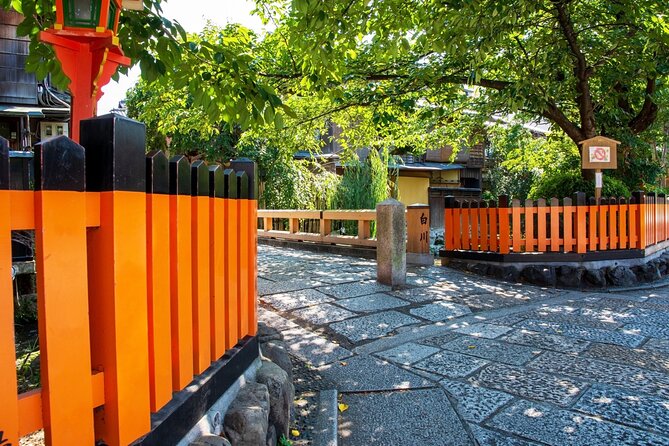
Tatsumi Bridge (Gion shibashi)
Your tour begins at Tatsumi Bridge, walking through Gion shibashi. This is one of those Kyoto moments where you immediately understand why Gion gets attention, the riverside setting and the rhythm of the streets pull you in fast.
You only have about 15 minutes here, so keep your camera ready. I would also slow down for a few minutes and look beyond the postcard view, because the guide’s early stories set the tone for what you are about to see.
Statue of Izumo-no-Okuni
You will also encounter the Statue of Izumo-no-Okuni, a key name tied to Kyoto’s long relationship with performance culture. Even if you have never traced the story behind the name, it works as a reminder that Gion has always been more than just scenery.
The value here is not the statue alone, it is how your guide connects entertainment tradition to the surrounding neighborhoods.
Chion-in Temple, Sanmon Gate
Next up is Chion-in Temple Sammon, the big wooden gate that signals you have entered one of Kyoto’s heavyweight temple settings. It is described as one of Japan’s largest wooden gates, so even a quick stop feels impressive.
You spend about 10 minutes, which is enough to take in the scale and let the guide explain what you are looking at. Quick note: gates like this often look best when you step to the side and avoid standing perfectly head-on, so you get depth in photos.
Chion-in Temple Main Area
Then comes Chion-in Temple itself, with around 20 minutes here. It is founded in the 13th century and is noted as one of the largest temples in Kyoto.
This stop is where the tour’s “why it matters” approach pays off. Instead of rushing temple architecture, you get a guided narrative about religion and the role these sites have played over centuries.
Maruyama Park
You get a breath of normal street life at Maruyama Park. It is described as an urban oasis and one of Kyoto’s oldest parks, so it is not just a patch of grass, it is a pause in the middle of sightseeing.
This segment is around 10 minutes, which works for regrouping, grabbing water, and resetting your eyes before the more hillside and slope-heavy portions.
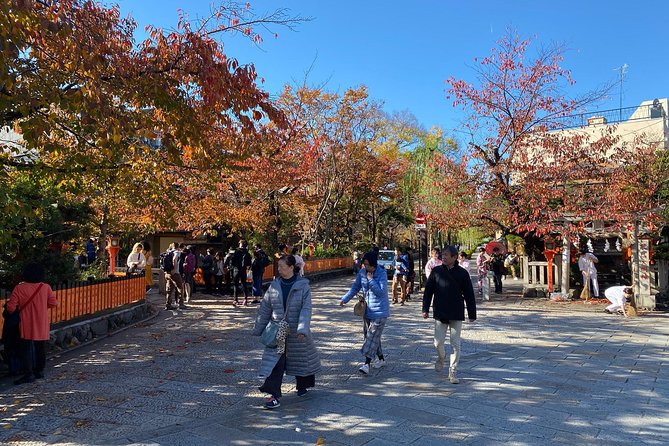
Nene no Michi (Path of Nene)
From the park, you head to Nene no Michi, also called the Path of Nene. The route is stone-paved and historic, and it is named after Nene, the wife of Toyotomi Hideyoshi.
This is a quieter kind of scenery, the type of place where the walk itself becomes the attraction. If you like Kyoto when it feels calm and human-scaled, this is the moment to appreciate it.
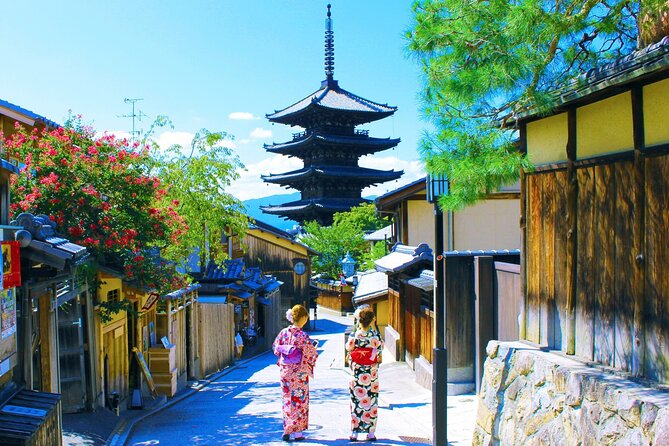
Hōkan-ji Temple (Yasaka Pagoda)
Then you reach Hōkan-ji Temple, also known as the Yasaka Pagoda, with about 10 minutes at the stop. The star here is the towering five-story pagoda, a classic Higashiyama landmark visible even before you are fully “in” the temple area.
If you are trying to understand the visual geography of eastern Kyoto, this is one of the best points. The guide can help you see how this kind of structure anchors your sense of direction.
Ninen-zaka Path (Two-Year Slope)
After the pagoda, you transition onto Ninen-zaka, the famous cobblestone pedestrian slope. It is known for preserved traditional buildings and a nostalgic feel, and the edges are lined with tea houses and souvenir shopping.
This stop is short, about 5 minutes, so use it for atmosphere and photos rather than trying to shop your way through. Also, cobblestones can be slick when damp, so slow your step.
Sannen-zaka Slope (Three-Year Slope)
Right after that, you continue to Sannen-zaka, another cobblestone slope with preserved traditional architecture. It is similar in vibe to Ninen-zaka, but the angle and surrounding streets feel different enough to keep it interesting.
You get around 10 minutes here. If you are doing the classic Kyoto slow-walk, this is where you stretch your legs for a few extra pictures.
Kiyomizu-dera Temple (UNESCO Views)
Your final major stop is Kiyomizu-dera, a UNESCO World Heritage site dating back to the 8th century. It sits on a hillside overlooking the city, and that is where the “big payoff” energy comes from.
You spend about 10 minutes, and importantly, admission is not included. I would plan your budget for the entrance fee here. Also, if you want more time at the viewpoints, you may want to extend your visit after the tour ends, since 10 minutes is a taste, not a full exploration.
What the Meiji Restoration Context Adds to Your Day
Kyoto can feel like an endless string of old buildings, which is cool, but it can also be confusing. This tour’s focus on the Meiji Restoration helps connect the past to the present, so temples do not feel frozen in time.
The guide’s explanations also help you understand why Kyoto’s identity survived dramatic national change. Even when you do not leave with a memorized timeline, you do leave with a better mental map of how religion, culture, and society shifted into the modern era.
That is the real value for me: you get a narrative thread. When you walk from Gion-related streets to major Buddhist sites, you start to see how all those layers lived side by side.
Geisha, Samurai, and Big Power Stories in Small Stops
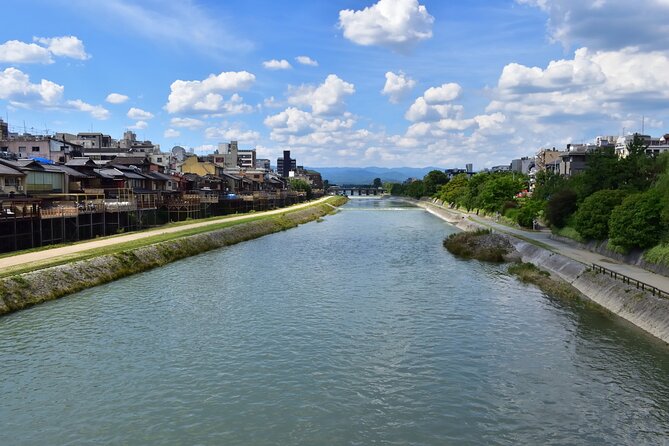
This route goes through areas that connect to entertainment history and to older systems of power. The walk through Gion, plus stops like the Izumo-no-Okuni statue and the temple complex at Chion-in, gives your guide room to talk about how different social worlds overlapped.
In particular, the tour’s stories can tie together themes you might hear around Kyoto: samurai influence, the role of monks and religious institutions, and how rulers shaped the city. You do not need to be a history buff to enjoy this, because the guide keeps it grounded in what you are standing in front of.
The Guide Makes or Breaks This Tour
This is one of those experiences where the guide is a huge part of the product. From the quality of feedback, names that come up often include Jay, Ben, Aiyumi, Tommy, and Michel.
You can expect guides to do a few key things well:
- Answer questions clearly in English
- Keep the tone upbeat, including humor
- Point out good photo spots and explain what to look for
- Give practical recommendations for what to do next
That last part is underrated. After three hours in Kyoto, you do not just want to see places, you want to know what makes sense next. A guide who shares route suggestions and nearby ideas helps you avoid wasting the rest of the day.
Comfort Tips: Shoes, Stairs, and Smart Timing
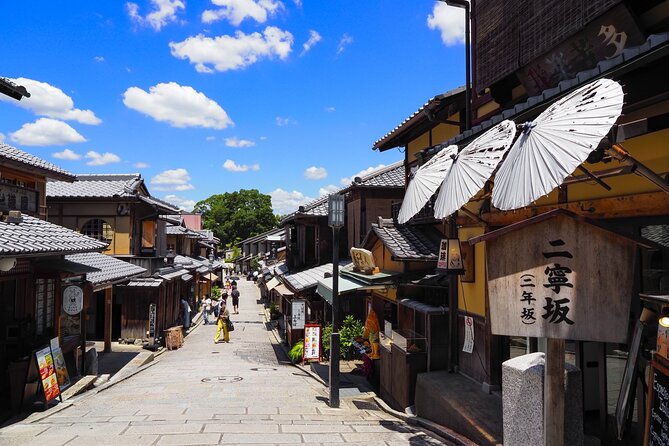
This is a half-day walk, and you will feel it. Wear walking shoes. That sounds obvious until you are halfway up a stone slope and realize you chose fashion over traction.
The route in eastern Kyoto can include stair climbing, and the cobblestone slopes can be a bit of a workout. If you have limited mobility, plan carefully and consider whether you want a slower, more accessible option.
Also, the tour does not include lunch, and your stop pattern is more sightseeing than eating. A smart move is to eat before you go, then bring water and a small snack if you get hungry between temple stops.
Finally, use the park stop and the quiet stretches to reset. If you try to power through without breaks, the last stretch up to Kiyomizu-dera can feel longer than it needs to.
Weather Matters, and Your Day Plan Should Have a Buffer
This tour requires good weather. If it is canceled due to poor conditions, you will be offered a different date or a full refund.
Because you end at Kiyomizu-dera, I like planning your next steps as flexible options. For example, you can continue exploring the temple area or shift into nearby streets while you are already in the right zone.
If you have a hard reservation right after the tour, give yourself some breathing room. When a guide is good, people ask questions, take photos, and linger, and that can affect timing.
Should You Book This Kyoto Gion Historical Walking Tour?
Book it if you want:
- A strong first overview of Gion and Higashiyama in about 3 hours
- An English guide to explain Kyoto beyond the signs
- A route with many free-entry stops and one paid climax at Kiyomizu-dera
- A day that connects temples to the story of modern Kyoto, including Meiji Restoration context
Skip it or choose a different style if you:
- Do not like walking for a half-day or you struggle with stairs and slopes
- Want lunch included and planned in the middle of the day
- Need a lighter, less information-heavy approach
For most visitors, this is a high-value way to get your bearings fast. You finish with the classic Kiyomizu-dera views, plus a better sense of how Gion’s world and Kyoto’s temples connect.
FAQ
How much does the Kyoto Gion Historical Walking Tour cost?
It costs $40.00 per person.
How long is the tour?
The tour runs for about 3 hours.
Where do I meet the guide?
Meet at Ben’s Cookies Kyoto Shijo at 89 Shinchō, Shimogyo Ward, Kyoto 600-8001, Japan.
Where does the tour end?
The tour ends at Kiyomizu-dera, in front of the entrance at 1-chōme-294 Kiyomizu, Higashiyama Ward, Kyoto 605-0862, Japan.
Do I get a mobile ticket?
Yes, the tour uses a mobile ticket.
Is lunch included?
No, lunch is not included.
Are temple admission fees included?
Admission fees are not included. Some stops are listed as free, but Kiyomizu-dera admission is not included.
What is the maximum group size?
The tour has a maximum of 12 travelers.
Are service animals allowed?
Yes, service animals are allowed.
What is the cancellation policy?
You can cancel for a full refund up to 24 hours in advance of the experience start time. If you cancel less than 24 hours before, the amount paid will not be refunded.
More Historical Tours in Kyoto
- Kyoto Gion: 2-Hour Geisha Culture & History Walking Tour
★ 5.0 · 1,186 reviews - Historical Kyoto E-Bike Tour
★ 5.0 · 181 reviews - Kyoto: Nijo Castle World Heritage Guided Tour with Admission
★ 5.0 · 128 reviews - Kyoto: Private 2.5 Hour Historical Walking Tour
★ 4.9 · 121 reviews
Fresh options around Kyoto
- Shamisen Discovery in Kyoto 【Group】★ 5.0 · 24 reviews
- Kyoto: Personalize, private tour (3h, 5h, 8h) [W/Car Option]★ 4.9 · 24 reviews
- Kyoto: Kiyomizu-dera, Fushimi Inari & Gion Geisha District★ 5.0 · 24 reviews
- Kyoto Geisha Show Cultural Hour with an apprentice geisha, Maiko★ 5.0 · 25 reviews
- Kyoto Full Course Tour: Explore 10 Must-See Sights & Hidden Gems★ 4.5 · 25 reviews
- Kyoto kiyomizu Temple : Maiko and Samurai Couple Photoshoot★ 4.8 · 25 reviews
- Kyoto: Private Tea Ceremony at local home with tea master★ 5.0 · 25 reviews
- Slow Cycling Tour at Uji’s Matcha Green Tea Fields and Heritage★ 5.0 · 25 reviews
Historical Tours, compared.
World Heritage Shirakawa-go and Experience Tours from Kanazawa
Read our review →
Imperial Palace and Shogun Historical Walking Tour
Read our review →
World Heritage Kyoto & Nara Uji Authentic Matcha Experience
Read our review →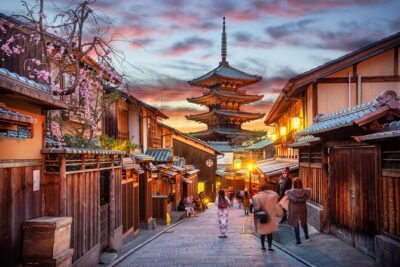
Kyoto Gion: 2-Hour Geisha Culture & History Walking Tour
Read our review →
World Heritage Shirakawa-go Morning Guided Tour
Read our review →
Hiroshima Historical Walking Tour – Why A-Bomb was Dropped
Read our review →
Hiroshima Peace (Heiwa) Walking Tour at World Heritage Sites
Read our review →Browse the lists this tour appears in