
Reviewed · HISTORICAL TOURS
Tokyo: Imperial Palace and Shogun Historical Walking Tour
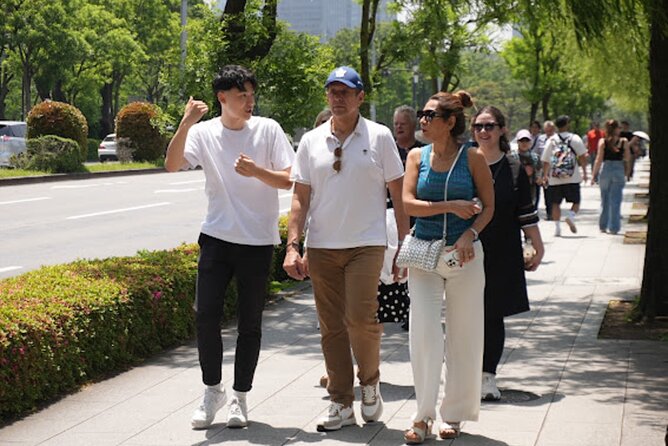
Tokyo slows down the moment you enter. This small-group walk through the Imperial Palace East Gardens connects today’s calm to the Edo-era power of the shoguns. You follow a guide, ask questions, and move at a relaxed pace through spots bus tours usually miss.
I especially like that you get guided context instead of just wandering. In the guide-led stories, names like Blake, Jim, Miguel, Tony, and Aya show up in reviews for making the palace feel personal and understandable, with practical explanations of what you’re looking at. It also helps that the group stays small, so you can actually hear details and not just catch sound bites.
One thing to consider: this is still a walking tour on public pathways inside a major site. Expect some uphill bits, and if you’re late at the meeting point near Starbucks, you can lose time at a place with limited access windows. Build in extra buffer.
Quick hits before you go
- Small group size (max 15) makes it easier to hear stories and ask questions
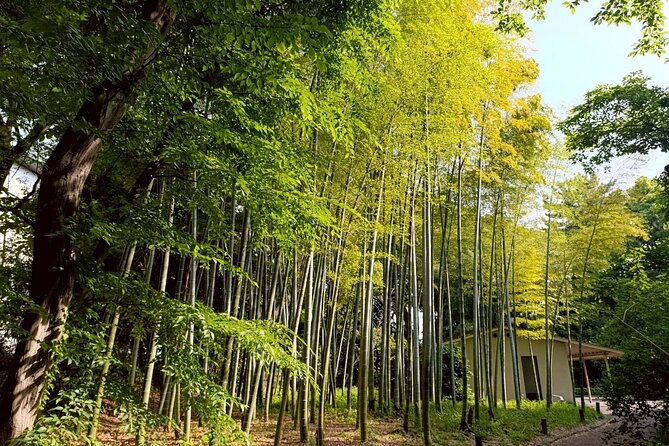
- Edo Castle ruins in the East Gardens add “how it used to be” to what you see today
- Admission to the East Gardens included, so you do not need extra tickets
- A guide-led route to gates, walls, foundations, and Ninomaru Garden beats aimless strolling
- Mobile ticket keeps things simple once you arrive
Tokyo’s Imperial Palace East Gardens, minus the guesswork
The Imperial Palace East Gardens are one of those Tokyo experiences that look straightforward from the outside, but feel layered once you understand what you’re viewing. You’re walking through carefully kept grounds that sit on top of earlier structures tied to the shogun era and the older Edo Castle layout. Without a guide, it can be hard to tell where the big transitions happened, what the shapes of the walls mean, or why certain corners feel more important than others.
What you get here is a guided path that turns the scenery into a storyline. The tour focuses on the East Gardens and the Edo Castle ruin area, so you’re not spending your time guessing. And because it’s a small group, you can slow down with the guide and ask follow-ups instead of scanning your phone every minute.
You’ll also notice a subtle value shift. The Imperial Palace grounds can be visited independently, but guided commentary changes the experience from sightseeing to understanding. You’re paying for time spent noticing, connecting, and interpreting what the site is showing you.
More Walking Tours in Tokyo
- Tokyo Tsukiji Fish Market Food and Culture Walking Tour
★ 5.0 · 3,184 reviews - Tokyo: Shinjuku Local Bar and Izakaya Guided Walking Tour
★ 4.9 · 1,794 reviews - Tokyo: Tsukiji Fish Market Food and Walking tour
★ 5.0 · 1,724 reviews
Where you meet, and the fast plan to stay on schedule
You start at Starbucks Coffee at Kokyo Gaien Wadakura Fountain Park, 3-1 Kōkyogaien, Chiyoda City. The tour ends back at that same meeting point. It’s a useful setup because it reduces transit stress. You’re not trying to reach a different drop-off location while also negotiating Tokyo crowds.
The tour duration is about 2 hours, and the East Gardens segment runs about 1 hour 30 minutes. That means your time inside the gardens is substantial, but not endless. If you want to stroll afterward on your own, plan for a shorter window after the tour rather than assuming you’ll have all day.
Also, the meeting location is near public transportation. That matters because you can route yourself quickly from central areas. Still, I recommend you build in extra buffer to account for train exits, walking time, and finding the exact Starbucks entrance.
The tour uses a mobile ticket, which is handy in Tokyo. You won’t be juggling paper confirmations, and you can keep everything in your phone.
The walk into Edo Castle ruins: gates, stone, and the big picture
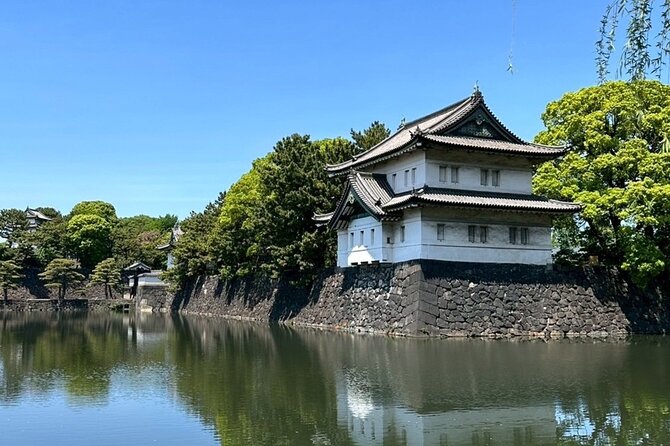
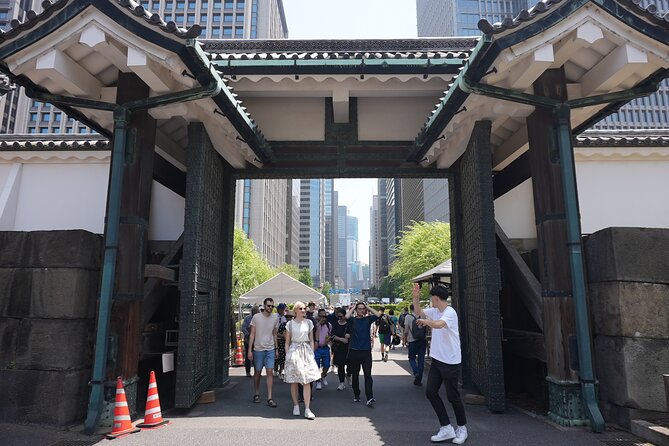
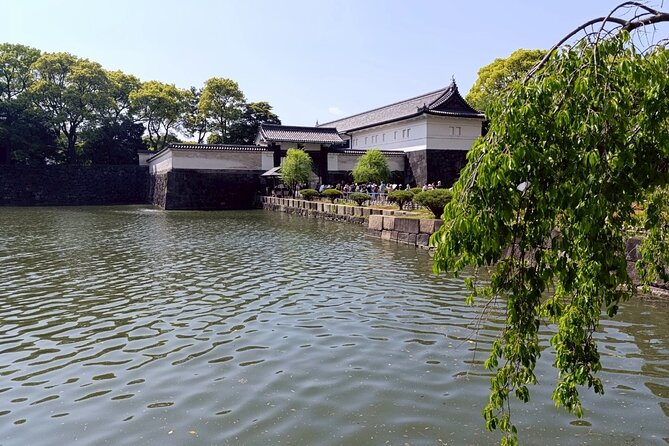
The main stop takes you through the East Gardens in a way that highlights the site’s former role. You’ll move past majestic stone gates and remnants of towering castle walls. Even if you know Japan has a long military past, the physical scale here helps you understand why Edo Castle mattered.
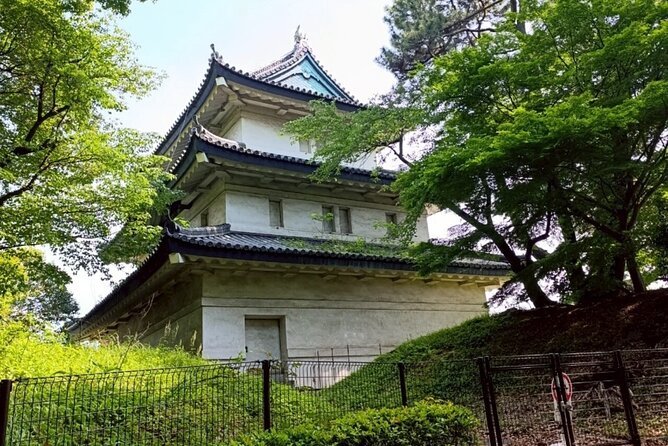
A key moment is the chance to stand on foundations connected to the castle keep. That’s not just a photo stop. The guide’s job is to help you visualize what the area used to support, how the layout would have worked, and why certain points feel like “centers” in a complex.
This is where the guided storytelling tends to earn those very high ratings. Reviews mention guides making the experience feel like a real class, but in a friendly way. For example, Jim is praised for weaving together Japanese history in a way that stays fun, and Miguel gets called out for turning the palace and Edo connections into a meaningful narrative.
If you like architecture and spatial thinking, this portion is a good match. You’re not just looking at pretty gardens. You’re reading the site like a map.
What to keep your eyes on
- Stone gate details, because they often signal rank and function
- Where walls end, because endings can reveal later redesigns
- Foundation areas, because they help you translate ruins into original structure
Same corner of Japan, a different kind of day:
- Mt Fuji and Hakone 1-Day Bus Tour Return by Bullet Train
★ 5.0 · 26,383 reviews - 1-Day Tokyo Bus Tour
★ 5.0 · 14,250 reviews - Tokyo: TOKYO SKYTREE® Admission ticket
★ 4.5 · 11,192 reviews - Tokyo: teamLab Planets TOKYO Digital Art Museum Entry Ticket
★ 4.6 · 9,779 reviews
Ninomaru Garden: where the Edo refinement shows up
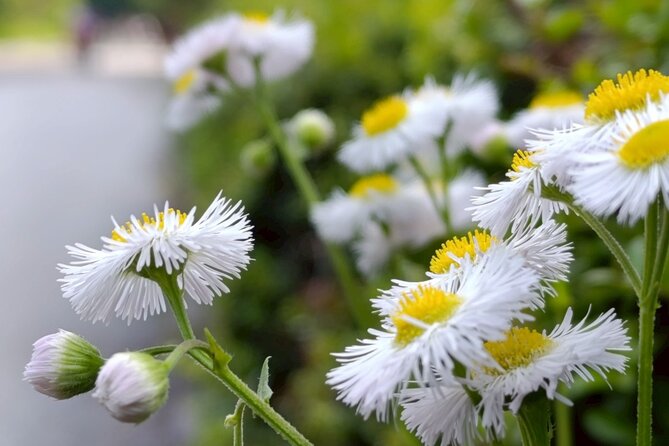
Within the East Gardens, you’ll also reach Ninomaru Garden, including seasonal flowers and tranquil ponds. This is the part where the tour balances power and peace. Edo Castle is the big frame, but the gardens show how refined space planning could be.
The practical value of this stop is that it changes your pace. Earlier you’re tracking remnants and foundations. Here you shift toward noticing symmetry, pond edges, and the garden’s calmer rhythms. It’s a natural mental reset, and it fits the tour’s relaxed tone.
This is also where a guide helps you more than you’d expect. Garden design carries messages in Japanese aesthetics, and you may miss them if you only look for the most obvious photo angles. A good guide points out what to notice and why it matters.
Why the guide commentary matters more than you think
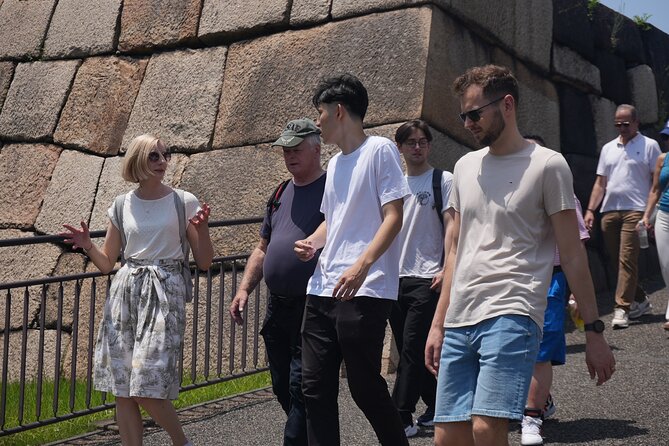
In a place like the Imperial Palace, the challenge is knowing what you’re looking at. The guide commentary turns vague impressions into clear connections. Reviews repeatedly mention guides explaining the Imperial family, the Emperor’s role in modern Japan, the Edo period, and shogunate history in a way that feels understandable.
You’ll see a pattern in the guide feedback: people love when the guide keeps things engaging, patient, and full of context. Names that come up a lot include Blake, Jim, Miguel, Tony, Aya, Lasse, Izzy, and Dylan. The specific phrasing varies, but the theme is consistent: the tour gives you the sense that you’re not just walking around, you’re learning how to read the site.
One more practical benefit: because the group stays small, the guide can respond to questions. That’s not a luxury detail. If you’re the type who wonders why a certain gate faces a certain way, or how modern palace life connects to older political structures, this tour design makes it easier to get answers on the spot.
My balanced take on pacing and explanation
Not every guide style lands the same for everyone. One review mentioned a tendency to over-explain and repeat, with long stops. Another wanted more historical scene-setting earlier. So if you prefer concise storytelling, go in with realistic expectations: the guide is likely to provide extra context to help you enjoy the whole route.
Walking reality: comfort, slopes, and what to wear
Even with a relaxed vibe, you should treat this as a real walking tour. Reviews mention slopes, and the route covers gates, walls, and garden paths. That means comfortable shoes are not optional.
The grounds are outdoors, so weather matters. Tokyo can be hot and humid, or show quick changes in conditions. Dress in layers so you can adjust without turning your day into a gear battle.
Also plan your energy. You have about 2 hours total. It’s long enough to feel like a “morning or afternoon plan,” but short enough that you can still do other Tokyo highlights the same day.
If you get tired easily, you might want to pace yourself at the start. Early momentum is easier than trying to catch up later when the group begins moving between stops.
Who this tour suits best (and who might want something else)
This is a great fit if you want:
- Royal and shogun-era context without doing pre-reading
- A small-group experience with room for questions
- A route that takes you to places you might not prioritize on your own
- A mix of ruins, gates, and garden beauty
It also works well as an introduction to Tokyo history, especially if this is your first or early visit. Several reviews describe the experience as meaningful and memorable partly because it connects the past to what you see now.
You may want to think twice if:
- You prefer self-guided pacing with minimal speaking
- You dislike any history-style explanation (even if it’s clear and friendly)
- You have mobility limits that make walking on outdoor paths difficult
For most people, this is doable, and the tour is described as suitable for most travelers. Still, comfortable footwear and a steady pace will make the biggest difference.
Price and value: why $22 can feel like a bargain
At $22 per person, this tour is priced like a small add-on to your Tokyo day, not a major splurge. The value comes from two specific things you do not get from casual strolling.
First, admission to the East Gardens is included. So part of your price is directly tied to being able to access what matters.
Second, you’re paying for the guide’s ability to translate the site. It’s one thing to stand at stonework and ruins. It’s another to understand what the elements represent and how they connect to Edo Castle and the Imperial narrative. When reviews highlight guides who are engaging and patient, they’re describing that translation power.
And because the group is capped at 15, the per-person cost also supports better attention. If you’ve done tours where you can barely hear the guide, that’s not the design here.
What to do before and after your 2-hour slot
Since the tour starts at a Starbucks in the Kokyo Gaien area, you can build your day around that neighborhood. Before you go, I’d keep your plans simple. Use the time to arrive early enough to settle, then focus on the tour rather than rushing.
After the tour, you’ll likely feel ready to keep exploring nearby areas at a slower pace. The East Gardens are calming, and that makes it easier to transition into other Tokyo sightseeing without feeling overstimulated.
If you’re hoping to stack multiple big attractions, remember that the tour is only about 2 hours total. It’s best as a main anchor you can build around, not a filler you tack on at the last second.
Should you book the Imperial Palace East Gardens walking tour?
I think you should book if you want an easy win: a small-group walk, guided context, and access focused on Edo Castle ruins and Ninomaru Garden. The pricing feels fair because you get included admission and a guide who can turn stone gates and foundation remnants into a story you can actually follow.
Skip it if you already know the palace and Edo history well, or if you dislike guided explanation. In that case, a self-guided visit might suit you better.
If you’re on the fence, here’s my rule: if you want to understand Tokyo’s royal and shogun layers in a low-effort way, this is a smart use of time.
FAQ
How long is the Imperial Palace and Shogun Historical Walking Tour?
It runs for about 2 hours (approximately). The East Gardens portion is listed as about 1 hour 30 minutes.
What does the tour include for admission?
Admission to the East Gardens is included.
Where do I meet the tour guide?
The meeting point is Starbucks Coffee – Kokyo Gaien Wadakura Fountain Park, 3-1 Kōkyogaien, Chiyoda City, Tokyo 100-0002, Japan.
Where does the tour end?
The tour ends back at the meeting point.
What is the group size limit?
The tour has a maximum of 15 travelers.
Do I need cash or paper tickets?
You’ll receive a mobile ticket, so you should be set up to show it on your phone.
Is the location easy to reach using public transportation?
Yes, it is listed as near public transportation.
What can I expect to see during the walk?
You’ll visit the East Gardens of the Imperial Palace, including Edo Castle ruin areas such as stone gates, remnants of castle walls, the keep foundation area, and Ninomaru Garden.
Is the tour suitable for most travelers?
It’s listed as suitable for most travelers.
What is the cancellation policy?
You can cancel for a full refund up to 24 hours in advance of the experience start time. If you cancel less than 24 hours before, the amount paid is not refunded.
More Historical Tours in Tokyo
- Tokyo: Imperial Palace Japanese History Walking Tour
★ 4.9 · 987 reviews - Yanaka Walking Tour: Historic and Traditional District of Tokyo
★ 5.0 · 530 reviews - Tokyo: Shinjuku Historical Walking Tour & Secret Backstreets
★ 5.0 · 530 reviews - Mt. Fuji Heritage Tour: Traditional Villages, Lakes & Shrine
★ 4.5 · 509 reviews
Fresh options around Tokyo
- Tokyo: Nikko Kegon Falls Lake Chuzenji Toshogu Temple & More★ 4.9 · 12 reviews
- Tokyo: Samurai History Walking Tour★ 5.0 · 12 reviews
- Harajuku: Kawaii Fashion and Pop-Culture Tour★ 4.7 · 12 reviews
- Tokyo: Mt. Fuji & Lake Kawaguchi Instagram Full Day Trip★ 4.1 · 12 reviews
- Shibuya Tokyo: Modern Kintsugi Workshop in Shibuya★ 5.0 · 12 reviews
- Tokyo: GTR Guided Daikoku Experience at Night★ 5.0 · 12 reviews
- Tokyo: Daikoku JDM Car Culture Tour★ 4.6 · 12 reviews
- Mt Fuji Private Day Trip from Tokyo with English speaking driver★ 5.0 · 13 reviews
Historical Tours, compared.
World Heritage Shirakawa-go and Experience Tours from Kanazawa
Read our review →
World Heritage Kyoto & Nara Uji Authentic Matcha Experience
Read our review →
Kyoto Gion: 2-Hour Geisha Culture & History Walking Tour
Read our review →
World Heritage Shirakawa-go Morning Guided Tour
Read our review →
Hiroshima Historical Walking Tour – Why A-Bomb was Dropped
Read our review →
Hiroshima Peace (Heiwa) Walking Tour at World Heritage Sites
Read our review →
Shinjuku Historical Walking Tour & Secret Backstreets
Read our review →Browse the lists this tour appears in