
Reviewed · HISTORICAL TOURS
Hiroshima Historical Walking Tour – Why A-Bomb was Dropped
Atomic history, mapped street by street. I love the way this walk links Hiroshima Gokoku Shrine with Hiroshima Peace Memorial Park, turning scattered landmarks into a clear storyline about Hiroshima’s wartime role and the atomic bomb. The best part is the English live guide, often praised for patient answering and real local perspective, like Chihiro or Emi, so you can ask questions as you go.
One consideration: this is emotional history. If you bruise easily or hate heavy topics, plan a calmer evening afterward.
Key moments that make this tour worth your time
- A three-site storyline that connects shrine, castle, and the memorial area into one thread
- English live guide with room for questions and side explanations
- Photo stops plus guided walking around the places you’ll keep seeing in photos later
- Atomic Bomb Dome and Peace Park focus, with time to process what you’re looking at
- Local perspective in the guiding style, with guides from Hiroshima mentioned by name
- Finish at the Peace Memorial Museum, so you can turn feelings into understanding
Entering Hiroshima with a storyline, not just landmarks
Hiroshima can feel like a set of powerful stops, but the message hits harder when the places connect. This tour is built as a walking narrative, timed for about 150 minutes, that moves from wartime context to the aftermath and the peace message that’s still strong today.
I like that it’s not only about the day of the bombing. You get the background that helps you understand why Hiroshima mattered in World War II, so the memorial sites don’t feel like random locations you rush through.
You’ll also move at a pace that feels human. One reason people rate this tour so highly is that the guide work sounds structured and responsive, not lecture-style. You get just enough time at each site for the story to land.
Finally, you’re paying for guidance, not just entry into museums. That’s the real value here: the guide gives you a framework so you can make sense of what you’re seeing.
More Walking Tours in Hiroshima
- Hiroshima Peace (Heiwa) Walking Tour at World Heritage Sites
★ 5.0 · 872 reviews - Hiroshima City 4hr Private Walking Tour with Licensed Guide
★ 5.0 · 437 reviews - Hiroshima Walking Tour Why A Bomb was dropped to Hiroshima
★ 5.0 · 347 reviews
Hiroshima Gokoku Shrine start, where wartime memory is part of daily space
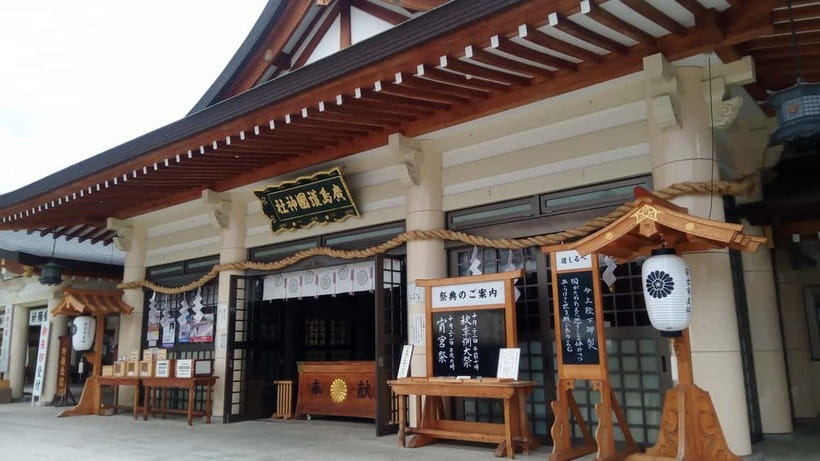
The tour begins in front of the Hiroshima Gokoku-jinja Torii Gate near the main hall. Even if you’ve studied World War II before, starting here changes the tone immediately. A shrine is not the first place most people expect on an atomic bomb tour, and that’s exactly why it’s effective.
At Gokoku Shrine, you’re set up with history and context, including Hiroshima’s military significance in the war. The guide helps connect cultural and historical ideas, so you understand that Hiroshima was not just a target on a map, it was a city with institutions tied to national war efforts.
I also appreciate how this start helps you avoid the common mistake of treating the memorial area like the whole story. When your tour starts at a place like this, the Peace Park ending hits with more weight, not less.
Tip from the practical side: stand near the meeting point a few minutes early so you’re not scanning the streets while your brain is gearing up for the subject. Comfortable walking shoes also help, because the tour is active, not a sit-down show.
Hiroshima Castle stop, photos and the city’s wartime geometry
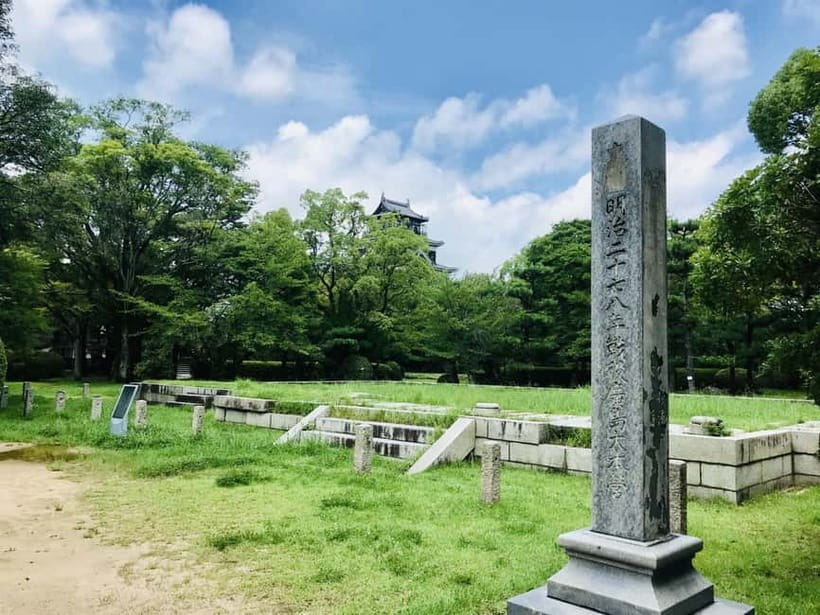
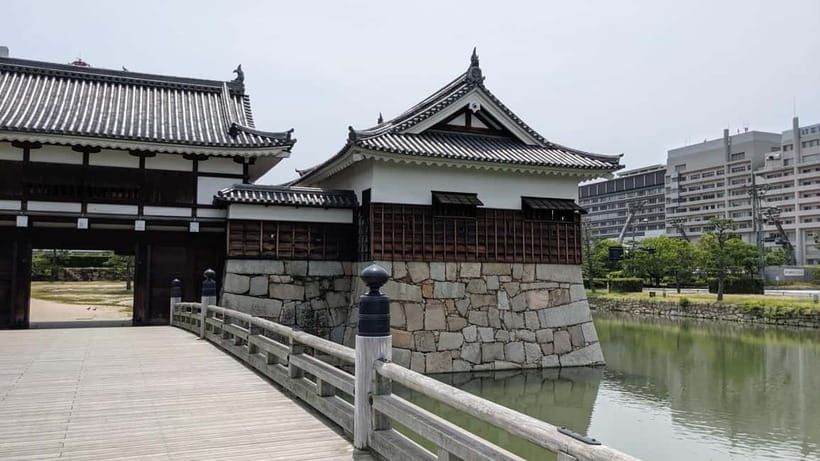
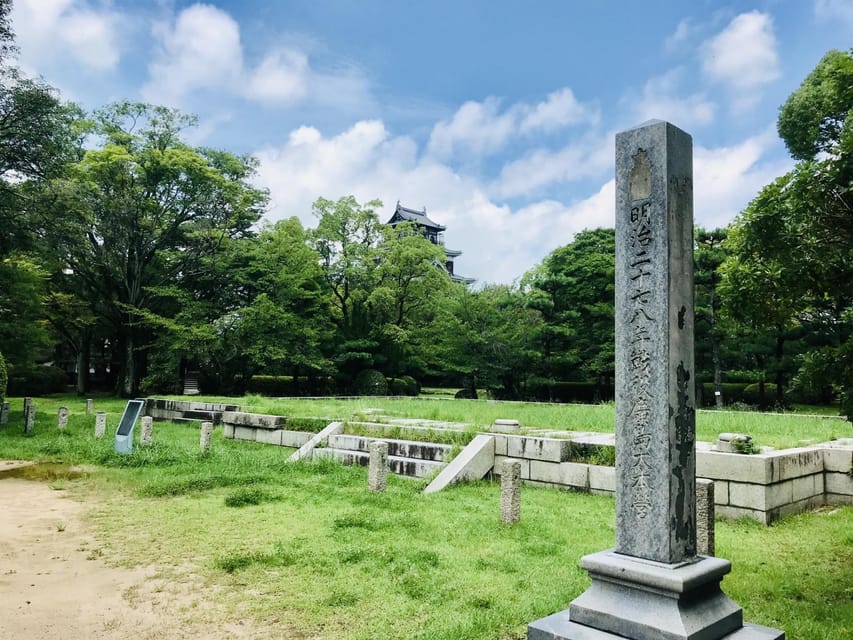
Next comes Hiroshima Castle, with a photo stop and a guided visit of about 20 minutes. This is the part where you can shift from emotion to structure. You’re looking at a symbol of power and planning, and the guide uses the setting to explain what made Hiroshima strategically meaningful.
Castle time works best when you treat it like a viewpoint. Yes, you can photograph. But also listen for the way the guide frames military decisions and the role of the city before the bombing.
In a lot of Hiroshima experiences, you get overwhelmed by the memorial message right away. This castle stop helps you build context first. That’s one reason this tour is such a popular “before the museum” choice.
A realistic drawback: castle stops are more weather-sensitive. If you’re there in rain or harsh sun, come ready with layers. The good news is the tour overall includes multiple site transitions, so you’re not stuck in one exposed spot for the entire route.
The quieter guided segments: Hiroshima Gate Park and the in-between connections
After Hiroshima Castle, you’ll have another short guided segment (about 10 minutes), then you’ll reach Hiroshima Gate Park for around 30 minutes of visit and guidance.
This stretch is where the tour often feels most like walking with a local narrator. You’re moving from big, obvious symbols to the quieter spaces that show how the city is arranged and how the war story threads through everyday geography.
Hiroshima Gate Park is useful because it helps you re-orient. By the time you reach it, you’ve heard why the city mattered and you’re ready to connect those ideas to the physical route toward the memorial area.
One detail worth knowing: some guides also bring in additional route highlights that fit the same theme, like the Orizuru Tower crane moment mentioned in recent guides’ experiences. If that’s part of your version, it’s a gentle pause in tone, and the cranes can make the peace message feel less abstract.
Even if you do not see a crane display, the value of this in-between portion is the pacing. A heavy topic needs breathing room, and this section tends to supply it.
Same corner of Japan, a different kind of day:
- Peaceful Hiroshima & Miyajima UNESCO 1 Day Bus Tour
★ 5.0 · 5,309 reviews - Hiroshima: Hiroshima and Miyajima UNESCO Sites 1-Day Tour
★ 4.9 · 2,330 reviews - Hiroshima / Miyajima Full-day Private Tour with Government Licensed Guide
★ 5.0 · 1,298 reviews - Hiroshima in a Nutshell: Morning Bike Adventure
★ 5.0 · 524 reviews
Atomic Bomb Dome and Peace Memorial Park, the moment you can’t unsee
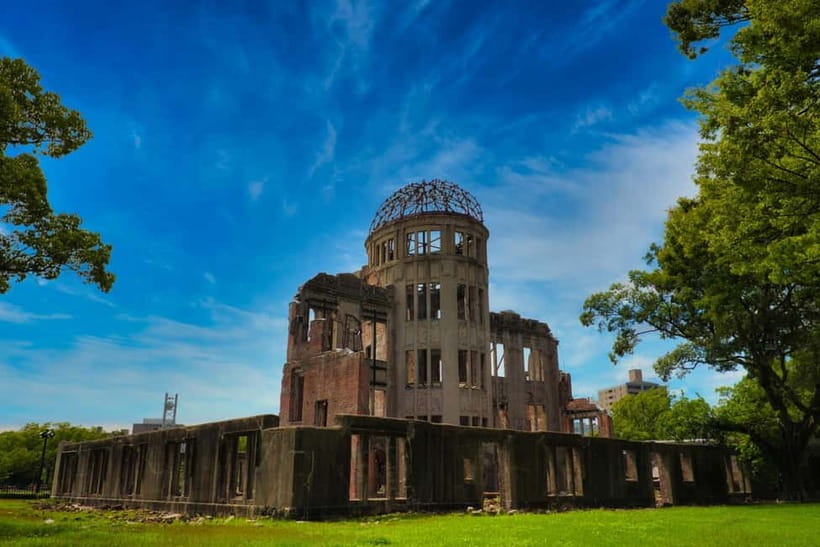
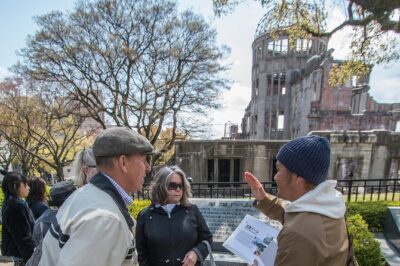
Then the route tightens around the focal points. You’ll visit the Atomic Bomb Dome for about 20 minutes. This is the classic image, the building that survived in a damaged, haunting state, and the guide helps you connect what you’re seeing to what happened and why it still matters.
The Dome works best when you keep your eyes open for details, not only the big silhouette. The guide’s job is to translate distance into meaning. The more context you have from earlier stops, the more the Dome becomes a human story, not just a landmark.
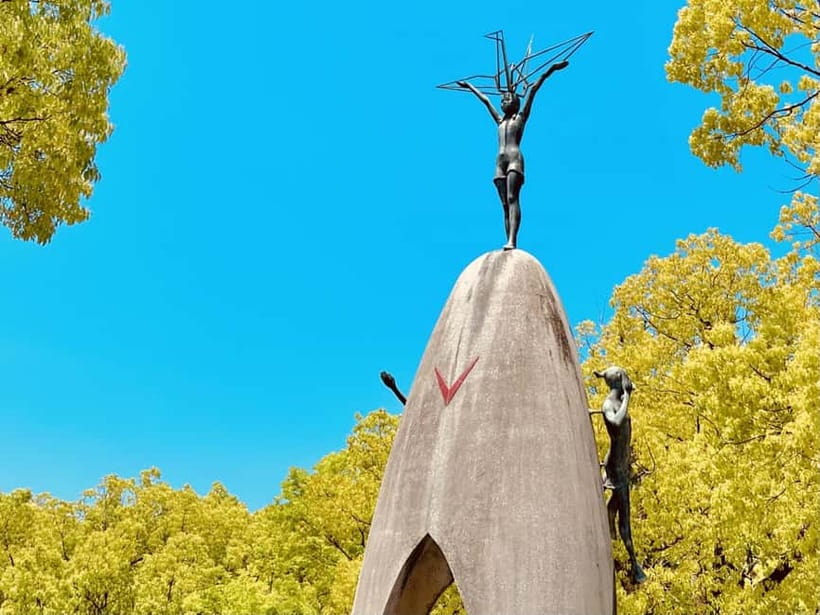
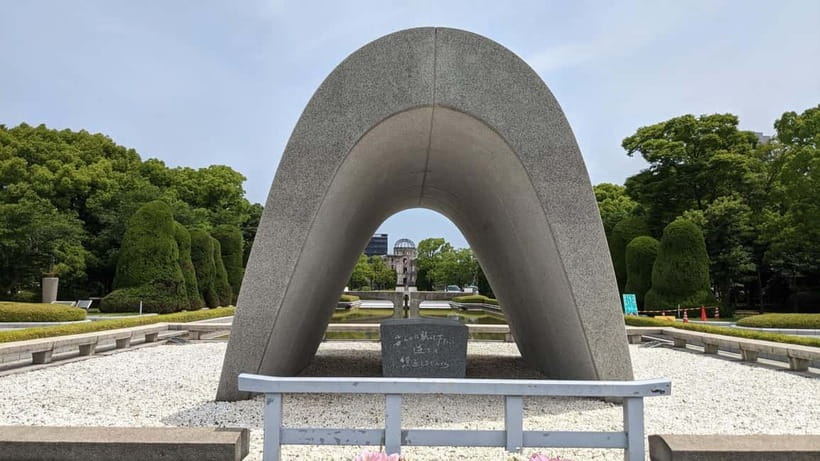
After that, you’ll spend about 30 minutes at Hiroshima Peace Memorial Park. This is where the tour shifts from explanation to remembrance. Many guides focus on the memorial layout and the message behind it, including references that visitors often associate with the Children’s Peace Monument and the paper crane symbolism.
I’ll be honest: this part can be very confronting. But it also feels honest, because the guide doesn’t rush the meaning. The structure of the tour gives you a bit of time to absorb what’s around you before you move on.
Practical advice: bring water, and give yourself permission to slow down. If you feel emotional, that’s not a problem. It’s part of what the sites are designed to provoke, and the guide framing helps you process rather than just absorb.
Finishing at the Peace Memorial Museum, turning facts into understanding
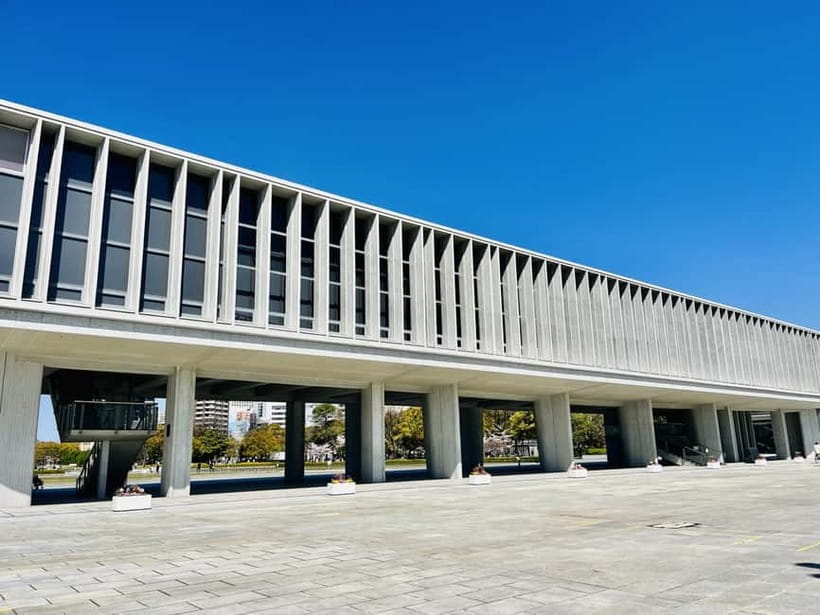
The tour ends at the Hiroshima Peace Memorial Museum. Finishing here is smart, because the park can stir your emotions, while the museum can help you make sense of the facts and timeline.
Even if you’ve read articles before, the museum often hits differently after walking the story. You arrive with the “why” already in your head, so you can use the exhibits to add depth instead of starting from scratch.
This finish also works because you control your next step. If you want more detail, you can stay longer. If you’re feeling maxed out, you can exit without feeling like you missed the whole point.
Many guides also provide helpful pointers for what to do right after, including where to eat. Some named guides, like Thomas, are noted for practical recommendations. That kind of local follow-through matters, because it helps you turn a heavy experience into a full day, not a sad ending.
Price and value: why $35 for 2.5 hours can feel fair
At $35 per person for about 150 minutes, you’re paying for a live English guide plus guided time at multiple major sites. In practical travel terms, that can be fair value if you would otherwise spend your time piecing together context from guidebooks or random internet searches.
Here’s the real value equation:
- You’re getting guided explanation at the points where it matters most, not only at the museum.
- You’re spending walking time with someone who can answer questions in real time.
- The tour ends at the museum, so you can build on what you hear instead of starting cold.
Also, the tour is frequently praised for pacing. That matters because a rushed memorial experience can turn meaningful places into a checklist.
One consideration on value: if you already know this history deeply and you prefer self-guided pacing with lots of reading, you might not need a guide. But if you want clarity and a human narrative to connect the sites, this is one of the more efficient ways to get it in a short visit.
Wheelchair accessible and English-led, with a route designed to keep moving
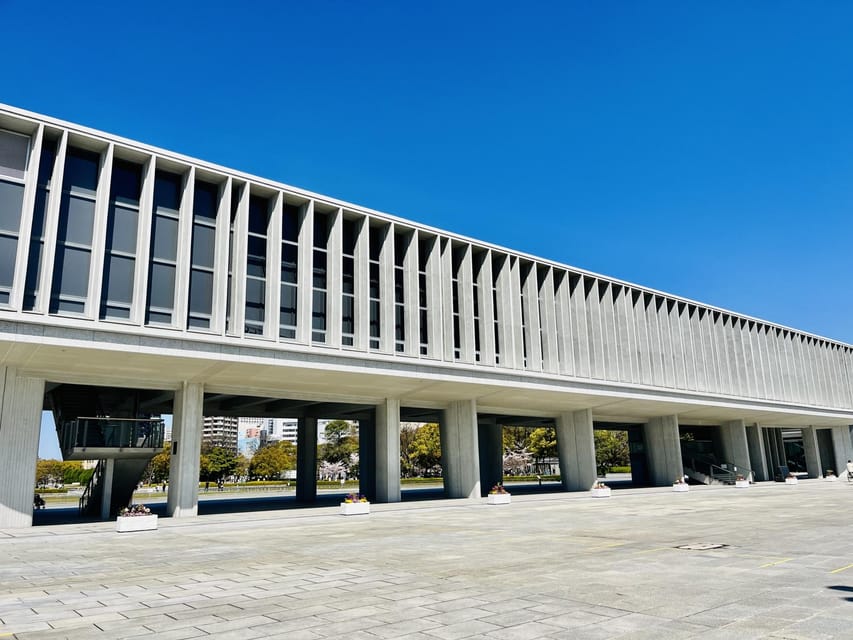
The tour is listed as wheelchair accessible, and it’s led in English. That’s helpful if you want to avoid the frustration of splitting time between translation apps and key moments.
Meeting point is in front of Hiroshima Gokoku-jinja Torii Gate near the main hall. It’s an easy landmark to find, as long as you give yourself a few minutes and keep your eyes open for the guide near the gate.
The route is also timed for short guided visits at each stop. That means you’re not stuck in one place for a long stretch, and it reduces fatigue compared with a more open-ended walk.
If rain hits, expect the tour to continue, but bring a light layer you can move in. People have noted strong guide handling even in tough weather, which is a good sign that you won’t be stranded waiting for conditions to improve.
Who should book this Hiroshima why-the-bomb walking tour
Book this tour if you want:
- Context before the museum, so the memorial sites make more sense
- A guided route that connects military significance to lasting cultural consequences
- A chance to ask questions during the walk, not only at the end
It can also work well for motivated kids and teens. One recent experience notes a family with a 12-year-old who stayed engaged, which usually means the guide can explain complex history without losing the group.
Skip it if you’re looking for a light sightseeing day. This is not that. It’s honest history, and it’s designed to leave you thinking.
Also, if you strongly prefer silence and independent wandering, you may find the guided narrative a bit too present. For most people, though, the guide helps you slow down in the right places.
Should you book it?
Yes, if you’re going to spend time in Hiroshima at all, book this walk first. It’s one of the most efficient ways to get the why behind the bombing, then use the museum to fill in the details.
I especially like the structure: shrine and castle set the wartime frame, Gate Park gives you breathing space, and then the Dome and Peace Memorial Park bring you to the core message. By the time you finish at the museum, you’re not just looking, you’re understanding.
Just go in ready for emotion. If you can handle serious history and want it explained clearly in English, this tour is a strong use of a half-day.
FAQ
How long is the Hiroshima Historical Walking Tour?
The tour duration is 150 minutes.
How much does the tour cost?
The price is $35 per person.
Where do I meet the guide?
Meet in front of the Hiroshima Gokoku-jinja Torii Gate near the main hall.
Is the tour wheelchair accessible?
Yes, the tour is listed as wheelchair accessible.
What’s included in the price?
The guided tour is included.
What language is the tour guide?
The live tour guide speaks English.
Is there free cancellation?
Yes. You can cancel up to 24 hours in advance for a full refund.
Do I need to tip the guide?
Tips are not included, so you may want to budget for a tip.
More Historical Tours in Hiroshima
- Miyajima Half-day Trip Historical Walking Tour
★ 5.0 · 284 reviews - Hiroshima: History of Hiroshima Group Walking Tour
★ 4.8 · 266 reviews - Hiroshima: Peace Walking Tour of World Heritage Sites
★ 4.9 · 190 reviews - Walking Through History: Hiroshima’s Path to Peace
★ 4.9 · 156 reviews
Fresh options around Hiroshima
- The Peace Memorial and Beyond: A Half-Day around Hiroshima★ 4.9 · 12 reviews
- Hiroshima Saijo Sake Tasting Tour with visit to 3 Breweries★ 5.0 · 12 reviews
- Private Hiroshima Calligraphy: Create Your Own Kanji Art Souvenir★ 5.0 · 12 reviews
- Hiroshima:Private lacquer workshop experience tour(gift included)★ 5.0 · 13 reviews
- Sunset Walking Tour at Peace Park, Hiroshima★ 5.0 · 13 reviews
- Kimono and Calligraphy Experience in Miyajima★ 5.0 · 16 reviews
- Hiroshima Peace Memorial Park: A Guided Tour★ 4.9 · 16 reviews
- History of Hiroshima: Small Group Night Walking Tour★ 4.8 · 17 reviews
Historical Tours, compared.
World Heritage Shirakawa-go and Experience Tours from Kanazawa
Read our review →
Imperial Palace and Shogun Historical Walking Tour
Read our review →
World Heritage Kyoto & Nara Uji Authentic Matcha Experience
Read our review →
Kyoto Gion: 2-Hour Geisha Culture & History Walking Tour
Read our review →
World Heritage Shirakawa-go Morning Guided Tour
Read our review →
Hiroshima Peace (Heiwa) Walking Tour at World Heritage Sites
Read our review →
Shinjuku Historical Walking Tour & Secret Backstreets
Read our review →Browse the lists this tour appears in