
Reviewed · CYCLING TOURS
Hiroshima in a Nutshell: Morning Bike Adventure
Bike time turns Hiroshima into one connected story.
This morning ride is a fast, human-scale way to see Hiroshima’s key landmarks, with bike and helmet setup so you can focus on the sights and not logistics. I love that the itinerary is built around Hiroshima Peace Memorial Park, with slow stops for short commentary and old photos that help you pace the emotions instead of rushing through them.
One thing to consider: the subject matter is heavy, and the guide may bring in broader framing that can feel a bit political depending on your own comfort level.
Key Highlights You’ll Feel Right Away
- Major Hiroshima stops packed into one half-day without the stop-and-start of walking
- Free entry at the Peace Memorial Park, Atomic Bomb Dome area, and Hiroshima Castle during the tour
- Shukkei-en admission included, so you do not have to think about tickets mid-ride
- Small group size, max 8 riders, which makes photo stops and safety guidance easier
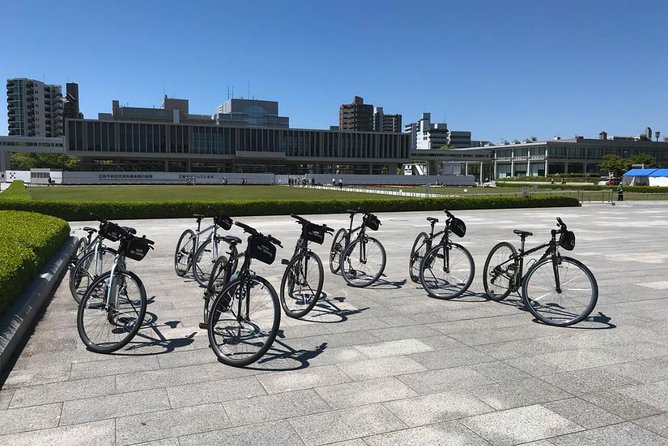
- Bike, helmet, and bottled water included, no need to show up with your own equipment
- Guides use clear safety signals and adjust bikes as needed, and the ride is mostly flat
Morning Start: Getting Set Up at Cycle Hiroshima
Your tour starts at Cycle Hiroshima, right in the Naka Ward area, near Ōtemachi (4-chōme-5-4 Ōtemachi, Hiroshima). The start time is 10:00 am, and you finish back at the same meeting point, so you are not solving transportation puzzles after a long morning.
You roll into the day with a bike and helmet already lined up. You also get bottled water included, which matters because even a short tour can feel longer when you are pausing often for photos and reflection.
If you like to travel light, this is one of those rare tours where your “gear list” is basically done for you. You just bring yourself, comfortable clothes, and a plan to stay present at the stops that ask for it.
More Bike Tours in Hiroshima
- Hiroshima 2hr Peace Cycling Tour with Local Guide
★ 5.0 · 321 reviews - Hiroshima: Peace Cycling Tour with Local Guide
★ 4.8 · 286 reviews - Hiroshima and Miyajima by Bike and Boat
★ 5.0 · 172 reviews
Why a Bike Tour Beats Walking (and Fits Hiroshima’s Layout)
Hiroshima’s top sights are spread out enough that walking can turn into a long slog, especially when you only have a day or two. This bike format lets you cover more ground, while still giving you that slow, personal pace when it counts.
The route is designed for the kind of travel that feels efficient, not frantic. You get to see the big names, and you also get chances to move through quieter streets that you would not naturally hit by bus or by taxi.
A practical plus: the riding is set up for most people who can participate, and the city is generally easy to bike through. In the reviews, people note the terrain is mostly flat, and the guides give clear hand signals so the group knows what is happening.
Peace Memorial Park: Quiet Reflection With Commentary and Old Photos
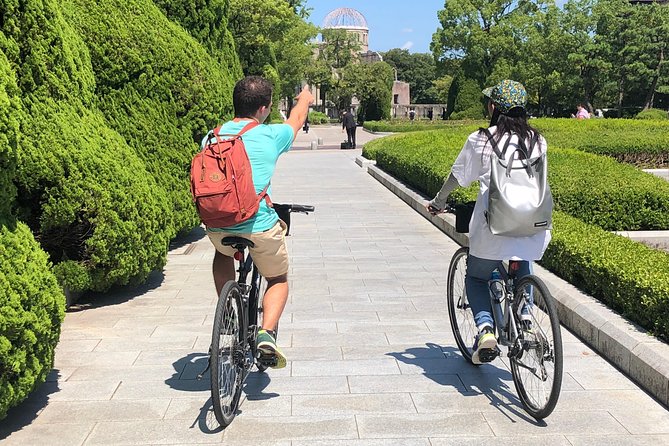
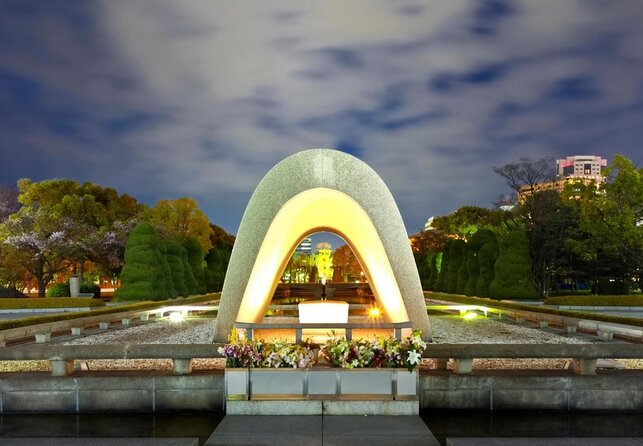
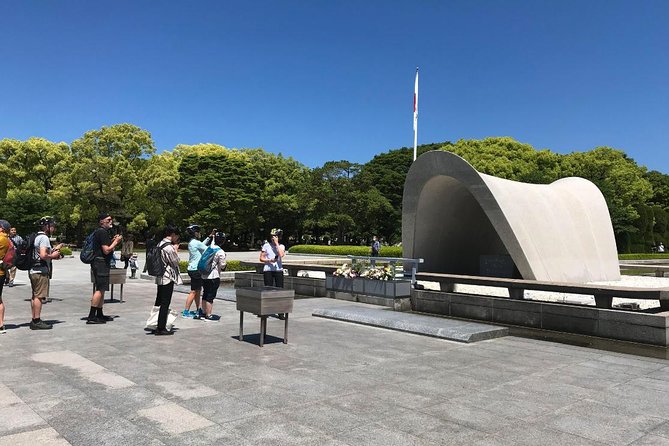
Stop 1 is Hiroshima Peace Memorial Park, and the tone is intentionally different from a typical sightseeing walk. You start with a slow, quiet ride and pause along the way for short commentary and old pictures of the area before World War II.
This is one of the most valuable parts of the tour because it helps you understand what you are looking at before you take photos or move on. Without that context, it is easy to treat the park like just another photo stop. With the guide’s pacing, you are more likely to remember the why, not only the where.
The time here is about 20 minutes, and that is long enough to read what you can, absorb a few key details, and then regroup. If you get emotional easily, you are not pushed to “keep moving” right away. The stop is built to let you slow down.
A useful note for your planning: bring a mindset for reflection, not a checklist mindset. You do not need to force your reaction. You just need to give yourself space to notice what the park is asking you to notice.
Atomic Bomb Dome Photo Stop and Moment to Reflect
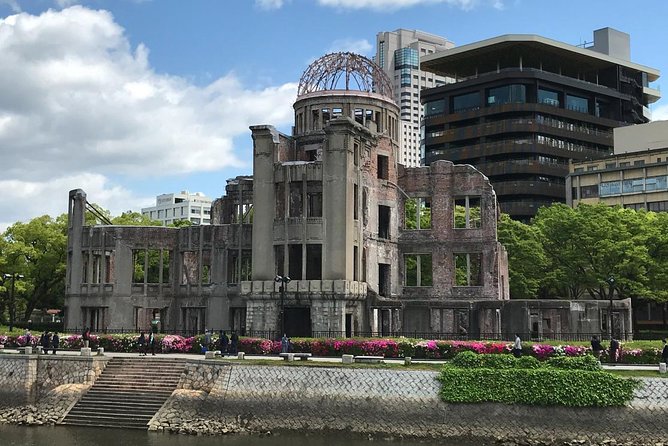
Next is a quick stop near the Atomic Bomb Dome for pictures and reflection. The timing is around 10 minutes, which means you should decide before you arrive how you want to use that time.
If you want a clean photo, you will likely need to stay alert and move with the group. If you want a moment of quiet, you can do that too, but you cannot linger long. The guide’s commentary helps you keep the stop meaningful without turning it into a rushed blur.
This is a very “you are here” kind of moment. You are not just reading history from a book. You are standing in the physical place where people remember what happened, and that is why the stop matters.
Even if you have seen images before, the scale and the setting can hit differently in person. I think the bike format makes it easier here because you are arriving with mental momentum, not arriving out of breath from a long walk.
Same corner of Japan, a different kind of day:
- Peaceful Hiroshima & Miyajima UNESCO 1 Day Bus Tour
★ 5.0 · 5,309 reviews - Hiroshima: Hiroshima and Miyajima UNESCO Sites 1-Day Tour
★ 4.9 · 2,330 reviews - Hiroshima / Miyajima Full-day Private Tour with Government Licensed Guide
★ 5.0 · 1,298 reviews - Hiroshima Historical Walking Tour – Why A-Bomb was Dropped
★ 4.8 · 893 reviews
Hiroshima Castle Courtyard Ride for Up-Close Views
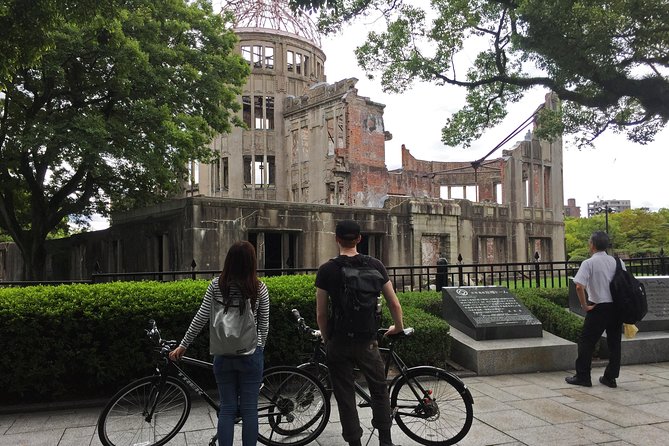
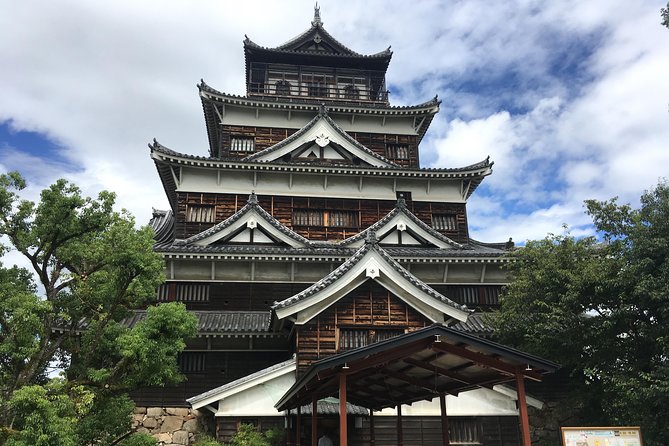
Then you shift from reflection to views at Hiroshima Castle. The bike ride connects you to the castle area while still keeping the pace comfortable.
This stop is about 25 minutes, which is enough time to get closer to the castle and take photos from different angles. The guide also adds history context during the visit, so you are not just looking at the structure. You are learning how people describe its story in Hiroshima today.
One advantage of arriving by bike is that you can get the “arrival experience” without spending extra energy. You can keep your legs fresher for standing, walking the grounds, and taking the shots you actually care about.
If you are the type who likes architecture photos, this is a good segment to focus on. If you prefer more quiet stops, you can still use the time to step back and absorb the surroundings for a few minutes at a time.
Shukkei-en Garden: Balance of Japanese Gardens (Admission Included)
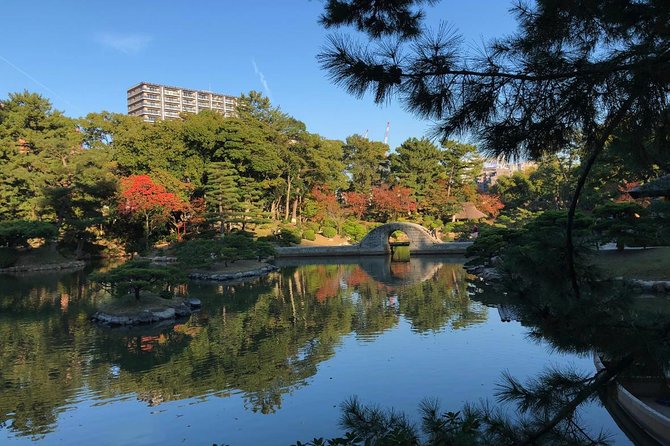
Stop 4 is Shukkei-en, and it is where the tour gets a calmer, greener mood. This segment lasts about 25 minutes, and the big practical detail is that admission is included in the tour.
Here, the guide talks about Japanese gardens, especially the idea of balance and how the design is constructed. Even without knowing the vocabulary ahead of time, it is easy to follow along because the guide points you toward what to notice.
The ride ending near a garden space also helps your brain reset. You go from monuments and history-focused stops to a setting that asks for slower observation. That contrast is one reason this tour can feel complete, not just “busy.”
This is a strong choice if you want your Hiroshima day to include more than one kind of experience. It is also a good fit if you are traveling with teens or adults who enjoy variety, not only solemn sites.
How the Guides Like Ihsan, Awais, Melissa, James, Yuki, and Levi Shape the Day
The guide can make or break any short tour, and this one leans heavily on the host’s ability to explain without rambling. In recent departures, guides like Ihsan and Awais have been praised for being friendly, careful with safety, and able to answer questions without making the group feel pressured.
Other guides also show up in people’s experiences, including Melissa, James, Yuki, Levi, and Amy. Across these different names, the recurring strengths are consistent: clear communication in English, a steady pace, and stories that connect what you see to why it matters.
One practical detail I like: guides explain hand signals and often take time to help with bike fit. You will also often find that the guide will help with photos, which saves you from constantly asking strangers to take pictures.
You should know the guides vary by day, but the style seems designed for small-group touring. With max 8 riders, you are less likely to be left behind, and more likely to get a helpful answer when you ask a question.
Pace, Safety, and the Reality of Frequent Stops
This tour is not a long ride where you just pedal through town and look out the window. You stop often, sometimes to dismount for a short walk or for a photo moment, then remount and roll again.
Some reviews note that there is more getting on and off than expected, but the good news is that this is understandable for timing and for safe viewing at each stop. If you have mobility constraints, this is worth keeping in mind. The tour is described as suitable for most travelers, but it is still an active experience with multiple stop-and-go moments.
The timing also matters. You have a 3 to 4 hour window, which means the guide needs to keep things moving. The best part is that the pace is described as steady and not rushed, even with lots of explanation.
Safety-wise, you get helmets and organized group cycling. The guides provide hand signals, and the group stays together enough that you are not constantly negotiating your own route.
If you want to maximize enjoyment, come with a calm expectation: this is a thoughtful, guided morning, not a casual ride where you control every second.
Bikes, Electric Options, and Who Should Choose What
Regular bikes are part of the included package, along with a helmet. For many people, that is all you need.
However, there is an electric bike option for those who want extra help on longer effort or if you are not feeling your strongest that morning. In one set of experiences, people mention an extra fee for e-bikes and that availability can be limited, so it is smart to plan ahead if you think you want one.
If you are fit and comfortable riding a normal bike, you can likely stick with the standard option and enjoy the route at a steady speed. If you want to reduce fatigue, e-bike assistance may help you stay focused on the sights instead of fighting your own leg burn.
Also, keep the height guidance in mind. The tour is not recommended for child aged 12 and under, and it is not possible for riders under 140 cm. That is worth checking early so you are not disappointed on the day.
Price Check: Is $72.96 Good Value for This Half-Day?
At $72.96 per person, you are paying for a lot more than just bike rental. You are getting an English-speaking guide, a bike and helmet, bottled water, and a planned route that hits the main landmarks in one morning block.
The admissions picture is also helpful for value. During the tour, Peace Memorial Park, the Atomic Bomb Dome area, and Hiroshima Castle are listed as free for the activity’s access. Shukkei-en has an admission fee that is included in the tour price.
That means fewer add-on costs mid-day, and it reduces decision fatigue when you are already emotionally invested in the sights. It also helps if you are trying to keep your Hiroshima budget predictable.
In short, you are paying for time saved, context provided, and the convenience of bike setup. If you would otherwise spend money on multiple transport rides and still feel rushed walking between sights, this is the kind of day that can feel like a bargain.
What to Bring for a Smooth Hiroshima Morning Ride
Even with gear handled for you, your comfort is still on you. Wear comfortable shoes, and dress for the morning conditions since the experience is subject to weather.
You should also treat the tour as one that asks for attention at certain stops. Bring a charged phone or camera if photos matter to you, but do not let photography turn into the only goal.
Most of all, keep your expectations aligned with the structure: a small-group ride, short stops, and guided commentary. The tour works best when you give yourself permission to listen and pause.
If you prefer longer free time at each location, you may feel a bit compressed. On the other hand, if you like covering the essentials and leaving with context, this is a strong format.
Should You Book This Hiroshima Morning Bike Tour?
I think you should book if you want an easy, efficient way to see Hiroshima’s most important sights in one half-day, without missing context. The combination of bike access, small-group structure, and guided stops at places like Peace Memorial Park and Hiroshima Castle makes it a practical choice for first-timers.
Skip it if you strongly dislike active touring with frequent stops and remounting, or if you know you want a very strictly neutral tone while discussing World War II. Also, if height limits affect your group, check that before committing.
If you want a morning that balances movement with reflection, this tour is one of the cleanest ways to do it.
FAQ
How long is the Hiroshima in a Nutshell Morning Bike Adventure?
It runs about 3 to 4 hours.
What time does the tour start?
The start time is 10:00 am.
Where does the tour start and end?
It starts at Cycle Hiroshima, 4-chōme-5-4 Ōtemachi, Naka Ward, Hiroshima, and ends back at the same meeting point.
What is included in the price?
The tour includes an English-speaking guide, a bike and helmet, and bottled water.
Do I need to bring my own bike?
No. Bike and helmet rental are included, so you do not need to bring your own bike.
Which stops are included during the tour?
The stops include Hiroshima Peace Memorial Park, the Atomic Bomb Dome, Hiroshima Castle, and Shukkei-en.
Are admission tickets included for the sights?
Admission tickets are free for Hiroshima Peace Memorial Park, the Atomic Bomb Dome stop, and Hiroshima Castle. Shukkei-en admission is included.
How many people are in a group?
The tour has a maximum of 8 travelers.
Is the tour suitable for children?
It is not recommended for child aged 12 and under, and it is not possible for riders under 140 cm.
What if the weather is bad?
The tour is subject to weather conditions. If canceled due to poor weather, you will be offered an alternative date or a full refund.
What is the cancellation policy?
You can cancel for a full refund up to 24 hours before the experience’s start time.
Fresh options around Hiroshima
- The Peace Memorial and Beyond: A Half-Day around Hiroshima★ 4.9 · 12 reviews
- Hiroshima Saijo Sake Tasting Tour with visit to 3 Breweries★ 5.0 · 12 reviews
- Private Hiroshima Calligraphy: Create Your Own Kanji Art Souvenir★ 5.0 · 12 reviews
- Hiroshima:Private lacquer workshop experience tour(gift included)★ 5.0 · 13 reviews
- Sunset Walking Tour at Peace Park, Hiroshima★ 5.0 · 13 reviews
- Kimono and Calligraphy Experience in Miyajima★ 5.0 · 16 reviews
- Hiroshima Peace Memorial Park: A Guided Tour★ 4.9 · 16 reviews
- History of Hiroshima: Small Group Night Walking Tour★ 4.8 · 17 reviews
Cycling Tours, compared.
3h Tokyo E-Bike Tour: Hidden Gems, and Local Life with guide
Read our review →
Arashiyama Bamboo Forest & Hidden Gems Bike Tour (Early Bird)
Read our review →
5 Top Highlights of Kyoto Full Day Bike Tour (E-bike option)
Read our review →Browse the lists this tour appears in