
Reviewed · CYCLING TOURS
Hiroshima: Peace Cycling Tour with Local Guide
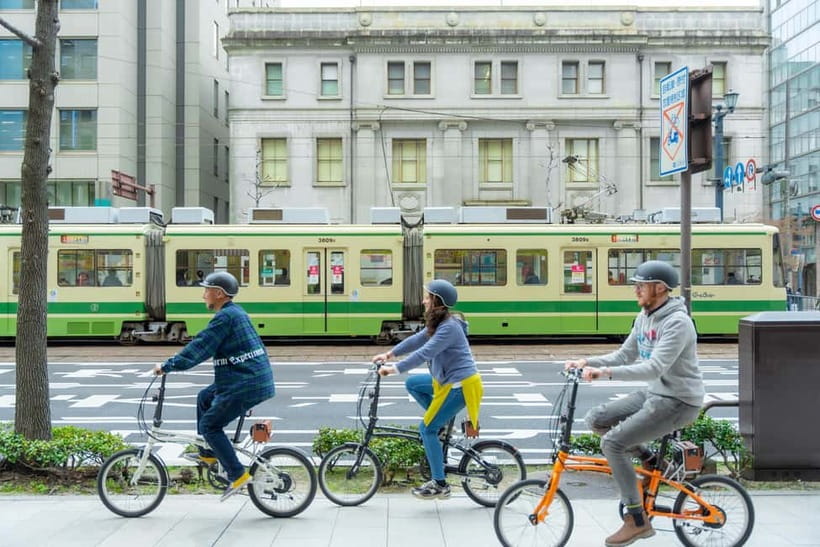
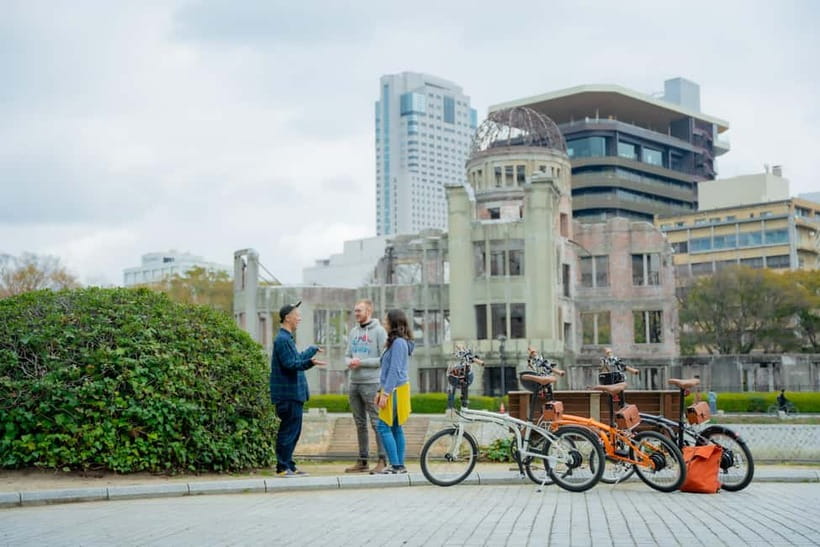
Pedal through Hiroshima’s memory. This electric bike tour is a practical way to cover key atomic-bomb locations while a local guide explains what the city felt like 70 years ago and what people carry in their hearts today. I especially like how the route mixes major landmarks with quieter places nearby, and how the guide’s personal family stories give the facts weight.
The biggest drawback is also the point: the subject matter is heavy. You should expect emotional moments, not a light sightseeing spin.
Key reasons this e-bike tour works
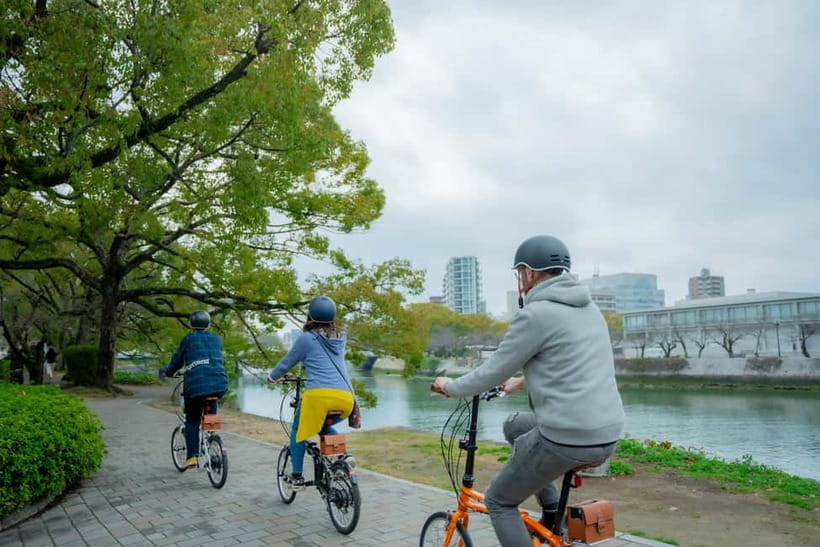
- Electric bikes make the route doable even if you are not a strong rider, and the distances stay manageable.
- Local guides bring lived perspective, with family connections that turn monuments into people’s memories.
- You see more than the Peace Park, including townscape areas outside the most touristed zone.
- You get a tight, guided flow of stops, so you do not waste time figuring out what matters where.
- Photo data is shared after the day, so you can focus on the ride and the explanations.
- The pace adjusts for mixed cycling comfort, since the tour can include people less used to cycling.
Entering the Peace story by e-bike, not by bus or feet
Hiroshima rewards slow looking. But walking alone can turn into a stop-start shuffle, especially if you want context beyond the Peace Memorial Park. This tour uses comfortable electric bikes so you can move smoothly from one setting to the next without burning your energy before you reach the most meaningful parts.
You also get a different kind of understanding. When you cycle, you notice street layouts, river bends, bridge approaches, and how neighborhoods connect. That matters in Hiroshima, because the impact of the bombing is not one flat picture. It is a city-scale event, and the rebuilt city sits right on top of what came before.
More Bike Tours in Hiroshima
- Hiroshima in a Nutshell: Morning Bike Adventure
★ 5.0 · 524 reviews - Hiroshima 2hr Peace Cycling Tour with Local Guide
★ 5.0 · 321 reviews - Hiroshima and Miyajima by Bike and Boat
★ 5.0 · 172 reviews
Meeting point near the Peace Memorial Park, then rolling into the day
The meeting spot is the Rest House at Hiroshima Peace Memorial Park. Getting there is straightforward: take the Hiroshima Electric Railway from Hiroshima Station to Atomic Bomb Dome Station, then walk about five minutes.
From that starting point, the tour quickly sets expectations. You are not just visiting attractions. You are learning what these places mean to people who grew up here. In the small group setup, you also get room to ask questions, not just listen and move on.
The 2-hour course: Peace Memorial Park plus the A-bomb streetcar story
If you have limited time, the 2-hour course gives you a focused arc. You start at the Peace Memorial Park area, then you move through nearby city scenes and A-bomb-linked sites, finishing back at the meeting point.
Peace Memorial Park, monuments and the Atomic Bomb Dome view
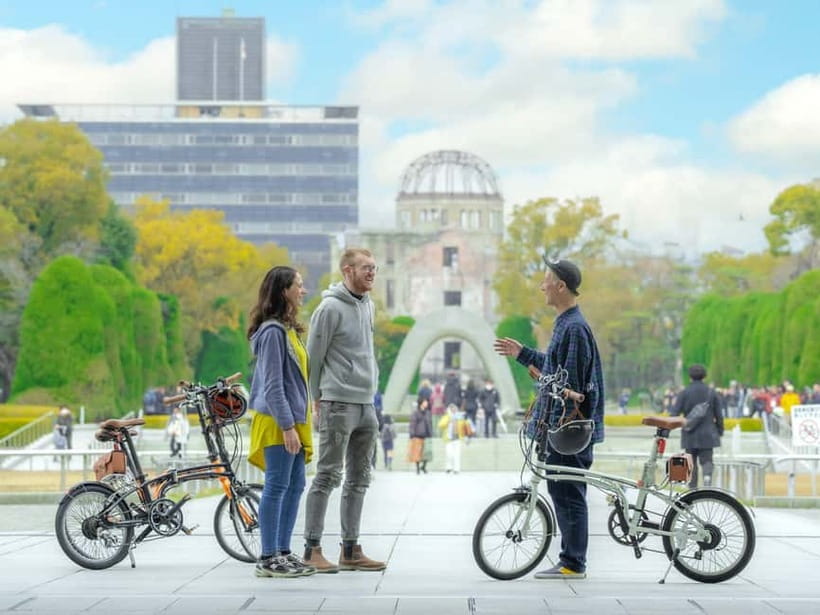
At the Peace Memorial Park stop, you get the foundation: what the monuments are meant to hold, what the Atomic Bomb Dome symbolizes, and how the bombing changed Hiroshima. The tour also frames the scale in a way that helps your brain place distance, noting that the area within about 2.5 km of the hypocenter was badly damaged.
This is where you slow down, because the guide’s goal is not just facts. It is memory. You will hear how people talk about the Peace Park today, including the emotional weight behind the messages, memorials, and the idea of peace after such destruction.
What to watch for: look past the obvious postcards. The guide points out details that connect the park to everyday life, not only to a single moment in time.
Same corner of Japan, a different kind of day:
- Peaceful Hiroshima & Miyajima UNESCO 1 Day Bus Tour
★ 5.0 · 5,309 reviews - Hiroshima: Hiroshima and Miyajima UNESCO Sites 1-Day Tour
★ 4.9 · 2,330 reviews - Hiroshima / Miyajima Full-day Private Tour with Government Licensed Guide
★ 5.0 · 1,298 reviews - Hiroshima Historical Walking Tour – Why A-Bomb was Dropped
★ 4.8 · 893 reviews
Surviving A-bomb streetcars, and why one still matters
Later, the tour shifts to a different kind of evidence. You hear about the A-bombed streetcars, including the point that one train is still running today. This stop is powerful because it shows continuity. Hiroshima did not only rebuild buildings. It rebuilt movement, routine, and the habit of going somewhere tomorrow.
Some guides have also been known to link the streetcar story to the famous 653 tram car, which gives you a concrete object to picture when you are listening.
Possible drawback: if you want every landmark at maximum depth, this shorter course may feel like a strong highlight reel. It is still meaningful, just more time-efficient than exhaustive.
The 3-hour route: from Hiroshima Castle to the Red Cross Hospital area
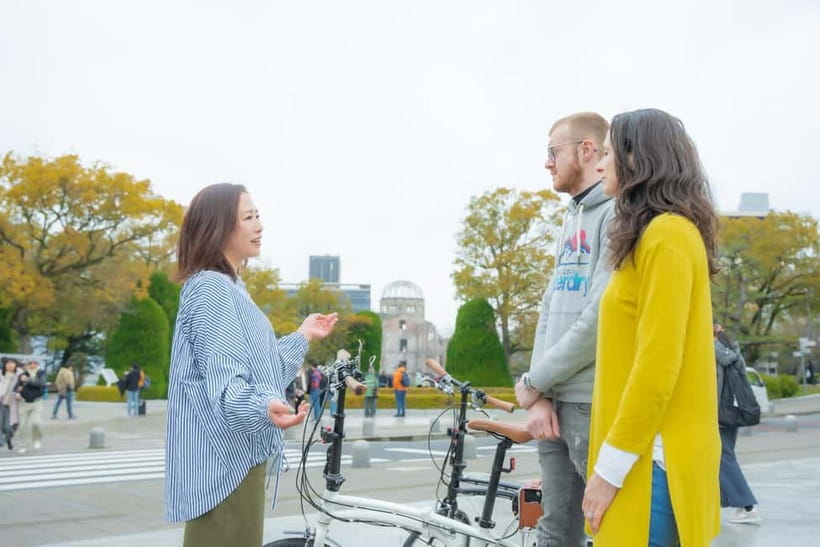
The 3-hour course is for you if you want the broader map of the central city and river crossings. It also gives more chances to feel the neighborhood layout, because you weave through multiple connected sites rather than sticking closely to one cluster.
The route includes landmarks such as Hiroshima Castle, Gokoku Shrine and its gate, Hiroshima Central Park, then key bombing-era markers like Aioi Bridge and the Atomic Bomb Dome. After that, you follow the Motoyasu River area via bridges, then continue to spots like Higashisenda Park, Hiroshima Red Cross Hospital, the Hiroshima Railway area, Miyuki Bridge and Kobayashi River, the Surviving Weeping Willow Tree, and finally Peace Boulevard.
Hiroshima Castle and the shrine gate, getting your bearings fast
Starting with Hiroshima Castle and the nearby shrine area can seem like a detour if your only goal is the bombing story. But it works. You get a sense of city identity and how the area functions as a living place, not only as a memorial landscape.
You also learn why remembrance and local pride can coexist. Hiroshima did not stop being Hiroshima in 1945, and the route keeps returning to that idea in small ways.
Central Park and the river-and-bridge geography of the tragedy
When you reach Aioi Bridge and then head toward the Atomic Bomb Dome, the city geography clicks. Bridges are where movement funnels. Rivers are where visibility changes. From these angles, you can better understand why the event affected specific routes and sections so strongly.
Then the tour follows the Motoyasu River via the Peace Bridge and continues through other nearby parks and river connections. This is one of the tour’s strengths. It helps you picture what it would have been like to move through those crossings on a normal day, and what would have been different after.
Atomic Bomb Dome, the “why” behind the most photographed landmark
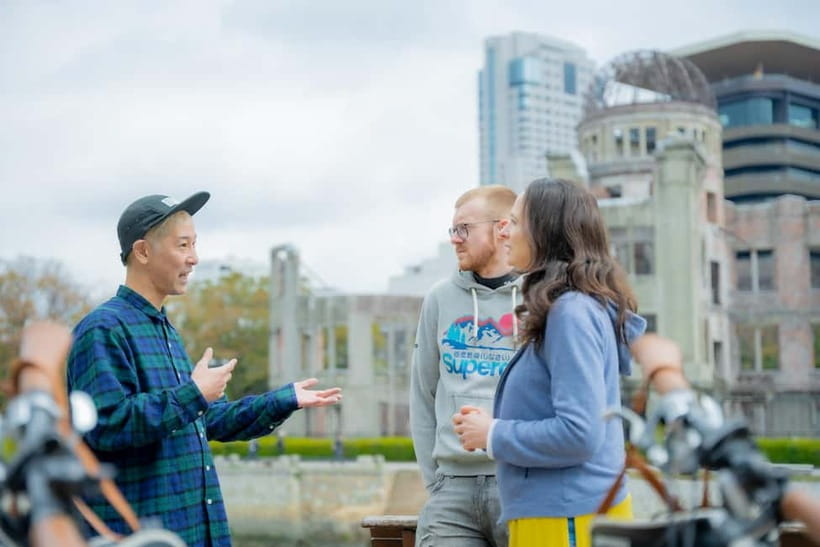
Yes, you will see the Atomic Bomb Dome. But you will also get help reading it. The guide connects what you are looking at to the immediate power of the bombing and the human aftermath that followed.
In the small-group setting, you can pause when it hits you. That is important here. Some guides also keep the tone balanced, explaining the destruction clearly while pointing out how Hiroshima rebuilt, planted, and carried forward lessons about peace.
Higashisenda Park and Hiroshima Red Cross Hospital, where survival meets response
Stops like Higashisenda Park and Hiroshima Red Cross Hospital shift the story from monuments toward people and services. You learn how medical efforts and community responses fit into what survivors faced, and you hear how these sites became part of the long memory people share.
Why it’s valuable for you: a tour that only shows buildings can leave your mind stuck in images. These stops move the story toward human action and consequence.
Railway connections and the surviving weeping willow
The route includes the Hiroshima Railway area and ends up at the Surviving Weeping Willow Tree. These are not just “cool photo stops.” They are about what endured when so much else did not, and how the city now uses those survivors as quiet reminders.
A surviving tree is hard to describe until you see it with context. You tend to notice small details, like how people stand around it, how it fits into its surroundings, and why the guide chose this spot for a stop.
Peace Boulevard, the closure feeling
Finishing at Peace Boulevard gives you a natural end point. It feels like the tour is pulling you toward the message the city wants to carry forward. By the time you are back at the meeting point, the day has gone from 1945 events toward what Hiroshima is still saying today.
The guides are the real engine: family stories and respectful pacing
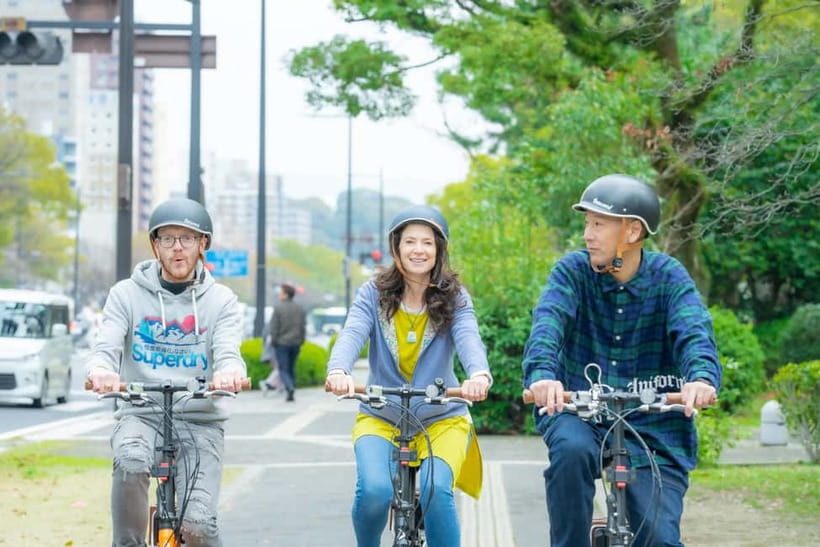
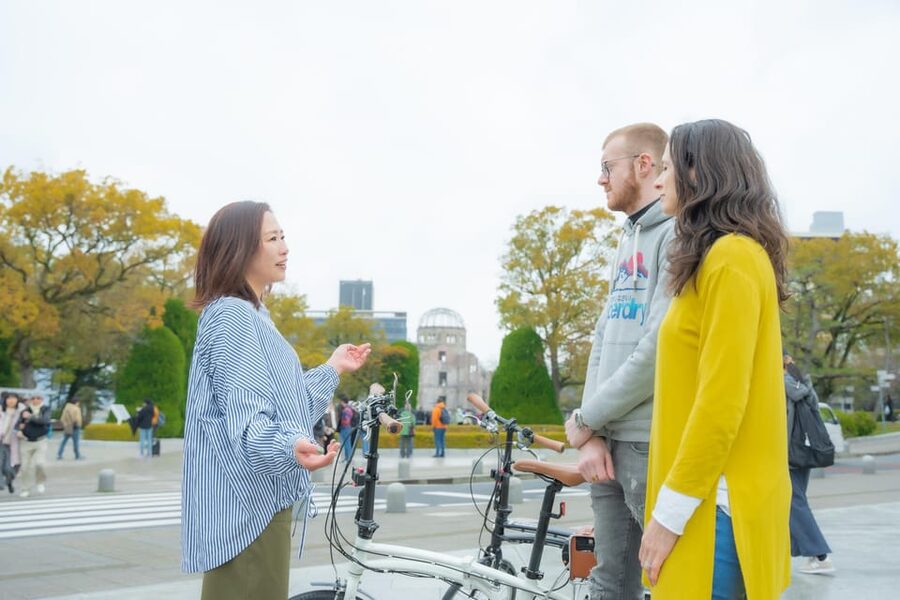
This is the part that most often shows up as the reason people rate this tour so highly. Guides such as Shin, Kana, Moe, Mai, Bella-Kana, Tomas, and Hugo have been praised for combining English explanations with personal connection. In many cases, the guide’s family ties to Hiroshima’s bombing story are part of the narrative, which makes the information feel less like a lecture and more like testimony.
I also like the way guides often balance emotion and hope. You still get the harsh truth. Then you hear how people here learned to live with it and why peace education matters in everyday life, not only in ceremonies.
Watch for: some guides bring extra practical care for comfort, especially in hot or changeable weather. For example, guides have been described with cooling items like salt candies, wet wipes, ice packs, or even UV shade when needed.
What this tour feels like on the road: safety, comfort, and practical tips
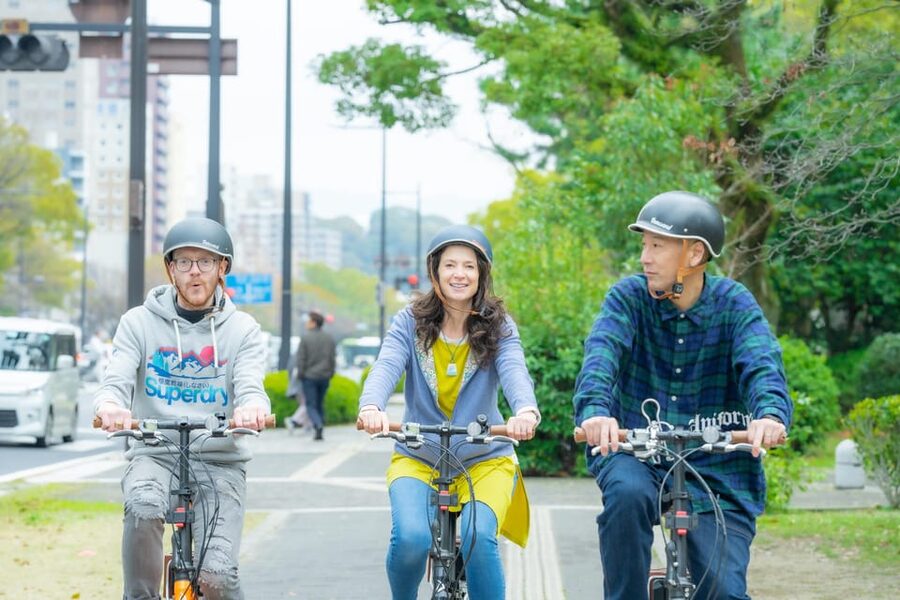
You ride electric bicycles, so your legs get a break. That said, you still need to be a confident rider enough to handle normal traffic patterns and stops. The tour also works as a shared group, up to 10 participants, so the guide may adjust pace if someone is less used to cycling, including children.
For gear, keep it simple. Bring comfortable shoes, a towel, and drinks. You are not given food, so plan on your own snack strategy before or after. A lot of people find that having water in hand keeps the emotional parts from being harder than they need to be.
There are also a couple of clear clothing notes:
- Avoid high-heeled shoes
- Wear comfortable clothes you can move in
Price and value: what $52 buys you in Hiroshima
At about $52 per person for a 2-3 hour tour, the value comes from what you get included. You receive bicycle rental, an English-speaking local guide, and insurance for bicycle accidents. You also get photo data after the day, which is handy when you are more focused on listening than taking selfies.
What is not included is food and drinks. So the true cost for you depends on how you plan snacks and water. If you arrive prepared with water and a simple plan for meals, the price feels fair for a guided experience that blends major sites with surrounding neighborhood context.
Who should book this Hiroshima Peace Cycling Tour
This tour fits you if you want:
- A serious, guided Hiroshima experience that goes beyond just seeing the Peace Park
- A practical way to cover multiple sites without exhaustion, thanks to e-bikes
- Clear English explanations paired with a human voice, often including family connection
It might be less ideal if you:
- Need a fully accessible, zero-cycling experience (because you do ride)
- Are very short on time and want a long list of stops, since this is built around key themes and manageable distances
- Prefer only light, sightseeing stories, because this tour is designed to treat the bombing with seriousness
Should you book this Peace Cycling Tour
I would book it if Hiroshima is on your list and you want both structure and heart. The combination of electric bikes, an English local guide, and the way the route connects monuments to neighborhoods makes it more than a checklist.
If you can handle a heavy topic and you are comfortable cycling for a couple of hours, this is a strong choice. Just bring water, wear good shoes, and be ready to let the story slow your day down.
FAQ
How long is the Hiroshima Peace Cycling Tour?
The tour runs for 2 to 3 hours. It operates as different route options, with a shorter 2-hour plan and a longer 3-hour plan.
What is included in the $52 price?
The price includes rental bicycles, an English-speaking guide, and insurance for bicycle accidents. Photo data from the day is also provided.
Is the guide available in English?
Yes. This is an English guided tour.
Where do I meet the tour?
Meet at the Rest House of Hiroshima Peace Park. From Hiroshima Station, take the Hiroshima Electric Railway to Atomic Bomb Dome Station, then walk about five minutes.
Is food or drinks included?
No. Food and drinks are not included, so plan to bring your own drinks.
What should I bring and wear?
Bring comfortable shoes, a towel, drinks, and comfortable clothes. High-heeled shoes are not allowed.
Are there height requirements for the electric bikes?
Yes. The adult electric bike is for riders who are 145 cm or taller. Kids have specific options and limits depending on weight and height, and it is best to contact the provider if your child does not fit the stated ranges.
Can I cancel, and what if I am late?
Cancellation is free up to 24 hours in advance for a full refund. If you are late for the meeting time without prior notice, the tour will be cancelled and a 100% cancellation fee will apply on the day of the tour.
Fresh options around Hiroshima
- The Peace Memorial and Beyond: A Half-Day around Hiroshima★ 4.9 · 12 reviews
- Hiroshima Saijo Sake Tasting Tour with visit to 3 Breweries★ 5.0 · 12 reviews
- Private Hiroshima Calligraphy: Create Your Own Kanji Art Souvenir★ 5.0 · 12 reviews
- Hiroshima:Private lacquer workshop experience tour(gift included)★ 5.0 · 13 reviews
- Sunset Walking Tour at Peace Park, Hiroshima★ 5.0 · 13 reviews
- Kimono and Calligraphy Experience in Miyajima★ 5.0 · 16 reviews
- Hiroshima Peace Memorial Park: A Guided Tour★ 4.9 · 16 reviews
- History of Hiroshima: Small Group Night Walking Tour★ 4.8 · 17 reviews
Cycling Tours, compared.
3h Tokyo E-Bike Tour: Hidden Gems, and Local Life with guide
Read our review →
Arashiyama Bamboo Forest & Hidden Gems Bike Tour (Early Bird)
Read our review →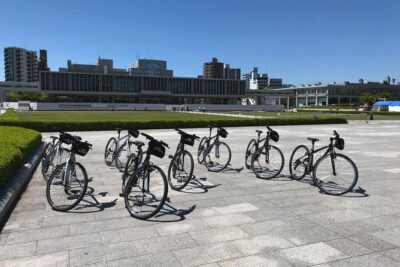
Hiroshima in a Nutshell: Morning Bike Adventure
Read our review →Browse the lists this tour appears in