
History weighs heavy here. I love the small-group pace, and I love how the tour builds meaning step-by-step, from the UNESCO-listed Atomic Bomb Dome to the moments that honor victims and point toward peace. The drawback is simple but real: this is an emotional route, and it is not a good fit if you have heart problems.
You’ll follow an expert-led walking plan through the Hiroshima Peace Memorial Park, stopping at key memorials, cenotaphs, and monuments, with time for questions along the way. Guides I’ve seen leading this tour, including PhD scholar Ghani and guides like Sheraz, tend to keep the facts clear while staying respectful of the setting. Expect a solemn walk, good context, and practical museum time built into the route.
Key moments that make this tour worth your time
- Atomic Bomb Dome focus: you see it with context, not just a photo spot
- Cenotaph tributes: the names and symbols matter, especially at the A-bomb Victims Cenotaph
- Peace Bell moment: ring the bell as a lived symbol of hope for world peace
- Sadako Sasaki and the thousand paper cranes: the Children’s Peace Monument connects loss to resilience
- Museum with guide framing: exhibits, artifacts, and survivor testimonies feel less overwhelming
- Peace Park route in 2 hours: you hit the major points without rushing the important ones
Why Hiroshima’s Peace Park works best with a guide and a clock
Hiroshima is full of memorials, and at first glance they can blur together. A guided walk helps you sort what each site is saying, and when it belongs in the larger story of 1945 and the years after. You are not just sightseeing. You are learning how the city holds memory in public space.
This tour is timed for real-world pacing too. At 2 hours, you can cover the core sites inside Hiroshima Peace Memorial Park while still having time to stop, listen, and ask questions. The group is limited to 10 participants, which is a big deal here because you do not want a loud, crowded Q and A during a memorial visit.
More Walking Tours in Hiroshima
- Hiroshima Historical Walking Tour – Why A-Bomb was Dropped
★ 4.8 · 893 reviews - Hiroshima Peace (Heiwa) Walking Tour at World Heritage Sites
★ 5.0 · 872 reviews - Hiroshima City 4hr Private Walking Tour with Licensed Guide
★ 5.0 · 437 reviews
Meeting at the Cenotaph for A-bomb Victims: the tone is set early
You start at the Atomic Bomb Dome area, in front of the Cenotaph erected by volunteers of Hiroshima Prefecture Chiho Lumber Co., Ltd. That first stop matters because it anchors the whole experience in remembrance. The guide sets expectations for a respectful visit, then you move into the park with the right mindset.
One thing I appreciate about starting here is that it prevents a common mistake. If you jump straight to the famous landmark, you might treat it like a monument for photos only. Starting with the tributes makes the rest of the walk feel connected and purposeful.
Atomic Bomb Dome and the nearby time markers
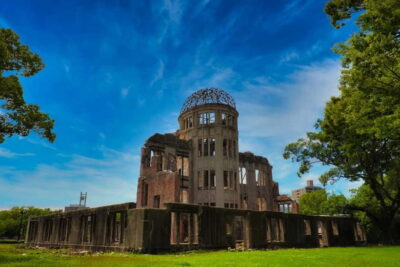
Next up is the Atomic Bomb Dome, with a guided segment designed to give you a clear sense of why this structure became an international symbol. It is listed as a UNESCO World Heritage Site, and the tour uses that status as more than a label. You get the human and historical weight behind the sight.
From there, you pass through additional key points that act like wayfinding for the story. You also spend time at the Clock Tower of Peace. The guide’s job here is not to make the timing feel like a lecture, but to help you understand how Hiroshima organized its public memory.
Practical note: the park walk involves short distances, but it still adds up. Comfortable shoes are not optional.
Ring the Peace Bell and honor victims at multiple cenotaphs
The Peace Bell stop is one of the most memorable parts of the route. You get to ring the bell, a simple action with a serious meaning: hope and world peace. It is the kind of moment that feels personal even when you are surrounded by others.
The itinerary also includes cenotaphs dedicated to different groups of victims. You visit the Korean Atomic Bomb Victims Cenotaph, and you also stop at the Hiroshima Victims Memorial Cenotaph. These stops broaden the story beyond a single national perspective, and the guide frames why these memorials exist in the park.
A drawback to be aware of: these are solemn spaces. You’ll want to keep your phone put away more often than you might in a normal sightseeing day. The guide will help you read the symbols, so you can stay present.
Same corner of Japan, a different kind of day:
- Peaceful Hiroshima & Miyajima UNESCO 1 Day Bus Tour
★ 5.0 · 5,309 reviews - Hiroshima: Hiroshima and Miyajima UNESCO Sites 1-Day Tour
★ 4.9 · 2,330 reviews - Hiroshima / Miyajima Full-day Private Tour with Government Licensed Guide
★ 5.0 · 1,298 reviews - Hiroshima in a Nutshell: Morning Bike Adventure
★ 5.0 · 524 reviews
Children’s Peace Monument: Sadako Sasaki and the thousand paper cranes
One of the tour’s standout thematic stops is the Children’s Peace Monument. This is where the story shifts toward the children who were affected, and where you learn the narrative of Sadako Sasaki and the thousand paper cranes.
I like this moment because it gives you something to hold onto besides dates and damage. It connects memory to a specific, repeatable act of hope. Even if you already know parts of the story, hearing it in this park context makes the meaning harder to dismiss as distant history.
Inside Hiroshima National Peace Memorial Hall and the Peace Memorial Museum
The route includes the Hiroshima National Peace Memorial Hall, then moves into the Hiroshima Peace Memorial Museum. This pairing is smart. The Hall helps you place what you are about to see. Then the museum gives you the details through exhibits, artifacts, and survivor testimonies.
The museum segment is where the emotional weight can spike. It is also where a guide helps most. When a story is framed well, the visitor does not feel lost in the scale of it all. Instead, you start noticing themes: what people tried to understand, what the city chose to preserve, and how testimony turned into a public call for peace.
A practical strategy: if you plan to add extra time after the tour, decide whether you want the museum first for context or the tour first for structure. Either approach can work, and you’ll get more from whichever order matches your attention span that day.
Prayer Fountain, Gates of Peace, and the symbols of rebuilding
The tour continues past the Prayer Fountain, then ends at the Gates of Peace. These final stops are about closure, not closure in the emotional sense, but closure in the visitor sense. You start the walk with remembrance, you travel through the main memorial story points, and you finish at a place designed to feel like a turning toward the future.
The Peace Park symbols around the edges can be easy to overlook if you are walking on your own. With a guide, you learn how the city’s reconstruction and modernization sit alongside commemoration, rather than replacing it.
Also included on the tour are the Dr. Marcel Junod Memorial and the Norman Cousins Memorial Monument. You’ll see them as part of the memorial landscape the guide connects back to the broader theme of international peace efforts.
What you get for $23: value comes from focus and small-group control
At about $23 per person for a 2-hour route, the value is less about the price and more about what you buy: focus. A guide turns a long list of names and sites into a sequence you can remember. It also saves you from the guesswork of which stops matter most on a first visit.
Small group format helps here. With a limit of 10 participants, you can actually ask questions without feeling like you are holding up a crowded train station. In the experiences I saw people share, guides stayed patient with questions and kept the pace respectful, even when timing got a little messy.
Language support is another practical value point. The tour runs in English, Urdu, and Hindi, and you do not need to rely on your own guesswork to follow the story.
And yes, the tour skips the ticket line, which is useful because memorial-day crowds are real.
How to pack and pace yourself for a 2-hour memorial walk
This is a walking tour, and the park heat can be unpredictable. Bring what the tour recommends: water, sunscreen, a hat, and a camera if you want it. Most importantly, wear comfortable shoes. Even if the distances look short on a map, memorial sites often have uneven ground, stairs, and long moments where you stand and listen.
Also, come ready for emotion. The tour notes it can be an emotional journey, and that matches what the setting feels like. If you want to keep your day smooth, you might plan something lighter afterward, because this one tends to stick with you.
Finally, smoking is not allowed during the tour. Simple, but it helps keep the space respectful.
Who should book this Hiroshima Peace Park walking tour
This tour is a great fit if you:
- Are visiting Hiroshima for the first time and want the main memorial story in a structured 2 hours
- Like expert explanation, including time for questions
- Want to see the Atomic Bomb Dome and then understand what the other sites are doing in the peace movement
It is also a solid choice for people who want a walk that stays focused on meaning rather than just landmarks. If you are the type who reads signs and wants context, this will feel satisfying.
The clear avoid list is people with heart problems, since the tour involves walking and standing during memorial visits.
Should you book Walking Through History: Hiroshima’s Path to Peace?
Yes, if you want your Hiroshima visit to feel guided, coherent, and respectful. For $23, you get a tight 2-hour route through the key sites, plus museum framing and a chance to ring the Peace Bell and learn the Sadako Sasaki story tied to the Children’s Peace Monument.
I would not treat this as a quick photo lap. Book it when you can give it your full attention. If you do, you will leave with more than images. You’ll leave with a clearer understanding of how Hiroshima chose to remember, rebuild, and speak for peace in public space.
FAQ
How long is the Hiroshima walking tour?
The duration is 2 hours.
How much does the tour cost?
The price is $23 per person.
Where does the tour meet?
The meeting point is Atomic Bomb Dome in front of the Cenotaph erected by volunteers of Hiroshima.
Is there a live guide?
Yes, it is a live tour with an English, Urdu, and Hindi guide.
Is the tour small group?
Yes. The group size is limited to 10 participants.
Is this tour wheelchair accessible?
Yes, it is wheelchair accessible.
Can I skip the ticket line?
Yes, the tour includes skipping the ticket line.
What should I bring?
You should bring comfortable walking shoes, a hat, a camera, sunscreen, and water.
Is smoking allowed?
No, smoking is not allowed.
Who might not find this tour suitable?
It is not suitable for people with heart problems.
More Historical Tours in Hiroshima
- Miyajima Half-day Trip Historical Walking Tour
★ 5.0 · 284 reviews - Hiroshima: History of Hiroshima Group Walking Tour
★ 4.8 · 266 reviews - Hiroshima: Peace Walking Tour of World Heritage Sites
★ 4.9 · 190 reviews - Hiroshima: Miyajima Half-day Historical Walking Tour
★ 4.7 · 100 reviews
Fresh options around Hiroshima
- The Peace Memorial and Beyond: A Half-Day around Hiroshima★ 4.9 · 12 reviews
- Hiroshima Saijo Sake Tasting Tour with visit to 3 Breweries★ 5.0 · 12 reviews
- Private Hiroshima Calligraphy: Create Your Own Kanji Art Souvenir★ 5.0 · 12 reviews
- Hiroshima:Private lacquer workshop experience tour(gift included)★ 5.0 · 13 reviews
- Sunset Walking Tour at Peace Park, Hiroshima★ 5.0 · 13 reviews
- Kimono and Calligraphy Experience in Miyajima★ 5.0 · 16 reviews
- Hiroshima Peace Memorial Park: A Guided Tour★ 4.9 · 16 reviews
- History of Hiroshima: Small Group Night Walking Tour★ 4.8 · 17 reviews
Historical Tours, compared.
World Heritage Shirakawa-go and Experience Tours from Kanazawa
Read our review →
Imperial Palace and Shogun Historical Walking Tour
Read our review →
World Heritage Kyoto & Nara Uji Authentic Matcha Experience
Read our review →
Kyoto Gion: 2-Hour Geisha Culture & History Walking Tour
Read our review →
World Heritage Shirakawa-go Morning Guided Tour
Read our review →
Hiroshima Historical Walking Tour – Why A-Bomb was Dropped
Read our review →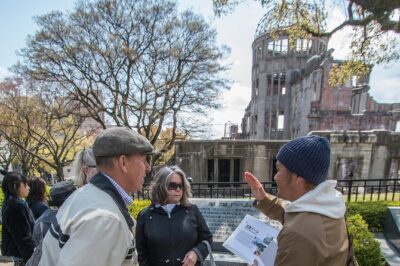
Hiroshima Peace (Heiwa) Walking Tour at World Heritage Sites
Read our review →Browse the lists this tour appears in