
Reviewed · WALKING TOURS
Hiroshima Walking Tour Why A Bomb was dropped to Hiroshima
Hiroshima hits hard, then points toward peace. This is a small-group walk that strings together Hiroshima Gogoku Shrine, Hiroshima Castle, the Peace Park area, and the Atomic Bomb Dome, with a local guide explaining what led to the bombing and what happened next. I love the way the route stays close enough to keep moving at a human pace, and I love how your guide turns famous landmarks into a clear story you can actually follow.
One thing to plan for: this tour is emotionally heavy, and you’ll spend time outdoors. If you get cold or sore feet easily, pack accordingly and bring water since it is not included. Also, remember the focus is the bombing’s impact, so the tone is respectful, not sightseeing-silly the whole way.
Why This Hiroshima Walk Feels Like More Than Site-Seeing
A Hiroshima museum visit can be powerful. But a guided walk does something different. It connects the dots in the order your brain needs, from the city’s spiritual and historical anchors to the precise locations tied to August 6, 1945.
You’ll start with Hiroshima Gogoku Shrine and Hiroshima Castle, then work toward the modern skyline near the Peace Memorial Park. That contrast matters. It helps you see how a city rebuilds, how memory stays in the street-level details, and how the message of peace is not just a slogan you read on a sign.
And because this is a small-group experience, you’re not stuck listening while a crowd shuffles past. You get room to ask questions, and the guide can answer in a way that matches your pace.
Key Points You Should Know Before You Go
- Small-group format: You keep the experience intimate, with a maximum size of 12 (and an absolute max of 15 listed).
- Clear WWII context: The guide explains why the bomb was dropped and what came after, in a way that feels organized.
- Signature Hiroshima landmarks: Hiroshima Castle (outside), Atomic Bomb Dome, Children’s Peace Monument, and memorial cenotaph stops.
- Mostly flat walking: The route is close-stop to close-stop, with plenty of photo opportunities.
- You end by the Peace Memorial Museum: The walk sets you up for what to absorb next.
- Guides set the tone: Many tours are led by friendly guides who mix respectful seriousness with human warmth.
More Walking Tours in Hiroshima
- Hiroshima Historical Walking Tour – Why A-Bomb was Dropped
★ 4.8 · 893 reviews - Hiroshima Peace (Heiwa) Walking Tour at World Heritage Sites
★ 5.0 · 872 reviews - Hiroshima City 4hr Private Walking Tour with Licensed Guide
★ 5.0 · 437 reviews
Starting at Hiroshima Gokoku Shrine, Then Getting Your Bearings
The tour begins at Hiroshima Gokoku Shrine, where you’ll take about 20 minutes to soak in the calm setting and the shrine’s role in protecting the Hiroshima domain. Even if you’re not a shrine person, this stop helps you understand the local backdrop. Hiroshima wasn’t just a target in 1945. It was a functioning city with its own traditions and community life.
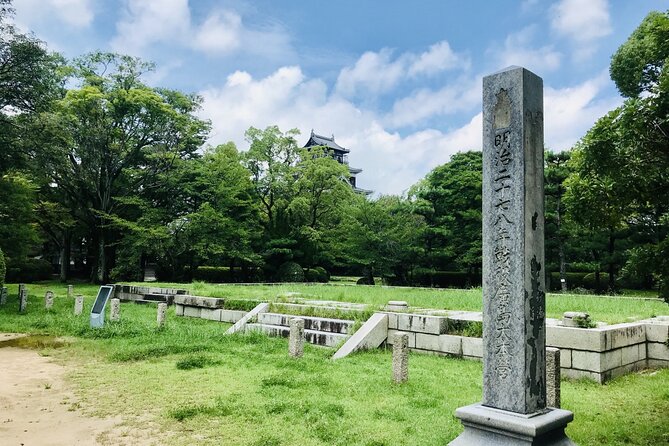
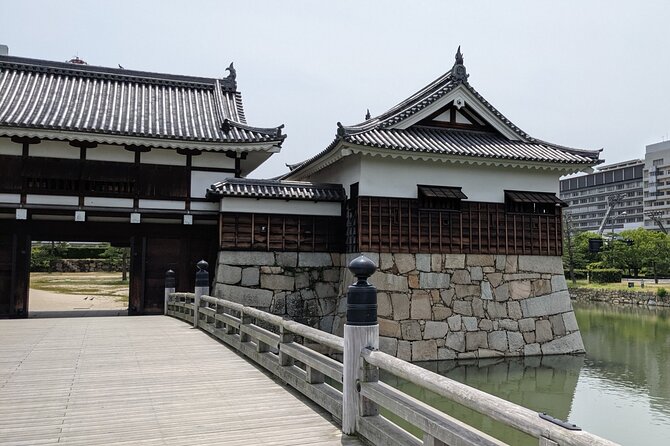
Then you move into Hiroshima Castle, often called Carp Castle. You’ll spend about 20 minutes here, and it’s mainly about the grounds, not going inside. Built in the 1590s as the home of the daimyō of the Hiroshima han, the castle gives you a sense of how long Hiroshima has been a center of regional identity.
Practical tip: take a few photos early. Later, you’ll be spending time near the memorials where it helps to have your earlier shots as context.
Hiroshima Castle Grounds Give You the Historical Anchor
I like this choice of stop because it avoids the common mistake of starting the day only at the tragedy. The castle grounds act like a “before” picture.
You’ll get a quick grounding in why Hiroshima mattered strategically and culturally long before WWII, and that makes the later memorial stops hit harder in a good way. When you understand the city, you can understand the loss.
A possible drawback: if you only want pure WWII content, this first stretch may feel like setup. But for most people, it makes the rest of the walk land with more meaning.
A Short Break at Hiroshima Green Arena and Orizuru Tower
The middle of the route includes a stop at Hiroshima Green Arena (also described as Hiroshima Prefectural Sports Center). Expect it to be more of a pacing and city-context stop than a deep-dive site. It also helps break up the walk, and it’s another chance to see Hiroshima as a living place, not only a memorial.
Next comes Orizuru Tower. This is a modern addition opened in 2016, a 13-story building located right next to Hiroshima Peace Memorial Park. Even if you don’t know anything about it going in, it’s a good reminder that this area is not only about the past. It’s where the city’s present meets its remembrance.
Practical tip: if you’re photographing around Peace Memorial Park later, you’ll thank yourself for having already checked your camera angles and comfort level.
Same corner of Japan, a different kind of day:
- Peaceful Hiroshima & Miyajima UNESCO 1 Day Bus Tour
★ 5.0 · 5,309 reviews - Hiroshima: Hiroshima and Miyajima UNESCO Sites 1-Day Tour
★ 4.9 · 2,330 reviews - Hiroshima / Miyajima Full-day Private Tour with Government Licensed Guide
★ 5.0 · 1,298 reviews - Hiroshima in a Nutshell: Morning Bike Adventure
★ 5.0 · 524 reviews
Atomic Bomb Dome: Where the Story Gets Specific
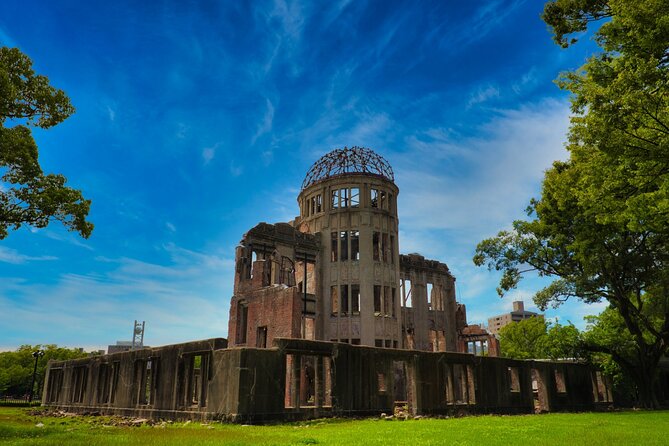
Then you reach the Atomic Bomb Dome, about 20 minutes of focused time. It’s described as the Hiroshima Prefectural Industrial Promotion Hall, and it sits near the blast’s epicenter. That location is the point. The Dome isn’t just an object you pass by. It’s tied to the exact moment the city’s story changed forever.
This is one of the stops that tends to make people go quiet. That’s normal. A good guide keeps the tone respectful and clear, so you understand what you’re seeing without turning it into a performance.
If you want to get the most from this stop:
- slow down your photos
- listen for the “why” and “what changed” parts of the explanation
- ask one question if something feels unclear
Children’s Peace Monument and the Power of Personal Meaning
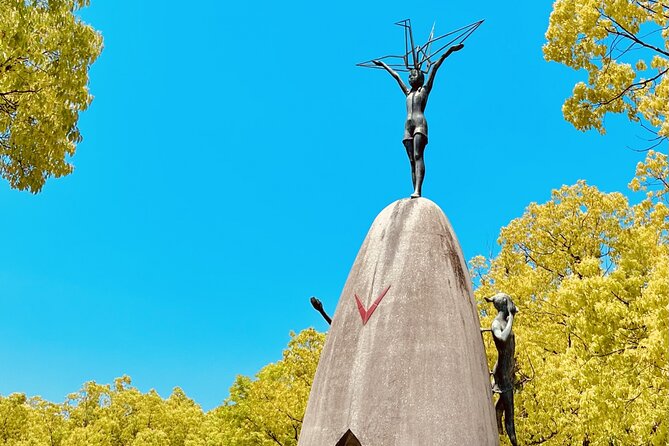
From there, you’ll visit the Children’s Peace Monument for about 10 minutes. The monument commemorates Sadako Sasaki and the child victims of the atomic bombing of Hiroshima, inspired by Sadako’s story.
This stop matters because it shifts the scale. WWII history can become abstract if you only hear it as dates and strategy. The Children’s Peace Monument turns it back into people, and especially into the young.
A quick note for families: this is often where kids start understanding that the memorial is not only for adults studying history. It’s for human beings who deserved a future.
Hiroshima Victims Memorial Cenotaph: Remembering the August 6, 1945 Loss
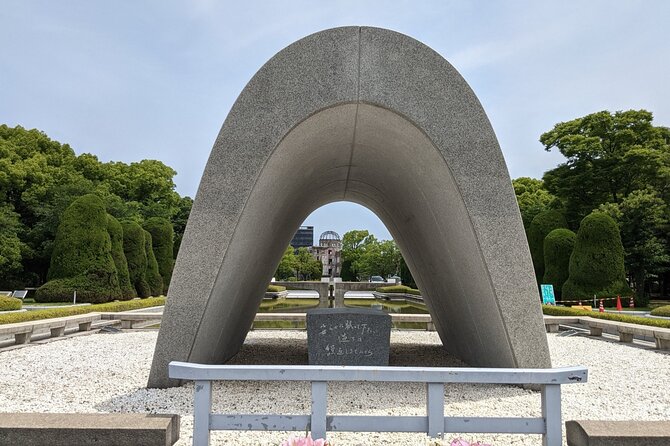
The walk continues into Peace Memorial Park with the Hiroshima Victims Memorial Cenotaph, about 30 minutes. This cenotaph is dedicated to the memory of the victims of the atomic bomb dropped on Hiroshima on August 6, 1945, and it’s located near the epicenter area.
This is the longest “quiet reflection” chunk of the tour. A good guide will explain what the site is for, but they’ll also give you room to look. If you rush, you miss what makes these memorial spaces different from regular tourist attractions.
If you’re sensitive to emotional content, come prepared. Bring a calm mindset. You don’t need to force yourself to feel anything specific. Just let the facts and the setting do their work.
Finishing at Peace Memorial Museum: What to Do Next
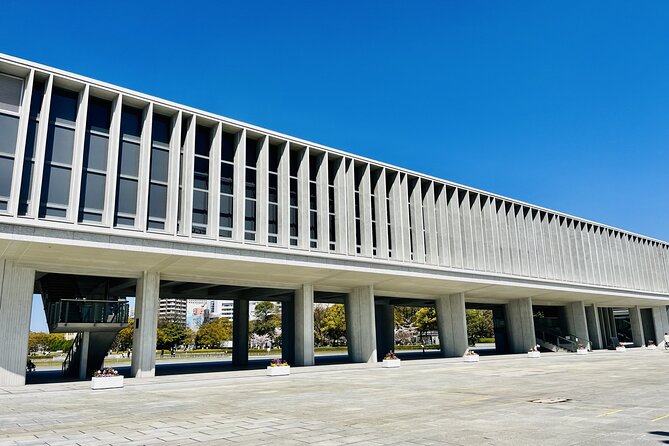
The tour ends in front of the Peace Memorial Museum (right near where you finish). Many people treat the walk as the story setup, then use the museum as the deeper source.
I like this finishing style because you’re not trying to process everything in a single place. The walk gives context. The museum gives details. Together, they help you build a full picture.
Practical tip: if you’re continuing into the museum, take a moment after the tour to refocus your energy before you go in. It can be a lot all at once.
Price and Value: Is $28 Worth It?
At $28 per person for a roughly 2 hours 30 minutes walk, this is priced like a focused guided experience, not a “grab your phone and walk” route. The big value kicker is that all fees and taxes are included, and the listed admission tickets at stops are free.
You also get:
- a small-group setting (maximum 12, with an absolute max of 15 listed)
- guide-led explanations about why the bombing happened and its lasting impact
- multiple landmark stops that would be harder to connect into one clear story on your own
What is not included: bottled water. That’s your only easy add-on to plan for. Bring a bottle or grab one nearby.
Is it worth it if you already read about Hiroshima? Yes, if you want your questions answered and your understanding organized. You can absolutely do Hiroshima solo, but you’ll likely miss some of the cause-and-effect framing that a guide provides.
Pacing, Comfort, and Photo Timing
The route is described as mostly flat, with stops close together, which helps keep the walking manageable over the full 2h30. You’ll also have time at the sites for photos, plus chances to ask questions.
A few small comforts that show up in real-world guiding:
- the guide uses visual aids like pictures and maps
- explanations come in short, digestible segments
- the pacing is built for the full duration, so you’re not sprinting from one emotional moment to the next
I also recommend dressing for weather. One tour experience on a very cold January day still felt enjoyable, which suggests the guides handle conditions well. Still, you should bring layers, especially if you tend to get stiff standing around.
What Makes the Guides Matter Here (Chihiro, Thomas, Katya, and More)
The most praised part of this tour is the human delivery. Guides like Chihiro, Thomas, Katya, Emi, and Chisa show up in different departures, and the pattern is consistent: you get clear explanations, a warm personality, and the ability to make the history understandable without turning it casual.
You may also notice guides include small personal perspectives, which helps the information feel less like a lecture and more like someone carefully sharing something they care about.
One more plus: some guides bring humor in the right spots. Not to make light of tragedy, but to keep the day from becoming unbearable.
Who Should Book This Hiroshima Walking Tour
Book it if you:
- want a guided, respectful overview of Hiroshima’s WWII story and aftermath
- prefer learning through walking between key landmarks
- like asking questions and getting direct answers
- want a small-group experience rather than a large bus-crowd day
It may not be the best fit if you only want very broad, fast sightseeing or if you need a lighter, less serious tone. This walk is purpose-built around the bombing and its lasting meaning.
Should You Book It?
Yes, if you want the most value from your limited time in Hiroshima and you care about understanding the “why” behind the bombing, not just seeing the famous sights.
I’d especially recommend it if you enjoy guided storytelling, want a structured route, and like the idea of ending at the Peace Memorial Museum with context already in your head. It’s one of those days where you learn, you look, and you leave with the city making more sense than when you arrived.
FAQ
How long is the Hiroshima walking tour?
It runs about 2 hours 30 minutes.
What is the price per person?
The price is $28.00 per person.
Where does the tour start and where does it end?
It starts at Hiroshima Gokoku Shrine (21-2 Motomachi, Naka Ward, Hiroshima). It ends in front of the Peace Memorial Museum.
How many people are in the group?
It is described as a small-group tour with a maximum of 12 guests, and a separate listing notes a maximum of 15 travelers.
What sites will I see during the walk?
You’ll visit Hiroshima Gokoku Shrine, Hiroshima Castle (grounds), Hiroshima Green Arena, Orizuru Tower, the Atomic Bomb Dome, the Children’s Peace Monument, and the Hiroshima Victims Memorial Cenotaph. The tour finishes at the Peace Memorial Museum.
Is bottled water included?
No. Bottled water is not included.
Are admission fees included?
Yes. All fees and taxes are included, and the listed admission tickets for several stops are free.
What is the cancellation window for a full refund?
You can cancel for a full refund if you cancel at least 24 hours before the experience’s start time.
Fresh options around Hiroshima
- The Peace Memorial and Beyond: A Half-Day around Hiroshima★ 4.9 · 12 reviews
- Hiroshima Saijo Sake Tasting Tour with visit to 3 Breweries★ 5.0 · 12 reviews
- Private Hiroshima Calligraphy: Create Your Own Kanji Art Souvenir★ 5.0 · 12 reviews
- Hiroshima:Private lacquer workshop experience tour(gift included)★ 5.0 · 13 reviews
- Sunset Walking Tour at Peace Park, Hiroshima★ 5.0 · 13 reviews
- Kimono and Calligraphy Experience in Miyajima★ 5.0 · 16 reviews
- Hiroshima Peace Memorial Park: A Guided Tour★ 4.9 · 16 reviews
- History of Hiroshima: Small Group Night Walking Tour★ 4.8 · 17 reviews
Walking Tours, compared.
Kyoto Geisha Walking Tour: Gion District & Hidden Gems
Read our review →
Tokyo Tsukiji Fish Market Food and Culture Walking Tour
Read our review →
Gion Magical Night Walking Tour with Geisha Trivia
Read our review →
Imperial Palace and Shogun Historical Walking Tour
Read our review →
Gion Geisha District Walking Tour – Stories of Geisha
Read our review →
Shinjuku Local Bar and Izakaya Guided Walking Tour
Read our review →
Browse the lists this tour appears in