
Reviewed · WALKING TOURS
Kyoto: Gion Geisha District Walking Tour – Stories of Geisha
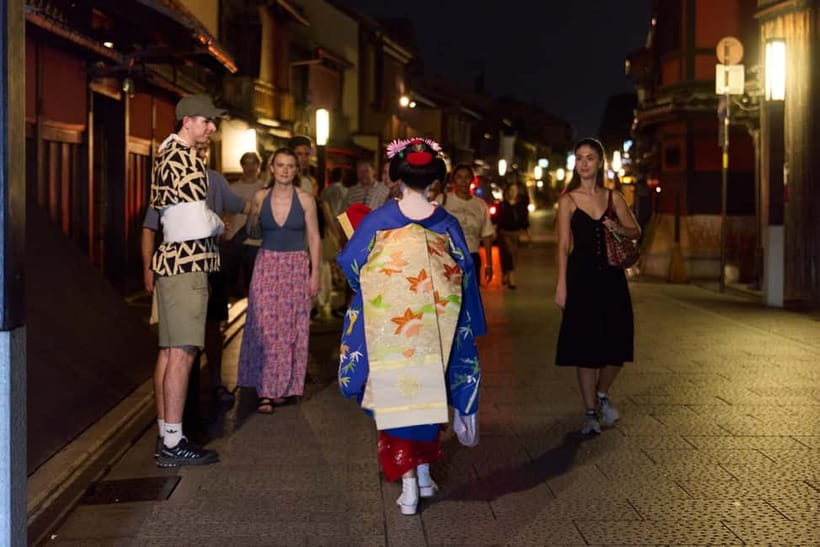
Geisha culture looks different at night. On this Gion and Pontocho walk, you follow wooden-lined lanes, hear the stories behind the traditions, and get a rare chance to see geiko and maiko on their way to appointments. One thing to plan for is that it is a nighttime walking tour, so wet pavement and low light can make the route a bit more tiring.
I like that the tour is built for real questions, not just a script. Guides such as Manuel, Yukari, Nami, and Yuki come up again and again for explaining the history and training in a way that works whether you are brand new or already curious. If you want a long, indoor, sit-down experience, this is not that kind of tour.
For $20 and about 2 hours, you get a focused introduction to Kyoto’s most famous geisha entertainment districts without the stress of trying to decode everything on your own. You do need to bring your patience for crowds in the area, and you should be ready for the walk to feel more like street-level exploration than a museum lesson.
Key Moments You Shouldn’t Miss
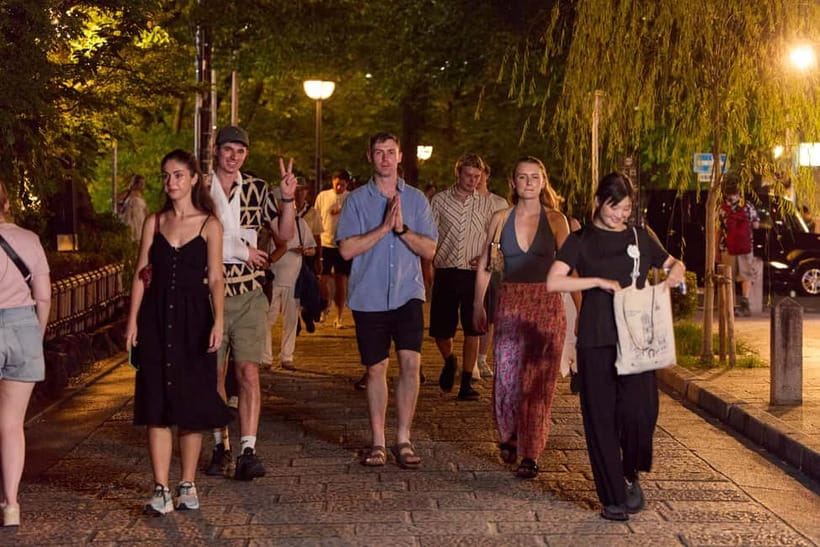
- Ben’s Cookies Kyoto Shijo meeting start so you can get oriented fast and step into the night walk right away
- Pontocho Alley at night for that classic lane vibe with traditional spots along the street
- Izumo-no-Okuni statue stop to connect the geisha world to the origins of kabuki
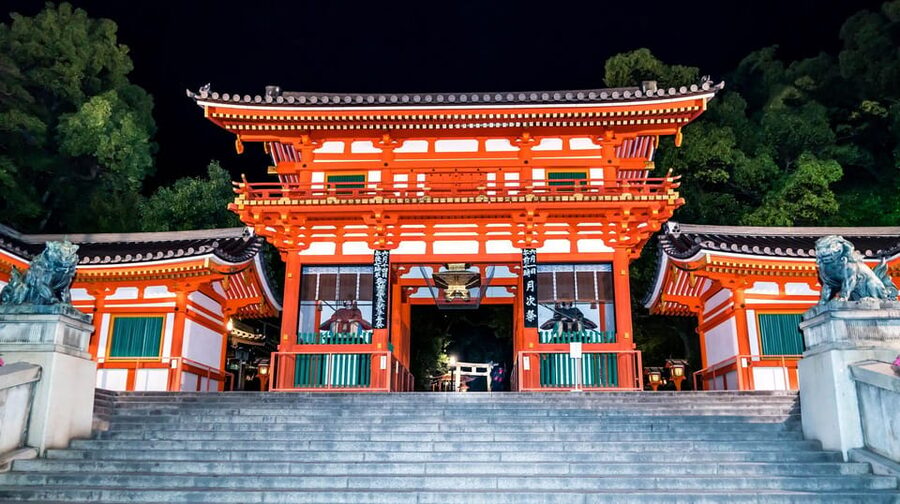
- Yasaka Shrine area storytelling as you move deeper into Gion
- Hanamikoji Street walking where you may spot geiko and maiko heading to appointments
- Guide Q and A throughout so you can ask what you really want to know about geisha life
Night in Gion, why this walk works after dark
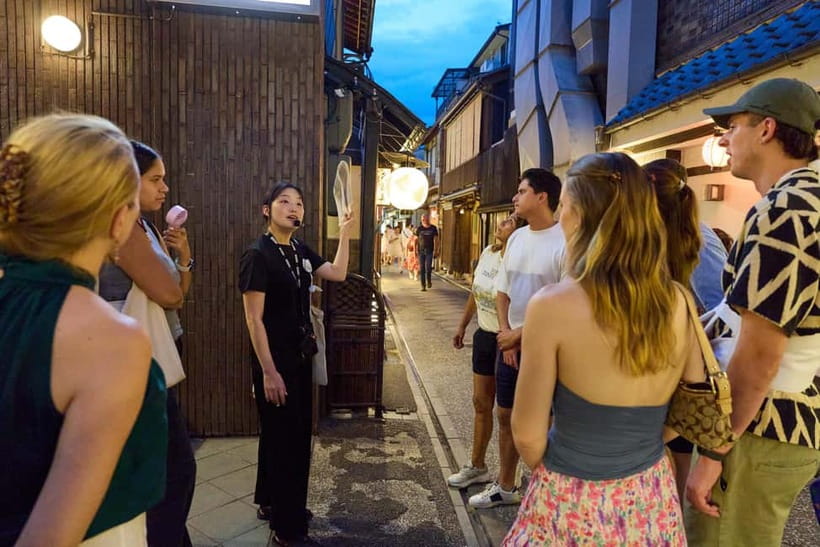
This is a story tour for evening, not a daytime photo run. The magic comes from walking the narrow lanes when the districts feel more atmospheric and you can better imagine the rhythm of appointments, teahouses, and performances that shaped this world.
You’ll spend your time in the two classic settings the tour is known for, Gion and Pontocho. Pontocho is especially good at night, with its traditional-eats feel, while Gion is where the culture stories start to connect to the landmarks you will pass.
The other big reason it works is that you are not just looking at buildings. Your guide ties what you see to how geiko and maiko practice, train, and show up for appointments, which is where the whole topic stops feeling abstract.
More Walking Tours in Kyoto
- Kyoto Geisha Walking Tour: Gion District & Hidden Gems
★ 4.7 · 3,273 reviews - Kyoto: Gion Magical Night Walking Tour with Geisha Trivia
★ 4.9 · 2,393 reviews - Night Walk in Gion: Kyoto’s Geisha District
★ 4.5 · 2,003 reviews
Meeting at Ben’s Cookies Kyoto Shijo, the easy way to start
Your tour begins at a simple landmark, in front of Ben’s Cookies Kyoto Shijo. The guide meets you holding a sign board, and you spend a short window getting briefed and getting your bearings before you head into the streets.
That first stretch matters more than it sounds. When you start a topic like geisha culture, it helps to know what to watch for on the walk, how the guide will frame what you are seeing, and what questions are welcome.
Bring water. It is a night walk, and you want to keep your energy steady through the 2-hour pace.
Pontocho Alley and the Izumo-no-Okuni statue stop
You start your guided exploring in Pontocho Alley, which is a lane famous for traditional Japanese eateries and more elite night spots. Walking it at night lets you slow down, notice the older street texture, and get a sense of why this area became part of Kyoto’s evening entertainment map.
Next, you cross toward the statue of Izumo-no-Okuni. This stop is not just a quick photo break. Your guide uses it to explain the woman credited with inventing kabuki, which is a strong connection point because it links geisha culture to Japan’s wider performing arts tradition.
One practical note: because this is a walking tour through narrow areas, you will need to keep your pace and spacing. Think calm and respectful, especially near entrances and side streets.
Gion streets, Yasaka Shrine, and where geiko and maiko may appear
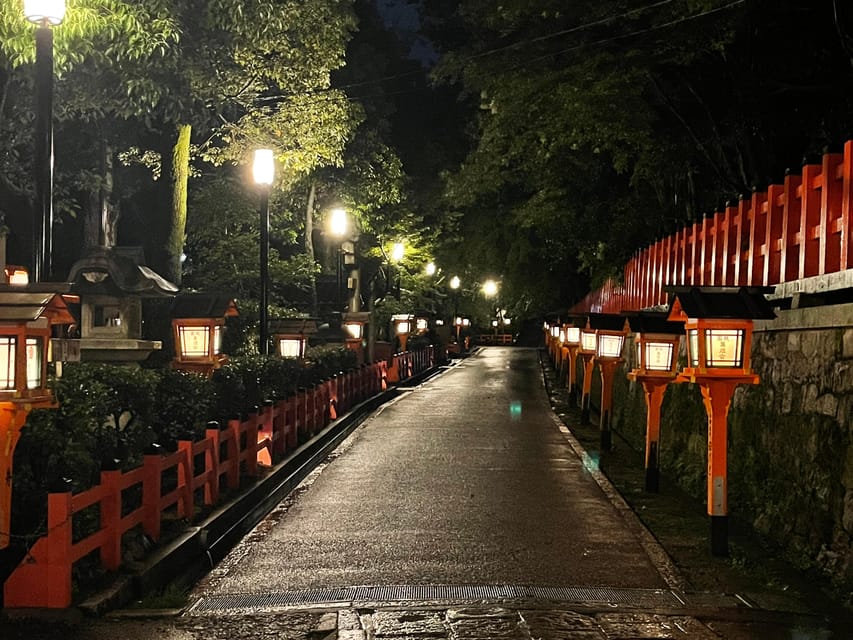
After Pontocho, you move deeper into Gion, Kyoto’s best-known geisha district. This is where your guide’s stories really start to shape the district into something you can understand, instead of just a set of streets that all look similar from far away.
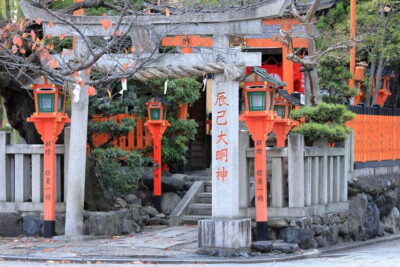
You’ll also visit Yasaka Shrine, one of the familiar Gion landmarks. The tour’s value here is less about ticking off a famous name and more about how your guide frames the shrine area as part of the cultural geography of the evening.
The tour’s heart is the chance to see geiko and maiko en route to appointments. The walking route along the classic streets, especially Hanamikoji Street, is designed to keep you in the right places at the right time.
And yes, it is possible to see a maiko or geiko during the walk. What you should keep in mind is that sighting is never the same as a guarantee. Even when no one appears close to you, the guide’s explanations help you understand what you are looking at and why it matters.
More geisha experiences in Kyoto:
- Best of Kyoto: Gion, Geisha, Pagodas & Cobblestones
★ 4.9 · 2,058 reviews - Kyoto Night Foodie Tour in Gion (9+ dishes + 6 Sake tastings)
★ 5.0 · 1,762 reviews - Kyoto Gion Geisha District Walking Tour – The Stories of Geisha
★ 5.0 · 1,441 reviews - Kyoto Gion: 2-Hour Geisha Culture & History Walking Tour
★ 5.0 · 1,186 reviews
Gion Corner and Hanamikoji, finishing with the most recognizable streets
As you continue, the tour includes a stop called Gion Corner. In practice, this is one more story checkpoint where your guide helps connect the overall picture of Gion with the traditions behind it.
Then you end up on Hanamikoji Street, one of the most recognizable streets in the Gion area. This is where the walk feels most like Kyoto’s old-world entertainment corridor, and where you will likely slow down to look for movement, not just architecture.
The best way to use this part of the tour is simple: ask questions if you have them. People who get the most out of the tour tend to treat Hanamikoji as the moment to clarify what they are seeing, how training shows up in details, and what the guide says about the traditions still alive today.
Guide skills that turn a walk into a real cultural lesson
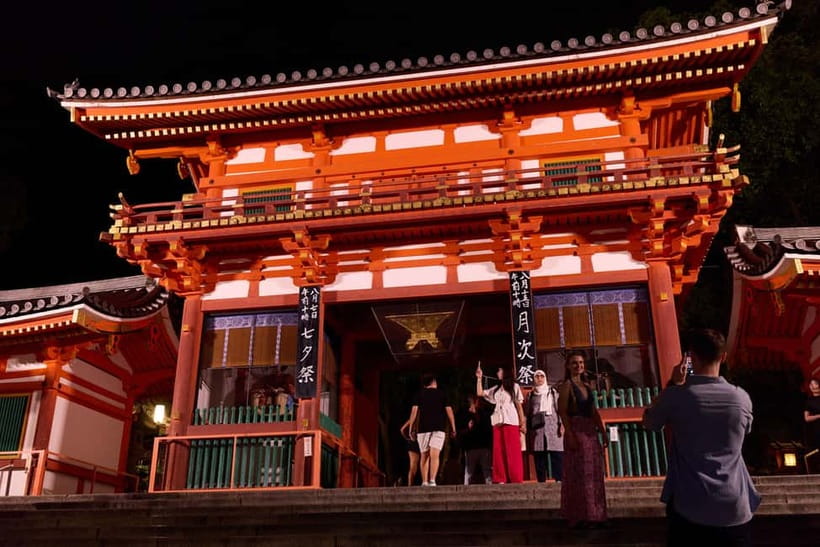
The most praised aspect of this tour is the way the guides explain the world of geisha culture. Names like Manuel, Yukari, Ann, Michael, Kenji, Nami, and Yuki come up for a reason: people consistently highlight that the guides do not just report facts, they connect ideas.
A few patterns you can expect from strong guides on this walk:
- They keep the pace friendly, with time for explanations and questions.
- They can adjust the level, whether you know little or want more detail.
- They help you respect what you are observing, especially when you are hoping to spot geiko and maiko.
There is also something practical here. Geisha culture can feel confusing from the outside, with terms and roles that sound similar. A good guide helps you separate the pieces, then you watch the streets with new eyes.
Price and value: what $20 buys for 2 hours in Gion
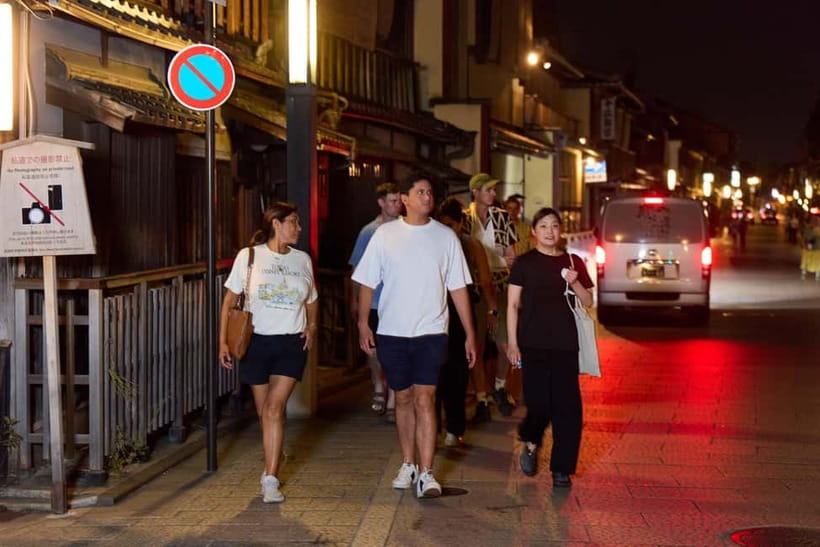
At $20 per person for a 2-hour walking tour, the value comes from focus. You are paying for a local, English or Spanish speaking guide who knows how to connect landmarks across Gion and Pontocho into a coherent story about geisha culture.
You are also paying for time efficiency. Kyoto is full of beautiful streets, but if you do not have context, a lot of that beauty stays generic. Here, the guide’s job is to make the district legible, from the alley atmosphere in Pontocho to the cultural significance tied to stops like the Izumo-no-Okuni statue.
One more value point is that you get a guided route built around the practical reality of night appointments. Even when sightings are limited, the tour helps you understand what you are observing when you do see activity.
If you are the type of traveler who likes learning through walking, asking questions, and using a night in Kyoto for something more meaningful than just wandering, this price feels fair for what you get.
Practical tips for a smooth nighttime walk in Kyoto
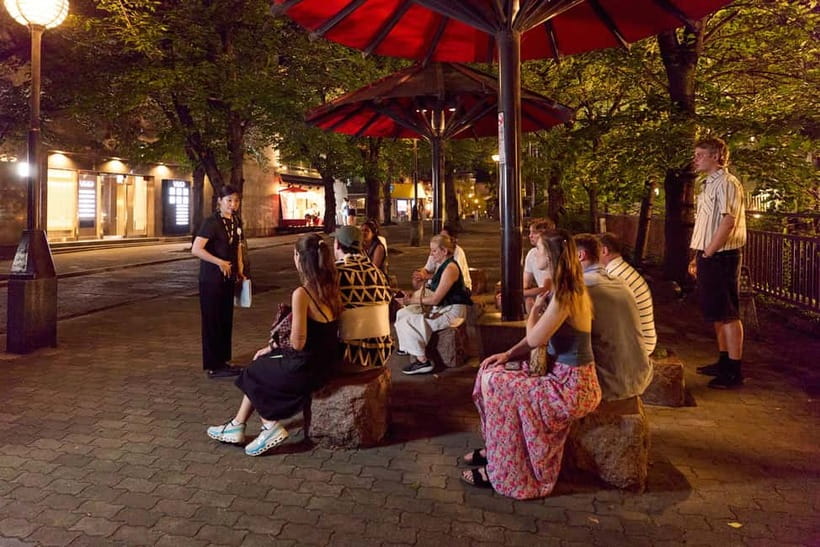
This is a simple tour logistically, but night walking has its own needs. Here are the practical things that will make your 2 hours more comfortable.
First, wear comfortable shoes. The route is through narrow alleyways and busy streets, so you want traction and cushioning.
Second, bring water. It is required, and it keeps you from feeling slow when the walk goes on.
Third, follow the rules: no alcohol and no drugs. It is part of keeping the tour respectful and low-key in neighborhoods where many people live and work.
Fourth, plan for weather. One traveler noted the experience continued even in pouring rain, with the guide handling it well and finding sheltered places to stop. That tells me the tour is designed to keep moving, even if Kyoto hands you rain.
Finally, check your party. The tour is not suitable for children under 10. If you are traveling with younger kids, you will likely find the content and pacing more adult-focused.
Who this tour is best for, and who should skip it
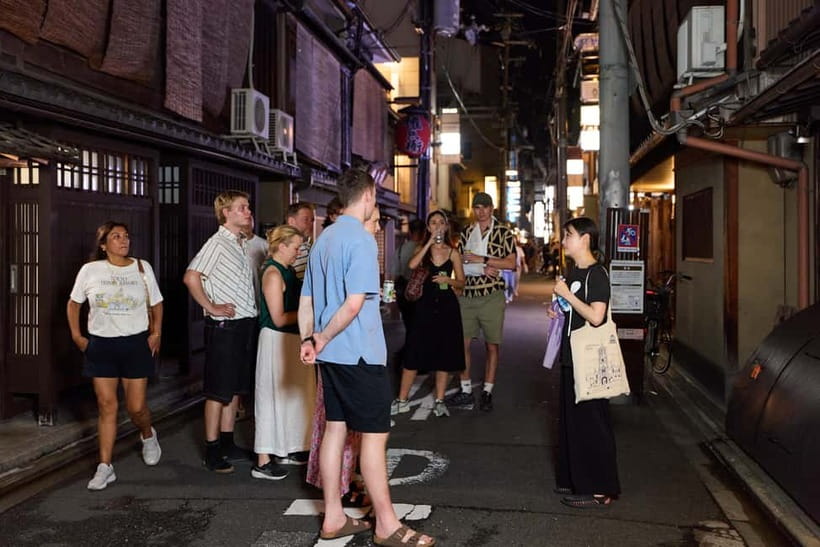
This tour is ideal if:
- You want a first-time orientation to Gion and Pontocho.
- You like cultural storytelling that you can connect to specific streets.
- You enjoy nighttime walks and want to use the evening efficiently.
You might want to skip it if:
- You need a kid-friendly outing, since it is not suitable for children under 10.
- You are looking for a long, sit-down experience or a performance with guaranteed spectacle.
- You prefer daytime photo time only, with minimal talking.
Should you book the Stories of Geisha walk in Kyoto?
If you have limited time in Kyoto and you want a guided way to understand the district behind the headlines, I’d book this. The 2-hour format is tight, the guide interaction is a big part of the value, and the route targets both Pontocho atmosphere and Gion landmarks like Yasaka Shrine and Hanamikoji Street.
Do it especially if you care about context, not just sightseeing. This tour turns geisha culture into something you can follow street by street, and it gives you a chance to watch the night rhythm of geiko and maiko appointments when they happen.
One last check before you go: come ready to walk, ask questions, and stay respectful. If you do that, you will leave with a much clearer picture of what you saw and why it matters.
FAQ
Where do I meet the guide for the tour?
Meet your guide in front of the Ben’s Cookies Kyoto Shijo shop. The guide will be holding a sign board.
How long is the Kyoto Gion Geisha District Walking Tour?
The tour lasts about 2 hours.
What languages are available for the live guide?
The live tour guide offers English and Spanish.
What should I bring?
Bring water.
Is the tour suitable for children?
No, it is not suitable for children under 10.
Are alcohol or drugs allowed on the tour?
No, alcohol and drugs are not allowed.
Can I get a refund if my plans change?
Yes, free cancellation is available up to 24 hours in advance for a full refund.
Fresh options around Kyoto
- Kyoto Aquarium Admission Ticket★ 4.7 · 12 reviews
- Kyoto Gion Photoshoot – Private Session | Pro Photographer★ 5.0 · 12 reviews
- Gyoza Cooking Class in Kyoto: Traditional Japanese Dumplings★ 5.0 · 12 reviews
- Kyoto: Guided Food Tour with 12 Dishes & 3 Drinks★ 5.0 · 12 reviews
- Kyoto: Avoid the Crowds at the Hidden Gems of Arashiyama★ 4.9 · 13 reviews
- Kyoto Early Bird English Tour: Gion & Higashiyama(Private opt)★ 5.0 · 13 reviews
- Otsu-e Folk Art Workshop & Local Culture Walk Near Kyoto★ 5.0 · 13 reviews
- Kyoto, Osaka, Nara Full Day tour by Car English speaking Driver★ 3.5 · 13 reviews
Walking Tours, compared.
Kyoto Geisha Walking Tour: Gion District & Hidden Gems
Read our review →
Tokyo Tsukiji Fish Market Food and Culture Walking Tour
Read our review →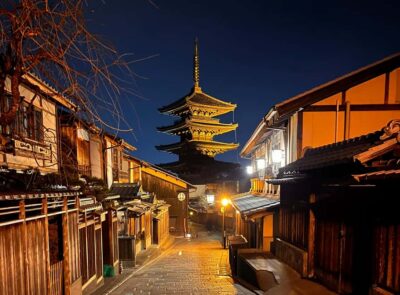
Gion Magical Night Walking Tour with Geisha Trivia
Read our review →
Imperial Palace and Shogun Historical Walking Tour
Read our review →
Shinjuku Local Bar and Izakaya Guided Walking Tour
Read our review →
Asakusa Walking Tour with Sensoji Temple Visit
Read our review →Browse the lists this tour appears in