
Reviewed · GEISHA & GION TOURS
Kyoto Early Bird English Tour: Gion & Higashiyama(Private opt)
Kyoto looks different before the tour buses. This Kyoto Early Bird English Tour is a smart, guide-led way to see Gion and Higashiyama without getting stuck with a map and a crowd. You get an itinerary that connects the famous lanes to the quieter, story-filled corners, with commentary that keeps the places making sense fast.
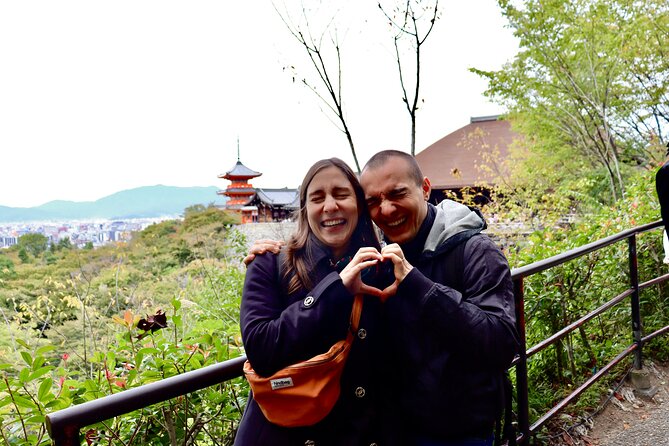
Two things I really like: you get professional photos taken during the tour, and the guide keeps you moving so you can spend your energy looking up and around instead of figuring out directions. Another strong plus is the flexibility to choose a private option or a small-group setup, which makes the experience feel more tailored than most big-bus sightseeing.
One consideration: it is a walking-focused tour, and Kiyomizu-dera’s admission is not included (it’s ¥500 per person). If you’re sensitive to hills, or you hate crowds but still want a packed early route, plan your pace carefully.
Key points worth knowing before you go
- Early bird timing helps you see Gion lanes and temple streets before the crush.
- Ikki Kataoka has a standout reputation for clear English, patience, and even acting as a pro photo helper.
- UNESCO World Heritage area stop adds meaning beyond postcard photos.
- Mostly free stops, with the one big paid exception being Kiyomizu-dera.
- A true walking route makes the experience feel like moving through Kyoto, not hopping between landmarks.
- Mobile ticket plus a fixed meeting point, keeps things simple and low-stress.
Early bird timing: why Gion feels calmer before the crowds
This tour’s whole idea is morning light plus momentum. Gion and Higashiyama are gorgeous at any hour, but early helps you avoid the hardest parts of peak congestion. That matters because this route is designed for walking, meaning your “view time” is directly affected by foot traffic.
You also get a guide who can steer you around the busiest angles of each stop. Even with the famous sights right in front of you, the best experience is often the small moments, like turning down a side lane and realizing you’re in the old Kyoto mood, not the tourist conveyor belt.
More geisha experiences in Kyoto:
- Kyoto Geisha Walking Tour: Gion District & Hidden Gems
★ 4.7 · 3,273 reviews - Kyoto: Gion Magical Night Walking Tour with Geisha Trivia
★ 4.9 · 2,393 reviews - Kyoto: Gion Geisha District Walking Tour – Stories of Geisha
★ 4.7 · 2,187 reviews
Price and value for a 3-hour guided route in Kyoto
At $64.01 per person for about 3 hours, this lands in the practical category for Kyoto. You’re not just paying for sightseeing, you’re paying for someone to do the translation, context, and route pacing for you.
What boosts the value is that most stops on the itinerary are listed as free, so your main unavoidable extra cost is Kiyomizu-dera admission (¥500 per person). On top of that, the tour includes professional photos taken during the experience. That turns the walk into something you can actually remember beyond a camera roll you never sort.
If you’re considering self-guided wandering, this is the tradeoff: paying for a guide saves you time and decision-making. In Kyoto, that can be the difference between enjoying streets and endlessly backtracking.
How the private or small-group format changes your day
This is a private tour/activity, which means only your group participates. That’s a big deal for a walk like this, because it keeps the pace human. You can ask questions, slow down where you care, and not feel like you’re constantly trying to keep up.
If you choose the small-group option, you still get guided commentary, but you may share a bit more of the group rhythm. Either way, the goal stays the same: you’re here to learn the landmarks and understand why they’re connected, not just to check boxes.
Start point in Higashiyama: getting your bearings fast
The meeting point is the Statue of Izumo-no-Okuni, located in Higashiyama Ward (Kawabatacho, Kyoto). It also helps that it’s near public transportation, which means you’re less likely to waste morning energy trying to get to a hard-to-reach corner of town.
The tour ends back at the meeting point. That’s a small detail, but it’s a real convenience, especially on a first Kyoto morning when you might still be building mental maps.
A few more Kyoto days worth comparing
- PERFECT KYOTO 1-Day Bus Tour
★ 5.0 · 13,518 reviews - Kyoto: Fushimi Inari, Kinkakuji, Bamboo Grove 1 Day Bus Tour
★ 4.8 · 4,316 reviews - Kyoto: Tea Ceremony in a Traditional Tea House in Kiyomizu
★ 4.9 · 3,519 reviews - Kyoto: Tea Ceremony Ju-An at Jotokuji Temple
★ 4.9 · 3,207 reviews
Stop 1: Gion, Kyoto’s most famous geisha district
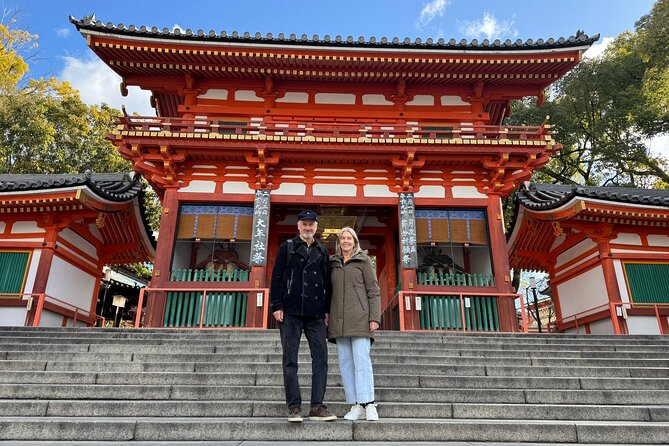
Your route begins in Gion, Kyoto’s classic geisha district. The guide-led pacing matters here because it’s easy to wander in circles if you don’t know where the lanes lead. With a guide, you’re more likely to notice the traditional machiya houses and teahouses that give the district its old atmosphere.
This is also where the early timing pays off. Morning gives you a calmer feel on the historic streets, so you can focus on details instead of squeezing through lines.
What to do here: take in the street rhythm and architecture. Gion is one of those places where looking slowly is the whole point.
Stop 2: Hanamikoji Street and the chance to spot maiko or geisha
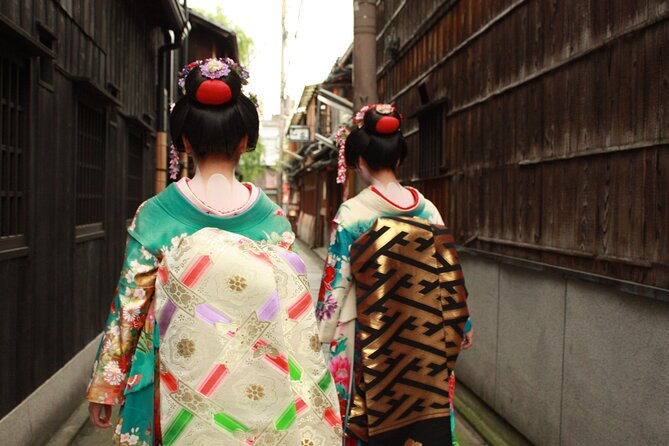
Next up is Hanamikoji Street, the famous lane in Gion. The tour is built around the idea that you may catch a glimpse of geisha or maiko. Even if you don’t, the street is still worth the stop because the teahouses and wooden machiya houses create that unmistakable Kyoto look.
Here’s a practical tip: if you see someone in traditional attire, keep your movements respectful and slow. A calm morning makes everyone’s day better.
Time on this stop: about 15 minutes, so think of it as a focused “walk-through” moment with guidance, not a long hangout.
Stop 3: Yasui-Konpiragu, a shrine tied to relationship wishes
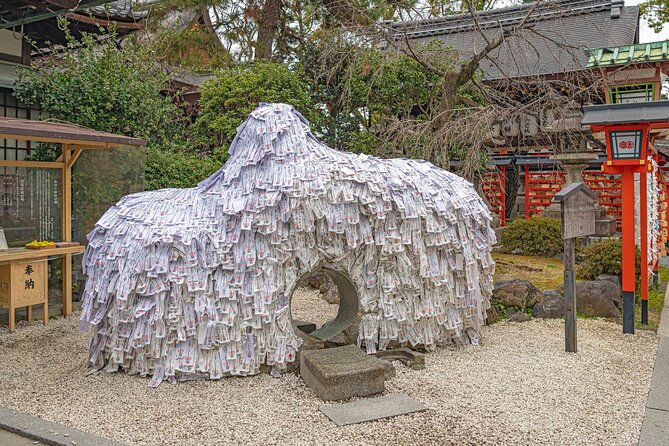
Then you shift from Gion’s streets into shrine territory. Yasui-Konpiragu is known as a powerful shrine visitors use when praying for the end of negative relationships and for new, positive connections.
This stop is useful because it adds a layer beyond “pretty Kyoto.” You see how locals frame wishes and spiritual help, and why shrines in Kyoto feel like part of daily emotional life.
What to watch for: the guide’s commentary on what people come to pray for. It helps the place feel relevant instead of just decorative.
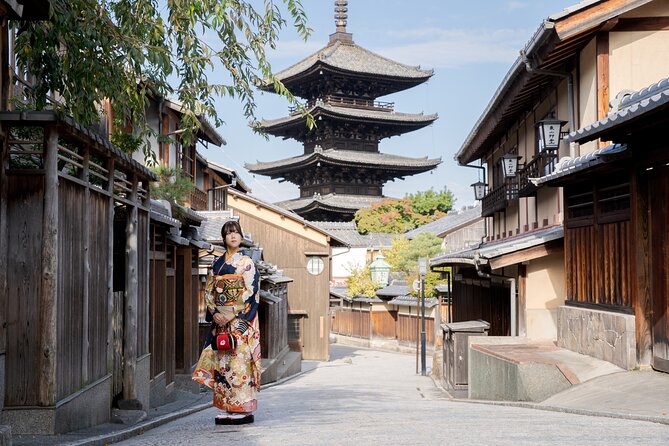
Stop 4: Yasaka Pagoda (Hokanji), an old wooden landmark
At Yasakanoto (Yasaka Pagoda, Hokanji temple), you’ll get one of those “how is this still here?” Kyoto moments. It’s described as one of the oldest wooden structures in Japan, built on a scale that feels hard to believe without nails.
This stop works well on a morning walk because you get time to look at proportions and craftsmanship without shoulder-to-shoulder pressure. The guide’s explanations are key here, because the curiosity is built into the structure.
Stop 5: Sannenzaka and Ninenzaka, stone lanes that feel like a time tunnel
Next are Sannenzaka and Ninenzaka, two charming stone-paved streets lined with souvenir shops and restaurants in historic wooden buildings. This is the part of the route where you can slow your pace and just enjoy the atmosphere.
These lanes are popular, so timing matters. Early morning makes it easier to appreciate the street texture and the old-building outlines before it turns into a constant flow of people.
Practical move: if you want snacks or small gifts, this is the moment to decide what you’re buying, because later in the route you’ll be more focused on Kiyomizu-dera.
Stop 6: Kiyomizu-dera, the big viewpoint moment (and the paid admission)
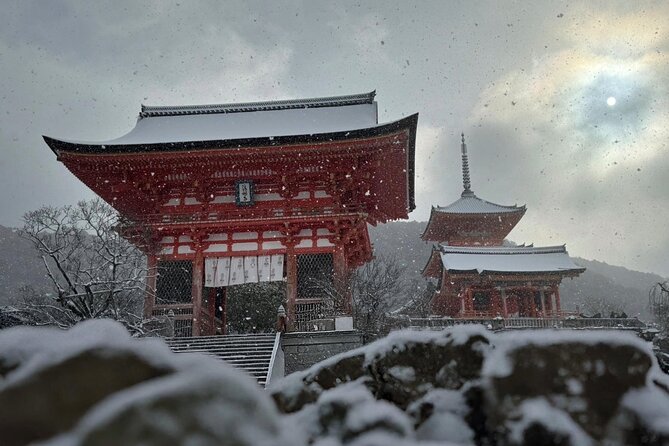
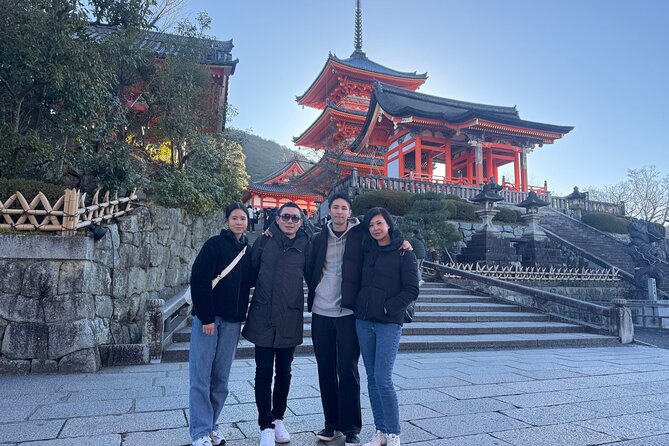
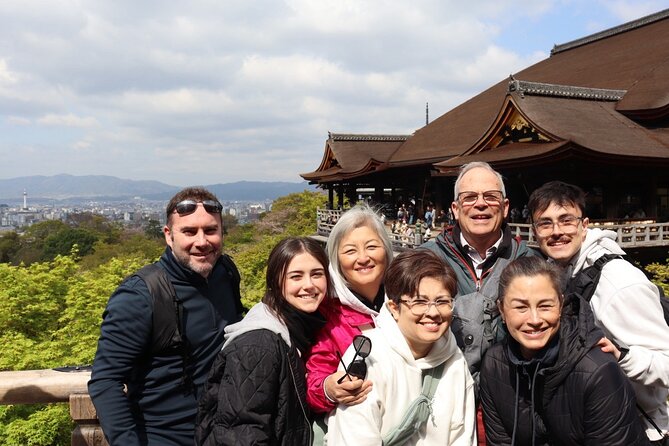
Now for the main event: Kiyomizu-dera Temple. The tour includes about an hour here, and the reason everyone makes time is simple. The temple sits up on a mountain and offers panoramic views of Kyoto City. It’s one of the most popular tourist spots in Kyoto for a reason: the setting and the sightlines work.
This is the one admission you should budget. Kiyomizu-dera costs ¥500 per person and is not included in the tour price. If you forget, it can feel annoying mid-tour, so I recommend mentally planning for it now.
How to use your hour: don’t rush. Spend time looking outward first, then turn back for details in the temple area. Views are the headline, but the space around the viewpoint is where the mood happens.
Stop 7: Yasaka Koshin-do, color and the mystery factor
After Kiyomizu-dera, the route continues to Yasaka Koshin-Do, described as a mysterious temple of unknown construction date. The big draw is the colorful decoration, especially because many temples tend to be more subdued.
This is a nice contrast stop. After the big, panoramic temple experience, the color here gives your eyes a different kind of focus.
Time: around 15 minutes. It’s short enough to keep energy high, long enough to appreciate the visual shift.
Stop 8: Yasaka Shrine, prosperity and a wide network of shrines
Your final stop is Yasaka Shrine, the headquarters of 2,300 related shrines throughout Japan. That’s a powerful detail because it makes this place feel bigger than one Kyoto address.
The shrine is dedicated to gods of prosperity and protection, and it’s also described as vital to Kyoto’s cultural life. With a guide, you’re more likely to understand what you’re seeing and why it mattered historically, not just that it’s a photo spot.
Time: about 30 minutes, enough to soak in the atmosphere and end the tour on something anchored and meaningful.
Photos included: how to get the most from the guide-camera advantage
One of the most praised features is the professional photos taken during the tour. A review highlight mentioned guide Ikki Kataoka also functioning as a professional photographer for the morning. That combination helps because the guide already knows where the light and angles tend to work on a walking route.
If you want better photos, don’t just stand there hoping. Move with the group, listen for where the guide wants you to stop, and be ready when the timing clicks. Early morning light can be flattering, but only if you’re present at the right moment.
Also helpful: the guide is described as patient, including with older guests. If you’re slow with photos or you need a few extra seconds to compose, that patience makes the whole walk feel easier.
What you’ll walk through, and what you should wear
This is designed as a walking experience, with moderate physical fitness recommended. The itinerary moves through streets and temple areas, which means shoes matter more than you might think.
Plan for:
- Comfortable walking shoes for stone-paved lanes and temple approaches
- A light layer for morning air
- Water or a break strategy, since food and drinks are not included
Because the route is only about 3 hours, it’s not a marathon, but it is steady walking. If you like to stop often, add a little buffer to your pace.
Tips to make the morning smoother (and not stressful)
Here are a few ways to keep the experience enjoyable:
- Arrive a bit early at the Statue of Izumo-no-Okuni meeting point, because late arrivals can mean you miss the tour.
- Bring cash or a card for Kiyomizu-dera’s ¥500 admission.
- Decide in advance what matters more to you: photos, quiet street time, or fast landmark coverage. The guide commentary is strong, so you’ll get value either way.
- Keep your schedule flexible around the tour window, so you can enjoy the surrounding neighborhoods afterward without rushing.
Who this tour fits best
This tour is a great match if you want:
- A guided route that connects Gion and Higashiyama into one morning story
- A calm early start that helps you dodge the worst crowd pressure
- Photo-friendly stops plus commentary that makes shrines and temples feel understandable
It’s also a nice fit for visitors who feel overwhelmed by Kyoto’s layout. When someone handles the route logic, you can focus on what you came for.
Who might want to skip: if you hate walking entirely, or if paying an extra entrance fee mid-route would throw your budget off, you may prefer a shorter or fully all-inclusive option.
Should you book the Kyoto Early Bird English Tour?
I’d book it if you’re the type who likes seeing Kyoto the “real street” way, not just jumping from one landmark bus window to the next. The combination of early timing, English guide commentary, and professional photos is strong value for a 3-hour outing.
I’d be a careful planner if you have tight mobility limits or if you strongly prefer admissions bundled into one flat price. With Kiyomizu-dera costing ¥500, you’ll just want to handle that upfront in your head.
FAQ
How long is the Kyoto Early Bird English Tour: Gion & Higashiyama?
The tour is approximately 3 hours.
Is this tour private?
Yes. This is a private tour/activity, and only your group will participate. There is also a flexible option to choose private or small-group.
Where do I meet, and where does it end?
The start point is the Statue of Izumo-no-Okuni in Higashiyama Ward, Kyoto. The activity ends back at the meeting point.
Is Kiyomizu-dera Temple admission included?
No. Kiyomizu-dera admission is not included and costs ¥500 per person.
Are photos included in the tour?
Yes. Professional photos are taken during the tour.
Is the tour mostly walking?
Yes. It is designed as a walking experience, and travelers should have a moderate physical fitness level.
Can I cancel for a refund?
You can cancel for free up to 24 hours in advance for a full refund. Changes within 24 hours of the start time are not accepted.
Fresh options around Kyoto
- Kyoto: Guided Food Tour with 12 Dishes & 3 Drinks★ 5.0 · 12 reviews
- Kyoto: Avoid the Crowds at the Hidden Gems of Arashiyama★ 4.9 · 13 reviews
- Otsu-e Folk Art Workshop & Local Culture Walk Near Kyoto★ 5.0 · 13 reviews
- Kyoto, Osaka, Nara Full Day tour by Car English speaking Driver★ 3.5 · 13 reviews
- 2 Hour Night Walking Tour Throughout Gion with snack★ 4.0 · 13 reviews
- Private eBike Tour Exploring Fushimi with Torii Red Gate Ride★ 5.0 · 13 reviews
- Private Art Sushi Roll Class in Kyoto★ 5.0 · 13 reviews
- Kyoto 1 Day Suntory Yamazaki Distillery Tour and Asahi Art Museum★ 5.0 · 13 reviews
Geisha & Gion Tours, compared.
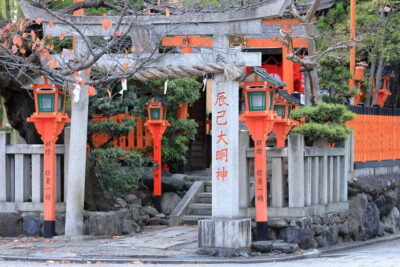
Kyoto Geisha Walking Tour: Gion District & Hidden Gems
Read our review →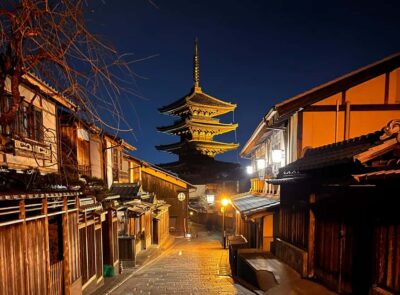
Gion Magical Night Walking Tour with Geisha Trivia
Read our review →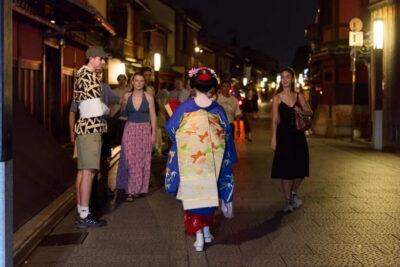
Gion Geisha District Walking Tour – Stories of Geisha
Read our review →
Best of Kyoto: Gion, Geisha, Pagodas & Cobblestones
Read our review →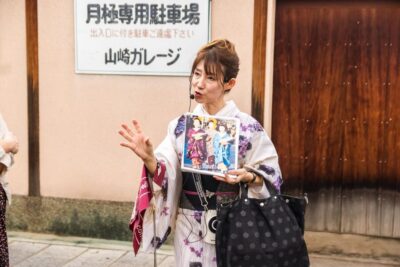
Kyoto Night Foodie Tour in Gion (9+ dishes + 6 Sake tastings)
Read our review →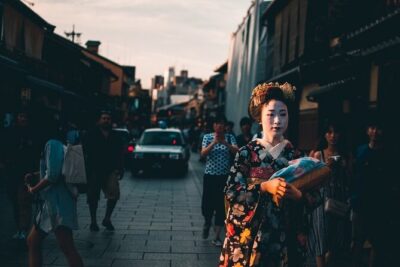
Kyoto Gion Geisha District Walking Tour – The Stories of Geisha
Read our review →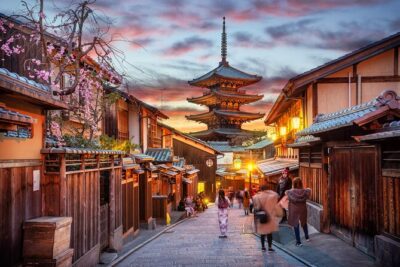
Kyoto Gion: 2-Hour Geisha Culture & History Walking Tour
Read our review →Browse the lists this tour appears in