
Reviewed · WALKING TOURS
Tokyo: Asakusa Walking Tour with Sensoji Temple Visit
Tokyo gets real in two hours. This Asakusa walking tour puts Sensō-ji and the Kaminarimon Thunder Gate right at the center, then threads you through Nakamise and other classic streets with a guide who explains what you are actually seeing. I love the mix of temple moments plus everyday shopping-street culture, and I love how the guide’s stories make the landmarks feel connected, not random. One thing to plan for: Asakusa is a busy area, and the tour moves at a steady walking pace, so wear comfy shoes and arrive on time, since the guide can’t wait for late arrivals.
You’ll finish near Azuma Bridge, with time for photos and a quick breather mid-route. Guides such as Keiko, Aya, Loc, and Polina are repeatedly praised for clear English and for answering lots of questions, which is a big deal in crowded, fast-moving tourist zones.
Key things I’d circle before you go
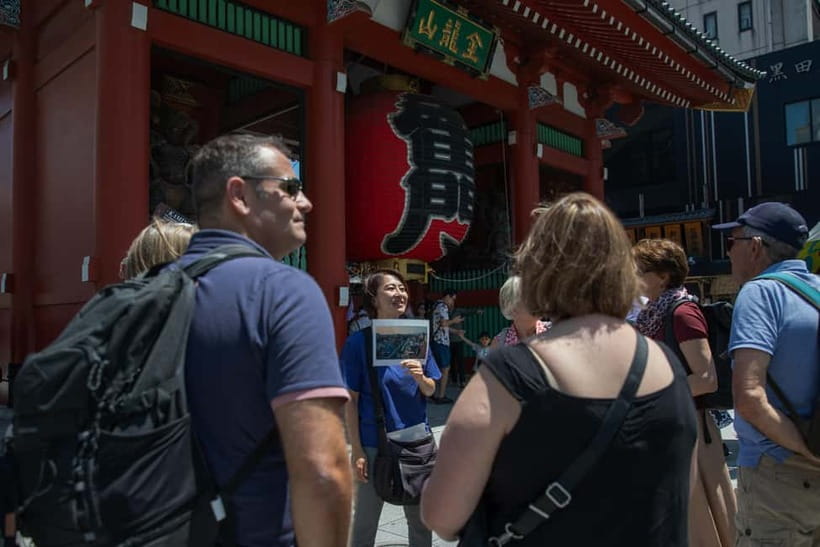
- Meet right at Kaminarimon: your tour starts at the Thunder Gate, so you understand the whole area from minute one.
- Nakamise Street, with context: instead of wandering blindly, you get a guided read on one of Japan’s older shopping streets.
- Sensō-ji details you might miss: the guide points out architectural and spiritual elements, plus you’ll have time to take photos.
- A second temple stop at Asakusa Shrine: you get a change of pace after Sensō-ji’s big energy.
- More street variety than you expect: Hoppy Street and Shin-Nakamise add extra texture beyond the headline sights.
- Finish at Azuma Bridge: the walk ends with an easy landmark for continuing your day.
Why this Asakusa walk feels like Tokyo’s real-world culture
Asakusa is one of those Tokyo neighborhoods where tradition isn’t stuck in a museum box. It’s right next to the shopping, the snacks, the quick errands, and the everyday foot traffic. This tour leans into that. You’re not just ticking off a temple. You’re walking through the layers that built the area’s reputation in the first place.
The Sensō-ji experience is the anchor. You’ll see the Thunder Gate, learn what makes Sensō-ji important, and get an explanation for the temple spaces you pass through. Then the tour switches gears into Nakamise Street shopping culture, with stops that keep the day from turning into one long temple visit.
If you like travel that mixes meaning with practical wandering, this kind of walk is a smart way to spend about two hours. It also works well when you want something classic but you do not want the pressure of figuring everything out on your own while people are moving around you.
More Temple & Shrine Tours in Tokyo
- Tokyo: Meiji Shrine, Asakusa, Skytree Bus Tour and Cruise
★ 4.7 · 1,986 reviews - Nikko: Kegon Falls, Lake Chuzenji & Toshogu Temple
★ 4.6 · 1,577 reviews - Tokyo: Nikko Toshogu Shrine and Kegon Waterfall Tour
★ 4.5 · 1,266 reviews
Starting at Kaminarimon: what to look for in the first minutes
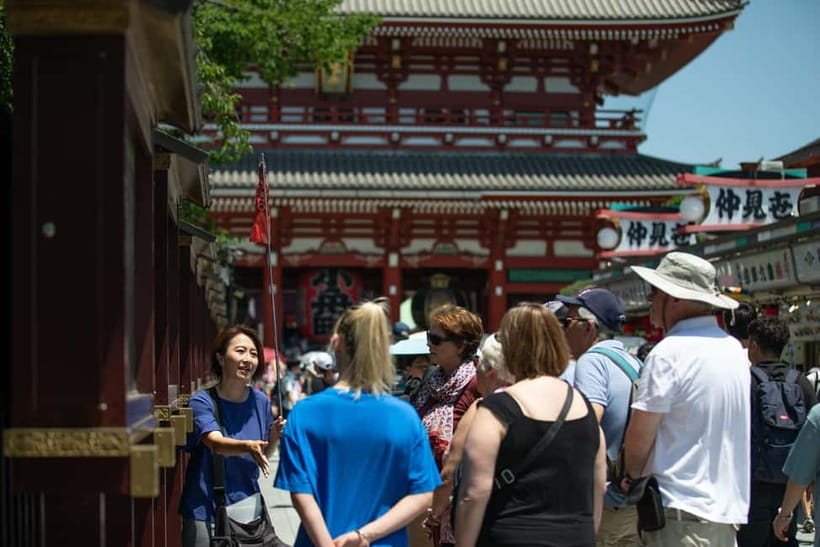
The meeting point is the Kaminarimon Gate area, right in front of it. The guide waits on the left side in front of Kaminarimon, near the Tokiwado Kaminari-okoshi Honpo shop, and they’ll be holding a sign for the tour.
Why start here? Because Kaminarimon is the visual shorthand for Asakusa. Seeing it up close first gives you a reference point for everything else. As you enter the temple area, the guide can explain what the gateway represents and how it connects to the larger Sensō-ji complex, so you’re not just taking photos, you’re understanding the scene.
Practical note: show up early enough to orient yourself without rushing. The tour is timed for a group walk. If you arrive late, the guide can’t slow down just for one party.
Nakamise Street: shopping energy with a guide reading the signals
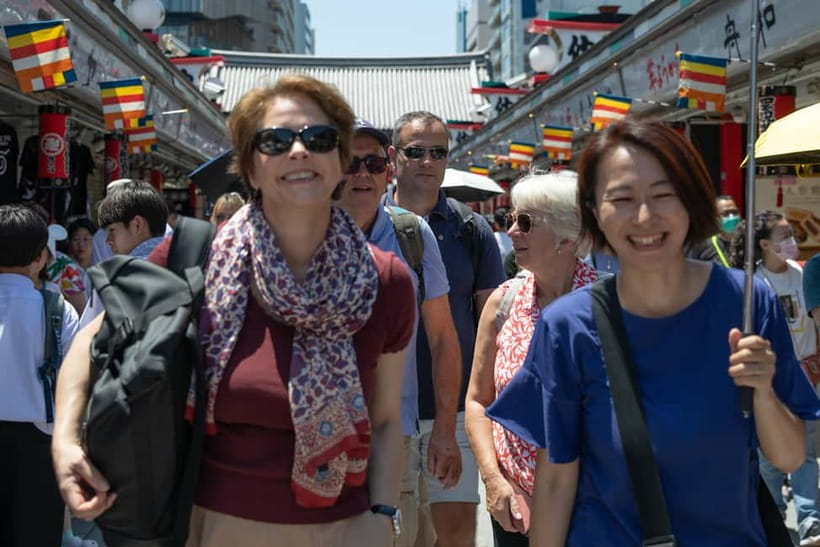
After the Thunder Gate intro, you’ll move onto Nakamise Shopping Street. This is one of the oldest-established shopping streets in Japan, and the tour treats it as more than a souvenir corridor.
Here’s what I like about this stop: the guide helps you notice details. You’ll see the kind of shops that cater to visitors, but you’ll also learn how the street fits into the temple area and why this layout matters. Instead of getting trapped in a single store, you get a sense of why these particular businesses sit in this exact place and what they’re offering people who come for the temple.
You also get a guided walk time here, then you continue onward rather than getting stuck in shopping mode. That’s important. Nakamise is fun, but it’s easy to lose the rest of your day if you drift too far. A guide keeps the flow, so you get the culture and the sights, not just a caffeine-fueled wander.
Photo breaks happen here too. It’s one of the easier places to take pictures because there are lots of signboards and storefront details, not just stone and incense smoke.
Sensō-ji Temple visit: what makes it more than a photo stop
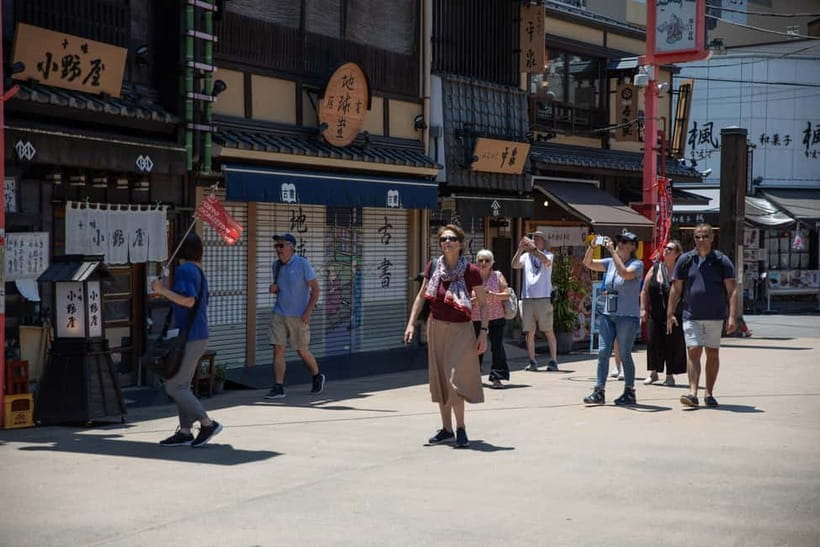
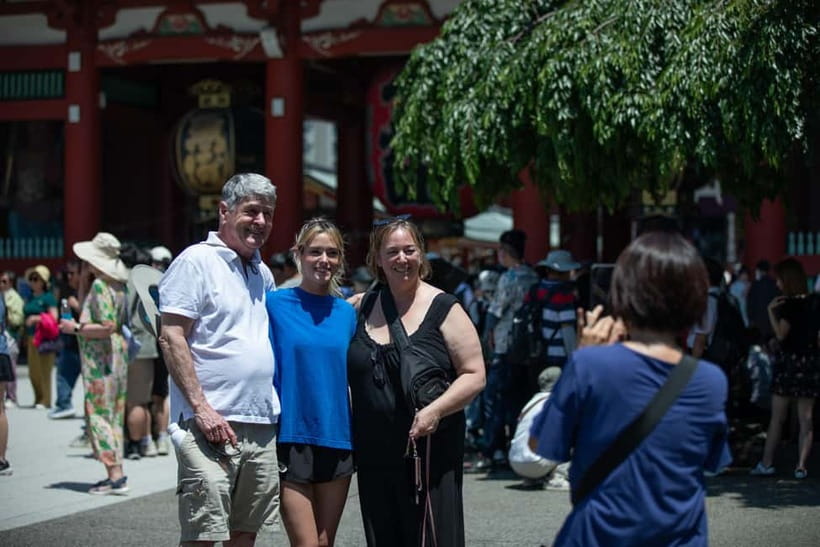
Sensō-ji (also called Asakusa Kannon) is Tokyo’s oldest Buddhist sanctuary, and this is the heart of the tour. You’ll get guided time inside the temple area, including a chance for photos and a bit of free time.
What to expect during the visit:
- You’ll learn about the temple’s significance, not just its location.
- You’ll see the intricate details the guide points out, which helps if you tend to look at buildings as a general backdrop.
- You’ll have a moment for the incense-burning experience, where the rituals and atmosphere make the place feel active, not staged.
One practical point: temples are busy and there are flows of people. Even if you’re comfortable in crowds, try to pause when the guide instructs, then move with the group. It keeps you from getting separated and it also helps you catch the guide’s explanations without standing in the wrong spot.
If you care about how religion looks in daily life, this part delivers. Sensō-ji is not only architecture. It’s the behavior around the space, the small gestures, and the way people take part in the ritual areas you walk past.
More Walking Tours in Tokyo
- Tokyo Tsukiji Fish Market Food and Culture Walking Tour
★ 5.0 · 3,184 reviews - Tokyo: Imperial Palace and Shogun Historical Walking Tour
★ 5.0 · 2,251 reviews - Tokyo: Shinjuku Local Bar and Izakaya Guided Walking Tour
★ 4.9 · 1,794 reviews - Tokyo: Tsukiji Fish Market Food and Walking tour
★ 5.0 · 1,724 reviews
Asakusa Shrine and the shift in mood
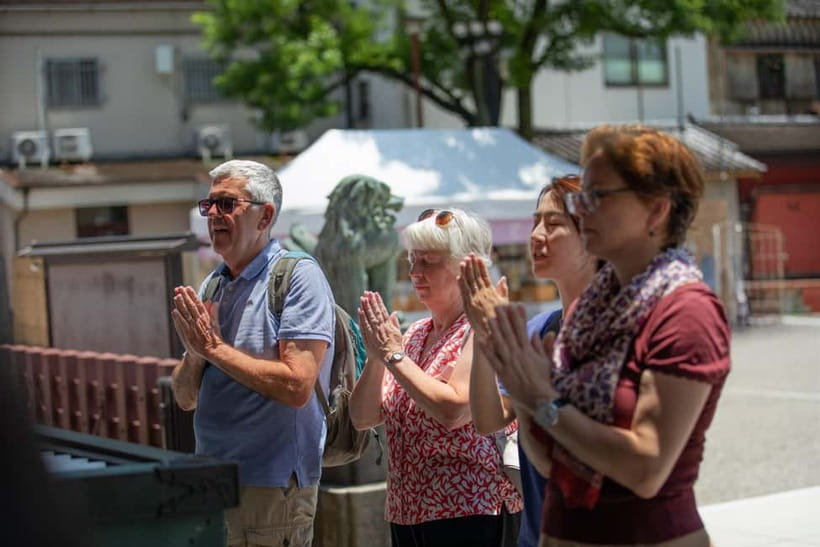
After Sensō-ji, the tour includes a stop at Asakusa Shrine, with guided time and a photo pause.
This matters because the energy changes. Sensō-ji is dramatic and central, while a shrine stop gives you a different angle on Tokyo’s spiritual landscape. You’ll likely notice how the setting and the atmosphere feel distinct even when both stops are within Asakusa’s same broader area.
Think of it as a palate cleanser. You get more context about what people do at these sites and what kinds of visual cues to look for. Even if you’re not a religion-history person, having a guide here helps you understand why the details in the buildings and approach paths matter.
This is also a good moment to ask questions. If you’ve been mentally collecting what you’ve seen, the shrine portion gives you a chance to connect those observations before the tour keeps moving.
Hoppy Street and Shin-Nakamise: practical local texture beyond the big sights
From the shrines, the tour continues through more local streets: Hoppy Street and then Shin-Nakamise Shopping Street.
These stops are shorter, but they add variety. The big-ticket moment is always Sensō-ji, but the neighborhood doesn’t end at the main gate. Streets like this help you understand how visitors and locals share space, how the area keeps working after the major sightseeing crowds surge through, and how the shopping street vibe changes as you walk.
For practical sightseeing, these are the parts where you can slow down slightly for browsing without fully derailing the tour. You’ll get guided time so you still hear the story behind the street, but the time pressure is lower than at the major temple areas.
If you want souvenirs, these are the moments when you’re most likely to notice things you actually want to carry home, not only the biggest, most obvious tourist items.
Finishing at Azuma Bridge: how to extend your day
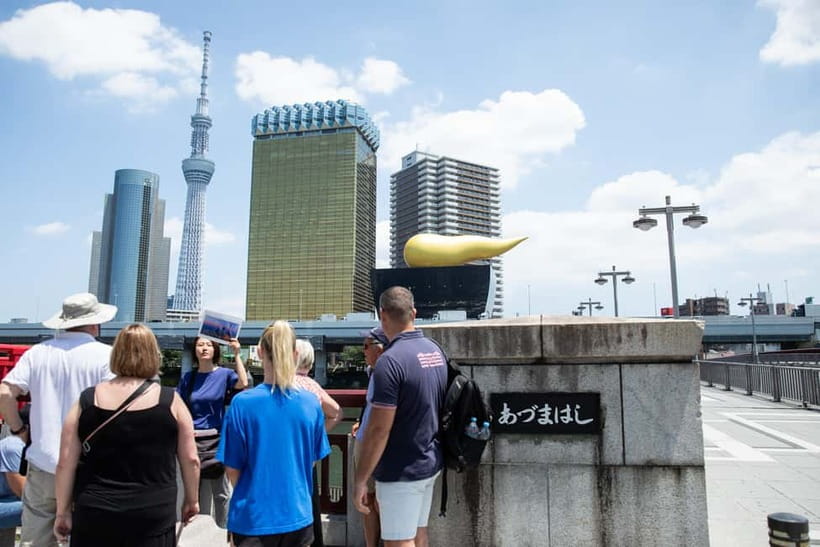
The tour ends at Azuma Bridge. That’s a helpful finish point because it’s a clear landmark for continuing on your own.
At this stage, you’ll have already covered the main temple and shopping-street spine of Asakusa, so your next steps become simpler. Maybe you want to grab lunch nearby, maybe you want to stroll by the river, or maybe you’re just ready to regroup and digest all that new context.
Many guides also use the wrap-up as a chance to share food ideas around Asakusa. If you do not know where to eat yet, this is a good time to ask. A practical recommendation can save you from ordering the wrong thing just because it looks easy.
What I’d expect from the guide quality on this tour
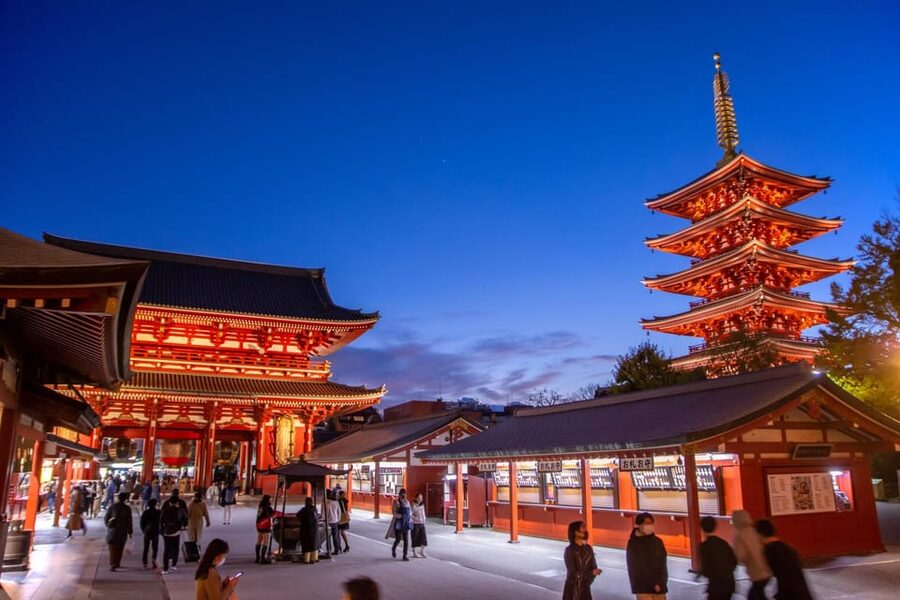
This kind of tour lives or dies by the guide. Here, the English-speaking guides are repeatedly praised for being engaging and for explaining the meaning behind what you see.
You’ll hear about temple stories and local cultural details, and guides like Keiko, Aya, Loc, Paulina, Polina, and Hiroko are specifically named in past tour feedback for being patient, responsive, and fun to listen to. A number of comments also emphasize that guides handle questions well and keep the pace manageable, including when families or kids are part of the group.
So if you want more than a narrated walk and you actually want to understand the place, you’re in the right lane. The tour is designed so you learn while you walk, not after you get back to your hotel and try to Google everything.
Timing, pace, and how to plan your shoes and schedule
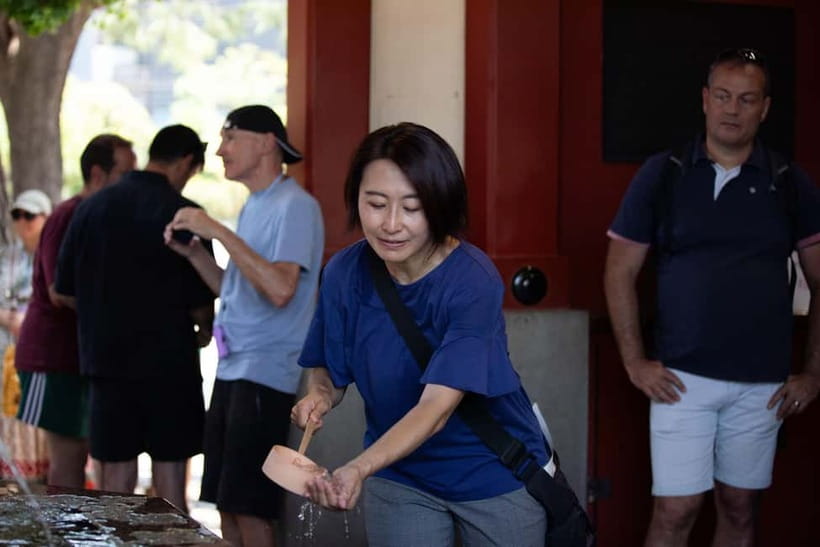
This is a two-hour walking tour. It’s not a long hike, but it is still a walk through multiple sections of Asakusa.
To get the most out of it:
- Wear comfortable shoes you trust on uneven or crowded sidewalks.
- Build in a little buffer time before your start, so you are not racing to Kaminarimon.
- Keep your camera ready for Kaminarimon and Sensō-ji. Those are the big visual wins, and the tour includes photo time there.
The itinerary includes guided segments plus small windows of free time. That structure is helpful. You get explanations in the right places, then you can take photos without feeling like you’re being rushed the whole time.
Is it good value at about $22 per person?
At $22 per person for roughly two hours, this tour is usually a good trade for three reasons.
First, you get a guided visit to multiple major spots, not just one temple stop with a quick photo. The walking route ties Sensō-ji, Nakamise, and the additional street scenes into a single coherent loop.
Second, you’re paying for interpretation. Sensō-ji can feel overwhelming if you are just looking around, especially in a busy area. Having someone explain what matters helps your brain file it away.
Third, you come away with a better plan for the rest of your Asakusa day. Several guides provide practical tips, especially around what to eat next. That can quickly make the $22 feel small if it helps you avoid wasted time and wrong turns.
If you already know Asakusa deeply and you’re comfortable navigating without help, you could DIY. But if you want a first-time-friendly route with meaning built in, this is a strong value.
Who should book this Asakusa walking tour, and who might skip it
Book it if:
- You want a classic Asakusa intro that includes Sensō-ji plus the surrounding streets.
- You prefer a guided pace in a busy area.
- You like learning cultural context while you walk, not after.
Skip it if:
- You hate walking through crowded, active streets.
- You only want the absolute bare minimum temple visit and nothing else.
- You want a long, unstructured shopping session where you can wander as slowly as you like.
This tour is best as a “get your bearings fast” kind of experience, especially when Asakusa is new to you.
Should you book this tour?
Yes, I think it’s worth booking if your goal is a focused, first-time Asakusa experience that balances Sensō-ji with Nakamise Street culture. The price is reasonable for what you get in about two hours, and the guide factor looks strong based on repeated mentions of clear English, humor, and question-friendly explanations.
If you come prepared with comfortable shoes and an on-time mindset, you’ll walk away feeling like Asakusa makes sense, not just like you saw a lot of pretty things.
FAQ
Where do I meet the guide?
Meet the guide in front of the Kaminarimon Gate on the left side. It is near the Tokiwado Kaminari-okoshi Honpo shop, and the guide will be holding a sign for the tour.
How long is the walking tour?
The tour duration is 2 hours.
Is the tour guided in English?
Yes, the live tour guide speaks English.
What does the tour cost?
The price is $22 per person.
Is this experience wheelchair accessible?
Yes, it is wheelchair accessible.
Can I get a refund if my plans change?
You can cancel up to 24 hours in advance for a full refund.
Fresh options around Tokyo
- Tokyo: Nikko Kegon Falls Lake Chuzenji Toshogu Temple & More★ 4.9 · 12 reviews
- Tokyo: Samurai History Walking Tour★ 5.0 · 12 reviews
- Harajuku: Kawaii Fashion and Pop-Culture Tour★ 4.7 · 12 reviews
- Tokyo: Mt. Fuji & Lake Kawaguchi Instagram Full Day Trip★ 4.1 · 12 reviews
- Shibuya Tokyo: Modern Kintsugi Workshop in Shibuya★ 5.0 · 12 reviews
- Tokyo: GTR Guided Daikoku Experience at Night★ 5.0 · 12 reviews
- Tokyo: Daikoku JDM Car Culture Tour★ 4.6 · 12 reviews
- Mt Fuji Private Day Trip from Tokyo with English speaking driver★ 5.0 · 13 reviews
Walking Tours, compared.
Kyoto Geisha Walking Tour: Gion District & Hidden Gems
Read our review →
Tokyo Tsukiji Fish Market Food and Culture Walking Tour
Read our review →
Gion Magical Night Walking Tour with Geisha Trivia
Read our review →
Imperial Palace and Shogun Historical Walking Tour
Read our review →
Gion Geisha District Walking Tour – Stories of Geisha
Read our review →
Shinjuku Local Bar and Izakaya Guided Walking Tour
Read our review →
Browse the lists this tour appears in