Reviewed · TICKETS
Tokyo: TOKYO SKYTREE® Admission ticket
Tokyo Skytree gives you a giant-city viewpoint fast. With Tembo Deck up at 350m, you get 360-degree views, clear city landmarks, and photo angles that make Tokyo feel real instead of just postcard. If you add the Tembo Galleria, you’ll climb even higher to a spiraling skywalk-style ramp for a sharper, more dramatic perspective.
What I like most is how practical the whole experience feels once you’re there, and how much variety you get for one price. You’re not only staring out windows, you’re also stopping for exhibits, an optional glass look-down section, and cafes inside the tower. The one drawback to plan for is that visibility depends heavily on weather and haze, so sunrise or crystal-clear skies are not guaranteed.
Key points worth knowing before you go
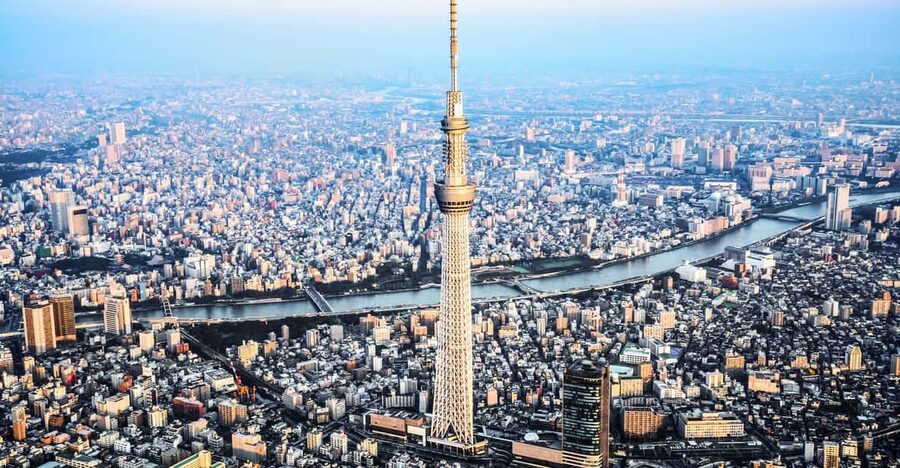
- Tembo Deck (350m) is the main ticket win, with 360-degree views from a big circular observation area
- Optional Tembo Galleria (450m) adds a long, sloping spiral ramp that changes the whole viewing feel
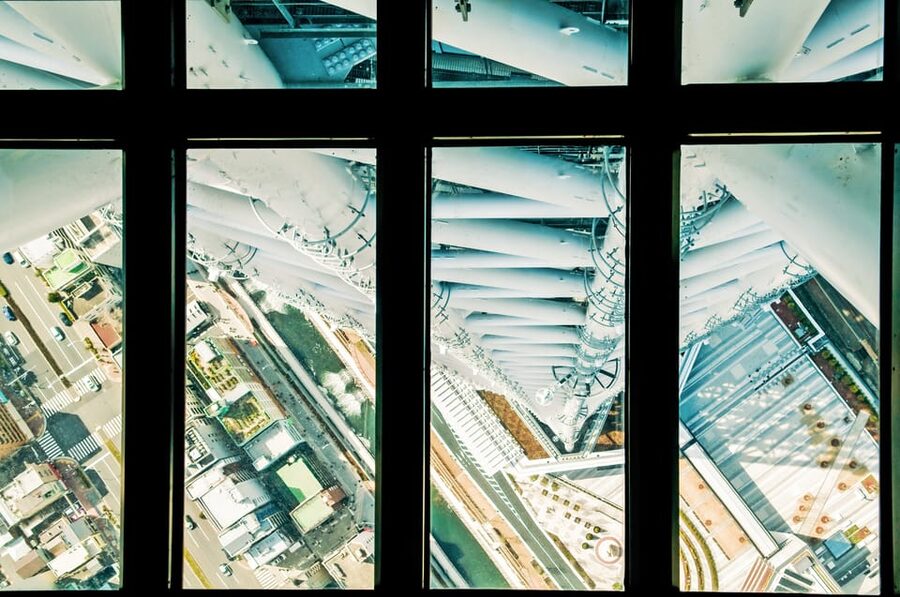
- Floor 340 glass lets you look straight down in a controlled, very popular moment
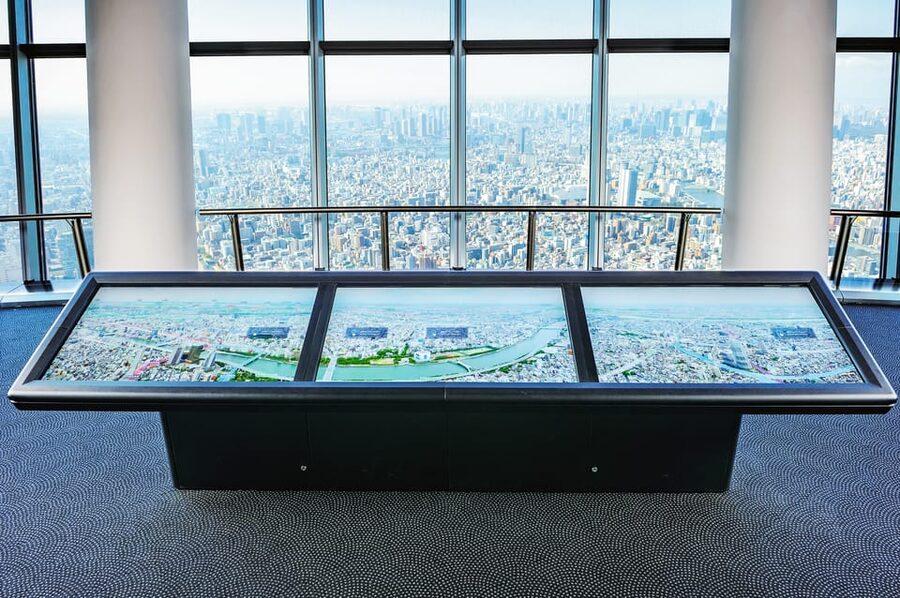
- Interactive displays help you spot major spots like Sumida River, Tokyo Dome, Tokyo Bay, Tokyo Tower, and sometimes Mount Fuji
- Skytree Café (340 or 350) gives you a higher-altitude break without leaving the tower
- Tokyo Solamachi inside Skytree Town turns one tower stop into an easy half-day or longer outing
Tokyo Skytree ticket basics, and why $13 feels fair

This admission ticket is simple: you’re buying your way up to the main observation level, Tembo Deck at 350m. The price here is about $13 per person, which is a pretty solid deal when you consider you are paying for height, elevators, crowd management, and the whole viewing setup in one go.
The optional choice matters. You can add access to the Tembo Galleria at 450m, which changes the experience from classic skyline viewing to a more moving, spiraling “you are part of the view” feeling. If you hate the idea of extra walking, skip the Galleria option. If you want the more wow factor, it’s the option to pick.
You should also understand what you are really paying for: not a museum, not a show, but a view platform experience. That means timing and weather decide how impressive it feels.
A few more Tokyo days worth comparing
- Mt Fuji and Hakone 1-Day Bus Tour Return by Bullet Train
★ 5.0 · 26,383 reviews - 1-Day Tokyo Bus Tour
★ 5.0 · 14,250 reviews - Tokyo: teamLab Planets TOKYO Digital Art Museum Entry Ticket
★ 4.6 · 9,779 reviews
Finding the 4th-floor ticket counter inside Tokyo Skytree Town
Your voucher gets redeemed right at Tokyo Skytree, on the 4th floor. The key detail is that you collect the admission ticket on the day you visit, at the ticket counter there. If you’re trying to avoid stress, arrive with time to spare so you can find that 4th-floor entrance without rushing.
The given coordinates for the site are 35.7100627, 139.8107004, which is helpful if you’re using a maps app and walking from a nearby station. Once you’re inside, staff are there and the experience is set up so you can move forward quickly.
Also note the “skip the ticket line” promise. Even though you may still have some waiting for elevators, you generally avoid the biggest ticketing delays when you’re already holding the right voucher.
Up to Tembo Deck at 350m: the 360-degree first impression
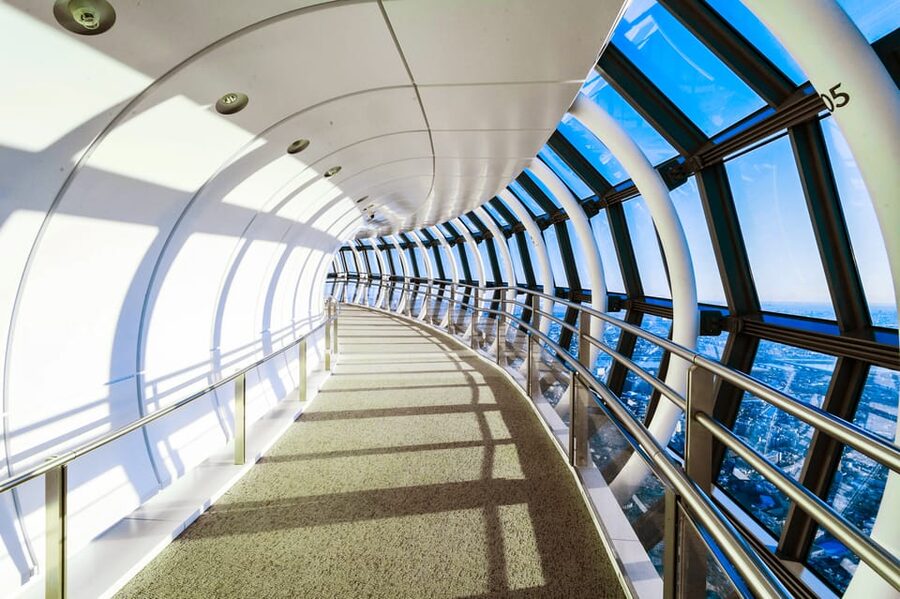
After you redeem your voucher on the 4th floor, you head straight into the elevator for the quick climb to Tembo Deck (350m). This level is built to feel panoramic. The huge circular deck has windows all around, so you can rotate your body and capture different angles without relocating.
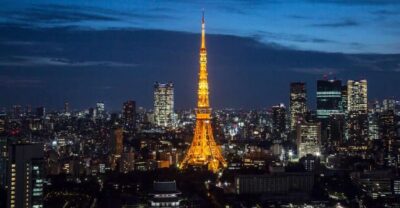
This is where the tower really earns its reputation. From here, you can see the Sumida River winding through the city, plus major landmarks like Tokyo Dome, Tokyo Bay, and Tokyo Tower. Mount Fuji is sometimes visible too, but treat that as a bonus, not a guarantee.
I also like the interactive touchpoints in the observation area. They help you pick out what you’re actually looking at instead of just seeing a wall of buildings. That kind of light guidance matters, especially if you’re new to Tokyo neighborhoods.
Tembo Galleria at 450m: the spiraling ramp that changes your viewpoint
If you choose the option that includes the Tembo Galleria (450m), you go higher again and experience the city from a different angle. Instead of standing in one circular viewing space, you move through a long, sloping spiral ramp where the skyline keeps unfolding as you walk.
This matters for two reasons. First, the height can reduce the clutter of mid-level rooftops, so the city looks more layered. Second, your photos come out more interesting because you’re shifting perspective while you’re viewing.
You should also know this level can feel busier, because it’s the “extra wow” floor. If your main goal is peaceful sightseeing and you’re not chasing photos, the Tembo Deck alone might be enough. If you want to maximize your one tower day, do both levels.
Same corner of Japan, a different kind of day:
- Mt Fuji & Hakone Cruise, Drum Show Bullet Train 1 Day from Tokyo
★ 4.0 · 7,413 reviews - Tokyo: Sumo Show Experience with Chicken Hot Pot and a Photo
★ 4.8 · 6,678 reviews - Tokyo: Shinjuku Food Tour (13 Dishes at 4 Local Eateries)
★ 5.0 · 6,603 reviews - Tokyo Mt Fuji 5th St & Hakone Cruise Bus Tour w/Bullet Train
★ 4.4 · 5,024 reviews
Floor 340 glass: looking straight down without guessing
One of the standout features is the glass flooring on Floor 340, where you can look straight down. It’s the kind of moment that turns your brain on, even if you normally handle heights fine. It also creates a natural pause in your route, so you don’t feel like you’re rushing through everything.
In the tower flow, you’ll encounter this on the way back down. Some people focus on the view through the windows, others go straight for this glass section, and that’s totally normal. If you’re claustrophobic or height-sensitive, give yourself a breath before you step onto the glass.
A small practical tip: bring your time awareness. The glass floor becomes a bottleneck because people line up for the same photo angle. If you want fewer interruptions, aim for a slightly off-peak moment, like mid-session rather than immediately at opening.
Sky-high cafes and shops: where to rest without losing the skyline
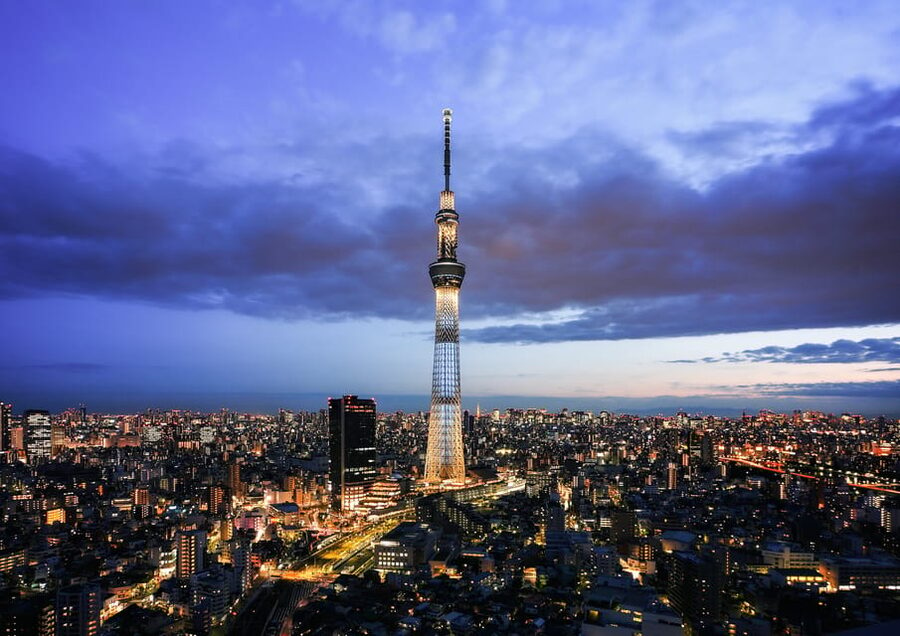
You do not have to leave the tower complex to take a break. Inside, there are two cafe locations tied to different heights.
Skytree Café 350 sits on the 350th floor and is described as Japan’s highest café. It’s a standing-style spot with drinks and light snacks, and the advantage is that you keep your view while you eat. Skytree Café 340 offers a more relaxed seating setup, with space for about 64 guests, so it works well if you want to slow down and actually enjoy the skyline.
Before you exit, there’s also a stop around Floor 345 for the gift shop, which makes sense because it’s one of the last places you’ll want to browse before heading back to ground level.
Then there’s Tokyo Solamachi, a large complex in the Skytree Town area with hundreds of shops and restaurants and even a planetarium. This turns your tower visit into a full outing, not a quick elevator ride and done.
Timing tips: sunset, night lights, and the Fuji question
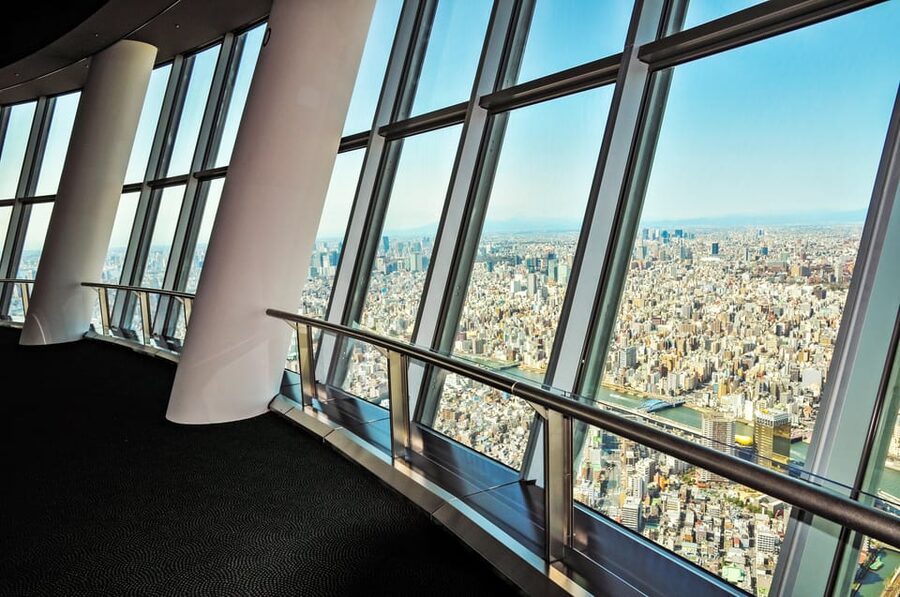
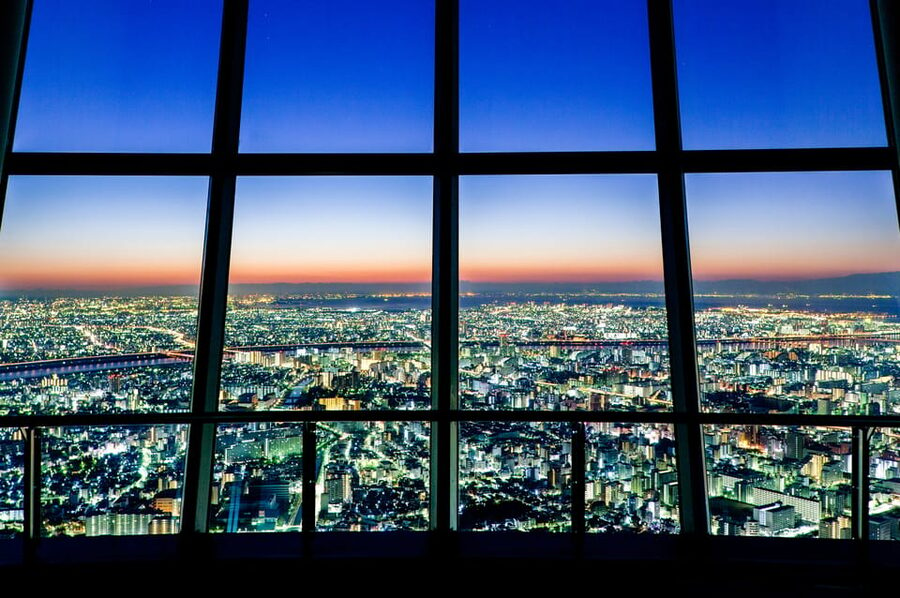
If you want the classic Tokyo look, go near sunset. You get the gradual shift from daylight city detail to night lighting, and it feels like the skyline changes personality every few minutes. Many people come for the night views too, and Tokyo looks especially dramatic once lights spread out across the horizon.
But here’s the reality check. Visibility depends on clouds, haze, and weather. One visitor even noted that they ended up seeing mostly white clouds at the top because conditions were not ideal. That’s the main reason I treat Mount Fuji sightings as luck-based, not something to plan your whole trip around.
The sweet spot for many is late afternoon into early evening. It gives you time to do both observation levels and still enjoy the darker skyline without rushing your last glass-floor moment.
How long should you plan, and who this suits best
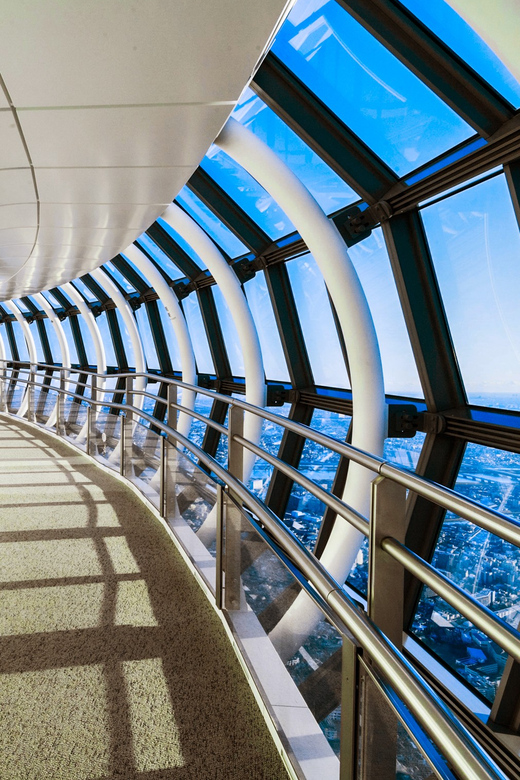
A typical visit feels fast at first, because the elevators are efficient. But once you’re up there, you’ll likely take photos, check the landmark displays, and pause for the glass floor. In practice, plan for about 1.5 to 2 hours if you’re doing both levels and want a leisurely pace.
This experience suits you if:
- You want the simplest major “Tokyo from above” attraction
- You enjoy photography and landmark spotting
- You want an easy add-on after sightseeing in Asakusa and along the Sumida River area
It might not be your best match if you hate crowds and want total quiet at the height levels. Also, if your schedule is extremely tight and you only have time for one viewing moment, focus on the Tembo Deck first and decide about the Galleria based on your comfort with extra walking and possible busier ramps.
Booking choice: Tembo Deck only or add Tembo Galleria?
If you’re deciding on the fly, use this rule. Choose Tembo Deck only if you want panoramic windows, landmark displays, and a shorter, more predictable experience. Choose Tembo Galleria if you want the spiral ramp experience and a more dynamic path through the views.
From the way the tower is designed, both options deliver. The Tembo Deck gives you the classic skyline sweep. The Galleria gives you the “moving viewpoint” feeling and adds height. If you can handle a bit more time and walking, adding the Galleria is usually the best upgrade.
Should you book this Tokyo Skytree admission ticket?
I’d book it if you want high-value sightseeing that feels official, well managed, and easy to use on arrival. For the price, you get a true 350m observation deck, optional access to the 450m Galleria, a glass look-down moment on Floor 340, and the option to take a cafe break without leaving the tower.
Skip booking only if you already know you will not care about views from above, or if your trip timing makes good visibility unlikely and you refuse to gamble on weather. Otherwise, this is one of those Tokyo “go once, be glad you did” experiences that delivers fast and clearly.
FAQ
How high is the Tembo Deck?
The Tembo Observation Deck is at 350 meters.
What is the Tembo Galleria, and how high is it?
The Tembo Galleria is an optional upgrade with access to a viewing space at 450 meters.
What’s included with this admission ticket?
Included access covers the Tembo Deck (350m). Access to the Tembo Galleria (450m) is included only if you select that option.
Where do I exchange my voucher?
You exchange your voucher at the ticket counter on the 4th floor of Tokyo Skytree and collect the admission ticket on the day you visit.
How long is the experience?
It’s listed as 1 day.
Are English and Japanese supported on site?
Yes. The host or greeter is available in English and Japanese, and the languages listed for the experience are English and Japanese.
Is the ticket refundable?
The activity is non-refundable.
Do I need to wait in a long ticket line?
The experience indicates skip the ticket line, though you may still encounter some waiting related to elevator access.
What other things can I do after the observation decks?
Inside Tokyo Skytree Town, you can explore Tokyo Solamachi, which includes shops and restaurants and also has a planetarium.
Fresh options around Tokyo
- Tokyo: Nikko Kegon Falls Lake Chuzenji Toshogu Temple & More★ 4.9 · 12 reviews
- Tokyo: Samurai History Walking Tour★ 5.0 · 12 reviews
- Harajuku: Kawaii Fashion and Pop-Culture Tour★ 4.7 · 12 reviews
- Tokyo: Mt. Fuji & Lake Kawaguchi Instagram Full Day Trip★ 4.1 · 12 reviews
- Shibuya Tokyo: Modern Kintsugi Workshop in Shibuya★ 5.0 · 12 reviews
- Tokyo: GTR Guided Daikoku Experience at Night★ 5.0 · 12 reviews
- Tokyo: Daikoku JDM Car Culture Tour★ 4.6 · 12 reviews
- Mt Fuji Private Day Trip from Tokyo with English speaking driver★ 5.0 · 13 reviews
Tickets, compared.
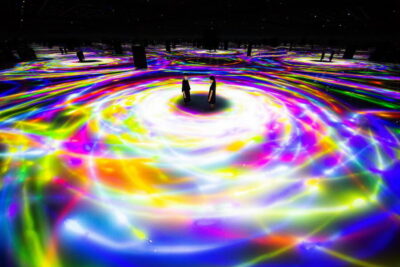
teamLab Planets TOKYO Digital Art Museum Entry Ticket
Read our review →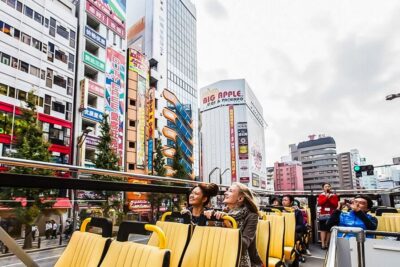
Japanese Dance Cabaret Theater Asakusa-Kaguwa Ticket
Read our review →