
Reviewed · HISTORICAL TOURS
Kyoto: Private 2.5 Hour Historical Walking Tour
Kyoto clicks faster with the right route. In this private walk from Yasaka Shrine, you get the why behind Shinto and Zen gardens, plus major views at Kiyomizu-dera and a five-storied pagoda moment.
I like two things most. First, the guide starts with Kyoto’s big story using a map of the city, then shows you how shrine worship works at Yasaka. Second, Entokuin’s Zen stop feels like a breather, with dry rock-and-sand gardens, sliding-door artwork, and the calm of traditional rooms.
One consideration: the tour is short, and Kiyomizu-dera is extremely popular, so if you want extra time for photos or the pure-water line, you may feel a bit time-pressed. Also, admission fees are not included, so budget a little on top of the tour price.
Key takeaways before you go
- Meet at Yasaka Shrine’s west gate (red gate) so you start in the right place and get context immediately.
- Entokuin Zen temple stop includes dry gardens and traditional rooms with artwork on sliding doors.
- Outside-only pagoda view gives you a classic photo spot without the extra time of indoor visiting.
- Kiyomizu-dera from the main hall stage is where the postcard angles happen, including Koyasu Pagoda views.
- Pure-water ritual and match-making shrine talk add meaning beyond the scenery.
Starting at Yasaka Shrine’s red gate, then learning shrine basics
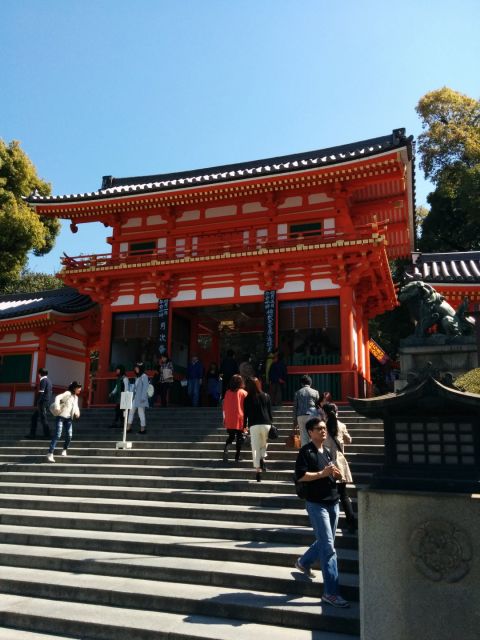
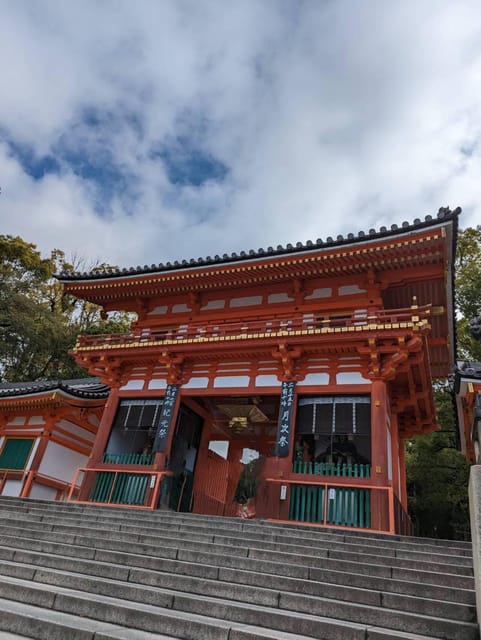
Your tour starts at the west gate (red gate) of Yasaka Shrine. This matters because the walk quickly becomes more than sightseeing. The guide opens with Kyoto’s background using a map of Kyoto, then shifts to what you’re looking at right in front of you.
At Yasaka Shrine, you’ll get practical context on how to worship at a shrine. That’s a small detail, but it changes how you experience the place. When you understand the basic flow, you stop treating everything as random statues, ropes, and clapping spots and start noticing the intention behind the ritual space.
You also get the immediate payoff of being oriented in Gion area streets early. After you leave the shrine, it’s a steady march toward the quieter Zen side of the neighborhood, not a last-minute dash.
More Walking Tours in Kyoto
- Kyoto Geisha Walking Tour: Gion District & Hidden Gems
★ 4.7 · 3,273 reviews - Kyoto: Gion Magical Night Walking Tour with Geisha Trivia
★ 4.9 · 2,393 reviews - Kyoto: Gion Geisha District Walking Tour – Stories of Geisha
★ 4.7 · 2,187 reviews
Maruyama Park and Nene-no-michi: history hiding in plain sight
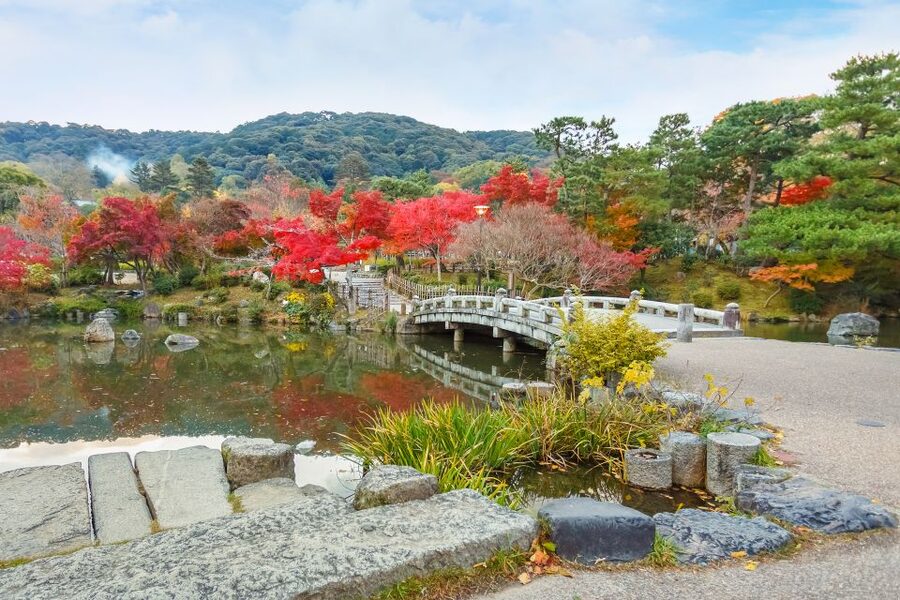
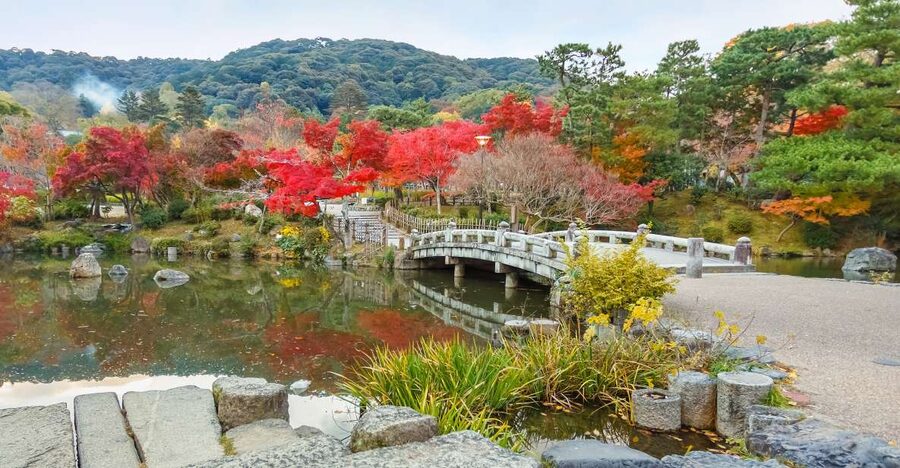
From Yasaka Shrine you pass through Maruyama Park, then into the busy street known as Nene-no-michi. This is where the guide’s storytelling helps you see the street as more than a walkway.
Nene is the wife of Toyotomi Hideyoshi, a major political figure in late-16th-century Japan. That single fact gives you a lens for the area. You’re not just walking through pretty streets, you’re moving through places shaped by people and power from centuries ago.
This stretch also leads you toward Entokuin, a temple associated with Nene. Even before you reach the Zen garden, you start understanding why the detour exists. In Kyoto, those side streets often carry the most meaning, if you know what to look for.
Entokuin Zen temple: dry gardens, sliding-door art, and quiet rooms
Entokuin is the Zen highlight on this route, and the timing is generous at about 40 minutes. You’re not rushed in and out. Instead, you can slow down and actually take the garden in.
Inside, the tour focuses on two strong visual experiences. First, you’ll see the Zen-style dry landscape gardens. Second, the guide points out famous pictures depicted on sliding doors of rooms in the temple. That blend matters, because it connects the calm garden world to the human, artistic world inside the buildings.
If you’ve ever felt that Zen temples are hard to read because you don’t know what you’re looking at, this stop is designed to fix that. You’re shown how to approach the space. The atmosphere stays serene, and you get a chance to notice details that you’d likely miss walking on your own.
One more practical point: comfortable shoes help here. Even though the walk is not extreme, temple grounds and pathways add up when you’re trying to stop often for photos and contemplation.
Yasaka Kōshin-dō and the viewpoint stop that sets up the grand finale
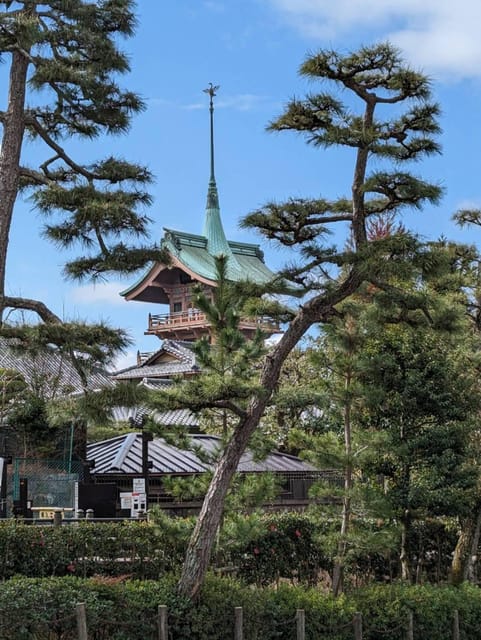
After Entokuin, you head toward Yasaka Kōshin-dō Temple. The visit is short, about 15 minutes, but it works well as a contrast stop. You’re moving from Zen quiet into another kind of sacred focus, still in the same general east Kyoto orbit.
Then you get a viewpoint visit of about 10 minutes. This is the kind of stop that helps you understand why Kiyomizu-dera feels dramatic. You get a mental picture of the terrain and how the temple sits in relation to the streets below, so the final climb and stage view make more sense.
This part of the tour can feel like setup, and it is. But if you like architecture, religious sites, or simply want to avoid feeling lost, the viewpoint helps you connect the dots before you enter the biggest scene.
Same corner of Japan, a different kind of day:
- PERFECT KYOTO 1-Day Bus Tour
★ 5.0 · 13,518 reviews - Kyoto: Fushimi Inari, Kinkakuji, Bamboo Grove 1 Day Bus Tour
★ 4.8 · 4,316 reviews - Kyoto: Tea Ceremony in a Traditional Tea House in Kiyomizu
★ 4.9 · 3,519 reviews - Kyoto: Tea Ceremony Ju-An at Jotokuji Temple
★ 4.9 · 3,207 reviews
The five-storied pagoda photo moment near Koshindo
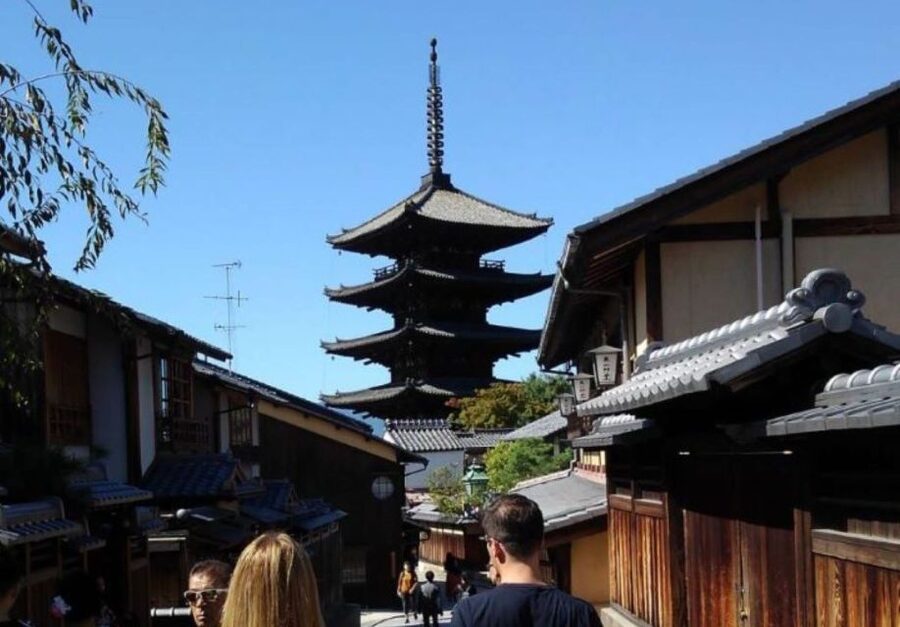
One of the best-known visual moments on this route is the five-storied pagoda, commonly called Yasaka-no-to (pagoda). It sits close to Koshindo, and you get to see it from outside.
This matters because outdoor viewing changes your pacing. You can grab photos, pick a spot near the famous photo spot on the street, and keep moving without being trapped by indoor schedules. It’s also a good way to keep energy for the main attraction ahead.
The pagoda view is brief, but it’s the kind of Kyoto image that sticks. Even if you’ve seen similar pictures online, seeing it in the real street context, with the surrounding buildings and pedestrian flow, tends to hit harder.
Kiyomizu-dera: pure water, the main hall stage, and Koyasu Pagoda views
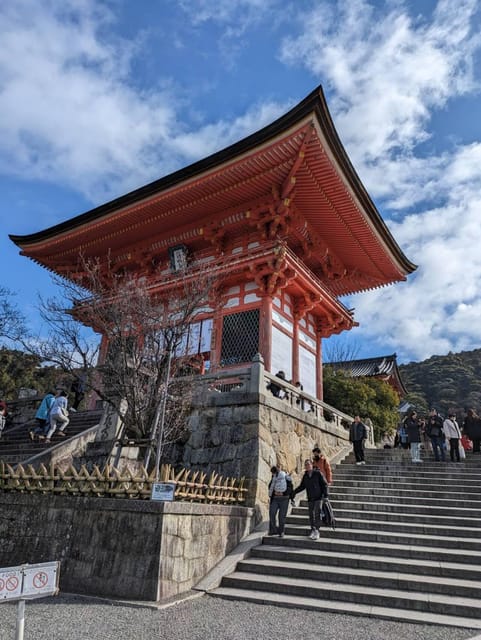
Kiyomizu-dera is the final destination, and you get about 35 minutes there. That’s enough to experience the big icons of the temple complex without turning it into an all-day grind.
First, a little perspective: Kiyomizu-dera was originally built in the 8th century, and it draws millions of visitors each year. The main object of worship is Kannon Bodhisattva. You’ll see Buddhist statues including Kannon Bodhisattva as part of the main experience.
Then comes the signature feature, the wooden stage attached to the main hall. The stage is a wooden structure without nails, and it’s built for dramatic viewing. If you stand where you’re meant to stand, the scenery feels magnificent for a reason. It’s not just a view, it’s a designed platform for looking out into Kyoto.
From this stage you can see a three-storied pagoda called Koyasu Pagoda, literally a pagoda for easy birth. A lot of women visit it, praying for easy birth. Understanding the name and purpose changes the angle from just scenic to meaningful.
Pure-water rituals and the heavy iron stick challenge
While you’re moving through the Kiyomizu-dera precincts, you’ll hear about why the name matters. Kiyomizu literally means pure water. The stream of water running down from the mountain behind the temple has never dried up.
You’ll also notice visitors lining up to drink the water. That line is not just a tourist action, it’s part of the temple’s everyday ritual life.
There are also donation items in the precincts: an iron stick and iron clogs. The iron stick is very heavy, so there’s a simple challenge built into the space. If you’ve got the humor to try, lift it. Even if you fail, you’ll learn how serious the weight is.
Jishu Shrine match-making: a small closing story with real atmosphere
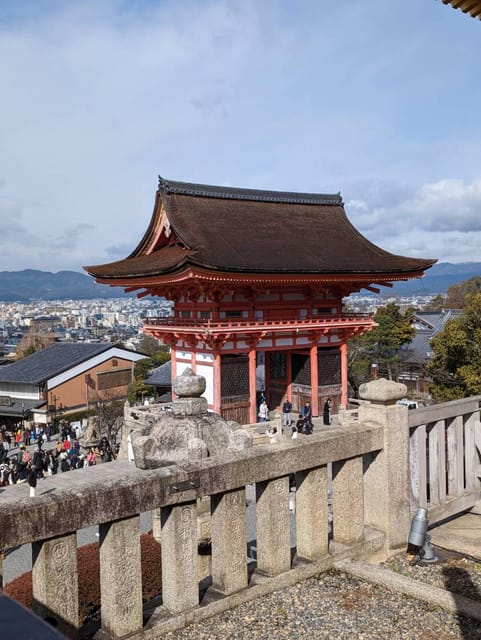
After you leave the main hall area, the tour ends. But before you wrap up, the guide explains Jishu Shrine, a shrine associated with match-making.
This last note is useful because it gives you a cultural frame for what you might otherwise interpret as random charms. Even if you do not plan to return later, you’ll know what the symbolism is when you see similar imagery around Kyoto.
The tour’s structure also works for first-time visitors. You get the big Kyoto icons, then a final human-scale story, so you leave with more than just photos.
Price and what the $80 per group really buys you
This tour costs $80 per group, up to five people. For Kyoto, that’s a good private-value setup when you price it against the cost of multiple taxis or the time you’d waste without context.
Here’s the practical math you should consider. If you’re coming with two to five people, your cost per person drops quickly, and you get one focused guide for the whole walk. If you’re traveling solo, you may prefer a private guide anyway because it saves decision fatigue. Instead of guessing which temple stop matters for understanding Kyoto’s religion and history, your route has a logic to it.
Also, the tour includes the guide only. Temple admission fees are not included, so factor those in. That’s normal for Kyoto temple experiences, but it’s still a cost you should plan for so you do not get surprised mid-day.
Who this tour fits best
This private walk works especially well if you want more meaning than a checklist.
You’ll likely enjoy it if:
- you care about religion in everyday life, not just architecture
- you like short, efficient walking routes that still explain what you’re seeing
- you want a calm Zen break before hitting the most famous temple crowd area
It may be less ideal if you hate walking, or if you want a super slow temple day. The tour is designed as a tight 2-hour experience listed, sold as 2.5 hours in the title. That pace is great for orientation, but you should plan extra time separately if you want to linger at Kiyomizu-dera.
What guide style to expect, based on past English-led bookings
English is the language used on this tour, and the guide experience shows up as a common theme in how people describe their time. Several named guides have been reported, including Hisako, Hiroshita, and Hiroko, and others such as Takayuki Ishii and Masumi-San.
Across those guides, the pattern is practical storytelling: a map early on, clear explanations of shrine worship, and visual aids like hand-drawn materials. In particular, multiple bookings mention the guide using drawings or notes to make historical points easier to remember.
One of the best signs for you is that the guides are also described as responsive to questions. If you like asking why, how, or what that detail means, you’ll probably enjoy the back-and-forth tone.
Should you book this Kyoto historical walking tour?
I think you should book it if you want an easy way to understand Kyoto’s sacred spaces without spending your day reading at a screen. The route balances a big-name finale at Kiyomizu-dera with a calmer Zen stop at Entokuin, and you get practical shrine context before you reach the crowds.
Skip it only if you want a long, unstructured temple day. This is a focused walk. You’ll get the main highlights like the Zen dry garden, the outside view of Yasaka-no-to near Koshindo, and Kiyomizu-dera from the wooden stage. But if you need hours to wander or you plan to queue a lot for the water ritual, add extra time on your own.
FAQ
Where is the meeting point for the tour?
You meet at the west gate (red gate) of Yasaka Shrine.
What’s the tour duration?
The tour is listed as 2 hours, and it’s also titled as a 2.5 hour historical walking tour.
Is this a private tour?
Yes. It’s a private group tour.
How many people are included per group?
The price is per group up to five people.
What language is the tour guide?
The live tour guide speaks English.
What’s included in the price?
The guide is included.
What is not included?
Transportation to and from the meeting point, meals and drinks, admission fees to the temples, and insurance are not included.
What should I wear or bring?
Wear comfortable shoes, since you’ll be walking and there are stone steps involved at the meeting area.
How do I get there by train?
If you use the Keihan Line, get off at Gion Shijo Station. If you use the Hankyu Line, get off at Kawaramachi Station, then walk to the east along Shijo Street to the end, going up on stone steps to the top.
How do I get there by bus?
Get off at the bus stop named Gion, then look for the stone steps before the red gate.
Which parts of the tour are the main highlights?
You’ll visit a Zen temple with dry gardens at Entokuin, see the five-storied pagoda outside near Koshindo, and enjoy views from Kiyomizu-dera, including the wooden stage area and the pure-water ritual.
Is cancellation free?
Free cancellation is available up to 24 hours in advance for a full refund.
More Historical Tours in Kyoto
- Kyoto Gion: 2-Hour Geisha Culture & History Walking Tour
★ 5.0 · 1,186 reviews - Kyoto Gion Historical Walking Tour
★ 5.0 · 188 reviews - Historical Kyoto E-Bike Tour
★ 5.0 · 181 reviews - Kyoto: Nijo Castle World Heritage Guided Tour with Admission
★ 5.0 · 128 reviews
Fresh options around Kyoto
- Kyoto Aquarium Admission Ticket★ 4.7 · 12 reviews
- Kyoto Gion Photoshoot – Private Session | Pro Photographer★ 5.0 · 12 reviews
- Gyoza Cooking Class in Kyoto: Traditional Japanese Dumplings★ 5.0 · 12 reviews
- Kyoto: Guided Food Tour with 12 Dishes & 3 Drinks★ 5.0 · 12 reviews
- Kyoto: Avoid the Crowds at the Hidden Gems of Arashiyama★ 4.9 · 13 reviews
- Kyoto Early Bird English Tour: Gion & Higashiyama(Private opt)★ 5.0 · 13 reviews
- Otsu-e Folk Art Workshop & Local Culture Walk Near Kyoto★ 5.0 · 13 reviews
- Kyoto, Osaka, Nara Full Day tour by Car English speaking Driver★ 3.5 · 13 reviews
Historical Tours, compared.
World Heritage Shirakawa-go and Experience Tours from Kanazawa
Read our review →
Imperial Palace and Shogun Historical Walking Tour
Read our review →
World Heritage Kyoto & Nara Uji Authentic Matcha Experience
Read our review →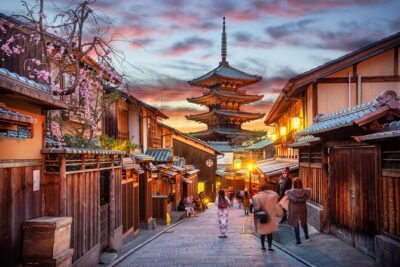
Kyoto Gion: 2-Hour Geisha Culture & History Walking Tour
Read our review →
World Heritage Shirakawa-go Morning Guided Tour
Read our review →
Hiroshima Historical Walking Tour – Why A-Bomb was Dropped
Read our review →
Hiroshima Peace (Heiwa) Walking Tour at World Heritage Sites
Read our review →Browse the lists this tour appears in