
Reviewed · TEA CEREMONIES IN KYOTO
Kyoto: Tea Ceremony with Maiko Premium
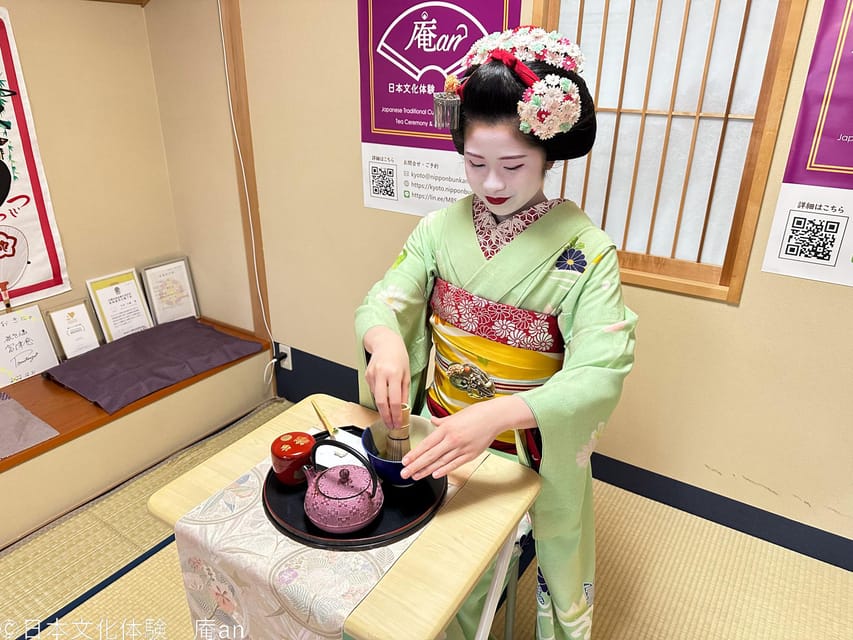
Meet a Maiko, sip matcha, and ask anything. This 90-minute Kyoto program pairs Maiko storytelling with hands-on matcha making, plus dance and a close photo moment you can actually savor.
I especially like the direct Q&A and how you can ask real questions about life as a Maiko, not just watch from the sidelines. I also like the photo setup, because you get the chance to take pictures up close, right beside her, along with a small gift you’ll remember later.
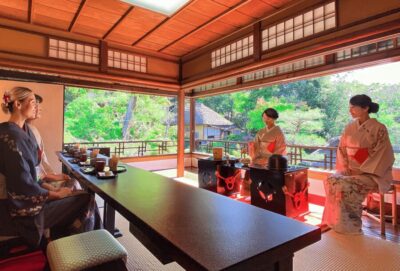
One key consideration: the venue is not a traditional tatami tea room or a classic ochaya house. It’s in a building with a more standard room layout, and some photos can catch visible signage or a plain backdrop.
Key Points You Will Actually Care About
- You make matcha yourself, guided by the performer, not just observe.
- The Q&A is built in, so you can ask about training, daily life, and what the kimono and routines mean.
- Premium moments include dance plus interactive game time, which makes it feel like more than a quick tea demo.
- You get a close photo and a Senjyafuda lucky charm, a nice extra beyond the tea.
- It may be a Geiko instead of a Maiko, depending on availability.
- Expect stairs and a modern building setting, so plan for comfort and photography angles.
Who the Maiko Are, and Why This Tea Ceremony Feels Personal
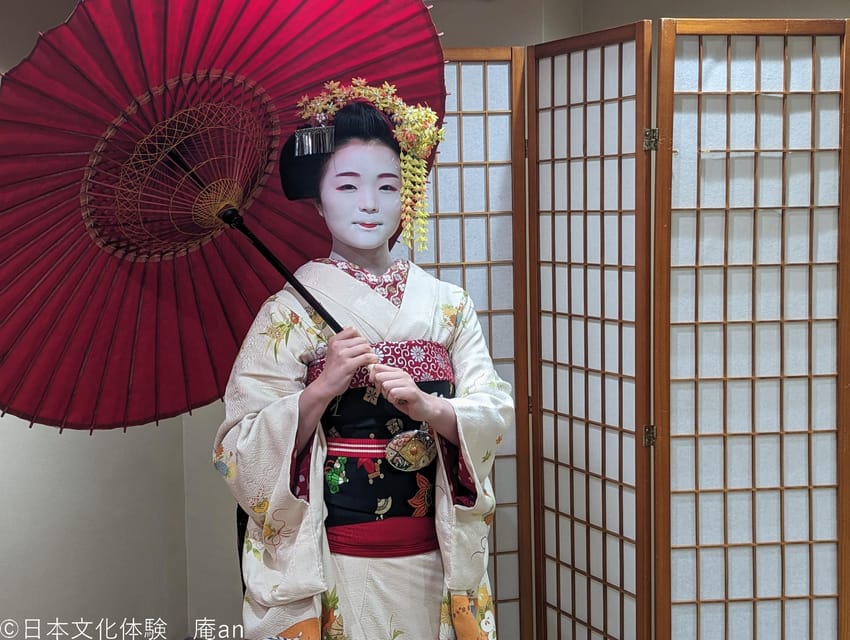
Kyoto’s Maiko world is all about apprenticeship, discipline, and daily practice. You’ll hear how much time and effort goes into the look, the etiquette, and the performance skills, and you’ll get a clearer sense of what life looks like beyond costumes for a night out.
What makes this experience compelling is the format. Instead of a one-direction show, you get a guided tea moment, a chance to speak with the performer in real time, and then entertainment that connects to seasons and everyday stories. It’s a structured introduction, with the human voice behind it.
Also, don’t assume the performer will always be a Maiko. The program notes that Geiko may be invited instead of Maiko depending on the situation, and multiple bookings report experiencing Geiko. Either way, you’re still getting the “performer + tea + cultural performance” package.
More Tea Ceremonies in Kyoto
- Kyoto: Tea Ceremony in a Traditional Tea House in Kiyomizu
★ 4.9 · 3,519 reviews - Kyoto: Tea Ceremony Ju-An at Jotokuji Temple
★ 4.9 · 3,207 reviews - Kyoto: 45-Minute Tea Ceremony Lesson Experience
★ 4.3 · 2,378 reviews
Premium Program Walkthrough: From Greeting to Matcha and Q&A
The whole session runs about 90 minutes, and it moves in clear steps. The schedule is designed to flow from meeting her, to making tea, to learning about her world, then finishing with performance and interaction.
Here’s how the time typically unfolds:
- Start of the program (about 0 to a few minutes): greeting from the performer
You’ll get introduced right at the beginning, and that sets the tone. It’s not silent. It’s a conversation-style cultural program.
- Tea ceremony with matcha, plus two Japanese sweets
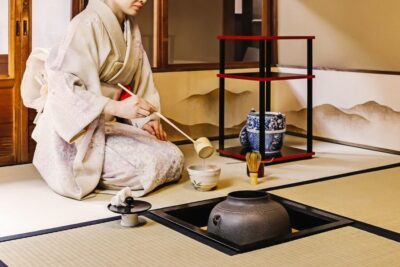
You’ll learn the basics and then make your own matcha. The tea is paired with two dried-type Japanese sweets, so don’t expect a full multi-course sweets spread. You will taste and learn the core process, and you’ll leave knowing what you did, not just what you watched.
- A Q&A session
This is one of the strongest parts. You can ask questions directly, and the performer explains things about training and daily routines. People consistently highlight how friendly and professional the performer is during this portion, and how much they enjoy hearing answers in plain, direct terms.
- Photo opportunity, right beside the performer
You’ll take a commemorative photo with her up close. This is the kind of moment that can be awkward in some shows, but here it’s built into the flow so you’re not rushing at the end.
If you like interactive cultural experiences, this is the reason to pick the Premium option. The whole program is not just tea. It’s tea plus performer access.
Making Matcha Yourself: What You Learn Beyond the Pour
Tea ceremonies can sound intimidating if you picture formal tatami rooms and silence. In this format, you’re guided step-by-step, and that matters. You get to participate, which makes the learning stick.
You’ll work with matcha and learn how the process works from start to finish, including how to prepare the tea and handle the sweets pairing. It’s not described as an ultra-detailed private ceremony, but it is hands-on, and that’s usually the best way to understand matcha in Kyoto.
One practical thing: matcha taste varies with preparation and mindset. When you make it yourself, you’ll understand why it tastes the way it does and what changes based on technique. That alone can make the experience feel worth it even if you’re not a tea expert.
The Close Photo, the Senjyafuda Charm, and What It Means
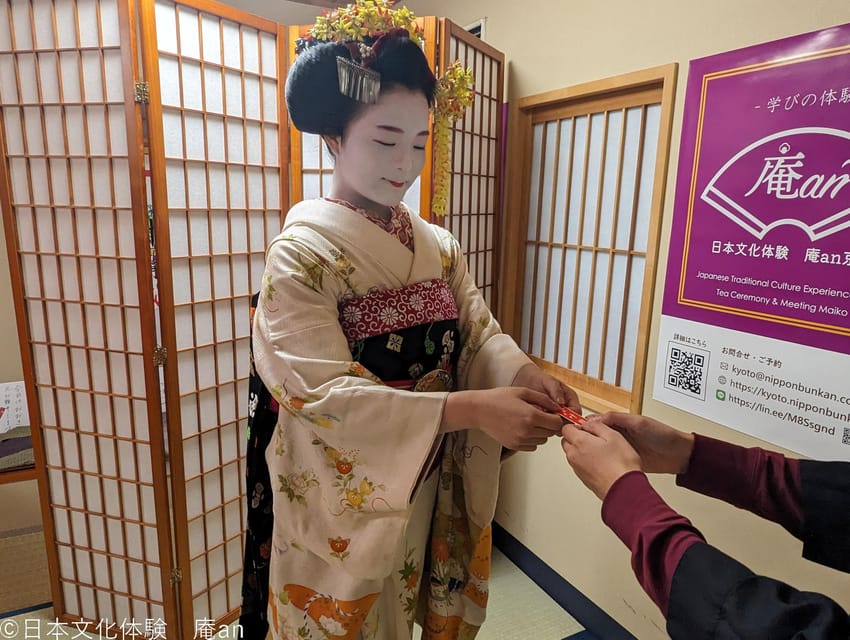
That close photo is one of the moments you’ll remember most clearly. Multiple bookings specifically mention how close the experience feels and how polite the performer is while taking photos.
Right after the photo, you’ll receive a small lucky charm called a Senjyafuda. It’s presented as part of the program, so you’re not scrambling at the gift counter afterward. It’s a meaningful souvenir because it ties to the moment you met her, not just a generic Kyoto trinket.
If you’re thinking about photos, plan for real-life conditions. One review notes that background advertising can appear in the frame. You can reduce that by standing with your body slightly angled, and by using a portrait mode crop strategy to keep the focus on kimono details and faces.
Same corner of Japan, a different kind of day:
- PERFECT KYOTO 1-Day Bus Tour
★ 5.0 · 13,518 reviews - Kyoto: Fushimi Inari, Kinkakuji, Bamboo Grove 1 Day Bus Tour
★ 4.8 · 4,316 reviews - Kyoto Geisha Walking Tour: Gion District & Hidden Gems
★ 4.7 · 3,273 reviews - Kyoto: Gion Magical Night Walking Tour with Geisha Trivia
★ 4.9 · 2,393 reviews
Dance and Stories: Two Performances Plus Seasonal Elegance
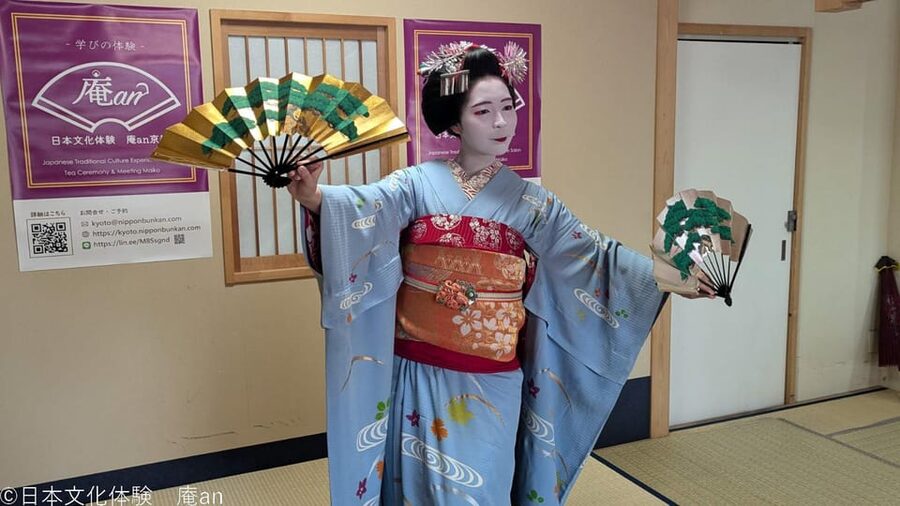
The program includes a dance performance, and it’s not just one brief clip. You’ll enjoy two traditional dances that express themes tied to seasons, love stories, or everyday life.
This is where you see the training show up. Dance here is less about big stage tricks and more about control, posture, and that slow clarity of movement. Several bookings highlight goosebump reactions, especially around the elegance of the movements.
You also get a sense of why Maiko and Geiko performance arts matter culturally. Even without knowing every reference, you can feel the discipline in timing and the intention in gestures.
The Interactive Game With Maiko: Fun That Fits Families
The Premium experience doesn’t stop at watching. You’ll also play a simple interactive game with the performer. Volunteers are welcome, but watching is also part of the fun.
I like this section because it flips the energy. After matcha and Q&A, the mood becomes playful. It also helps kids and adults share the same activity, so it doesn’t feel like two separate experiences crammed into one.
If you want a Kyoto evening that feels lively and human, this is where it happens. The performer still leads, but you’re participating, cheering, and reacting in real time.
One note for expectations: this is still a group program. It can feel intimate compared to a big theater, but it won’t be a private one-on-one lesson.
Where You’ll Sit and How the Venue Affects the Atmosphere
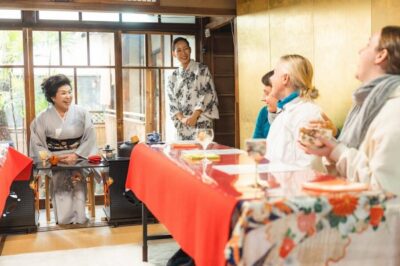
Here’s the honest picture. This is not an ochaya or a classic traditional Japanese house setting. Reviews describe tables and stools rather than tatami rooms, and one mentions a plain backdrop with posters.
That affects two things:
1) Photography mood. If you care about background aesthetics, you may need to position yourself and accept that some frames won’t look like a cinematic postcard.
2) Immersion level. You still learn a lot, but the setting is more modern and functional than theatrical.
At the same time, the program is described as relaxed and friendly, with staff support and no special preparation needed. So if you arrive ready to focus on the performer, matcha, and stories, you should still have a great time.
Also, remember there’s no elevator in the building. You’ll take stairs to reach each venue area, so keep that in mind if you have mobility limitations.
Timing, Meeting Point, and How to Get the Most Out of 90 Minutes
Your meeting point is about one minute walk from Exit 1 of the Karasuma Line Gojo Station. The entrance faces Gojo-dori, which helps you orient quickly.
The program operates from 10:00 to 17:00. If your reservation comes after 17:00, it’s processed the next day. On the day itself, don’t treat your arrival time casually. The event won’t be held to accommodate delays, so plan a buffer.
I also love the small practical tips that can make the start feel extra fun. One booking suggests arriving around 15 minutes early because you can sometimes see Maiko arrive by taxi to enter the building. Another suggests staying a bit after the show to watch the performer depart and wave goodbye. That’s not guaranteed, but arriving early is still smart because it gives you time to find the entrance and settle in.
The program typically runs like this:
- greeting
- tea ceremony with matcha and two sweets
- Q&A
- photo and Senjyafuda charm
- dance performance
- interactive game
- you then leave around the 90-minute mark
Some bookings report it can feel slightly shorter than advertised. If you’re a detail-oriented planner, treat 90 minutes as the intended total, but accept a little variation.
English, Translation, and How to Prepare Your Questions
The instructor is Japanese, and the language focus is Japanese. English translation is provided as much as possible, and you can request additional help by contacting them.
Because there’s a Q&A, you’ll get more out of this if you bring a few questions ready. Aim for topics like training routines, kimono basics, what daily preparation involves, and what she enjoys most about performing. You can also ask about how the lifestyle differs from what people assume.
Even if your questions are simple, the best part is that the performer answers directly, and you’re not just collecting facts. You’re hearing the logic and emotion behind them.
Price Versus Value: Is $50 Fair for What You Get?
At about $50 per person, you’re paying for more than tea. You’re paying for a full performer-led program: matcha making, two Japanese sweets, an extended Q&A, a close photo, a lucky charm, a dance performance, and an interactive game. That’s a lot of structured content for the price.
Premium pricing is specifically called out as worth it by bookings. The common thread is that Premium includes the dance and game pieces, which are the elements that make the night feel complete rather than like a short ceremony followed by a quick exit.
Also, the experience includes free snacks and a drink. Reviews mention that additional drinks may be available inside at moderate prices, so if you’re thirsty, you can plan to pay for extras only if you want them.
If you’re doing Kyoto on a tight schedule, this program is a “high concentration” cultural stop. It’s not a full day like Arashiyama or a long traditional workshop. It’s a compact evening or midday block that gives you performer access and real interaction.
Who Should Book, and Who Might Want to Skip
This is a strong choice if you want:
- a hands-on tea experience, including making matcha yourself
- a direct Q&A with a performer
- dance and interactive fun in one package
- a close photo moment with a Maiko or Geiko
It might be less ideal if:
- you want the setting to look like a traditional tatami ochaya room
- you are very sensitive to photo backgrounds and visible signage
- you expect a perfectly quiet, private session
Families often like this too because the game portion works for kids, and the performer interaction keeps it lively.
If you’re the kind of traveler who likes authenticity but also likes efficiency, this is a good compromise. You get access and context without needing hours of planning.
Should You Book Kyoto Tea Ceremony With Maiko Premium?
Yes, I’d book it if your goal is a short, vivid Kyoto cultural evening where you learn matcha, meet a performer, and get more than just a photo. The Q&A, the dance, and the interactive game are the real value drivers, and the Senjyafuda charm is a satisfying, memorable extra.
If you’re mainly chasing a perfectly traditional room aesthetic, you might feel slightly let down by the modern building layout and the plain backdrop. In that case, still go if you can shift your focus to the performer experience and the matcha you make.
Go in with reasonable expectations, come early, and have one or two questions ready. Do that, and you’ll leave with a Kyoto memory that feels personal, not packaged.
FAQ
How long is the Kyoto Tea Ceremony with Maiko Premium?
The experience lasts about 90 minutes.
Where is the meeting point?
Meet at a spot about a one-minute walk from Exit 1 of the Karasuma Line Gojo Station. The entrance faces Gojo-dori.
What happens during the tea ceremony?
You’ll learn about matcha from the performer and then make your own matcha. The tea includes two Japanese sweets.
Do I always meet a Maiko?
The program says it may invite a Geiko instead of a Maiko depending on the situation.
What is included in the ticket?
It includes the tea ceremony with Maiko Premium, free snacks and a drink, and the program elements such as Q&A, photos, a Senjyafuda lucky charm, dance performance, and an interactive game.
Is there English translation?
Japanese is the main language, and English translation is provided as much as possible. If you want additional translation support, you should contact them.
Are children under 2 years old free?
Children under 2 years old are free of charge, but if a seat or meal is required, the child is charged at the same fee as one person.
Is the venue accessible by elevator?
There is no elevator in the building, and you need to take stairs to reach the venues.
What is the cancellation policy in general terms?
Free cancellation is offered up to 8 days in advance for a full refund, and cancellation fees may apply if you cancel later.
More Geisha Experiences in Kyoto
- Kyoto: Gion Geisha District Walking Tour – Stories of Geisha
★ 4.7 · 2,187 reviews - Best of Kyoto: Gion, Geisha, Pagodas & Cobblestones
★ 4.9 · 2,058 reviews - Night Walk in Gion: Kyoto’s Geisha District
★ 4.5 · 2,003 reviews - Kyoto Night Foodie Tour in Gion (9+ dishes + 6 Sake tastings)
★ 5.0 · 1,762 reviews
Fresh options around Kyoto
- Kyoto Aquarium Admission Ticket★ 4.7 · 12 reviews
- Kyoto Gion Photoshoot – Private Session | Pro Photographer★ 5.0 · 12 reviews
- Gyoza Cooking Class in Kyoto: Traditional Japanese Dumplings★ 5.0 · 12 reviews
- Kyoto: Guided Food Tour with 12 Dishes & 3 Drinks★ 5.0 · 12 reviews
- Kyoto: Avoid the Crowds at the Hidden Gems of Arashiyama★ 4.9 · 13 reviews
- Kyoto Early Bird English Tour: Gion & Higashiyama(Private opt)★ 5.0 · 13 reviews
- Otsu-e Folk Art Workshop & Local Culture Walk Near Kyoto★ 5.0 · 13 reviews
- Kyoto, Osaka, Nara Full Day tour by Car English speaking Driver★ 3.5 · 13 reviews
Tea Ceremonies in Kyoto, compared.
Tea Ceremony in a Traditional Tea House in Kiyomizu
Read our review →
Arashiyama Bamboo Forest, Monkeys, Matcha & Temple Tour
Read our review →
Tea Museum Tickets and Matcha Grinding Experience
Read our review →
Browse the lists this tour appears in