
Reviewed · DESSERT TOURS
Kyoto: Traditional Tea Ceremony with Matcha & Sweets in Gion
Kyoto’s matcha moment is calmer than you expect. In the historic Gion area, this tea ceremony keeps things graceful but not stiff, so you can actually follow what is happening and join in without feeling like you must sit perfectly on the floor. You watch an elegant tea ceremony up close, then you make your own bowl of matcha, with traditional sweets and tea history folded into the experience.
I especially like the chair seating approach. It removes the biggest barrier people worry about with tea ceremonies, so your body can relax while your attention opens up to the details. I also like that you do not just observe. You get clear guidance to make matcha yourself after seeing the real techniques performed right in front of you.
One thing to plan around is that matcha is caffeinated, so it is not recommended for children under age 5, and kids who are younger may not get their own matcha to make. If you choose the kimono option, your tea ceremony time is fixed based on your selected kimono start time, so you will want to double check those slots before you commit.
Key things to know before you go
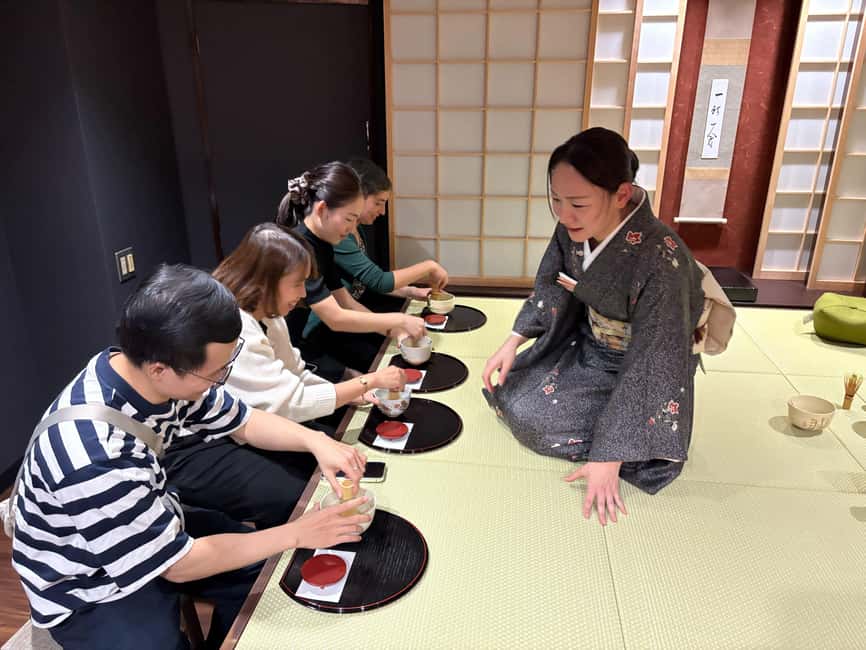
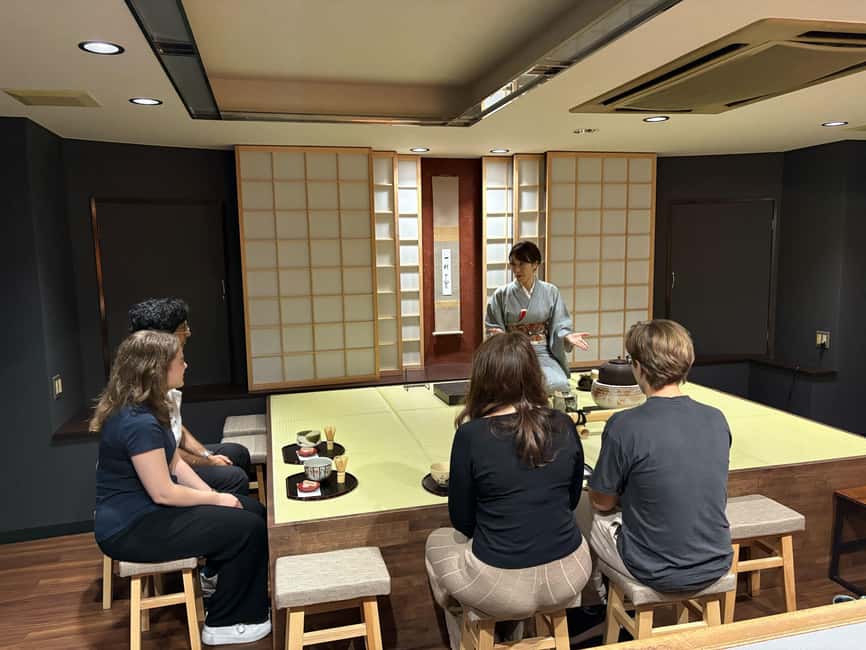
- Chair seating in Gion keeps the experience comfortable and easier to follow
- Watch first, then whisk so you understand what you are doing before you make it
- Tea history and Zen philosophy are explained in a friendly, human way
- Local farm matcha powder goes into your bowl, not mystery powder
- Traditional sweets from long-established confectioners help balance the taste of matcha
- Take-home matcha recipe makes it easier to recreate the experience after your trip
Gion Kyoto, but with a relaxed tea ceremony vibe
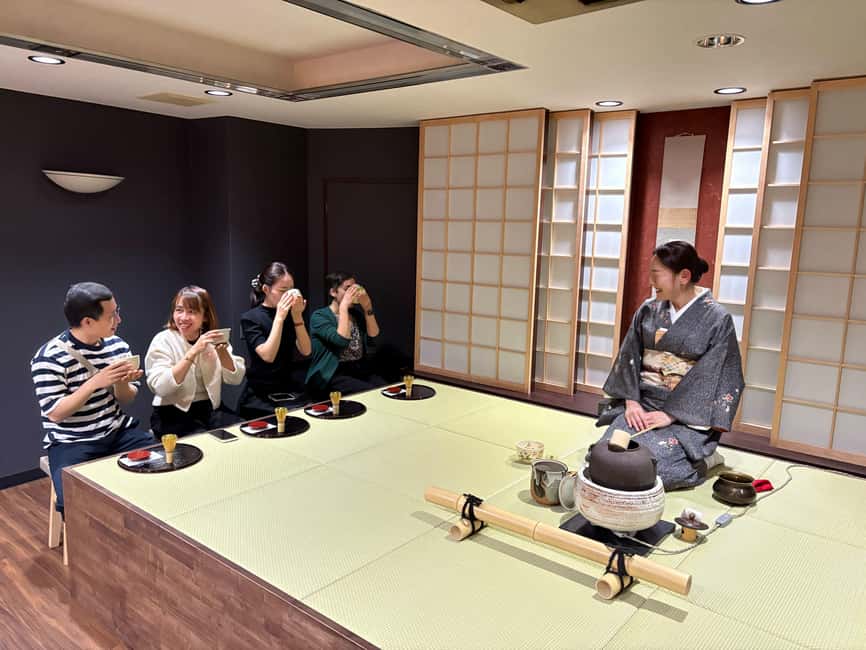
Gion is famous for its traditional side streets, old wood buildings, and that slower pace you feel as soon as you turn into the neighborhood. This tea ceremony takes place right in the middle of that atmosphere, so you get the sense that you are not doing a random food activity, you are stepping into a cultural space.
What makes this version especially appealing is the tone. Traditional tea ceremonies can sound formal and strict, but this one aims for calm elegance without making you feel judged. Expect a friendly, approachable session where the tea master guides you through what matters, rather than insisting you perform perfectly. That is a big deal when you are traveling, because your focus should be on learning and tasting, not on worrying.
Also, the setting is built for comfort. Instead of the typical floor setup, you sit in chairs. That choice matters because it helps you stay present. You can listen, watch the motions, and then participate without pain or stiffness stealing your attention.
More Tea Ceremonies in Kyoto
- Kyoto: Tea Ceremony in a Traditional Tea House in Kiyomizu
★ 4.9 · 3,519 reviews - Kyoto: Tea Ceremony Ju-An at Jotokuji Temple
★ 4.9 · 3,207 reviews - Kyoto: 45-Minute Tea Ceremony Lesson Experience
★ 4.3 · 2,378 reviews
Your chair-side lesson: tea history, Zen, and what the ritual is for
The experience is built in two halves, and the first half is about context. You learn the history of tea and the tea ceremony, with the deeper philosophical ideas behind it, including how Zen philosophy influenced the practice. The goal is not to throw dates and facts at you, it is to help you understand why people treat tea as a moment, not just a drink.
In practice, this kind of explanation changes how you taste. When you know the meaning behind the steps, the ritual stops being a show and becomes something you can actually feel. You start to notice the rhythm: water heated, tools brought forward, movements controlled, pauses included. Even if you do not think of yourself as a “ceremony person,” you can still appreciate the logic.
Another plus is that you get instruction from an English-speaking tea master. If you like learning culture through hands-on guidance, this is the kind of session that respects your time. You are not left guessing what is happening, and you are not expected to already know tea terminology.
Watch a real tea ceremony up close, then make matcha yourself
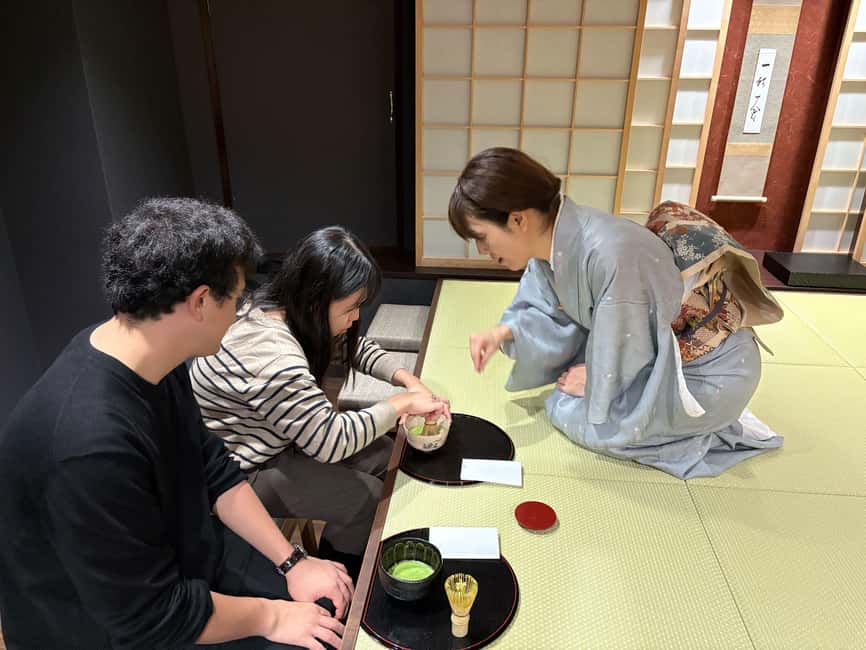
The most satisfying part is the flow from watching to doing. You get to observe the authentic techniques performed up close, so you can see the small decisions that affect the final bowl. That close-up element helps a lot, because matcha is not just powder and water. It is texture, timing, and how you create foam.
Then comes your turn. You mix your own bowl of matcha with guidance. The instruction focuses on the practical goal: how to properly whisk so you get a nice froth and a smooth drinking consistency. If you have ever tried matcha at home and found it flat or bitter, this is the part that usually fixes the problem, because you learn the method that creates the right texture.
You also start with matcha powder sourced from a family-run tea farm. That matters for quality. Better matcha tends to taste more balanced and gives you a clearer sense of what matcha should taste like, instead of masking it with harsh bitterness.
If you are a sensory person, you will likely appreciate the calm atmosphere. One of the most memorable moments for many people is the sound of the hot pot starting to whistle, which becomes a signal that the session has truly begun. It is a small detail, but it reinforces that you are in a real ritual space, not a rushed demonstration.
Traditional Japanese sweets with your matcha, and why pairing matters
After the tea ceremony portion, you move into tasting. You will enjoy carefully selected traditional Japanese sweets chosen by the tea master, including sweets from long-established confectioners. You are not given random snacks here. The pairing is part of the teaching.
This is one of those underrated parts of tea culture. Matcha has a strong green character, often with a slightly bitter edge. Traditional sweets are usually designed to soften that edge and give you contrast. That means you get to taste matcha as more than a single flavor note. You taste it alongside something that supports it.
As you eat, pay attention to the balance. The session encourages you to slow down and notice how the sweetness changes the way the matcha feels in your mouth. It is a simple lesson, but it is one you can carry home. When you drink matcha later, you will remember that the best experience might involve pairing and pacing, not just sipping.
Also, sweets are an easy way to keep the mood light. If you are someone who finds some cultural activities too serious, this part helps the session stay friendly. You can relax while still learning something real.
Same corner of Japan, a different kind of day:
- PERFECT KYOTO 1-Day Bus Tour
★ 5.0 · 13,518 reviews - Kyoto: Fushimi Inari, Kinkakuji, Bamboo Grove 1 Day Bus Tour
★ 4.8 · 4,316 reviews - Kyoto Geisha Walking Tour: Gion District & Hidden Gems
★ 4.7 · 3,273 reviews - Kyoto: Gion Magical Night Walking Tour with Geisha Trivia
★ 4.9 · 2,393 reviews
Q&A with the tea master, plus a simple matcha recipe to take home
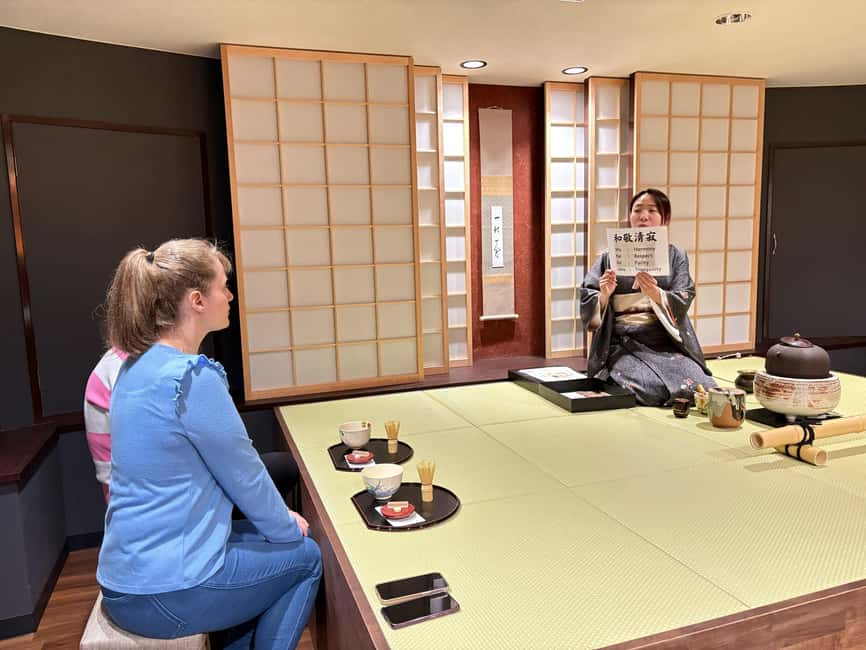
The last step is where the experience turns from event into understanding. You get a Q&A with the tea master, so you can ask questions about tea, the ceremony, matcha, or anything else that comes up as you participate. This is especially useful because tea has plenty of terms people hear online, but do not know how they connect to what is actually happening during a ceremony.
I like this ending because it gives you permission to be curious. You do not need to pretend you know all the background. You can ask for clarification, and you leave with a clearer picture of what you just learned.
The other big win is the take-home recipe. This is not complicated. It is a simple way to recreate matcha for daily life. That is what turns this from a one-hour ticket into a skill you can use again back home. If you have ever bought matcha powder before and felt stuck on how to make it taste right, a recipe designed for normal use is a practical gift.
Timing, group size, and language, so you are not stressed on arrival
Expect a session that lasts from about one hour up to roughly 150 minutes, depending on the start time and the format you book. That range can sound broad, but it usually means you will have breathing room for the full arc: greeting, explanation, ceremony observation, hands-on matcha making, sweets, and Q&A.
This is an English-led experience, and it is offered as a small group. Small group matters because it makes questions easier and reduces the pressure of being lost in a crowd. You are more likely to get hands-on attention when needed, and you can actually hear the tea master’s explanations.
If you are pairing this with other things in Kyoto, plan for it like a calm stop rather than a quick snack. You do not want to run across town right after, because you will probably want a moment to process what you learned, and maybe enjoy the taste one more time.
If you choose the kimono option, just note that your tea ceremony time is fixed based on your kimono start time. For example, if you select 11:00 as your kimono start, you attend the 12:30 tea ceremony, and the same pattern applies to other start times. That means you should coordinate your schedule around the ceremony, not just the kimono rental window.
Value check: what $22 gives you in Kyoto matcha culture
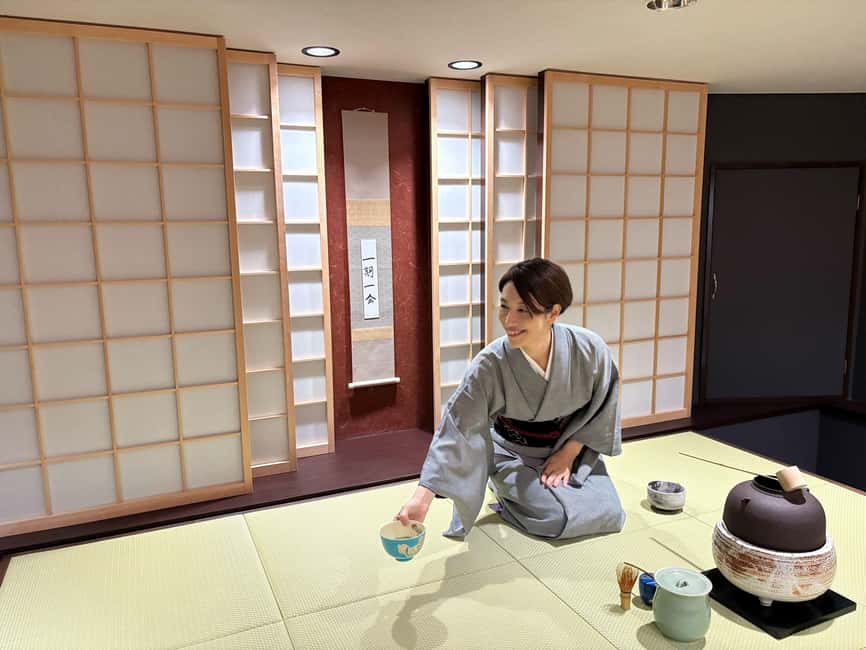
At about $22 per person, this is priced like a cultural experience, not a mass-market activity. For that price, you get matcha drink made with matcha powder from a local tea farm, guidance to make matcha, a simple recipe to take home, and traditional sweets.
The value is not only in what you consume. It is in the instruction and the access. Watching an authentic tea ceremony up close, then making your own bowl with guidance, is where the money tends to pay off. You are not just tasting matcha once, you are learning how to recreate the texture and rhythm at home.
Also, the chair seating approach adds value for many people. It reduces the friction that can make cultural activities feel uncomfortable. You can focus on the experience instead of managing discomfort.
If you like the idea of learning Kyoto culture through food and craft, this is a good deal. It is also flexible for planning, since you can reserve now and pay later, and there is free cancellation up to 24 hours before the experience starts.
Who this Kyoto tea ceremony suits best
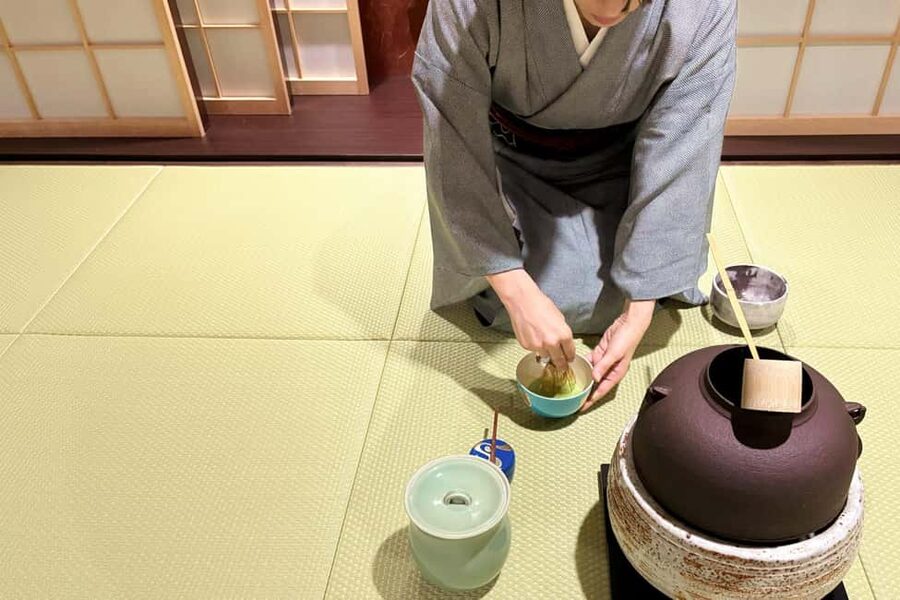
This fits well if you want authentic Kyoto culture without a performance vibe. You will get real technique, real context, and real taste, with a warm tone that does not demand perfection.
It is also a smart choice if:
- you are traveling with limited mobility or you simply prefer sitting comfortably in a chair
- you want a deeper understanding of matcha beyond trying a cup
- you like hands-on experiences, not just watching from a distance
- you want a small group setting where questions are welcome
It may be less ideal if:
- you are booking for a young child under age 5, since matcha is caffeinated and the session notes it is not recommended for that age group
- you want a fully flexible schedule, because kimono timing can lock in the tea ceremony time
Should you book this Kyoto Traditional Tea Ceremony with Matcha and Sweets in Gion?
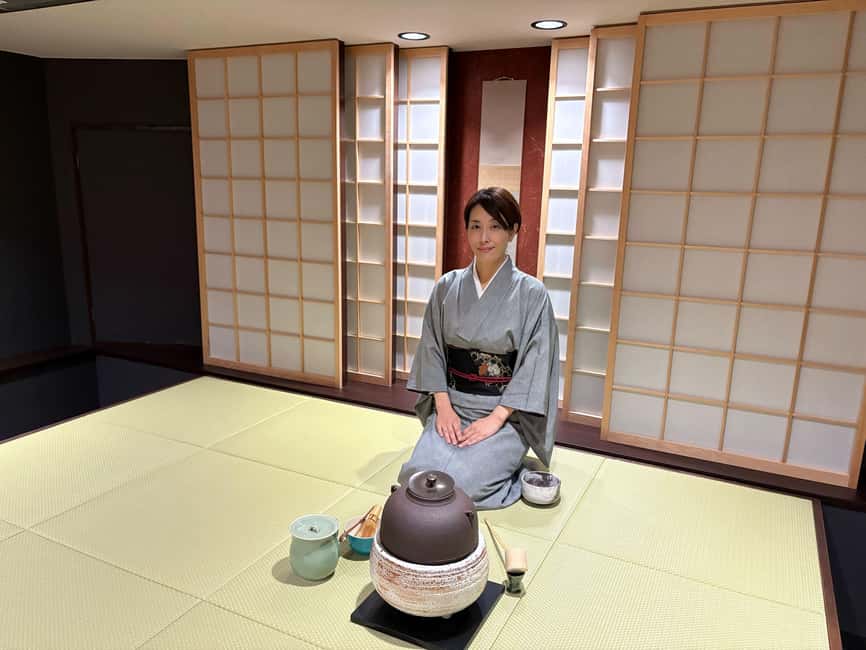
I think you should book it if you want a high-signal Kyoto experience: calm, guided, and practical. You get the cultural story behind tea, you see technique up close, and you leave with matcha skills plus a take-home recipe. That combination is what makes it worth your time, especially in a city where you might otherwise spend your energy bouncing between sights.
If you are the type who loves food craft and wants to understand why things are done a certain way, this is a strong pick. If you are cautious about sitting on the floor during traditional activities, the chair format is a clear advantage.
On the other hand, if you are traveling with very young kids, or you are strict about avoiding caffeine, you will want to reconsider or plan around age guidance. But for most adults and older teens, it is a friendly, elegant way to taste Kyoto, learn something real, and bring a piece of the ritual home.
FAQ
How long is the Kyoto tea ceremony experience?
The duration ranges from 1 hour to 150 minutes, depending on the option booked and the scheduled start time you choose.
Is this tea ceremony done sitting on the floor?
No. This experience is designed with chair seating, rather than sitting on tatami.
What is included in the price?
You get a matcha drink, guidance for making matcha and tea history by the tea master, a simple recipe to use after your trip, and Japanese traditional sweets selected for the ceremony.
Can children participate?
Infants and toddlers are free of charge, but if they want to try making tea, they must use their parent or guardian’s matcha cup, and they will not receive their own matcha to make. Matcha is high in caffeine, and it is not recommended for children under age 5.
Is the tour taught in English?
Yes. The instructor is listed as English.
If I choose the kimono option, how does timing work?
After renting the kimono at the Wargo Gion store, you go to the meeting point and arrive about 10 minutes before the tea ceremony starts. Your ceremony time is fixed based on your kimono start time: for example, an 11:00 kimono start pairs with a 12:30 tea ceremony, and a 12:00 start pairs with a 14:00 ceremony. After the tour, you need to return the kimono by 5:30pm.
More Geisha Experiences in Kyoto
- Kyoto: Gion Geisha District Walking Tour – Stories of Geisha
★ 4.7 · 2,187 reviews - Best of Kyoto: Gion, Geisha, Pagodas & Cobblestones
★ 4.9 · 2,058 reviews - Night Walk in Gion: Kyoto’s Geisha District
★ 4.5 · 2,003 reviews - Kyoto Night Foodie Tour in Gion (9+ dishes + 6 Sake tastings)
★ 5.0 · 1,762 reviews
Fresh options around Kyoto
- Kyoto Private & Personalized Half-Day Walking Tour with a Local★ 4.5 · 27 reviews
- Kyoto: Stone Seal Carving Workshop with Calligrapher★ 4.9 · 27 reviews
- Private Dinner with Maiko and Geiko in Kyoto★ 5.0 · 28 reviews
- Kyoto Private Customizable Day Trip With English chauffeur★ 5.0 · 28 reviews
- Kyoto Matcha Green Tea Tour★ 4.7 · 28 reviews
- Stunning Private Tea Ceremony: Camellia Garden Teahouse★ 5.0 · 28 reviews
- Golden Pavilion, Nijo Castle, & Nishiki Market Half day tour★ 5.0 · 29 reviews
- Kyoto Photo Shoot by Professional Photographer (77K Followers)★ 4.5 · 29 reviews
Dessert Tours, compared.

Matcha Making Class in Tokyo with Authentic Japanese Sweets Set
Read our review →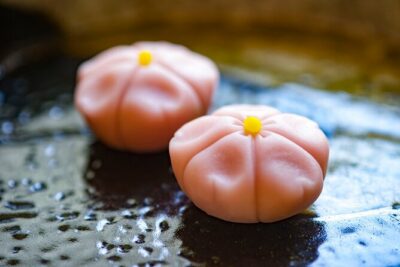
Matcha Making Class in Osaka with Authentic Japanese Sweets Set
Read our review →
Matcha Making Experience with Mochi Sweets in Asakusa
Read our review →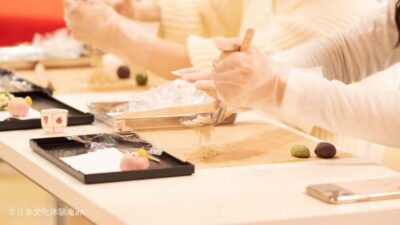
Japanese Traditional Sweets Making and Tea Ceremony
Read our review →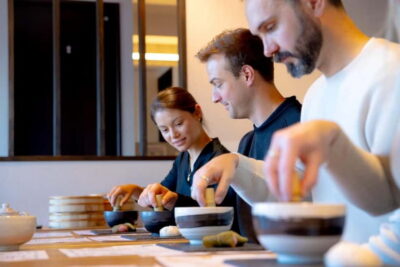
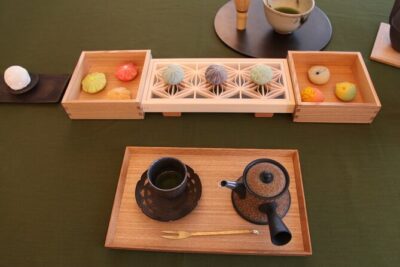
Make Traditional Nerikiri Sweets & Matcha experience in Shibuya
Read our review →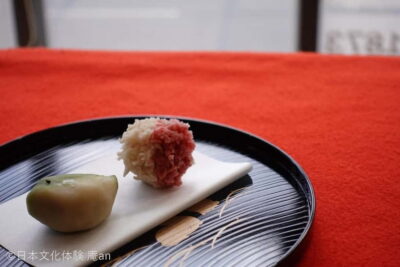
Japanese Traditional Sweets Making and Tea Ceremony
Read our review →
Private Mochi Sweets Making class near Shibuya area
Read our review →Browse the lists this tour appears in