
Reviewed · TEA CEREMONIES IN OSAKA
Osaka: Japanese Traditional Sweets Making and Tea Ceremony
Your day gets wonderfully hands-on fast. This Osaka class mixes Nerikiri sweets making with a Uji matcha tea ceremony. I love how you start from colored bean paste instead of just watching, and I also like the focus on single-origin Matcha rather than shortcuts. One thing to consider is that instructions are mainly in Japanese, with English provided as much as possible.
The pace is calm and structured, so you get time to actually shape your sweets and then enjoy them. A possible drawback is also practical: there’s no elevator, so you’ll need stairs to reach the rooms.
Key highlights at a glance
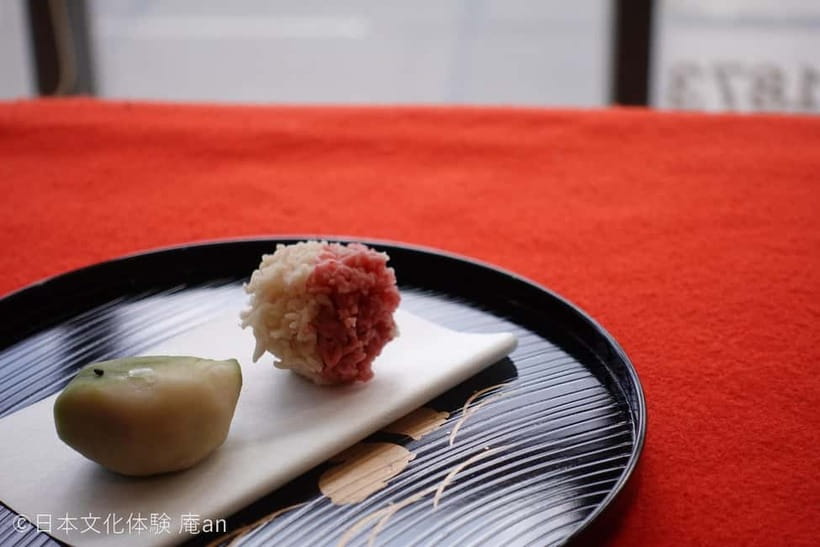
- Two seasonal sweets made by you, not a quick demo
- Nerikiri shaping begins with coloring the white bean paste
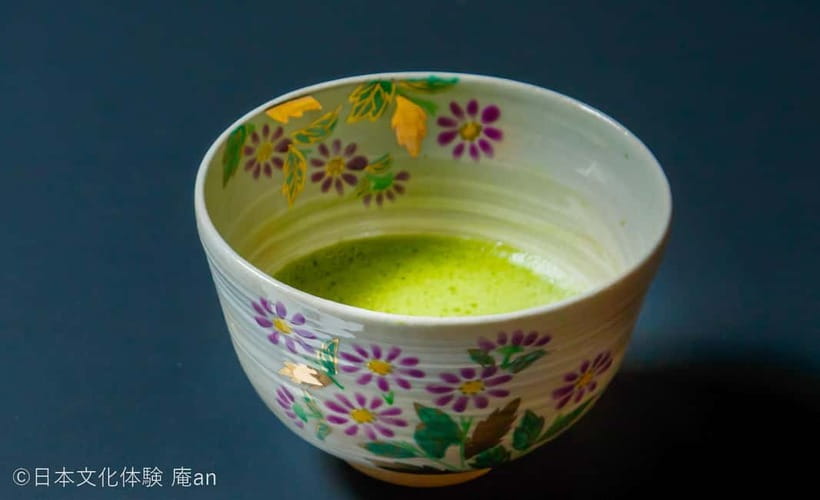
- Uji Matcha is front and center, including a grinding demonstration
- Quality ingredients sourced via Kyoto long-established shops
- You get to eat what you make with your own Matcha
- Small, classroom-style flow that stays friendly even if your Japanese is basic
Osaka wagashi and tea: what you’re really signing up for
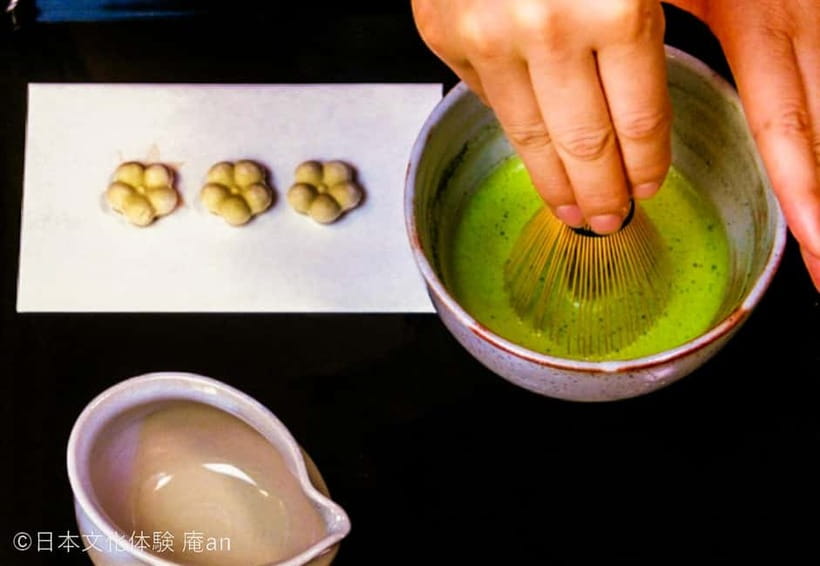
If you want Osaka beyond neon streets, this is a great sideways entry. You’re not just learning tea. You’re learning how Japanese sweets are built with fine detail, then you taste the result with matcha prepared the traditional way.
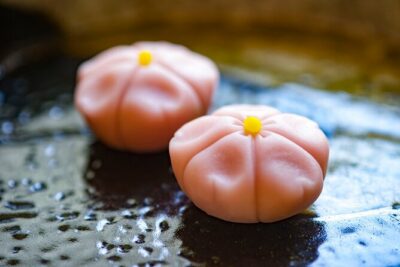
What I like most is that the sweet-making is part of the experience, not an add-on. You’ll make Nerikiri, a high-grade wagashi where colored bean paste is shaped into seasonal flowers or fruit. You also make two sweets that match the season, which means your table at the end looks like something you’d happily keep on display for a moment before eating.
More Tea Ceremonies in Osaka
- Osaka: Tea Ceremony Experience
★ 4.9 · 1,426 reviews - Tea Ceremony Experience in Osaka Doutonbori
★ 5.0 · 754 reviews - Matcha Making Class in Osaka with Authentic Japanese Sweets Set
★ 5.0 · 509 reviews
Meeting points near Yodoyabashi and Higobashi
This class is easy to reach by train because you have multiple nearby options. If you’re coming via Osaka Metro Yotsubashi Line, aim for Higobashi Station, Exit 10, about a 1-minute walk. Keihan Nakanoshima Line travelers can use Watanabebashi Station, Exit 7, around 5 minutes on foot.
Other workable choices: Yodoyabashi Station (Osaka Metro or Keihan), Exit 10, roughly 7 minutes away; Kitashinchi Station (JR Tozai), Exit 10, about 10 minutes; or Osaka Station, South Central Gate, around 15 minutes.
Two practical tips so your day stays smooth. First, there’s no elevator in the building, so plan on stairs. Second, they won’t hold the event for delays, so if you’re tight on timing, show up a few minutes early and avoid the last-minute scramble.
The 95-minute flow: sweets first, then matcha
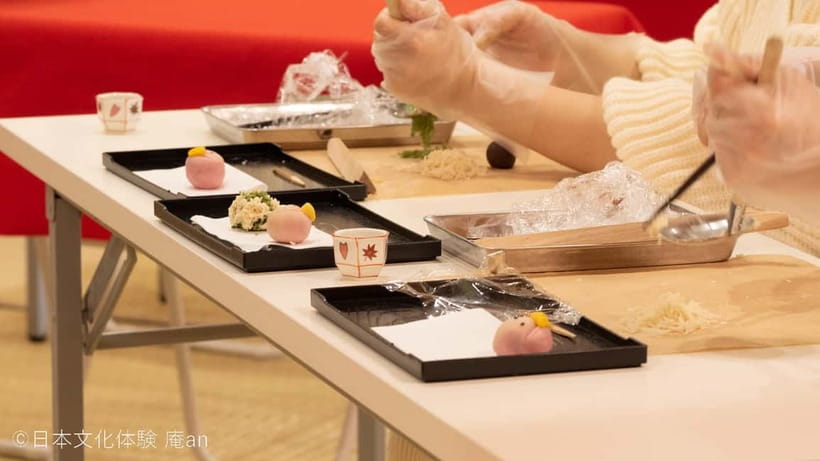
The whole experience is 95 minutes, and it’s built around two main blocks. From the start until the mid-session break, you focus on sweets. After that, you shift into tea, including grinding matcha and taking part in a ceremony-style experience.
A simple way to picture it:
- Sweets-making: explanation, then hands-on Nerikiri from colored bean paste
- Break time: you pause before switching gears
- Tea portion: matcha grinding demonstration and tea-ceremony experience
- Final stretch: you eat the sweets you made and drink your matcha
Because the schedule is structured, it’s a good choice if you prefer knowing what’s next. You’ll spend less time wondering and more time doing.
Nerikiri workshop: from bean paste color to seasonal shapes
You start by making a type of traditional wagashi called Nerikiri. The process begins with coloring the white bean paste. That part matters more than it sounds, because Nerikiri is all about controlled color and a finished look that feels intentional.
Then you move into crafting. The class uses white and red bean paste produced by Kyoto’s long-established shops. That detail is a big deal for flavor and texture. Bean paste is not a generic ingredient here, and it shows in how the sweetness balances when you pair it later with matcha.
You’ll make two sweets that fit the season. In Nerikiri, the shapes are often based on seasonal flowers or fruit. Even if you’re not an arts-and-crafts person, the workshop format is designed so you can follow steps and build something that looks like real wagashi, not classroom playdough.
Same corner of Japan, a different kind of day:
- Osaka Go Karting Tour with Funny Costume
★ 5.0 · 2,658 reviews - Osaka Castle: Museum and Tower Entry Ticket
★ 4.5 · 2,380 reviews - Osaka: Shinsekai Food Tour with 13-15 Dishes at 5 Eateries
★ 4.8 · 2,204 reviews - Osaka Food Tour: 13 Dishes at 5 Local Eateries
★ 5.0 · 2,149 reviews
Tips for getting the best results while you shape your sweets
Even without advanced pastry skills, you can set yourself up for success. Use the instructor’s pace as your pace, especially during the coloring and shaping stage. Small adjustments matter here. Nerikiri is a finesse workshop, and attention to detail is the whole point.
Also, don’t rush the look. Several instructors in past sessions are known for being patient, including bilingual support when needed. The vibe is calm, which helps you focus on the steps instead of feeling rushed.
When your sweets are finished, you get to keep them as the centerpiece for the tea pairing later. And yes, they’re meant to be eaten, not just photographed.
Tea ceremony in Osaka: Uji matcha grinding and the ritual steps
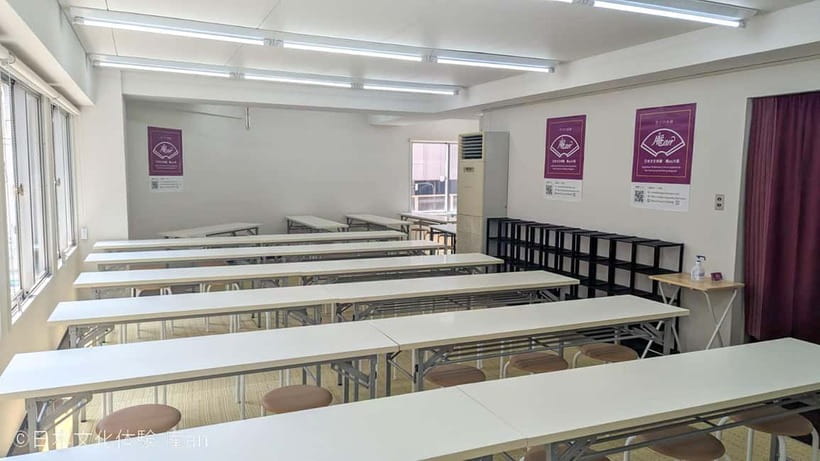
Once sweets are done, you switch to tea. The tea portion starts with explanation about Japanese tea culture and then moves into a matcha grinding demonstration. You’ll see how matcha becomes powder, which adds context to what you’re about to drink.
The class uses Uji matcha, and the matcha is described as single-origin special Matcha. That means you’re tasting one flavor profile instead of a mixed, generic matcha style. If you’ve ever felt that matcha tastes different from cup to cup, this helps you understand why.
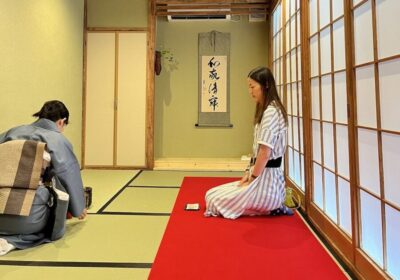
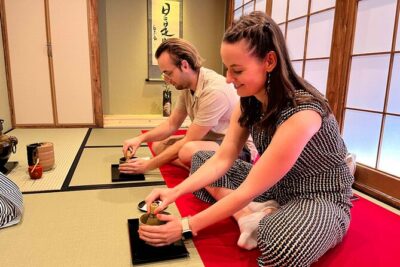
Then comes the tea-ceremony experience. You’ll prepare and drink tea in a guided style, using what you learned about the proper way to drink tea and express appreciation in Japan. It’s not just sipping time. It’s a mini lesson with an actual sequence.
Pairing your wagashi with matcha: why the flavors click
The sweet you make is designed to work with matcha. The class specifically notes that the sweetness of the high-quality white or red bean paste balances well with matcha. That balance is what makes the pairing feel natural instead of too sweet or too bitter.
When it’s time to eat, you’ll enjoy your two sweets along with your own matcha tea. This is one of the best parts of the experience because you can taste the result of your effort right away. It’s also a smart way to learn, because your mouth becomes the final instructor.
If you’re sensitive to very sweet flavors, start by tasting the matcha on its own for a second, then try a small bite of Nerikiri right after. You’ll get a clear read on how the sweetness and bitterness adjust each other.
What you get for the price: $18 and where the value comes from
At $18 per person for a 95-minute workshop, this is one of the best types of cultural classes for pure value. The price is not just paying for sitting and watching. You’re making two sweets and taking part in a guided matcha experience.
Included in the cost:
- The experience itself
- Use of required tools
Not included add-ons:
- A sweets take-out box for 100 JPY
- An experience completion certificate for 300 JPY
So where does the value come from? You get quality ingredients and real hands-on teaching. Kyoto’s long-established bean paste is part of the sweet-making, and Uji matcha is part of the tea portion. Those are the two core ingredients of the experience. You also get to take your work home to eat, and you don’t need extra money to enjoy the main moment.
If you like making edible souvenirs that you’ll actually eat, this is a good deal. If you mainly want a long guided tour of Osaka sights, this might not be as satisfying, because it stays focused on sweets and tea rather than city wandering.
Language and instructor style: what to expect
Languages are Japanese. English translation is provided as much as possible. If you want extra English support, the info says you can contact them to add it. I’d plan on a mix of gestures, ingredient names, and step-by-step instructions.
The experience is led by a Japanese instructor, and you’ll likely notice the teaching style is friendly and patient. Past sessions show instructors like Maiko, Jun, and Mihiko are often described as cheerful, clear, and good at handling language barriers. That matters because in a workshop like this, good pacing keeps you from falling behind.
If you’re worried about understanding, focus on this. Even when words are limited, the steps are visual and method-based. You can follow what your hands are doing.
Who should book this Nerikiri and matcha class
This is a strong fit if you want a calmer, skill-based afternoon in Osaka. It’s also ideal if you love food activities that teach technique, not just facts.
You’ll likely enjoy it if:
- You want a hands-on cultural experience
- You’re interested in wagashi and matcha
- You like structured lessons with a clear schedule
- You want something different from food tours or ramen hunts
It also works well for families. One class experience included a 10-year-old and a 12-year-old who both enjoyed the Nerikiri and matcha parts. Children who sit on their parents’ lap are free if they are under 2 years old.
If you have mobility limitations, note the stair requirement. There is no elevator, and the building requires stairs to reach the venues. The activity itself is seated or workshop-based, but getting to the rooms still matters.
Extras to know: take-out box and completion certificate
You can request practical extras depending on what you want to do after the class. There’s an optional sweets take-out box available for 100 JPY if you’d like to store or bring sweets away.
There’s also an experience completion certificate for 300 JPY. If you’re collecting proof of activities, it’s a nice souvenir, but it’s not necessary for enjoying the main experience.
Should you book this Osaka wagashi and tea workshop?
I think it’s a yes for most food-minded travelers who want something quiet and rewarding. The combination of Nerikiri making and Uji matcha ceremony is a good use of time, and the fact that you make two seasonal sweets keeps it from feeling like a short demo.
Book it if you care about details and like the idea of eating what you make with the same flavors you learned about. If you’re sensitive to sweets, go slow during tastings so the matcha balance stays enjoyable. If your Japanese is very limited and you want a smoother language experience, contact them in advance for English translation support.
If your goal is mainly to see Osaka landmarks for hours, you may want a different tour. But if you want a practical cultural skill you can repeat at home in spirit, this workshop delivers real value in 95 minutes.
FAQ
How long is the Osaka Japanese Traditional Sweets Making and Tea Ceremony?
The experience lasts 95 minutes.
Where is the meeting point?
It is near multiple stations, including Higobashi Station (Exit 10), Watanabebashi Station (Exit 7), Yodoyabashi Station (Exit 10), Kitashinchi Station (Exit 11-5), and also accessible from Osaka Station (South Central Gate). The exact walking times are listed in the meeting-point details.
What is the price per person?
The price is $18 per person.
What will I make during the class?
You will make two Japanese sweets matching the season. You start with Nerikiri by coloring white bean paste and then shaping the sweets.
Is matcha included, and do I get to participate in the tea part?
Yes. The class includes a tea-ceremony experience using Uji Matcha, and there is a matcha grinding demonstration. You also eat the sweets you prepared along with your own Matcha tea.
Are tools provided?
Yes, the experience includes use of the required tools.
Is English available?
English translation is provided as much as possible. The info also says you can contact them if you would like to add it.
Is there an elevator in the building?
No. There is no elevator, and you will need to take stairs to reach each venue.
What optional extras cost extra?
A sweets take-out box costs 100 JPY, and an experience completion certificate costs 300 JPY.
Fresh options around Osaka
- Osaka Winery Tour with Wine Tasting & Vineyard Walk★ 4.9 · 12 reviews
- Osaka: Early Morning Osaka Castle Guided Tour, Avoid Crowds★ 4.9 · 12 reviews
- Kyoto Day Trip from Osaka Port – Private Shore Excursion★ 5.0 · 13 reviews
- Osaka Private Pop Culture Tour: Historic Tenma to Dotonbori★ 4.5 · 13 reviews
- Osaka Castle Admission Ticket★ 4.0 · 13 reviews
- Hidden Osaka Foodie Tour: Nishinari Backstreets & Local Dining★ 5.0 · 13 reviews
- Discover Real Osaka: A Cultural Walk with Food & Drink★ 5.0 · 13 reviews
- Nara private tour (Shore excursion available from Osaka or Kobe port)★ 5.0 · 13 reviews
Tea Ceremonies in Osaka, compared.
Matcha Making Class in Osaka with Authentic Japanese Sweets Set
Read our review →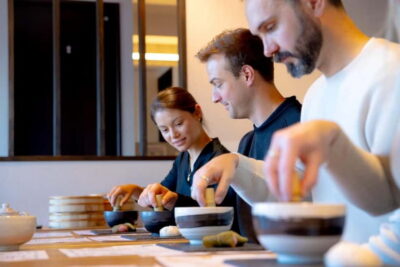
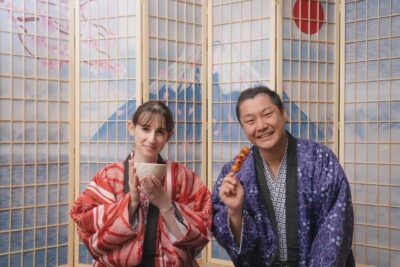
Osaka Temple Cool Foot Bath & Matcha Experience〈45min〉
Read our review →
Samurai Show, Tea Ceremony, Japanese Traditional Activities
Read our review →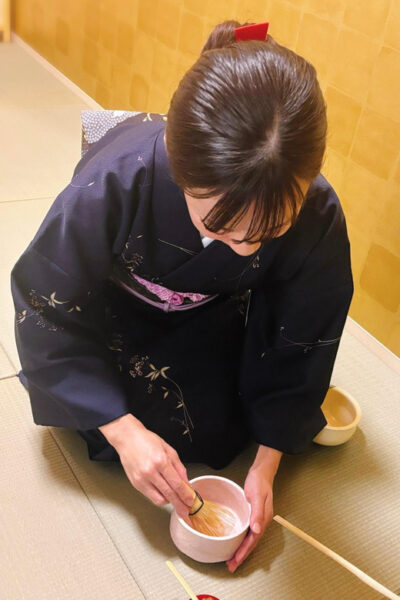
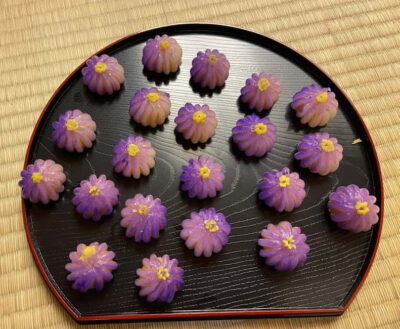
Osaka; Japanese Tea ceremony experience, Macha and Sencha
Read our review →Browse the lists this tour appears in