
Reviewed · FOOD & DRINK
Discover Real Osaka: A Cultural Walk with Food & Drink
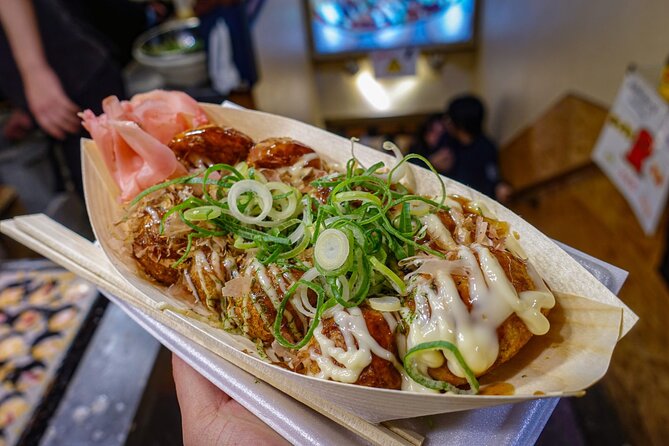
Osaka is better when you walk it. This small-group tour strings together street style, lantern alleys, and serious food, plus takoyaki and okonomiyaki. I also love the lifetime Google Map tips that help you keep exploring after the walk. One thing to consider: it is still a walking tour, and the standard group version starts at a set meeting point, so wear shoes you trust.
I like that the group stays small, capped at 9. That makes it easier to ask questions, get meal advice on the fly, and actually hear the stories tied to each neighborhood. You also finish near Dobutsuen-mae Station, which means you are dropped off close to Shinsekai, a smart layout if you want to keep your evening going.
The price, $78.38, looks simple until you translate it into what is included. You get snacks, an included alcoholic option (sake), and a guide who connects the dots between Osaka’s different vibes. If you are hoping for hotel pickup every time, note that group tours meet at the starting point, while private options may allow more flexibility.
Key things to know before you go
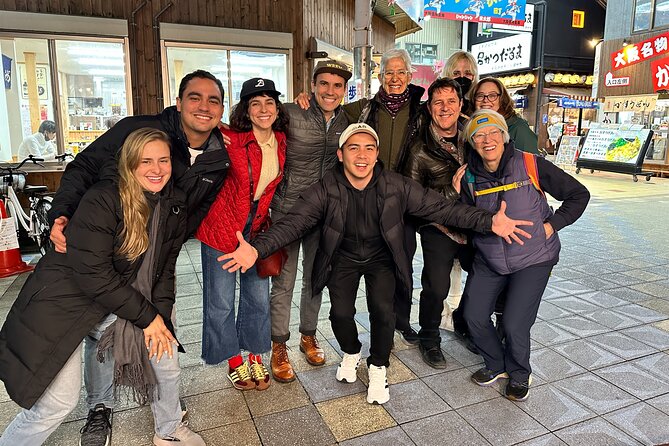
- Small group size (max 9): more conversation, easier navigation, and a smoother pace through tight streets.
- Food is built in: you will eat takoyaki and okonomiyaki, and you also get sake plus a non-alcoholic drink.
- You finish near Shinsekai: the end point is close to Dobutsuen-mae Station, on the Midosuji Line Red Line.
- Free entry at the stops: the listed sights have free admission, so you pay mainly for the guide and food.
- Private tours add big-ticket Osaka sights: Osaka Castle, ukiyo-e prints, and Abeno Harukas can show up depending on your version.
Meeting at Namba and walking like a local
This tour runs from 10:00 am, starting at Swissotel Nankai Osaka in Namba. From the start, you are in the thick of Osaka, not on the edge of it, which is the whole point. Even if you are coming from Umeda or another hub, the Midosuji Line Red Line makes it fairly straightforward to reach the area and get back out at the end.
The walking time is about 4 hours for the core version, with flexible options of 4, 5, or 6 hours depending on what you choose. In practical terms, that means you should plan on a solid half-day of movement. There is an option to arrange train or taxi help if needed, but it is at your own expense, so bring that backup plan in your head.
Pickup is listed as offered, but for the group format, hotel pickup is not included. Translation: if you want to be picked up at your hotel, you should choose the private option (or ask ahead). For most people, meeting at Swissotel Nankai is easy enough, but it is still good to confirm what mode you booked.
And here is a detail that matters more than it seems: you finish near Dobutsuen-mae Station by Shinsekai. That is not random. It keeps your walking day from ending in the middle of nowhere, and it lets you turn right into more neon, more food, or just an easy stroll after the tour.
More Food Tours in Osaka
- Osaka Delights: Traditional Japanese Food Tour
★ 4.5 · 33 reviews - Osaka: Namba Local Food Walking Tour (Taste 15 Dishes)
★ 5.0 · 20 reviews - Osaka Food Tour Eat Like a Local in Namba and Dotonbori
★ 5.0 · 17 reviews
America Mura: street style and Osaka’s younger pulse
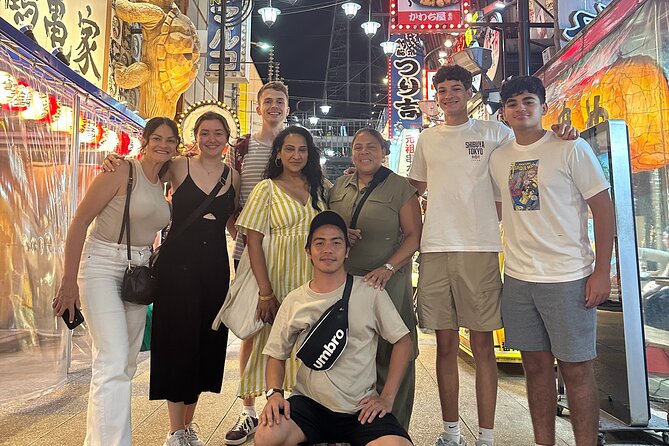
America Mura, or Amemura, is where Osaka shows its punky side. You start there because it is a fast way to understand a different Osaka than the one people picture from brochures. Expect street art, fashion shops, and a youth-oriented vibe that feels more urban than formal.
You are only there about 20 minutes, so this stop works like an opener. It sets the tone, then moves you along before you get too settled. The value here is not shopping for hours. It is getting your bearings in the neighborhood and learning what to look for as you walk.
A practical tip: if you want to browse, bring a little patience. This part of Osaka tends to reward quick scanning and then deeper browsing on your own after the walk.
Dotonbori Tsuribori and Shinsaibashi: lights, signs, and the shopping rhythm
From Amemura you head into the Dotonbori area. This is Osaka’s big visual stage: bright lights, busy streets, and the kind of atmosphere where you look up without meaning to. The tour specifically points you toward Dotonbori Tsuribori and the iconic Glico Running Man sign, which is the kind of photo moment that makes sense because you will already be there when the street energy peaks.
Then you roll into Shinsaibashi, another neighborhood built around shopping and evening momentum. The time here is about 20 minutes. That is short, but it is enough for two things: you will feel how Osaka’s shopping streets work at night, and you get a quick local pointer for a secret-like spot that is close by but not the first thing most people find.
One consideration: if you are very time-limited, this area can get crowded. That is also why a guide helps. You spend less time trying to figure out where to stand and more time actually enjoying the scene.
Hozenji Yokocho: lantern light beside mossy Buddhist statues
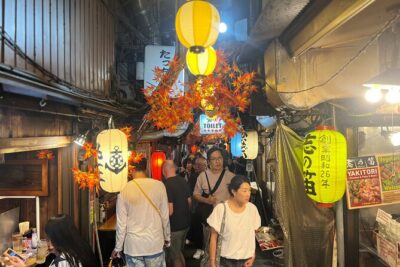
Then the pace shifts. You move from shopping street energy to Hozenji Yokocho, the lantern-lit alley that feels like it belongs to an earlier Osaka. This stop is about 30 minutes, which gives you time to slow down and pay attention.
What makes Hozenji Yokocho special in real life is the contrast. Outside, you have traffic and crowds. Inside, you get narrow space, warm lantern light, and that unmistakable feeling of old-world atmosphere. The tour highlights the moss-covered Buddhist statues nearby, which you may not notice at first if you are just walking through.
If you are the kind of person who likes photos, take a moment here not to rush. The alley is small enough that you can easily get the shot you want with less effort if you pause, step to the side, and let the crowd move past.
More Walking Tours in Osaka
- Osaka Bar Hopping Night Walking Tour in Namba (3 bars, 6 tastes)
★ 5.0 · 958 reviews - Osaka 6hr Private Walking Tour with Government Licensed Guide
★ 5.0 · 174 reviews - 1 Day Takoyaki Making and Osaka Castle Walking Tour
★ 5.0 · 15 reviews - Osaka: Hotspots & Hidden Gems Walking Tour Private or Group
★ 4.9 · 1,300 reviews
Kuromon Market: Osaka’s kitchen and where the okonomiyaki fits
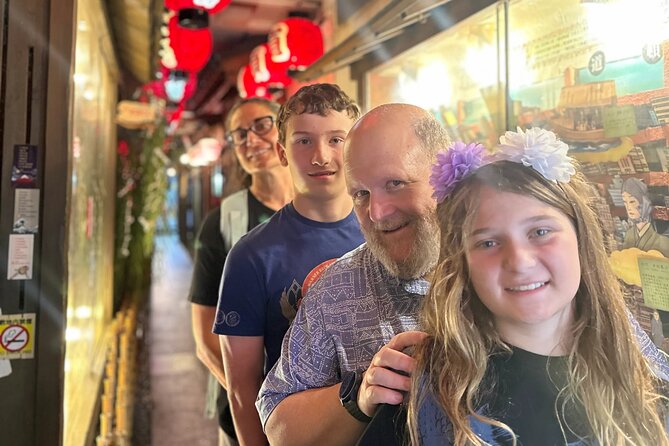
Kuromon Market, nicknamed Osaka’s Kitchen, is a place you can easily burn time in. The tour gives you about 1 hour, which is a good amount for tasting and learning without turning the day into a food marathon.
The strategy here is smart: you do not wander forever trying to choose from everything. You go straight to a favorite okonomiyaki spot tied to the tour, where you can taste a savory pancake style you can compare to what you try later. The included meal plan is built for this part of the day.
Since this is a market environment, expect lots of people. Your guide’s role is to help you get your bearings quickly, and to help you pick the right window to eat and not just stand in line.
If you have dietary needs, you should check directly when booking. The tour data confirms specific included foods, so it is best to clarify substitutions up front rather than assuming.
Den Den Town and Tower Knives: anime culture plus real-life craft
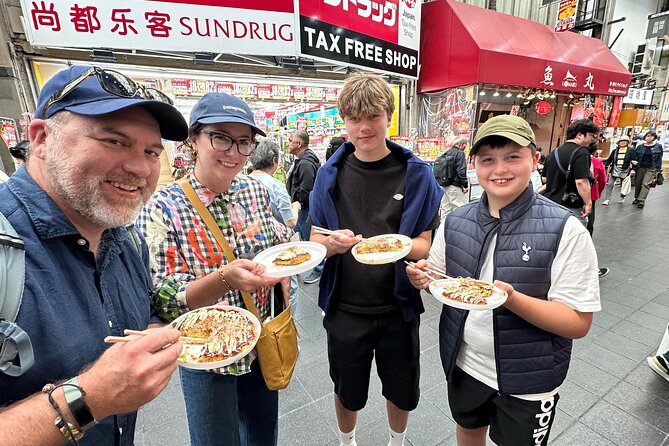
After you have the food and the street scenes under your belt, the tour shifts into two very different, very Japanese interests: anime and practical kitchen tools.
Den Den Town is the Osaka district for anime, gaming, and quirky gadget shops. It is a fun change of pace from the food streets. Even if you are not hunting for anything specific, the energy helps you understand why Osaka feels like a place where pop culture and daily life sit close together.
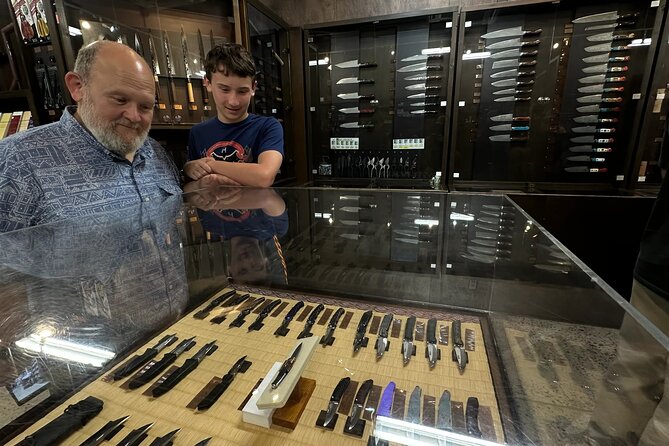
Then you visit Tower Knives, a small knife shop near Tsutenkaku Tower. This is not a typical tourist stop. The value is that you get to see Japanese kitchen culture in a focused way, with staff who are ready to talk and show what they sell. That kind of stop is great even if you do not buy, because it teaches you how to judge quality and craftsmanship.
Practical note: if you are the shopper type, bring extra space. Even a small purchase can be heavy.
Shinsekai and the retro neon of Tsutenkaku
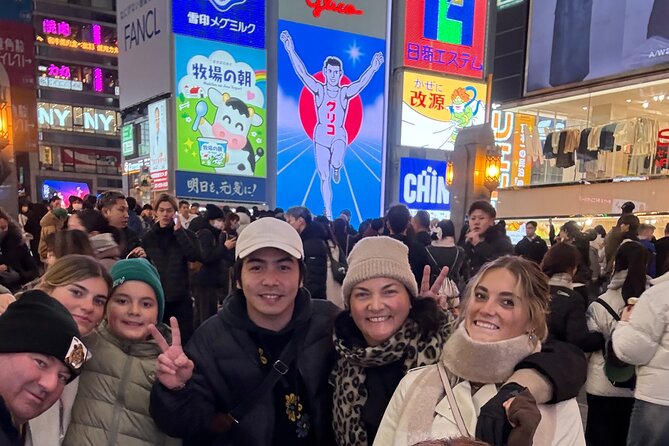
Next comes Shinsekai, a retro district that feels like Osaka is time-traveling. The tour gives you about 30 minutes, which is enough to see the style, notice the old-school signage, and take in Tsutenkaku Tower area views.
Shinsekai has a different mood than Dotonbori. It is less about the huge spectacle sign energy and more about atmosphere, local eateries, and that nostalgic neon glow. If you want a single snapshot of what people mean by retro Osaka, Shinsekai is the place.
End your stop with a slow walk. It is easy to rush here, but the streets are designed for wandering.
Nishinari on the group version: raw Osaka street scenes
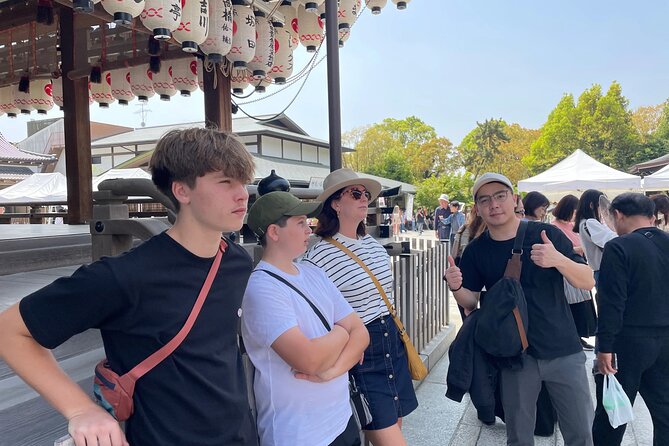
There is also an optional-feeling stop for the group version: Nishinari Dobutsuen-mae, sometimes described as deep Osaka street flavor. The tour data says this part happens if the group insists, so it is not guaranteed.
This is the part of your day where Osaka can feel more candid and less polished. The focus is on experiencing the neighborhood’s edge and the daily pulse of the area. That can be a big deal if you want to understand Osaka beyond its postcard zones.
One consideration: some people do not enjoy areas that feel more rough around the edges. If that worries you, ask your guide how they handle it for your group and whether your comfort level can guide the plan.
Private tour upgrades: Osaka Castle, ukiyo-e prints, and Abeno Harukas views
If you book a private version, the tour data shows some stops that are not listed for group format. These are the “big sights” add-ons that can turn your half-day walk into a more complete Osaka overview.
You could visit Osaka Castle for about 30 minutes. The tour frames it around Toyotomi Hideyoshi and what the castle represented. Even in a short visit, it helps you connect Osaka’s modern identity to the ambitions of the past.
You may also stop at a small museum featuring Edo period ukiyo-e woodblock prints. One highlight mentioned is a print of The Great Wave. This is a nice pivot if you like art, and it gives context to the idea that Japan’s visual culture has deep roots.
Then there is Abeno Harukas, the tallest skyscraper in Japan at 300 meters, with an observation deck. The tour includes the promise of panoramic views, and on a clear day you can see quite far. It is the kind of stop that gives you a map-in-your-head feeling, because you see how neighborhoods connect.
Finally, a museum with life-size Edo period street recreations can show you everyday scenes from centuries ago. This is the “walk back in time” style stop, and it pairs well with the castle and the prints if your goal is context.
Food and sake you actually get, plus how to handle it
Let’s be honest: food tours can be all promises and no real eating. This one gives you specific included items: takoyaki and okonomiyaki as snacks, plus 1 sake and 1 non-alcoholic drink.
The sake choice is set up as the alcohol option, and the non-alcoholic drink is included too. You can think of it as you get a drink pairing without having to decide everything on your own. If you do not want to drink alcohol, check with the provider because the data says sake is included, but you still get a non-alcoholic drink regardless.
How the food fits the day matters. Takoyaki and okonomiyaki are Osaka comfort foods that make sense in the areas you walk through. You also get to compare textures and flavors while you are still in “street food mode,” so the food does not feel random.
A small practical point: the market and street stops can tempt you to buy extra snacks. Build in a little buffer so the included food does not get swallowed by impulse eating.
Value check: does $78.38 make sense?
At $78.38 per person, the big question is whether you are paying for food and sights, or whether you are paying for the guide’s know-how. Here, it is both, and the balance is decent.
You get:
- a 4-hour walking day (plus longer options)
- a route through multiple recognizable areas
- included takoyaki and okonomiyaki
- an included sake and a non-alcoholic drink
- a small group capped at 9
- plus lifetime access to personal Google Map links and curated tips for Tokyo, Kyoto, Osaka, and beyond
That last item is the real “value multiplier.” If you use it, you keep getting returns after the tour ends. It also helps you avoid a common Osaka problem: spending days bouncing between places without a plan. With the guide’s map links and curated itineraries, you can keep building your day after this one.
If you were planning to eat anyway, and you were also planning to do a “see the highlights” walking day, this price can pencil out quickly. If you hate walking, or if you already have a tight plan and will not use the lifetime map tips, then the value is less automatic.
The guide factor: Yamamoto Travel and the Mico Yamamoto connection
Yamamoto Travel runs the experience. The standout name pulled from the feedback is Mico Yamamoto. The fact that the reviews specifically call out Mico is a good sign: it suggests the guide presence matters here, not just the printed route.
Even with a good route, Osaka rewards people who can explain what you are looking at. This tour is built around neighborhoods that need context. America Mura is more than stores. Hozenji Yokocho is more than a pretty alley. Kuromon Market is more than a crowd. A guide helps you see the patterns.
Who should book this walking walk, and who should rethink it
This tour is a great fit if you:
- want a first-time Osaka orientation that still feels local
- like food stops that are actually included
- enjoy pop culture and craft side trips (Den Den Town, Tower Knives)
- want help planning after the tour using lifetime map links
You might rethink it if you:
- hate walking or need frequent transport breaks
- only want major paid attractions and museums, because the group version leans more toward streets and markets
- are sensitive to neighborhoods that can feel rougher on the Nishinari stop (if included for your group)
Should you book Discover Real Osaka?
I think you should book this tour if your goal is simple: get the feel of Osaka quickly, eat well, and leave with practical tools to explore on your own. The included takoyaki and okonomiyaki, the included sake option, and the small-group pace make it a solid deal for a half-day.
If you want the most complete Osaka highlights day, consider the private format, since the tour data shows add-ons like Osaka Castle, ukiyo-e prints, and Abeno Harukas. If your travel style is more about street-level neighborhoods and food routes, the group version does that job well, with the option to include more raw street flavor through Nishinari if your group chooses.
FAQ
Where does the tour start and when does it begin?
The tour starts at Swissotel Nankai Osaka, 5-1-60 Namba, Chuo, Osaka. The start time is 10:00 am.
How long is the tour?
The walking tour is listed as about 4 hours, with flexible duration options of 4, 5, or 6 hours.
How much does it cost?
The price is $78.38 per person.
Is the tour a group tour or can I book private?
You can choose between a group adventure or a private tour tailored for you.
What food and drinks are included?
Snacks include takoyaki and okonomiyaki. You also get 1 alcohol option (sake) and 1 non-alcoholic drink.
Are there any paid entry fees at the stops?
The listed stops in the plan show admission as free.
Is hotel pickup included?
Hotel pickup is not included for group tours. You meet your guide at the set meeting point. Pickup is listed as offered, so if pickup is important to you, check private options.
What is the group size limit?
The tour has a maximum of 9 travelers.
Do you arrange transportation during the tour?
This is a walking tour, but train or taxi rides can be arranged upon request at your own expense.
What is the end point of the tour?
The tour ends near Dobutsuen-mae Station in Nishinari Ward, close to Shinsekai.
More Walking Tours in Namba
- Kyoto Geisha Walking Tour: Gion District & Hidden Gems
★ 4.7 · 3,273 reviews - Kyoto: Gion Magical Night Walking Tour with Geisha Trivia
★ 4.9 · 2,393 reviews - Tokyo: Imperial Palace and Shogun Historical Walking Tour
★ 5.0 · 2,251 reviews - Kyoto: Gion Geisha District Walking Tour – Stories of Geisha
★ 4.7 · 2,187 reviews
More Food Tours in Namba
- Tokyo: Shinjuku Food Tour (13 Dishes at 4 Local Eateries)
★ 5.0 · 6,603 reviews - Tokyo Tsukiji Fish Market Food and Culture Walking Tour
★ 5.0 · 3,184 reviews - Osaka: Shinsekai Food Tour with 13-15 Dishes at 5 Eateries
★ 4.8 · 2,204 reviews - Osaka Food Tour: 13 Dishes at 5 Local Eateries
★ 5.0 · 2,149 reviews
Fresh options around Namba
- Badminton in Osaka & Kyoto with Locals!★ 5.0 · 15 reviews
- 1 Day Takoyaki Making and Osaka Castle Walking Tour★ 5.0 · 15 reviews
- Osaka Food Tour Eat Like a Local in Namba and Dotonbori★ 5.0 · 17 reviews
- Osaka: Namba Local Food Walking Tour (Taste 15 Dishes)★ 5.0 · 20 reviews
- Osaka Delights: Traditional Japanese Food Tour★ 4.5 · 33 reviews
- Osaka Private Tour with a Local Guide (Must See Places in 1 Day)★ 5.0 · 57 reviews
- From Osaka/Kyoto: Kyoto & Nara Day Trip with Optional Lunch★ 4.5 · 79 reviews
- From Osaka or Kyoto: Kyoto and Nara 1-Day Bus Tour★ 3.5 · 141 reviews
Food & Drink, compared.
Shinjuku Food Tour (13 Dishes at 4 Local Eateries)
Read our review →
Tokyo Tsukiji Fish Market Food and Culture Walking Tour
Read our review →
Shinsekai Food Tour with 13-15 Dishes at 5 Eateries
Read our review →
Osaka Food Tour: 13 Dishes at 5 Local Eateries
Read our review →
Shinjuku Food Tour (15 Dishes and 4 Eateries)
Read our review →
Best of Shinjuku: Izakaya Food Tour (4 Stops, 14+ Tastings)
Read our review →
Kyoto Night Foodie Tour in Gion (9+ dishes + 6 Sake tastings)
Read our review →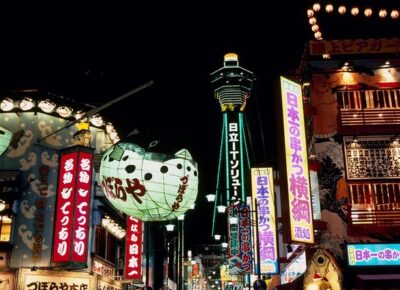
Hungry Osaka Street Food Tour:15 Tastings & 3 Drinks with a Local
Read our review →Browse the lists this tour appears in