
Reviewed · SAMURAI & NINJA EXPERIENCES
Samurai Show, Tea Ceremony, Japanese Traditional Activities
Samurai, tea, and calligraphy in one stop. I love the tea ceremony station, where you learn the flow and make your own cup, and I also like the calligraphy part because you do real practice instead of just watching. A possible catch: the listing says samurai armor and kimono are not included, so if you want dress-up time, plan for extra options.
This is a 2.5-hour program in a big indoor facility, with a max group size of 20, so you can keep moving through the stations without feeling lost. I also like that the staff include English support, and names like Yui and Miyu show up in the praise because they help people feel comfortable fast.
You start near Shinsaibashi (with Dotonbori as the vibe for the start area) and you end back at the same meeting point. If you want an Osaka activity that works even when the weather is messy, this one is built for that.
Key things that make this Osaka experience different
- Hands-on tea ceremony, including making and drinking green tea
- Calligraphy practice, plus a take-home item like a personalized fan (when offered in your session)
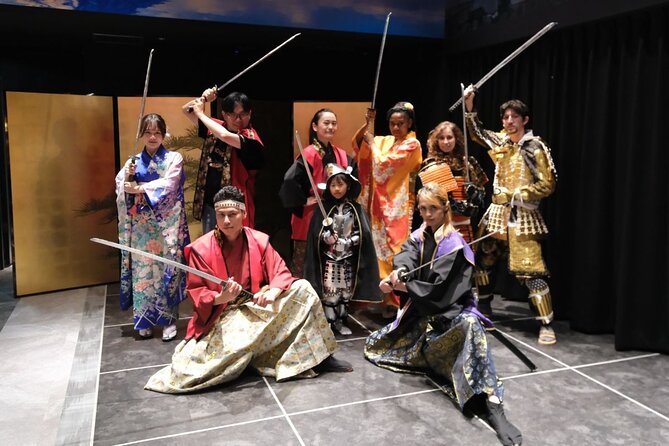
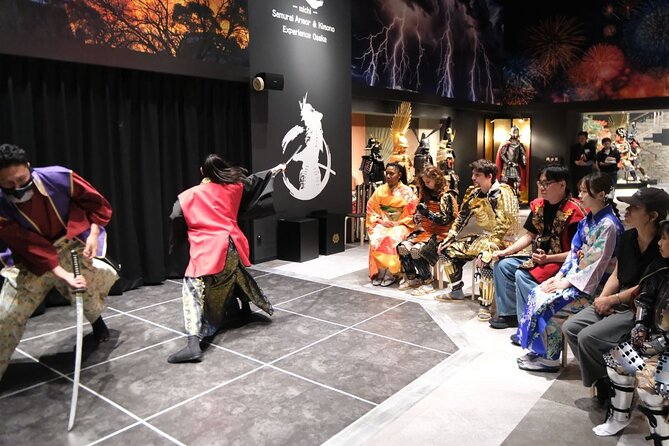
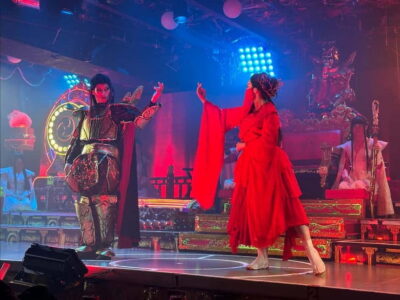
- Interactive samurai performance, where you practice moves, not just watch
- Traditional Japanese music, with chances to play along on instruments
- Small group cap (20 people), which helps the instructors manage everyone
- English support from the staff, so you can follow what is happening without guessing
Osaka Samurai Show and Traditional Activities: the big picture
This is the kind of Osaka cultural stop I like when I want more than a photo. Instead of one static performance, you get several stations that mix watching with doing: tea, calligraphy, a samurai show with practice, and traditional music with instrument time. The pacing is designed so you move from one moment to the next, which is why it feels like a full afternoon chunk even though the ticket is around 2.5 hours.
The theme is very Japan-specific, but the tone is friendly and practical. Think instruction you can follow, plus room to ask questions. That matters, because calligraphy and tea etiquette can feel intimidating if you only know the basics.
One more detail that helps you set expectations: the base ticket includes performances and the interactive classes, but “costume dress-up” items like kimono or samurai armor are not listed as included. In other words, you are there to learn and participate, not to get fully dressed unless you add it on.
More Samurai & Ninja Experiences in Osaka
- Samurai Training Experience KENDO in Osaka
★ 5.0 · 515 reviews - OSAKA NIGHT FUSION Japanese Taiko Kabuki Samurai Dance Show
★ 4.8 · 155 reviews - Osaka: Samurai Training Experience KENDO in Osaka
★ 5.0 · 111 reviews
Getting there from Shinsaibashi and making the timing work
Your meeting point is at Shinsaibashi ARTY Inn in Nishishinsaibashi, Chuo Ward. It is near public transportation, which is the best kind of convenience in Osaka, because you can hop in and out of the area without a complicated plan.
The flow also keeps things easy. Dotonbori is listed as the start point, which means you are in that famous Osaka energy zone at the beginning, then you move to the indoor program space. The activity ends back at the meeting point, so you are not stuck figuring out how to get home after the final show.
Timing tip: give yourself a little cushion. The experience is listed at about 2 hours 30 minutes, but the hands-on parts can take a moment longer when you are learning and getting your pictures organized. If you are pairing this with dinner, I would schedule it so you still have time to wander Shinsaibashi after.
Tea ceremony station: how the green tea part usually goes
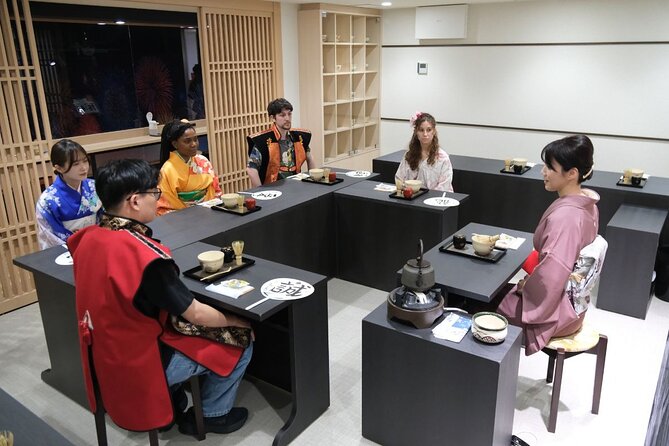
The tea ceremony experience is one of the main reasons to book this. You are not just tasting tea somewhere. The format is built to teach you the steps and the intent behind them, and you participate through the process rather than sitting on the sidelines.
What I like about this setup for first-timers is that tea etiquette becomes less mysterious when you are doing it. Even if your movements are a little awkward at first, the instructors can guide you through the order of steps and the small details that make the ceremony feel respectful instead of performative.
You also get the fun part: making your own green tea and then actually drinking it. That last step matters. It turns tea from a concept into a sensory memory you can take home, especially if you are comparing it to the kinds of tea you can buy on the street in Osaka.
Practical note: since this happens in an indoor facility in a big space, it is a solid choice on rainy days. The setting helps you stay focused on the ritual instead of fighting the weather.
Calligraphy workshop: writing time, not just watching
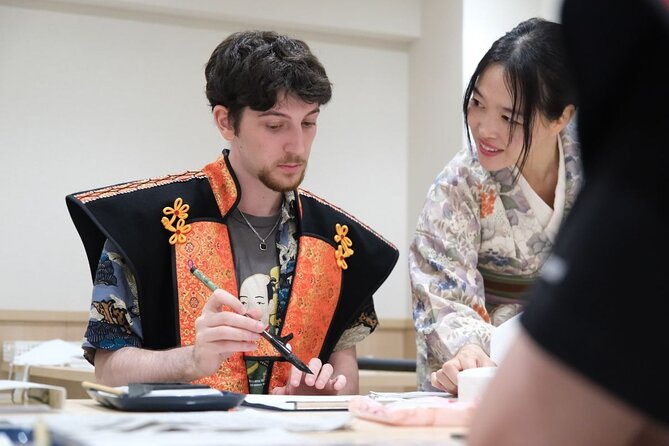
Next comes calligraphy, and this is where many people feel the biggest payoff, because it is tangible. You practice, you learn what to pay attention to, and you leave with a personal result.
A detail that shows up in the stories is a take-home item, like a personalized fan. I would not assume every session hands you the same exact souvenir, but the theme is consistent: you create something you can keep.
For you, the value is twofold:
- You learn the basic rhythm of brush work, so it stops being random scribbling.
- You get a piece that makes your photos more meaningful. You can point to what you made, not just what you saw.
If you are traveling with kids or multi-generational family, calligraphy is also a great equalizer. It is structured, but it still lets people try. The staff support tends to keep it moving, which helps when you have mixed ages in the group.
More Tea Ceremonies in Osaka
- Osaka: Tea Ceremony Experience
★ 4.9 · 1,426 reviews - Tea Ceremony Experience in Osaka Doutonbori
★ 5.0 · 754 reviews - Matcha Making Class in Osaka with Authentic Japanese Sweets Set
★ 5.0 · 509 reviews - Osaka: Matcha Making Experience with Japanese Sweets
★ 5.0 · 146 reviews
Samurai show and practice moves: real swords or not
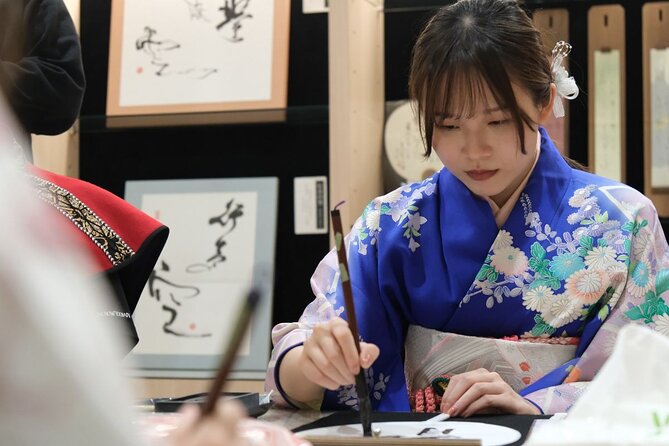
The samurai performance is dramatic, but it is also very clear about what you are doing. Reviews describe a show where you get to join the fun with practice sword action. And importantly, it is not about swinging real weapons at anyone. People highlight that it is safe and instructional.
That said, one caution comes from an honest concern: some sessions may use reproductions rather than authentic original weaponry or armor in the moment. So if you are expecting a museum-grade, strictly historical gear display up close, temper that expectation and focus on the performance and the movement practice.
The best way to approach the samurai portion is with the mindset of “learn the gestures.” You are there to understand how the show frames samurai spirit and how the performers translate that into stage action and audience participation.
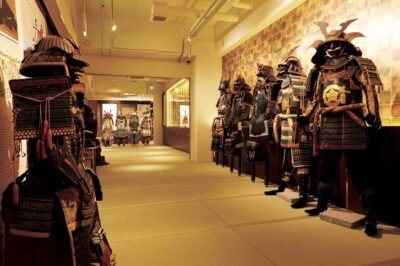
Also, there is a “Samurai armor crafted by Marutake Industries” theme described in the experience overview. But the base listing notes that samurai armor is not included, so if you specifically want to try on armor yourself, check what your ticket covers versus any add-on options.
Traditional Japanese music: you might play instruments, not just listen
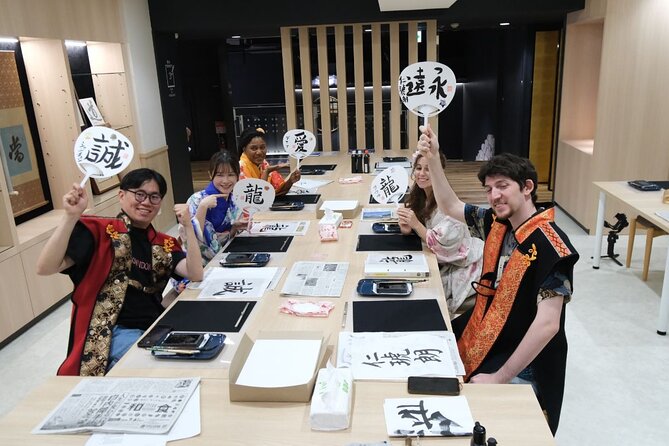
After tea and calligraphy, you move into the music part, and this is where the experience turns playful. The program includes traditional Japanese music performances, plus opportunities to practice on instruments.
From what is described, you may get hands-on moments with instruments such as a Japanese guitar, and some people mention trying instruments like harp and even a Japanese flute later. There is also mention of a complex Japanese-style piano. The exact lineup can vary by session, but the key pattern stays the same: you do not only hear music, you interact with it.
For you, this matters because it changes the way you remember the sound. Instead of thinking, “That was nice,” you think, “I tried that hand motion,” or “Now I know what part is hard.” That kind of memory sticks.
If you are music-curious, this is a good use of your time in Osaka. Many city attractions focus on scenery. This one teaches you how traditional instruments behave and how performers explain the technique.
Dress-up options: kimono, armor, and what your base ticket likely covers
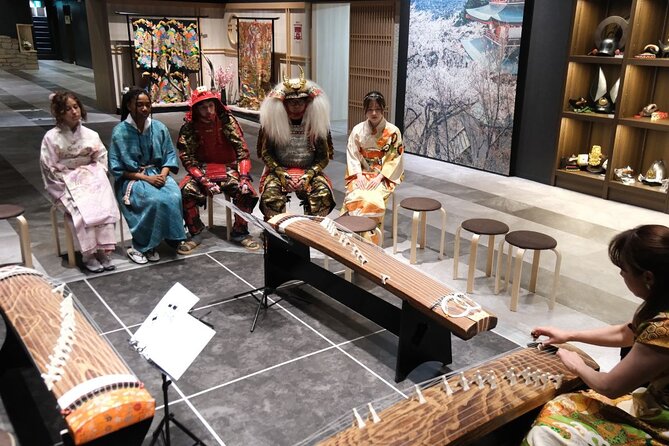
The listing clearly says kimono and samurai armor are not included. Still, there is dress-up in the broader experience concept, and some people do add upgrades.
One review mentions a kimono upgrade for 5,000 yen, with attendants helping guests get dressed and assist with photos. Another review describes an option to dress in samurai attire. So the real answer for you is simple: the base ticket is for the performances and classes, and costume dressing is likely an add-on you can choose when you are there.
If you want photos, decide ahead of time whether you truly need full dress-up. It can be a fun memory, but you do not want it to steal time from the hands-on stations you came for.
A good compromise is this: prioritize tea and calligraphy first. If you still have energy and want the photos, consider the costume upgrade while you are already in the flow.
Price and value: is $44.92 worth 2.5 hours in Osaka?
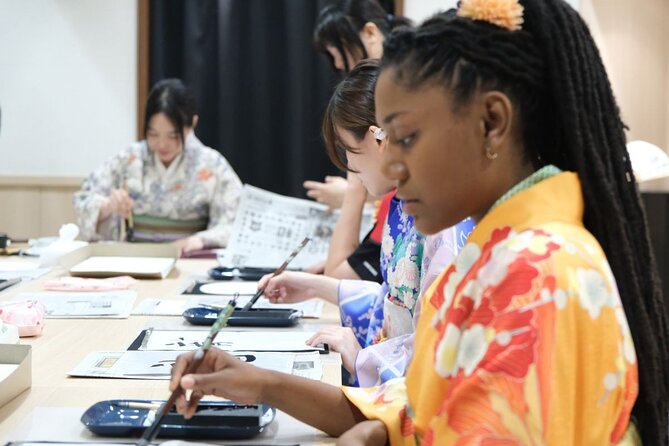
At $44.92 per person, this is priced like a value activity, not a premium museum day. And the reason it can feel like a good deal is the amount of different content you get in one place:
- Tea ceremony participation
- Calligraphy practice with a take-home element
- Samurai show with audience participation
- Traditional music performances, with instrument practice
You are basically paying for a bundled cultural mini-course plus stage entertainment. In Osaka, where many paid attractions are either all show or all craft, this “mix-and-match” format tends to feel fair.
The small group size, up to 20 people, also helps the value story. You are less likely to feel like you are stuck behind someone the entire time.
So, who gets the best value? People who learn best by doing, not just watching. If you like hands-on culture and you want a structured activity you can finish in one afternoon, this fits.
Who this Osaka experience suits best
This works especially well if you fall into any of these groups:
- First-timers who want a sampler of Japanese traditions in one go
- Families with kids or grandparents, since the activities are interactive and staff support helps keep it manageable
- People traveling on a tight schedule who do not want to hunt down separate classes across town
- Anyone looking for an indoor option on rainy days or hot afternoons
It is also a solid pick if you want something that feels slightly playful. Reviews describe moments that go from educational to funny, like practicing samurai moves and trying instruments. That balance is rare when people are teaching formal traditions.
The one mismatch is for you if you only want traditional elements in the most strictly academic format. This is cultural education through performance and practice, not a silent, museum-style experience.
Practical tips to get the most from your time
A few small things can make your visit smoother.
- Wear comfortable clothes. You will move through multiple stations and likely do hands-on activity like writing with a brush.
- Give yourself time for photos, especially if you consider kimono or costume add-ons. Dressing and picture time can take minutes you do not want to rush.
- Ask questions during the stations. The staff are the reason the experience feels easy to understand. People have specifically praised staff for being friendly and helpful, including support from Yui and Miyu.
- Keep an eye on the program pace. The session flows like a route through several rooms, so if you hesitate too long at one stop, you can feel it later.
If you want to enjoy Osaka beyond this activity, schedule it earlier in your afternoon so you still have energy to walk Dotonbori and Shinsaibashi afterward.
Should you book the Samurai show, tea ceremony, and calligraphy experience at Michi?
If your goal is a hands-on cultural afternoon that mixes tea, calligraphy, samurai performance with practice, and traditional music, I think you should book it. The price is reasonable for the amount of activities, and the structure makes it easy to enjoy even if you have limited time in Osaka.
I would also book it if you want a plan that feels safe and guided, especially with staff support and English help. This is the kind of activity where you can show up as a total beginner and still leave with something you made, plus a sense of what each tradition is trying to communicate.
Skip it or adjust expectations if you specifically want authentic, up-close museum-level armor and kimono included in the base price. The listing says those costumes are not included, so you would need an add-on if that is central to your idea of the day.
Bottom line: for an afternoon that feels like doing Japan, not just seeing it, this is a strong match.
FAQ
How long is the Samurai show, tea ceremony, and calligraphy experience?
It runs about 2 hours 30 minutes (approximately).
What is included with the $44.92 ticket?
The included parts are the tea ceremony experience, calligraphy experience, traditional Japanese music, and a samurai performance.
Are samurai armor and kimono included?
No. Samurai armor, kimono, and ninja are listed as not included.
Where do I meet for the experience in Osaka?
You meet at Shinsaibashi ARTY Inn, 2-chome-17-3 Nishishinsaibashi, Chuo Ward, Osaka 542-0086, Japan. The activity ends back at the same meeting point.
How large is the group?
The group size is capped at a maximum of 20 travelers.
What happens if weather is poor?
The experience requires good weather. If it is canceled due to poor weather, you will be offered a different date or a full refund.
Fresh options around Osaka
- Osaka Winery Tour with Wine Tasting & Vineyard Walk★ 4.9 · 12 reviews
- Osaka: Early Morning Osaka Castle Guided Tour, Avoid Crowds★ 4.9 · 12 reviews
- Kyoto Day Trip from Osaka Port – Private Shore Excursion★ 5.0 · 13 reviews
- Osaka Private Pop Culture Tour: Historic Tenma to Dotonbori★ 4.5 · 13 reviews
- Osaka Castle Admission Ticket★ 4.0 · 13 reviews
- Hidden Osaka Foodie Tour: Nishinari Backstreets & Local Dining★ 5.0 · 13 reviews
- Discover Real Osaka: A Cultural Walk with Food & Drink★ 5.0 · 13 reviews
- Nara private tour (Shore excursion available from Osaka or Kobe port)★ 5.0 · 13 reviews
Samurai & Ninja Experiences, compared.
Samurai Ninja Museum Guided tour and Experience
Read our review →
Kendo and Samurai Experience with Uniform and Gear
Read our review →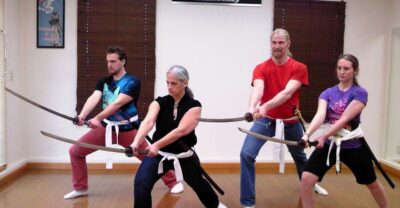
Samurai Sword Class by Experts in Traditional Arts
Read our review →
Skip the lines Basic Ticket at SAMURAI NINJA MUSEUM KYOTO
Read our review →
Samurai Sword & Archery Class from Samurai Descendant
Read our review →
Browse the lists this tour appears in