
Reviewed · WALKING TOURS
Sunset Walking Tour at Peace Park, Hiroshima
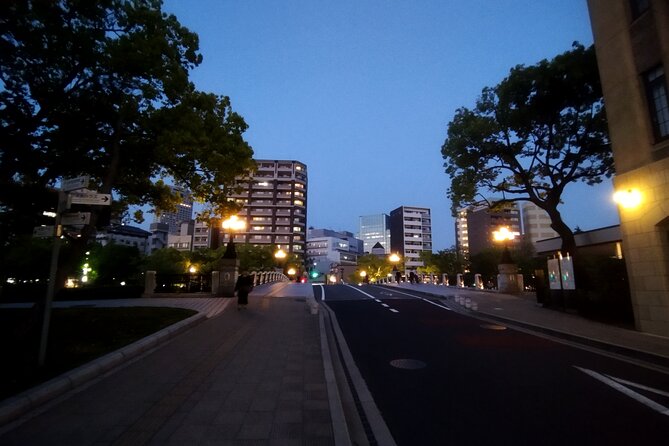
If you want Hiroshima to hit, do it at dusk. This Sunset Walking Tour at Peace Memorial Park turns the same sites you may have read about into a more human, hopeful experience. You’ll walk through the park as the light changes, with monuments and memorials glowing into evening, and an English-speaking guide who explains the Atomic Bomb impact in clear, engaging ways.
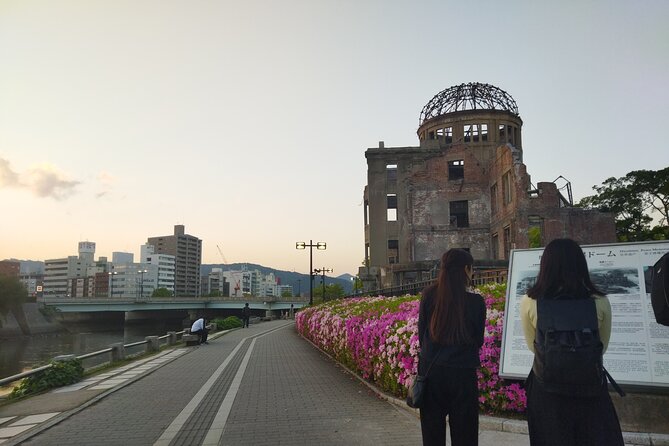
I especially liked two things. First, the small group feel means you can ask questions without being swept along. Second, the photogenic timing is real, the A-bomb Dome and the park lights up in twilight, so you get memorable photos without fighting daytime crowds and heat.
One possible drawback: this is a laid-back, flexible hour. If you’re looking for a tightly packed, highly structured script, you might find it a bit unplanned in the moment, even though the guide can personalize the pace to your interests.
Key Things to Know Before You Go
- Twilight-to-night lighting: expect the park to look different at every step
- Small group, private format: your time stays focused on your group, not a big crowd
- English narration that connects the dots: the story of the bomb and the park’s meaning is explained clearly
- Photographs that actually feel reverent: Peace Dome area views and lit memorial details make great evening shots
- A humane tone: the tour aims for hope and understanding, not only overwhelm
- Good weather matters: the experience runs only when conditions are suitable
Why the Peace Park Feels Different After 5:30 pm
Hiroshima’s Peace Memorial Park can feel heavy at any time of day. But at sunset, the park takes on a quieter rhythm. Daytime visitors bring crowds and heat, and the memorials can feel like a checklist. At dusk, the same grounds feel slower, more reflective, and easier to take in.
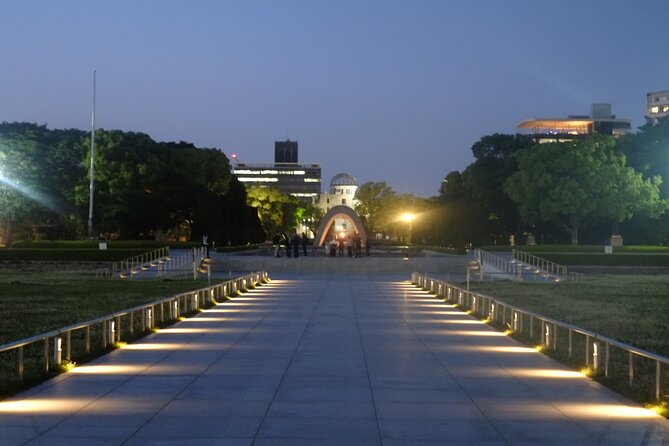
This tour is timed to catch that transition from warm light to nighttime illumination. You start at 5:30 pm, then walk as the sky darkens and the park’s features turn on. In real terms, that means you can actually look closely at details, instead of rushing from one stop to the next.
You’ll also appreciate the tone. The guide helps you experience what you might already know from museum exhibits, but with less shock and more context. The goal is understanding, plus a sense of hope, alongside the solemn reality of what happened.
More Walking Tours in Hiroshima
- Hiroshima Historical Walking Tour – Why A-Bomb was Dropped
★ 4.8 · 893 reviews - Hiroshima Peace (Heiwa) Walking Tour at World Heritage Sites
★ 5.0 · 872 reviews - Hiroshima City 4hr Private Walking Tour with Licensed Guide
★ 5.0 · 437 reviews
Price and Timing, and How It Fits Your Hiroshima Day
The price is $32.66 per person for about one hour, and you get a mobile ticket. That makes it a straightforward add-on if your itinerary is already full. Also, one practical bonus: the tour includes a free admission ticket (the experience is designed around Peace Memorial Park entry rather than charging you again at each stop).
Is it a “bargain”? If you’re comparing it to paying for a longer guided day, maybe not. But for an hour that combines orientation, stories tied to specific memorials, and a sunset lighting window, it can feel like solid value. You’re not just walking, you’re learning what to look for as the light changes.
The schedule is simple: it’s one stop focused on the Peace Memorial Park area, and you end back at the same meeting point after the walk.
Meeting Point at the Hypocenter: Start With Real Orientation
You’ll meet at the Hiroshima Atomic Bomb Hypocenter Monument at 1-chōme-5-25 Ōtemachi, Naka Ward, Hiroshima. Starting here matters. It grounds the whole experience in place, before you move into the park’s monuments and symbolism.
From the start, your guide sets the tone and gives you a mental map. That’s useful even if you’ve been to Hiroshima before, because the park covers a lot of ground and includes multiple memorial elements. With a guide, you spend less time trying to figure out what you’re seeing and more time understanding why it was placed there.
Also, you’re not stuck with a distant, impersonal lecture. Reviews often highlight the guides who go at a gentle pace, answer questions, and adjust to what the group wants to focus on.
The Peace Park Walk: How the Monuments Evolve From Twilight to Night
This tour centers on the Peace Memorial Park area, and it’s all about what changes as evening settles. The park is large and includes many memorials, bridges, and symbolic features, and your guide helps you connect them into one story.
Here are the major elements you’ll encounter as the lighting improves:
Same corner of Japan, a different kind of day:
- Peaceful Hiroshima & Miyajima UNESCO 1 Day Bus Tour
★ 5.0 · 5,309 reviews - Hiroshima: Hiroshima and Miyajima UNESCO Sites 1-Day Tour
★ 4.9 · 2,330 reviews - Hiroshima / Miyajima Full-day Private Tour with Government Licensed Guide
★ 5.0 · 1,298 reviews - Hiroshima in a Nutshell: Morning Bike Adventure
★ 5.0 · 524 reviews
The Peace Bell, T-shaped Bridge, and the “in-between” spaces
The Peace Bell is one of the first symbols people recognize in the park. In the evening, it feels less like a landmark and more like part of the park’s calming flow. The same is true for the T-shaped bridge, which reads differently at dusk. You’ll start noticing how visitors move through the grounds, and how the memorial path is designed to guide attention.
A-bomb Dome views, framed by evening light
The A-bomb Dome is the star sight, and sunset gives it a different mood than midday. As light fades, the area around the Dome becomes more dramatic, and you can often find photo angles that feel respectful rather than chaotic.
Even if you’ve seen pictures before, it’s worth slowing down here. Your guide’s narration helps you frame what you’re looking at, so the Dome is not just architecture, it’s a surviving witness.
Children’s Monument and the Fountain of Prayer
The Children’s Monument adds a powerful layer of human scale to the park. At dusk, it can feel especially poignant, because the quieter light helps you focus on the meaning, not the rush.
Nearby, the Fountain of Prayer and related memorial features shift into a gentle, reflective atmosphere. The park’s twilight lighting makes these areas feel like spaces for thought, not just photo stops.
The Tree That Survived A-bomb
The Tree that survived A-bomb is one of those details you might notice less if you’re rushing. In this timed walk, you get the chance to look longer, and your guide can explain what makes it symbolically important.
This is where you often feel the tour’s underlying approach. Instead of focusing only on tragedy, the tour leans into resilience and the idea that life continued, even after unimaginable destruction.
Flame of Peace, Cenotaph, and Pond of Peace
As the tour moves toward the most solemn memorial points, the park’s illumination becomes more obvious. The Flame of Peace and the Cenotaph area are especially striking once evening lighting takes over, because they look like they belong to the night.
The Pond of Peace also plays a role in that. Reflections can make the scene feel more still. It’s not about “pretty water,” it’s about how the memorial space encourages you to pause.
Korean Victims Monument and the broader scope of remembrance
A quick but important detail: the tour doesn’t limit itself to only one memorial viewpoint. You’ll also see the Korean Victims Monument, which reinforces that the park’s remembrance includes multiple groups of victims. That context matters, because it helps you understand Hiroshima as a global subject, not a local one.
What Your English-Speaking Guide Actually Does
A guided walk is only worth it if the guide helps you see what you’d miss alone. This tour tends to score well on exactly that.
The English-speaking guide is described as native, and the narration is clear, concise, and engaging. You’re not drowning in long speeches. Instead, the guide explains the park’s meaning and the Atomic Bomb’s impact in a way that stays connected to the specific monuments you’re standing in front of.
In reviews, the name Joshua comes up again and again. People call out how he answers questions, keeps the pace gentle, and provides context that you might not catch if you simply read signs and move on. One review even notes that he handled very curious kids’ questions, which is a good sign that he can adjust his tone to the audience.
That said, one review also mentioned the tour felt slightly underwhelming for them because it was laid back and less overtly enthusiastic. The takeaway for you is simple: if you want energy and a very structured route, start the tour by sharing what you hope to get out of it. Ask your first question early, and the guide can steer the focus.
Escaping Crowds and Heat Without Skipping the Meaning
The best argument for doing the Peace Park at sunset is practical. In summer, daytime can feel brutal. In this hour, you get the benefits of evening air and softer light while still visiting key memorial sites.
It also helps that the format is private for your group. You’re not competing with a big bus crowd for attention. That private feel supports the most important part of a memorial visit: your own pace.
And because this tour is short, you avoid the “I’ve been standing in solemn places for hours” fatigue. After an hour, you can still process what you saw, rather than rushing off to the next stop without time to absorb it.
Photography Notes for the Peace Dome Area and Park Lights
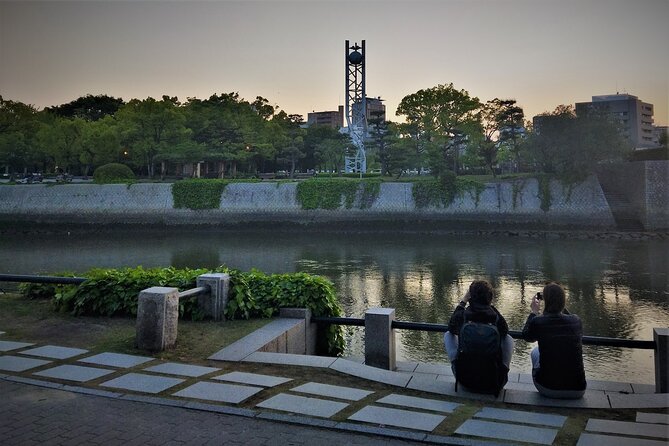
If you care about photos, this timing is genuinely useful. The park lights and night illumination change the look of the same monuments dramatically. Reviews mention lots of photography opportunities, especially around the Dome area and then once nighttime lighting comes on at the museum fountain and the Eternal Flame area.
A few practical pointers you can use right away:
- Bring a phone or camera you can hold steady. Even a small tripod is usually not practical for a walking tour.
- Expect low light. If you’re on a smartphone, use night mode when it’s available.
- Move slowly. Some of the best shots come from taking two minutes to reposition, not by rushing forward.
Most importantly, keep the tone respectful. You’ll get better photos when you’re mindful of people around you and when you pause to look instead of treating it like a photo scavenger hunt.
Is One Hour Enough, and Who This Tour Suits Best
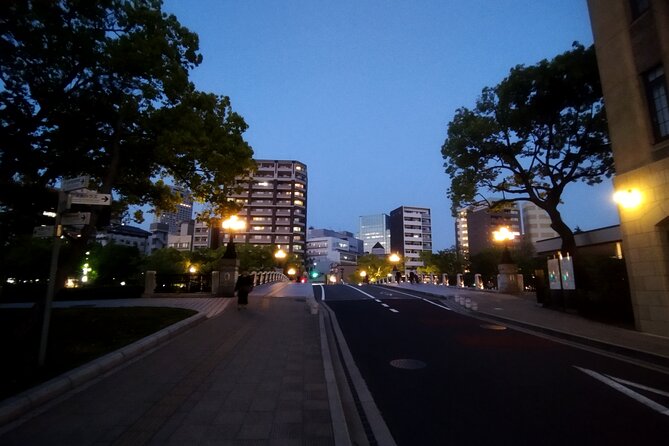
One hour can sound short for a place like Peace Memorial Park. But the tour’s value is that it selects the most meaningful elements and adds narration as you go. You’re not trying to see every single thing in the park, you’re getting a coherent guided experience that connects what you see with what it represents.
This is a strong match if you:
- Want a guided orientation even if you’ve visited the museum already
- Haven’t been to the museum yet and want the park to make more emotional sense
- Prefer a calm pace over a rapid checklist
- Travel with kids or anyone who benefits from clear explanations and question time
It might not be your perfect choice if you:
- Prefer a highly structured tour with a very tight timeline and frequent mini-lessons
- Want a long, museum-heavy schedule in one sitting
For the best experience, treat the hour like a guided “light switch” for your understanding. You’ll still want time later to revisit anything that really stuck with you.
Pairing This Tour With Miyajima in One Day
The tour is often easy to combine with a morning trip to Miyajima. The timing helps: you don’t need a full day to pull this off. You can do sightseeing on Miyajima earlier, then return to Hiroshima for an emotionally important evening walk when the light is better and crowds are thinner.
This kind of pairing also balances your day. Miyajima tends to feel scenic and lively, while Peace Memorial Park is reflective. Doing them on the same trip can create a full spectrum of Japan, without feeling like one place cancels out the other.
Logistics That Matter: Getting There, Tickets, and Weather
The meeting point is near public transportation, which matters because you likely have other Hiroshima stops planned. You’ll also use a mobile ticket, which keeps the experience smooth.
One more reality check: the tour requires good weather. If it’s canceled due to poor weather, you’ll be offered a different date or a full refund. With an outdoor walking tour, that’s not a small detail. If you’re visiting during a rainy stretch, keep a little flexibility in your schedule.
Service animals are allowed, and most travelers can participate. If you have specific mobility needs, it’s smart to ask before booking, because the experience is still a walking tour even if it’s paced gently.
Should You Book This Sunset Walking Tour at Peace Park?
If you want a short, humane, well-timed way to experience Hiroshima’s Peace Memorial Park, I think this tour is a smart booking. The sunset timing makes the A-bomb Dome and the surrounding memorial features more visible and more photo-friendly, while the guide’s narration gives you context that signs alone can’t fully provide. Add in the private small group feel, and it’s easier to ask questions and move at a pace that lets the meaning land.
I’d skip it only if you know you want a highly structured, fast-moving tour with lots of “beat-by-beat” planning. This one is calmer, and that can be either a strength or a disappointment depending on your style.
If you’re on the fence, here’s an easy decision rule: if you value explanation tied to specific monuments and you love the look of places at twilight, book it. If you prefer a strict itinerary with constant active engagement, consider something more museum-centered instead.
FAQ
How long is the Sunset Walking Tour at Peace Park?
The tour lasts about 1 hour.
What time does the tour start?
The start time is 5:30 pm.
Where do I meet the guide?
You meet at the Hiroshima Atomic Bomb Hypocenter Monument, 1-chōme-5-25 Ōtemachi, Naka Ward, Hiroshima, 730-0051, Japan. The tour ends back at the same meeting point.
Is this tour private or shared?
It is a private tour/activity, so only your group participates.
Do I need to pay for admission to the park or museum areas?
The included admission ticket is listed as free.
Is a mobile ticket used?
Yes, the tour uses a mobile ticket.
What happens if weather is bad?
This experience requires good weather. If it’s canceled due to poor weather, you’ll be offered a different date or a full refund.
More Evening Experiences in Hiroshima
- Hiroshima Izakaya Food and Drink Night Tour
★ 5.0 · 297 reviews - History of Hiroshima: Small Group Night Walking Tour
★ 4.8 · 17 reviews - Kyoto: Gion Magical Night Walking Tour with Geisha Trivia
★ 4.9 · 2,393 reviews - Night Walk in Gion: Kyoto’s Geisha District
★ 4.5 · 2,003 reviews
Fresh options around Hiroshima
- Hiroshima:Private lacquer workshop experience tour(gift included)★ 5.0 · 13 reviews
- Kimono and Calligraphy Experience in Miyajima★ 5.0 · 16 reviews
- Hiroshima Peace Memorial Park: A Guided Tour★ 4.9 · 16 reviews
- History of Hiroshima: Small Group Night Walking Tour★ 4.8 · 17 reviews
- Okunoshima Rabbit Island Cycling Tour with Local Guide★ 4.5 · 17 reviews
- Shore Excursion from Hiroshima Port : Private Tour in Hiroshima★ 5.0 · 17 reviews
- Mitaki Peace Tour Beyond Central Hiroshima★ 5.0 · 18 reviews
- Hiroshima and Miyajima Full Day Private Tour★ 4.5 · 19 reviews
Walking Tours, compared.
Kyoto Geisha Walking Tour: Gion District & Hidden Gems
Read our review →
Tokyo Tsukiji Fish Market Food and Culture Walking Tour
Read our review →
Gion Magical Night Walking Tour with Geisha Trivia
Read our review →
Imperial Palace and Shogun Historical Walking Tour
Read our review →
Gion Geisha District Walking Tour – Stories of Geisha
Read our review →
Shinjuku Local Bar and Izakaya Guided Walking Tour
Read our review →
Browse the lists this tour appears in