

Reviewed · CYCLING TOURS
Okunoshima Rabbit Island Cycling Tour with Local Guide
Rabbits and poison gas, on two wheels. That mix is exactly why the Okunoshima Rabbit Island Cycling Tour feels so gripping: you’re rolling around a small island with wild rabbits and a guide who clearly explains the island’s darker wartime past. I especially like the chance to get stories from a real local expert like Junko, not just a basic walkthrough. The one drawback to plan for is that several key sites, like the lighthouse and parts of the poison gas facilities, are view-only, since entry is prohibited.
This is also a very practical kind of sightseeing. You ride with a bike included, you stay on a tight 2-hour schedule, and the group is small (max 5), with a shared-group format. You will still need to budget for the ferry, since the Tadanoumi to Okunoshima ferry fee is not included.
Because it’s cycling on a real island (not a flat city tour), I’d call out the fitness part up front. The tour asks for moderate physical fitness, so if you’re unsure, it’s worth picking a day you feel good and keeping an easy pace.
Key things I’d watch for before you go
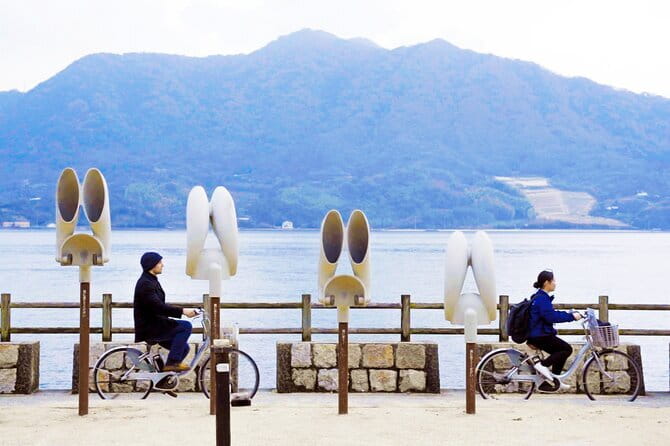
- Small group size (up to 5) with a shared tour setup, so you still get some personal attention
- Bicycle included plus all fees and taxes covered, but food and beverages are not
- View-only access at multiple spots like the lighthouse and poison gas ruins, with short viewing stops
- Okuno Shrine brings rabbits right into a calm, sacred setting
- Northern Cannon Battery Remnants are the closest, walk-up ruins on the route
- Ferry cost to plan for: 360 yen from Tadanoumi to Okunoshima
Rabbits, ruins, and why this island feels complicated in the best way
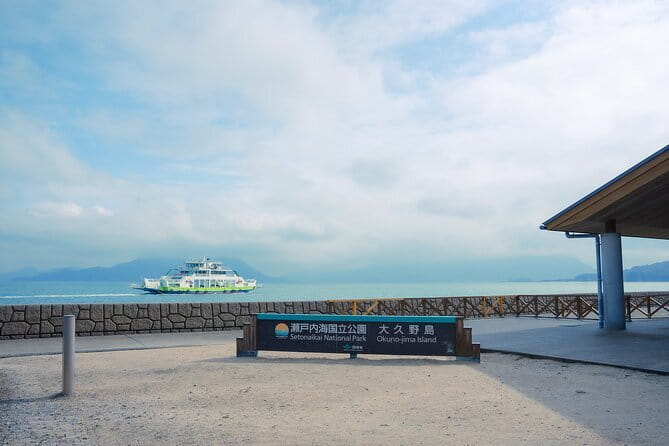
Okunoshima sits in Japan’s Seto Inland Sea, in a zone known for lots of small islands and day-trippable water views. The island itself is only about a 4 km circumference, so it’s the kind of place where a bike tour actually makes sense: you can cover the main areas without turning it into a long workout.
The emotional pull here is the contrast. Today, the island is famous for hundreds of wild rabbits, and that’s the first thing you’ll notice when you arrive. But the tour also frames Okunoshima as a place that was hidden from normal view for a long time because of its wartime history. That dual identity is what turns this from a cute animal outing into something that stays with you.
More Bike Tours in Hiroshima
- Hiroshima in a Nutshell: Morning Bike Adventure
★ 5.0 · 524 reviews - Hiroshima 2hr Peace Cycling Tour with Local Guide
★ 5.0 · 321 reviews - Hiroshima: Peace Cycling Tour with Local Guide
★ 4.8 · 286 reviews
How the cycling tour moves on a 4 km island
The whole experience is about 2 hours, paced around short stops rather than long rides between them. That matters because you’re not just biking for distance, you’re biking to reach specific points where your guide can tell you what you’re looking at.
With a bike included, you don’t need to figure out rental logistics or timing on your own. The tour is also designed around minimal friction: you meet at the KYUKAMURA OHKUNOSHIMA property, and you finish right in front of the hotel again, so you don’t end up stuck halfway through the day.
One more practical note: this is a shared group tour. The tour operates with at least 2 participants, and the maximum group size is 5, so it’s not a big crowd situation. Still, it’s not a private tour, so you’ll move at group speed.
Stop 1: Okunoshima Lighthouse viewpoints (the scenery, minus the entry)
Your first stop is Okunoshima Lighthouse. Here’s the key thing to know: entry is prohibited, so you’re not going to walk around the inside or get close enough for the kind of photos you’d get at an open attraction. Instead, you view it from a short distance.
What you get out of this stop is the setup. A lighthouse view helps you orient yourself quickly, especially on an island where the water and coastline are the main reference points. Even if you can’t go in, it’s a good “catch your bearings fast” moment.
Because the stop is only about 10 minutes, you won’t waste your time waiting around either. It’s more of a visual anchor than a full attraction.
Stop 2: Okunoshima Island time, plus the meaning behind the rabbits
Next is Okunoshima Island, where you’ll spend about 1 hour. Admission is free, and this is the core “walk and look, guided by someone who actually cares” part.
This is where the rabbits do their job. You’ll see them in the wild, moving through the island’s public areas rather than acting like zoo animals. That’s part of the charm, but the tour also uses this time to connect the present to the past, so you understand why the island’s peace feels earned and complicated at the same time.
The island is part of the Seto Inland Sea National Park area. Even without turning this into a long hiking day, you’ll get a sense of how the terrain shapes daily life on the island. And with a guide talking through what happened here, the rabbits stop feeling like the only story.
Same corner of Japan, a different kind of day:
- Peaceful Hiroshima & Miyajima UNESCO 1 Day Bus Tour
★ 5.0 · 5,309 reviews - Hiroshima: Hiroshima and Miyajima UNESCO Sites 1-Day Tour
★ 4.9 · 2,330 reviews - Hiroshima / Miyajima Full-day Private Tour with Government Licensed Guide
★ 5.0 · 1,298 reviews - Hiroshima Historical Walking Tour – Why A-Bomb was Dropped
★ 4.8 · 893 reviews
Stop 3: Okuno Shrine, where the rabbits overlap with quiet
Okuno Shrine is short, about 10 minutes, but it’s one of the stops that can surprise you. The shrine is the island’s only shrine, and it’s also home to rabbits.
That combination changes the mood. Instead of thinking only about the wartime ruins, you get a calmer pause where the rabbits feel less like a spectacle and more like part of the everyday island scene. If you’re visiting Okunoshima just for animal time, this stop still delivers. If you’re here for the history, it helps you understand why people describe the island as peaceful and healing, even when they know what happened in the past.
Because it’s only a brief stop, you’ll want to use it well. Watch for rabbit activity near the shrine area, but also take a minute to just look around. The guide’s context is often what turns these quick moments into something memorable.
Stops 4 and 5: Nagaura Poison Gas Storage Ruins and the power plant viewpoints

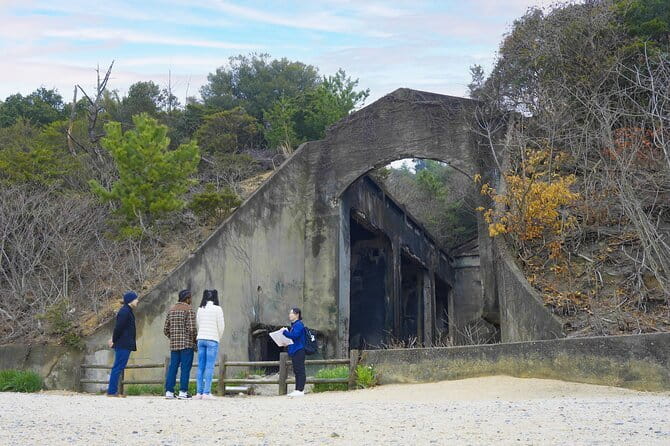
Now for the hard part. Nagaura Poison Gas Storage Ruins and the Power Plant Ruins both center on the island’s poison gas production and storage history. Both of these stops are view-only, with entry prohibited for safety reasons.
Each stop is around 10 minutes, which keeps the pace steady but also means you’ll get just enough time to absorb what you’re seeing. You’ll view the structures from a short distance rather than walking the grounds. That can feel limiting if you’re expecting a full memorial experience with deep access, but safety restrictions are part of the reality here.
Still, these stops are valuable because they connect the island’s present-day quiet to the reason it was once hidden from normal public view. The “why” matters, and having a local guide explain what you’re looking at makes a difference. You’re not left guessing.
If you’re sensitive to difficult history, I recommend mentally preparing for a brief but direct shift from rabbits and scenery into a darker subject. The tour is designed to handle that contrast, but you should go in with the right mindset.
Stop 6: Northern Cannon Battery Remnants, where you can get closer
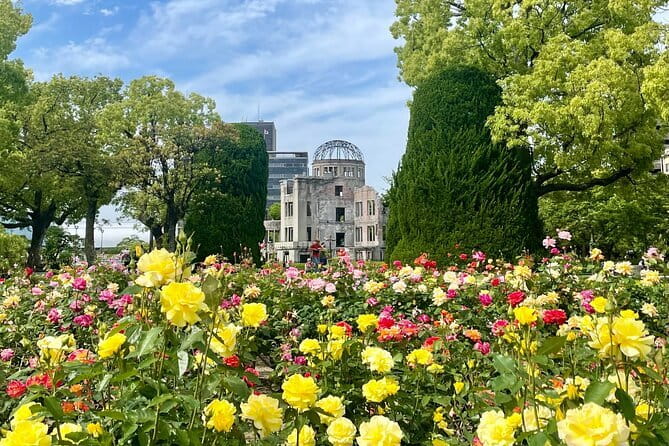
Your final major stop is Northern Cannon Battery Remnants, where you can see the ruins more closely. This one runs about 15 minutes, longer than the view-only distance stops before it.
That extra access matters because it helps your brain “place” the story. When you can get a bit closer, the physical reality of the site hits differently. It turns the history from abstract to tangible, without turning the tour into something unsafe or overly long.
This is also a good moment to balance your emotional load. The day moves through sadness and then returns to clearer island context. By the time you hit the cannon battery remains, you’ve already seen the rabbits, the shrine, and the wartime-related ruins. That sequencing helps the final stop land with more meaning.
The guide makes the tour feel human, especially with Junko

The biggest stand-out in the experience is the guide style. A local expert can make a short tour feel complete because they translate what the island is into something you can actually understand while you’re standing there.
I’m especially glad the tour highlights guides like Junko, who is described as kind and passionate about educating people on the island’s terrible past. That kind of guiding matters because Okunoshima isn’t just a place to look at. It’s a place where context turns cute moments into something thoughtful.
If you care about accurate, respectful storytelling, don’t skip the conversation time. Ask questions when you can. Even in a small group (max 5), you’ll usually get room for simple questions rather than feeling rushed.
Price and value: is $59.12 a good deal for 2 hours?
At $59.12 per person, this tour isn’t trying to be “cheap sightseeing.” It’s priced like a guided experience on a specific island with transportation involved.
Here’s what you get that supports the price:
- Bicycle included
- All fees and taxes included
- Travel insurance included
And here’s what you should expect not to be included:
- Food and beverages
- Ferry fee (Tadanoumi to Okunoshima is 360 yen)
Value-wise, the key point is that you’re paying for local interpretation and a structured route across the island’s main story points. You’re also saving time because the tour manages the flow, so you don’t spend your energy trying to connect dots between rabbits, shrine, and wartime sites.
If your goal is simply to see rabbits with no background, you might do something looser on your own. But if you want the full Okunoshima meaning, a guided bike route is a strong value for a short visit.
Logistics that matter: meeting point, timing, and what to bring
You’ll meet at KYUKAMURA OHKUNOSHIMA in Tadanoumichō, Takehara, Hiroshima, and the tour ends in front of the same hotel. That keeps your day simple, especially if you’re already planning to stay nearby or arrive by local transit.
Because the tour includes a bicycle, I’d dress for comfort rather than style. You’ll be moving on an island route, and you’ll want to feel stable and ready for short rides between stops.
Also plan your snacks. Food and beverages aren’t included, so bring water and a small bite if that fits your day. Even though the tour is only about 2 hours, cycling plus walking time can make you hungry, and it’s nice to avoid hunting for food mid-tour.
One more practical detail: you’ll use a mobile ticket. Make sure your phone has battery and can show the ticket if needed.
Weather planning on Okunoshima: rain can cancel the ride
This is a cycling tour, so weather matters. The tour follows a clear policy: if the Japan Meteorological Agency forecasts a 60% or higher chance of rain by 12:00 PM the day before the tour, it will be cancelled with no cancellation fees.
That’s helpful because it reduces the risk of getting stuck in bad conditions. Still, it means you should keep your schedule flexible and be ready to adjust if rain is likely.
Who should book this Okunoshima cycling tour?
I think this tour fits best if you want:
- A short, structured island experience in about 2 hours
- To see rabbits but also understand why the island has a hidden past
- A calm group setting, since it’s capped at 5
It’s also a good fit for people who appreciate guided history without getting stuck in long walking days. The stops are short, and several sites are view-only due to safety, which keeps the pace controlled.
On the flip side, if you’re hoping to enter the lighthouse or walk inside the ruins sites, you may find the experience limited. Multiple locations are prohibited to enter, so your expectations should be “view and learn,” not “explore inside.”
Should you book? My honest take
Yes, I’d book this if you’re going to Okunoshima at all and you care about doing more than taking rabbit photos. The guided approach gives you a coherent story, and the tour length is realistic if you have other Hiroshima-area plans.
I’d skip it only if you want a fully independent rabbit wander with no history framing, or if you strongly prefer attractions where you can enter every site. Here, you’ll see and learn from viewpoints, and that’s part of how the island is meant to be experienced respectfully.
If you’re planning a focused half-day in the Seto Inland Sea area and you want both rabbits and a real sense of place, this is a smart way to spend your time.
FAQ
How long is the Okunoshima Rabbit Island Cycling Tour?
The tour lasts about 2 hours.
How much does the tour cost?
The price is $59.12 per person.
What’s included in the price?
The tour includes bicycle use, all fees and taxes, and travel insurance.
Is the ferry fee included?
No. The ferry fee from Tadanoumi to Okunoshima is 360 yen and is not included.
Where do I meet, and where does the tour end?
You meet at KYUKAMURA OHKUNOSHIMA (休暇村大久野島) and the tour ends in front of the hotel there as well.
Is this a private tour?
No. It is a shared group tour, and the maximum group size is 5 travelers.
Are we allowed to enter the lighthouse or the poison gas ruins?
No. Entry is prohibited at the lighthouse and the poison gas-related sites, so you view them from a short distance. The Northern Cannon Battery Remnants can be seen more closely.
What is the weather policy for cancellations?
If the Japan Meteorological Agency forecasts a 60% or higher chance of rain by 12:00 PM the day before the tour, the tour will be cancelled with no cancellation fees.
Do I need a certain fitness level?
The tour requires moderate physical fitness.
More Cycling Tours in Hiroshima
- Hiroshima and Miyajima by Bike and Boat
★ 5.0 · 172 reviews - Hiroshima 3hr Peace Cycling Tour with Local Guide
★ 5.0 · 131 reviews - Hiroshima: Best of Hiroshima Guided Bike Tour
★ 4.9 · 89 reviews - Hiroshima Country Cycling: Explore Rural Life 1 HR from City
★ 5.0 · 22 reviews
Fresh options around Hiroshima
- Hiroshima Peace Memorial Park: A Guided Tour★ 4.9 · 16 reviews
- History of Hiroshima: Small Group Night Walking Tour★ 4.8 · 17 reviews
- Shore Excursion from Hiroshima Port : Private Tour in Hiroshima★ 5.0 · 17 reviews
- Mitaki Peace Tour Beyond Central Hiroshima★ 5.0 · 18 reviews
- Hiroshima and Miyajima Full Day Private Tour★ 4.5 · 19 reviews
- 4 Hour Miyajima PRIVATE Tour★ 5.0 · 19 reviews
- Hiroshima Private Walking Tour with a Local★ 4.5 · 19 reviews
- Hiroshima Scenic Cycling Guided Tour★ 5.0 · 19 reviews
Cycling Tours, compared.


3h Tokyo E-Bike Tour: Hidden Gems, and Local Life with guide
Read our review →
Arashiyama Bamboo Forest & Hidden Gems Bike Tour (Early Bird)
Read our review →
Hiroshima in a Nutshell: Morning Bike Adventure
Read our review →Browse the lists this tour appears in