
Reviewed · WORKSHOPS
Popular Sushi Making Class near Tokyo Tower
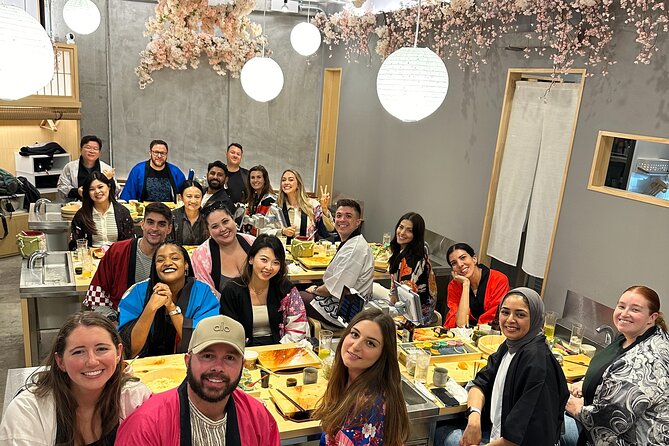
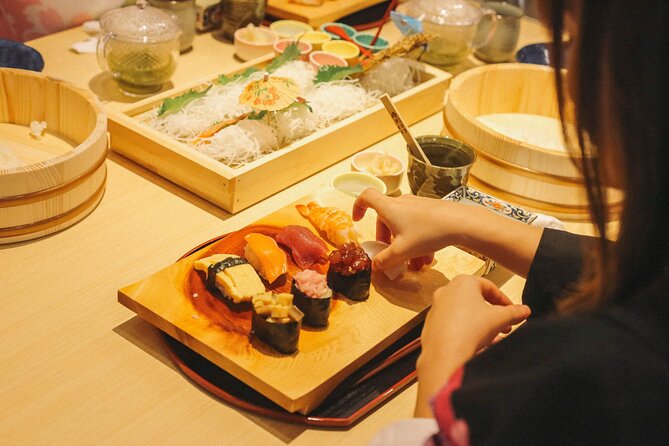
Tokyo Tower gets the postcard view, but sushi class is the real treat. In Higashiazabu near the tower, you learn how to shape and assemble sushi with ingredients like salmon and tuna, then you eat what you make. I love that it is hands-on, English-led, and built for real practice, not just watching. I also like the photo and video moments, plus the chef costume and props that make it feel like Japanese cooking culture, not a worksheet. One drawback to plan for: class size can be small and you may share seating with other customers, so the pace and individual help can vary a bit.
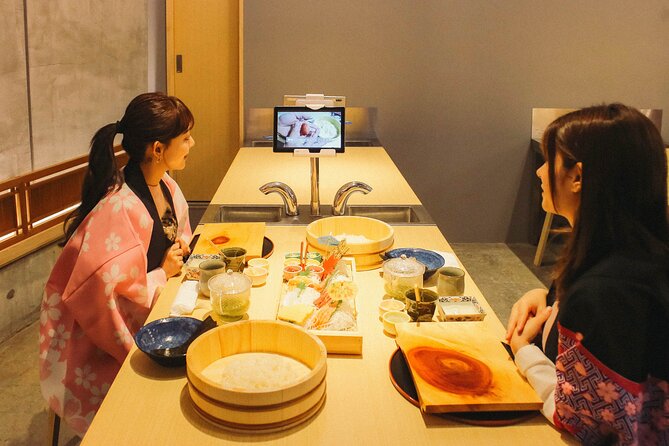
You will be working with a sushi chef at a clean, teaching-focused setup, and the experience includes a short instruction video beside your seat. In reviews, instructors like Keiko, Yuki, and Mickie are specifically called out for friendly English teaching, patience, and clear step-by-step guidance. If you are traveling with kids, this is also the kind of activity that gets them moving and eating quickly, since you craft your sushi and finish with a meal.
Key highlights you will actually care about
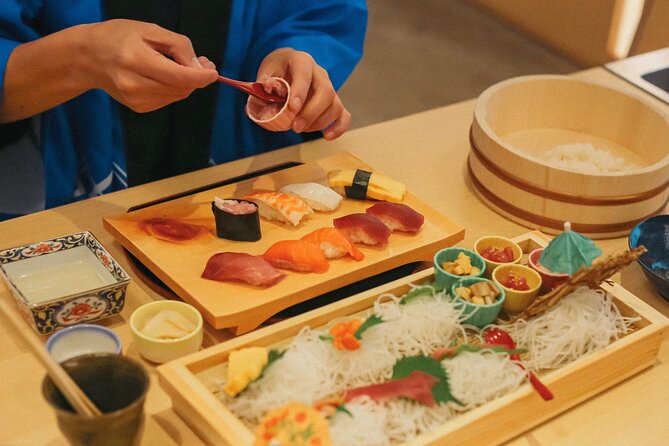
- Eat what you make: you craft the pieces, then enjoy them right after
- English instruction with hands-on practice: chefs teach assembly steps, and you copy what you see
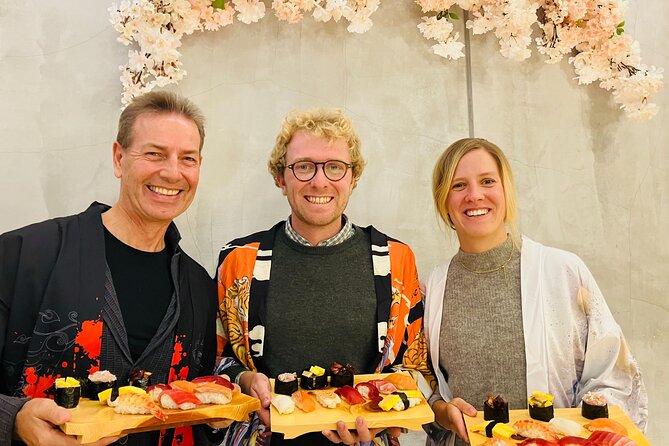
- Costume and photos: kimonos and other dressing-up items, plus lots of picture time
- Small class size: maximum 14 travelers, often with a very “everyone has a seat” setup
- Diet options with notice: vegetarian, vegan, and gluten free can be arranged if you message in advance
Where Higashiazabu meets Tokyo Tower: the vibe and the payoff
This sushi making class sits in Higashiazabu, a short walk and easy ride from Tokyo Tower. That matters because you can pair it with sightseeing without feeling like you are sprinting across the city. The neighborhood feel is part of the appeal. Instead of only doing big sights, you get a focused food experience right in the middle of the Tokyo Tower area.
What makes the setting work is the classroom style. You have your own place to work, and you are not just standing around. Reviews repeatedly point to the space being clean, organized, and designed for teaching, which is a quiet but huge factor for a cooking class in a foreign language. Even if you only remember half the steps, you still walk away with the right mental order: rice prep and handling, then fish placement, then the final assembly.
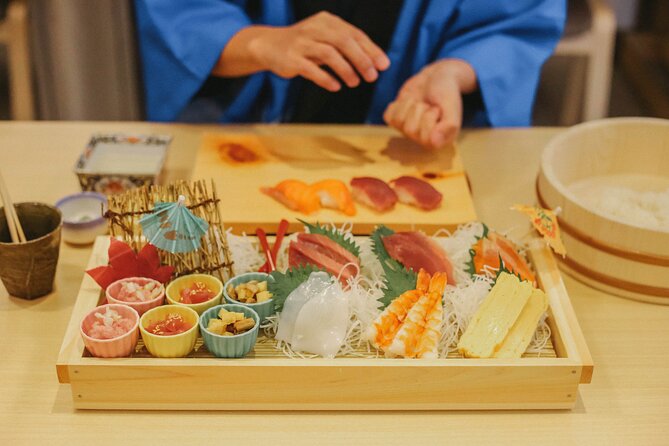
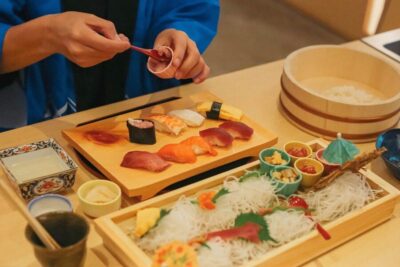
And then there is the best part: you eat your sushi afterward. You are not paying for a souvenir roll that sits on a plate for show. You are building something you can taste immediately, which makes the lesson stick. One review described learning rice rolling technique and fish placement, then enjoying a full set of pieces, like 8 to 12 pieces depending on the class flow.
More Sushi Making Classes in Tokyo
- Sushi Making Tokyo Roll and Authentic Japanese Sushi Class
★ 5.0 · 3,971 reviews - Tokyo: Roll and Authentic Sushi Making Class in Asakusa
★ 4.9 · 1,957 reviews - Make Sushi and Create Unforgettable Memories in Tokyo
★ 5.0 · 1,413 reviews
Your 90 minutes: what you do during the sushi making lesson
The class is about 1 hour 30 minutes. It runs throughout the day, so you can choose a time that fits your meal plans. If you are the type who hates food activities that end too late, plan it so it lands near lunch or an early dinner. Multiple reviews mention you will make a lot of sushi for the time you have.
Here is the core structure you should expect:
1) Welcome and preparation
You start with a warm welcome and quick orientation. Some classes include dressing up, with kimono-style costumes, and in reviews there are mentions of props like samurai swords and ring lights for photos.
2) Video instruction beside your seat
Instead of only listening, you can reference a short instruction video. That is helpful when English is clear but you are still learning techniques that are hard to describe.
3) Chef-led demonstration
A Japanese sushi chef demonstrates the process in English. Reviewers specifically mention step-by-step explanation and chefs who take time to walk participants through assembly. Names like Keiko and Yuki come up often, with an emphasis on patience and friendly teaching.
4) Your turn, your hands, your pieces
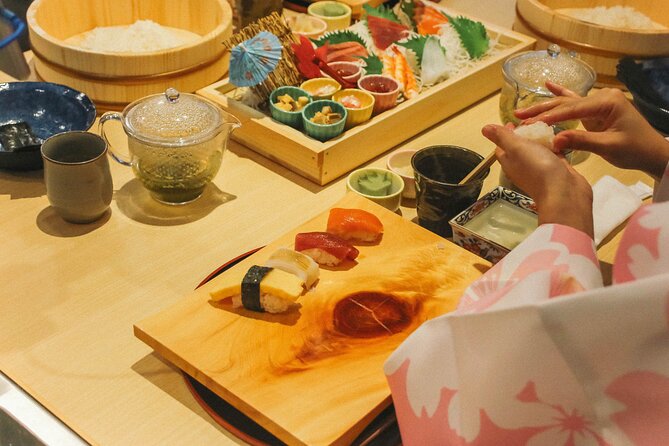
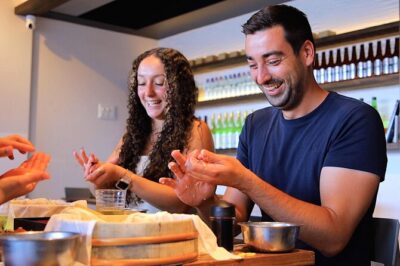
You craft sushi at your seat. Reviews frequently mention that each person has their own setup and that assistants help, which is especially important for kids and first-timers. Some people also note that it can feel surprisingly easy once you follow the technique for shaping rice and placing fish correctly.
5) Eat what you made
After you finish assembling your pieces, you eat them. Reviews mention the sushi is very good and the ingredients taste fresh, with comments about rice texture like soft rice and fish freshness.
What you might notice during the class
A few details pop up in reviews that help you set expectations:
- You might only get a short video screen portion before hands-on begins.
- The class can involve a lot of assembly in a short time, which is great if you like action, but it means you should pay close attention early.
- In one mixed review, the rice felt too hard and the fish quality was not what they hoped for. That is not the overall pattern in the high ratings, but it is a reminder that ingredient handling can matter, and your own preferences for rice softness and fish richness might affect your experience.
The sushi skills that help you at Japanese restaurants
Even if you never plan to roll sushi at home, you will learn things you can use instantly when you order in a restaurant. One key lesson is how rice texture and handling affects the final bite. Reviews mention you learn the right way to roll and shape rice, including tips for getting it to the correct feel and not making a messy, sticky disaster.
You also learn fish placement and assembly. The chef teaches where the fish sits and how to form the piece so it holds together. That kind of technique knowledge matters because most restaurant sushi is about balance, not just raw fish on rice.
And because the chef talks through ingredient choices, you start thinking differently about what to pick. For example, once you understand why certain fish types pair better with certain rice textures, you can order with more confidence instead of guessing from a menu photo.
Same corner of Japan, a different kind of day:
- Mt Fuji and Hakone 1-Day Bus Tour Return by Bullet Train
★ 5.0 · 26,383 reviews - 1-Day Tokyo Bus Tour
★ 5.0 · 14,250 reviews - Tokyo: TOKYO SKYTREE® Admission ticket
★ 4.5 · 11,192 reviews - Tokyo: teamLab Planets TOKYO Digital Art Museum Entry Ticket
★ 4.6 · 9,779 reviews
Photo moments and costume culture: why it feels more than a cooking class
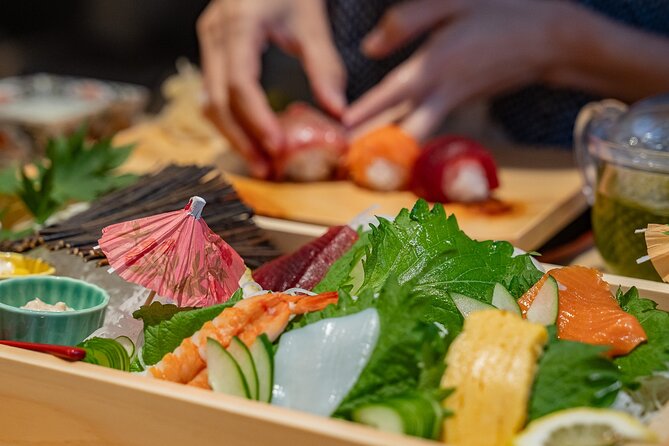
If you like travel experiences that give you something to remember beyond photos on your camera roll, this one is built for you. Many reviews call out costume dressing and photo sessions with a ring light or other picture time. You can also take images with your finished sushi.
This is not just for fun. It changes the tone of the class. When you are laughing, wearing a costume, and getting photos with your work, you stay present. That makes it easier to remember steps later. One review describes the chef taking photos and making a video, and it matches the overall pattern of a “celebrate your effort” approach.
Also, for couples and families, this is an easy win. Adults feel like they are doing something cultural and hands-on. Kids feel like they are participating in an event, not just learning food trivia.
How the day’s stops fit around your Tokyo Tower area outing
The experience is set up with a route through the Tokyo Tower area, plus a few big-name spots nearby. The exact timing is not spelled out here, so I will treat this as an order of places you visit, with the sushi class as the main reason you are in the neighborhood.
Stop 1: Tokyo Tower
Tokyo Tower is your anchor landmark. Even if you have already seen it from a distance, it is worth getting close, if only for the “I am actually here” moment. It also gives context for why Higashiazabu is a smart base for this class. You are not stuck farther out in Tokyo with no convenient way to connect sightseeing.
Stop 2: Zojo-ji
Zojo-ji is a classic contrast to modern Tokyo Tower energy. It gives you a calmer, temple-side pause before you head back to food and action. If you are photographing, you can also use it as a gentle reset for your eyes before the next urban stops.
Stop 3: Azabujuban
Azabujuban is where the neighborhood vibe comes in. You get a sense of local Tokyo, not just a single landmark loop. This is a good walking zone, and it helps you feel like you are moving through real streets rather than only visiting set pieces.
Stop 4: Shiba Park
Shiba Park offers a break from constant city motion. Even if you only stop briefly, a park pause helps you keep your energy for later stops and for the class itself. It is the kind of stop that makes your day feel less like a checklist.
Stop 5: teamlab Borderless Tokyo at Azabudai Hills
This is one of the most popular art and digital experience stops on the list. If you like interactive exhibits, you will probably enjoy the creative energy here. Just plan for crowds on busy days, because famous tech-art can draw lines.
Stop 6: Azabudai Hills
Azabudai Hills is part mall, part cultural hub, and part view point. It is the kind of place where you can get a snack or do a quick look around between major stops. If you want something practical, it is a good place to keep your schedule flexible.
Stop 7: Hamarikyu Wharf
Hamarikyu Wharf brings you back toward water and a softer atmosphere. It is a nice tonal change from tower views and indoor art. If you are doing this kind of itinerary in one day, this is a helpful breath.
Stop 8: Tokyo City View Observation Deck (Roppongi Hills)
Observation decks are a travel cheat code for understanding Tokyo’s size. The value here is simple: you can connect the neighborhoods you walked through to the big picture. If you go near sunset, views often feel more dramatic, but any clear time helps.
Stop 9: The National Art Center, Tokyo
This stop works well if you want a calmer, more traditional museum pacing in the middle of a day packed with hotspots. Art centers are also a good place to slow down when you want less walking and more sitting.
Stop 10: Roppongi
Roppongi wraps up the route with a lively Tokyo feel. If you are hungry after the sushi class, this is a helpful neighborhood to know for dinner plans afterward.
Who this sushi class is best for
This experience is designed to work for couples, first-time sushi fans, and families. The class is maximum 14 travelers, and reviews mention multiple helpers, so kids tend to do well. One review specifically notes kids aged 7 to 15 enjoying the experience.
You will probably be happiest if you:
- Want a hands-on food lesson, not a lecture
- Like learning technique you can use at home
- Want photo moments as part of the memory
- Are already planning Tokyo Tower area sightseeing and want your food stop to fit naturally
It might be less ideal if you:
- Want a long, quiet, step-by-step class with minimal crowding
- Are very picky about fish quality and rice softness, since in one case the reviewer felt the ingredients were not great
- Struggle with instructions when language learning gets tricky, since one mixed review mentioned the language barrier.
Price and value: is $87.55 worth it?
At $87.55 per person, this is not the cheapest food activity in Tokyo. But it does have strong value signals for that price.
You are getting:
- A full hands-on lesson with English guidance
- A chef demonstration
- Instruction that focuses on assembly technique, not just watching
- The meal itself, meaning you eat the sushi you craft
- Costume and photo moments that you likely would pay for elsewhere if you did them on your own
When reviews call it fun, tasty, and well run, they are describing more than food. They are describing how smoothly the experience flows, how welcome people feel, and how much work you actually do. That matters when you compare it to lower-cost cooking experiences that may be more like a demo.
Still, one important caution: you are paying for quality ingredients and a smooth class tempo. If you care most about top-tier fish and perfect rice every time, you might compare this to a higher-end dining experience. But if your priority is learning and doing, and then eating your results, this pricing starts to make sense quickly.
Dietary needs and food safety basics you should plan for
If you have dietary restrictions, it helps that the class states vegetarian, vegan, and gluten free options are available if you message in advance. That is the key part. If you wait until the day, they may not be able to accommodate.
Also, tell them about any food allergies in advance by message. This is not just polite, it is necessary so your setup matches your needs.
One more practical point: since you will be making sushi, think about how comfortable you are with substitutions. The class can adjust, but you are still assembling pieces, so you might want to communicate what level of strictness you need.
Group size, seating, and what it means for your comfort
The class caps at 14 travelers. In practice, reviews suggest helpers are available and that people often have individualized attention. That is why families frequently recommend it.
At the same time, the information also says you may be seated with other customers depending on how busy the venue is. That can affect how much space you feel you have and how quickly you can ask questions. If you like a lot of personal coaching, consider booking a time when you expect less crowding.
Final verdict: should you book the Tokyo Tower sushi making class?
Yes, I would book it if you want a short, hands-on Tokyo food experience that fits near Tokyo Tower. The strongest reasons are practical: you learn assembly steps in English, you eat what you make, and you get a clean, well-run setup with costume and photo moments. Reviews also highlight instructors like Keiko and Yuki as standout teachers, which is exactly what you want for a technique-based class.
Skip it or at least adjust your expectations if you are mainly chasing the absolute best possible fish quality, or if you want a slow, deeply technical lesson. A minority of feedback suggests rice texture and fish quality did not match their hopes, and a language barrier can be a factor for some people.
If you are doing Tokyo Tower area sightseeing anyway, this class is a smart, fun way to turn that day into something hands-on.
FAQ
How long is the sushi making experience near Tokyo Tower?
It runs for about 1 hour 30 minutes.
Do I eat the sushi I make in the class?
Yes. After you craft your sushi, you eat it.
Is the class taught in English?
The sushi chef teaches in English.
Are vegetarian, vegan, or gluten free options available?
Vegetarian, vegan, and gluten free options are available if you let the provider know in advance by message. Requests on the day may not be accommodated.
Is there an age requirement or child pricing?
Fees apply from 4 years old. The provider notes that you should share a dish under 4 years old, and children fees follow the listed details.
Can I cancel and get a full refund?
Yes. You can cancel for free up to 24 hours in advance for a full refund. If you cancel less than 24 hours before the start time, you do not get a refund.
Fresh options around Tokyo
- Tokyo: Nikko Kegon Falls Lake Chuzenji Toshogu Temple & More★ 4.9 · 12 reviews
- Tokyo: Samurai History Walking Tour★ 5.0 · 12 reviews
- Harajuku: Kawaii Fashion and Pop-Culture Tour★ 4.7 · 12 reviews
- Tokyo: Mt. Fuji & Lake Kawaguchi Instagram Full Day Trip★ 4.1 · 12 reviews
- Shibuya Tokyo: Modern Kintsugi Workshop in Shibuya★ 5.0 · 12 reviews
- Tokyo: GTR Guided Daikoku Experience at Night★ 5.0 · 12 reviews
- Tokyo: Daikoku JDM Car Culture Tour★ 4.6 · 12 reviews
- Mt Fuji Private Day Trip from Tokyo with English speaking driver★ 5.0 · 13 reviews
Workshops, compared.
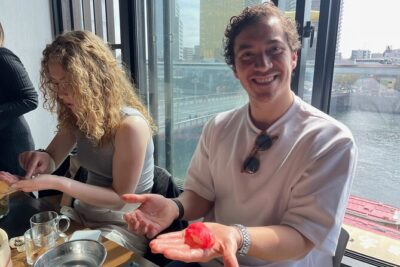
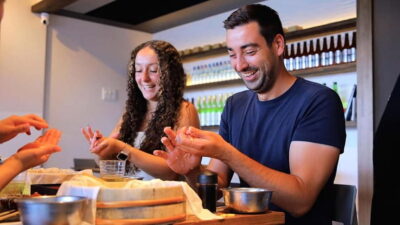
Sushi Making Tokyo Roll and Authentic Japanese Sushi Class
Read our review →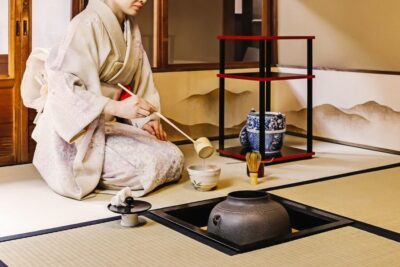
Roll and Authentic Sushi Making Class in Asakusa
Read our review →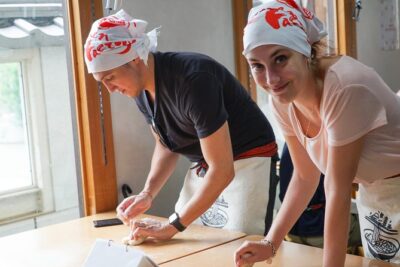
Ramen Cooking Class at Ramen Factory in Kyoto
Read our review →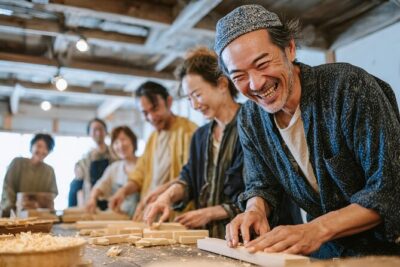
Sushi Making Class in a Happi Coat near a Famous Spot
Read our review →
Sushi Making Osaka Roll and Authentic Japanese Sushi Class
Read our review →Browse the lists this tour appears in