
Reviewed · WORKSHOPS
Learn Zen in a class of making Matcha tea near Osaka Castle
Matcha Zen starts with a costume change. What makes this class fun is that you step into the tea room as if you belong there, dressed for the role, then you learn the manners that shape chanoyu. I especially love the kimono and samurai-style dressing and the way wagashi turns into real lessons on wabi-sabi and the seasons. The main consideration is timing, you’ll need to arrive 30 minutes early to change, and transportation isn’t included.
One of the best parts of the experience is the tea-room mindset: when you pass through the nijiriguchi entrance, status falls away. I like that it’s taught as a two-way relationship too, the host sets the tone, and the guests respond with correct gestures and attention. This is also a small group (up to 6), so you get time to practice instead of rushing through.
Finally, you’re not just watching tea from the outside. A professional instructor and an English interpreter guide you through making matcha, the etiquette (sitting, bowing, standing, walking), and the hospitality spirit behind it, plus you get included photo shooting with your data sent by email. If you want the full outdoor photo vibe with extra hair and footwear pieces, you’ll likely need a paid add-on.
Key highlights you’ll remember
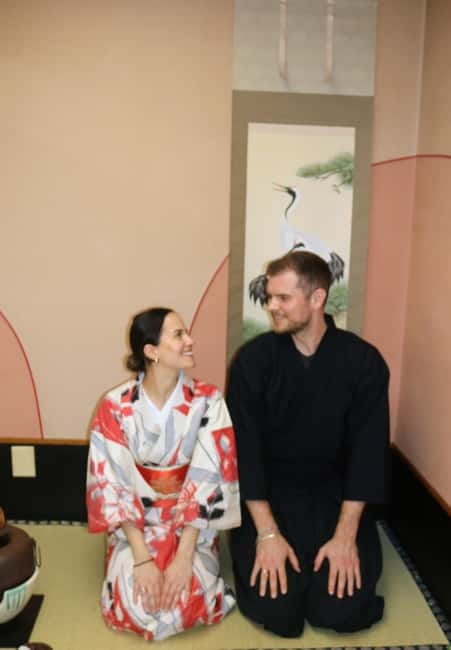
- Enter through the nijiriguchi as equals, where age, gender, and nationality don’t matter inside the tea space
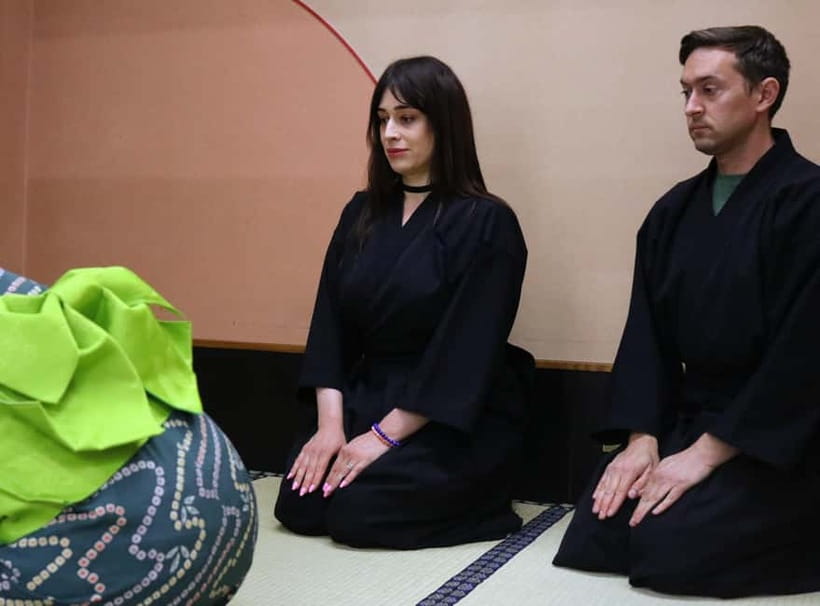
- Kimono or hakama styling that fits your role, men as samurai (hakama and dogi), women as Yamato Nadeshiko (kimono)
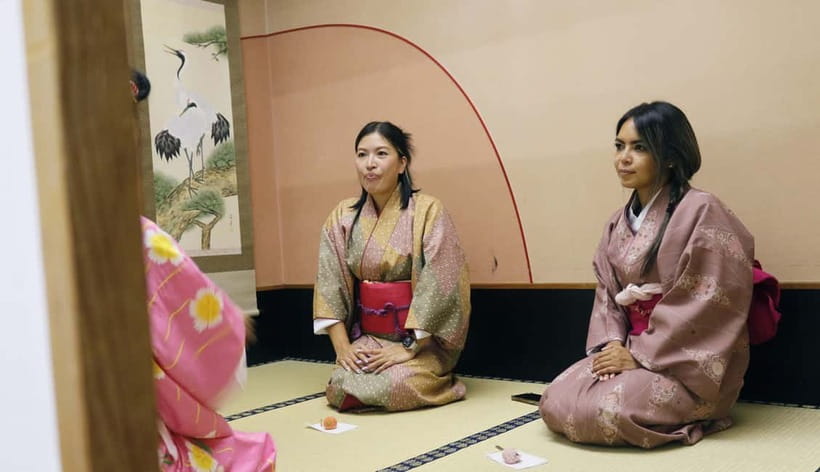
- Wagashi lessons with wabi-sabi and four seasons, using handmade sweets that reflect Japanese aesthetics
- Hands-on matcha etiquette practice, including how to sit, bow, and move in a tea setting
- Photo shooting included, with your images sent to your email, so you can focus on the ceremony
Finding Samurai Honor near Osaka Castle (and not getting lost)
This experience happens at Bushi no Homare (Samurai Honor), inside Excellence Takayama 1F, located at 2-3-19 Shiginonishi, Joto-ku, Osaka-shi, Osaka 536-0014. It’s a convenient add-on if you’re already planning time around Osaka Castle, because you’re not committing to a whole day of transport and logistics.
Plan on arriving 30 minutes before your reserved time. That early arrival matters because you’ll need time for instructions and changing into your traditional outfit. There is no pick-up or drop-off from a train station or hotel, so you’ll want to budget for getting yourself there by your normal Osaka method, train and short walk, or taxi.
Meeting point detail that helps: look for a wooden sign that reads Honor of the Samurai. The landmark is a rack with activity pamphlets in front of the store, and you may also spot kimonos and hakama hanging to dry, which is a nice visual clue.
One more practical note: the address shown on Apple Maps is listed as incorrect, so use the provided Google Maps link instead. That single step can save you the annoying kind of stress you don’t want before a culture class.
More Castle Tours in Osaka
- Osaka Castle: Museum and Tower Entry Ticket
★ 4.5 · 2,380 reviews - Ultimate Osaka Walking Tour: Castle, Dotonbori & Hidden Gems
★ 5.0 · 862 reviews - Osaka Castle Walking Tour and Castle Tower Admission
★ 5.0 · 561 reviews
Costume change: samurai and Yamato Nadeshiko
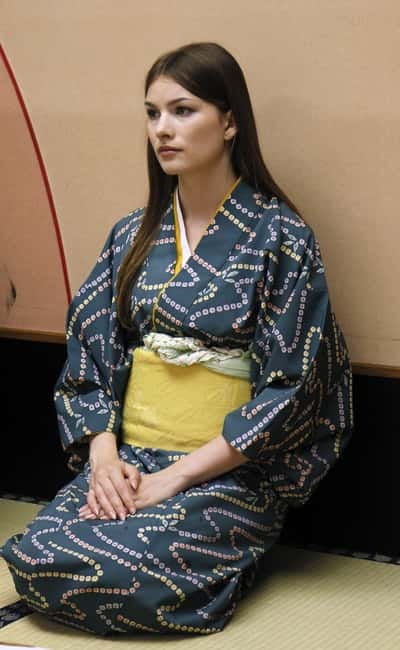
You don’t just wear a kimono here and call it a day. Before the ceremony begins, you change into traditional clothing and take on a role.
- Men wear hakama (traditional male dress) and dogi (robe), turning into a samurai for the session
- Women wear a kimono, taking the Yamato Nadeshiko role
This is part of the value of the class. The clothing shapes posture and movement, so etiquette lessons feel physical instead of theoretical. You’ll also feel the “small theater” effect in a good way: suddenly you’re part of a ritual, not a tourist demo.
About hair and accessories: wagami (collected hair plus kanzashi) is listed as not included. Paid options exist for extra styling and outdoor shooting. That said, reviews suggest your hair may still be beautifully styled for the main experience. For example, one booking noted the hairstyle was done with an updo and flowers with no upcharge. Just keep in mind that what’s guaranteed versus what’s styled case-by-case can vary, since wagami is specifically listed as not included.
What to bring: a T-shirt. That’s likely for underlayer comfort while you change. Even if you plan to dress in traditional garments, you’ll be glad you packed something simple and breathable.
The tea room entrance through the nijiriguchi
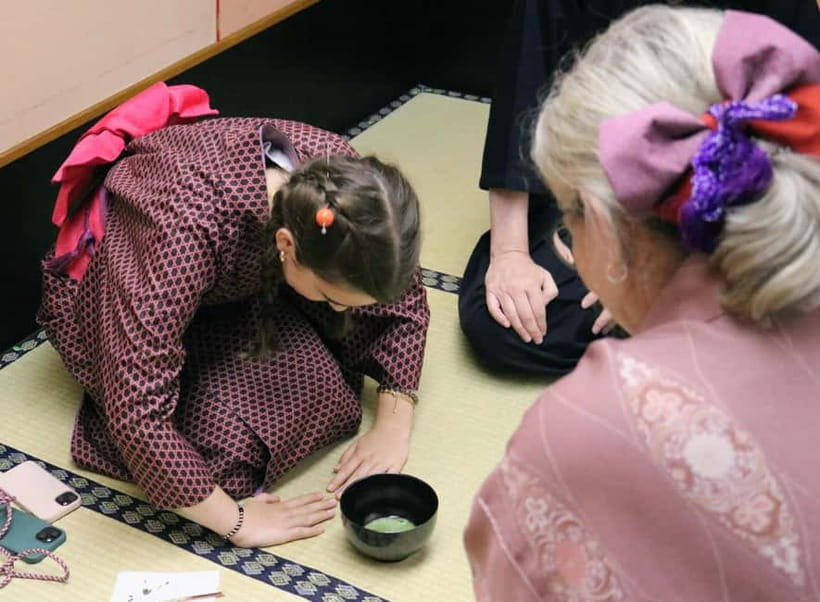
The emotional center of this class is the moment you enter the tea room via the nijiriguchi. Once you pass through that entrance, you’re treated as equals. It’s spelled out clearly: regardless of nationality, age, gender, or status, everyone is handled the same way inside.
That concept matters because tea ceremony etiquette often sounds formal on paper. In practice, the equality moment reframes the rules. Bowing, sitting, and careful movement stop feeling like performance for strangers and start feeling like respect inside a shared space.
You’ll also learn about the role of the host and master, how hospitality flows both ways. In this style of tea ceremony thinking, the master entertains, but the guests also respond. You’re not meant to be passive. The class pushes you to practice the gestures, not just observe them.
So if you’re the kind of visitor who likes meaning behind the motions, this part will click. If you’re only here for a photo, you might still get great shots, but the full effect comes when you treat it like a real ceremony with real rules.
Wagashi: four seasons, wabi-sabi, and edible craft
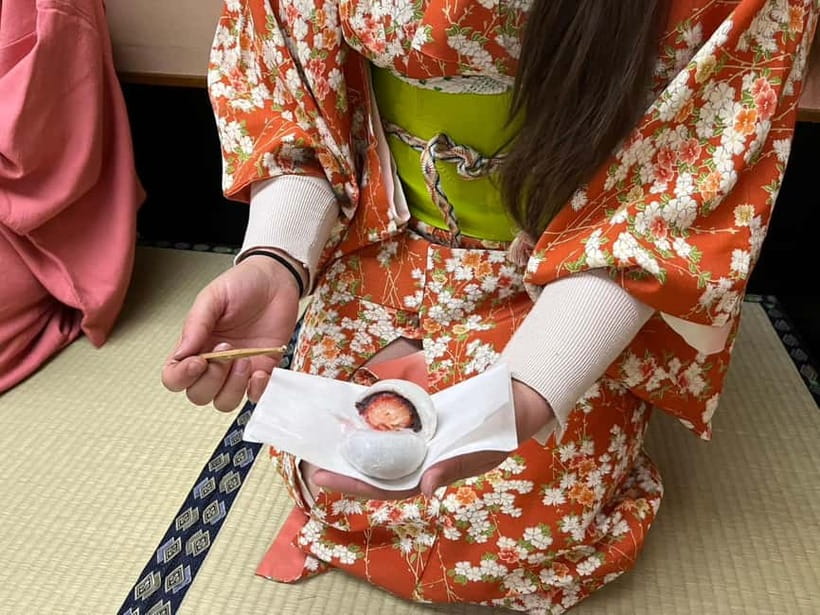
Wagashi is one of the most memorable parts, because it bridges Japan’s aesthetics and everyday life. In this class, you use wagashi as a learning tool, not just a snack.
You’ll learn that wagashi developed alongside tea culture during the Kamakura period. It’s described as unique to Japan and tied to the sense of appreciating the four seasons. The sweets are also treated like small works of art, shaped and colored to suggest spring, summer, fall, and winter.
Here’s what makes it click for most people: wagashi is all about subtle beauty and imperfection. Wabi-sabi is about quiet simplicity and the charm of natural wear and time. In a tea setting, those ideas feel personal, because you’re not rushing through the experience. You see the craft, then you taste it slowly in context.
Reviews repeat the same vibe from the tasting side too, wagashi can be so beautiful that eating it feels almost rude. That reaction is normal. It’s part of the design, and it makes you understand why tea ceremony culture values attention.
You also connect wagashi with Japanese history and food culture. So you’re not learning a single recipe, you’re learning why the sweets matter in the story of tea.
More Tea Ceremonies in Osaka
- Osaka: Tea Ceremony Experience
★ 4.9 · 1,426 reviews - Tea Ceremony Experience in Osaka Doutonbori
★ 5.0 · 754 reviews - Matcha Making Class in Osaka with Authentic Japanese Sweets Set
★ 5.0 · 509 reviews - Osaka: Matcha Making Experience with Japanese Sweets
★ 5.0 · 146 reviews
Matcha and etiquette: how the gestures become the lesson
The ceremony includes learning etiquette and manners through practice. Expect instruction on the practical rules, such as how to serve tea, how to sit, how to bow, how to stand, and how to walk. Even if you’ve never heard of chanoyu before, the class is structured so you can follow along step by step.
The flow typically looks like this:
- You’re dressed and briefed
- The host and the master guide the atmosphere and manners
- Matcha is served and you learn how it’s handled
- You practice the correct gestures as you move through the ceremony
- You prepare and share matcha as part of the experience
One key teaching idea is hospitality as a two-way street. You’ll be treated with care as the guest, and you’re also expected to meet that care with correct attention and response. That’s why the ceremony can feel surprisingly warm. You’re not just getting a lesson, you’re participating in a shared moment.
English support is built in. The activity provides English interpreter guide staff, and the listed languages are English and Japanese. If you need another language beyond English, you have to inquire about staff schedules before booking, since availability for other languages may be limited.
One more practical reality: the class is only one hour. So it’s short enough to fit into an Osaka itinerary, but it still includes costume changes, teaching, and practice. That’s why the “small group” size matters, you get time to try and get corrected without a long wait.
Photo shooting with kimono: what’s included and what to add
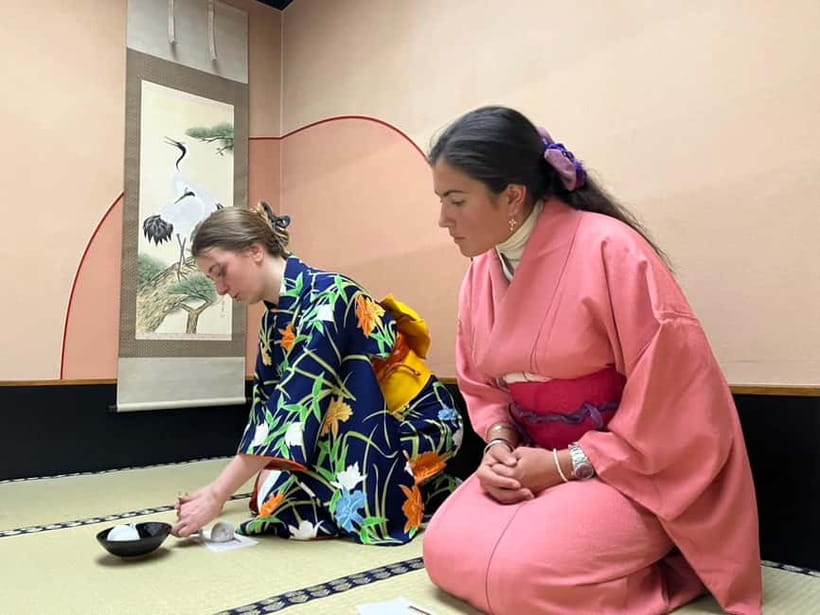
Good news if you care about photos: photo shooting is included, and you’ll have your data sent to a designated email address. Reviews mention photos taken throughout the ceremony and that images could arrive quickly by email, which is exactly what you want when you’re planning your day and not waiting forever.
A practical tip: choose your standing and turning moments carefully during the session. In tea ceremony etiquette, movement is not random. So if you time photos when you’re naturally adjusting posture or preparing to pour, you’ll look more elegant and less “posed.”
Outdoor photography is listed as a paid option, and it also notes additional clothing components for both women and men are part of that option (like obi, tabi, zori for women, and obi, tabi, geta for men). If you want an Instagram-ready outdoor look, factor that added cost into your budget. If you’re happy with indoor ceremony photos and a real experience, you can keep it simple and just take the included shooting.
Also note a separate paid option for movie shooting exists.
Price and value for $40 in a 1-hour class
At $40 per person for 1 hour, this class is priced in a way that makes sense if you’re comparing to the real cost of kimono access plus guided cultural instruction.
Your included items are:
- Kimono clothing
- English interpreter guide staff
- Matcha
- Wagashi
- Certified professional instructor
- Tax and tips
- Photo shooting, with data emailed
What’s not included includes transport, and also additional photo and outfit options like outdoor shooting and wagami. So the value depends on what you want. If you only want the basics and you’re okay with indoor ceremony photos, you’re likely getting a strong deal because clothing, tea, sweets, instructor time, and photos are all wrapped into one ticket.
If you’re someone who expects a full-day cultural program, this is a short stop. It’s designed to be digestible. In exchange, you get a focused experience where etiquette and matcha steps get taught without taking over your schedule.
Who this matcha class suits best (and who should rethink it)
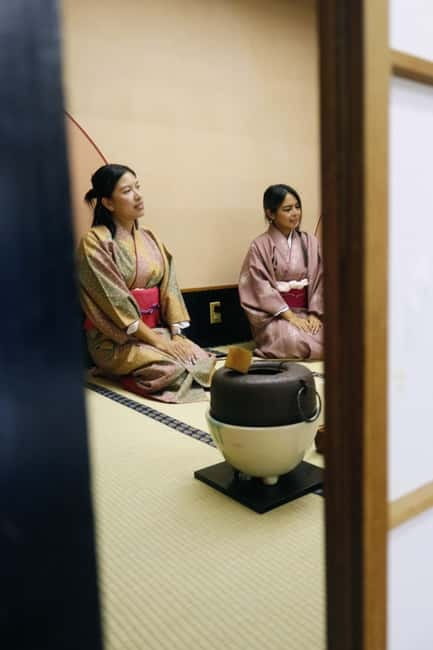
This is a good fit if you want:
- A hands-on tea ceremony experience, not just a show
- A realistic introduction to Japanese etiquette and hospitality
- A visually memorable activity, with included kimono and ceremony photos
- A small-group setting where you can practice the movements
It can also work well for families with kids, but there’s an important constraint: it’s listed as not suitable for children under 10 years. So if you’re traveling with kids, plan for age 10+ to keep it compatible with the experience rules.
There are also clear health and age limits listed:
- People with altitude sickness
- People over 95 years
If you’re in any of those categories, it’s worth checking with the provider before booking.
Finally, if you dislike structured rules and careful movement, tea ceremony etiquette may feel a bit strict. You can still enjoy it, but you might enjoy a more casual cultural class more.
FAQ
FAQ
How long is the matcha tea experience?
The experience lasts 1 hour.
What’s the price and what’s included in the $40?
It’s $40 per person, and the package includes kimono clothing, English interpreter guide staff, matcha, wagashi, a certified professional instructor, tax and tips, and photo shooting (sent by email).
Do I need to bring anything?
Yes, you should bring a T-shirt.
Where do we meet, and how early should we arrive?
Meet at the business landmark with a wooden sign that reads Honor of the Samurai. Arrive 30 minutes before your reserved time for changing and instructions.
Is pickup from the station or hotel included?
No. Pick up and drop off at the train station or hotel are not included.
Can I cancel, and what’s the policy?
You can cancel up to 24 hours in advance for a full refund.
Should you book this matcha class near Osaka Castle?
If you want a short, well-organized experience that mixes samurai-style costume dressing, a real introduction to tea etiquette, and washi-like beauty you can actually taste through wagashi, I think it’s a smart booking. The included photo shooting and small group size are especially valuable if you want photos without feeling rushed or crowded.
Book it when you can arrive early for changing, and when you’re excited to follow etiquette instructions, not just watch. Skip or reconsider if you’re traveling with someone who falls under the listed limits (children under 10, altitude sickness, or over 95), or if you need transport handled for you.
More Castle Tours near Osaka
- From Osaka: Himeji Castle, Arima Onsen & Mt. Rokko Day Tour
★ 4.6 · 339 reviews - 5-Hour Osaka Bike Tour to the Neighborhood of Osaka Castle
★ 5.0 · 319 reviews - Osaka Castle Guided Tour
★ 4.7 · 249 reviews - Osaka: Castle History Walking Tour / Castle Tower Admission
★ 4.9 · 230 reviews
Fresh options around Osaka
- Osaka Winery Tour with Wine Tasting & Vineyard Walk★ 4.9 · 12 reviews
- Osaka: Early Morning Osaka Castle Guided Tour, Avoid Crowds★ 4.9 · 12 reviews
- Kyoto Day Trip from Osaka Port – Private Shore Excursion★ 5.0 · 13 reviews
- Osaka Private Pop Culture Tour: Historic Tenma to Dotonbori★ 4.5 · 13 reviews
- Osaka Castle Admission Ticket★ 4.0 · 13 reviews
- Hidden Osaka Foodie Tour: Nishinari Backstreets & Local Dining★ 5.0 · 13 reviews
- Discover Real Osaka: A Cultural Walk with Food & Drink★ 5.0 · 13 reviews
- Nara private tour (Shore excursion available from Osaka or Kobe port)★ 5.0 · 13 reviews
Workshops, compared.
Sushi Making Tokyo Roll and Authentic Japanese Sushi Class
Read our review →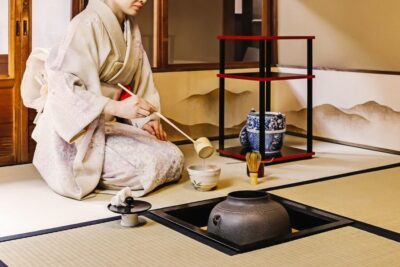
Roll and Authentic Sushi Making Class in Asakusa
Read our review →
Ramen Cooking Class at Ramen Factory in Kyoto
Read our review →
Sushi Making Class in a Happi Coat near a Famous Spot
Read our review →
Sushi Making Osaka Roll and Authentic Japanese Sushi Class
Read our review →Browse the lists this tour appears in