

Reviewed · HISTORICAL TOURS
Osaka: Castle History Walking Tour / Castle Tower Admission
Osaka Castle feels different when you read it like a fortress. This guided walk turns the grounds into a clear battle plan, with skip-the-line tower entry so you spend less time in queues and more time seeing how the place was built to stop attackers.
I love the way the tour focuses on practical defensive design, from triple moats and multi-layered gates to masugata entrances that forced invaders into kill zones. I also like the payoff: you get a guided climb to the tower and a view worth the effort, plus photo time so you can slow down at the best angles.
One consideration: you will do some museum-style exploring on your own. If you want a floor-by-floor guided talk inside every room of the tower museum, you may feel the tour is more about the defensive walk up, not a full inside-the-museum walkthrough.
Key points I’d use to choose this tour
- Skip-the-line tower access, using a separate entrance so you do not burn time waiting
- Triple moats and masugata gates explained, including why the routes zigzag and trap attackers
- Defensive details like arrow slits and gun ports, with context for how the last defense operated
- The largest stone plus 16th-century transport methods, including the craft marks left by stonemasons
- A clear story arc to 1614 to 1615, linking Toyotomi Hideyoshi’s legacy and Tokugawa Ieyasu’s ambition
Osaka Castle’s battle plan: why a guided read matters
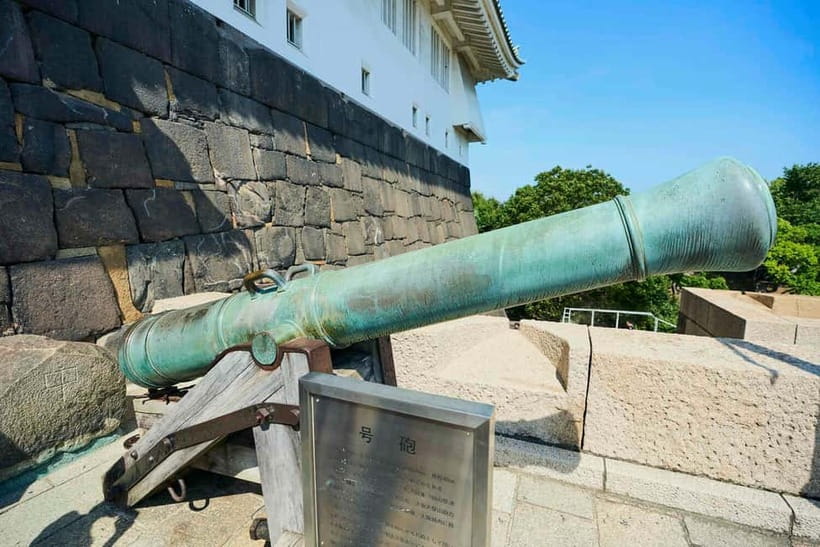
Osaka Castle can look like one more big landmark if you just stroll. With a guide, it turns into architecture with a job. You start noticing the logic: layers, delays, and funnels. The grounds are designed to make a fast attack hard and a slow attack dangerous.
What I like is the way the tour teaches you what to look for while you are standing in the right spot. You are not just hearing dates. You learn how attackers were forced to change direction, get exposed, and lose momentum, especially at gates and passageways. That makes the castle feel less like a monument and more like engineering.
You also get a human story behind the stones. The tour connects the castle’s “invincible” reputation with the reality of power politics, including why the fortress fell in 1614 to 1615. If you enjoy military strategy, walls, and the “why” behind design choices, you will get more out of your visit than going solo with a guidebook.
More Castle Tours in Osaka
- Osaka Castle: Museum and Tower Entry Ticket
★ 4.5 · 2,380 reviews - Ultimate Osaka Walking Tour: Castle, Dotonbori & Hidden Gems
★ 5.0 · 862 reviews - Osaka Castle Walking Tour and Castle Tower Admission
★ 5.0 · 561 reviews
Meeting Point at Lawson S Otemae Rest House Store
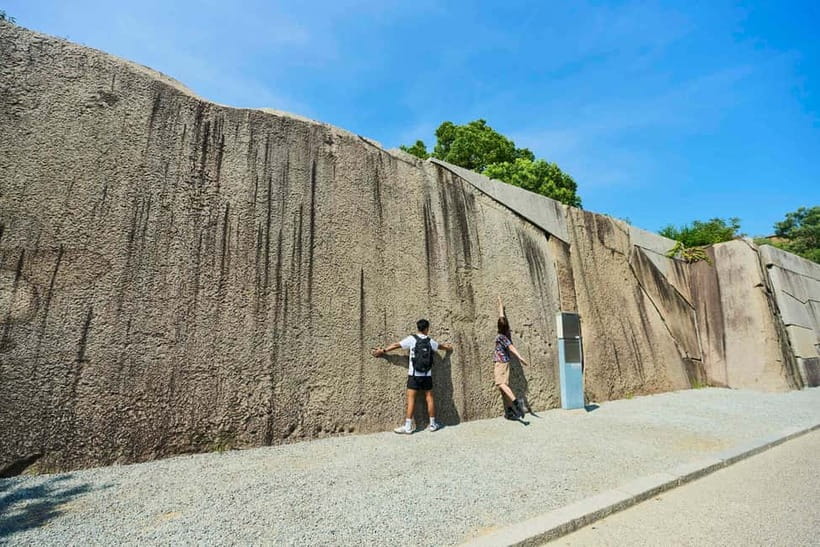
This tour meets in front of a very specific place: Lawson S Otemae Rest House Store. The big practical tip is that there are multiple Lawson stores in the area, so take a minute and confirm the correct one on Google Maps before you arrive.
Once you get there, look for the Local Guide Stars sign. That matters more than it sounds, because the meeting area is the type of place where you might assume you are in the right spot but end up waiting for a different group.
Comfort also matters here. The schedule is walking-focused, and the route includes multiple stops around the castle grounds. I’d plan for steady time on your feet and wear shoes you can walk in for real, not just “tour sneakers.”
If you are early, use that buffer to get oriented around the castle approach. When you start the walking portion with your bearings already set, the whole fortress story clicks faster.
Moats and masugata gates: how attackers were funneled
The heart of the experience is the defensive walk. You begin with the outer defenses and work your way through layered protection. The guide helps you connect each feature to a single goal: delay attackers and divide them so they can be handled in smaller groups.
Here are the big things you should actively look for as you walk:
- Triple moats, where the goal is not just water, it is stopping movement and buying time
- Multi-layered gates, designed to slow people down again and again
- Masugata entrances, which are built to trap intruders inside awkward angles and sight lines
- Zigzag routes, where the plan is to disrupt a straight push forward
A practical way to think about it: the castle does not try to meet every threat head-on. It tries to make an attack unpredictable and uncomfortable. When you see how gates and passageways redirect movement, you start understanding why the walls feel like they are “watching” you.
The tour also points out wall angles and stonework that were meant to be difficult to climb. That detail is easy to miss on your own. On the tour, you get the explanation that turns “wow, those stones are huge” into “wow, those stones are shaped to stop people.”
Hokoku Shrine stop: a short reset between fortifications
You also spend time at Hokoku Shrine as a guided stop. It is not the main “defense lesson,” but it gives you a mental break between the most tactical parts of the castle walk.
Think of it as a reset point. After you have been tracking moats, gates, and defensive geometry, the shrine stop can help you switch from battlefield logic to cultural context. It is also a good chance to catch your breath, take a couple photos, and regroup before you head back into the castle’s vertical story at the tower.
Because this part is guided, it will be paced for your group. That matters if you like moving efficiently without having to figure out what is worth your attention.
If you are traveling with someone who needs periodic breaks, this is one of the built-in pauses. And if you are a history buff, it keeps the experience from feeling like only walls and weapons. The castle area is tied to a wider world, not just a defensive shell.
More Walking Tours in Osaka
- Osaka: Hotspots & Hidden Gems Walking Tour Private or Group
★ 4.9 · 1,300 reviews - Osaka Local Foodie Walking Tour in Dotonbori and Shinsekai
★ 5.0 · 985 reviews - Osaka Bar Hopping Night Walking Tour in Namba (3 bars, 6 tastes)
★ 5.0 · 958 reviews - Osaka: Deep Backstreets Walking Tour with Dinner Option
★ 4.9 · 902 reviews
The castle tower visit: arrow slits, gun ports, and the psychology of gold
The tower is where the tour’s story becomes dramatic. You go beyond the outer defenses and look at the tower as the command post and last line of resistance. The guide highlights practical defensive openings, like arrow slits and gun ports, and connects them to how defenders controlled space.
One detail I really appreciate in this type of tour is the attention to psychology. Here, the guide talks about gold as psychological warfare, basically using visual power to affect the people who see the fortress. It is not only about fighting. It is also about intimidation and signaling control.
When you reach the tower, you benefit from the skip-the-line setup. That matters because Osaka Castle can have real waiting time. You are still going to navigate crowds and ticket checks sometimes, but a separate entrance and guided timing reduce the dead time.
You also get time for photos and self-paced exploring. That is a good mix. You get interpretation from the guide where it counts most, then you can wander through what interests you most without feeling like you have to absorb everything at once.
Just note this: the tour includes the tower admission ticket, but it does not include a guided talk for every floor inside the museum. You will have support on the key defensive meanings, then you explore the rest yourself.
The largest stone and hidden mason marks you should hunt
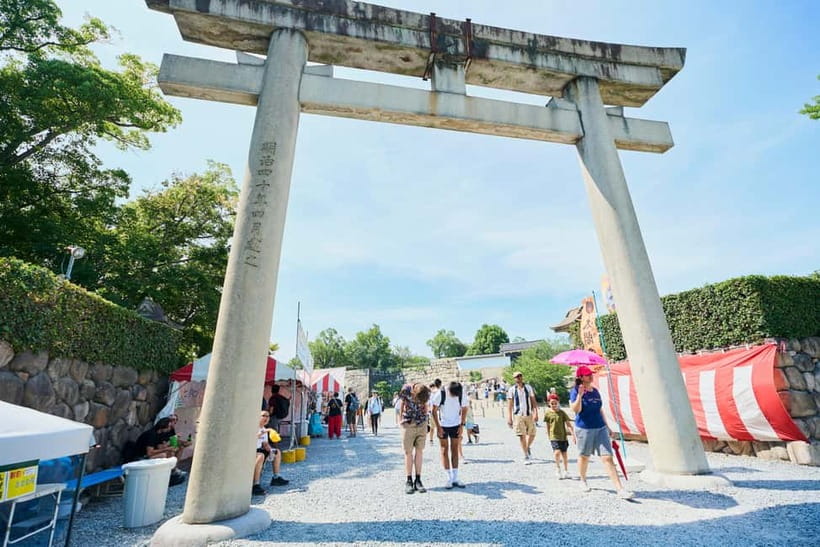
One of the most memorable stops is the one about the largest stone in the castle, plus how it was transported in the 16th century. Even if you have seen other castles, this kind of detail gives you a rare view into the physical challenge behind the architecture.
The tour also helps you spot hidden stone marks from master craftsmen. That is the kind of thing you would never notice if you were just scanning for big views and skyline photos. With a guide, you learn to look for subtle evidence of how the work was measured, fitted, and finished.
A big value here is learning how walls were made difficult to climb. When the guide points out wall angles and stonework, you start understanding how defensive construction can be both practical and brutal. The castle does not rely on one trick. It uses geometry, material, and placement together.
If you like hands-on learning, this is your moment. Try to slow down right where the guide directs your attention. Look at the stone surfaces, the edges, and the junctions. You are not just seeing old rock. You are seeing the fingerprints of a building process designed to last.
1614 to 1615: the rivalry that brought the fortress down
The tour ends the way good castle stories should, with the uncomfortable truth: fortresses fall, even when they are built to feel unstoppable.
You learn how Osaka Castle was pulled into the rivalry between Toyotomi Hideyoshi’s legacy and Tokugawa Ieyasu’s ambition, and why the castle fell in 1614 to 1615. This part is more than a timeline. It gives meaning to the impressive defensive structure by placing it in the politics of power.
The contrast is sharp. The tour spends time showing the genius of design, then it shows what design could not control, which is succession and strategic dominance. That makes the history feel grounded instead of myth-like.
For you, it is a useful takeaway because it changes what you do after the tour. When you walk away, you will not only remember moats and towers. You will remember a chess match where the board was stone, and the pieces were people.
And honestly, that is why guided context matters. Without it, a castle can feel like a photo stop. With it, it becomes a story you can still feel in the walls.
Value check: is $33 worth it for 90 minutes?
At about $33 per person for a 90-minute experience, this tour is priced like a practical add-on to your Osaka Castle visit, not a budget activity. The key value drivers are simple.
First, you get the tower admission included. That removes a common hassle and helps the tour feel like a complete package rather than “guide plus extra tickets.”
Second, you get skip-the-line access through a separate entrance. Time is money on a day trip. If you are trying to hit multiple sights in Osaka, saving waiting time at the tower can be the difference between enjoying the day and feeling behind.
Third, the guide work is the real “why” factor. You are paying for interpretation of moats, gates, stone transport, and defensive geometry, plus a clear explanation of what the tower represented as a command post and last defense.
So who gets the best value? You if you want more than photos and you like architecture that has a purpose. If you are the type to read every sign and wander slowly anyway, you might not need the guide. But if you want the castle to make sense fast, this is the kind of guided visit that earns its keep.
Should you book this Osaka Castle history walking tour?
Book it if you want Osaka Castle to feel like a real system, moats to gates to tower, with explanations that help you see the defensive design instead of just walking past it. It is especially worth it if you care about military strategy and construction details like masugata entrances, wall angles, arrow slits, and stonework.
I’d also lean toward this tour if you know your time is tight. The skip-the-line setup and included tower admission mean less friction. You also get guided time, then enough self-paced space to take photos and linger where you care most.
Skip it only if you mainly want a quick stroll, or if you specifically want a full, floor-by-floor guided museum tour inside the tower. This experience focuses more on the defensive story than on guiding every museum level.
FAQ
Where is the meeting point?
Meet in front of Lawson S Otemae Rest House Store. There are multiple Lawson stores nearby, so confirm the exact one on Google Maps. Look for the Local Guide Stars sign.
How long is the tour?
The duration is 90 minutes.
What is included in the price?
Your ticket includes Osaka Castle Tower admission and a professional English-speaking guide.
Does it include skip-the-line entry?
Yes. You get skip-the-line access through a separate entrance.
Is there a guided tour of every floor inside the museum?
No. The included guide is not described as covering a guided talk of each floor in the Osaka Castle museum.
What should I bring?
Bring comfortable shoes and weather-appropriate clothing.
Is cancellation free?
Free cancellation is available if you cancel up to 24 hours in advance for a full refund.
What language is the tour in?
The tour is offered in English.
Who should consider this tour most?
This is suitable for history buffs and people interested in military strategy and architecture, and it involves walking through historical sites so comfortable shoes are important.
More Historical Tours in Osaka
- Osaka: Osaka Castle & Historical Museum Guided Tour
★ 4.8 · 28 reviews - Osaka Castle & Samurai History Walking Tour
★ 5.0 · 22 reviews - (Ticket Included) Explore Osaka Castle & Museum of History
★ 4.8 · 21 reviews - Osaka: Kyoto & Nara & Uji Historical and Scenic One-Day Tour
★ 4.7 · 21 reviews
More Castle Tours near Osaka
- From Osaka: Himeji Castle, Arima Onsen & Mt. Rokko Day Tour
★ 4.6 · 339 reviews - 5-Hour Osaka Bike Tour to the Neighborhood of Osaka Castle
★ 5.0 · 319 reviews - Osaka Castle Guided Tour
★ 4.7 · 249 reviews - Osaka Highlights: 4-Hour Walking Tour with Castle
★ 5.0 · 152 reviews
Fresh options around Osaka
- Osaka Winery Tour with Wine Tasting & Vineyard Walk★ 4.9 · 12 reviews
- Osaka: Early Morning Osaka Castle Guided Tour, Avoid Crowds★ 4.9 · 12 reviews
- Kyoto Day Trip from Osaka Port – Private Shore Excursion★ 5.0 · 13 reviews
- Osaka Private Pop Culture Tour: Historic Tenma to Dotonbori★ 4.5 · 13 reviews
- Osaka Castle Admission Ticket★ 4.0 · 13 reviews
- Hidden Osaka Foodie Tour: Nishinari Backstreets & Local Dining★ 5.0 · 13 reviews
- Discover Real Osaka: A Cultural Walk with Food & Drink★ 5.0 · 13 reviews
- Nara private tour (Shore excursion available from Osaka or Kobe port)★ 5.0 · 13 reviews
Historical Tours, compared.

World Heritage Shirakawa-go and Experience Tours from Kanazawa
Read our review →
Imperial Palace and Shogun Historical Walking Tour
Read our review →
World Heritage Kyoto & Nara Uji Authentic Matcha Experience
Read our review →
Kyoto Gion: 2-Hour Geisha Culture & History Walking Tour
Read our review →
World Heritage Shirakawa-go Morning Guided Tour
Read our review →
Hiroshima Historical Walking Tour – Why A-Bomb was Dropped
Read our review →
Hiroshima Peace (Heiwa) Walking Tour at World Heritage Sites
Read our review →Browse the lists this tour appears in