
Reviewed · WALKING TOURS
Osaka Local Foodie Walking Tour in Dotonbori and Shinsekai
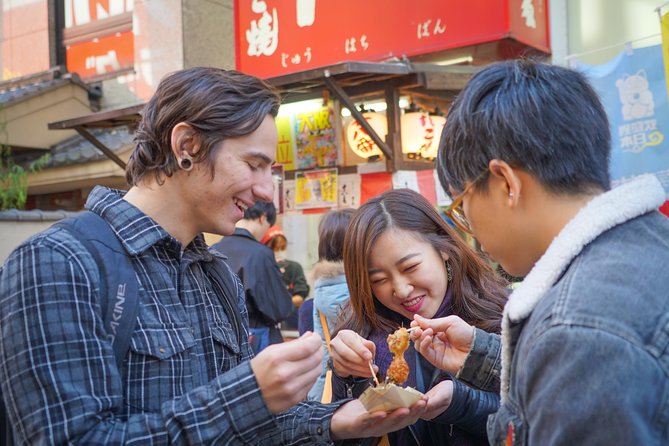
Osaka at street level is a snack-fueled adventure. This 3-hour Shinsekai and Dotonbori food walk pairs classic bites with city stories, from crispy kushikatsu to temple-side photo spots, plus strong guide energy like Aika and Yuma. I like the tight small-group setup (up to 7) because you get more personal attention and better guidance in the alleys.
One thing to keep in mind: the experience can feel more like a mixed food-and-neighborhood tour than a restaurant-heavy foodie marathon, and the walk can be brisk depending on the guide and the group. If you are extremely picky about food variety or portion size, read carefully and go in with realistic expectations.
Key highlights you should know before you go
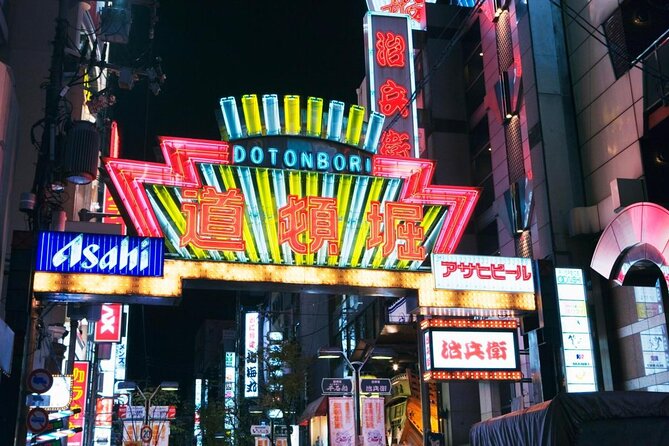
- A clear included tastings list: 6 pieces of kushikatsu, 1 piece okonomiyaki, 1 box takoyaki, plus 3 drinks (alcohol or non-alcohol).
- Max 7 people means you are not just lost in a crowd. It also makes it easier to get photos and ask questions.
- Tsutenkaku starts the flavor train with Jan-Jan Yokocho alley stops and crispy skewers.
- Hozen-ji Temple and Ukiyo-koji add a real Osaka feel, plus snack time and the classic Glico photo moment.
- Ends right at the action in Dotonbori, so you can continue exploring without a long transfer.
Shinsekai to Dotonbori: where Osaka feels most like Osaka
Osaka is best understood by walking. And this tour does that in two neighborhoods that feel totally different.
Shinsekai is the older, grittier, neon-adjacent side of town. You get the vibe of Osaka as a place where people actually hang out, eat fast, and talk loudly. The iconic Tsutenkaku tower hangs over the area like a landmark from a different era, which makes it a good place to start your food focus without needing a museum-level intro.
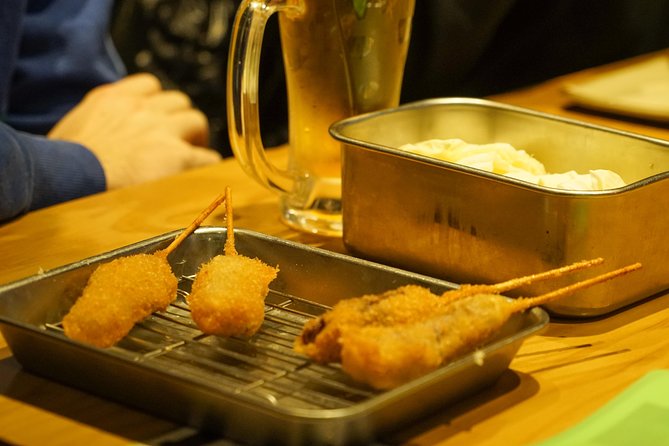
Then you shift into Dotonbori, the district that screams Osaka to your face. Think crowds, bright signs, and street-level food culture. The route also includes shopping streets and photo stops, so it feels like a guided way to see the highlights without trying to decode everything on your own.
The biggest win here is how the tour connects food to place. When you eat in the right setting, dishes like takoyaki and okonomiyaki stop being just items on a list and start feeling like part of Osaka daily life.
More Walking Tours in Osaka
- Osaka: Hotspots & Hidden Gems Walking Tour Private or Group
★ 4.9 · 1,300 reviews - Osaka Bar Hopping Night Walking Tour in Namba (3 bars, 6 tastes)
★ 5.0 · 958 reviews - Osaka: Deep Backstreets Walking Tour with Dinner Option
★ 4.9 · 902 reviews
Your food lineup: what you get (and what the route is built around)
This tour is priced at $111.42 per person, and it includes a solid base of food. Here is what is explicitly listed as included:
- 6 pieces of kushikatsu (deep-fried skewers)
- 1 piece of okonomiyaki (Osaka savory pancake)
- 1 box of takoyaki (octopus fritters)
- 3 drinks (alcohol and non-alcohol available)
The route also includes stops where you will snack more. For example, the Hozen-ji Temple section suggests enjoying takoyaki and sweets with an approximate ¥500 snack amount. Since only the listed items are guaranteed as included, I’d treat that ¥500 as a small extra budget for things beyond what you already get.
If you are wondering whether the price is fair, look at the math like this:
- You are paying for guided navigation through two major neighborhoods, access to specific food spots, and multiple tastings plus drinks.
- You are also paying for the guide’s ability to translate Osaka street culture into something you can understand fast, especially in alley areas where signage and layouts can be confusing.
That said, you may want to be honest with your own expectations. Some people want a long list of different bites at lots of tiny stands. Others just want a guided, high-confidence sequence of the classics. This tour leans toward the second.
Tsutenkaku and Jan-Jan Yokocho: kushikatsu to kick things off
Stop 1 is Tsutenkaku, walking through the Jan-Jan Yokocho alley. It is a smart start because it is visual, easy to anchor your bearings, and it instantly connects you to the Shinsekai food identity.
You’ll enjoy kushikatsu, which is deep-fried skewered meat and vegetables. The tour includes admission ticket at this first tasting stop, so you are not just sampling from a random stall. And the guide focus matters here, because kushikatsu has its own rhythm: ordering, sharing, and eating rules that locals take for granted.
One practical note from the tour details: for the vegetarian option, dashi (pork broth) is still used even in vegetarian kushikatsu. If you do not eat pork-based broth, you need to tell the operator in advance so the team can adjust with other vegetarian dishes.
Shinsaibashi-suji shopping street: the “old Osaka” feeling
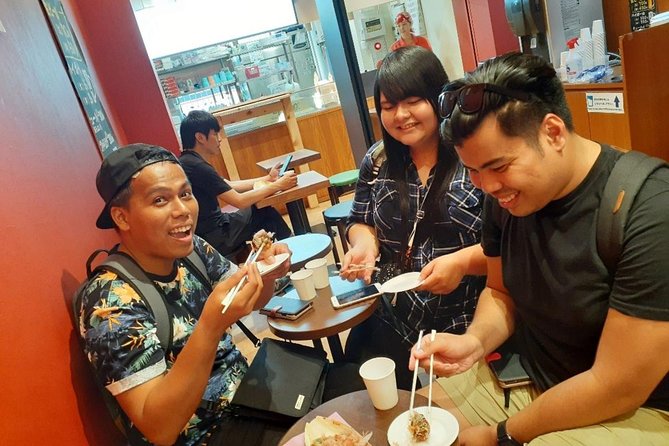
Stop 2 takes you into Shinsaibashi-suji Shopping Street, with time spent around Shinsekai landmarks like Tsutenkaku and the Billiken statue.
There is something charming about shopping streets when you treat them like an open-air time capsule. The tour description calls the alley a kind of virtual experience of Osaka’s center as it existed over 80 years ago. Even if you are not obsessed with history, that idea matters because it changes how you look at the architecture, shopfronts, and street rhythm.
This stop is free admission and set aside for walking and orientation, not heavy eating. It works well because you digest the first fried bite, then reset before the next neighborhood wave.
Same corner of Japan, a different kind of day:
- Osaka Go Karting Tour with Funny Costume
★ 5.0 · 2,658 reviews - Osaka Castle: Museum and Tower Entry Ticket
★ 4.5 · 2,380 reviews - Osaka: Shinsekai Food Tour with 13-15 Dishes at 5 Eateries
★ 4.8 · 2,204 reviews - Osaka Food Tour: 13 Dishes at 5 Local Eateries
★ 5.0 · 2,149 reviews
Dotonbori and Doguya-suji: shopping, signs, and the knife-store vibe
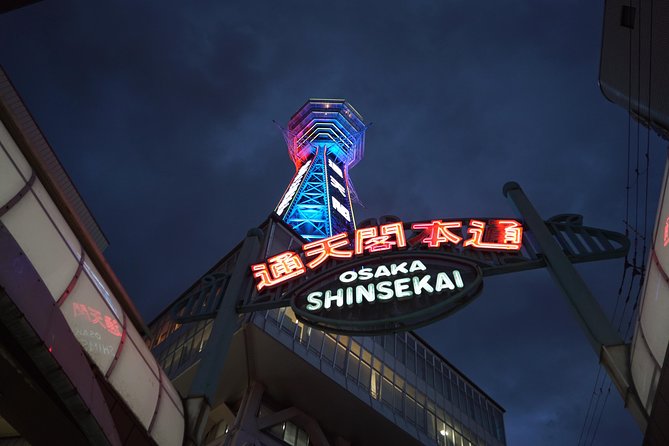
The tour then lands in Dotonbori, including souvenir shopping on Dōgu-ya-suji, with mention of the Hōchō-ya knife shop.
This part is not just retail time. It is also where Dotonbori’s identity comes through. If you have ever walked into a neon city and felt overwhelmed, this is a calmer, guided way to learn how people shop here, what streets are worth a look, and where the classic sign areas sit in relation to the food stalls.
Stop 3 includes time both during the day and evening route framing. In real life that means you get a mix of big-street energy and smaller lanes, depending on your exact departure time.
If shopping is not your thing, do not panic. You can still enjoy this stop for street texture and the build-up toward the Hozen-ji and Glico photos.
Hozen-ji Temple and Ukiyo-koji: snack time with atmosphere
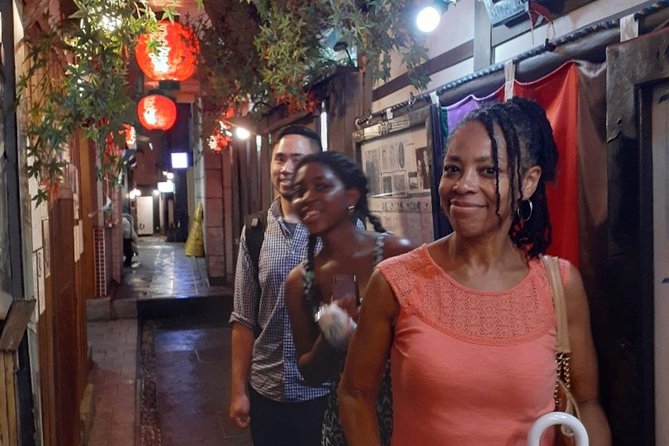
Stop 4 is Hozen-ji Temple, followed by a stroll through Ukiyo-koji (Ukiyo Alley). This is one of the most memorable “Osaka isn’t only food” moments in the itinerary, even though you will still eat.
The plan includes snack time with takoyaki, sweets, and more, with the itinerary suggesting about ¥500 for snacking. You’ll also get a photo op at the Glico sign, which matters because that sign area is crowded and chaotic if you try to time it alone.
A small reality check: the area around Hozen-ji can be dark in the evening. If you are sensitive to low-light walking, bring a phone light for your own comfort.
Glico sign photos, then Sennichimae Doguyasuji for okonomiyaki
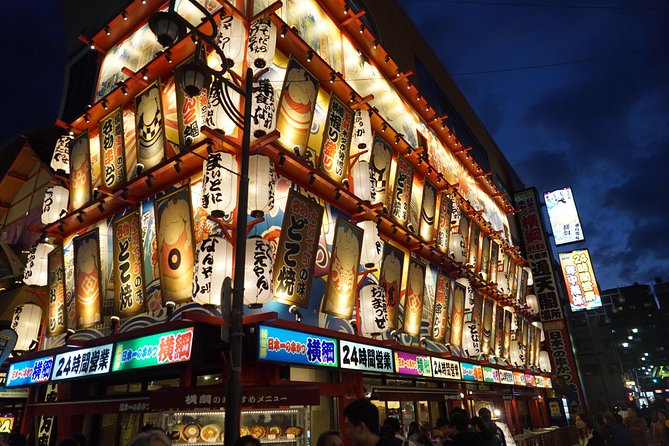
You’ll spend time at the Glico sign in Dotonbori for photos (Stop 5). This is a short stop, but it is the kind of “yes, I was there” moment that makes your Osaka photos look like Osaka.
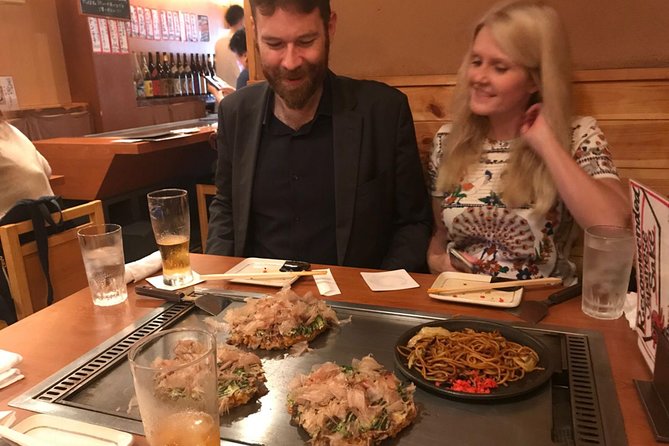
Then the tour moves to Sennichimae Doguyasuji, where you enjoy Osaka-style okonomiyaki and do more snapping near the Glico sign. The okonomiyaki stop is admission ticket included, which usually means you are seated and served rather than eating standing-only.
Okonomiyaki is one of those dishes where the first bite teaches you the whole concept. It is savory, filling, and built for Osaka’s fun, casual dining culture. Some guides also turn the meal into a hands-on moment. The tour details do not promise cooking, but guide experiences in the past have included extra interaction during this segment, so you might get more than a simple plate.
The tour ends in Dotonbori, which is ideal. You can keep wandering after you are full, not after a forced transfer.
Price and logistics: is $111.42 a good deal?
At $111.42, you are paying for more than food. You are paying for:
- A guided walk that connects Shinsekai and Dotonbori
- Specified tastings plus 3 drinks
- Access to particular spots, including the Tsutenkaku kushikatsu stop and ticketed okonomiyaki experience
- A guide who can explain what you are eating and why the neighborhoods look the way they do
Also note what is not included:
- Transportation fees: 190 JPY
That 190 JPY line matters because it is a small “life math” detail. You should plan to pay it so you do not get surprised later.
Value will depend on your definition of a foodie tour.
- If you want a big variety of tiny samples at tons of places, you might wish for more stops.
- If you want the classics done well, plus guided context and good pacing, this tends to hit the target.
The pricing is also a bit of a bet. Guides vary in style and energy. The best experiences often pair strong local storytelling with smooth timing. Some guides like Aika and Mich have been described as especially strong at linking food to culture and history, while other experiences have felt less “food focused” for a few people. That does not mean the tour is bad. It means you should choose this tour for the concept, not for a promise that every second will be a brand-new food discovery.
Getting there, how long it really takes, and the walking reality
The tour runs about 3 hours. It is a walking tour with frequent short stops. That means your shoes matter more than your appetite.
The meeting point is FamilyMartJapan at 557-0001 Osaka, Nishinari Ward, Sannō, 1-chōme 176 ザ・ウエストサイド. The tour ends at the Glico Sign Dotonbori at 1-chōme-10-3 Dōtonbori, Chuo Ward, Osaka, 542-0071, Japan.
Two practical timing rules from the tour info:
- The tour starts on time, and you cannot join if you arrive late and miss the group.
- The walk is set up for a group pace, so you should come ready to keep moving.
Osaka weather is another real factor. The tour notes extreme heat in summer (up to 40°C) and winter lows down to about -5°C. If it is hot, bring water and wear light layers. If it is cold, consider a warm outer layer and gloves.
One more small etiquette heads-up: the tour may visit places where smoking is allowed.
Dietary needs: what you can count on, and what you should ask early
This is where you should read the fine print, because Osaka food culture includes stock, batter, and shared preparation areas.
The tour states:
- Gluten-free and vegan cannot be accommodated
- Vegetarian can be requested, but you must request it when booking or at latest by the day before
- If you choose vegetarian, dashi may still be used for kushikatsu, because pork broth is part of the preparation
Allergy handling is also limited. You must inform the operator at least one day before with dietary requests or allergies. Even then, the tour notes you cannot guarantee allergy-free meals or substitutions because the food is prepared in kitchens not run by the tour.
If you have dietary restrictions, treat this tour as a “needs advance coordination” experience, not a walk-in-safe option.
Should you book this Osaka local foodie walking tour?
I’d book this tour if you want:
- The Osaka classics (kushikatsu, takoyaki, okonomiyaki) in the right neighborhoods
- A small-group guide to help you move through Shinsekai and Dotonbori without confusion
- Food plus street-level Osaka culture, including temples and photo moments
I might skip it if:
- You need a strict gluten-free or fully vegan menu
- You want lots of tiny samples across many restaurants, every single stop
- You are very sensitive to brisk walking pace and prefer longer sit-down meals
If you do book, come with two smart moves: wear good shoes, and send your dietary questions in early. Then you can focus on the real payoff, crispy skewers, hot griddled okonomiyaki, and that unmistakable Dotonbori feeling when the lights are on.
FAQ
How long is the Osaka Local Foodie Walking Tour, and what’s included?
The tour runs about 3 hours. Included tastings are 6 pieces of kushikatsu, 1 piece of okonomiyaki, 1 box of takoyaki, and 3 drinks (alcohol or non-alcohol available).
How many people are in the group?
This tour has a maximum of 7 travelers.
Are gluten-free or vegan options available?
No. The tour states that gluten-free and vegan cannot be accommodated.
Can vegetarians join, and how is vegetarian kushikatsu handled?
Vegetarian can be requested when booking or by the day before. The tour also notes that dashi (pork broth) is still used even in vegetarian kushikatsu, and other vegetarian dishes can be prepared if you tell them in advance.
Where do I meet and where does the tour end?
Meet at FamilyMartJapan at 557-0001 Osaka, Nishinari Ward, Sannō, 1-chōme 176 ザ・ウエストサイド. The tour ends at the Glico Sign in Dotonbori at 1-chōme-10-3 Dōtonbori, Chuo Ward, Osaka, 542-0071, Japan.
Is transportation included, and can I get a refund if I cancel?
Transportation fees are not included, and the listed fee is 190 JPY. For refunds, you can cancel up to 24 hours in advance for a full refund. Canceling less than 24 hours before the start time is not refundable.
Fresh options around Osaka
- Osaka Winery Tour with Wine Tasting & Vineyard Walk★ 4.9 · 12 reviews
- Osaka: Early Morning Osaka Castle Guided Tour, Avoid Crowds★ 4.9 · 12 reviews
- Kyoto Day Trip from Osaka Port – Private Shore Excursion★ 5.0 · 13 reviews
- Osaka Private Pop Culture Tour: Historic Tenma to Dotonbori★ 4.5 · 13 reviews
- Osaka Castle Admission Ticket★ 4.0 · 13 reviews
- Hidden Osaka Foodie Tour: Nishinari Backstreets & Local Dining★ 5.0 · 13 reviews
- Discover Real Osaka: A Cultural Walk with Food & Drink★ 5.0 · 13 reviews
- Nara private tour (Shore excursion available from Osaka or Kobe port)★ 5.0 · 13 reviews
Walking Tours, compared.
Kyoto Geisha Walking Tour: Gion District & Hidden Gems
Read our review →
Tokyo Tsukiji Fish Market Food and Culture Walking Tour
Read our review →
Gion Magical Night Walking Tour with Geisha Trivia
Read our review →
Imperial Palace and Shogun Historical Walking Tour
Read our review →
Gion Geisha District Walking Tour – Stories of Geisha
Read our review →
Shinjuku Local Bar and Izakaya Guided Walking Tour
Read our review →
Browse the lists this tour appears in