
Reviewed · WORKSHOPS
Kyoto: Japanese Calligraphy Workshop
Brush ink, and Kyoto slows down. This SHODO calligraphy workshop at Gojo Paradiso in central Kyoto feels hands-on from minute one, and I like the step-by-step beginner instruction. You leave with a real, one-of-a-kind piece of calligraphy you made yourself. One consideration: it is not suitable for children under 10, so plan around that if you are traveling with kids.
The teaching is personal in a small group that caps at 10. In past sessions, the instructor has been known for clear English, patient coaching, and even helping you practice writing your name in kanji, so it does not feel like you are just watching. The final portion lets you take photos and spend a bit of time looking around the gallery before you place special orders.
This is also a practical choice location-wise. The meeting point on Kiyamachi Street along the Takase River is easy to reach from Keihan Kiyomizu Gojo Station and Keihan Shichijo Station, and the whole class runs about 1 to 2 hours. For $32, with supplies included and a finished keepsake, it is a pretty solid value if you want a cultural activity that you can actually take home.
Key highlights worth your time
- Beginner-friendly SHODO instruction that builds from basic brush strokes to kanji
- A finished keepsake on rice paper, so you are not leaving with empty hands
- English supported teaching plus Japanese when you want a different explanation
- Small group format (up to 10 people) with individual help during practice
- Photo time and gallery viewing, plus an option to place special orders at the end
Gojo Paradiso and the Calm Start by the Takase River
Kyoto is loud in the streets sometimes, but this workshop has a calmer rhythm. The class takes place at Gojo Paradiso on Kiyamachi Street, along the Takase River, so you get that good mix of city access and a more focused setting. When you arrive, you are not stuck with a big lecture hall vibe. Instead, you get set up for doing the thing, brush in hand, paper ready, and clear direction on what to try next.
This location also helps you connect the experience to your wider Kyoto day. If you are already planning time around Kiyomizu-Gojo or Shichijo, the walk is manageable. You are also not paying extra just to get from point A to point B, because the workshop’s “getting there” factor is pretty straightforward.
Inside, the tone is built for learning. That matters because Japanese calligraphy has a learning curve, even when you have seen characters before. You will go from simple strokes to a finished piece, and that shift is where the workshop really delivers. It is one of those activities where you can feel progress quickly, then refine it with coaching.
You should also know the pace is designed for adults and older teens. The workshop is not suitable for children under 10, which likely means the session stays structured and content-focused.
A few more Kyoto days worth comparing
- PERFECT KYOTO 1-Day Bus Tour
★ 5.0 · 13,518 reviews - Kyoto: Fushimi Inari, Kinkakuji, Bamboo Grove 1 Day Bus Tour
★ 4.8 · 4,316 reviews - Kyoto: Tea Ceremony in a Traditional Tea House in Kiyomizu
★ 4.9 · 3,519 reviews
The 1 to 2 Hour Workshop Flow: What You’ll Do Step by Step
The class is short on purpose. Between 1 and 2 hours, you get a full learning loop, intro to practice to a take-home result. You start with context, then you move into hands-on stroke work, and then you finish by creating your own calligraphy piece.
Here is the typical flow you can expect:
First comes a guided introduction to the history and meaning of calligraphy (SHODO). This part is not just trivia. Understanding what you are doing helps you treat each stroke like part of a whole. It changes the experience from art-and-crafts to something with cultural grounding.
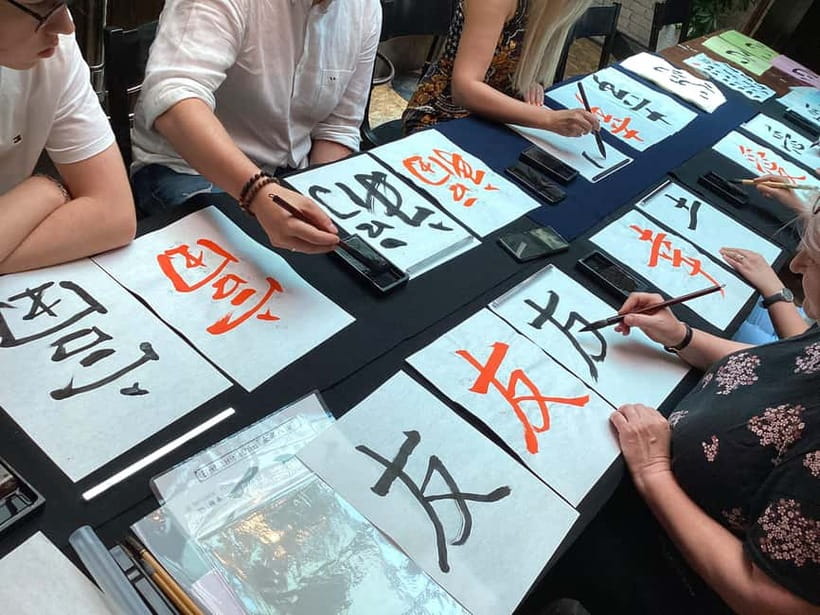
Next you practice basic brush strokes. The instructor walks you through what to do, and you repeat until your hand starts to behave. With calligraphy, the “how” is everything: pressure, angle, speed, and the decision to lift or not lift the brush at the right time. You are learning control, not just copying shapes.
Then you move into kanji characters. You practice writing characters with guidance that keeps beginners from getting lost. The best part of this stage is how you are not thrown into the hardest thing first. You build technique, and then apply it.
In the final part, you can take photos, explore the gallery, and place special orders. That end section is more than a neat bonus. It gives you a moment to look at what other works look like in a real setting, and it gives you a chance to think about getting additional pieces if calligraphy has you hooked.
Brush Strokes That Actually Make Sense (Without Prior Experience)
If you are worried about messing up, good. That fear is normal, and the workshop is set up to handle it. You are not expected to arrive with calligraphy training. You start from basics and gradually build.
What I like about the stroke practice is that it is guided in a way that lets you feel cause and effect. When your hand pressure changes, the brush line changes. When your angle changes, the stroke shape changes. When your timing improves, the character looks less shaky and more intentional.
In past sessions, instructors have offered very clear directions and stayed patient when people needed repeats. You also benefit from helpers during the class, which helps if you are learning the same stroke with slightly different needs. That small-group setup, combined with real coaching, is what turns the session from a fun demo into a skills-building workshop.
You should also expect some cultural language to show up in how the lesson is explained. Even if you do not catch every detail, the meaning behind SHODO is part of why the work feels calming and focused. One review described the experience as relaxing and encouraged that you try again and improve, and that encouragement is exactly what makes stroke practice feel doable.
This is also a great moment to go slow. If you rush your brushwork, it shows. If you take your time on the first attempts, you build a stroke rhythm that carries into the later character writing.
Creating Your Own Piece, Including Name in Kanji
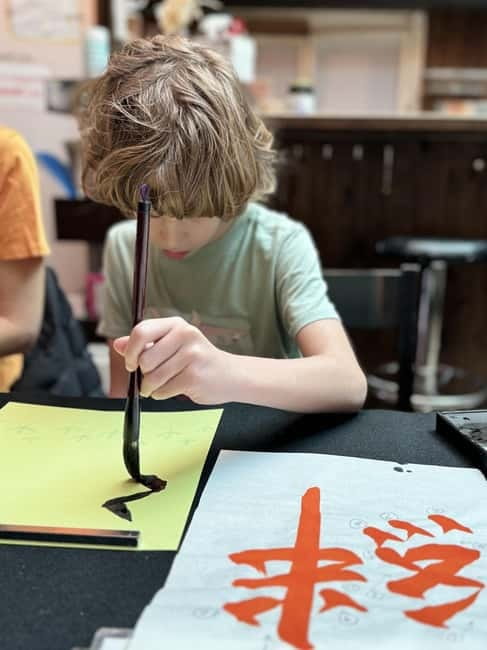
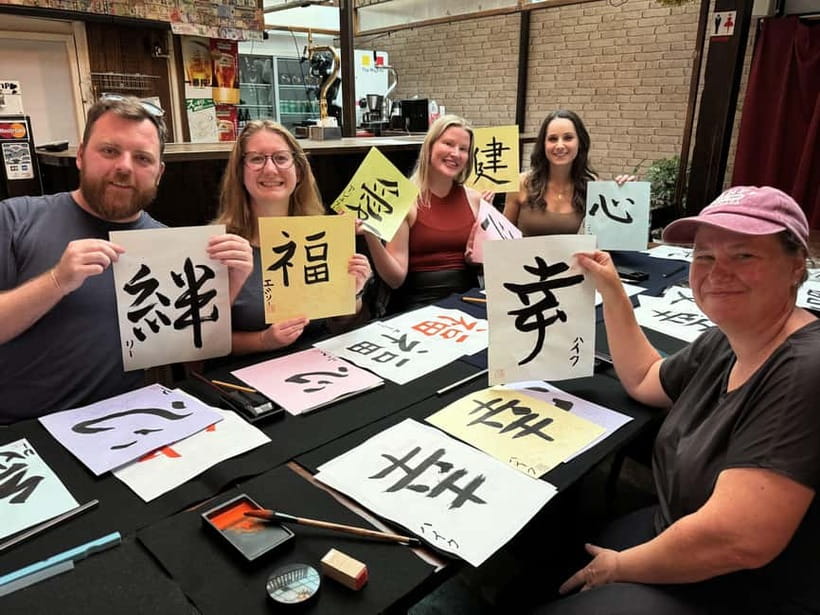
The end result is what you will remember, because it is something you can keep. The workshop is structured so that you leave with a unique calligraphy piece, made by you, on rice paper.
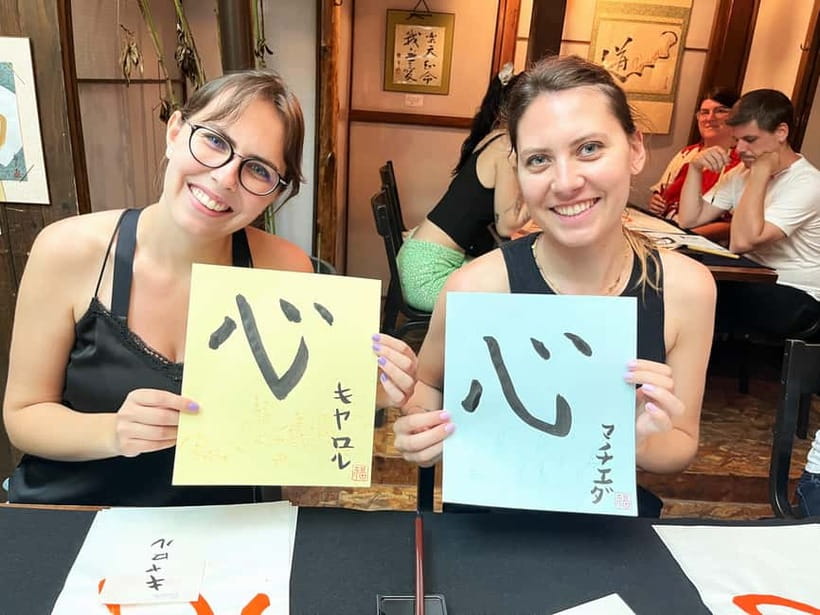
A couple details make this feel special rather than generic. One is that you sign your work, often by writing your name in kanji. That turns your final piece into something personal, not just an assigned character practice. In past sessions, the instructor has also shown students how to write their names in kanji, which makes the final result feel like it belongs to you.
Another key detail is the finishing touch. Reviews mention that your teacher stamps the calligraphy for you, and that is the kind of step that elevates your keep-sake. It signals that your work is being treated with real care, not just collected at the end.
You can also take photos during the end portion. That matters because calligraphy is one of those activities where you might forget what your early strokes looked like once you move to the final piece. Photos help you keep the story straight when you get back home.
Some classes include extra surprises beyond the main keepsake. For example, one instructor has been described as giving an additional small handmade gift with gold accents. Since that is not listed as a guaranteed add-on, think of it as a possible bonus, not a promise. Still, it reflects the overall teaching tone: supportive, generous, and focused on your success.
Same corner of Japan, a different kind of day:
- Kyoto Geisha Walking Tour: Gion District & Hidden Gems
★ 4.7 · 3,273 reviews - Kyoto: Tea Ceremony Ju-An at Jotokuji Temple
★ 4.9 · 3,207 reviews - Kyoto: Gion Magical Night Walking Tour with Geisha Trivia
★ 4.9 · 2,393 reviews - Kyoto: 45-Minute Tea Ceremony Lesson Experience
★ 4.3 · 2,378 reviews
Small Group Energy, Patient Coaching, and English Support
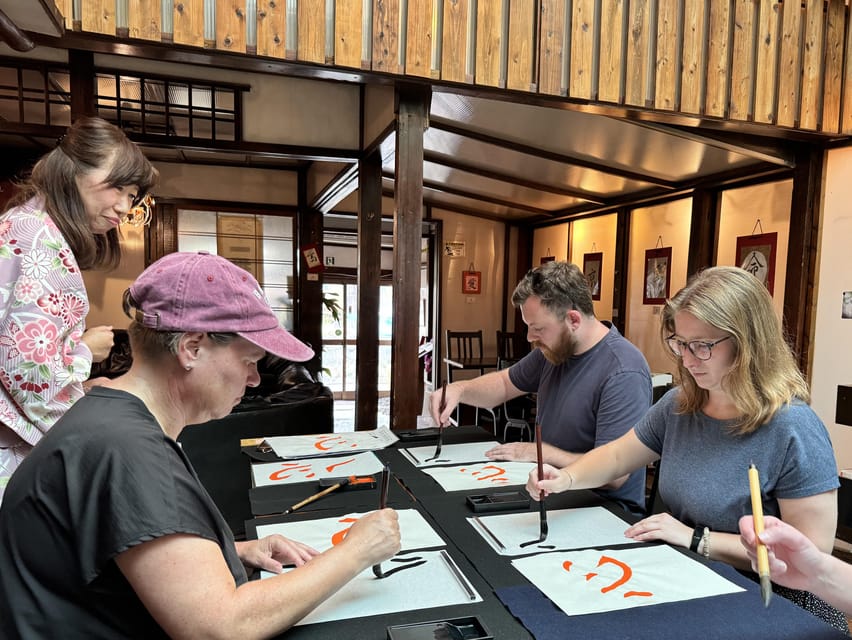
There is a reason the group size matters here. Calligraphy is physical. Your hand position and brush control need feedback. If you are in a large group, you spend more time waiting and less time improving.
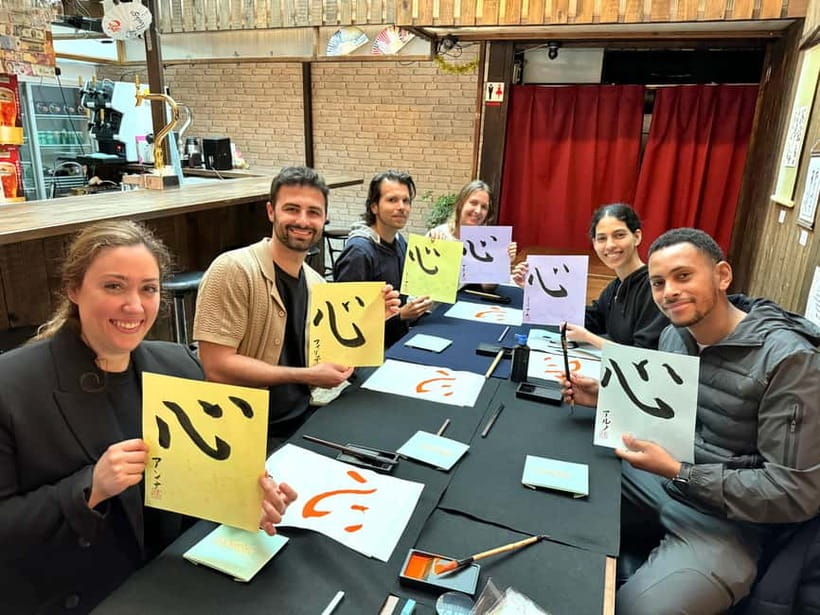
This workshop caps at 10 participants, and it shows in how coaching happens. In earlier sessions, the instructor and helpers have spent time individually with each person during the exercises. That kind of attention is what makes a beginner feel guided instead of overwhelmed.
Language support also helps. The instructor speaks English and Japanese, and English instruction is part of what makes the workshop approachable if you do not read Japanese. In one example, the instructor’s English was described as clear, and the coaching stayed patient even when someone needed more time on a stroke.
So your real question is not whether you can do calligraphy. Your question is whether you will feel comfortable learning it. The small-group format, clear instruction, and patience are built for that comfort.
One more practical point: the class is designed to start and end on time. In a city where you are bouncing between temples, meals, and trains, that punctual rhythm helps you keep your day running smoothly.
Price and Value: Why $32 Feels Fair for a Take-Home Art Moment
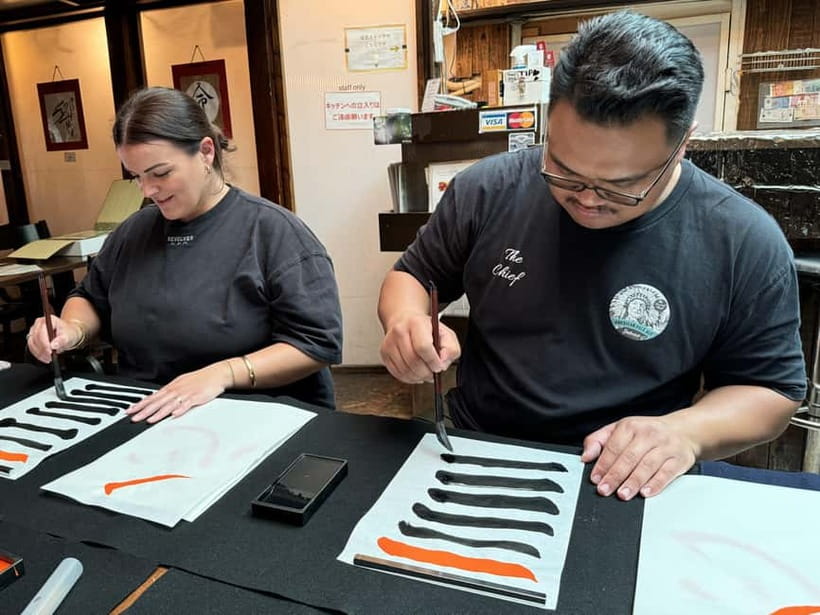
At $32 per person, you are paying for more than “watching someone write.” You get expert instruction, all necessary supplies, and a finished piece you take home. For a short 1 to 2 hour activity, that is strong value in Kyoto, where experiences can range from very polished but pricey to low cost but light on materials and coaching.
Supplies being included is a big deal. Calligraphy takes specific paper, brushes, inks, and setup. You are not going to the store for basics, then trying to guess which tools match the style. You show up, you learn with the correct materials, and your finished result is ready to keep.
The time investment is also realistic. If you are spending a few days in Kyoto, you want something that fits without swallowing an entire afternoon. This workshop gives you a cultural activity that is hands-on and leaves you with an item that reminds you of that day. It is the kind of souvenir that actually has meaning when you look at it later.
Finally, the experience is interactive. You practice, you make choices in your final work, and you learn how the strokes come together. That is why the price feels fair. You are not just buying a moment, you are buying an ability to continue practicing, even if it is only a little at home.
Who Should Book This Kyoto Calligraphy Workshop
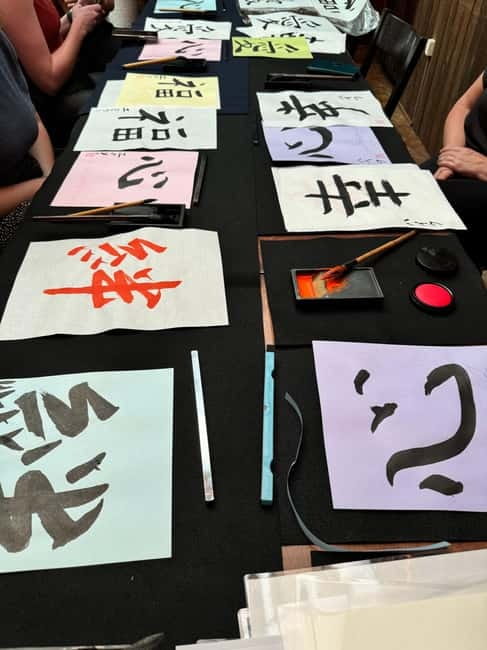
This is a great match for you if you want Kyoto culture that is not locked behind a museum label. You like activities where you do something with your own hands. If you enjoy calm, focused tasks, you will likely find the rhythm of brushwork satisfying.
It is also a smart choice if you are traveling with a partner or a small friend group. The structure is set for up to 10 participants, so you get a more personal learning environment, and you can experience it together without feeling lost in a crowd.
Beginners are the target. The workshop specifically supports beginners through step-by-step guidance from basic strokes to kanji characters. Even if you only know a few kanji, the lesson builds logically so you can still walk out with a strong result.
It is less ideal if you are traveling with younger kids, because it is not suitable for children under 10. If that describes your group, you might want another adult-focused activity elsewhere in Kyoto.
If you have ever tried calligraphy at home and felt frustrated by control and ink flow, this class is a good reset. The coaching helps you correct technique early, so you do not keep repeating the same mistakes.
Practical Tips to Get Better Fast in Your Calligraphy Session
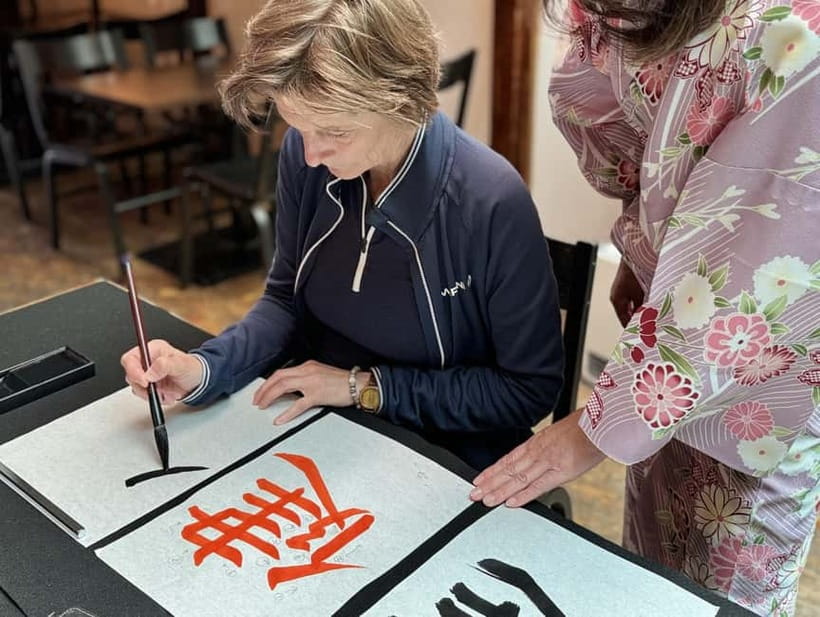
You will get the best result if you approach this like practice, not performance. Go in ready to try again on strokes that do not look right on the first pass.
A few practical ideas that fit what the workshop teaches:
Keep your body relaxed. Calligraphy looks precise, but it is built on steady movement, not tension.
Follow the instructor’s guidance on stroke direction and timing. Those details matter more than you expect.
Take your time during the basic stroke practice. Your later character writing will feel easier because your hand learns the motion earlier.
Use the photo moment. Snap a quick picture before you forget how your early strokes look.
If you want a more personal final piece, consider asking about writing your name in kanji. The class experience has included name kanji guidance in past sessions.
Also, plan your day so you can enjoy the workshop without rushing. Since it runs about 1 to 2 hours, it works well as a middle-of-the-day cultural stop, when you want a breather from temple lines.
If you are coming from somewhere nearby, the meeting point is on Kiyamachi Street by the Takase River. It is about a 5 minute walk from Keihan Kiyomizu Gojo Station and around 10 minutes from Keihan Shichijo Station.
Should You Book This Kyoto Japanese Calligraphy Workshop?
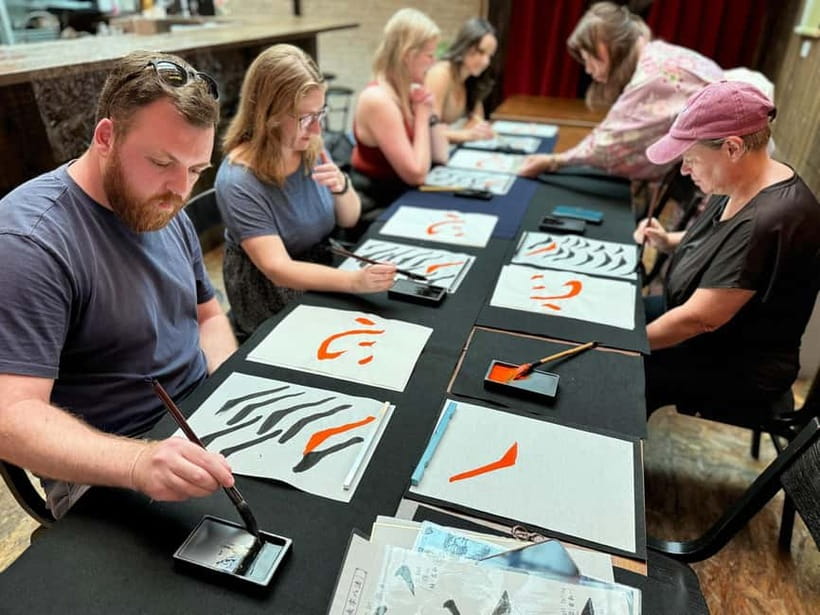
Yes, if you want a Kyoto souvenir that is not just a photo. This is a short, beginner-friendly SHODO workshop with all supplies included, expert guidance, and a take-home piece you create yourself. The small-group size, English support, and patient coaching are exactly what you want when you are learning something technical like brush strokes.
Book it if you like experiences where culture becomes practical. You learn the meaning behind calligraphy, then apply it in strokes and kanji characters. You also get the extras at the end, photos, gallery time, and the option to place special orders if you want more.
I would skip it only if you are traveling with children under 10, or if you specifically want a more passive cultural experience with no hands-on practice. Otherwise, for $32, this is a highly workable, meaningful add-on to a Kyoto itinerary.
FAQ
How long is the Kyoto Japanese Calligraphy Workshop?
The workshop lasts about 1 to 2 hours.
What is the price per person?
The price is $32 per person.
What is included in the workshop?
You get an expert calligraphy instructor, all necessary supplies, and a memorable cultural experience.
Do I need to bring my own calligraphy supplies?
No. All necessary supplies are included.
What languages are available during the class?
The instructor provides instruction in English and Japanese.
How many people are in each group?
The group is small, with a maximum of 10 participants.
Is the workshop suitable for children?
It is not suitable for children under 10.
Where do I meet for the workshop?
You meet at Gojo Paradiso, located along the Takase River on Kiyamachi Street. It is about a 5-minute walk from Keihan Kiyomizu Gojo Station and a 10-minute walk from Keihan Shichijo Station.
Is there a reservation requirement?
Yes. You need to reserve at least 1 day in advance.
Fresh options around Kyoto
- Kyoto Aquarium Admission Ticket★ 4.7 · 12 reviews
- Kyoto Gion Photoshoot – Private Session | Pro Photographer★ 5.0 · 12 reviews
- Gyoza Cooking Class in Kyoto: Traditional Japanese Dumplings★ 5.0 · 12 reviews
- Kyoto: Guided Food Tour with 12 Dishes & 3 Drinks★ 5.0 · 12 reviews
- Kyoto: Avoid the Crowds at the Hidden Gems of Arashiyama★ 4.9 · 13 reviews
- Kyoto Early Bird English Tour: Gion & Higashiyama(Private opt)★ 5.0 · 13 reviews
- Otsu-e Folk Art Workshop & Local Culture Walk Near Kyoto★ 5.0 · 13 reviews
- Kyoto, Osaka, Nara Full Day tour by Car English speaking Driver★ 3.5 · 13 reviews
Workshops, compared.
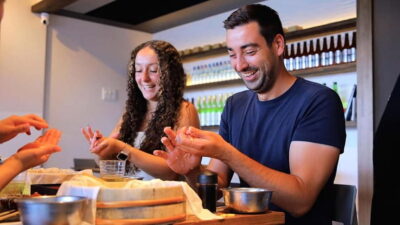
Sushi Making Tokyo Roll and Authentic Japanese Sushi Class
Read our review →
Roll and Authentic Sushi Making Class in Asakusa
Read our review →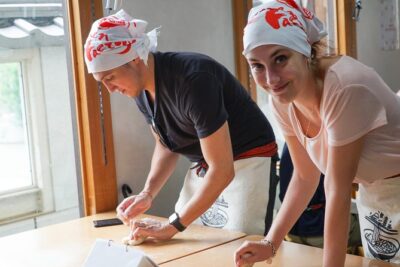
Ramen Cooking Class at Ramen Factory in Kyoto
Read our review →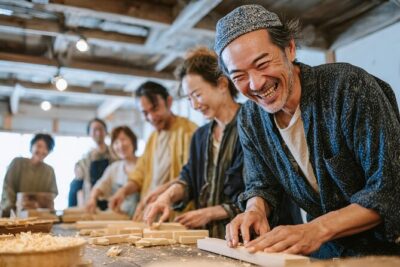
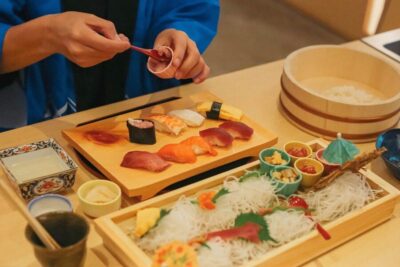
Sushi Making Class in a Happi Coat near a Famous Spot
Read our review →
Sushi Making Osaka Roll and Authentic Japanese Sushi Class
Read our review →Browse the lists this tour appears in