
Reviewed · WORKSHOPS
Kyoto: Beginner Knife Sharpening & Handle Fitting Workshop
Kyoto knife craft feels like a cheat code. In just two hours, you choose a real Japanese blade, sharpen it on a whetstone, then fit a handle you can use at home. I love the hands-on sharpening with tight coaching, and I love the small group vibe with English help. One thing to plan for: during handle fitting they use fire, so wear clothes you do not mind smelling smoky.
The workshop starts with context on Japanese knives and how different shapes are meant for different jobs. You can pick santoku, deba, or yanagi, and you can add an engraving (up to 4 letters) if you set it up ahead of time. When you are done, the shop packages your knife so you can carry it home without babying the edge.
It runs through the Japanese knife shop HIRAI, so the tone is focused and craft-first, not showy. The class is limited to 3 participants, and it has some clear limits (no pets, no baby strollers, no smoking, and keep noise down). It is also not set up for children under 15, wheelchair users, or people over 80.
Key Highlights You’ll Notice Fast
- Pick your blade type (santoku, deba, or yanagi) before you start sharpening
- Sharpen with live corrections so you can actually repeat the method later
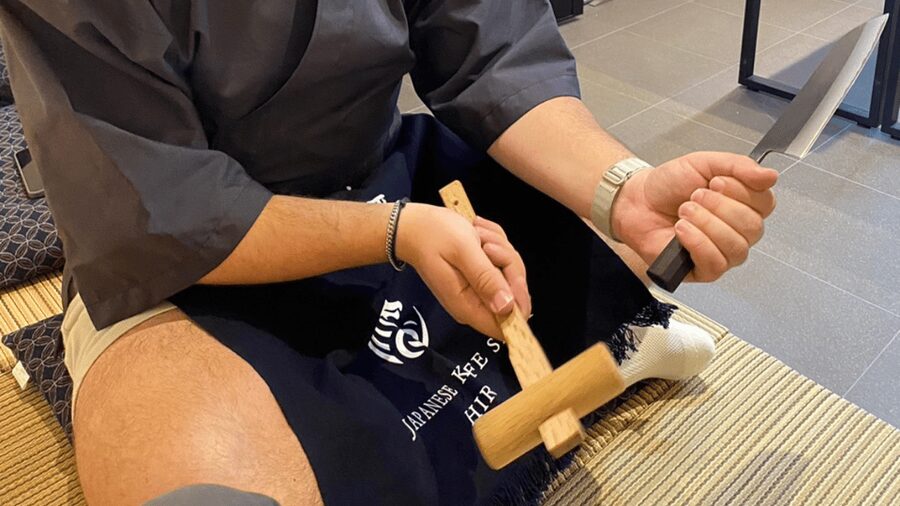
- Magnolia handle fitting, including a fire step that can produce smoke
- Optional engraving up to four letters if you request it in advance
- Take your knife home in packaged protection after the workshop
- English and Japanese support in a group of up to three
Finding HIRAI and Choosing Santoku, Deba, or Yanagi
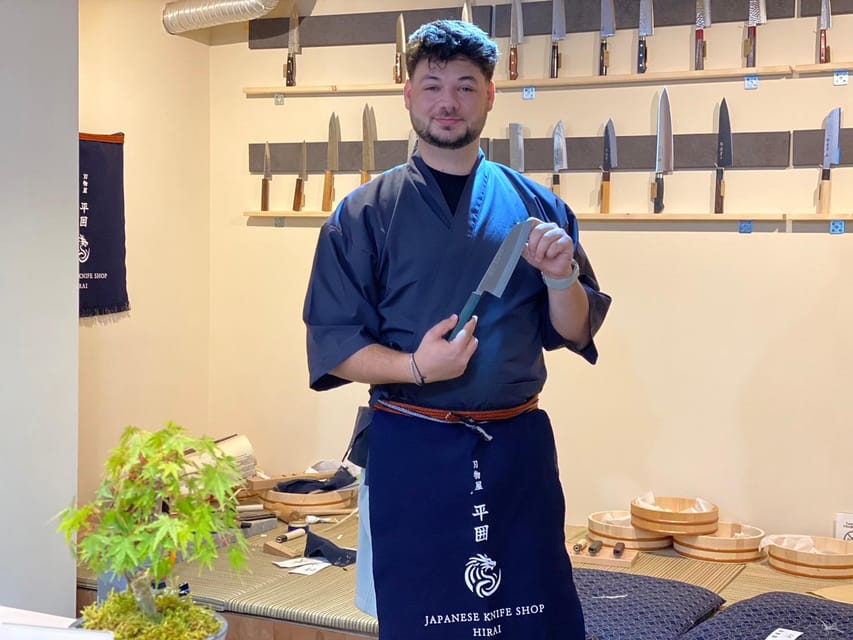
This is the kind of Kyoto activity that feels practical the second you walk in. The workshop is run through the Japanese knife shop HIRAI, and you meet the team at the shop directly. Look for the white storefront curtain on the building, then step inside and get ready for real workshop focus.
Before you sharpen anything, you choose the knife type you want to work on. The options are santoku, deba, or yanagi. That choice matters because these knives have different jobs in Japanese kitchens, and you are not just learning one random technique. Even if you never go full nerd on knife shapes, it helps to feel why each blade form exists.
You also get a short start-up talk about Japanese knives, so the class does not feel like a pure tool demo. It is more like learning the logic behind the craft. That context pairs well with what the instructors do next: demonstration first, then you try it, then they check your progress.
Instructors vary by day, but names like Julio, Tim, and Tatsu show up in people’s memories for a reason. The common thread is patient, step-by-step guidance, plus corrections that keep you from practicing the wrong angle for too long.
A few more Kyoto days worth comparing
- PERFECT KYOTO 1-Day Bus Tour
★ 5.0 · 13,518 reviews - Kyoto: Fushimi Inari, Kinkakuji, Bamboo Grove 1 Day Bus Tour
★ 4.8 · 4,316 reviews - Kyoto: Tea Ceremony in a Traditional Tea House in Kiyomizu
★ 4.9 · 3,519 reviews
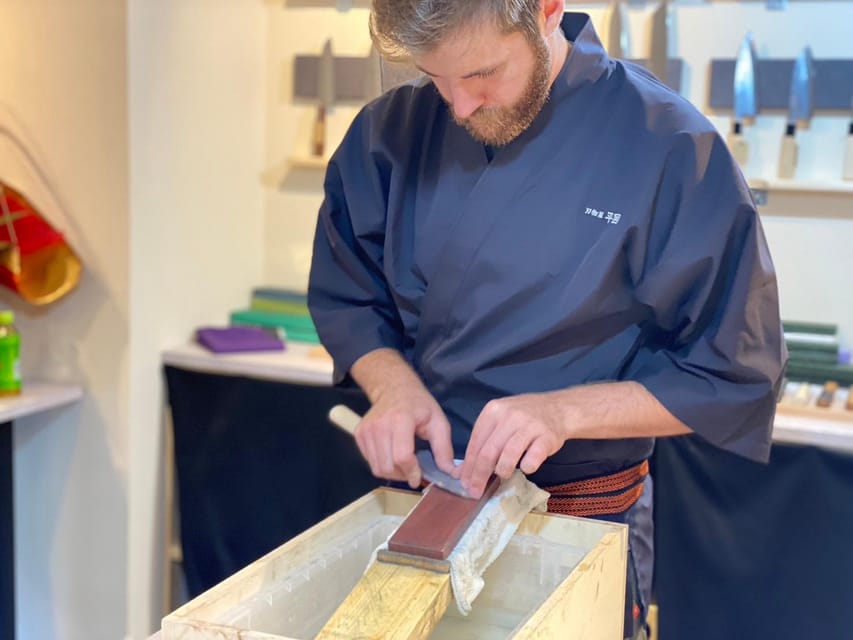
Two Hours of Sharpening That Actually Clicks for Beginners
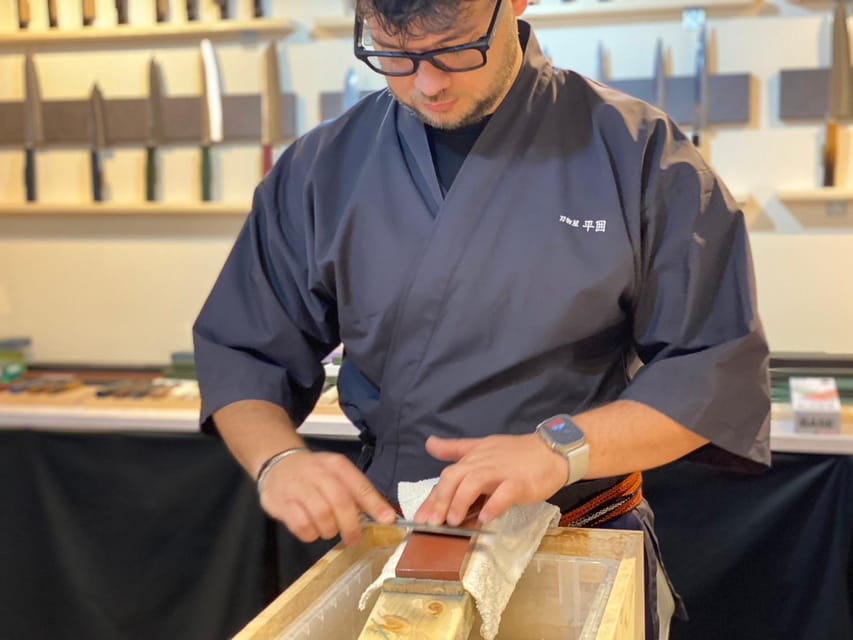
Here is what I like about this class for first-timers. You do not just watch a how-to video. You learn with your hands on the stone while the instructor watches your technique and corrects it.
The workshop includes sharpening on a whetstone provided by the shop. You are not expected to buy one just to take the class. That reduces the usual beginner friction, because the hardest part is figuring out the motions and the angle, not finding the right gear.
The format is what makes it click. You usually start with a demonstration so you can copy the big moves, then you sharpen your own selected blade. The instructors then double-check and confirm progress. That direct feedback is the difference between feeling confident and feeling like you are guessing.
If you have tried sharpening at home based on YouTube, you already know how easy it is to get lost. This workshop gives you a repeatable feel for the process, and it helps you understand what to adjust when something is not working. People also love that there is no pressure to upsell a new knife during the lesson. The attention stays on skill.
And yes, you end up leaving with a knife you sharpened. That detail changes the emotional payoff. It is not just a class where you walk away empty-handed.
Handle Fitting With Magnolia Wood, Plus the Fire Smoke Step
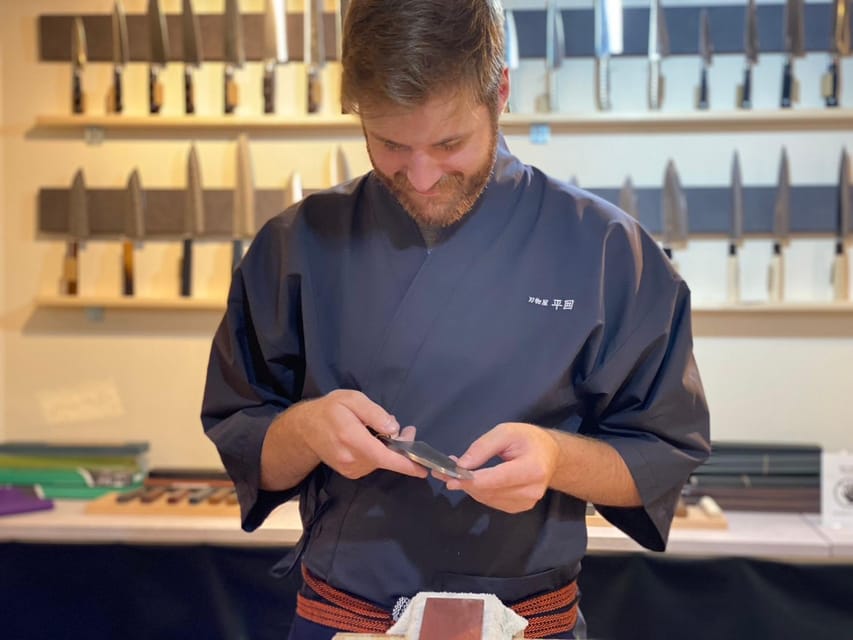
Sharpening is only half the story here. The other half is handle fitting, and it is the part that feels most like a craft workshop instead of a school lesson.
In the handle fitting section, you attach a handle to the blade. The standard handle included is made from magnolia tree. You will get help during the fitting, and you learn the steps in a way that is meant to be practical for later.
Then comes the part that catches people off guard if they only think about knives being clean and quiet. During the fitting, they use fire, so sometimes smoke comes out. If you do not want your clothes to smell smoky afterward, wear something you do not mind sacrificing. Think of it like a workshop apron moment, not a dinner outfit.
You also learn that handle fitting is not a one-size-fits-all process. If you want a different handle type, you can do that with an additional fee. The amount changes depending on the handle you choose. The important practical point is this: if you want options beyond the included magnolia, bring extra budget and decide early.
The workshop also provides you with a Japanese working uniform and an apron. That helps you focus on the task and protects your clothes a bit, but it does not erase the smoke risk entirely, so choose your outfit with that fire step in mind.
Optional Engraving, Packaging, and Taking Your Knife Home
One reason people love this class as a Kyoto souvenir is that it ends with a blade that feels personal. After the workshop, the shop packages your knife so you can take it home.
Engraving is available, and you can request it in advance. The request allows up to 4 letters. You tell them what characters you want ahead of time, and the shop adds it as part of the experience. If you are bringing the knife back as a gift, this is the detail that makes it feel special instead of generic.
The workshop cost includes the engraving fee, so you are not adding surprise charges just to customize your knife. Just plan your letters before you arrive so the team can prepare properly.
Also note the practical flow at the end. Once handle fitting and any requested personalization are done, the knife gets packaged. That means you can focus on getting your day back on track without worrying about transporting the edge yourself.
Same corner of Japan, a different kind of day:
- Kyoto Geisha Walking Tour: Gion District & Hidden Gems
★ 4.7 · 3,273 reviews - Kyoto: Tea Ceremony Ju-An at Jotokuji Temple
★ 4.9 · 3,207 reviews - Kyoto: Gion Magical Night Walking Tour with Geisha Trivia
★ 4.9 · 2,393 reviews - Kyoto: 45-Minute Tea Ceremony Lesson Experience
★ 4.3 · 2,378 reviews
What Your $161 Buys, and Why It Feels Like Value
$161 is not a small number, especially in a city where you can book loads of cultural experiences. The value here comes from what is bundled.
You are paying for more than a sharpening demo. The price covers:
- A knife you sharpen during the class
- Handle fitting, including the magnolia handle you attach
- The working uniform and apron
- The experience fee
- The engraving fee (if you request it)
You do not have to buy a whetstone for the class, because the shop provides whetstones. The only common extra costs are optional choices, like buying additional knives from the shop or choosing a different handle type beyond magnolia.
Compared to simply buying a Japanese knife, the big difference is that you are learning how to maintain it. People describe the workshop as a way to get confidence and repeatable technique. That matters because a knife is only useful if you can keep it sharp.
There is also an emotional value that is hard to put in a spreadsheet. You leave with a knife that is physically yours, made through your own sharpening and your own handle fitting. That is why the activity lands for people who like hands-on souvenirs, not just photos.
Group Size, Timing, and What to Do When You Arrive
This workshop is designed for small groups, limited to 3 participants. That size is a big deal. It means the instructor can watch what you are doing and fix the issues that usually happen with beginners, like angle inconsistency.
Timing is another simple piece of advice: plan to be at the shop before 5 minutes so the class starts smoothly. Arriving late can throw off the workshop pacing, especially because you start with knife selection and then move into sharpening.
When you arrive, you should already know which knife type you want to choose. The shop expects you to pick one of santoku, deba, or yanagi for your workshop knife, so it helps to decide ahead of time.
For many people, the meeting point is the one little friction point. The shop is in a busy area, so if you are nearby, take a moment to locate that white storefront curtain before you walk in circles.
Who Should Book This Knife Workshop in Kyoto
If you want a Kyoto experience that connects craft to everyday life, this one fits well. It is built for beginners, and it is also a good confidence boost if you have tried sharpening but feel stuck.
You will likely enjoy it if:
- You cook at home and want to maintain your knives
- You like hands-on learning with corrections
- You want a souvenir that is functional, not just decorative
On the other hand, skip it if you fall into the workshop’s not-a-fit categories. It is not suitable for children under 15, wheelchair users, or people over 80. And the shop has rules like no pets, no baby strollers, no smoking, no alcohol and drugs, and a request not to make noise, which makes it a quieter, more controlled environment.
If you are sensitive to smoke, plan your outfit carefully, because that fire step during handle fitting is part of the process.
Should You Book Kyoto Beginner Knife Sharpening and Handle Fitting?
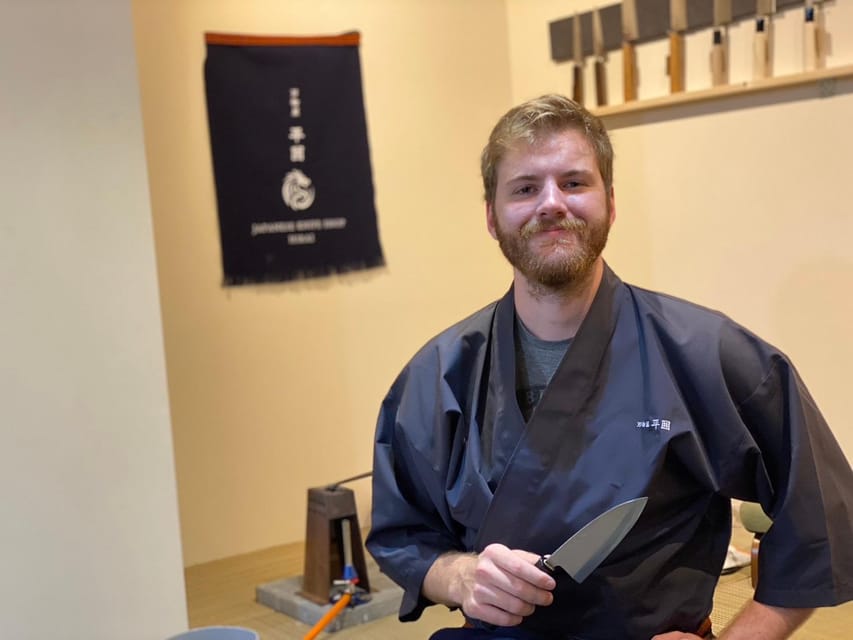
I think you should book this workshop if you want real technique and you love the idea of taking home a knife you helped create. The best part is the combination: sharpening plus handle fitting, plus the coaching that helps beginners understand what to do.
Skip it if you want a low-effort, sightseeing-style activity. This is a craft session where you pay attention, concentrate, and follow the instructor’s corrections. It is not hard, but it is hands-on.
If your goal is a one-of-a-kind Kyoto memory that you will use in your kitchen for years, this is one of the more practical souvenirs around.
FAQ
How long is the Kyoto beginner knife sharpening and handle fitting workshop?
The workshop lasts 2 hours.
What knives can I choose for the workshop?
You can choose one knife from santoku, deba, or yanagi.
Is handle fitting included in the workshop?
Yes. You will sharpen a knife and also fit a handle during the workshop. The included handle is magnolia tree.
Can I take my knife home after the workshop?
Yes. After the workshop, the shop packages your knife and you can take it home.
Is engraving available, and how many characters can I request?
Engraving is available. You can request up to 4 letters, and you need to tell the shop in advance what characters you want.
Do I need to buy a whetstone?
No. You do not need to purchase a whetstone for the class because the shop provides the whetstones.
Is an English guide available?
Yes. The instructor and guides include English support (along with Japanese).
How many people are in the group?
The workshop is a small group limited to 3 participants.
Is there any age or accessibility restriction?
Yes. It is not suitable for children under 15, wheelchair users, or people over 80.
Is free cancellation available?
Yes. You can cancel up to 24 hours in advance for a full refund.
Fresh options around Kyoto
- Kyoto Aquarium Admission Ticket★ 4.7 · 12 reviews
- Kyoto Gion Photoshoot – Private Session | Pro Photographer★ 5.0 · 12 reviews
- Gyoza Cooking Class in Kyoto: Traditional Japanese Dumplings★ 5.0 · 12 reviews
- Kyoto: Guided Food Tour with 12 Dishes & 3 Drinks★ 5.0 · 12 reviews
- Kyoto: Avoid the Crowds at the Hidden Gems of Arashiyama★ 4.9 · 13 reviews
- Kyoto Early Bird English Tour: Gion & Higashiyama(Private opt)★ 5.0 · 13 reviews
- Otsu-e Folk Art Workshop & Local Culture Walk Near Kyoto★ 5.0 · 13 reviews
- Kyoto, Osaka, Nara Full Day tour by Car English speaking Driver★ 3.5 · 13 reviews
Workshops, compared.
Sushi Making Tokyo Roll and Authentic Japanese Sushi Class
Read our review →
Roll and Authentic Sushi Making Class in Asakusa
Read our review →
Ramen Cooking Class at Ramen Factory in Kyoto
Read our review →
Sushi Making Class in a Happi Coat near a Famous Spot
Read our review →
Sushi Making Osaka Roll and Authentic Japanese Sushi Class
Read our review →Browse the lists this tour appears in