
Reviewed · HISTORICAL TOURS
History of Hiroshima Group Walking Tour
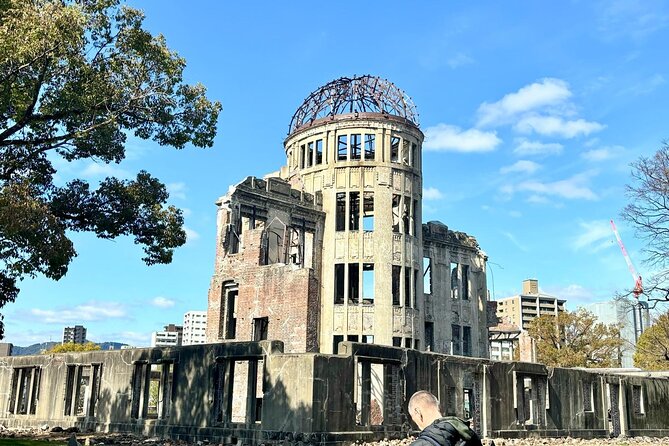
Peace starts with a short guided walk. This 2-hour Hiroshima route uses a guide with a Peace Studies background to connect the biggest memorial sites, from the Peace Memorial Park to the Atomic Bomb Dome, with clear context on the atomic bombing and what changed afterward. You get a tightly planned walk that works well when you have limited time but still want meaning, not just photos.
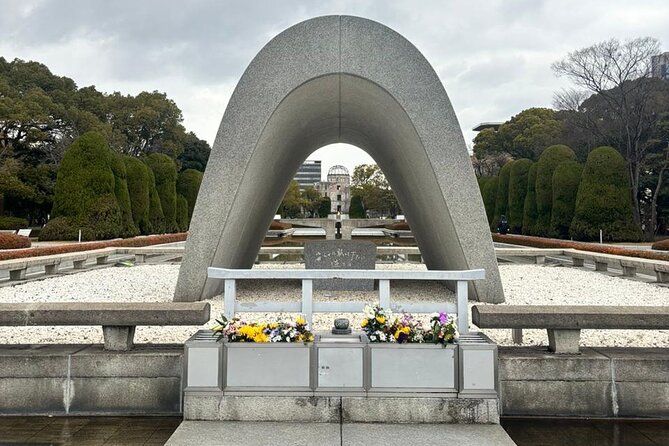
I especially love two things: the human way the guide explains what you are seeing, and the fact that the stops cover more than the main headline sites. In particular, the tour includes the Mothers and Baby in the Storm monument, the Cenotaph for the Atomic Bomb Victims, and the Children’s Peace Monument with Sadako and the paper crane story, so the message lands on real lives.
One possible drawback is that the subject matter is heavy, so if you want light sightseeing only, this may feel intense. Also, with a walking format and no lunch included, you will want to plan food and energy before and after the tour.
Key highlights at a glance
- Peace Studies guide context helps you understand why each monument was placed where it is
- A compact 2-hour route is ideal if Hiroshima feels like one stop too many on your schedule
- Multiple perspectives in the memorials includes a Korean Victims and Survivors monument
- Specific storytelling stops like the Rest House survival and Sadako’s paper crane
- Easy pace for most people with a small group size capped at 30
Why this Hiroshima walk feels different from a self-guided stroll
Hiroshima can be overwhelming. You can stand in front of each memorial and still wonder what you are supposed to feel, what matters most, and how all the pieces connect. This tour helps by giving you the through-line while you walk, so the history becomes easier to hold in your head and harder to forget.
The best part is how the tour balances details with restraint. Instead of turning the sites into a checklist, the guide explains why an atomic bomb was dropped and how the city was transformed into a symbol of peace and resilience. That framing matters, because the Peace Memorial area is not just about the past, it is about how Hiroshima tells its story today.
I also like that you move efficiently without rushing your understanding. The route is short enough to finish in a single sitting, but long enough to include the most important monuments, the Atomic Bomb Dome, and several memorial elements that many first-timers miss if they only skim the highlights.
And yes, it is group-based, so you will walk with other people. You get the benefit of shared questions and the guide’s focus, but you will not have full freedom to linger at every spot.
More Walking Tours in Hiroshima
- Hiroshima Historical Walking Tour – Why A-Bomb was Dropped
★ 4.8 · 893 reviews - Hiroshima Peace (Heiwa) Walking Tour at World Heritage Sites
★ 5.0 · 872 reviews - Hiroshima City 4hr Private Walking Tour with Licensed Guide
★ 5.0 · 437 reviews
How the 2-hour route works, from meeting point to Ground Zero
The tour starts at Ristorante Mario 4-11 Nakajimachō, Naka Ward, Hiroshima and ends at the Hiroshima Atomic Bomb Hypocenter Monument near Ground Zero. You are basically doing a straight line through the emotional core of the Peace Memorial area, so you do not need to figure out transit between far-flung locations.
Expect a guided walk that totals about 2 hours. The stops are short, often 5 to 20 minutes, which keeps the pace moving but still gives enough time to look, listen, and absorb what the guide is pointing out. For a first-time visit, that rhythm is a win, because you get a full story arc without burning a whole day.
This is also the kind of tour where group size matters. With a maximum of 30 travelers, you are not getting swallowed by a huge crowd, and the guide has a better shot at answering questions. That can make a real difference when your head is full and you want clarification on something you just saw.
One small planning tip: wear comfortable shoes. Even though the tour is only around two hours, you are on memorial grounds where surfaces and pathways may not be what you want after a long travel day. Bring a light layer too, because the tour depends on decent weather.
Stop-by-stop: the story from the Gates of Peace to the Dome
Stop 1: Gates of Peace
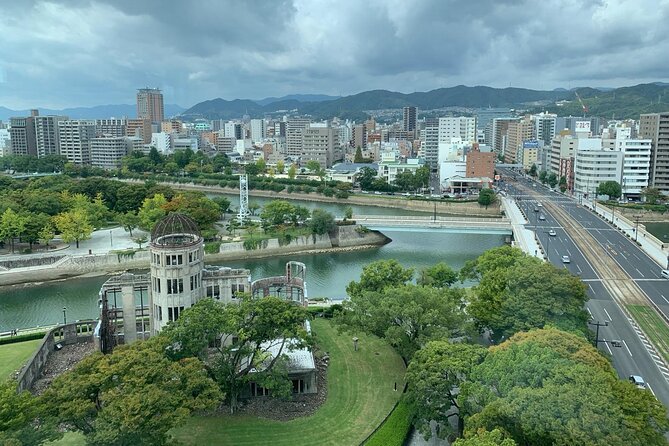
The tour begins at the Gates of Peace, where the guide sets the historical stakes. You get an explanation for why Hiroshima was targeted and how that moment changed world history. This opening matters because it gives you a starting point that is easy to follow while you walk.
You also see how the memorial spaces are designed to guide your attention. The gates themselves are part of the meaning, not just a convenient photo spot. This is where the tour earns its value: you are not just collecting sights, you are learning how Hiroshima wants the world to understand what happened.
Same corner of Japan, a different kind of day:
- Peaceful Hiroshima & Miyajima UNESCO 1 Day Bus Tour
★ 5.0 · 5,309 reviews - Hiroshima: Hiroshima and Miyajima UNESCO Sites 1-Day Tour
★ 4.9 · 2,330 reviews - Hiroshima / Miyajima Full-day Private Tour with Government Licensed Guide
★ 5.0 · 1,298 reviews - Hiroshima in a Nutshell: Morning Bike Adventure
★ 5.0 · 524 reviews
Stop 2: Arashi no Naka no Boshi Statue (Mother and Baby in the Storm)
Next up is the Mother and Baby in the Storm monument, dedicated to mothers who sacrificed their lives trying to save their children. It is brief in time, but it lands hard.
This stop is important because it shifts the scale from nations to families. In a memorial area full of structures and names, this kind of imagery helps you remember that the human cost was immediate and personal.
Stop 3: Peace City Monument Cenotaph for the Atomic Bomb Victims
You then move to the Cenotaph for the Atomic Bomb Victims, where the focus is on the victims and the scale of the loss. The guide’s job here is to help you look at the monument as more than a wall of meaning. You learn how the names represent lives, not statistics.
If you have ever stared at a memorial and felt unsure what to do next, this is the kind of stop where a good guide can help you understand how to read the space. You spend about 20 minutes, which is long enough to slow down without feeling trapped.
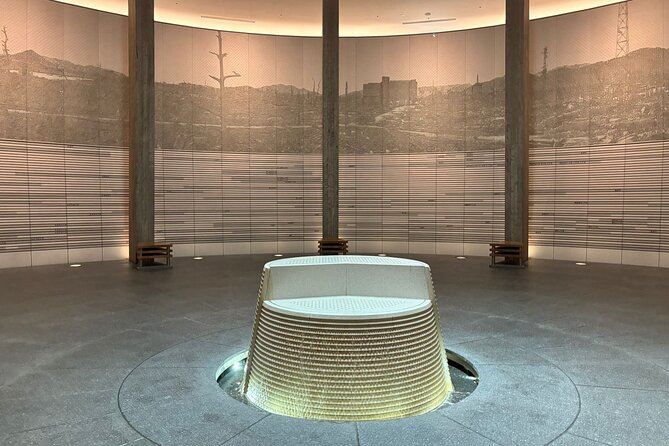
Stop 4: Hiroshima National Peace Memorial Hall for the Atomic Bomb Victims
This stop is about what the city looked like in the aftermath. The National Peace Memorial Hall shows the destruction of Hiroshima, and the guide helps connect that visual evidence back to the story you started with at the gates.
This is one of those moments where the tour feels practical, not just emotional. You are not left to guess what to interpret. You are given a framework so what you see in the hall makes sense in context.
Stop 5: Rest House of Hiroshima Peace Park
The Rest House, described as solo survival about 170 meters from ground zero, is one of the most striking “location-based” stops. It gives you a physical sense of proximity to the blast.
A guided explanation here is especially useful because it turns a building into a reference point. You can walk by and think, that survived, but the guide helps you understand why that survival matters to Hiroshima’s story and memory.
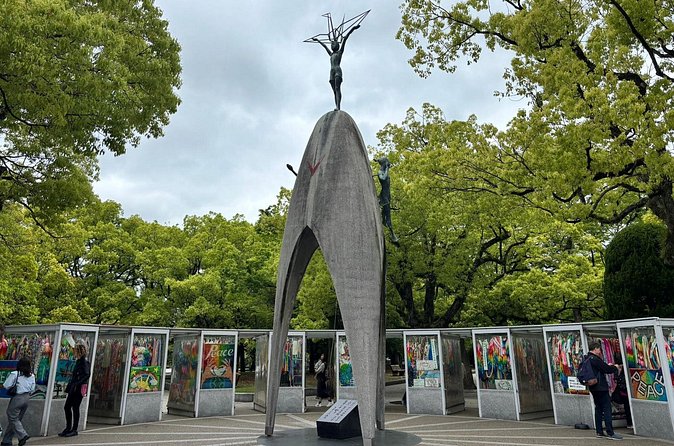
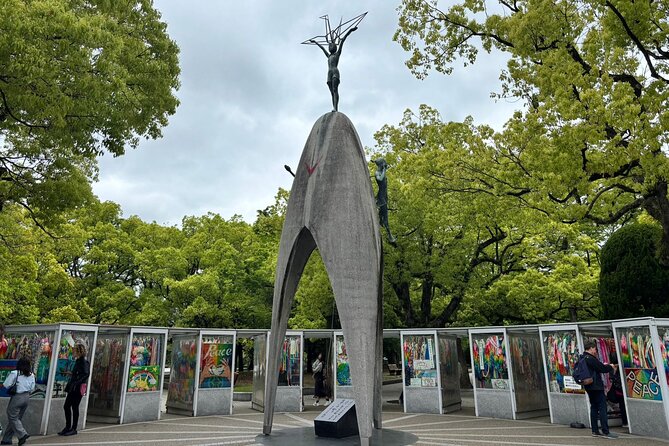
Stop 6: Children’s Peace Monument
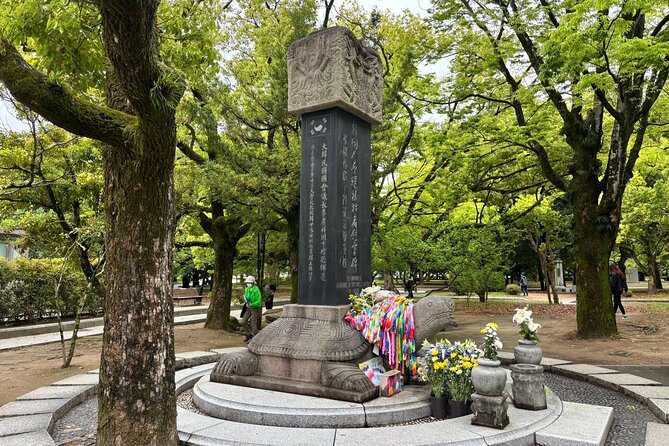
Then comes the Children’s Peace Monument, tied to Sadako and other children who died in the bombing. The guide also connects it to the paper crane, a symbol of peace that spread beyond Japan.
This is a stop that many people want to see, but it can be hard to get the emotional logic without context. With the guide, it becomes more than a symbol on a pedestal. It becomes a story about how children faced unimaginable loss and how messages of peace traveled outward afterward.
Stop 7: Monument to Korean Victims and Survivors
The tour also includes the Monument to Korean Victims and Survivors, which is dedicated to Korean victims. This matters because Hiroshima’s memorial narrative is not only Japanese. The guide helps you see how other affected communities are part of the city’s experience and remembrance.
If you care about full context, this inclusion is one of the strongest reasons to take a guided route rather than only reading a guidebook.
Stop 8: Peace Bell
Next is the Peace Bell, a short stop but a meaningful one. In a memorial area, these smaller gestures are not filler. They give you a moment to reflect on the future-facing theme of the tour: peace as a practice, not a slogan.
You likely will not need long here, but you do need a guide’s explanation to connect it to everything you saw earlier.
Stop 9: Atomic Bomb Dome
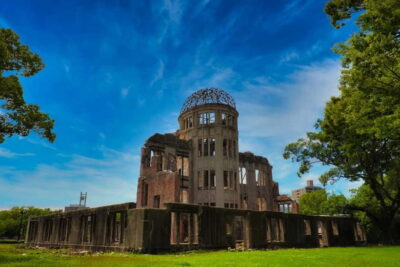
Finally, you end at the Atomic Bomb Dome, a building that survived the atomic bombing. This is the obvious headline site, but the tour makes it more than a landmark.
Because you have already walked past the gates, the memorial names, the hall, and the survival reference, the dome becomes the visual punctuation at the end of the story. It is easier to process now than it would be as a first stop.
The tour ends near the Hypocenter/Ground Zero area, so your last steps feel like closure rather than a random destination hop.
What you actually gain from a Peace Studies guide
The tour is designed for meaning. That is clear in the stop choices, but it becomes real in how the guide talks through what you are looking at.
Several guides tied to this experience, including Ali as the listed provider, were described as English-speaking and personable, with some bringing humor to lighten the mood at just the right moments. That does not erase the tragedy. It helps you keep listening, especially on a subject that can drain your energy.
Most importantly, the guide gives you rare insights into Hiroshima’s history and how the city became a symbol of peace and resilience. That is exactly what a self-guided walk often lacks: the connect-the-dots explanation that turns monuments into understanding.
If you want a visit that is respectful but not confusing, this is a good fit. The tour keeps your attention where it needs to be, and it gives you language to interpret what you see.
Price and value: is $32.84 a fair deal?
At $32.84 per person for about 2 hours, this is positioned as a compact, high-structure experience rather than a long day. For me, the value comes from three areas.
First, it is a guided tour with a guide who can connect multiple sites into a single story. Second, the group format and small cap of 30 travelers can make it feel more personal than big bus-style tours. Third, the itinerary’s key sites are marked as free admission, so you are mostly paying for the guided interpretation and time efficiency.
Also, the tour offers a mobile ticket and includes group discounts. If you are traveling with others, that can help reduce the per-person burden. Even without that, the price feels aligned with what you are buying, which is context you cannot easily get from walking alone.
The only situation where I would hesitate is if you plan to be in Hiroshima for only a short moment and you do not want any guided narrative. In that case, you could spend time just looking, but you will likely miss the “why” behind each stop.
Who should book this tour, and who might skip it
This tour is a strong match if you:
- want a fast, structured overview of Hiroshima’s memorial story in about 2 hours
- appreciate hearing context while you stand at each monument
- want your visit to include perspectives beyond the most famous headline sites, like Korean victims and survivors
- prefer a guide who can explain complex history in a way that stays human
You might choose something else if you:
- want a purely quiet, independent visit with no group pacing
- need a lighter tone during your trip
- plan to eat first and are not comfortable with the fact that lunch is not included
Small logistics that can make or break your experience
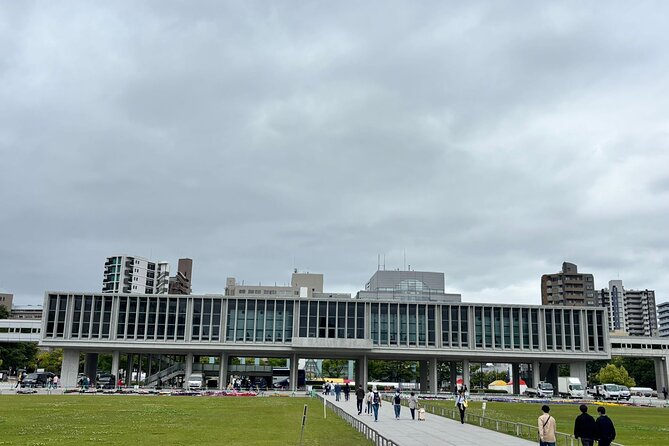
Because this is a walking tour, comfort matters. Start with shoes that work on footpaths and memorial ground surfaces. Bring a light jacket or layer, since the tour requires good weather, and you do not want to cut your attention short because you are cold or uncomfortable.
Also, come ready for a subject that is emotionally serious. You can expect the guide to keep the mood appropriate, and some guides were praised for using gentle humor to relieve tension. Still, the themes of sacrifice, destruction, and victims are central to the itinerary.
Finally, think about timing with meals. Since lunch is not included, you will want a plan before the tour and a buffer afterward. This keeps you from rushing out mentally because your stomach is calling the shots.
Should you book this Hiroshima Peace Memorial walking tour?
I would book it if you want your Hiroshima visit to feel connected, not fragmented. The route hits the most important memorial points, and the guide’s explanations turn a series of monuments into a story you can understand and carry with you.
If you are sensitive to heavy themes, you should still consider it, but give yourself emotional space. This is not a casual walk, but it can be a powerful one when you want clarity and respectful context.
If you hate group pace or you prefer to read everything at your own speed, then you might be happier going alone with a guidebook. But if you want the fastest path to understanding why the Peace Memorial area matters, this is a smart use of limited time.
FAQ
How long is the History of Hiroshima Group Walking Tour?
It lasts about 2 hours.
What is the price per person?
The price is $32.84 per person.
What is included in the tour price?
The price includes a guided tour.
Are there admission fees at the stops?
The itinerary’s listed stops show Admission Ticket Free.
Where does the tour start and end?
It starts at Ristorante Mario, 4-11 Nakajimachō, Naka Ward, Hiroshima, and ends at the Hiroshima Atomic Bomb Hypocenter Monument.
Is lunch included?
No. Lunch is not included.
Can children join for free?
Yes, 2 children aged 0-10 years can join free of charge.
What happens if the weather is bad?
The tour requires good weather, and if it is canceled due to poor weather, you will be offered another date or a full refund.
More Historical Tours in Hiroshima
- Miyajima Half-day Trip Historical Walking Tour
★ 5.0 · 284 reviews - Hiroshima: History of Hiroshima Group Walking Tour
★ 4.8 · 266 reviews - Hiroshima: Peace Walking Tour of World Heritage Sites
★ 4.9 · 190 reviews - Walking Through History: Hiroshima’s Path to Peace
★ 4.9 · 156 reviews
Fresh options around Hiroshima
- The Peace Memorial and Beyond: A Half-Day around Hiroshima★ 4.9 · 12 reviews
- Hiroshima Saijo Sake Tasting Tour with visit to 3 Breweries★ 5.0 · 12 reviews
- Private Hiroshima Calligraphy: Create Your Own Kanji Art Souvenir★ 5.0 · 12 reviews
- Hiroshima:Private lacquer workshop experience tour(gift included)★ 5.0 · 13 reviews
- Sunset Walking Tour at Peace Park, Hiroshima★ 5.0 · 13 reviews
- Kimono and Calligraphy Experience in Miyajima★ 5.0 · 16 reviews
- Hiroshima Peace Memorial Park: A Guided Tour★ 4.9 · 16 reviews
- History of Hiroshima: Small Group Night Walking Tour★ 4.8 · 17 reviews
Historical Tours, compared.
World Heritage Shirakawa-go and Experience Tours from Kanazawa
Read our review →
Imperial Palace and Shogun Historical Walking Tour
Read our review →
World Heritage Kyoto & Nara Uji Authentic Matcha Experience
Read our review →
Kyoto Gion: 2-Hour Geisha Culture & History Walking Tour
Read our review →
World Heritage Shirakawa-go Morning Guided Tour
Read our review →
Hiroshima Historical Walking Tour – Why A-Bomb was Dropped
Read our review →
Hiroshima Peace (Heiwa) Walking Tour at World Heritage Sites
Read our review →Browse the lists this tour appears in