
Reviewed · WORKSHOPS
Hanakoushi cotton Scarf Class
A scarf you dye yourself in Kyoto.
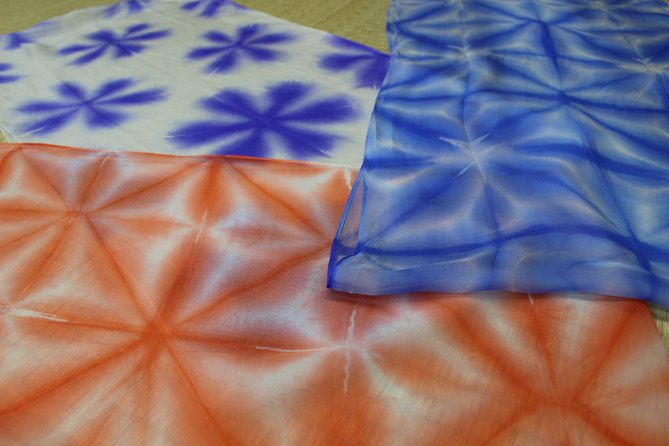
This private class at the Kyoto Shibori Museum teaches you the folding and dye steps of sekka shibori, and you leave with a wearable souvenir.
I love how the experience is hands-on without being overwhelming. You choose a color, fold the cotton using the hanakoushi approach, then dye it, with staff who guide you clearly. I also like that the class naturally turns into museum time, so you can keep learning and then browse the shop for shibori goods.
One consideration: it is quick, about 30 minutes, so if you expect an all-day crafting marathon, you might feel it moves fast.
Key points to know before you go
- Private class only for your group, so instructions can be paced to you
- Sekka shibori and hanakoushi folding, starting from choosing your color
- You take home a finished scarf, sized about 70 by 17 inches (175 by 50 cm)
- Short dye wait time, about 30 minutes, which becomes museum time
- The museum shop is part of the experience, with fabrics, souvenirs, and tools
- A beginner-friendly process, simplified for tourists while still feeling authentic
Kyoto Shibori Museum: where your scarf-making starts
This class is based at the Kyoto Shibori Museum in central Kyoto, at 135-5 Shikiamichō, Nakagyo Ward. It’s set up for a true craft experience, but the pace is traveler-friendly, not slow and ceremonial. You’re not just looking at shibori patterns, you’re making one.
The big reason I think this is worth your time is the “make, wait, learn, shop” flow. You start working right away, then you switch into museum mode while your scarf dries. That keeps the session from feeling like you’re standing around, and it gives you context so your finished scarf makes more sense when you wear it later.
A few more Kyoto days worth comparing
- PERFECT KYOTO 1-Day Bus Tour
★ 5.0 · 13,518 reviews - Kyoto: Fushimi Inari, Kinkakuji, Bamboo Grove 1 Day Bus Tour
★ 4.8 · 4,316 reviews - Kyoto: Tea Ceremony in a Traditional Tea House in Kiyomizu
★ 4.9 · 3,519 reviews
Private class value: getting one-on-one attention in 30 to 60 minutes
The experience is listed as a private tour/activity, meaning it’s exclusively for your party. That matters because shibori has lots of tiny technique details, and having someone guide your folds and dye steps can prevent common mistakes.
In practice, the class timing is about 30 minutes (approx.), and it’s also described as usually taking 30 to 60 minutes per class. That range is normal for handmade work. If you want a clean “one activity” block in your Kyoto day, think of it as a compact workshop that fits into a morning or afternoon without dragging.
At this price point, you’re paying not just for the labor, but for the materials and the instruction. You also get the museum portion, plus shopping time right after, which can easily turn this from a quick craft into a longer cultural stop if you choose to browse.
Choosing color and folding for hanakoushi shibori
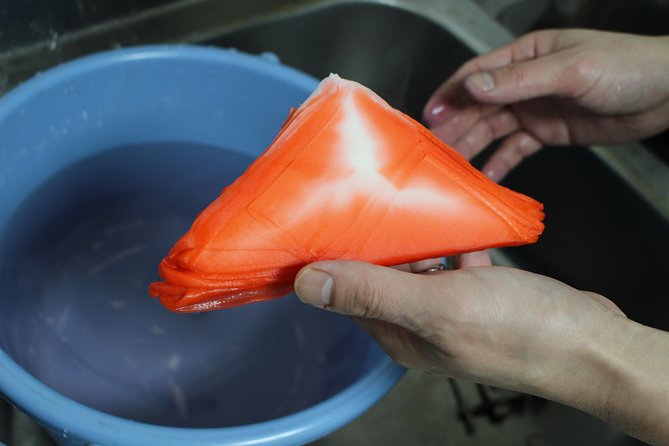
Your session starts with picking your favorite color. Then you learn how to fold your fabric in a particular way for the hanakoushi shibori method. Folding is the heart of shibori. The dye does the easy part, your folds do the pattern-making.
I like how beginner-friendly this is. The process is described as modernized or simplified for tourists, so you are not stuck for hours tying tiny fabric bits. You still get that hands-on satisfaction of doing real technique, but without turning it into a day-long puzzle.
The scarf you’ll work on is a cotton scarf, sized about 70 by 17 inches (175 by 50 cm). That’s a generous piece. You’re not making a small swatch you’ll forget in a drawer. You’re making something you can actually style, gift, or frame as a personal keepsake.
Dye step: turning folds into pattern
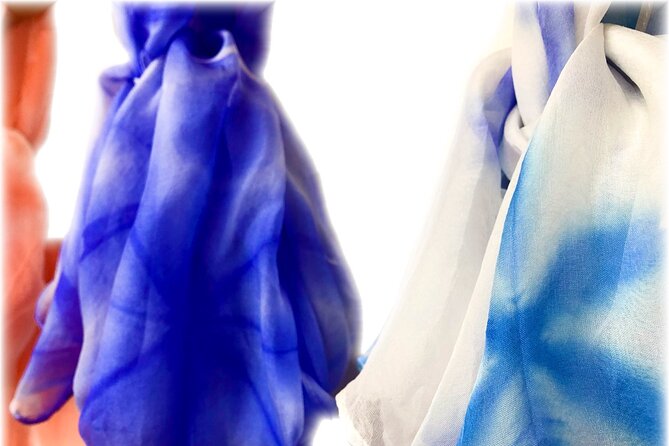
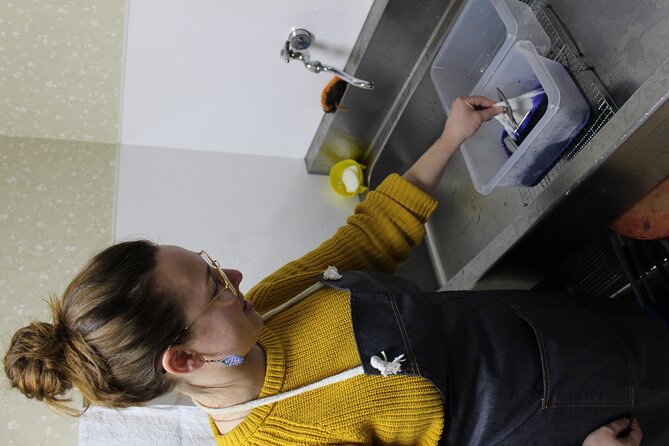
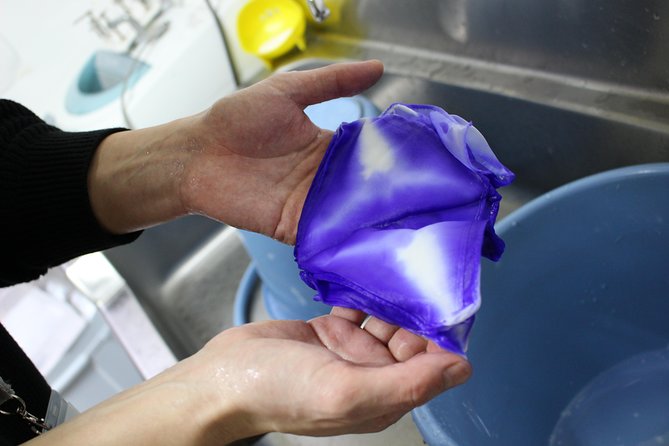
After folding, you dye the fabric with your chosen color. This is the moment that feels most magical, because the folds determine where the dye reaches and where it resists.
This is also where having clear guidance pays off. If your folds are off, the pattern can change. If you fold carefully the way the instructor explains, you’ll see results that feel crisp and intentional, not random.
Same corner of Japan, a different kind of day:
- Kyoto Geisha Walking Tour: Gion District & Hidden Gems
★ 4.7 · 3,273 reviews - Kyoto: Tea Ceremony Ju-An at Jotokuji Temple
★ 4.9 · 3,207 reviews - Kyoto: Gion Magical Night Walking Tour with Geisha Trivia
★ 4.9 · 2,393 reviews - Kyoto: 45-Minute Tea Ceremony Lesson Experience
★ 4.3 · 2,378 reviews
The best part: the drying wait becomes museum time
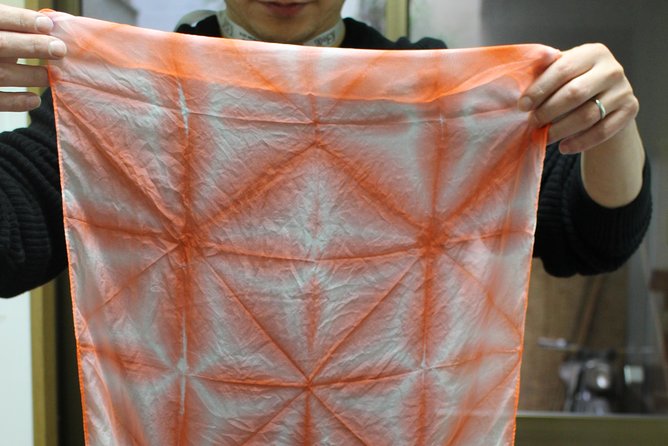
Once your fabric is dyed, you’ll wait while it dries. The wait is about 30 minutes. The clever part is what you do during that time: you learn more about shibori at the museum.
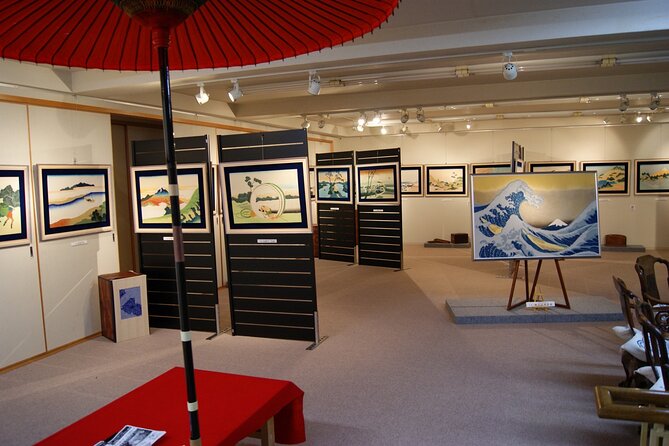
You can browse art pieces, tools, and samples displayed inside. It’s a chance to connect your scarf to the larger world of shibori, including how different techniques create different visual effects. Even if you only have a short attention span for museum stuff, this section helps because you’re actively making something. It’s easier to understand what you’re seeing.
There’s also a museum shop on-site, and this timing is perfect. You don’t feel rushed to buy something before your hands are full. Instead, you can shop after you’ve made your own piece, which makes your purchases feel like part of a continuing story.
What you leave with: a scarf souvenir you actually want to wear
The class ends with you leaving with a finished scarf as a Kyoto souvenir. That’s a strong value point because many workshops stop at “you made something,” but this one gives you a practical item you can use immediately.
Also, the scarf size is a big deal. A narrow scarf can feel like an accessory. Something this long and wide can become a wrap, a bold neck scarf, or a gift that looks substantial. It also helps that the materials are described as high-quality in positive feedback, which matters for something that you’ll actually handle and wear.
If you’re choosing a Kyoto memory that won’t sit in a tote bag, this is one of the better options because it’s both personal and wearable.
Kyoto Shibori Museum shop time: smart souvenirs, not random trinkets
The shop sells shibori items, souvenirs, fabrics, and more. What I like about this setup is you can shop with better taste after the class. Once you understand folding and dye resistance, you spot quality and technique differences more easily.
If you like buying gifts in Kyoto, this shop is a focused alternative to wandering for hours looking for something meaningful. It’s still fun browsing, but the theme is tight: shibori.
Realistic expectations: what could feel disappointing
The overwhelming theme is fun, clear instruction, and a satisfying finished scarf. But there’s one caution I think you should listen to.
If you expect to spend a long time working with your hands on every step, remember the session is short, around 30 minutes to an hour. Some people may feel they did not do enough of the work, especially if the instructor handles part of the process while you observe and assist. If you want a very hands-on day, you might prefer a longer workshop.
Also, the museum is described as tiny by one person. Even so, it can be a great break from busy streets, especially if you like focused, theme-based stops rather than sprawling museums.
Timing it in your Kyoto day
Because this experience is short and conveniently located near public transportation, it works well as a break between neighborhoods. I like it as an afternoon plan when your feet start complaining.
Plan your day with a little buffer. Between choosing your color, folding, dyeing, and then the drying wait, this does not feel like a “walk in and out” photo stop. It’s a craft workshop experience that benefits from a calm pace.
Who this class suits best
I think this is ideal if you want a Kyoto activity that checks multiple boxes at once:
- You want a hands-on craft, not just sightseeing
- You like Japanese traditional arts, but you want an accessible entry point
- You want a wearable souvenir you can bring home and actually use
- You appreciate learning something small and specific, then seeing examples in a themed museum
It can also be a good choice for couples or small groups because the private format helps the instruction feel personal, and two scarves make a strong set.
Should you book Hanakoushi cotton scarf class in Kyoto?
Book it if you want a compact, beginner-friendly craft with real results. The combination of private instruction, a meaningful technique lesson (sekka shibori and hanakoushi folding), and a take-home cotton scarf makes this one of the more “useful souvenir” activities in Kyoto.
Skip or rethink it if you’re chasing a long, do-every-step workshop day. The session is brief by design, and the museum is small, so your experience level and expectations will matter.
If you want a Kyoto memory that is both educational and practical, this is an excellent bet.
FAQ
How long is the Hanakoushi cotton scarf class?
It is listed as about 30 minutes (approx.). Classes are also described as usually taking 30 to 60 minutes per class.
Is this class private?
Yes. It’s a private tour or activity, and only your group participates.
Where do we meet for the class?
The meeting point is Kyoto Shibori Museum, 135-5 Shikiamichō, Nakagyo Ward, Kyoto, 604-8261, Japan.
What scarf will I make and what size is it?
You’ll dye a cotton scarf using the hanakoushi shibori method. The scarf size is about 70 inches by 17 inches (175 cm by 50 cm).
What happens while the scarf dries?
While your fabric is drying (about 30 minutes), you can learn more about shibori by browsing displays of art pieces, tools, and samples in the museum.
Is the ticket digital?
Yes. The activity uses a mobile ticket.
Is the museum easy to reach with public transportation?
Yes. The location is near public transportation.
What is the cancellation policy?
Free cancellation is available up to 24 hours in advance for a full refund. If you cancel less than 24 hours before the start time, there is no refund.
Fresh options around Kyoto
- Kyoto Aquarium Admission Ticket★ 4.7 · 12 reviews
- Kyoto Gion Photoshoot – Private Session | Pro Photographer★ 5.0 · 12 reviews
- Gyoza Cooking Class in Kyoto: Traditional Japanese Dumplings★ 5.0 · 12 reviews
- Kyoto: Guided Food Tour with 12 Dishes & 3 Drinks★ 5.0 · 12 reviews
- Kyoto: Avoid the Crowds at the Hidden Gems of Arashiyama★ 4.9 · 13 reviews
- Kyoto Early Bird English Tour: Gion & Higashiyama(Private opt)★ 5.0 · 13 reviews
- Otsu-e Folk Art Workshop & Local Culture Walk Near Kyoto★ 5.0 · 13 reviews
- Kyoto, Osaka, Nara Full Day tour by Car English speaking Driver★ 3.5 · 13 reviews
Workshops, compared.
Sushi Making Tokyo Roll and Authentic Japanese Sushi Class
Read our review →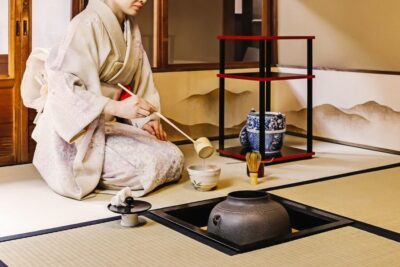
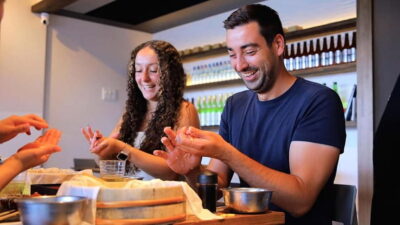
Roll and Authentic Sushi Making Class in Asakusa
Read our review →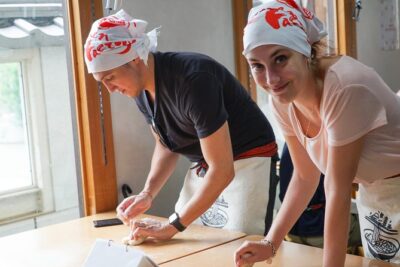
Ramen Cooking Class at Ramen Factory in Kyoto
Read our review →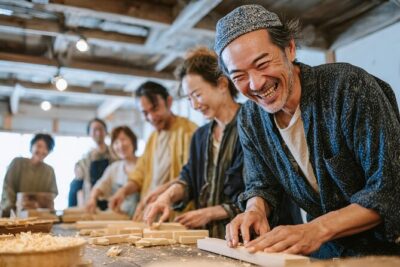
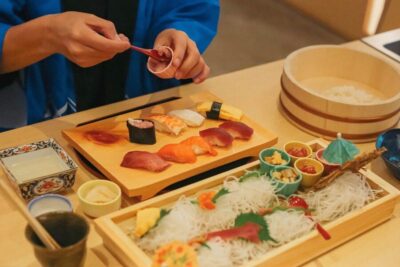
Sushi Making Class in a Happi Coat near a Famous Spot
Read our review →
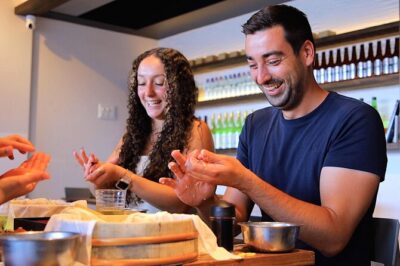
Sushi Making Osaka Roll and Authentic Japanese Sushi Class
Read our review →Browse the lists this tour appears in