
Reviewed · WORKSHOPS
Calligraphy & Digital Art Workshop in Kyoto
Brush ink and iPad art in one class. It’s a Kyoto workshop that teaches both traditional calligraphy (or suibokuga) and iPad etegami picture letters, with friendly guidance and a short tea break. If you want something more hands-on than museum hopping, this hits the spot.
I really like the way the session is paced. You get real brush-stroke feedback in the first half, then you switch gears to digital calligraphy on an iPad and make something postcard-style by the end. The other big win is the teaching style, led by Ami and her team at Studio Aya, with a warm studio feel and included tea and snacks.
One thing to consider: this is only about 1.5 hours total, including break, so it’s best seen as a satisfying first taste and not a long practice session. If you’re hoping for heavy, step-by-step mastery of one style, you might want to pair this with another class later.
Key highlights to notice before you go
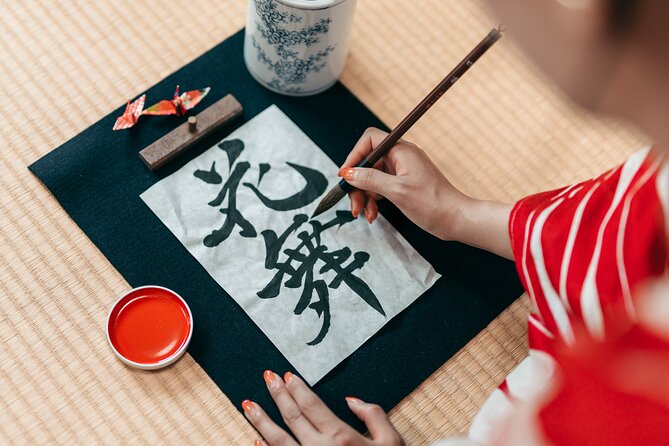
- Traditional brushwork plus a Zen mindset before you touch the iPad, so your strokes feel less random
- Etegami picture letters on an iPad, mixing Japanese character art with a postcard idea
- Tea and snacks included, with a real break built in so your hands can reset
- Ami’s teaching background and Studio Aya’s setup, shaped by digital art education and creative classes
- Private group format, so you are not stuck waiting your turn as a crowd
Why Kyoto’s Studio Aya mixes brush ink and iPad art
Kyoto is great at slowing you down. This workshop does the same, but in an interesting way. You start with ink and brush skills tied to traditional calligraphy and suibokuga, then you move into a modern format that uses an iPad to create picture letters called etegami.
That combo matters because it shows you two views of the same idea. Traditional calligraphy is about control, pressure, and timing. Digital art is about editing, experimenting, and building a look you can iterate fast. Doing both in one sitting helps you see that Japanese character art is not frozen in the past. It can live on paper and on screens.
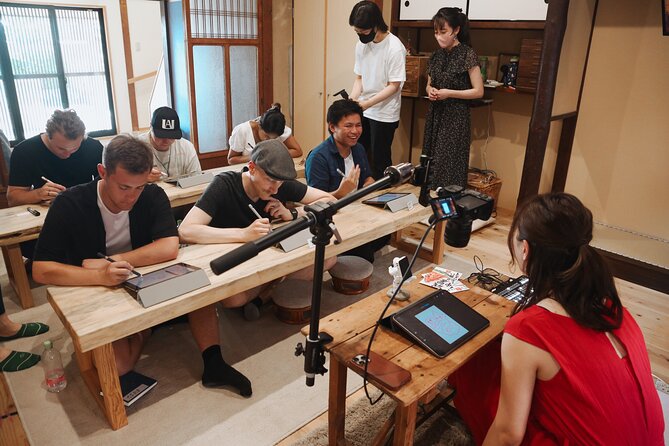
The studio setup also feels practical. You’re not walking around Kyoto looking for materials or worrying if you’re doing it “right.” The iPad is provided, and you get snacks and tea, so you can focus on the art instead of logistics.
A few more Kyoto days worth comparing
- PERFECT KYOTO 1-Day Bus Tour
★ 5.0 · 13,518 reviews - Kyoto: Fushimi Inari, Kinkakuji, Bamboo Grove 1 Day Bus Tour
★ 4.8 · 4,316 reviews - Kyoto: Tea Ceremony in a Traditional Tea House in Kiyomizu
★ 4.9 · 3,519 reviews
Getting to the workshop and what arrival feels like
The meeting point is at iPadmate kids, 47 Daikokuyachō, Kamigyo Ward, Kyoto, with a 3:00 pm start. You’ll use a mobile ticket, and the activity ends back where you started.
I like that it is a private activity. Only your group participates, so the pace tends to be calmer, and the instructors can help you faster if you get stuck. It is also near public transportation, which matters in Kyoto where getting around is easy when you stay close to transit lines.
When you arrive, you’re basically stepping into a studio lesson, not a performance. Expect a structured flow: a greeting and intro at the start, then the class splits into traditional instruction, a break, and a digital session. The schedule is roughly 30 minutes, then 15 minutes break, then 30 minutes digital time, then a 15-minute Q&A.
That timing is useful for planning the rest of your day. Because you’re done and back at the meeting point, you can line up dinner nearby without a complicated commute.
The first half: suibokuga or traditional calligraphy and why the strokes matter
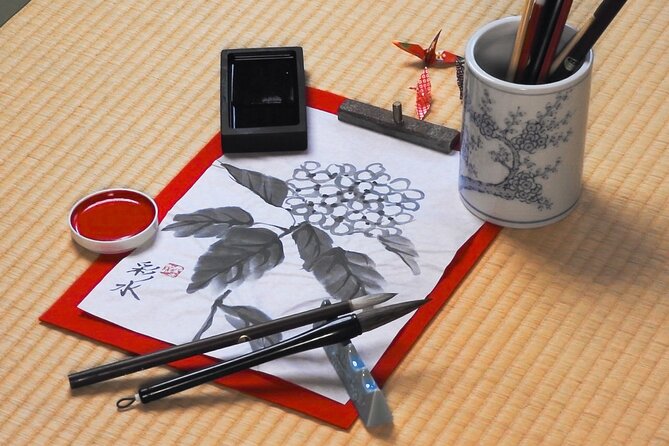
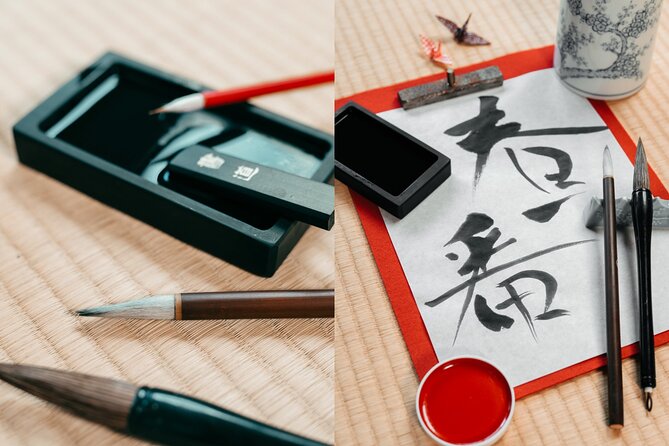
The opening portion is about fundamentals, and you choose between traditional calligraphy or suibokuga (Japanese ink painting) as part of the first segment. You’ll get greetings and an introduction, then instruction aimed at your brushwork.
Here is what I think makes this first half valuable, even if you have zero experience. You’re guided on how to handle the brush so your strokes stop looking like shaky practice marks and start looking intentional. The goal is not artistic perfection. It is control and rhythm.
The class also emphasizes a Zen approach to calligraphy. In plain terms, that means less rushing and more focus on the moment of the stroke. If you’ve ever tried to copy characters while thinking about everything else you have to do, you already know how easily that breaks the flow. This structure gives you a chance to slow down and actually feel what your hand is doing.
One review-style detail I found especially reassuring: the instructors help you improve brush-stroke work and explain the Zen approach. That combination is exactly what you need at the start. You get correction, not just encouragement.
If you are traveling with kids, this first half is also a great cultural entry point. Writing Kanji characters on paper is tangible. You can see the process immediately, and it doesn’t require any tech skills.
The tea break: included snacks and a chance to reset
After the traditional section, the workshop takes a break for free Japanese tea and snacks. This isn’t just a token pause. It matters because switching from paper brushwork to iPad drawing is a new kind of hand work.
I like breaks like this in short workshops. Your fingers warm up on the brush, then you have a moment to breathe and regroup before you start tapping and drawing on a screen. It also helps you enjoy the atmosphere. The studio is described as ambient, so the pause feels like part of the experience rather than a rushed stop.
Practically, it’s a good time to ask quick questions before the iPad portion begins. If you’re unsure about how etegami picture letters work digitally, you can use the break to clarify what to aim for.
Same corner of Japan, a different kind of day:
- Kyoto Geisha Walking Tour: Gion District & Hidden Gems
★ 4.7 · 3,273 reviews - Kyoto: Tea Ceremony Ju-An at Jotokuji Temple
★ 4.9 · 3,207 reviews - Kyoto: Gion Magical Night Walking Tour with Geisha Trivia
★ 4.9 · 2,393 reviews - Kyoto: 45-Minute Tea Ceremony Lesson Experience
★ 4.3 · 2,378 reviews
The iPad session: making etegami picture letters in a modern format
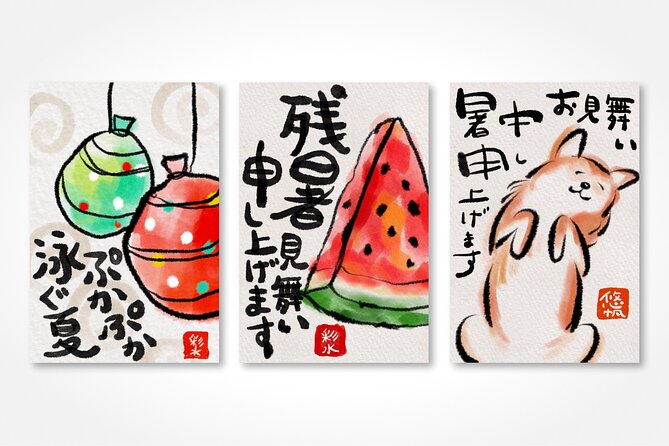
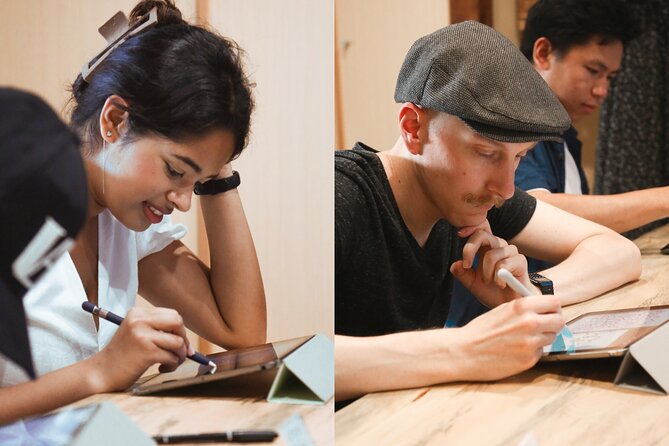
Then comes the fun pivot. You move into the digital art portion on the iPad for about 30 minutes. This segment focuses on creating etegami, Japanese picture letters, using digital calligraphy and picture-letter style composition.
I like that the iPad is included. You don’t have to bring devices, adapters, or worry about battery life. You also avoid the common travel problem of trying to practice tech skills on a device you don’t know.
How the instruction likely feels, based on the structure and what you’re taught: you’ll use guidance to create the character or calligraphy element first, then build the picture-letter vibe around it. The point is to make something you can recognize as Japanese picture-letter art, not just typed characters.
Etegami is a clever creative target for a workshop. It nudges you toward combining handwriting-like shapes with a postcard-style layout. Even with a short session, that gives your final result a sense of purpose.
A big plus here is that the class bridges traditional and digital without making you “choose a side.” Your eyes learn from the brushwork, then your hand learns the iPad tools. If you struggle with one medium, the other can help you succeed anyway.
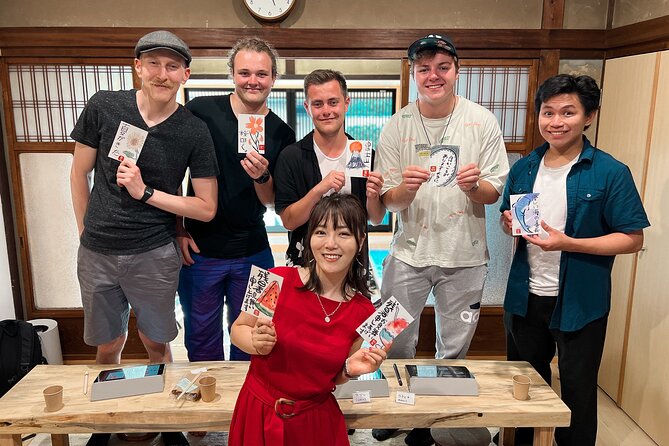
In one experience described, the participants learned how to write characters both on paper and iPad, then created their own postcard via etegami. That’s the kind of progression that makes short workshops feel complete.
Q&A time: how to get unstuck before you leave
The final segment is about Q&A, around 15 minutes. This matters more than you might think. In many classes, once you get going, questions pile up, and then the session ends. Here, the time is built in.
Use this moment to ask practical questions like how to adjust your strokes, what the instructor wants you to focus on for the etegami composition, or what to try next time if you want to keep practicing.
If you’re traveling as a couple or with friends, Q&A can also help you compare approaches without feeling awkward. Private group lessons are great for that. You can ask questions while still keeping your own pace.
At the end, your workshop ends back at the meeting point. That means you can wrap up and move into Kyoto time right away, without planning extra transport for a separate location.
Price and value check: $72 for two styles and included materials
At $72, this is priced like a focused hands-on class, not like a full-day art retreat. The value comes from what you actually get in that 1.5-hour window.
Here’s what you are paying for:
- Guided instruction from Ami and her team, with both traditional and digital instruction
- An iPad provided, so you are not paying for equipment or dealing with device setup
- Tea and snacks, which makes the break feel real
- A full arc, from greeting and intro to traditional practice, then digital etegami creation, then Q&A
For comparison in your head, think about how many separate things you would need for a DIY version in Kyoto. You would likely need supplies, someone to correct your strokes, and a clean setup for the digital portion. This workshop bundles those needs into a tight schedule.
Also, because it is a private activity for your group, the per-person value often feels better than a very large class format. You are not competing with strangers for help.
So the best way to judge the price is simple: if you want both the cultural feel of ink writing and the modern twist of iPad picture letters, you are getting two learning experiences in one appointment.
Who this workshop suits best, and who might want something else
This workshop is a great fit if you want a hands-on Kyoto experience that is not physically exhausting and does not depend on language skill. The class is structured to help most travelers participate, and it includes everything you need like the iPad, tea, and snacks.
It also suits:
- Families who want a Japanese culture activity that kids can enjoy
- Couples who want a shared creative project
- Solo travelers who prefer something guided instead of open-ended museum wandering
- Anyone curious about the difference between brush-based calligraphy and digital calligraphy
One note for adults who are extremely art-technical or want serious depth. The session is only about 1 hour 30 minutes including break, with about 30 minutes each for the traditional and digital parts. You’ll leave with a taste and a finished result, but you won’t leave with years of repetition.
If you already know calligraphy and want a deep technical critique, you might find a longer class more satisfying. If, however, you want a memorable Kyoto workshop that gives you a real skill and a digital keepsake concept, you’ll probably love it.
About Ami and the Studio Aya approach
Ami is the creator behind the Studio Aya setup and teaching direction. She studied digital art in the UK and runs a YouTube channel called amity_sensei, with a large subscriber base. She also founded Japan’s first creative school called iPadmate kids in 2020, focusing on helping children unlock creativity through iPad-based learning.
That background helps explain the tone of the workshop. It is not only about making an artwork. It is about teaching you how to think creatively, then guiding you step-by-step through the tools.
Studio Aya is run by professional artists and creators, and the atmosphere is designed to be welcoming for both adults and kids. Based on the overall flow and the emphasis on friendly help, you’re not going to feel lost as soon as you walk in.
Should you book this Kyoto calligraphy and iPad etegami workshop?
Book it if you want a Kyoto activity that blends traditional Japanese calligraphy with modern iPad creativity in one clear lesson. You’ll get guided brushwork, a tea break, then an iPad session making etegami picture letters, plus time to ask questions before you go.
Skip it or consider something longer if you are hunting for a long, intensive art training session. This is designed for a short, satisfying experience, not for deep, repeated practice.
If your schedule allows a 3:00 pm slot, this is the kind of activity that balances well with a Kyoto day. You get culture, a skill you can carry forward, and a fun creative result without spending the rest of the evening chasing down supplies or translations.
FAQ
How long is the calligraphy and digital art workshop in Kyoto?
It lasts about 1 hour 30 minutes, including the break.
What does the workshop include?
The workshop includes an iPad and Japanese snacks and tea.
What happens during the class timeline?
You’ll do a greeting and traditional calligraphy or suibokuga segment, then a break with tea and snacks. After that, you’ll have a digital art session on the iPad, then a Q&A.
Where does the workshop start?
It starts at iPadmate kids, 47 Daikokuyachō, Kamigyo Ward, Kyoto, 602-8055, Japan.
What time does the workshop start?
The start time is listed as 3:00 pm.
Is this activity private?
Yes. It is a private tour or activity, so only your group participates.
Do I need to bring an iPad or supplies?
No. An iPad is included.
Can I cancel for a full refund?
Yes, you can cancel for a full refund up to 24 hours before the experience’s start time.
Is the workshop near public transportation?
Yes, it is near public transportation. Service animals are also allowed.
Fresh options around Kyoto
- Kyoto Aquarium Admission Ticket★ 4.7 · 12 reviews
- Kyoto Gion Photoshoot – Private Session | Pro Photographer★ 5.0 · 12 reviews
- Gyoza Cooking Class in Kyoto: Traditional Japanese Dumplings★ 5.0 · 12 reviews
- Kyoto: Guided Food Tour with 12 Dishes & 3 Drinks★ 5.0 · 12 reviews
- Kyoto: Avoid the Crowds at the Hidden Gems of Arashiyama★ 4.9 · 13 reviews
- Kyoto Early Bird English Tour: Gion & Higashiyama(Private opt)★ 5.0 · 13 reviews
- Otsu-e Folk Art Workshop & Local Culture Walk Near Kyoto★ 5.0 · 13 reviews
- Kyoto, Osaka, Nara Full Day tour by Car English speaking Driver★ 3.5 · 13 reviews
Workshops, compared.
Sushi Making Tokyo Roll and Authentic Japanese Sushi Class
Read our review →
Roll and Authentic Sushi Making Class in Asakusa
Read our review →
Ramen Cooking Class at Ramen Factory in Kyoto
Read our review →
Sushi Making Class in a Happi Coat near a Famous Spot
Read our review →
Sushi Making Osaka Roll and Authentic Japanese Sushi Class
Read our review →Browse the lists this tour appears in