
Reviewed · WORKSHOPS
Little EDO Sushi Making workshop in Kawagoe
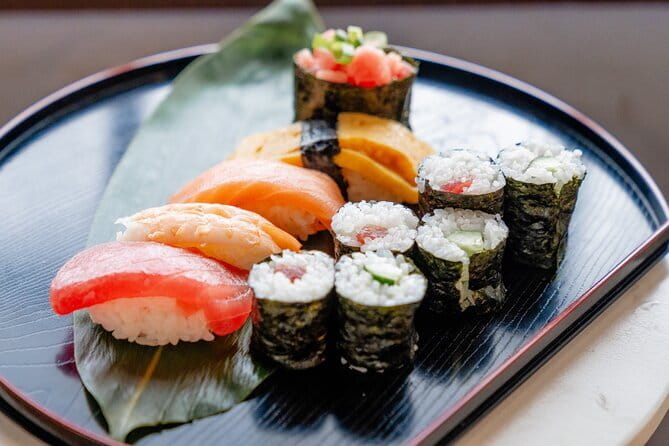
Sushi starts with your own hands. I love the hands-on format where you shape nigiri and roll maki, and I love the setting in a 140-year-old rice merchant building. The only catch is the venue has stairs, so plan ahead if you need to avoid them.
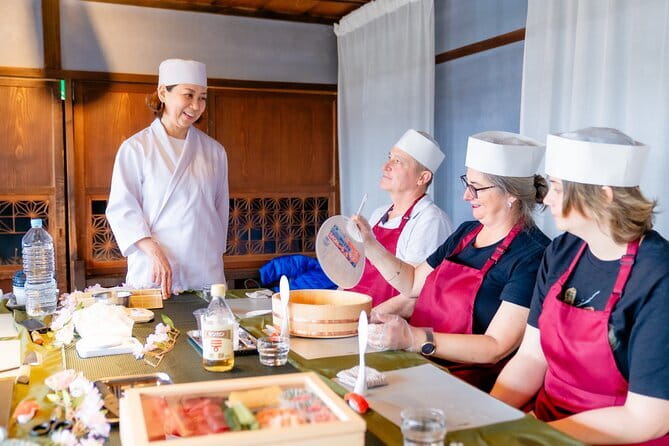
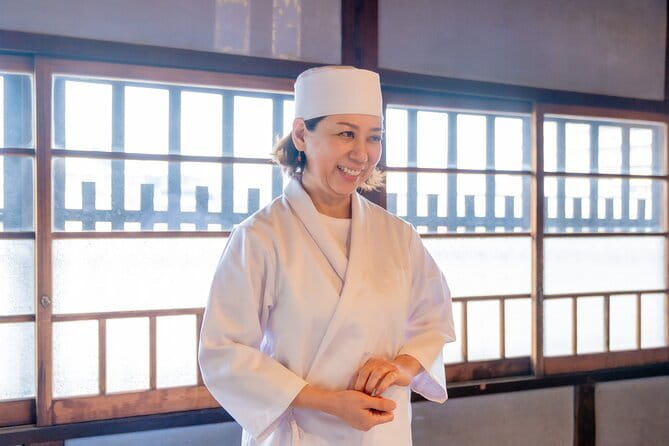
An English-speaking Japanese female sushi chef guides you through rice technique and classic sushi history inside old staircase cabinets and ceiling beams, then you eat what you make. The session runs about 1.5 hours and stays small, up to six people.
Key highlights you should know
- 140-year-old rice merchant building: you learn in a space that feels like old Kawagoe history.
- Nigiri and maki in one class: two classic styles, made by you, not just watched.
- English-speaking Japanese chef: clear instruction, plus lots of chances to copy hand movements.
- Sushi rice skill you can repeat at home: the focus is technique, not mystery.
- Dietary options with advance notice: vegetarian, vegan, gluten-free, and halal can be accommodated when requested.
Entering The Old Rice Merchant Building in Kawagoe
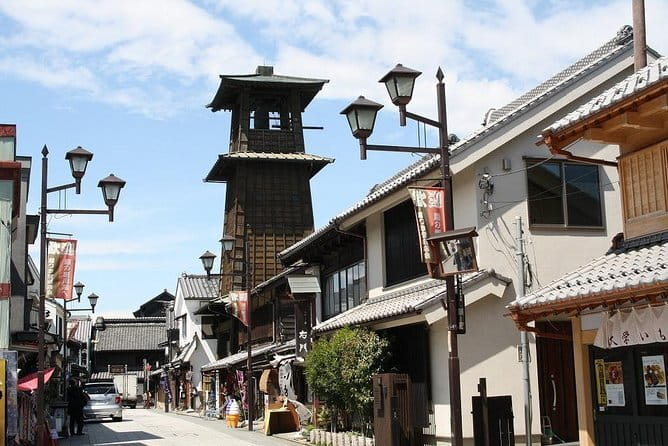
Kawagoe has that slow, historic feel, and this workshop puts you right inside it. You meet at 結家 -MUSUBIYA-Japan, a venue in a historic 140-year-old building that used to be a rice wholesale shop. Once you step in, you can see why the place makes such an impression, with staircase cabinets and impressive ceiling beams that take you back decades.
The location also helps. The workshop is about a 3-minute walk from KASHIYA YOKOCHO, so you can fold it into an easy old-town wander. If you like experiencing the real atmosphere of a neighborhood, this kind of class is more than a cooking activity. It is part of the place.
One practical note: there are stairs to access the venue. If stairs are a problem for you, let the organizers know in advance so they can make alternative arrangements.
More Sushi Making Classes in Tokyo
- Sushi Making Tokyo Roll and Authentic Japanese Sushi Class
★ 5.0 · 3,971 reviews - Tokyo: Roll and Authentic Sushi Making Class in Asakusa
★ 4.9 · 1,957 reviews - Make Sushi and Create Unforgettable Memories in Tokyo
★ 5.0 · 1,413 reviews
What Actually Happens in the 1.5-Hour Sushi Session
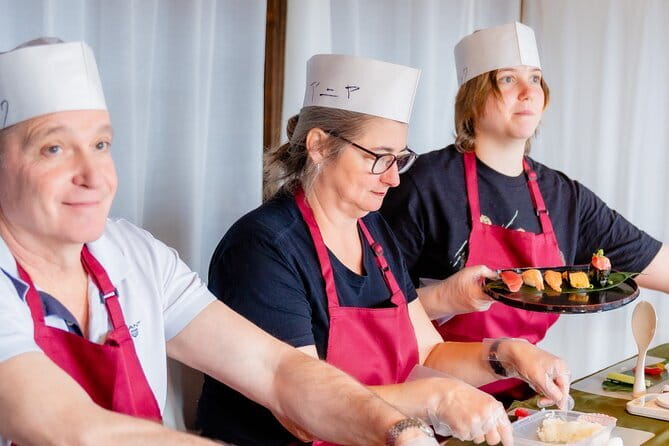
This isn’t a sit-and-watch show. It is built around doing, with a tight 1 hour 30 minutes pace (about). You’ll start with the chef setting expectations and giving you the basics for sushi-making, including cultural context. Then it is straight into shaping and assembling.
The group size stays small, up to six people. That matters because it gives you time to ask questions and get feedback on your technique. If you have ever tried to learn by copying a video, you know the frustration. Here, you can adjust while the chef is right there.
The two big projects are:
- Nigiri sushi (hand-formed pieces)
- Maki sushi (rolled sushi with fillings)
When the hands-on portion wraps up, you eat what you made. Ingredients and the meal are included, so you do not need to track down a separate lunch plan.
Learning Sushi Rice, the Skill Behind Everything
Sushi rice is the make-or-break part, and this workshop treats it that way. You learn how to make perfect sushi rice in a way you can recreate at home later. That is a big deal because most people have heard about sushi rice, but they do not realize how much technique matters in the seasoning, texture, and timing.
The chef also focuses on the hand movements you will need as you form sushi. You get guided practice so you can mimic the motions correctly, not just copy an outcome. That is where a good lesson beats a cookbook. You learn what to watch for while you are doing it.
Even if you only want one dish for your next dinner party, learning rice properly gives you more flexibility than it sounds. Once you know the rice, you can adapt to different toppings and fillings with less guesswork.
Nigiri Sushi: Forming Hand-Made Pieces Like a Pro

Nigiri is the traditional style, and the class teaches you exactly how to do it. You will shape your sushi by hand, creating the basic mound and then adding the topping. The workshop highlights the idea of Japanese chef technique, meaning you are copying the chef’s movements and rhythm, not guessing your way through.
This part is also where you see the value of small-group instruction. If your rice is too loose or your shape is uneven, that is normal when you are learning. In a larger class, that usually means you struggle silently. In a group of up to six, you get more attention.
One of the most praised parts of the experience is learning nigiri plus the related skills around prepping topping elements. In particular, people talk about learning how to cut neta and how to approach it with the right care. Even if you are vegetarian, you still benefit from that precision mindset, because sushi is as much about consistent handling as it is about flavor.
Same corner of Japan, a different kind of day:
- Mt Fuji and Hakone 1-Day Bus Tour Return by Bullet Train
★ 5.0 · 26,383 reviews - 1-Day Tokyo Bus Tour
★ 5.0 · 14,250 reviews - Tokyo: TOKYO SKYTREE® Admission ticket
★ 4.5 · 11,192 reviews - Tokyo: teamLab Planets TOKYO Digital Art Museum Entry Ticket
★ 4.6 · 9,779 reviews
Maki Sushi Rolls: Rolling Neat, Not Just Tasty

Then you move on to maki, the rolled sushi that many people recognize instantly. You learn the steps for building a roll and shaping it so it holds together. The description calls out various fillings, and the workshop can adapt to vegetarian and other requested menus.
Roll sushi is where you learn practical control. It is easy to make a filling pile, hard to make it into a clean roll you can slice neatly. The chef helps you with the process, and you get to repeat it during the class instead of just hearing advice.
If you have ever eaten a great roll and thought it looked deceptively simple, this is the reality check. The technique matters. Once you make a few rolls yourself, you understand why chefs take time with each step.
The Cultural Layers: Why Nigiri Matters, and What This Building Adds
This workshop does not treat sushi like a generic dish. It gives you cultural context while you cook. One standout detail is the mention that nigiri sushi was created in Japan about 300 years ago. That timeline helps you see sushi as something with a lineage, not a modern trend.
You also learn in a venue that reinforces the story. The building’s past as a rice wholesale shop adds meaning to rice itself. You are not just making rice because it is needed. You are making rice in a place built around rice commerce. That connection makes the lesson feel tighter, and it is one of the reasons the setting earns high marks.
Add in the visual cues once you arrive, like the old beams and staircase cabinets, and the history stops being background noise. It becomes part of the experience you are physically in.
Eating Your Own Sushi, With Dietary Options That Are Actually Planned
You get to savor your creations at the end, and that is a key part of the value. Cooking lessons can turn into nonstop production with no satisfying payoff. Here, ingredients and the meal are included, so you get a clear moment where the work turns into lunch or an early dinner.
Dietary options are a real part of the plan. The workshop can accommodate:
- Vegan and vegetarian
- Gluten-free
- Halal
They also handle allergies when you request them in advance, with exclusions listed as meat, nuts, fruits, and dairy.
The important practical point is timing. Menu changes must be requested when booking. Changes on the day of the class are not accommodated. If you have a specific dietary need, treat the booking step like part of your preparation, not an afterthought.
Also, if you avoid stairs, tell them in advance. That is the venue’s main accessibility friction point, not the food or cooking format.
Price and Value: What $84.08 Buys You Here
At $84.08 per person, this workshop is not a budget impulse buy. But it can be good value depending on what you want out of your trip. You are paying for:
- A small-group, hands-on lesson (max six)
- An English-speaking Japanese female sushi chef guiding you directly
- Ingredients plus the meal included
- Practice across two sushi types, not just one basic roll
If your goal is to get a fun memory and a quick snack, there are cheaper options. If your goal is to take home a real skill, the structure helps. Learning sushi rice and practicing nigiri and maki means you are leaving with something useful, not only photos.
The fact that classes average being booked 19 days in advance suggests demand is steady. If you are traveling around weekends or popular sightseeing windows, I would plan ahead rather than assume you can wait.
Timing, Location, and How to Plan Your Arrival
The class is about 1 hour 30 minutes, and it uses a mobile ticket. The published opening hours list Monday sessions at 12:00 PM to 1:30 PM and 3:00 PM to 4:30 PM. Other days may exist, but the only specific schedule provided here is Monday, so check your booking details for your exact time slot.
Because you meet at 結家 -MUSUBIYA-Japan, I suggest arriving with a little buffer. You want time to get your bearings, especially since there are stairs to reach the venue. If you are combining the class with KASHIYA YOKOCHO, it is close enough that you can keep your plan relaxed.
Beverages are not included. That means you should either plan to buy something after, or bring water if it is easy for you to do so. You will be eating what you made, so hydration is still worth thinking about.
Who This Sushi Workshop Is Best For
This workshop fits best if you like hands-on learning and you want a skill you can repeat. It is especially good for:
- Food travelers who want technique, not just tasting
- People who enjoy old-town settings and want history with their meal
- Small groups who like a more personal class size
It also works well for vegetarians and other dietary needs, because the workshop has a structured way to accommodate multiple diets when you request in advance.
If you hate stairs or have mobility limitations, you can still go, but you must communicate your needs before the day. Since stairs are part of the access, that planning matters.
Should You Book This Workshop?
I think you should book it if you want a practical, guided way to learn sushi-making in an atmospheric historic building. The small group size, the focus on sushi rice, and the chance to form nigiri and maki yourself are the core reasons this works. You get both the fun of cooking and the payoff of eating what you made.
It might not be the right fit if you want a low-cost experience or you cannot handle stairs without advance arrangements. Also, if you need a last-minute dietary accommodation, plan ahead because day-of changes are not supported.
If those points are fine for your trip, this is one of those experiences that turns travel into something you carry home, especially because sushi rice is a repeatable skill.
FAQ
Where is the workshop meeting point?
You meet at 結家 -MUSUBIYA-Japan, 350-0824 Saitama, Kawagoe, Ishiwaramachi, 1-chōme67.
How long is the sushi making class?
The duration is about 1 hour 30 minutes.
What sushi types will you make?
You will make two classic types: nigiri sushi (hand-formed) and maki sushi (roll sushi with fillings).
How big is the class?
The workshop has a maximum of 6 travelers.
Is the meal included?
Yes. Ingredients for the class and the meal are included, but beverages are not.
What dietary options are available?
You can request vegan, vegetarian, gluten-free, halal, and allergy accommodations when booking. Allergies are accepted with exclusions listed as meat, nuts, fruits, and dairy.
Are there stairs to get to the venue?
Yes, there are stairs. If you prefer to avoid stairs, you should let the organizers know in advance for alternative arrangements.
Can you cancel and get a full refund?
Yes, free cancellation is available. You can cancel up to 24 hours in advance for a full refund, and cancellations within 24 hours are not refunded.
Fresh options around Tokyo
- Tokyo: Nikko Kegon Falls Lake Chuzenji Toshogu Temple & More★ 4.9 · 12 reviews
- Tokyo: Samurai History Walking Tour★ 5.0 · 12 reviews
- Harajuku: Kawaii Fashion and Pop-Culture Tour★ 4.7 · 12 reviews
- Tokyo: Mt. Fuji & Lake Kawaguchi Instagram Full Day Trip★ 4.1 · 12 reviews
- Shibuya Tokyo: Modern Kintsugi Workshop in Shibuya★ 5.0 · 12 reviews
- Tokyo: GTR Guided Daikoku Experience at Night★ 5.0 · 12 reviews
- Tokyo: Daikoku JDM Car Culture Tour★ 4.6 · 12 reviews
- Mt Fuji Private Day Trip from Tokyo with English speaking driver★ 5.0 · 13 reviews
Workshops, compared.
Sushi Making Tokyo Roll and Authentic Japanese Sushi Class
Read our review →
Roll and Authentic Sushi Making Class in Asakusa
Read our review →
Ramen Cooking Class at Ramen Factory in Kyoto
Read our review →
Sushi Making Class in a Happi Coat near a Famous Spot
Read our review →
Sushi Making Osaka Roll and Authentic Japanese Sushi Class
Read our review →Browse the lists this tour appears in