
Reviewed · HISTORICAL TOURS
Walking Through History: Hiroshima’s Path to Peace
Some cities hit you fast, then linger. Hiroshima does both, and this walk explains why. You’ll move through major memorials in a small group with an expert guide who connects each site to the bigger story of destruction, survival, and the push for a nuclear-free world.
What I like most is how the tour gives you clear context at each stop, not just facts on a sign. The second big win is the practical flow: the Peace Memorial Museum entrance ticket is handled in advance so you can skip the long line, then you explore the museum on your own. One thing to plan for is emotional weight. This is a “quiet and careful” kind of tour, and even with a good pace, it can feel intense.
Key Points I’d Budget Your Time For
- Small group size (max 8) helps you keep up and ask questions without getting rushed.
- A PhD scholar-led experience means you’ll get thoughtful, well-grounded explanations, not surface commentary.
- Major Peace Park stops in about 2 hours makes it a smart use of a half day in Hiroshima.
- Museum ticket is arranged ahead of time so you can bypass the line and spend your energy reading and reflecting.
- Free admission at multiple monuments keeps the experience focused on meaning, not add-on fees.
- Pace is adjusted for real bodies, with shade breaks and a slower rhythm if needed.
Hiroshima Peace Park, Explained at Human Speed
Hiroshima is not the kind of place you “speed through.” It rewards attention. This walking tour is designed for that exact need, with a route that takes you from the iconic remains of the atomic bombing to the Peace Memorial Museum and the surrounding memorial complex, all within a tight, manageable 2-hour window.
I also like the tone this kind of tour tends to use. It keeps things respectful and grounded, with room for silence as much as discussion. And because the group is limited to up to 8 people, the guide can steer the pace based on the day, the weather, and who’s in front of them.
More Walking Tours in Hiroshima
- Hiroshima Historical Walking Tour – Why A-Bomb was Dropped
★ 4.8 · 893 reviews - Hiroshima Peace (Heiwa) Walking Tour at World Heritage Sites
★ 5.0 · 872 reviews - Hiroshima City 4hr Private Walking Tour with Licensed Guide
★ 5.0 · 437 reviews
Price That Actually Matches What You Get
At $31.63 per person, this is a reasonable price for Hiroshima. The key is that you’re not paying for “just a walk.” You’re paying for expert guidance plus logistical help that saves time, especially at the museum.
A lot of the stops involve free admission, so your money goes to the thinking behind the route. The museum entrance ticket is included, with the tour organizer purchasing it in advance so you can skip the long line. In a city where time can disappear fast, that matters.
Where You Start and How the Walk Fits Your Day
The tour starts at 1-chōme-10-1 Ōtemachi, Naka Ward and ends at the Gates of Peace in Nakajimachō. That end point is convenient, because you’ll finish right in the Peace Memorial Park area, close to where most people want to linger afterward.
The walk itself is described as easy and fairly flat, which helps if you’re trying to see a lot in one day. Still, it’s a full memorial loop, so wear comfortable shoes and plan for crowds. Even when the route is simple, the emotional atmosphere can make every minute feel slower.
Stop 1: Atomic Bomb Dome, the First Image You Can’t Unsee
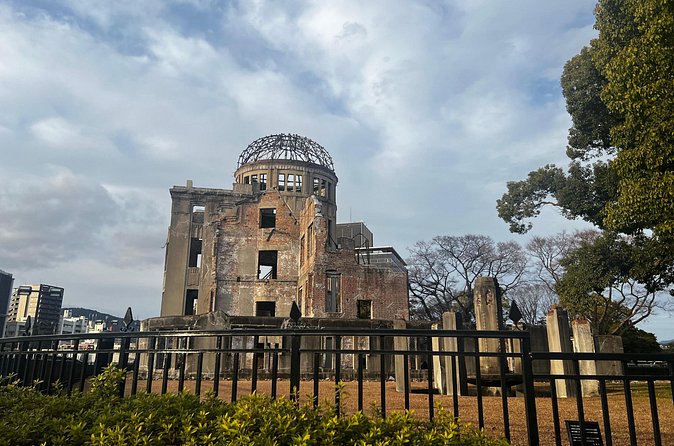
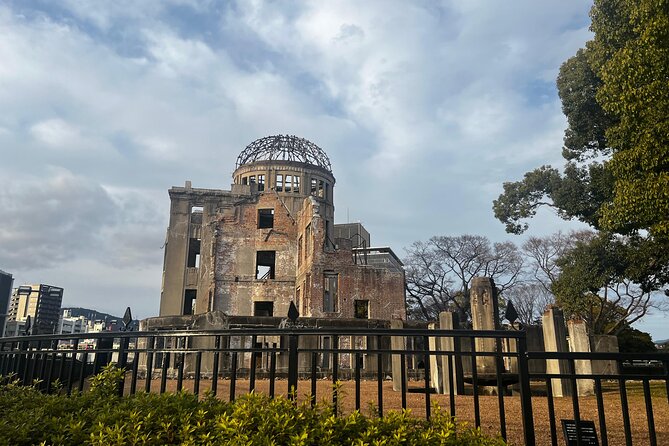
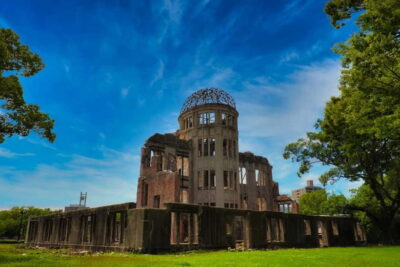
You begin at the Atomic Bomb Dome, a haunting UNESCO World Heritage site. Even if you’ve seen photos before, standing there is different. The structure feels like a sentence that got interrupted, and your guide helps you read what you’re looking at.
This is a powerful first stop because it sets the framework for everything that comes next. Instead of treating later memorials as separate attractions, the guide connects them back to the bombing, the aftermath, and the long road toward peace advocacy.
A practical tip here: take a moment before you move on. This is the moment where it’s best to slow your brain down. Let it land.
Same corner of Japan, a different kind of day:
- Peaceful Hiroshima & Miyajima UNESCO 1 Day Bus Tour
★ 5.0 · 5,309 reviews - Hiroshima: Hiroshima and Miyajima UNESCO Sites 1-Day Tour
★ 4.9 · 2,330 reviews - Hiroshima / Miyajima Full-day Private Tour with Government Licensed Guide
★ 5.0 · 1,298 reviews - Hiroshima in a Nutshell: Morning Bike Adventure
★ 5.0 · 524 reviews
Stop 2: Peace Bell, Sound as a Message
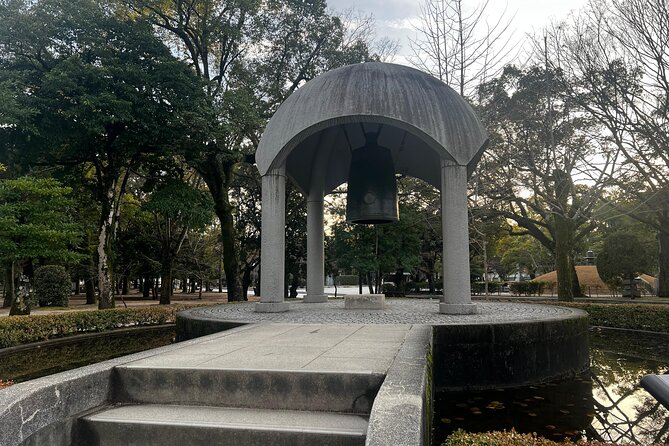
Next is the Peace Bell, with a simple idea behind it: harmony and a world without nuclear weapons. The bell’s deep sound is meant to feel like a shared reminder, not a private thought.
What I find useful about starting here is how it changes your mode. The Dome is visual, heavy, and fixed in time. The bell introduces something else, a kind of universal rhythm that turns the story toward the future.
If you’re the type who wants your facts first, you’ll still get them. If you’re the type who needs a feeling first, you’ll get that too.
Stop 3: Monument for Korean Victims and Survivors
Then you move to the Monument to Korean Victims and Survivors. This stop matters because it widens the circle of remembrance. It honors Korean victims of the atomic bombing, recognizing suffering and also the role these lives played in Hiroshima’s modern memory.
This is also where the tour’s approach shows its value. You’re not only learning about the event, you’re learning what different communities lost, and why that loss belongs in the shared historical record.
Stop 4: Children’s Peace Monument and Sadako Sasaki’s Paper Cranes
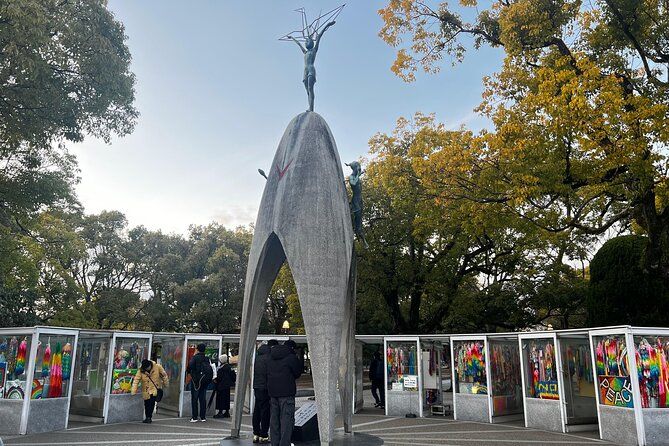
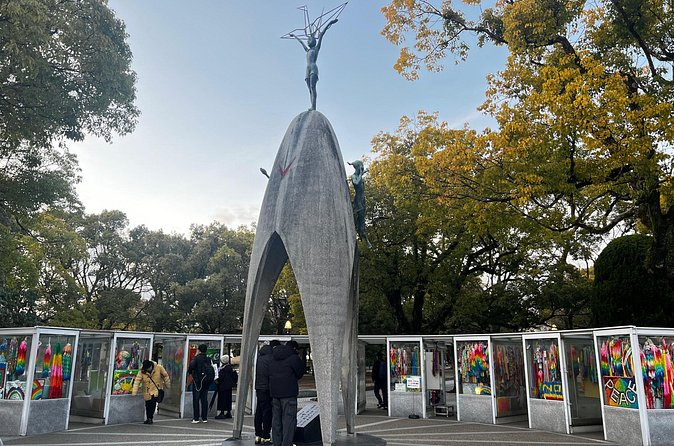
After that, you’ll reach the Children’s Peace Monument, dedicated to the children who lost their lives due to the atomic bombing. The inspiration ties to Sadako Sasaki, the girl whose story is connected with folding paper cranes as a hope for survival.
This stop is emotionally direct. It’s also educational in a different way, because it shows how grief can be shaped into action and symbolism. Even if you already know the crane story, the monument gives it a physical anchor.
If you’re visiting with kids, this is a stop where questions will naturally come. I’d expect the guide to handle that with care and clarity, because this is one of the most human parts of the route.
Stop 5: Peace Flame, Still Burning Since 1964
The Peace Flame is burning continuously since 1964, and it’s set up with a clear message: it remains lit until nuclear arms are abolished. That’s not a vague hope. It’s a measurable goal stated in flame form.
What I like here is that it turns the visit away from pure remembrance and into a “now” mindset. The fire is always on, even when you’re not thinking about it.
This stop is short, but it’s a good breather. You’ll often feel like your mind needs a reset after the children’s monument, and the flame helps with that shift.
Stop 6: Hiroshima National Peace Memorial Hall, Personal Stories
Next you enter the Hiroshima National Peace Memorial Hall for the Atomic Bomb Victims. This is where the visit turns from symbols to people, through personal stories, photographs, and survivor testimonies.
The hall’s design supports quiet reflection, and it’s the kind of place where you’ll want to read slowly. The tour experience also has a built-in rule: you’ll visit the museum area on your own, because tour guides are not allowed to speak inside. That might sound like a limitation, but it’s often a blessing. It gives the memorial the space it deserves.
Practical note: take your time here even if you feel tempted to skim. The value of this place is in the details, the lived reality, and the way the exhibits connect events to human lives.
Stop 7: Cenotaph for the Atomic Bomb Victims, Names and Rest
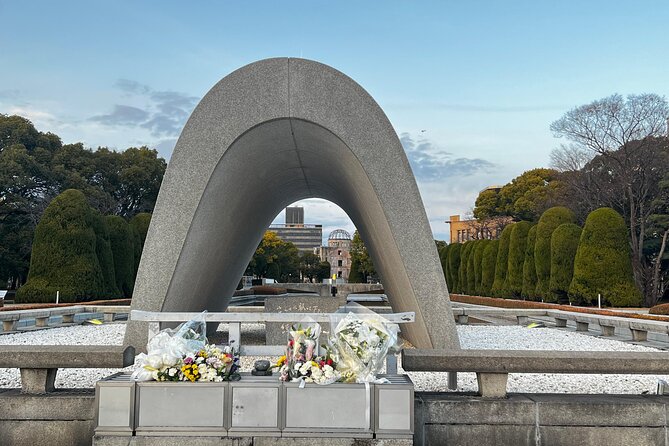
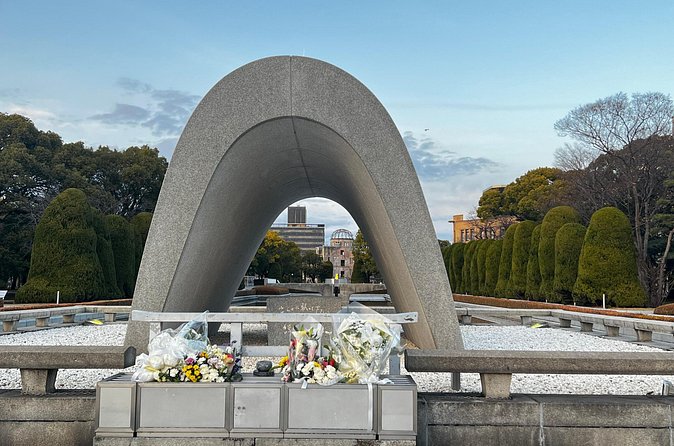
You’ll then stand before the Hiroshima Peace City Monument Cenotaph for the Atomic Bomb Victims. It’s an arched monument with an inscription about letting souls rest and refusing repetition of the evil. It also holds the names of all known victims.
This stop hits a different nerve than the earlier ones. The story shifts from what happened to whom, and the names create a sense of scale that is hard to absorb from a distance.
If you’re prone to rushing on tours, slow down here. The cenotaph is the kind of place where standing quietly feels like part of the experience, not a pause between attractions.
Stop 8: Peace Memorial Museum, Ticket Taken Care Of
The Hiroshima Peace Memorial Museum is included, with the ticket purchased in advance so you can skip the long line. That means you lose less time to queues and more time inside reading and absorbing.
Since the guide cannot speak inside the museum, you’ll explore independently. That’s important: go in with the mindset that you are responsible for your own pace. Pick a few sections that grab you, then let the rest fill in the gaps as you move.
If you’re short on time in Hiroshima, this is still a solid stop because the museum is the place where the story is explained in detail. It’s also where your earlier stops start to snap together into one full picture.
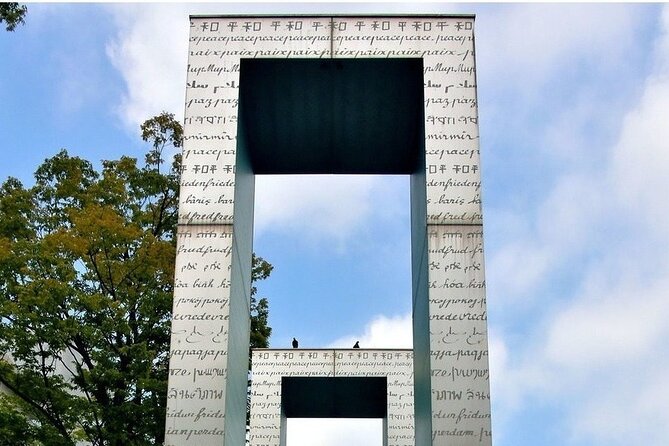
Stop 9: Gates of Peace, Ten Ways to Say Peace
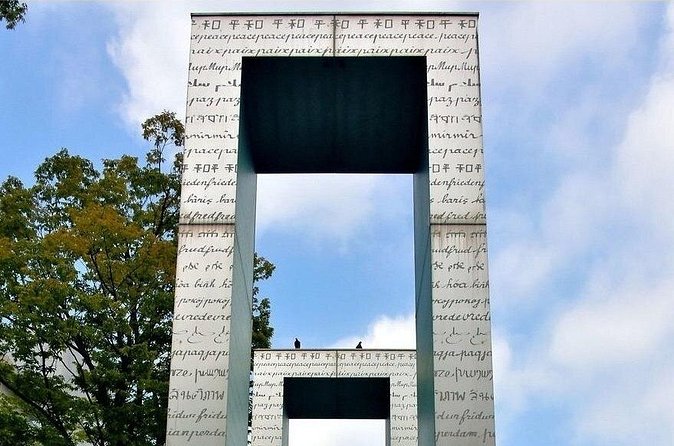
Finally, you’ll finish at the Gates of Peace. These are ten glass gates inscribed with the word peace in multiple languages, which turns the Hiroshima message outward to the world.
The route ends here for a reason. After the heavy material, you need a visual that points forward. These gates do that job. They’re also a handy “I’m done for now” marker, since you’ll exit at a place that feels like a natural boundary.
Take a few minutes at the end if you can. Let the final images settle, then decide what you want to do next in Hiroshima.
What Makes This Tour Feel Worth It: The Guide and the Pace
The biggest strength of this experience shows up in how guides handle the visit. In the feedback I saw, different guides were praised for being engaging, well organized, and thoughtful about pace. Names that came up include Ghani, Sheraz, Shiraz, and Sharain, and all of them were described as bringing history to life without losing the respectful tone these sites need.
A few practical things matter a lot during this kind of walking tour:
- Questions are encouraged, and the guides often keep the group involved with prompts.
- Pace is adjusted for people who need it, including slowing down for stairs or taking shade breaks on hot days.
- Time at each stop is intentional, so you don’t feel herded like cattle, but you also don’t waste time waiting for others.
If you care about getting accurate context while still keeping your own pace, this is the style you want.
Timing, Weather, and Comfort Tips That Actually Help
Two hours can sound short, but Hiroshima’s Peace Park can feel like a full day mentally. Plan for that by keeping your body comfortable.
I’d strongly recommend:
- Comfortable shoes (you’ll be walking the grounds for multiple stops).
- Water, especially in summer. One guide-style note from feedback: people praised thoughtful shade stops when it was hot.
- A slower visit at the museum. Because the guide won’t be speaking inside, your reading speed is what determines how meaningful it feels.
If you’re traveling with limited mobility, you’ll want to assess your comfort level with walking between points. Still, the easy flat walk description and the guide’s willingness to adjust for knee issues are good signs.
Who This Tour Best Suits
This experience is a good fit if you:
- Want a guided route through the Peace Memorial Park without having to figure everything out yourself.
- Appreciate a tour with expert context and a thoughtful pace.
- Are spending limited time in Hiroshima and want the essentials, with the museum included.
It may be less ideal if you prefer a fully self-paced itinerary where you control every minute. Because you’re following a planned route with scheduled stops, you’ll give up some spontaneity. Still, for many visitors, that structure is exactly what makes it easier to get value quickly.
Should You Book This Hiroshima Peace Park Walking Tour?
I’d book it if you want two things at once: meaningful guidance and smart time use. The biggest practical win is the pre-arranged museum ticket, which helps you avoid line delays. The biggest emotional win is the way the route walks you through remembrance in a logical order, from the Dome to the bells and monuments, then into the museum, ending at the Gates of Peace.
Skip it only if you strongly prefer a DIY approach and you already know exactly what you want to focus on inside the museum. If that’s you, you might save money and still have an okay visit. But if you want your experience to be organized, respectful, and easier to navigate, this is a strong choice.
FAQ
How long is the walking tour in Hiroshima?
The tour lasts about 2 hours.
How much does the tour cost?
The price is $31.63 per person.
Does the tour include the Peace Memorial Museum ticket?
Yes. The Peace Memorial Museum entrance ticket is included, and it’s purchased in advance so you can skip the long line. The guide cannot speak inside the museum, so you explore it on your own.
Is there an admission charge at the main memorial stops?
The tour states that tickets are free for many stops, including the Atomic Bomb Dome, Peace Bell, and several other monuments.
Where does the tour start and end?
It starts at 1-chōme-10-1 Ōtemachi, Naka Ward, Hiroshima, 730-0051, Japan, and ends at Gates of Peace, 4-15 Nakajimachō, Naka Ward, Hiroshima, 730-0811, Japan.
Is the group size limited?
Yes. The tour has a maximum of 8 travelers.
More Historical Tours in Hiroshima
- Miyajima Half-day Trip Historical Walking Tour
★ 5.0 · 284 reviews - Hiroshima: History of Hiroshima Group Walking Tour
★ 4.8 · 266 reviews - Hiroshima: Peace Walking Tour of World Heritage Sites
★ 4.9 · 190 reviews - Walking Through History: Hiroshima’s Path to Peace
★ 4.9 · 156 reviews
Fresh options around Hiroshima
- Hiroshima: Saijo Sake Tasting at 7 Breweries Guided Tour★ 4.8 · 29 reviews
- Private Full Day Hiroshima Tour★ 4.5 · 29 reviews
- Half Day Private Guided Walking Tour in Hiroshima City★ 5.0 · 30 reviews
- 1-Day Private Sightseeing Tour in Hiroshima and Miyajima Island★ 4.5 · 31 reviews
- The Peace Memorial to Miyajima : Icons of Peace and Beauty★ 4.5 · 31 reviews
- Best of Hiroshima Food Tour★ 5.0 · 32 reviews
- Private Japanese Cooking Class in Hiroshima with Machiko’s Family★ 5.0 · 35 reviews
- Hiroshima Kagura Performance Entry Ticket★ 5.0 · 36 reviews
Historical Tours, compared.
World Heritage Shirakawa-go and Experience Tours from Kanazawa
Read our review →
Imperial Palace and Shogun Historical Walking Tour
Read our review →
World Heritage Kyoto & Nara Uji Authentic Matcha Experience
Read our review →
Kyoto Gion: 2-Hour Geisha Culture & History Walking Tour
Read our review →
World Heritage Shirakawa-go Morning Guided Tour
Read our review →
Hiroshima Historical Walking Tour – Why A-Bomb was Dropped
Read our review →
Hiroshima Peace (Heiwa) Walking Tour at World Heritage Sites
Read our review →Browse the lists this tour appears in