
Reviewed · WORKSHOPS
Tokyo: Rice Ball Making Class
Tokyo moves fast, but this makes it slow. You start by shaping onigiri the classic way, then you bike to one of Tokyo’s peaceful garden pockets by the bay. It’s a fun mix of hands-on food skill and outdoor sightseeing.
I love two things most: the friendly expert guidance (English is handled well), and the payoff of eating your own warm rice balls in a garden setting. If you like tasting real local snacks and learning why they’re made the way they are, this hits the spot.
The main drawback is also the obvious one: you need to be comfortable on a bike for the ride after class. People with back problems, mobility impairments, wheelchair users, or anyone who can’t ride a bike are not suitable for this experience.
Key things to know before you book
- Small group size (up to 6) keeps the class personal and the cycling more relaxed
- You learn onigiri technique, not just how to copy a shape
- Hamarikyu Gardens picnic turns your food lesson into an outdoor break
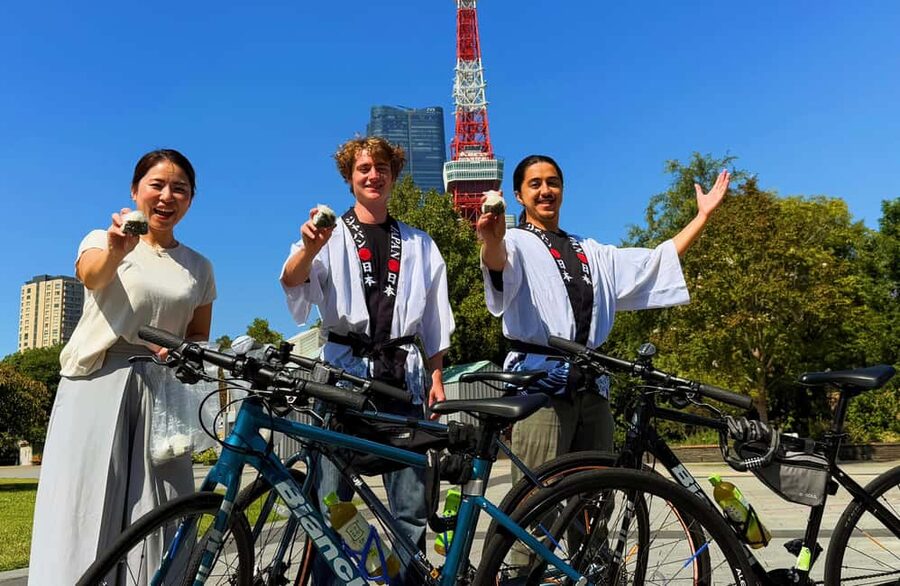
- Bike route includes famous sights, like Tokyo Tower and the Imperial Palace area
- English live guide helps you understand the why, not only the what
Rice ball class plus biking, in the right order
Tokyo onigiri is easy to buy and hard to get “right.” This experience flips that. Instead of grabbing a pre-made snack and moving on, you learn the craft first, then you eat your results in a calm garden, and only then you pedal through the city.
The timing matters. Starting with rice means your hands are busy before you’re distracted by traffic noise or big-city energy. And finishing with a bike ride gives you a way to see Tokyo at street level, not just from a train window. You’ll likely feel like you actually connected to the city, because you’re doing a Japanese daily-life skill and then using a bike to explore neighborhoods at a human pace.
A few more Tokyo days worth comparing
- Mt Fuji and Hakone 1-Day Bus Tour Return by Bullet Train
★ 5.0 · 26,383 reviews - 1-Day Tokyo Bus Tour
★ 5.0 · 14,250 reviews - Tokyo: TOKYO SKYTREE® Admission ticket
★ 4.5 · 11,192 reviews
The onigiri class: rice, seasoning, and classic fillings
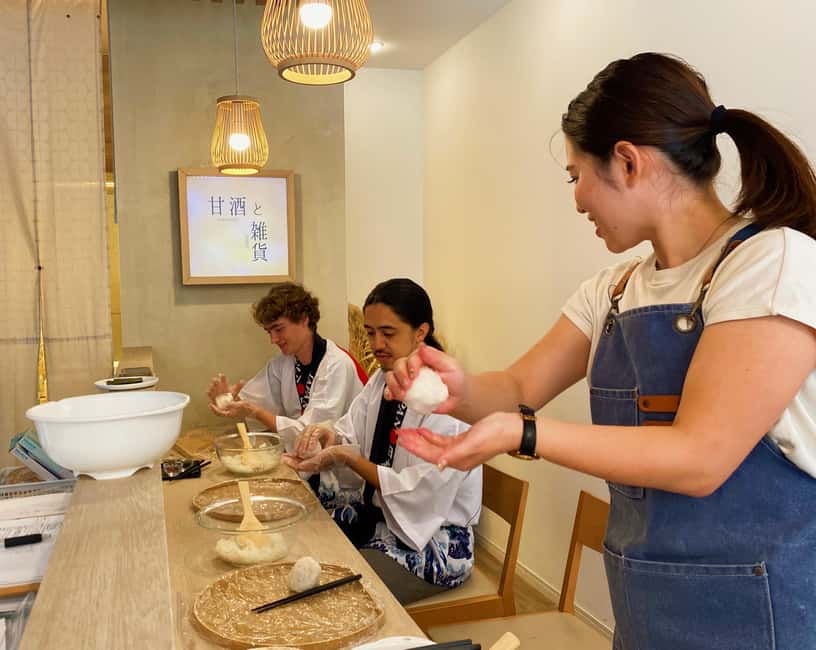
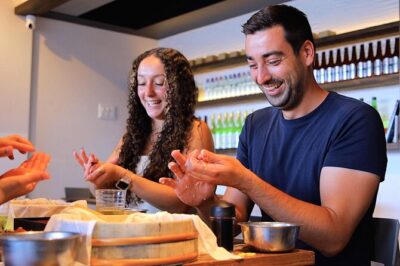
The class is built around making onigiri the traditional snack way. You’ll work with freshly steamed rice, then season and shape it into rice balls. That sounds simple until you try it. Rice has a texture that changes how it holds, and your hands are the tool that makes the shape work.
Here’s what you should expect to learn:
- How to handle warm rice so it stays workable
- How to season it properly so the flavor lands in every bite
- How to shape onigiri into a form that holds together
You also get to experiment with classic fillings, and this is where the experience becomes more than a demonstration. You can choose between savory salmon, tangy pickled plum, or a creamy tuna-mayo style option. These are familiar flavors in Japan, but learning them in a rice-ball context helps you understand the balance that makes onigiri so satisfying as a grab-and-go food.
One practical note: your class output is not just a souvenir. You’ll have your homemade onigiri packed and ready, then later you’ll enjoy it during your garden picnic. The warm rice experience is a big part of the value, since the taste and texture are best right after shaping.
Your handmade picnic at Hamarikyu Gardens
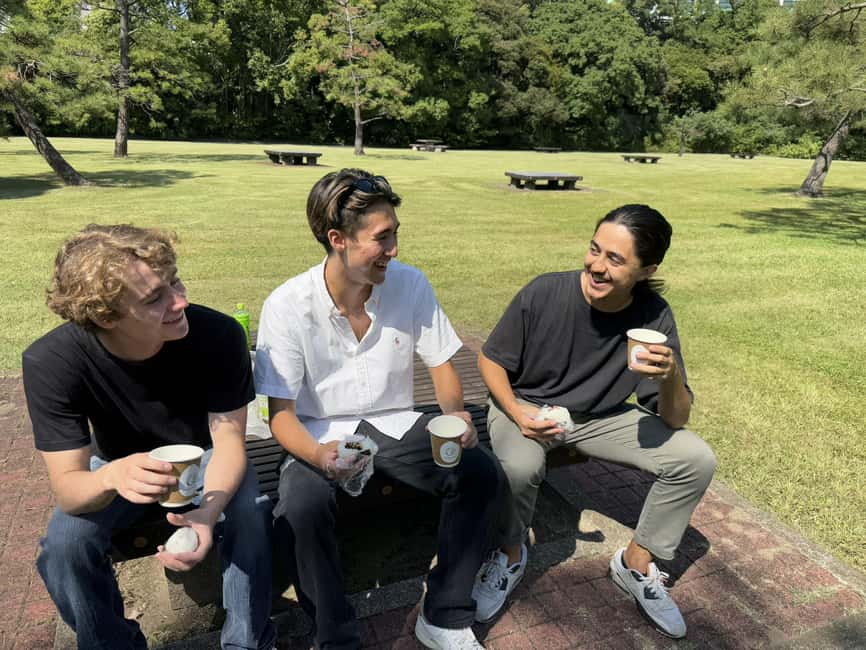
After the class, you bike to Hamarikyu Gardens, one of the city’s most beautiful historic landscapes by the bay. The location is the point. Tokyo Bay is close enough that you feel the change in air and atmosphere, and the garden gives you a break from the urban rush.
What you get there is a real pause. You can spread out and unwrap your still-warm onigiri for a picnic while you watch the contrast between traditional teahouses and Tokyo’s modern skyline. Even if you’ve seen photos of Japanese gardens before, this one tends to land differently because you’re eating food you made yourself.
What makes this stop work for most people:
- It turns your morning effort into a direct reward
- It breaks up a sightseeing day with quiet time
- It’s an easy way to experience Japanese garden design without getting lost in complicated logistics
Drawback to consider: you are outside, so bring your energy for walking and settling on grass. If weather is harsh, you might want to plan for an alternate way to sit comfortably, but the overall activity still centers on enjoying your picnic.
The bike ride through Tokyo’s layers, with real landmarks
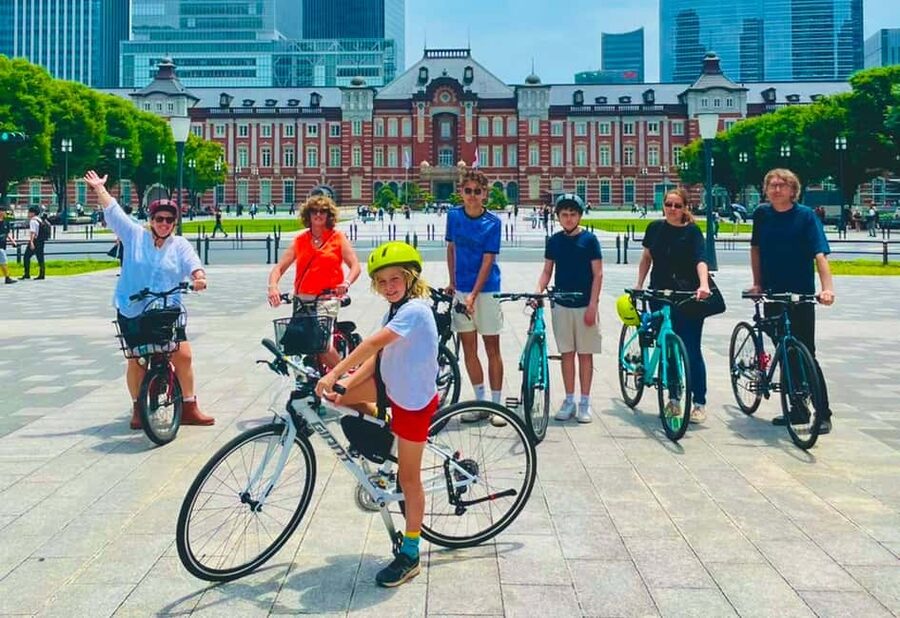
Once you’ve refueled, you ride again. This second part is guided, so you’re not spending the whole time figuring out routes or worrying about street turns. The route is chosen to show Tokyo in layers, from everyday neighborhood life to wider waterfront lanes with bay views.
Expect the ride to include:
- Backstreets and riverside paths that feel more local than tourist-only roads
- Waterfront lanes where the city opens up with broader views
- Sightlines for major sights, including Tokyo Tower rising in the distance
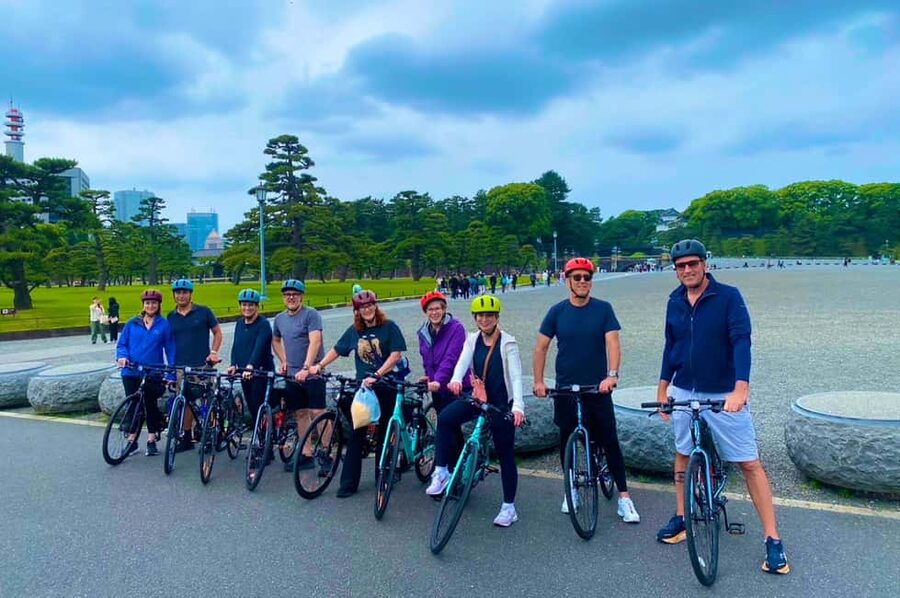
- Stops or views near the Imperial Palace area and Zozoji Temple
Even if you know Tokyo is a huge city, biking helps you feel it differently. You notice small details: the rhythm of side streets, storefront life, and how the city shifts as you move from residential pockets toward the bay.
Practical reality: this isn’t a casual stroll. Comfortable cycling clothes help because you’ll be on the bike after the hands-on food class, and you’ll want to stay comfortable. Also, you’ll get more out of the ride if you can maintain a steady pace and not feel stressed by traffic-adjacent roads.
Same corner of Japan, a different kind of day:
- Tokyo: teamLab Planets TOKYO Digital Art Museum Entry Ticket
★ 4.6 · 9,779 reviews - Mt Fuji & Hakone Cruise, Drum Show Bullet Train 1 Day from Tokyo
★ 4.0 · 7,413 reviews - Tokyo: Sumo Show Experience with Chicken Hot Pot and a Photo
★ 4.8 · 6,678 reviews - Tokyo: Shinjuku Food Tour (13 Dishes at 4 Local Eateries)
★ 5.0 · 6,603 reviews
What’s included, and why it’s good value at $51
At $51 per person, this is priced like a small experience with real components: a guided onigiri class, ingredients, a bike, a local bike tour guide, and entrance to Hamarikyu Gardens. The value isn’t only the total cost. It’s how many different “types” of time you get in one package.
You’re paying for:
- A guided food skill session (so you learn by doing)
- Ingredients provided, which saves you the trouble of sourcing supplies
- A bike plus a guide (so you see more without navigation stress)
- Garden entry (so the picnic stop is official and straightforward)
The only thing called out as not included is extra snacks and drinks at the shop. That’s normal for a class plus activity day. If you’re the type who likes a morning drink, you may want to bring water and plan to keep it simple. You’ll already have your onigiri and time to eat.
The small-group format keeps things friendly
This runs as a small group limited to 6 participants. That matters more than it sounds. Smaller groups usually mean:
- You get more direct help during shaping and seasoning
- The guide can keep the class moving without losing people
- The biking pace is more manageable, especially for a mixed comfort level
From the experience vibe, you’ll want a guide who can explain clearly in English, and this one is live and English-speaking. That helps you ask questions in the moment instead of guessing what something is supposed to do.
One small detail worth highlighting: in addition to being helpful, the guides are known for being friendly and fun. If you’re nervous about cooking classes in a foreign language, that kind of tone can make a big difference.
Who should book this, and who should skip it
This is a great fit if you want a hands-on Tokyo moment. You’ll likely enjoy it if you:
- Like cooking activities where you learn a technique, not just watch
- Want a picnic setting that feels calmer than typical city sightseeing
- Are comfortable biking and want a guided route that hits key sights
- Prefer small-group experiences where your questions matter
It’s not suitable if you:
- Can’t ride a bike or you’re not confident on two wheels
- Have back problems, mobility impairments, or you use a wheelchair
- Need accommodations for visual impairment (not suitable)
- Have high blood pressure, low fitness, or you’re over 70
- Are traveling with children under 12
Also, baby strollers are not allowed, so this is best for adults and teens who can move independently.
If you’re on the fence because of fitness, be honest with yourself about the cycling. The cooking part is easy to enjoy, but the bike ride is where the physical requirement really shows up.
Tips to make the day smoother (and more comfortable)
You’ll get the best experience if you show up prepared for both parts of the day.
Bring and wear:
- Water (explicitly recommended)
- Comfortable clothes for cycling (also explicitly recommended)
Think about the order of the day too. You’ll be learning rice technique first, then cycling, then sitting for a picnic. Clothing that lets you move, and that you won’t regret if you get a little warm, helps.
Bike comfort tip: during the ride, focus on relaxed hands and steady pedaling. If you try to muscle through it, you’ll burn energy you need later for the picnic and sightseeing.
My quick decision guide: should you book it?
If you want one Tokyo activity that combines learning, eating, and active sightseeing, I’d book it. The class gives you a real skill and a tangible result you can enjoy, and the garden picnic turns that effort into a memorable break. The bike route is a smart way to see Tokyo beyond the main photo stops, especially because you’re led through neighborhood streets and along bay-adjacent viewpoints.
I’d skip it only if biking is a real concern for you. The experience is clearly set up for participants who can comfortably ride, and it’s not designed around mobility accommodations. If that’s you, you’ll probably feel stress instead of fun.
If you fit the biking requirement and you like hands-on food, this is a strong value use of a few hours in Tokyo. You’ll leave with onigiri know-how and a calmer garden moment, plus views of Tokyo’s major landmarks from the route.
FAQ
How long does the Tokyo onigiri making class and bike tour take?
The duration is listed as 1 to 3 hours, depending on available starting times.
What is the price per person?
The price is $51 per person.
Where is the meeting point?
Meet your guide at the onigiri making class.
What is included in the experience?
Included are the onigiri making class with an expert, onigiri ingredients, a local bike tour guide, the bike, and entrance to Hamarikyu Gardens.
What should I bring, and what should I wear?
Bring water. Wear comfortable clothes for cycling.
Is this experience suitable for kids or people who cannot ride a bike?
No. It is not suitable for children under 12. It is also not suitable for people who cannot ride a bike, wheelchair users, and several other mobility and health limitations listed by the activity.
Fresh options around Tokyo
- Tokyo: Nikko Kegon Falls Lake Chuzenji Toshogu Temple & More★ 4.9 · 12 reviews
- Tokyo: Samurai History Walking Tour★ 5.0 · 12 reviews
- Harajuku: Kawaii Fashion and Pop-Culture Tour★ 4.7 · 12 reviews
- Tokyo: Mt. Fuji & Lake Kawaguchi Instagram Full Day Trip★ 4.1 · 12 reviews
- Shibuya Tokyo: Modern Kintsugi Workshop in Shibuya★ 5.0 · 12 reviews
- Tokyo: GTR Guided Daikoku Experience at Night★ 5.0 · 12 reviews
- Tokyo: Daikoku JDM Car Culture Tour★ 4.6 · 12 reviews
- Mt Fuji Private Day Trip from Tokyo with English speaking driver★ 5.0 · 13 reviews
Workshops, compared.
Sushi Making Tokyo Roll and Authentic Japanese Sushi Class
Read our review →
Roll and Authentic Sushi Making Class in Asakusa
Read our review →
Ramen Cooking Class at Ramen Factory in Kyoto
Read our review →
Sushi Making Class in a Happi Coat near a Famous Spot
Read our review →
Sushi Making Osaka Roll and Authentic Japanese Sushi Class
Read our review →Browse the lists this tour appears in