
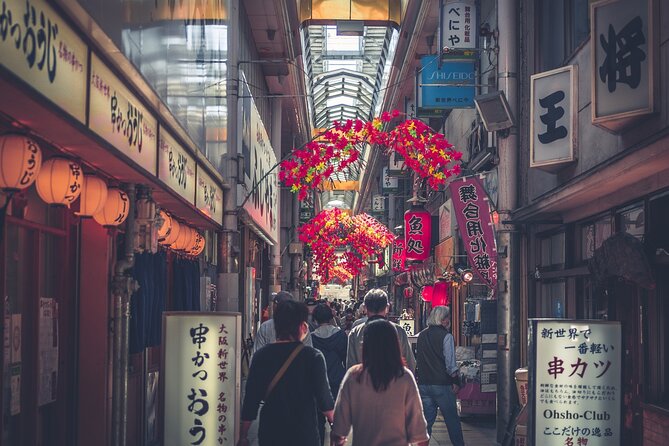
Reviewed · WALKING TOURS
The Dark Side of Osaka Walking Tour
Osaka at night turns every street into a story. This walking tour takes you through Shinsekai and Tobita Shinchi, a neighborhood set up around decades of local life, including an area known for red-light history and strict rules. I like that it has a small group feel, and I really like that the guides focus on social context, not just sightseeing. One drawback to consider, though, is that it is partly slower walking through gritty streets, so it may not feel action-packed every minute.
The meeting point anchors the tour in Shinsekai, and the ending lands you near Tsutenkaku, so the whole route feels like a guided loop through the local nightlife geography. You’ll walk for about two hours, so wear shoes you would trust on a long night out. If you hate street scenes that feel rough or hard, this might feel like too much “real Osaka” in one go.
Key things to know before you go
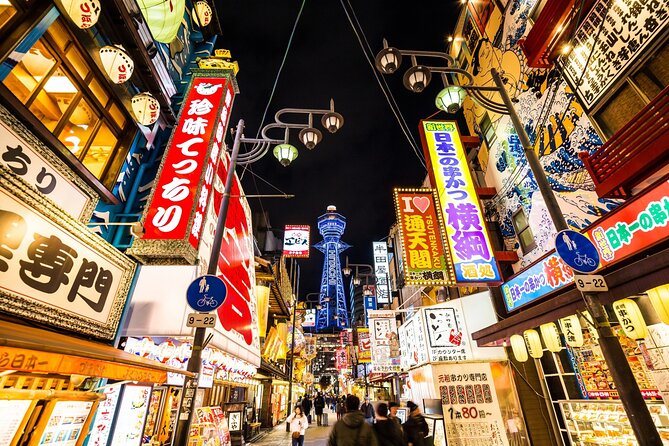
- A 5:30 pm start: this runs on night energy, which changes how the streets and shops feel.
- Four main stops in about two hours: Shinsekai, Nishinari Dobutsuen-mae, Jan Jan Yokocho, then Tobita Shinchi.
- A “dark side” theme with social context: you are not just passing alleys, you are hearing why these places developed.
- Mobile ticket and small groups: up to 15 people, so questions get answered.
- No snacks included: plan for a quick bite before or after, not during.
Osaka’s 5:30 pm night mood, and why it matters
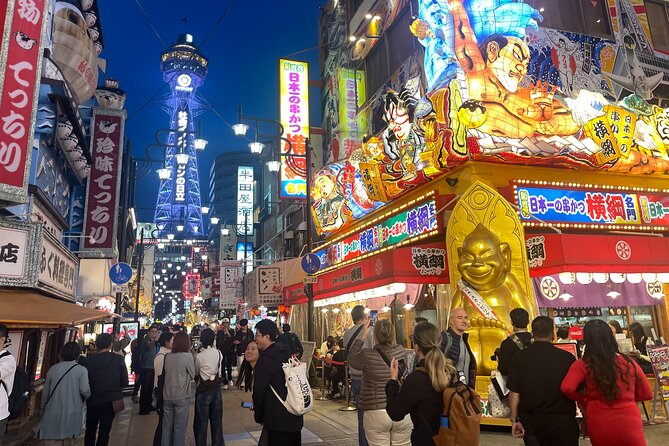
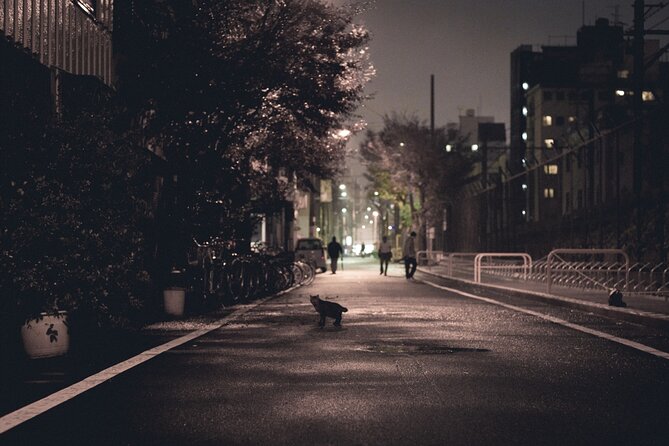
This is a night tour in Osaka, not a daytime highlight reel. The time slot matters because street life shifts fast after the dinner rush. You’ll notice lighting, storefront rhythms, and how people move when the city turns from commuting mode into late-evening mode.
The “dark side” angle can sound sensational, but the value here is interpretation. The tour is framed around Osaka’s historic getto area and a long-running red-light district, described as spanning over 400 years. That long timeline turns random corners into something you can understand, instead of just stare at.
I also like that the tour uses a simple format. You get a focused route, short stop times, and a guide who keeps pulling the thread back to society, rules, and daily reality. That makes it easier for you to remember what you saw as more than just street photography fodder.
More Walking Tours in Osaka
- Osaka: Hotspots & Hidden Gems Walking Tour Private or Group
★ 4.9 · 1,300 reviews - Osaka Local Foodie Walking Tour in Dotonbori and Shinsekai
★ 5.0 · 985 reviews - Osaka Bar Hopping Night Walking Tour in Namba (3 bars, 6 tastes)
★ 5.0 · 958 reviews
From MEGA Don Quijote Shinsekai to Tsutenkaku: how the route works
You start at MEGA Don Quijote Shinsekai in Ebisuhigashi and finish near Tsutenkaku. The meeting time is 5:30 pm, and the tour runs about two hours. Expect to move steadily between stops rather than taking long sit-down breaks.
This kind of walking route is practical, because Shinsekai and Tobita Shinchi are clustered. You’ll get to see a tower landmark (Tsutenkaku) while also moving through the surrounding alleys and arcade streets that make the area feel like a real neighborhood, not a theme park.
The tour includes all fees and taxes, and you do not need to worry about buying separate tickets for the stops listed as free admission ticket entries. You do need to plan for one thing: snacks are not included. If you get hungry on a long walk, I suggest eating earlier and keeping water on hand, since you’ll be on your feet for most of the experience.
One more practical note: the group size tops out at 15. That matters because your questions about local customs and social history are more likely to actually get answered as you go.
Shinsekai: the “New World” intro and the arcade vibe
Your first stop is Shinsekai, a district literally tied to the name meaning New World. It has a reputation for mixing retro nostalgia with everyday Osaka life, and it traces back to being planned in the early 1900s. The guide framing here helps you look at Shinsekai as an idea, not just a grid of streets.
You’ll also get oriented fast, which is huge for a night tour. Seeing the area around the Tsutenkaku orbit at the start gives you landmarks to anchor later photos and later impressions. It is easier to understand where you are, and easier to follow what the guide is pointing out.
There’s also a bit of emotional contrast built in. Shinsekai can feel playful at a glance, with arcade storefronts and signs that look like they belong in a movie set. But the tour treats that surface as the starting point for deeper context about who lived here, how the area developed, and why it looks the way it does today.
If you love architecture, street design, and how old city planning shapes daily movement, Shinsekai is a strong opener. If you prefer quiet neighborhoods, keep in mind this is a lively zone by design, and you are doing it on a clock time when crowds are part of the picture.
Nishinari Dobutsuen-mae street time: working-class Osaka, up close
Next you head into Nishinari, specifically the Dobutsuen-mae Deep Osaka street area. This part of the tour is where the tone turns more serious. The area is described as having history connected to day laborers and a working-class community, and it carries a raw, authentic feel.
This stop matters because it challenges the usual tourist rhythm. Instead of focusing only on famous landmarks, you are shown a neighborhood shaped by labor, housing pressure, and day-to-day survival. You start to connect what you saw in Shinsekai to bigger patterns of urban life.
The practical upside is that you will learn how to read the street. You’ll pay attention to how businesses operate, how foot traffic flows, and how the built environment supports a specific kind of local routine. The drawback is also real: if you want nonstop “things to look at,” this section can feel more like guided walking than a parade of sights.
That said, this is often the kind of time on a tour that makes the rest click. When the guide has given you the right context, later streets in the route stop feeling random and start feeling purposeful.
Same corner of Japan, a different kind of day:
- Osaka Go Karting Tour with Funny Costume
★ 5.0 · 2,658 reviews - Osaka Castle: Museum and Tower Entry Ticket
★ 4.5 · 2,380 reviews - Osaka: Shinsekai Food Tour with 13-15 Dishes at 5 Eateries
★ 4.8 · 2,204 reviews - Osaka Food Tour: 13 Dishes at 5 Local Eateries
★ 5.0 · 2,149 reviews
Jan Jan Yokocho (Nanyodori): the alley where you slow down
Then you slip into Jan Jan Yokocho, a shopping and dining alley right by Tsutenkaku. The area is known for a narrow lane layout and a nostalgic vibe, and it’s the kind of place where a few steps can change the entire scene. This is one of those stops that works well on a night walk, because alleys feel more intimate after dark.
I like this stop because it adds “human scale” after the heavier discussion. You can look at storefronts, signage, and the general rhythm of people choosing where to eat or hang out. Even if you skip snacks during the tour, you’ll likely leave with clear ideas about where to grab something after.
There is also a subtle lesson here. In Japan, small streets like this can hold a lot of identity in a tight space. The guide’s job is to help you notice what stays consistent, even when the audience changes.
The only thing to watch is your comfort level with narrow spaces. If you do not like tight lanes or you get anxious in crowded alleyways, plan to keep your pace steady and stay aware of foot traffic.
Tobita Shinchi: the red-light district, history, and respectful viewing
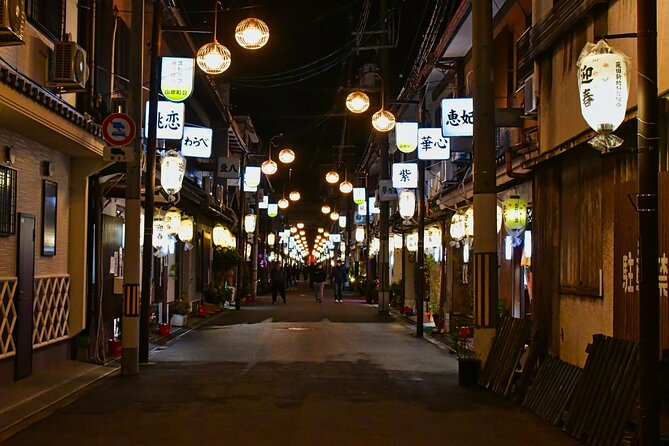
Tobita Shinchi is the centerpiece for the “dark side” theme. This is described as Osaka’s most famous and largest red-light district, with a history stretching back over a century. The tour emphasizes that it is known for a unique architectural style and a tightly regulated environment.
This is not a stop where you just stare. The guide approach is the point: you learn how regulations, street design, and local rules interact. That shifts your mindset from sensational curiosity to understanding how a city manages something socially sensitive.
You’ll also see why this district sits within the wider Osaka story. The tour links the area to historic neighborhoods and long-running local systems, rather than treating it like an isolated oddity. For me, that’s what makes it valuable: you finish with a sense of structure, not just shock.
Still, there is a consideration. The name “red-light district” tells you the topic is adult-focused. If that theme makes you uncomfortable, or if you expect a purely cultural history lecture with no street exposure, this stop might feel like too much.
If you go, take the respectful route: keep your questions focused, follow the guide’s pacing, and remember this is a neighborhood with ongoing life. The tour’s framework is built around seeing and understanding, not gawking.
Tsutenkaku Hondori: arcade street energy to end the loop
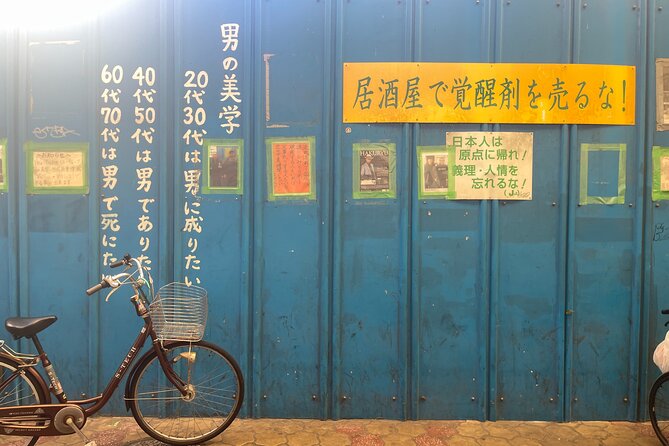
After Tobita Shinchi, you end at Tsutenkaku Hondori Shopping Street, an arcade at the foot of Tsutenkaku Tower. This makes a strong finish because it turns your final images into a practical “after” view, where you can keep wandering or choose where to eat.
The arcade setting is also a nice tonal shift. You are moving from the adult-history focus back into everyday street commerce: shops, snacks, and casual movement. It helps you digest what you learned earlier, then decide how you want to continue your night.
One reason this ending works for a walking tour is pacing. By the time you reach the arcades, your feet have already done the hard part. You get a place that is easy to navigate and good for a last look before you head back.
If you enjoy arcade shopping culture, you’ll probably like this finish even more. If you do not, you can still treat it as a way to close the tour with something lively and local, while staying near a clear landmark.
Value check: is $25 worth two hours of night walking?
At $25 per person for an about-two-hour tour, this is priced like a midrange neighborhood experience. The key value isn’t that you get a long list of paid attractions. It’s that you pay for guided context, guided pacing, and a tight route through parts of Osaka you might skip.
Because all fees and taxes are included, your cost is straightforward. And because the stops are listed with free admission ticket entries, you are not paying extra at each location. You mainly pay for the guide’s explanations and the structure that helps you interpret what you are seeing.
Where the value can feel different is your personal comfort level with the theme. If you like learning how cities work socially, this tour is likely worth it. If you want a more lighthearted night stroll and do not want to walk through rougher streets, then you might feel shorted for the same money.
That said, the overall rating is extremely strong, and the feedback patterns point to one recurring strength: the guides keep the tour moving at a perfect pace and answer questions as they come up. For $25, that kind of Q and A access matters.
Practical tip for value: treat this as your “orientation plus context” night. After the tour, pick one nearby spot to eat or drink, since you’ll understand the area better than you did at 5:30 pm.
What makes the guides matter: Jay, Matt, and Rico style of storytelling
The standout across feedback is the guide quality. Guides like Jay, Matt, and RICO are repeatedly praised for knowing social history and sharing local stories in a way that actually helps you understand the neighborhoods you walk through.
You can feel the difference between a tour that points and a tour that explains. Here, the guide doesn’t just describe streets, they connect them to why the areas developed the way they did, and what social forces shaped daily life. That turns “dark” into “understandable.”
Another strength is responsiveness. People mention that questions get answered and that tips get shared along the way. That means you can ask about etiquette, what you should notice, and how to read what you are seeing without feeling lost.
Pace also gets called out. The route is broken into short segments, which helps on a night walk. You get movement, short attention points, and enough time at each stop to absorb what the guide is saying before you move again.
If you want a tour that feels like a conversation with the city, this format is built for that. If you prefer a silent walking tour where you do your own thinking, you might find it too talk-heavy.
Who should book this tour, and who should skip it
Book this if you want to see Osaka beyond the usual postcard route. It’s ideal for curious travelers who like street-level context and can handle a serious theme in a respectful way. It also suits people who enjoy guided walking with a small group size, because questions stay easy.
You should also book it if you enjoy Shinsekai’s specific style and want to understand why the streets look the way they do, then contrast that with the darker side of the city. The mix of arcade scenery and harder topics gives you a fuller picture than a single-neighborhood stroll.
Skip it if you hate walking for nearly two hours and you want constant visual spectacle. One critical point to remember: part of the tour is walking through grittier areas, and some people may want more “stuff” at the stops. If you are sensitive to adult-topic settings, decide carefully before committing.
If you have mobility limits, the tour says most travelers can participate, and it is near public transportation. Still, it is a night walking route, so bring a realistic expectation about time on your feet.
Should you book the Dark Side of Osaka walking tour?
Yes, I think you should book it if you want a guided, meaningful night look at Shinsekai and the Tobita Shinchi area with solid context. The $25 price is easier to justify when you care about social history, local rules, and how neighborhoods evolve over time.
I would pass if you want only bright, easy sights, or if you expect snacks, big-ticket attractions, and nonstop entertainment. This is a walking tour with a theme, not a performance.
If you go, do two things: wear comfortable shoes, and come hungry for understanding, not just for photos. You’ll leave with a sharper sense of what Osaka looks like when the city stops performing for tourists and starts showing how it really works.
FAQ
How long is the Osaka night walking tour?
It runs for about 2 hours.
What time does the tour start?
The start time is 5:30 pm.
Where do I meet for the tour?
You meet at MEGA Don Quijote Shinsekai, 3-chōme-4-36 Ebisuhigashi, Naniwa Ward, Osaka, 556-0002, Japan.
Where does the tour end?
The tour ends at Tsutenkaku, 1-chōme-18-6 Ebisuhigashi, Naniwa Ward, Osaka, 556-0002, Japan.
What areas will the tour cover?
You’ll visit Shinsekai, Nishinari Dobutsuen-mae Deep Osaka Street, Jyanjyan Yokocho (Nanyodori Shopping District), Tobita Shinchi, and Tsutenkaku Hondori Shopping Street.
Is admission included for the stops?
Admission tickets for the listed stops are shown as free, and the tour price includes all fees and taxes.
Is food or snacks included?
No, snacks are not included.
Do I get a mobile ticket?
Yes, the tour uses a mobile ticket.
How many people are in the group?
The tour has a maximum of 15 travelers.
What if the weather is bad, and can I bring a service animal?
The experience requires good weather. If it is canceled due to poor weather, you’ll be offered a different date or a full refund. Service animals are allowed.
Fresh options around Osaka
- Osaka Winery Tour with Wine Tasting & Vineyard Walk★ 4.9 · 12 reviews
- Osaka: Early Morning Osaka Castle Guided Tour, Avoid Crowds★ 4.9 · 12 reviews
- Kyoto Day Trip from Osaka Port – Private Shore Excursion★ 5.0 · 13 reviews
- Osaka Private Pop Culture Tour: Historic Tenma to Dotonbori★ 4.5 · 13 reviews
- Osaka Castle Admission Ticket★ 4.0 · 13 reviews
- Hidden Osaka Foodie Tour: Nishinari Backstreets & Local Dining★ 5.0 · 13 reviews
- Discover Real Osaka: A Cultural Walk with Food & Drink★ 5.0 · 13 reviews
- Nara private tour (Shore excursion available from Osaka or Kobe port)★ 5.0 · 13 reviews
Walking Tours, compared.
Kyoto Geisha Walking Tour: Gion District & Hidden Gems
Read our review →
Tokyo Tsukiji Fish Market Food and Culture Walking Tour
Read our review →
Gion Magical Night Walking Tour with Geisha Trivia
Read our review →
Imperial Palace and Shogun Historical Walking Tour
Read our review →
Gion Geisha District Walking Tour – Stories of Geisha
Read our review →
Shinjuku Local Bar and Izakaya Guided Walking Tour
Read our review →
Browse the lists this tour appears in