
Reviewed · WALKING TOURS
Sakai – Knife Factory and Craft Walking Tour
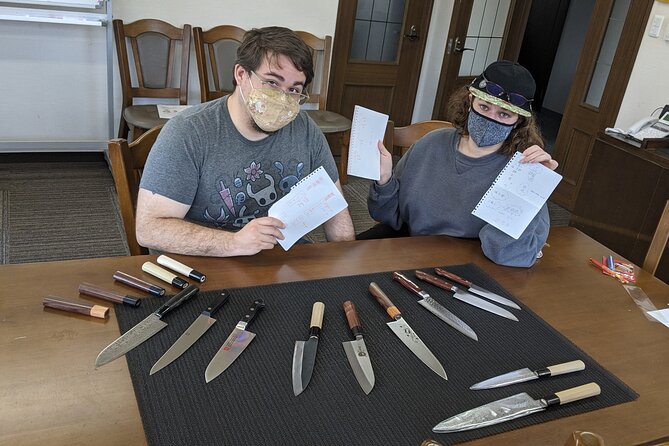
Sakai makes knives feel personal. In a half-day walk, you get inside a real Sakai knife workshop with more than a century of family work, you taste cinnamon mochi, and you learn hands-on sharpening from professionals. I like that it is not just watching, you practice the traditional motions yourself, then you see how blades turn into proper handmade cooking knives.
One thing to think about before you go is schedule and language. If you are counting on a French-speaking guide, the tour notes that French is not guaranteed on shared departures, and the factory and museum plan can shift on certain days.
Key Things to Know Before You Go
- You see the process from the start, raw blades coming in from the blacksmith, then turning into handmade cooking knives.
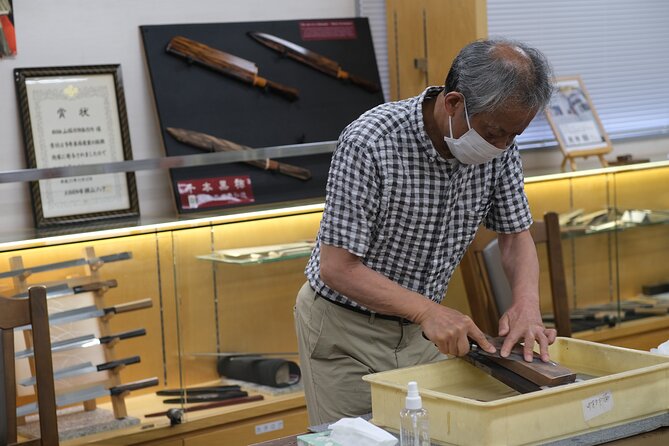
- Hands-on sharpening is part of the deal, with a professional teaching traditional techniques.
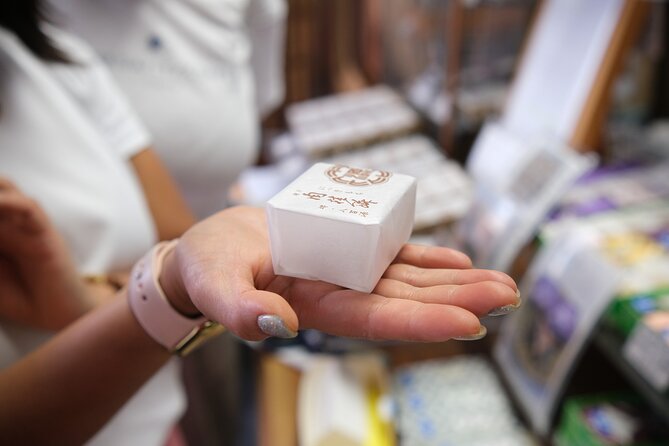
- Cinnamon mochi is included, with a 400-year origin story and one sweet handed to you.
- Small group size, up to 10 people, keeps it easier to ask questions and move between spots.
- You may be able to order a custom knife, watching the make as it happens, not years later.
Why Sakai Knives Matter More Than You Think
Sakai is one of those places where the craft is the main character. You are not looking at knives like they are products on a shelf. You are seeing how skill turns steel into something you will actually use at home.
This tour is priced at $66.05 per person, and that matters because you are paying for access plus instruction. You are getting entry into the knife-making world, a sharpening lesson, and time with a guide who can explain what you are seeing in plain terms. The included sweet is a nice bonus, not the headline.
Also, the group stays small. Up to 10 people means the shop staff are not juggling a huge crowd, and you can ask the practical questions that turn into better knife choices later.
More Walking Tours in Osaka
- Osaka: Hotspots & Hidden Gems Walking Tour Private or Group
★ 4.9 · 1,300 reviews - Osaka Local Foodie Walking Tour in Dotonbori and Shinsekai
★ 5.0 · 985 reviews - Osaka Bar Hopping Night Walking Tour in Namba (3 bars, 6 tastes)
★ 5.0 · 958 reviews
First Stop: Yao Gen and the Cinnamon Mochi Story
The walk starts at 八百源来弘堂本店. This is where you get a quick hit of Sakai flavor and a piece of local lore: a 400-year-old origin story tied to traditional Japanese cinnamon mochi.
You will get one mochi as a present, and you can buy more if you want. Even if you never buy snacks elsewhere in Japan, this first stop sets the tone. It is not a random tourist bite. It is local, specific, and tied to a shop with deep roots.
Timing is short here, about 15 minutes, so it works even if you plan to keep the rest of the day moving. If you have a sweet tooth, go slow at the first bite, because you will likely want room later for lunch recommendations from your guide.
Walking Into the Real Knife Factory in Sakai
The heart of the experience is the knife factory visit, centered around an address in Sakai that takes you to the sharpening station area. This is where you learn why Sakai is famous for knives, and you see the factory rhythm up close.
You get to observe blades being turned into proper handmade cooking knives, and the tour emphasizes that raw blades arrive directly from the blacksmith. That detail is worth your attention. It helps you understand this is not a modern assembly line story. It is a chain of skilled work that stays connected.
You will also visit the sharpening station and the main office. Watching from these areas gives you two angles: how things look when makers are focused on the steel, and how the shop frames the craft when people ask questions.
Practical note: factory areas can involve standing and close quarters. Comfortable shoes help, and it is smart to dress in a way you can stay in for a few hours without feeling sticky.
The Sharpening Lesson, Hands-On and Practical
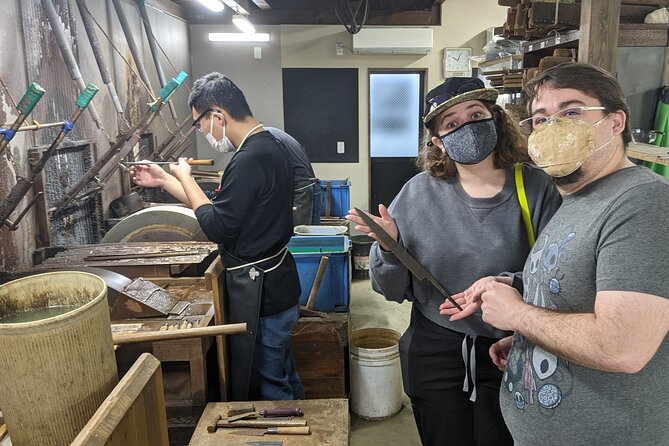
This is where the tour earns its keep. You do not just watch someone sharpen. You learn and practice traditional sharpening techniques with a professional.
From the reviews, the big payoff is the skill you get to see, and the calm confidence you see in the makers. People mention precision and pride in the work, and that shows in how sharpening is taught. It is easy to think knives are magic. This tour brings you back to the motions, the attention to angle, and the discipline behind good edge work.
Even if you feel clumsy at first, that is normal. The point is not that you become a master in one session. The point is that you leave with a mental map of what makes a knife perform well and why maintenance matters.
If you are the type who cooks often, this lesson has a direct payoff. Once you understand sharpening, you start respecting your tools. That changes how you treat and choose knives, not just that you bought one.
Same corner of Japan, a different kind of day:
- Osaka Go Karting Tour with Funny Costume
★ 5.0 · 2,658 reviews - Osaka Castle: Museum and Tower Entry Ticket
★ 4.5 · 2,380 reviews - Osaka: Shinsekai Food Tour with 13-15 Dishes at 5 Eateries
★ 4.8 · 2,204 reviews - Osaka Food Tour: 13 Dishes at 5 Local Eateries
★ 5.0 · 2,149 reviews
Chance to Order a Custom Knife While You Watch
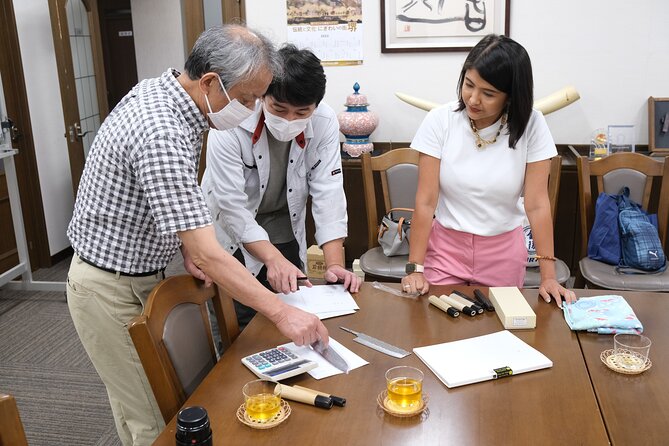
One of the strongest themes from the experience is access to purchasing knives directly through the craftsmen you see. Some tours let you browse. This one is structured around meeting the people behind the work.
You also get a chance to order a customizable knife you can watch being made in front of you. That is a powerful difference. You are not guessing what you are paying for. You can see the attention and the steps.
The purchasing part is also described as not pushy. The value is in the match between what you learned and what you buy. If you leave thinking, I want a knife that feels right for my kitchen, you are in the right mood to choose.
Do keep your expectations grounded though. This is not a factory where everything is mass-produced and instant. Custom work takes time, and the price can vary based on what you choose. Even if you do not buy anything, watching the process can still reframe how you think about knives.
Sakai Traditional Crafts Museum and Knife Shop for Context
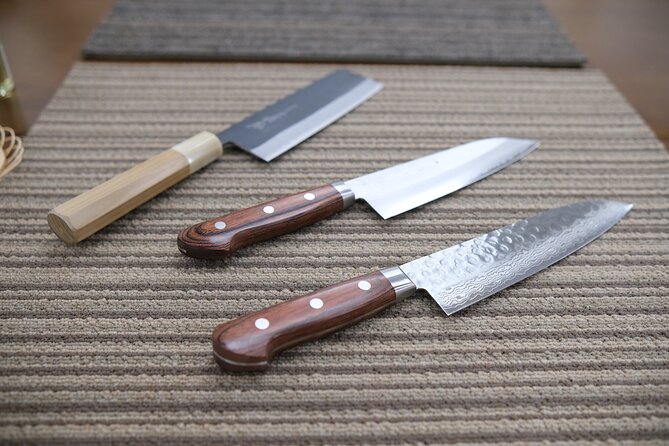
After the workshop, you shift to the Sakai Traditional Crafts Museum and Knife Shop. This stop is about context, the wider craft scene around Sakai knives, bicycles, and local products.
The museum is designed to show what makes Sakai special, including handmade crafts. You also hear about bicycle culture here, because Shimano was first created in Sakai. That connection helps you see why Sakai is known for practical engineering and precision work, not just knives.
You will have about 30 minutes here. That is enough time to orient yourself, spot a few things worth remembering, and browse the shop area if you want to compare what you saw in the factory with what is for sale.
Possible drawback: because this part is a museum stop, you may want to skim if you are short on time or not into exhibits. The factory is the main event. Use the museum time to connect dots, not to force yourself to read every label.
Price and Value: What $66.05 Really Buys
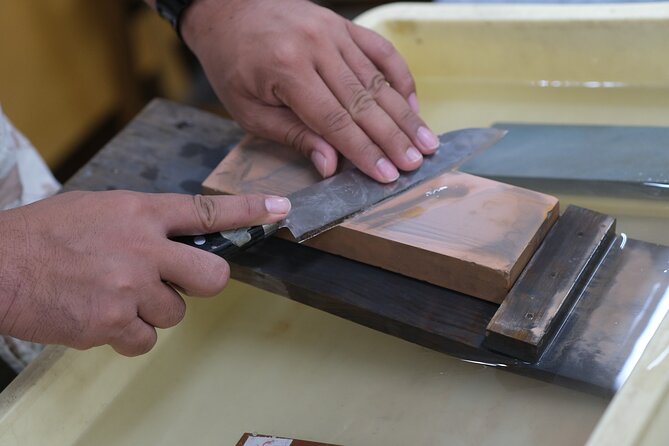
Let us talk value in real terms. At $66.05, you are paying for a focused, guided half-day. You get all fees and taxes covered, a bilingual guide, entry to the knife factory experience, and a knife sharpening lesson.
You also get a snack included: one sweet per person, which is tied to the cinnamon mochi stop. On top of that, you get a chance to purchase or order a knife directly connected to the craftsmen you meet.
If you tried to recreate this on your own, the hard part would not be finding Sakai. The hard part is the access. Factory access and instruction are the expensive pieces, and those are exactly what this tour bundles for you.
What is not included is also important. Extra food and souvenirs are not part of the price. If you want to make this a full morning, plan lunch separately, and set a budget if you decide to buy or order a knife.
Timing and Getting There for a 9:00 Start
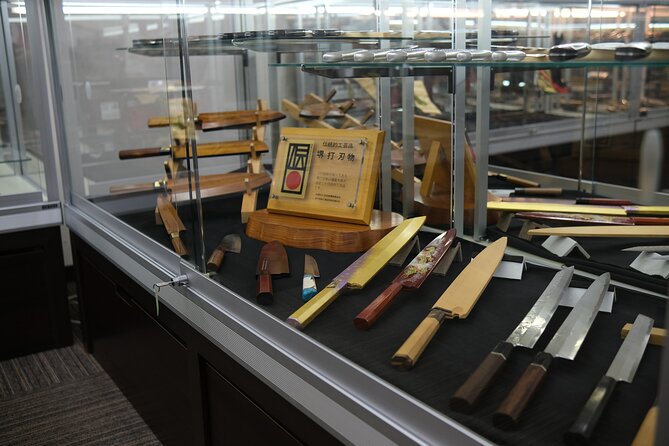
The tour begins at 9:00 am, runs about 3 to 4 hours, and ends back at the meeting point. That return matters. You do not have to scramble for your next step.
Your meeting point is 3-chōme-22 Ebisujimachō, Sakai Ward, Sakai, Osaka 590-0985. The tour notes it is near public transportation, which is great if you are coming from central Osaka.
Group size also helps your pacing. With a maximum of 10 participants, you are more likely to get time for questions at each stop. Still, factory and sharpening areas can move on a schedule. The best move is to arrive a few minutes early and stay flexible.
When to Go: Blacksmith-Only Dates and the 3rd Tuesday Change
Dates can change what you experience. The tour notes a specific period when the format shifts: from 2026 March 6 to April 6, blacksmith only is available, and those dates run on Tuesdays, Wednesdays, and Thursdays. If you are planning around those weeks, confirm the day you choose matches what you want to see.
There is also a monthly pattern to watch. Every 3rd Tuesday, the museum has an inventory and might close without notice. If that happens, your guide will take you directly to the craftsman location.
This matters because it affects expectations. If your plan depends on the museum stop, pick a day other than the 3rd Tuesday if you can. If you care more about the workshop and sharpening, these changes should not feel like a loss. The core experience is tied to the craftsmen.
Who This Tour Fits Best (and Who Might Feel Shorted)
This is a great match for three kinds of people.
First, food and cooking nerds. If you cook at home and want a knife that feels better in your hand, sharpening knowledge makes you a smarter buyer.
Second, craft lovers. If you like watching skilled work with your own eyes, the factory access is the main reason to book.
Third, history and culture travelers who prefer details over monuments. You learn about Sakai through tools, shops, and making methods, not just through displays.
Who might feel shorted? If you expected a long walking tour packed with major city sights, this is more focused. It is 3 to 4 hours with hands-on knife content at the center. The museum adds context, but it is not a full museum day.
Language can also be a consideration. The tour is described as bilingual, but a francophone guide is not guaranteed on shared tours.
Should You Book This Sakai Knife Factory and Craft Walking Tour?
I think you should book if you want a real, working craft experience with instruction. The combination of factory access, a sharpening lesson, and the chance to order a customizable knife while you watch the making is the sort of practical value you rarely get on a short outing.
Skip it only if your priorities are more traditional sight-seeing, or if your schedule is built around a museum visit on a 3rd Tuesday and you cannot adjust. Also, if you are set on a French-speaking guide, choose your dates carefully because francophonie is not guaranteed for shared tours.
If you do book, go in with one mindset: you are here to understand why knives work. When you leave with that, even browsing feels different.
FAQ
How long is the Sakai knife factory and craft walking tour?
It runs about 3 to 4 hours.
What time does the tour start, and where does it meet?
The start time is 9:00 am. The meeting point is 3-chōme-22 Ebisujimachō, Sakai Ward, Sakai, Osaka 590-0985, Japan.
What is included in the price?
The price includes a sweet snack (one per guest), all fees and taxes, a bilingual guide, a knife factory visit, and a knife sharpening lesson.
Can I request a French-speaking guide?
The tour notes that for a francophone guide request, they cannot guarantee francophonie for a shared tour.
Is this tour okay for solo travelers?
Solo travelers can book, but there is a 2 guests minimum rule. If the minimum is not met, the session might be canceled and you will be notified with a reschedule option or a full refund.
What is the cancellation window?
You can cancel for a full refund up to 24 hours in advance of the experience start time.
If you cancel less than 24 hours before start time, the amount paid is not refunded.
Fresh options around Osaka
- Osaka Winery Tour with Wine Tasting & Vineyard Walk★ 4.9 · 12 reviews
- Osaka: Early Morning Osaka Castle Guided Tour, Avoid Crowds★ 4.9 · 12 reviews
- Kyoto Day Trip from Osaka Port – Private Shore Excursion★ 5.0 · 13 reviews
- Osaka Private Pop Culture Tour: Historic Tenma to Dotonbori★ 4.5 · 13 reviews
- Osaka Castle Admission Ticket★ 4.0 · 13 reviews
- Hidden Osaka Foodie Tour: Nishinari Backstreets & Local Dining★ 5.0 · 13 reviews
- Discover Real Osaka: A Cultural Walk with Food & Drink★ 5.0 · 13 reviews
- Nara private tour (Shore excursion available from Osaka or Kobe port)★ 5.0 · 13 reviews
Walking Tours, compared.
Kyoto Geisha Walking Tour: Gion District & Hidden Gems
Read our review →
Tokyo Tsukiji Fish Market Food and Culture Walking Tour
Read our review →
Gion Magical Night Walking Tour with Geisha Trivia
Read our review →
Imperial Palace and Shogun Historical Walking Tour
Read our review →
Gion Geisha District Walking Tour – Stories of Geisha
Read our review →
Shinjuku Local Bar and Izakaya Guided Walking Tour
Read our review →
Browse the lists this tour appears in