
Reviewed · WORKSHOPS
Osaka: Temple Tour and Traditional Calligraphy Lesson
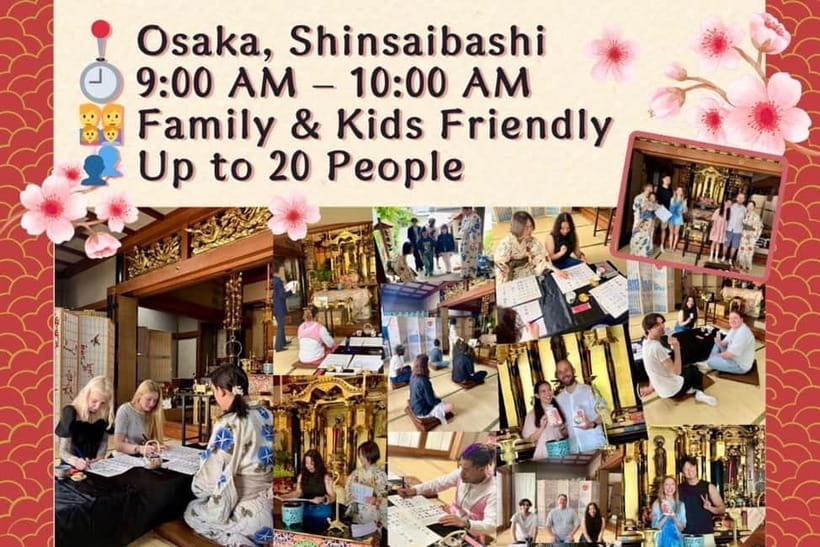
Ink, silence, and one perfect kanji. At Saishoji Temple near Yotsubashi, you start in a quiet Zen setting before practicing zazen breathing and focus. That combination turns a simple craft class into a cultural reset you can feel right away.
I also love how this isn’t just calligraphy. You get a guided Japanese history and language mini-lesson tied to Osaka spots like Shinsaibashi, Yotsubashi, and Osaka Castle, plus practical phrases and temple versus shrine differences. One possible drawback: because it lasts only one hour, first-timers may want more time to slow down and repeat strokes until it feels natural.
Key Highlights You Will Actually Notice
- Saishoji Temple, steps from Yotsubashi Station: a peaceful start without long transit
- Guided Osaka context in plain English: history and language tied to where you are
- Zazen meditation for breathing and focus: a quiet mental warm-up before the brush
- Calligraphy copying and guided technique: you are not just handed tools and left alone
- One favorite kanji on a mini shikishi: personal, tangible, and framed by instruction
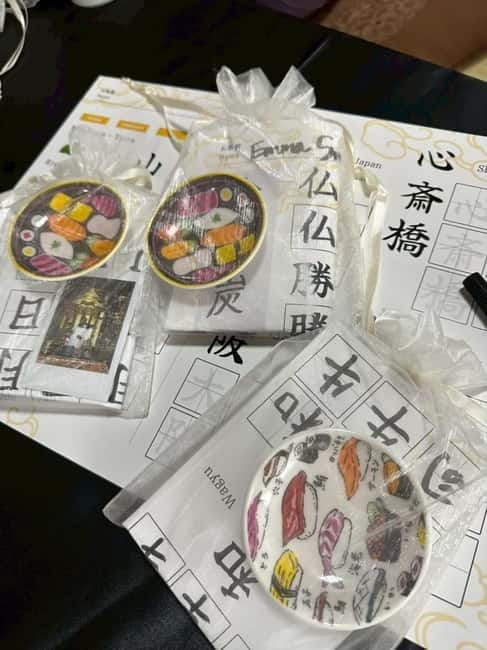
- Souvenirs that make it stick: a name card with kanji meaning plus a small ceramic gift (8 cm)
Saishoji Temple, Just Steps from Yotsubashi Station
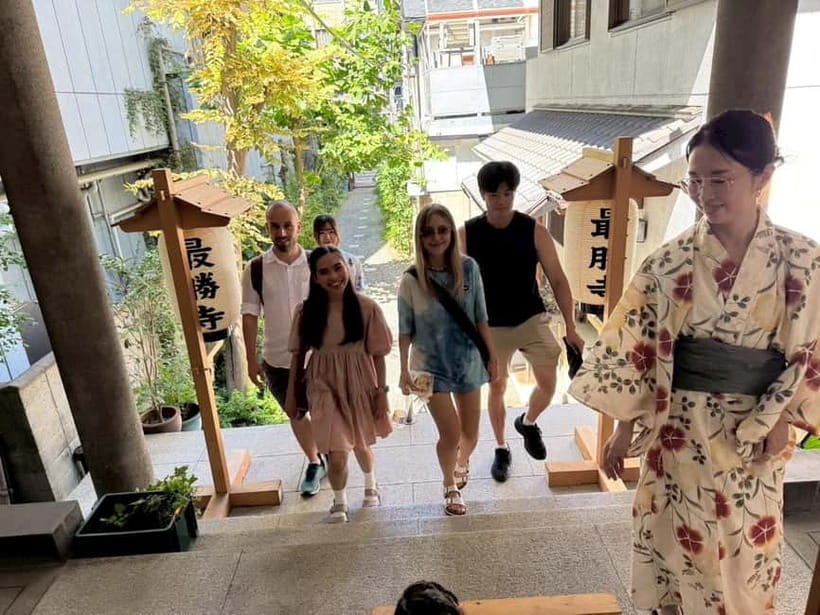
This experience starts at Saishoji Temple at 1-6-18 Kitahorie, Nishi-ku. The practical win is location. It is about a 3-minute walk from Yotsubashi Station (Osaka Metro Yotsubashi Line, Exit 4), around 10 minutes on foot from Shinsaibashi Station, and roughly 15 minutes from Namba Station.
That means you can do this without fighting Osaka transit or planning your whole day around it. It is also a nice change of pace if you are already in the Shinsaibashi and Horie area shopping and eating. Here, the tempo drops quickly once you’re inside the temple space.
What I like about the setup is that the calm is part of the experience, not an optional bonus. You are not just learning calligraphy on a table in the middle of the city. You are learning it in the quiet surroundings that go with Zen practice.
More Temple & Shrine Tours in Osaka
- Osaka: Minoh, Katsuoji Temple, & Minoh Falls Full-day Tour
★ 4.9 · 172 reviews - Sagano Romantic Train & Arashiyama, Kiyomizudera, Fushimi Inari Taisha Day Tour
★ 4.5 · 171 reviews - Full Day Kyoto Tour : Bamboo Forest, Golden Temple, Fushimi Inari
★ 5.0 · 84 reviews
A Clear Start: Guided Osaka History Plus Mindful Communication
Before you touch a brush, you get a short, guided lesson that grounds everything. The focus is language and context, not academic lectures.
You begin with a brief history and orientation that covers Shinsaibashi, Yotsubashi, and Osaka Castle. Then you learn the differences between temples and shrines in Japan. This matters because people often wander Osaka with generic “Japanese culture” ideas. After this, you will know how to describe what you’re seeing in a more accurate way.
You also practice conversational phrases and idiomatic cultural expressions. The goal is simple: you learn how to communicate in a way that fits the setting, so you can move through Osaka temples with more confidence. The experience also emphasizes mindful communication, which sounds a little abstract until you experience the switch from city noise to slow, present attention.
If you are studying Japanese, this is a smart use of time. You are not cramming vocabulary in the open air. You’re pairing language with specific cultural meaning, right where it applies.
Zazen Meditation: The Breathing Reset Before Calligraphy
Then comes the most “you can feel it” part: zazen meditation. The instructions are aimed at clearing your mind and focusing on breathing.
Even if you’ve never meditated before, the structure helps. You’re given a guided pace, and you’re not trying to invent the right mindset on your own. You end up with something that many first-time visitors rarely get in Osaka: a moment of quiet focus.
This matters for the calligraphy that follows. Calligraphy is not just handwriting. It is physical control, timing, and mindset. When your attention is steady, your strokes tend to look more deliberate. When your mind is scattered, your brushwork usually shows it.
So think of the meditation as more than a spiritual add-on. It is your technique training in disguise.
Calligraphy Copying and Brush Technique, Step-by-Step
After the meditation, you move into hands-on practice: basic calligraphy with guidance.
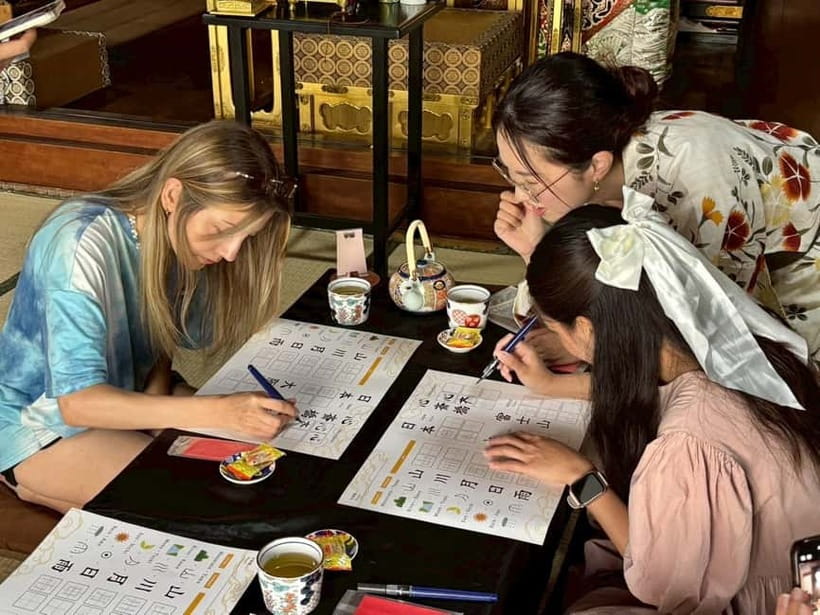
You start with copying practice first. That is a good choice for beginners. Copying lowers the pressure because you are focusing on form and rhythm, not inventing something perfect from scratch.
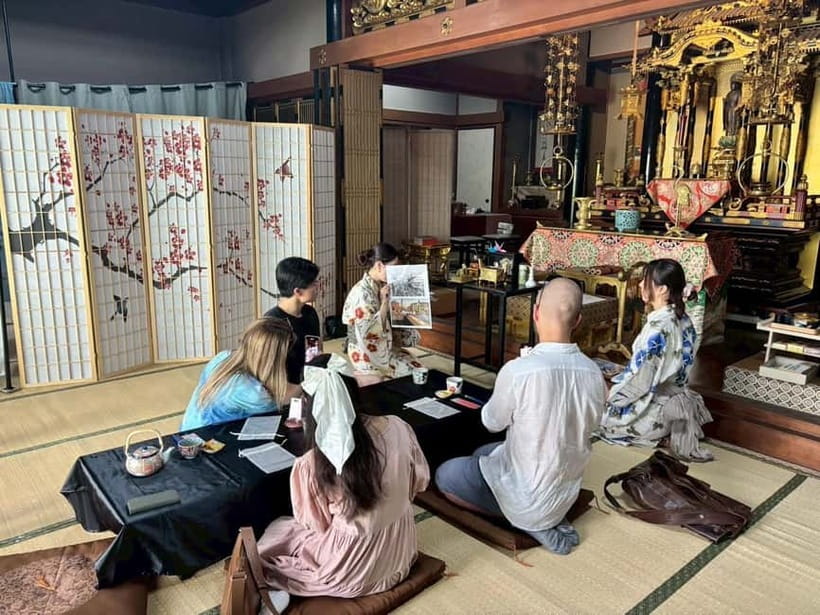
Your instructors and monks lead the activity, so you are not working solo. You get help while you hold the brush, ink the strokes, and learn how to pace your movement. The experience is offered in English with an English instructor, which helps if your Japanese reading is still limited.
The vibe here is calm and focused. Based on how people describe the experience, the atmosphere is one of relaxed attention, not performance. That is exactly what you want in a class where the goal is better control, not impressing anyone.
One practical tip for you: wear sleeves that are comfortable and not too long. You will be moving slowly and writing, and the less you have to adjust your clothing, the easier it is to stay in the moment.
More temple and shrine tours in Osaka:
- Osaka Temple Cool Foot Bath & Matcha Experience〈45min〉
★ 4.9 · 82 reviews - Osaka: Mind & Spirit Balance Temple Reiki Healing
★ 5.0 · 41 reviews - Katsuo-ji Temple, Arashiyama Forest, & Nara Park
★ 4.0 · 37 reviews - Kyoto: Immersive Arashiyama & Fushimi Inari by Private Car
★ 5.0 · 35 reviews
Write Your Favorite Kanji on a Mini Shikishi
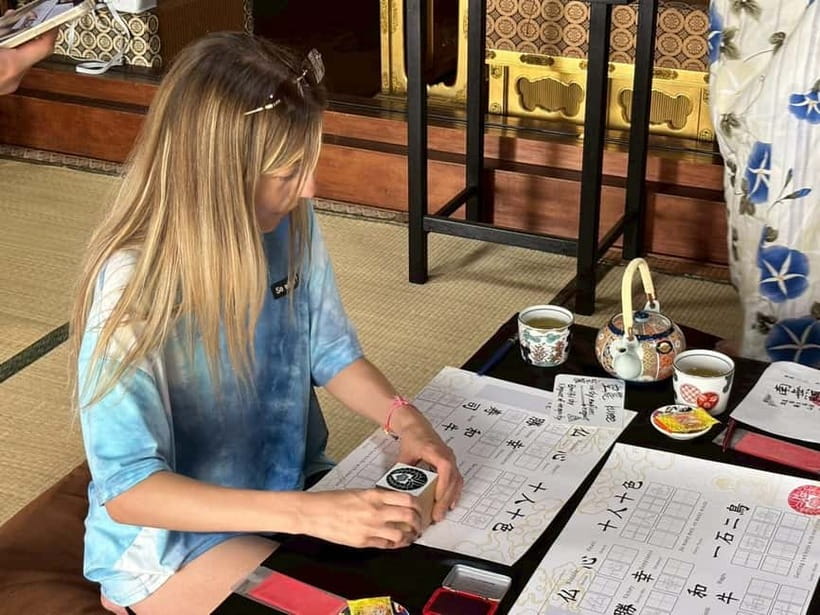
This is the part that turns instruction into a keepsake. You practice calligraphy, then write one favorite kanji on a mini shikishi.
A mini shikishi is a small format, which is ideal for a one-hour experience. It keeps things manageable, and it gives you a finished piece you can bring home without it becoming a huge project.
You also receive a name card featuring Japanese kanji and its meaning. That is a small detail, but it’s useful. It gives you a reference point for the character you chose, so you are not left guessing what it means later.
What you’re really buying with this part is a personal connection. Anyone can copy characters on a page. Choosing your favorite kanji gives you a character that already has meaning for you, and that makes the lesson stick.
Matcha Tea Ceremony Inside the Temple Atmosphere
After the writing, the experience includes a traditional matcha tea ceremony.
I like that the class does not end the moment the calligraphy dries. The tea ceremony turns the lesson into a full cultural arc. You practice focus through meditation, then you express it through brushwork, then you slow down again through tea.
You do not need to be a tea expert for this to make sense. You just need to follow along and enjoy the quiet structure. If your day in Osaka is loud and rushed, this is where you get your pacing back.
If you are someone who worries about being the awkward person at ceremonies, this format is reassuring. Everything is led by instructors, and the session is designed as a guided, approachable cultural activity.
What You Get: A Name Card Plus a 8 cm Ceramic Plate Gift
You receive materials for the activities, plus a couple of tangible takeaways.
The documented gifts include:
- A name card with Japanese kanji and its meaning
- A small ceramic plate as a gift, 8 cm in diameter
These aren’t giant tourist souvenirs that end up collecting dust. They connect directly to what you did during the session. The name card ties to your kanji choice. The ceramic plate feels like a practical little item you can keep on a shelf and remember the experience by.
And since this is a short, one-hour tour, having a take-home item matters. You are going to get home with something concrete, not just photos.
Price and Value for a 1-Hour Temple Culture Session
At $20 per person, this is priced like a focused, short workshop rather than a half-day cultural immersion.
For the value, I look at a few things:
- You get a temple setting in Osaka, with guided instruction
- You get language learning that connects to culture, not just calligraphy alone
- You get multiple activities in one hour: meditation, calligraphy practice, and matcha
If you only want calligraphy, you could find longer classes. But if you want something efficient that combines Zen calm, beginner-friendly instruction, and a bit of Japanese language context, this price point can make a lot of sense.
Also, the class is set up for different skill levels, and small group sizes mean you’re not getting shuffled. That kind of attention is what helps beginners feel comfortable with brushwork.
Who Should Book This Osaka Calligraphy and Temple Tour

This works especially well if you:
- Want a short cultural experience without committing to half a day
- Are a beginner at calligraphy and want step-by-step guidance
- Like the idea of pairing Japanese language learning with real cultural context
- Prefer calmer activities over crowded sightseeing
It can also be a great solo outing. People often join alone and still feel supported. The instructors and monks are there to guide you, and the setting is designed for quiet focus rather than social pressure.
If you dislike meditation or very slow-paced activities, you might want to consider whether zazen and a ceremony style fit your travel energy. The class is calm by design.
Should You Book This Osaka Temple Tour and Calligraphy Lesson?
Yes, if you want an authentic-feeling Osaka experience that goes beyond shopping streets.
Book it if you:
- Want a peaceful Zen temple stop that is close to the subway
- Enjoy hands-on learning that ends with a finished kanji piece
- Appreciate short guided language practice tied to real cultural meaning
Skip it if you need a long, deep calligraphy session with lots of repetition, or if you strongly prefer active sightseeing over meditation and ceremonies.
For most people looking for value, comfort, and a memorable cultural souvenir from Osaka, this is a smart one-hour choice.
FAQ
Where is the meeting point?
You meet at Saishoji Temple, 1-6-18 Kitahorie, Nishi-ku, Osaka, 550-0014, Japan.
How long does the experience last?
The duration is 1 hour.
How much does it cost?
It is $20 per person.
Is the instruction offered in English?
Yes, the instructor is English.
What activities are included?
The experience includes a guided Japanese history and language lesson, Zazen meditation, basic calligraphy practice with copying, writing one favorite kanji on a mini shikishi, and a traditional matcha tea ceremony.
Do I get materials or souvenirs?
You get all materials needed for the activities. You also receive a name card with Japanese kanji and its meaning, plus a small ceramic plate gift (8 cm in diameter).
What are the cancellation and payment options?
Free cancellation is available up to 24 hours in advance for a full refund. There is also a reserve now & pay later option (pay nothing today).
Fresh options around Osaka
- Osaka Winery Tour with Wine Tasting & Vineyard Walk★ 4.9 · 12 reviews
- Osaka: Early Morning Osaka Castle Guided Tour, Avoid Crowds★ 4.9 · 12 reviews
- Kyoto Day Trip from Osaka Port – Private Shore Excursion★ 5.0 · 13 reviews
- Osaka Private Pop Culture Tour: Historic Tenma to Dotonbori★ 4.5 · 13 reviews
- Osaka Castle Admission Ticket★ 4.0 · 13 reviews
- Hidden Osaka Foodie Tour: Nishinari Backstreets & Local Dining★ 5.0 · 13 reviews
- Discover Real Osaka: A Cultural Walk with Food & Drink★ 5.0 · 13 reviews
- Nara private tour (Shore excursion available from Osaka or Kobe port)★ 5.0 · 13 reviews
Workshops, compared.
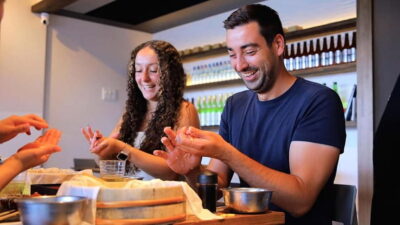
Sushi Making Tokyo Roll and Authentic Japanese Sushi Class
Read our review →
Roll and Authentic Sushi Making Class in Asakusa
Read our review →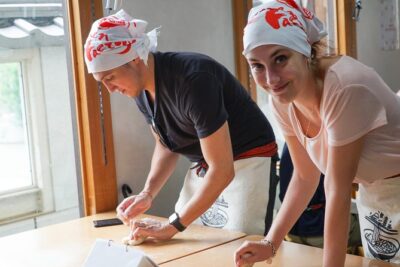
Ramen Cooking Class at Ramen Factory in Kyoto
Read our review →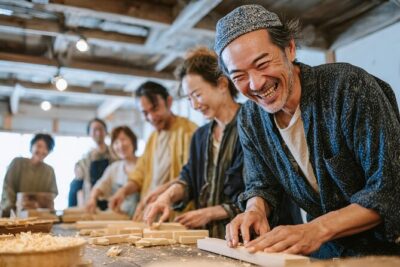
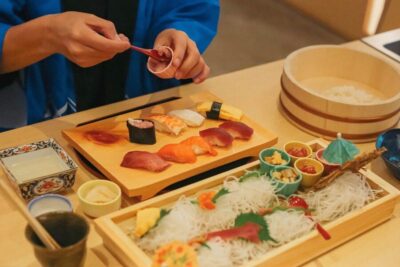
Sushi Making Class in a Happi Coat near a Famous Spot
Read our review →
Sushi Making Osaka Roll and Authentic Japanese Sushi Class
Read our review →Browse the lists this tour appears in