
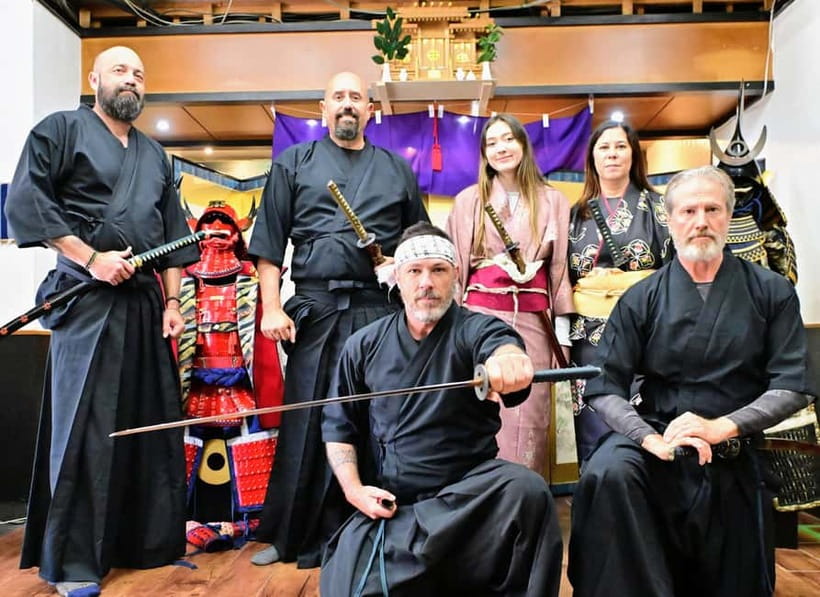
Reviewed · SAMURAI & NINJA EXPERIENCES
Osaka: Learn Bushido – Trial Slashing with Samurai Sword
Samurai training in Osaka, no fluff. This one-hour class turns sightseeing near Osaka Castle into real body-and-mind practice, from costume changes to trial cutting. You’ll learn the basics in a small group, and the payoff is that moment when you actually do a controlled cut.
I especially liked two things: the way the instructor starts with proper samurai manners before any swinging happens, and the hands-on practice that moves from stance basics to trying your own cut. The photos also matter here, because they capture what you just learned, not just a costumed selfie.
One heads-up: you need to show up early to change and get instructions, and you’re actively practicing with a sword setup. If you’re not comfortable with physical coordination or being in full samurai clothing for a short session, plan accordingly.
Key highlights at a glance
- Samurai costume practice, dogi and hakama, before you touch anything sharp
- Bow-first dojo routine around a shrine, with training that starts and ends with respect
- Iai basics you can feel, including battou, chiburui, and nottou motions
- Stances and katana swings taught step by step, with a focus on sword weight, not arm strength
- Trial slashing on a cut target such as rolled straw, with sessions that can look like tatami-based targets
- Photo shooting included, with images sent to your email afterward
Osaka Castle Area, Samurai Honor: What the Experience Really Feels Like
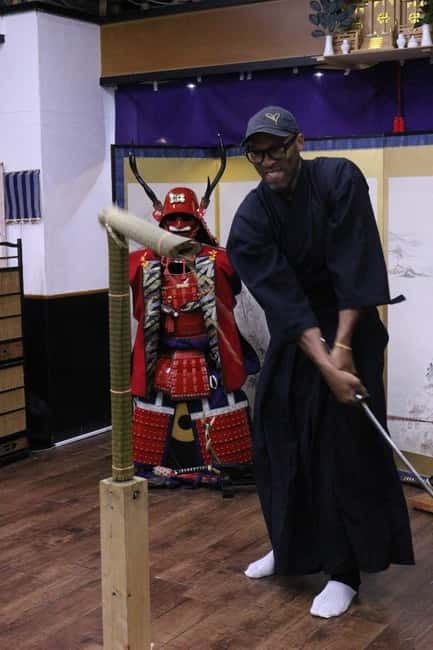
If you’re in Osaka and want something more memorable than another photo stop, this session is built for that. It’s called Osakan: Learn Bushido, Trial Slashing with Samurai Sword, and the format is simple: you show up, you get into samurai gear, you practice the motions, and then you do a real trial cut.
What I like about it is the balance. It’s not just theater. The class starts with etiquette and mindset, then moves into technique. The result is that the cutting part lands better because you understand what your body is supposed to do, and why.
This is also close enough to Osaka Castle that it feels like a natural follow-up to your sightseeing. Instead of rushing off to a far-flung attraction, you can stay in the same general area and turn the day into something hands-on.
More Samurai & Ninja Experiences in Osaka
- Samurai Training Experience KENDO in Osaka
★ 5.0 · 515 reviews - OSAKA NIGHT FUSION Japanese Taiko Kabuki Samurai Dance Show
★ 4.8 · 155 reviews - Osaka: Samurai Training Experience KENDO in Osaka
★ 5.0 · 111 reviews
Finding Samurai Honor at the Excellence Takayama Building
The meeting point is easy to spot once you know what to look for. You want the wooden sign that reads Honor of the Samurai. It’s the landmark in front of the store, on a rack where the activity pamphlets are displayed. There are even kimonos and hakama hanging out to dry, which makes it more recognizable in person.
The address for the location is:
Excellence Takayama 1F, 2-3-19 Shiginonishi, Joto-ku, Osaka-shi, Osaka 536-0014.
One important note: the Apple Maps address can be wrong, so use Google Maps for accuracy.
From the reviews, the area is walkable and straightforward once you’re near Osaka’s park zone. People specifically mention it being easy to get to from Osakajokoen station and that it’s across the river. You’ll still want to give yourself time to find the sign and get settled.
The First Moment: Samurai Costume, Bowing, and That Dojo Setup
Plan your timing like you’re training, not touring. The instructions say you should arrive 30 minutes before your reserved start time. That extra time is for changing clothes and getting set up, and it also keeps the session smooth for the instructor and the small group.
Once you arrive, you change into the samurai costume: dogi and hakama. This isn’t just a quick costume photo moment. The class treats the change as the start of the discipline. You’re expected to act the part right away.
Then the instructor moves to a bowing routine. The dojo setup includes a shrine enshrined in the training space, and the class begins and ends with a bow before it starts. It’s a small detail, but it changes the tone. You stop thinking of this as a casual class and start thinking of it as practice with rules.
Sword and Samurai Manners: Why This Comes Before Cutting
Here’s the thing most people underestimate. Sword technique without etiquette can turn into pure motion. This class does the opposite. It explains the relationship between the samurai and the Japanese sword, including how samurai carried their swords inseparably, even during daily life. The message is direct: the sword is treated as something more than a tool.
You also learn the basics of the samurai mindset. The class connects training to bushido values such as discipline and respect. The dojo teaching is framed as budō training, with mind, technique, and body treated as one system for refining character and courtesy.
You also get practical physical guidance, including the idea of walking while wearing the sword belt. That walking practice is not flashy, but it helps you understand how clothing and equipment affect movement. In real life, technique fails when your stance and posture are wrong, so this step makes sense.
More samurai and ninja experiences in Osaka:
- Osaka: A Modern Samurai, Kabuki, Taiko, & Dance Show
★ 4.5 · 66 reviews - Osaka 2-Hour Genuine Kendo / Samurai Experience In Japan
★ 5.0 · 65 reviews - Samurai Show, Tea Ceremony, Japanese Traditional Activities
★ 5.0 · 56 reviews - Osaka: Private Samurai Experience – Train with Sword Master
★ 5.0 · 36 reviews
Iai Practice Sword Fundamentals: Battou, Chiburui, Nottou
Before any trial cutting, you practice with an iai practice sword. This is where the class becomes methodical. You’re not just swinging. You’re learning a sequence.
The motions you’ll go through include:
- Battou, pulling the sword out from the scabbard with the intent to cut
- Chiburui, a symbolic wiping or cleaning motion after the cut
- Nottou, returning the sword to the scabbard afterward
The terminology matters because it keeps your focus on order. The instructor isn’t just teaching you a flourish. It’s teaching you a complete kata-like workflow: preparation, decisive action, then finishing behavior.
You can expect your instructor to demonstrate, then coach you until the movement becomes controlled. The goal is to help you cut better later, but even if you never go “perfect,” you’ll still leave with an actual process you can repeat in your mind.
Katana Stances and Sword Swings: The “Hi-nari” Moment
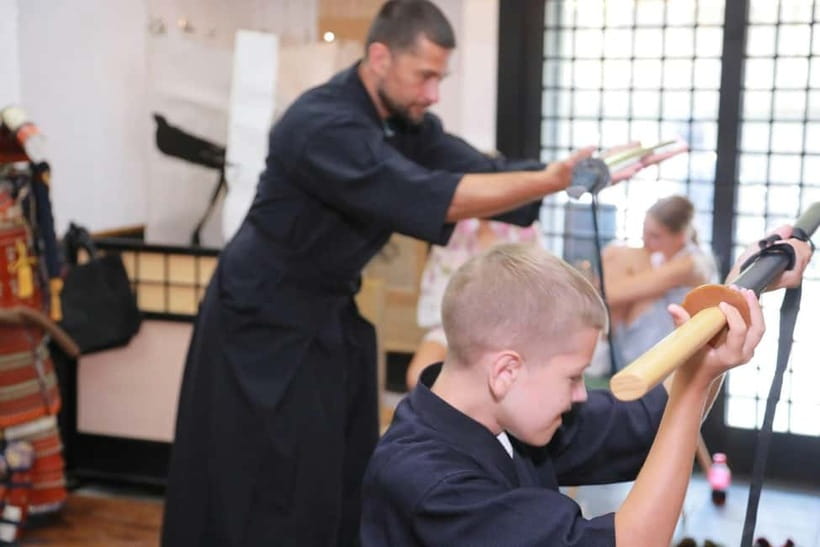
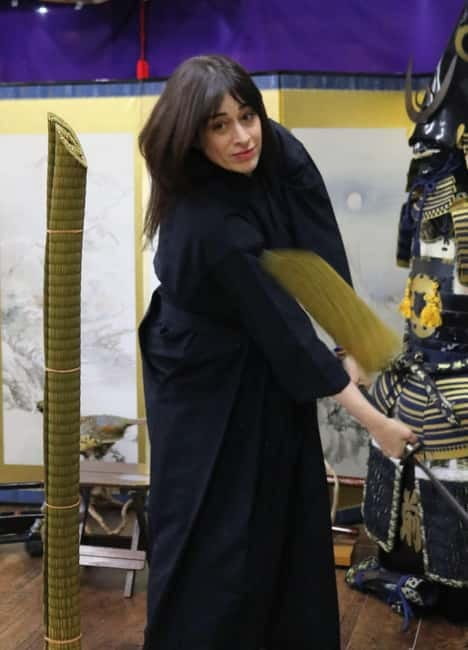
Once the basic sequence clicks, the class moves into stances and swing mechanics. You’ll practice multiple stances, including middle stance, upper stance, lower stance, eight-phase stance, and side stance. For a beginner, this might sound like a lot. In practice, it’s taught in a way that builds step by step, starting with what you need to keep your balance and alignment.
You’ll also learn how to swing correctly. This part is especially useful if you’re used to thinking that strength drives power. The instruction emphasizes sword weight instead of arm force. When your mechanics line up, you can hear a specific sound from the sword called hi-nari. It’s a practical feedback cue. You’re basically learning to recognize when your movement is right, even before you try the cutting target.
Reviews back this up. People describe the sensei as patient and clear, guiding sword swinging motions, then moving to more advanced movements once you’re satisfying the basics. That structure makes the hour feel like real instruction, not just “try and hope.”
Trial Slashing With a Katana: Rolled Straw, and Targets That Look Like Bamboo
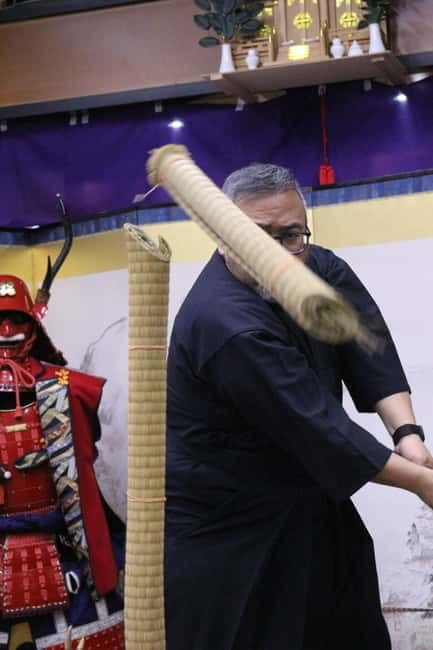
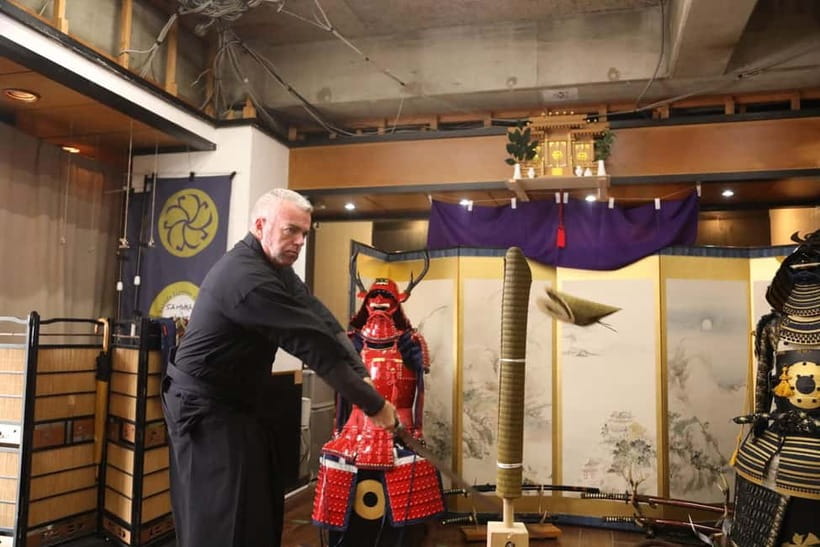
This is the headline moment: trial slashing. The class description says you try cutting a rolled straw. In the reviews, some people describe a final cutting stage that looks like bamboo, but is actually a tatami mat.
So what should you expect? Expect to do controlled cutting on a prepared target, after you’ve practiced stances and basic mechanics. Whether the target looks like rolled straw or a tatami-based bundle, the idea is the same: you’re applying what you learned, safely and under instruction, so your cut has a direction, timing, and follow-through.
What makes this part satisfying is that you’re not doing it blindly. Because you trained the pulling, the stance, and the finishing gestures earlier, the trial cut becomes a test of technique, not just brute force.
Also, you’ll likely notice that the instructor pays attention to how you swing and how you finish the sequence. For a lot of people, that’s the real education you carry home: the cut is the last step, not the whole story.
Photo Shooting Included: Capturing the Samurai Moment
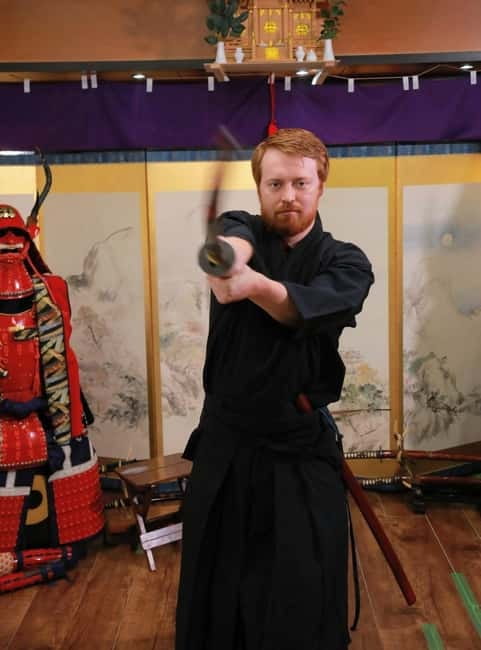
One of the best value parts here is the included photo shooting. Instead of just giving you a moment and letting you figure out your own camera angles, you get help getting pictures during the experience.
The setup includes sending the photo data to your designated email address afterward. People mention getting lots of photos, and they even describe instructors and a photographer supporting both the experience and the picture taking.
If you’re coming with friends or family, this is worth paying attention to. The class involves physical practice, so you might not want to spend your time acting as the group camera operator. Having photos handled for you takes stress off the experience.
And yes, people really do leave with that “I became a samurai for an hour” feeling, because the costume is real, the practice is real, and the cutting moment is real.
Small Group Size and Language Support That Matters
This is a small group experience, limited to 4 participants. That size is more than a comfort detail. It affects how much the instructor can correct your stance, your timing, and your motions without rushing you.
Language support is also practical. The default language for interpreters is English, and the instructor is listed as English and Japanese. If you need a different language (Italian, Spanish, French, Chinese, Thai, Indonesian), you can inquire about the staff member’s schedule before reserving, but they may not always be able to accommodate.
If you don’t speak Japanese, that English coverage helps. Clear instructions are the difference between “I swung a sword” and “I learned how the sequence works.”
Price and Value: Is $92 Reasonable for One Hour?
At about $92 per person for a 1-hour class, you’re paying for more than a demo. You’re paying for real guided coaching, costume, structured practice, and included photos.
A simple way to judge value is to count what you get besides the cutting:
- Samurai clothing included (dogi and hakama)
- Certified professional instructor
- Step-by-step practice from stances to swinging mechanics
- Trial cutting practice
- Photo shooting included, with delivery afterward
You also avoid the cost and hassle of finding a place that rents gear and teaches kata safely with a structured flow. For many visitors, it’s cheaper than piecing together multiple experiences, and it’s more satisfying because it ends with doing the main action yourself.
One timing note: the booking lists duration as 1 hour, but some people report the full lesson feeling closer to about two hours, likely because of changing and the full coaching pace. So think of this as a short but real commitment, not a quick in-and-out.
Who Should Book This Bushido Trial Slashing Session
This is a strong fit if you:
- Want an Osaka Castle-area activity that’s more hands-on than walking tours
- Enjoy learning a skill with clear steps, not just watching
- Want photo-worthy results with real instruction behind them
- Prefer a small group setting where the instructor can correct details
It’s also good if you’re traveling as a family and want everyone to participate, as long as children meet the minimum age. The experience is not suitable for children under 10.
If you’re sensitive to physical activity or you hate being in coordinated costume clothing, this might feel more challenging than a traditional museum stop. It’s training focused, so bring the mindset of practice.
Should You Book Samurai Honor Near Osaka Castle?
If you want one thing in Osaka that feels different from the usual sights, I think this is an easy yes. The combination of samurai etiquette training, structured sword basics, and an actual trial cut makes it worth your time. The included photos also make it feel complete, because you can remember the technique, not just the costume.
I’d only hesitate if you want a purely passive experience, or if you’re uncomfortable with coordination and practicing movements for an hour plus setup time. Otherwise, it’s one of the most direct ways to experience Bushido in a way that actually teaches you something.
FAQ
How long is the Osaka Samurai Honor trial slashing experience?
It’s listed as 1 hour.
What’s included in the price?
Samurai clothing (dogi and hakama), a certified professional instructor, tax and tips, and photo shooting with delivery by email.
What should I bring with me?
Bring a T-shirt for the session.
Do I need to arrange transportation or a pickup?
Pick up and drop off at the train station or hotel is not included, and transportation is also not included.
What languages are available for instruction?
English is the default interpreter language, and the instructor is listed for English and Japanese. Other languages may be possible if you inquire about the staff schedule before booking.
Is this experience suitable for children?
No, it’s not suitable for children under 10 years old.
What’s the main trial cutting target?
The class description says you try cutting a rolled straw during trial slashing.
Fresh options around Osaka
- Osaka : Private One-way Transfers to/from Kansai Airport(KIX)★ 5.0 · 16 reviews
- Let’s Dance Bon Odori Japanese folk Dance near Tsutenkaku★ 5.0 · 16 reviews
- Osaka: Ninja Experience Cafe in Dotonbori★ 4.9 · 16 reviews
- Osaka 1 Day Walking Tour with River Cruise from Osaka or Kyoto★ 4.5 · 16 reviews
- From Osaka or Kyoto: Full Day Sightseeing Tour of Kyoto★ 4.5 · 16 reviews
- Get to know Minoo from Osaka. Katsuoji Temple, Ryuanji Waterfall and Ryuanji Temple★ 5.0 · 16 reviews
- Samurai Armor & Sword experience with phot near Osaka Castle★ 4.6 · 16 reviews
- Osaka: Private and Fully Customized Tour with Hotel Meet Up★ 5.0 · 16 reviews
Samurai & Ninja Experiences, compared.

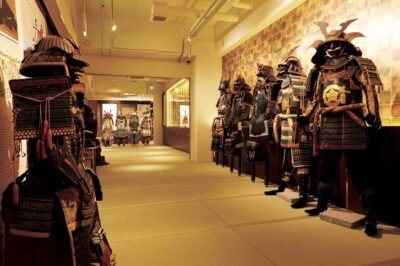
Samurai Ninja Museum Guided tour and Experience
Read our review →
Kendo and Samurai Experience with Uniform and Gear
Read our review →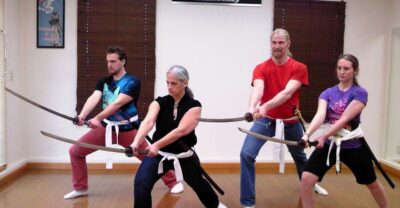
Samurai Sword Class by Experts in Traditional Arts
Read our review →
Skip the lines Basic Ticket at SAMURAI NINJA MUSEUM KYOTO
Read our review →
Samurai Sword & Archery Class from Samurai Descendant
Read our review →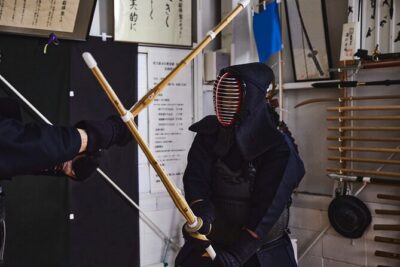
Browse the lists this tour appears in