
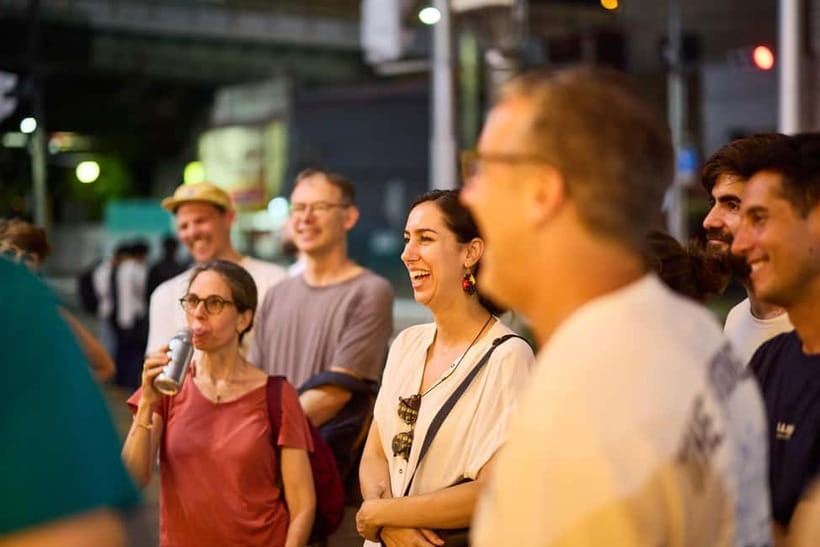
Reviewed · WALKING TOURS
Osaka: Dark Side of Osaka Night Walking Tour
Osaka after dark has a second face. This night walking tour takes you past Shinsekai, Nishinari, and Osaka’s biggest red-light district, with an English guide ready to explain the city’s softer glow and its darker corners. I like that it’s built around real neighborhoods and street-level details, and I especially like the chance to see Tobita Shinchi in context, not as a postcard. You may also get guides such as Jay, Rico, or Matt, who handle sensitive topics with care and answer questions without turning the whole thing into a spectacle.
One possible drawback: some scenes and stories here can feel confronting, and you should be ready for a more discreet side of urban life that many people normally avoid.
Key reasons to book this Osaka night walk
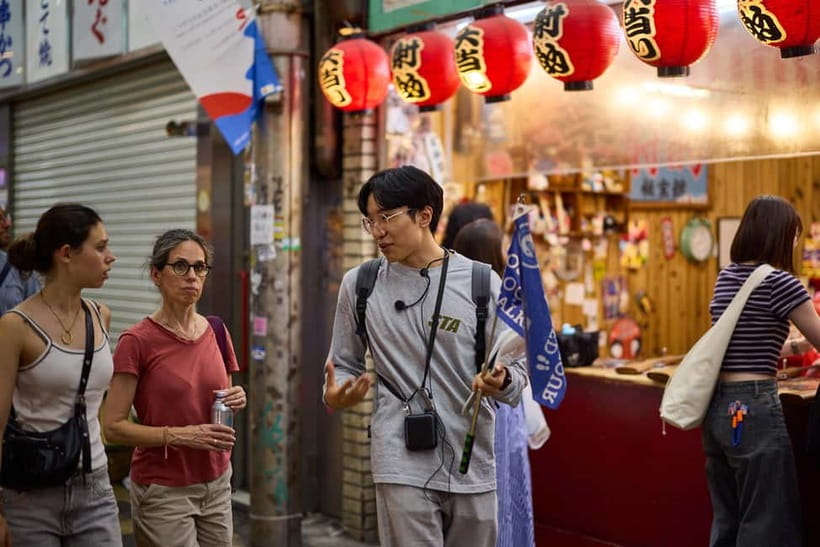
- MEGA Don Quijote Shinsekai meeting point makes it easy to find, even after dark.
- Shinsekai’s Western-influenced roots (1912, Paris and Coney Island models) add real “why” to the retro streets.
- Nishinari’s working-class story helps you understand how Osaka neighborhoods change over time.
- Jyanjyan Yokocho near Tsutenkaku is the kind of alley where you get atmosphere first, then context.
- Tobita Shinchi’s red-light district is covered with rules, respect, and historical framing.
- English guides with lots of Q and A keep the pace engaging for a full 2 hours.
Meeting Under the Giant Penguin at MEGA Don Quijote Shinsekai
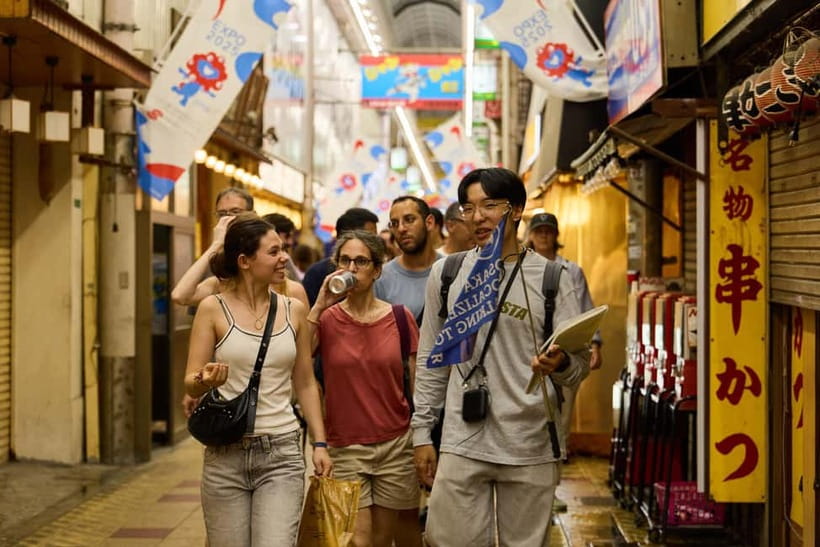
You start at a spot that’s hard to miss: Under the Giant Penguin of MEGA Don Quijote Shinsekai. Your guide waits holding a sign that says GetYourGuide. This matters more than it sounds. Osaka at night can be a blur of alleys and crosswalks, and starting at a clear landmark helps you avoid the “where are we?” stress.
The tour is English-speaking and runs about 2 hours on foot. It’s also not a long, stop-and-go affair on buses or trains. You’ll be walking and listening, which is exactly what you want for neighborhoods like Shinsekai and Tobita Shinchi, where the mood comes from street life, not from indoor exhibits.
Also note the practical stuff. Bring comfortable shoes because this is a night walk. Weather can change quickly, so dress for rain or cold if you need to. And keep it respectful, especially in areas connected to regulated nightlife.
More Walking Tours in Osaka
- Osaka: Hotspots & Hidden Gems Walking Tour Private or Group
★ 4.9 · 1,300 reviews - Osaka Local Foodie Walking Tour in Dotonbori and Shinsekai
★ 5.0 · 985 reviews - Osaka Bar Hopping Night Walking Tour in Namba (3 bars, 6 tastes)
★ 5.0 · 958 reviews
Shinsekai After Dark: 1912 Western-Style Entertainment District
Shinsekai starts the story in a fun, oddball way. The district name means New World, and it was established in 1912 as a modern entertainment area with Western inspiration. The southern half was modeled after Paris, and the northern half was modeled after New York’s Coney Island. That mix of “imported dream” and local street reality is one reason Shinsekai feels different from many other parts of Osaka.
What I like about this stop is the contrast. Over time, the initial grandeur faded, but the area kept a quirky charm. That’s useful for you because it trains your eyes. Instead of seeing Shinsekai as one long theme park, you learn to spot how layers of history survive in small ways, like signage, street layout, and the kind of storefronts people still use at night.
You also get a guide’s eye for details. In a lot of tours, “history” becomes facts you can forget five minutes later. Here, the goal is to connect the past to what you can actually see walking down the street now. So when something looks retro, you understand whether it’s just aesthetics or a clue to how the neighborhood was built.
One more thing to keep in mind: Shinsekai is not polished. It’s part tourist-friendly, part everyday Osaka. That’s what makes it worth your time, but it also means the mood can be a little uneven. Go in with curiosity, not expectations of a neat, curated district.
Nishinari: The Working-Class Past and Today’s Street Reality
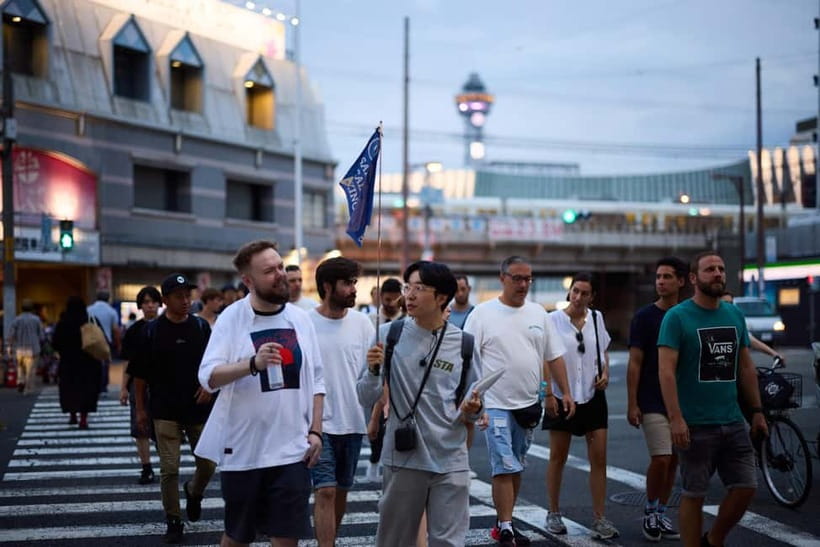
From Shinsekai, the tour heads into Nishinari, in southern Osaka. This area has a reputation for being raw, and for a reason. Nishinari used to be a hub for day laborers and a working-class community. In recent years, it has been changing too, with budget travelers and urban explorers showing up to see the gritty side and how it’s evolving.
Why this stop works for you: it’s a neighborhood that resists the simple version of Japan. Many visitors come to Japan expecting uniform beauty. Nishinari adds the human texture that explains why cities develop the way they do, and why certain districts carry heavier stories than guidebooks tend to highlight.
The tour approach here is important. You’re not just walking through a “bad side.” You’re hearing context about how communities shift, how people live, and how tourism can influence a place over time. The tone in the guide commentary tends to stay respectful, especially on sensitive themes, which you’ll appreciate if you are the kind of traveler who doesn’t want entertainment at someone else’s expense.
Practical tip: Nishinari is more about street atmosphere than major monuments. Keep your attention on the smaller scenes the guide points out. That’s where you’ll feel the shift from “bright Osaka” to the Osaka that shows its rough edges.
Jyanjyan Yokocho: Retro Alley Comfort Food and Mid-Century Atmosphere
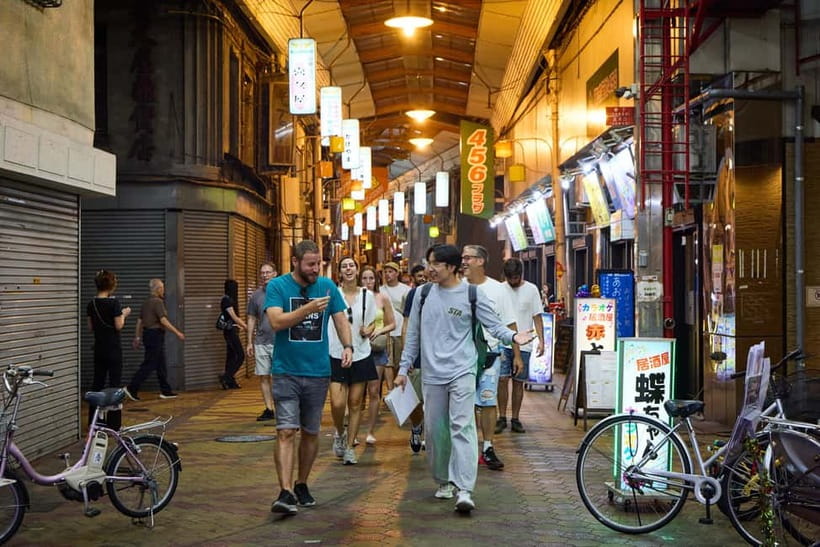
Next comes Jyanjyan Yokocho, a narrow shopping and dining street in Shinsekai near Tsutenkaku Tower. This is where the tour slows just enough for you to smell and see what makes the area nostalgic.
The alley is known for old-school eateries, bars, and shops, and it’s often described as a time trip to mid-20th century Japan. Even if you’ve seen a lot of narrow alleys in Japan, this one stands out because it feels like an extension of the neighborhood’s identity. It’s not trying to be modern. It’s trying to be itself.
A small but useful note: food and drinks are not included on the tour. That’s actually a good thing for your planning, because you can choose what fits your budget and dietary needs. If you want to eat after the walk, this is a smart moment to learn where you might want to go back.
Also pay attention to how the guide talks about the street. A good guide here won’t just name places. They’ll help you understand how these tiny spaces function socially. You’ll notice how the alley shapes foot traffic, how storefronts face the sidewalk, and how night lighting changes what feels cozy versus what feels cramped.
If you’re the kind of traveler who likes a mix of culture and practical “what should I try?” energy, this stop is often a highlight.
Same corner of Japan, a different kind of day:
- Osaka Go Karting Tour with Funny Costume
★ 5.0 · 2,658 reviews - Osaka Castle: Museum and Tower Entry Ticket
★ 4.5 · 2,380 reviews - Osaka: Shinsekai Food Tour with 13-15 Dishes at 5 Eateries
★ 4.8 · 2,204 reviews - Osaka Food Tour: 13 Dishes at 5 Local Eateries
★ 5.0 · 2,149 reviews
Tobita Shinchi Red-Light District: History, Architecture, and Respect
The tour’s most sensitive chapter is Tobita Shinchi, described as Osaka’s most famous and largest red-light district, with a history over a century. This is where you should expect stricter rules and a more discreet atmosphere. The tour covers it in a way that focuses on history and the social reality of regulated nightlife.
What you can realistically expect to see here is tightly managed street life, including the way the area is designed and how it’s kept orderly. The tour framing matters because it gives you a lens: you’re not just staring at windows, you’re learning how an urban district like this operates and why it’s still here when many others disappear.
You will also notice the “unique architectural style” mentioned in the tour overview. Even without a formal museum stop, the area’s structure communicates its purpose. That’s why this part of the walk can be more than a quick look. It becomes a lesson in urban planning and social boundaries.
One consideration: some parts of this tour can feel uncomfortable, especially if you are less used to discussions of sex work and social discretion. The good news is that the tone tends to stay diplomatic. Guides like Jay, Rico, and Matt are repeatedly described as respectful when covering delicate material, and they tend to keep the conversation from turning into gossip.
Rule of thumb for you: act like you’re in someone’s workplace-adjacent environment. Keep your voice down. Don’t block doorways. And remember, your curiosity is not the same thing as permission for intrusive behavior.
Pace, Timing, and How the 2 Hours Flows on Foot
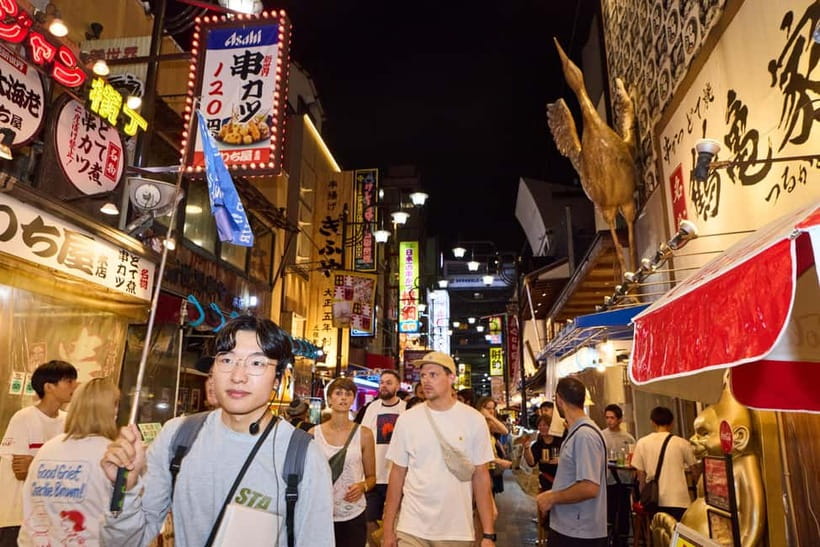
The structure is simple: you start at MEGA Don Quijote Shinsekai, then you move through multiple guided segments and district walks, finishing at Tsūtenkaku. The duration is 2 hours, which is long enough to feel like you connected the dots, but short enough that you’re not stuck in one neighborhood forever.
The stop timing in the tour format is broken into guided segments of different lengths, with one very short portion and several around 20 to 30 minutes. Practically, that means you’ll likely get a mix of walking time and guided explanation time, without constant “stand still and listen” moments.
This matters because night walking is tiring. When you’re in motion, even a slow crowd pace feels doable, and you can absorb details without feeling trapped. In the same way, when a guide gives you a bit of context before you reach a new area, you get more out of what you see.
Small-group energy also seems to be part of the experience. Some people mention small group size, which is great because you can ask questions and get answers that fit your interests. If you like history but also want street-level advice, this pacing helps.
Price and Value: What $25 Buys You in Osaka
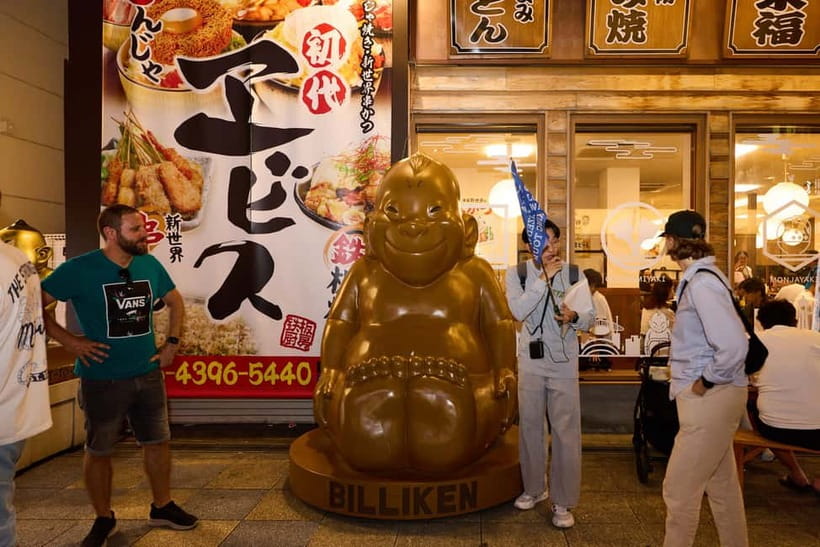
At $25 per person for about 2 hours, this tour is trying to offer value in the right place. You’re paying for an English-speaking guide and a guided night route through districts that are usually confusing or awkward to explore alone.
If you were to do this on your own, you could probably find Shinsekai, Tobita Shinchi, and Tsutenkaku on a map. But the difference is context. Here, the guide gives you reasons behind what you’re seeing, plus how to act in sensitive spaces. That human interpretation is often what turns a “look around” walk into a meaningful night out.
Also, the guide’s approach seems to be a big part of satisfaction. People describe guides as friendly, insightful, and careful with sensitive topics. That kind of guide quality is hard to replicate with a self-guided audio app, especially when you want to ask questions and get straight answers on local history and social change.
Food and drinks are not included, so you’ll want to budget separately if you plan to eat. That’s still fine, because it gives you freedom: you can grab something simple before you start, then use the walk to find where you want to return.
Who This Tour Is For, and Who Might Want to Skip It
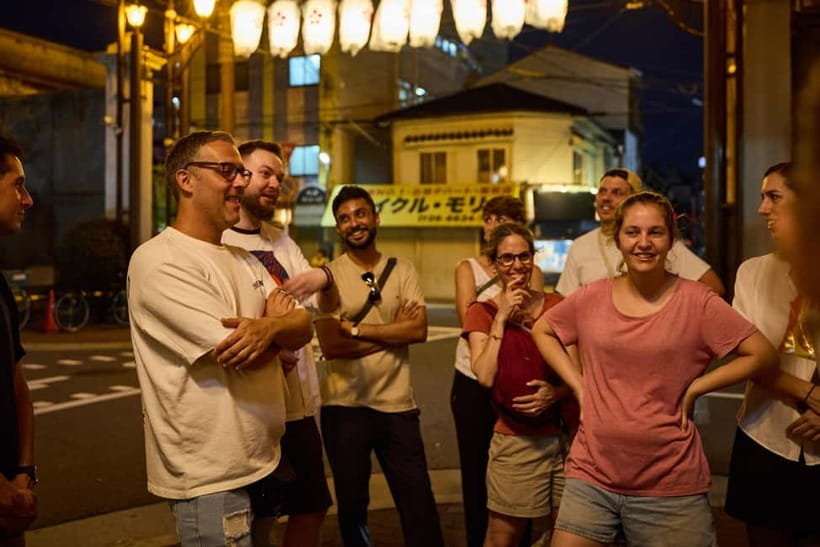
This is a night walking tour, and it’s also a tour that touches on adult nightlife zones. So it fits best if you:
- like city history that includes social realities, not just temples and postcards
- can handle a topic that may feel confronting
- enjoy asking questions and getting context from a live guide
- want an offbeat Osaka plan that still connects to mainstream landmarks like Tsutenkaku
It is not suitable for children under 18 or wheelchair users, based on the tour’s stated rules. That’s an important filter. Stairs, uneven sidewalks, and tight lanes in areas like Tobita Shinchi and Jyanjyan Yokocho can make accessibility tough, and the tour’s content is adult-focused.
If you’re the type who prefers only upbeat, bright experiences, you might find this emotionally heavier than you planned. But if you want the full Osaka picture, this tour gives you one of the more honest nighttime angles.
Should You Book This Osaka Dark Side Tour?

I’d book this tour if you want more than nightlife photos and you like understanding how neighborhoods got the way they are. The strongest reason to choose it is the guide component. People consistently praise how guides connect history to what you can see, and how they keep their tone respectful when discussing sensitive topics.
Skip it if you know you cannot handle uncomfortable subject matter, or if you’re traveling with someone under 18. Also skip it if you hate walking for two hours, because the value comes from being on your feet through Shinsekai and the surrounding districts.
If your goal is an Osaka night with context, street texture, and a route that avoids the awkwardness of wandering alone, this tour is a solid bet at $25.
FAQ
Where do I meet the tour guide?
You meet your guide at Under the Giant Penguin of MEGA Don Quijote Shinsekai. The guide holds a sign that says GetYourGuide.
How long is the Osaka night walking tour?
The tour lasts 2 hours.
What areas do we visit?
You explore Shinsekai, Nishinari, Jyanjyan Yokocho (near Tsutenkaku Tower), and Tobita Shinchi, finishing at Tsūtenkaku.
Is the tour in English?
Yes, the live tour guide speaks English.
Are food and drinks included?
No. Food and drinks are not included.
Is it suitable for wheelchairs or young children?
No. It is not suitable for wheelchair users, and it is not for children under 18.
Are there rules about smoking or alcohol?
Smoking is not allowed. Alcoholic drinks in the vehicle are also not allowed.
What is the starting price and value?
The price is $25 per person for a 2-hour guided night walk focused on these specific districts. That cost includes the live guide and walking exploration, while food is separate.
More Evening Experiences in Osaka
- Osaka After Dark: Small-Group Night Food Tour (Max 6)
★ 4.5 · 245 reviews - OSAKA NIGHT FUSION Japanese Taiko Kabuki Samurai Dance Show
★ 4.8 · 155 reviews - Osaka: Bar-Hopping Night Tour in Namba
★ 4.7 · 117 reviews - Osaka Night Walk : Discover Umeda Food and Pub
★ 5.0 · 34 reviews
Fresh options around Osaka
- Osaka Winery Tour with Wine Tasting & Vineyard Walk★ 4.9 · 12 reviews
- Osaka: Early Morning Osaka Castle Guided Tour, Avoid Crowds★ 4.9 · 12 reviews
- Kyoto Day Trip from Osaka Port – Private Shore Excursion★ 5.0 · 13 reviews
- Osaka Private Pop Culture Tour: Historic Tenma to Dotonbori★ 4.5 · 13 reviews
- Osaka Castle Admission Ticket★ 4.0 · 13 reviews
- Hidden Osaka Foodie Tour: Nishinari Backstreets & Local Dining★ 5.0 · 13 reviews
- Discover Real Osaka: A Cultural Walk with Food & Drink★ 5.0 · 13 reviews
- Nara private tour (Shore excursion available from Osaka or Kobe port)★ 5.0 · 13 reviews
Walking Tours, compared.
Kyoto Geisha Walking Tour: Gion District & Hidden Gems
Read our review →
Tokyo Tsukiji Fish Market Food and Culture Walking Tour
Read our review →
Gion Magical Night Walking Tour with Geisha Trivia
Read our review →
Imperial Palace and Shogun Historical Walking Tour
Read our review →
Gion Geisha District Walking Tour – Stories of Geisha
Read our review →
Shinjuku Local Bar and Izakaya Guided Walking Tour
Read our review →
Browse the lists this tour appears in