
Reviewed · WALKING TOURS
Nostalgic Osaka walk, totally different from Dotonbori
Osaka has more than neon. This nostalgic walk takes you into Karahori, a quieter pocket with old houses and everyday routines, not Dotonbori theatrics. Two things I really liked: the craft stops, from a tatami maker to heritage shops, and the way your guide, Chieko-san, points out the details locals actually notice.
Here is the only real catch: this is a walking tour with turns through narrow streets and slight uphill/downhill bits, so comfortable shoes matter. Also, the route uses quieter “behind the scenes” paths where you must keep your voice down and not disturb residents.
Key points to know before you go
- Small group of up to 6 means more conversation time with Chieko-san
- Morning or afternoon options help you fit it around Osaka’s busier sights
- Craft and heritage stops include tatami making and a bonito shop founded in 1765
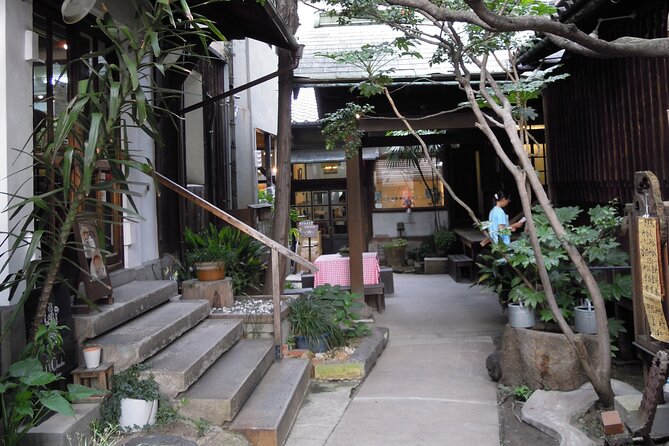
- Renovated-house cafés and shops show how old machiya buildings stay useful
- Karahori shotengai-style streets offer a real sense of daily shopping life
- Respectful route rules keep the neighborhood calm, especially in hidden alleys
Osaka beyond Dotonbori: why this nostalgic walk feels different
Dotonbori is famous for a reason. It is loud, bright, and easy to photograph. But it is also a bubble, the kind of place where you can feel like you are watching a show that was built for visitors.
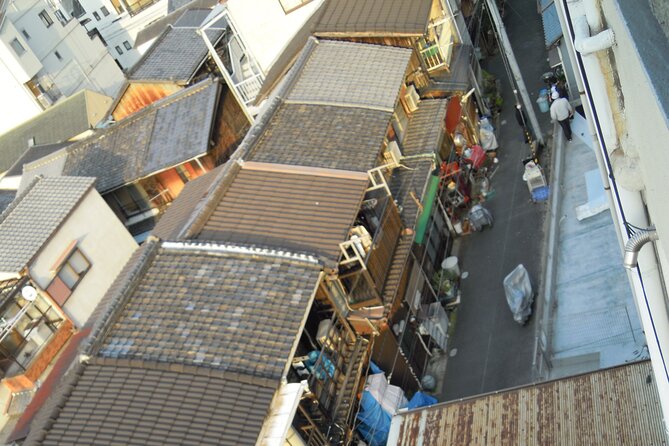
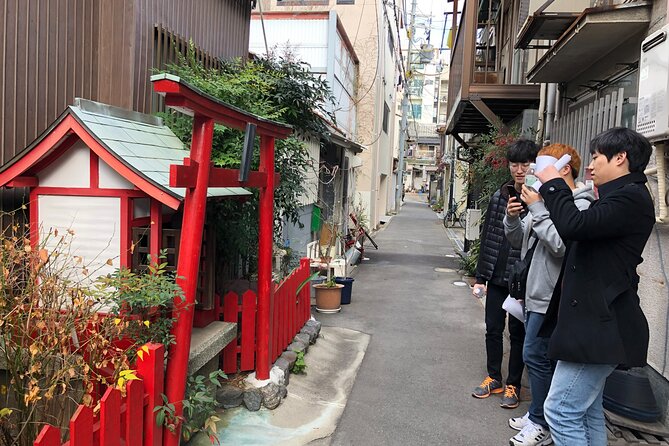
This tour is designed for the opposite mood. You spend your time in Karahori, a more historical neighborhood where narrow lanes, old machiya houses, and small businesses still shape everyday life. The goal is not to “check off” attractions. It is to help you see how Osaka works when it is not trying to entertain you.
The second reason it feels special is your guide, Chieko-san. Based on what people say about her, she does not just recite facts. She guides you at neighborhood speed, pointing out terrain lines, building age, and local habits you would normally walk past.
More Walking Tours in Osaka
- Osaka: Hotspots & Hidden Gems Walking Tour Private or Group
★ 4.9 · 1,300 reviews - Osaka Local Foodie Walking Tour in Dotonbori and Shinsekai
★ 5.0 · 985 reviews - Osaka Bar Hopping Night Walking Tour in Namba (3 bars, 6 tastes)
★ 5.0 · 958 reviews
Is this tour worth your time if you’re short on days?
If you have one or two days in Osaka, you might worry you are missing the biggest hits. Here is the honest tradeoff. This walk will not replace a major landmark day. It is smaller, quieter, and more about texture than scale.
What it does do is give you a second Osaka. You get the “old town” feeling people chase, plus modern daily life in the same route. And because it is only about 2 hours, it is a smart add-on even on a busy itinerary.
Who it suits best:
- You want something calmer than Dotonbori but still very “Osaka”
- You like craft details and family-run shops
- You enjoy wandering at a local pace and talking with your guide
Timing and meeting point: how to keep the day smooth
The experience starts and ends at the same meeting spot in Tanimachi, Chuo Ward (6-chōme-2-24 Tanimachi, Osaka 542-0012). It is described as near public transportation, which helps if you are building your day with transit.
One important rule: if you are more than 15 minutes late, you cannot join the trip. That is not a “maybe.” Plan to arrive early, especially if you are still figuring out the neighborhood.
You also have to be mindful during the quiet alley portions. The instructions are clear: do not disturb residents while you are walking through the neighborhood’s hidden paths. You are walking through people’s everyday home area, including older neighbors who still live there.
Stop-by-stop: tatami craft, Karahori streets, and alley cafés
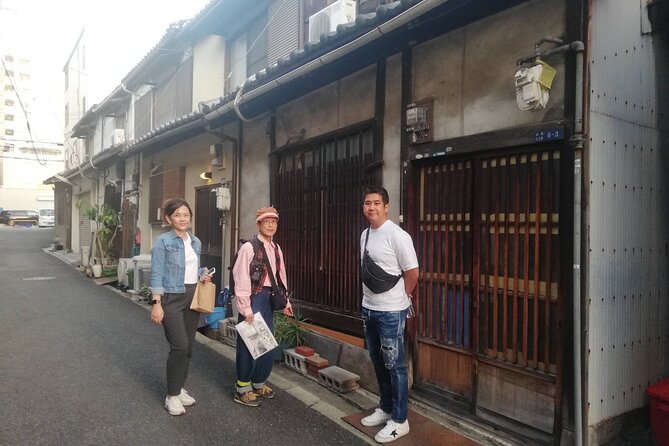
Your route is built like a story. You start with a hands-on traditional craft, then move into daily-life shopping streets, and finish with renovated old-house cafés and specialty shops. Along the way, you get help spotting what makes the area old without feeling like you’re stuck reading a museum label.
Same corner of Japan, a different kind of day:
- Osaka Go Karting Tour with Funny Costume
★ 5.0 · 2,658 reviews - Osaka Castle: Museum and Tower Entry Ticket
★ 4.5 · 2,380 reviews - Osaka: Shinsekai Food Tour with 13-15 Dishes at 5 Eateries
★ 4.8 · 2,204 reviews - Osaka Food Tour: 13 Dishes at 5 Local Eateries
★ 5.0 · 2,149 reviews
Stop 1: Inoue Seijosho and the tatami-making craft
The first stop is Inoue Seijosho, a tatami mat workshop area. This is where the tour earns its cultural points quickly. You learn how tatami mats are made, including seeing the materials and a tatami-making machine in action.
Why this works for real-life travelers: tatami is easy to admire in a photo, harder to understand in context. Seeing the process early helps you notice why these mats matter in Japanese interiors and why the craft is still worth preserving.
Admission at this stop is free, and the visit is short, about 10 minutes, so it fits well into the walking rhythm.
Stop 2: Karahori Shopping Street and the neighborhood feel
Next comes Karahori Shopping Street, a place built for daily shopping. This is where you shift from craft to community.
You will see old houses, including machiya that can be over 100 years old. You also get a sense of how the neighborhood still functions: residents move through lanes like they always have, and local storefronts feel woven into the street rather than placed for tourists.
One practical note: the route involves walking through quieter lanes. Keep your pace gentle, and remember the instructions about not disturbing inhabitants.
Stop 3: a renovated-house café (Kuderi Café)
Then you get a short stop at クーデリーカフェ (Kuderi Café), described as a hidden café in a renovated old house.
This stop is not about long coffee time. It is about atmosphere and design. You are seeing how old structures are reused, not erased. It is also a chance to shop a bit differently. Some people specifically like that you can find items that do not feel like standard airport souvenir stock.
Time on this stop is about 15 minutes and admission is free.
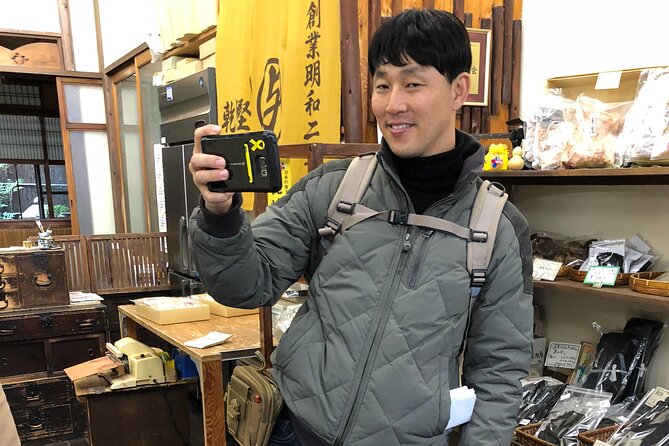
Stop 4: Maruyo-shoten, a bonito shop since 1765
Up next is Maruyo-shoten, a bonito shop founded in 1765. If you like food history, this is a great detour.
The tour frames it around authenticity, essentially showing what authentic bonito looks and tastes like in a place that has stayed in business for centuries. It is a short stop (about 5 minutes), but it gives you a strong anchor point for thinking about Japanese ingredient culture.
Again, admission here is free.
Stop 5: Ek Chuah chocolatier in Karahori
After the savory stop, you shift to chocolatier Ek Chuah at the Karahori “Kura” main shop.
This is one of the more “sensory” breaks on the route. People talk about this stop as a favorite, and the tour’s pacing keeps it from feeling rushed. If you like gifts that are more personal than mass-produced sweets, this is where you’ll start building ideas for what to bring home.
Time is about 5 minutes, with free admission.
Stop 6: Len – Karahori Residence, a refurbished commercial complex
The next stop is Len – Karahori Residence, described as a traditional house renovated into a shop complex. Think of it as machiya energy plus modern retail usefulness.
This is another shop-stop, but it is different from a typical mall store cluster. You are walking through a building that still carries old-house form, which makes browsing feel like part of the experience, not just shopping therapy.
Time is about 10 minutes, free admission.
The best finishing touch: Osaka castle’s moat wall in an alley
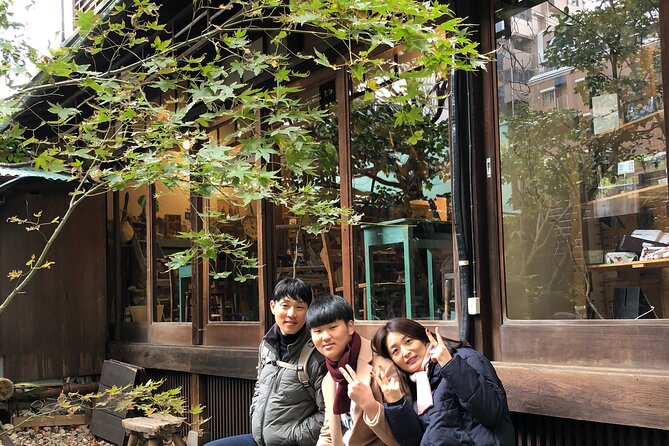
Your final segment includes a hidden café in an alley. The fun detail is what you can see right beside it: the Osaka castle original moat wall, said to remain since the 15th century.
This is exactly the kind of payoff this tour is built for. Without a local guide, it is the sort of sight you might miss entirely because it is not presented like a headline attraction. With context, it becomes a “wait, that’s old” moment that makes the neighborhood feel bigger than it looks on the map.
The stop is short, and the experience ends back near where you started.
What you’ll learn from Chieko-san, not just where you’ll walk
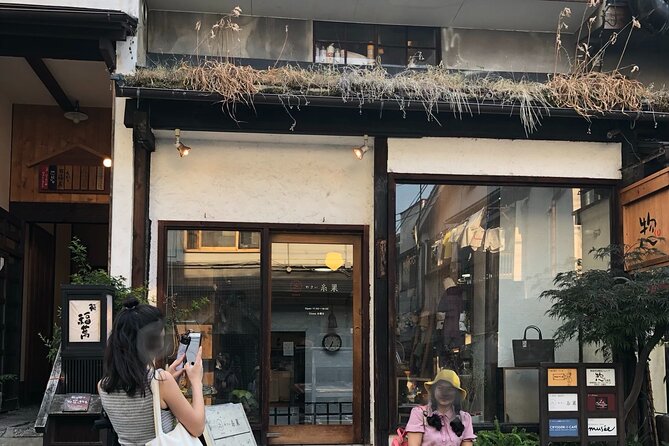
A lot of walking tours can feel like a string of store fronts. This one leans harder into explanation and everyday context.
From what people highlight about Chieko-san’s guiding style, you can expect:
- Focus on neighborhood history tied directly to what you see (old terrain clues, walls, house changes)
- Clear stories about daily life, not just big-name dates
- Friendly conversation, including the kind of small personalization that keeps it from feeling scripted
One review note stood out to me: if you mention preferences like cats, Chieko-san may tailor parts of the walk to match that interest. That tells you something important about the vibe. You are not just a ticket number, you are a person walking with a neighbor who cares about her streets.
Food and shopping tips that keep this experience fun
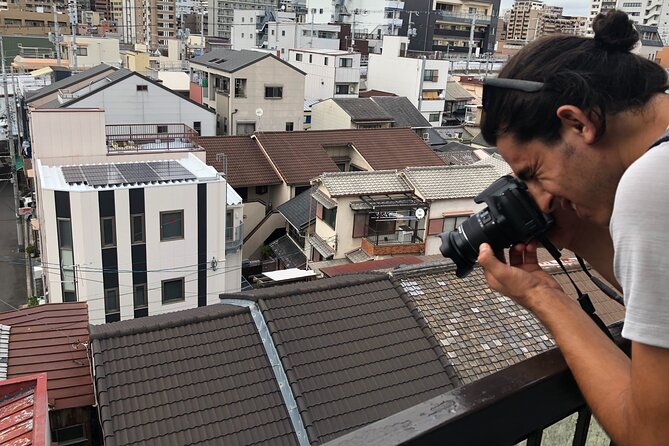
This is not a full meal tour. Bottled water is included, but meals are not. Coffee and tea are also not included, so you will likely buy drinks or snacks if you want them.
Here is my practical approach for tours like this:
- Decide a budget before you go, because shop stops are frequent and some are genuinely worth buying from
- Treat snacks and small gifts as part of the story, not as random consumption
- Save your bigger purchases for one or two stops, so you do not end up carrying bags for the rest of Osaka
Also, because part of the value is seeing unique shops (the kind that feel better than big chains), it helps to browse with a purpose: pens, small snacks, food gifts, or local-brand chocolates.
Price and value: what $36.13 buys you in real terms
At $36.13 per person, this is priced like a budget-friendly cultural experience rather than a premium private tour.
Why it feels like good value:
- You get around 2 hours of guided walking
- It is small group size (maximum 6 travelers), which matters for questions and conversation
- There are multiple stops with free admission, including tatami-making viewing and several heritage shops
- Bottled water is included, so you start comfortable rather than hunting for a drink immediately
What you should mentally price in separately:
- Any snacks, drinks, and purchases you choose to make during shopping and café stops
- Your time and energy for walking, since it is not a sit-down, minimal-walking route
Given the focus on local craft and neighborhood context, this price lands in the “you’ll use it later” category. You do not just see things. You get a lens for understanding Osaka.
Logistics and weather: the simple things that affect your day
The tour requires good weather. If conditions are poor, you will be offered a different date or a full refund.
Because the route includes alley walking and outdoor street segments, dress for comfort. Wear shoes you can walk in without thinking about it. The group size is small, but the streets are still streets, and you want your body to stay happy.
Who should book this nostalgic Osaka walk
Book it if:
- You want to escape the Dotonbori rhythm without leaving Osaka behind
- You like older neighborhoods, machiya houses, and craft details
- You want local shop time, not just sightseeing photos
- You enjoy guided conversation, especially with a personable guide like Chieko-san
Skip it if:
- You hate walking or have mobility limits that make alley streets hard
- You only want major Osaka landmarks and big-ticket sights
- You want a heavily food-centric day with a full meal plan
Should you book this nostalgic Osaka walk?
Yes, if your goal is to see Osaka as more than a single entertainment district. This tour gives you a compact dose of old-town texture, plus a neighborhood-shopping feel that most short Osaka trips miss.
If you like Dotonbori, you will still enjoy it. But you will also understand why it feels different from the rest of the city. And when you spot the moat wall in that alley café area, it will click in a way that a map-based sightseeing day rarely does.
FAQ
How long is the Nostalgic Osaka walk?
It runs about 2 hours.
What does the price include?
Bottled water is included. Meals, coffee, and tea are not included.
Are there free admission stops?
Yes. The provided stops list free admission for the tatami-related stop and several shop and café stops.
Do I need to choose a morning or afternoon tour?
Yes, you can choose from a morning or an afternoon option to fit your schedule.
What if I arrive late?
If you are late by more than 15 minutes, you cannot join the trip to respect the schedule for other guests.
Is the group size limited?
Yes. The tour has a maximum of 6 travelers.
What happens if the weather is bad?
The experience requires good weather. If it is canceled due to poor weather, you will be offered a different date or a full refund.
If you tell me your travel dates and whether you prefer morning or afternoon, I can help you decide where this fits best alongside Osaka’s other neighborhoods.
Fresh options around Osaka
- Osaka Winery Tour with Wine Tasting & Vineyard Walk★ 4.9 · 12 reviews
- Osaka: Early Morning Osaka Castle Guided Tour, Avoid Crowds★ 4.9 · 12 reviews
- Kyoto Day Trip from Osaka Port – Private Shore Excursion★ 5.0 · 13 reviews
- Osaka Private Pop Culture Tour: Historic Tenma to Dotonbori★ 4.5 · 13 reviews
- Osaka Castle Admission Ticket★ 4.0 · 13 reviews
- Hidden Osaka Foodie Tour: Nishinari Backstreets & Local Dining★ 5.0 · 13 reviews
- Discover Real Osaka: A Cultural Walk with Food & Drink★ 5.0 · 13 reviews
- Nara private tour (Shore excursion available from Osaka or Kobe port)★ 5.0 · 13 reviews
Walking Tours, compared.
Kyoto Geisha Walking Tour: Gion District & Hidden Gems
Read our review →
Tokyo Tsukiji Fish Market Food and Culture Walking Tour
Read our review →
Gion Magical Night Walking Tour with Geisha Trivia
Read our review →
Imperial Palace and Shogun Historical Walking Tour
Read our review →
Gion Geisha District Walking Tour – Stories of Geisha
Read our review →
Shinjuku Local Bar and Izakaya Guided Walking Tour
Read our review →
Browse the lists this tour appears in