
Reviewed · WALKING TOURS
Kyoto: Gion Walking Tour
Gion feels personal when you have a guide. On this Kyoto Gion walking tour, I love the small-group setup and the ask-anything Q&A about daily life, maiko, and geiko, plus overlooked spots downtown. The one drawback: a maiko or geiko sighting is never guaranteed.
You meet at the Disney Store Kyoto Shijo-Kawaramachi, then stroll about 3.3 km for roughly two hours, covering Pontocho, Gion-Kobu, and Gion-Higashi. The guides (including Jose and Saskia) keep things interactive in English, French, Dutch, or Spanish, and they use an iPad to show photos and context while you walk.
Key Things You’ll Notice Right Away
- A true small-group pace (max 6): more time to ask questions, fewer awkward waits in crowded alleys
- Three hanamachi districts in two hours: Pontocho, Gion-Kobu, and Gion-Higashi, not just one postcard lane
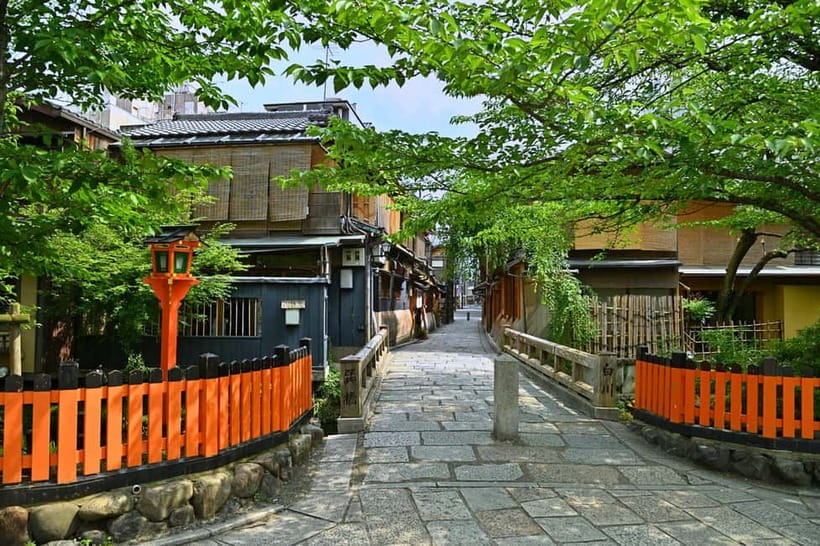
- Stone, wood, and street-level detail: machiya neighborhoods and overlooked historical corners you would miss alone
- Yasaka Shrine ties Gion to its name: including background on the Gion Festival origins if timing allows
- No pressure to spot performers: you still get cultural context even if you only see the neighborhood life
Entering Gion With a Plan (And the Right Expectations)
Kyoto’s Gion looks like a living postcard, but it can also feel like a bunch of pretty streets if you do it solo. This tour works because it gives you a map for how to look: what the streets were built for, why certain neighborhoods matter, and what you are seeing when you notice traditional houses, signs, and the rhythms of daily life.
You are not trying to “win” geisha sightings here. The guide is there to explain what Gion is beyond the famous entertainment angle. And that means you leave with a mental model, not just photos.
Two practical expectations help a lot:
- The route covers about 3.3 km on foot in around 2 hours, so wear comfortable shoes.
- You can learn and ask questions nonstop, but a maiko or geiko sighting is not guaranteed, even with an expert guide.
If you want a tour where your questions actually steer the pace, this format fits.
More Walking Tours in Kyoto
- Kyoto Geisha Walking Tour: Gion District & Hidden Gems
★ 4.7 · 3,273 reviews - Kyoto: Gion Magical Night Walking Tour with Geisha Trivia
★ 4.9 · 2,393 reviews - Kyoto: Gion Geisha District Walking Tour – Stories of Geisha
★ 4.7 · 2,187 reviews
Starting Point at the Disney Store Kyoto Shijo-Kawaramachi
Your guide is waiting in front of the Disney Store Kyoto Shijo-Kawaramachi. Look for the person holding an iPad with the Get Your Guide branding for this Kyoto Gion Guided Walking Tour. It is a clear, easy-to-find meeting spot in a central area, which matters in Kyoto when streets can be confusing fast.
You will want to show up a few minutes early so the group can start together. The walking time is short, and the tour works best when you waste as little time as possible.
What to bring is simple but important. The tour provides no amenities, so pack your own:
- Comfortable shoes
- Water
- Umbrella (Kyoto weather can be unpredictable)
- Sun hat and sunscreen
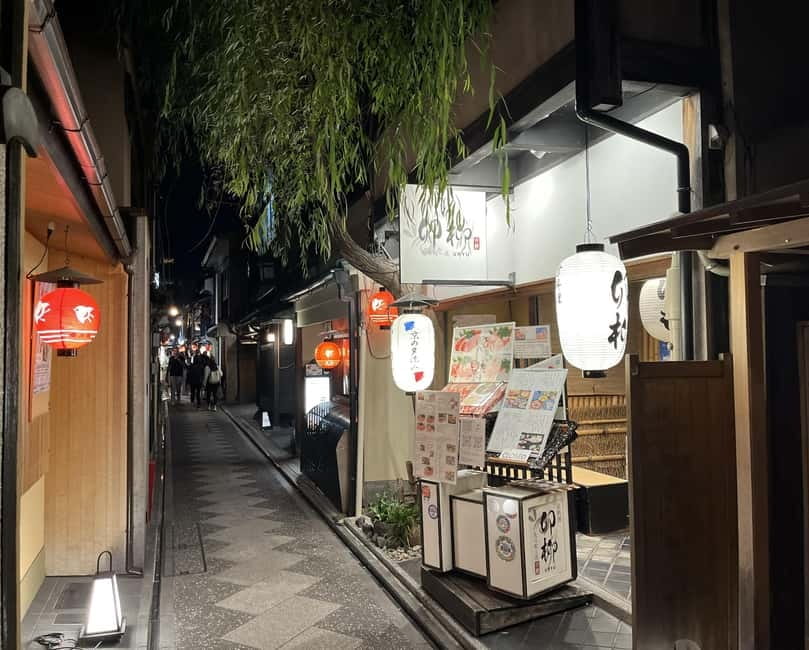
Pontocho Alley and Kaburenjoko Views: Kyoto by the Waterline
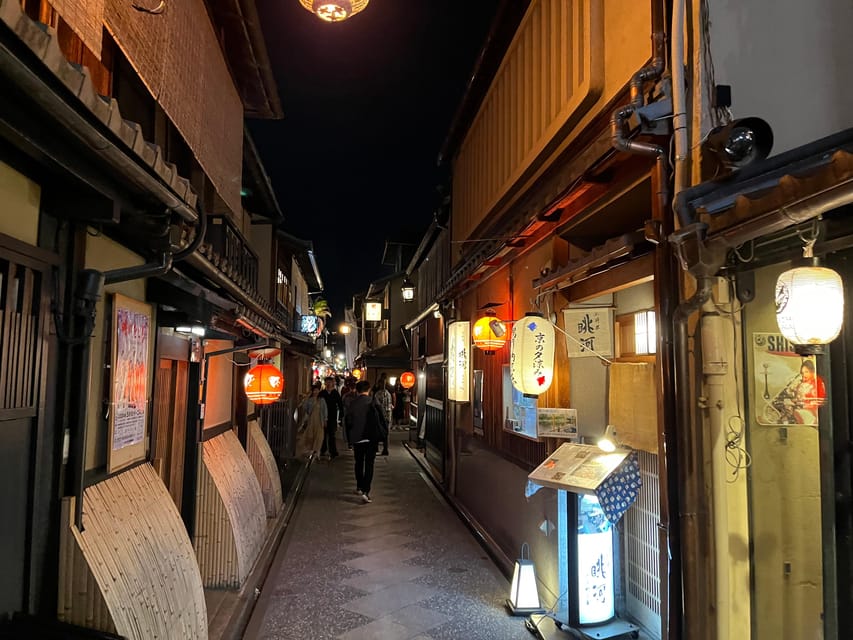
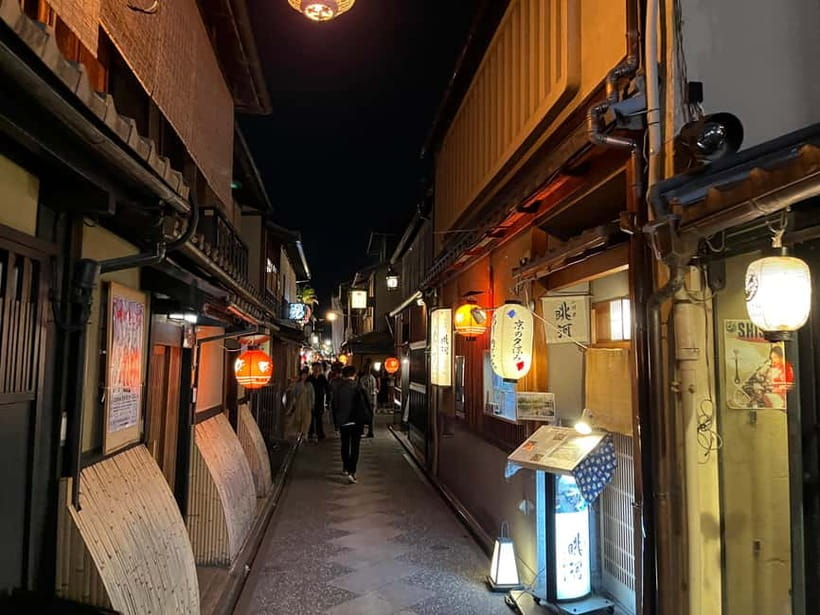
The walk begins in the Pontocho area, known for its narrow lanes near the river and its classic Kyoto “alley at night” feel. You will move through Pontocho alley and the Kaburenjoko area, where the setting makes you slow down. The buildings hug the street. The angles are tight. The river gives everything a different light.
This is one of those neighborhoods where it is easy to think you understand it from outside. The guide’s job is to connect the dots: how the district’s layout supports the kind of social and entertainment life people associate with Gion, and how that history changed over time while the street look stayed familiar.
If you enjoy street-level details, this part is a win. A lot of the best moments are not big monuments. They are small things: signage placement, the way lanes curve, and how buildings face the water.
Spotting the Yagi-san and Kita-san Statues (and Why They Matter)
Next you pass the Yagi-san and Kita-san statues. Even if you do not know what they are at first glance, you will have context for why the guide points them out. This tour is good at doing something simple but rare: it gives you a reason to care about objects you might otherwise ignore.
Then you approach Kamogawa river viewpoints and the route continues toward the iconic bridge area.
More geisha experiences in Kyoto:
- Best of Kyoto: Gion, Geisha, Pagodas & Cobblestones
★ 4.9 · 2,058 reviews - Night Walk in Gion: Kyoto’s Geisha District
★ 4.5 · 2,003 reviews - Kyoto Night Foodie Tour in Gion (9+ dishes + 6 Sake tastings)
★ 5.0 · 1,762 reviews - Kyoto Gion Geisha District Walking Tour – The Stories of Geisha
★ 5.0 · 1,441 reviews
Sanjo Ohashi Bridge: The Best Place to Pause and Look Back
The tour includes a stop around Sanjo Ohashi (bridge). Bridges are more than photo stops in Kyoto. They give you scale. They let you line up what you just walked with where you are going next.
You get a moment to look down the river corridor and see how the district sits in relation to downtown. It helps the rest of the walk click, because you start noticing street connections instead of treating each alley as a separate world.
I like bridge stops because they naturally reset your brain after a stretch of narrow lanes. You can ask questions while the group is stationary and then move on with less mental clutter.
Yamato-dori to Gion-Kobu: Where Street Names Tell Stories
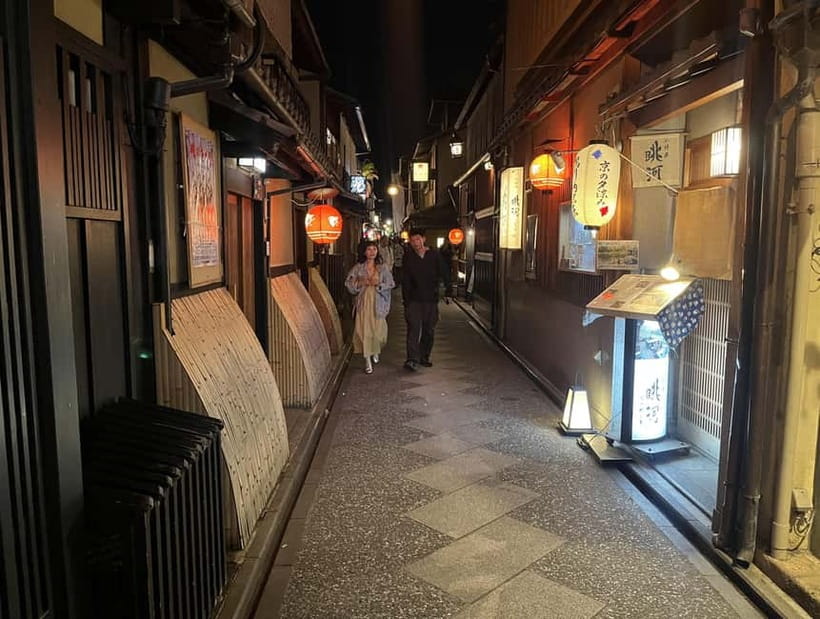
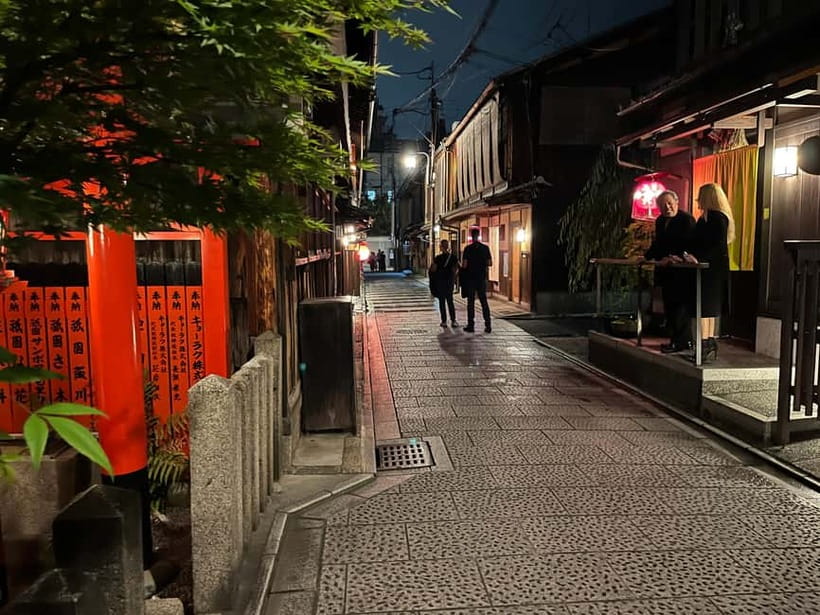
After the river views, the walk shifts toward Yamato-dori and into Gion-Kobu. This is where you start hearing more about how the neighborhood is organized and how hanamachi life works in practice.
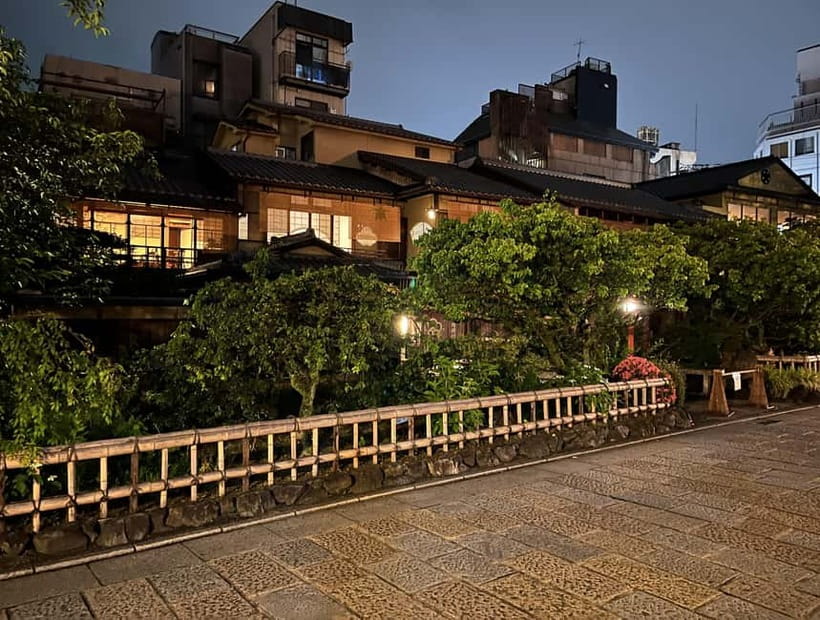
You will spend time on Gion-Kobu streets such as Gion-Shinbashi Dori and Gion Shiragawa. The guide focuses on things you can actually observe:
- how daily routines show up in small details around traditional homes
- how hanamachi identity differs from generic old-town sightseeing
- what terms like maiko and geiko mean in real life, not just in TV stereotypes
One nice detail: the guides use their iPad to show photos and references. It helps you connect what you see now with how the area functioned before modern changes.
If you like learning through questions, you will probably get pulled into long, satisfying conversations here. Many guests highlight that the guides answer a huge number of questions without rushing you.
Gion Shiragawa and the “North” Side Feel
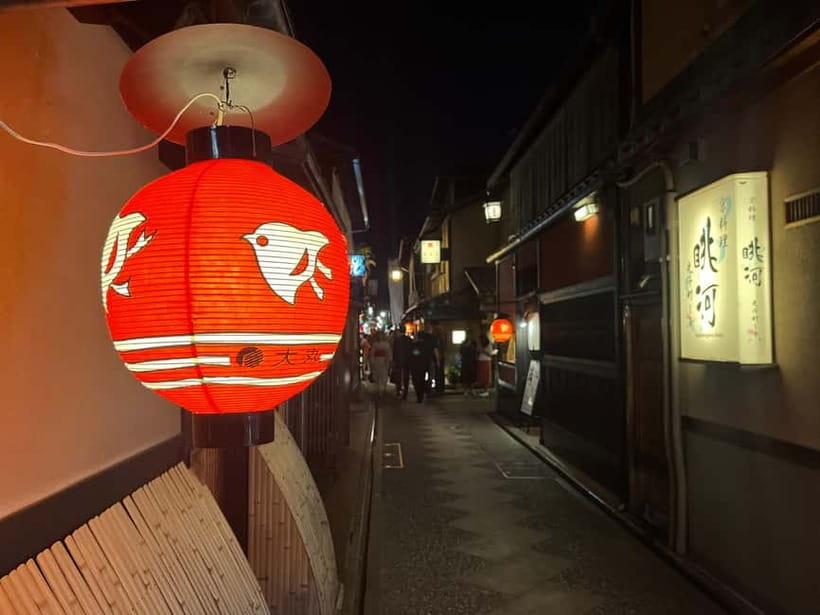
The route spends time in the Gion-Kobu area that is described as the north side portion of the preserved neighborhood. That matters because Gion is not one uniform look. Streets feel different depending on who occupies the corners, how the buildings face the lanes, and how the community has preserved older forms.
You are not just walking past pretty architecture. You are learning how the neighborhood’s long life connects past and present, and how people’s daily rhythms shaped what remains visible today.
This is also where the “ask a lot of questions” part of the experience becomes real. The tour length is only two hours, so every stop is designed to make it easy for you to talk.
Tatsumi Jinja: A Shrine Stop That Changes the Mood
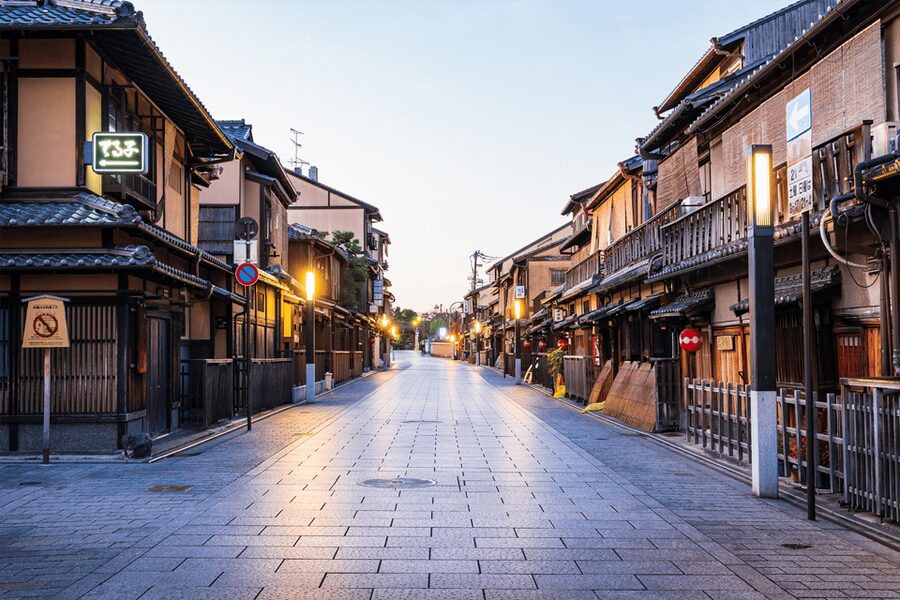
Then you reach Tatsumi Jinja. A shrine stop breaks up the street-walk energy, and it gives you a cultural reset. In Kyoto, you often learn the most when you step away from the main sight lanes for a minute.
Even if shrines are not your top interest, the guide’s explanation helps you see the shrine as part of the neighborhood story. It is not only a religious site. It is also a place tied to local identity and long-time community patterns.
You will also cross Tatsumi Hashi (bridge) after. Bridges and shrine stops together work well because you get both sightlines and meaning.
Gion-Higashi: Another Hanamachi Side of the Same Story
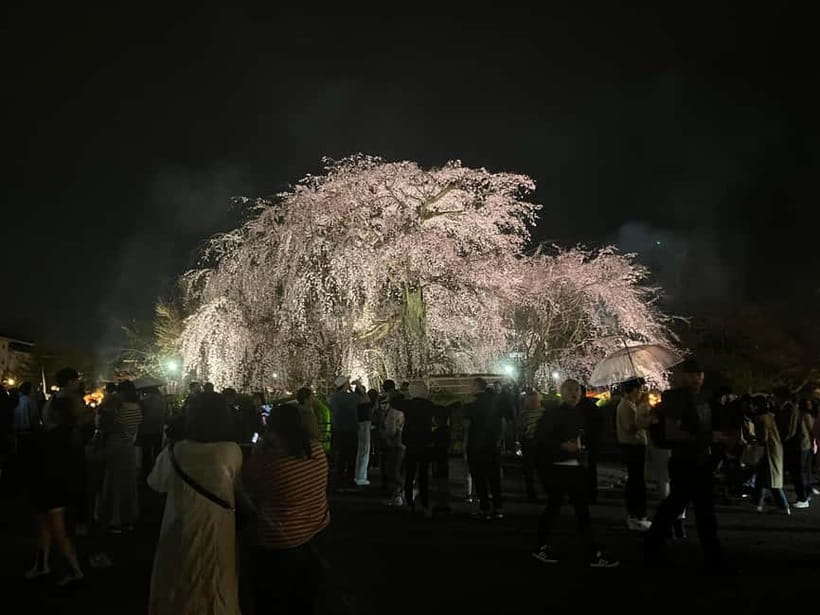
The tour continues into Gion-Higashi. This is one of the reasons I like this tour layout: it does not treat hanamachi as a single themed zone. By visiting multiple areas, you get the sense that Gion is made of distinct districts and micro-neighborhoods.
You will see how the street character shifts slightly. That helps you understand why people care about which hanamachi they are visiting, and why terms and traditions are not just “tour talk.”
If you are the type who enjoys comparing neighborhoods, this is where it starts to feel like more than a walk. It feels like a guided interpretation.
Yasaka Shrine (Former Gion Shrine): Where the Name Comes From
One of the biggest anchor points of the tour is Yasaka Jinja, Yasaka Shrine. The tour notes that this is the formerly named Gion Shrine, and it is tied to how the district name originates.
This is the part where the tour moves beyond architecture and into explanation. You will connect the Gion story to something older than the current image of the district. Timing can also allow the guide to share background on the Gion Festival, one of Japan’s major festivals, and how it traces back to the Gion area origins.
If you are there later in the day, shrines also feel different at dusk. Several guests mention loving the nighttime atmosphere at Yasaka Shrine, and that your guide may also encourage you to pray at places within the shrine grounds such as the shrine of beauty and the shrine of love.
Even if festivals are not your thing, I recommend paying attention here. It is a turning point for how you think about Gion.
What About Hanamikoji-dori?
Important caution: Hanamikoji-dori is not included. That matters because many first-timers mentally picture hanamikoji as the Gion “must see.” Here, you get a wider slice of Gion’s other lanes and preserved neighborhood corners.
So if your goal is specifically to chase one famous street, plan that extra time elsewhere. If your goal is to understand Gion as a functioning historic district, the tour’s route makes sense.
Maiko and Geiko Reality Check: How to Look Without Chasing
You may see a maiko-san and/or Geiko-san (geisha), but it is not guaranteed. The guide sets this expectation upfront, and honestly, that makes the whole thing more relaxing. When you are not trying to force a sighting, you can actually enjoy what the guide points out.
Here is how to make the most of the possibility:
- Keep your eyes on the street activity, not just faces.
- Notice where the alley traffic thins or where people pause, because that is often where the neighborhood rhythm changes.
- Use the guide’s explanations to understand what you are spotting, so your photos feel meaningful later.
If you do spot performers, you will get more out of it because you learned the names, roles, and daily-life context during the walk.
Price and Value for a Two-Hour Kyoto Walk
At $35 per person for about 2 hours, this tour sits in the “small spend, big understanding” category for Kyoto. You are not paying for a bus ride or entry tickets. You are paying for interpretation, pacing, and the chance to ask real questions.
The value comes from three places:
- Max 6 participants, so you spend more time hearing and asking and less time waiting.
- Multiple stops and districts, so you see more than one tiny zone.
- A guide who shares personal insights about daily life in Japan, and who is clearly comfortable answering curious questions again and again.
If you are only in Kyoto for a short time, this is a strong use of two hours because it helps you read the city later when you are on your own.
The Pace Works: Lots of Stops, Lots of Questions
The tour is built around frequent stops. That sounds minor until you try a long walking tour that rushes through everything. Here, the guides slow down often, explain what you are looking at, and then give you time to ask.
From what I see this format excels at:
- It keeps the group together in narrow areas.
- It prevents the classic problem of everyone photographing while missing the explanation.
- It turns the walk into a conversation, not a lecture.
Many past guests note that the guides can handle lots of different interests, from architecture to history to daily life. If you ask questions as you go, you will probably get more out of it than someone who stays quiet the whole time.
Seasonal Route Note: Sakura Time Changes the Walk
During cherry blossom season, roughly late March through early April, the route may shift slightly to highlight sakura around Gion. If you are traveling in peak bloom weeks, this is worth knowing so you do not worry if the exact street order differs from what you expected.
Either way, the tour still centers on the same core districts and the shrine anchor points.
A Possible Bonus Stop: Gion Gallery
For the 9:45 and 12:30 tours, there can be a free visit to the Gion Gallery if you want to extend your time. That is a nice add-on for anyone who likes visuals, context, or a quick indoor break.
If you are sensitive to weather or just want a pause from walking, this can be a good choice.
Who Should Book This Tour
This is a great match if:
- you want context more than crowds
- you like history and street-level storytelling
- you are curious about maiko and geiko life, but you do not want a rigid sightseeing script
- you prefer a small group where your questions get answered
You might skip it if your goal is only a single iconic street scene like hanamikoji-dori. Or if you are hoping for a guaranteed performer sighting. This tour is built for understanding, not certainty.
Should You Book Kyoto: Gion Walking Tour
Yes, I think you should book it if you want Gion to make sense fast. For $35 and a two-hour window, you get a focused slice of three hanamachi districts, plus a shrine stop tied to the origin story of Gion’s name. The small-group format with Jose or Saskia (and other language options like English, French, Dutch, Spanish) makes it feel personal, even when Kyoto is busy.
Just go in with realistic expectations: you are not buying a guaranteed maiko or geiko sighting. You are buying time with a guide who can show you what to notice, why it matters, and how daily life and long-time history overlap in the streets you walk.
If that sounds like your kind of Kyoto day, this is a smart pick.
Fresh options around Kyoto
- Kyoto Aquarium Admission Ticket★ 4.7 · 12 reviews
- Kyoto Gion Photoshoot – Private Session | Pro Photographer★ 5.0 · 12 reviews
- Gyoza Cooking Class in Kyoto: Traditional Japanese Dumplings★ 5.0 · 12 reviews
- Kyoto: Guided Food Tour with 12 Dishes & 3 Drinks★ 5.0 · 12 reviews
- Kyoto: Avoid the Crowds at the Hidden Gems of Arashiyama★ 4.9 · 13 reviews
- Kyoto Early Bird English Tour: Gion & Higashiyama(Private opt)★ 5.0 · 13 reviews
- Otsu-e Folk Art Workshop & Local Culture Walk Near Kyoto★ 5.0 · 13 reviews
- Kyoto, Osaka, Nara Full Day tour by Car English speaking Driver★ 3.5 · 13 reviews
Walking Tours, compared.
Kyoto Geisha Walking Tour: Gion District & Hidden Gems
Read our review →
Tokyo Tsukiji Fish Market Food and Culture Walking Tour
Read our review →
Gion Magical Night Walking Tour with Geisha Trivia
Read our review →
Imperial Palace and Shogun Historical Walking Tour
Read our review →
Gion Geisha District Walking Tour – Stories of Geisha
Read our review →
Shinjuku Local Bar and Izakaya Guided Walking Tour
Read our review →
Browse the lists this tour appears in