
Reviewed · WALKING TOURS
Kyoto: Gion Sunset Walking Tour with Local Guide
Gion looks totally different after dark, and this short walk helps you see why sunset changes everything in Kyoto. I like that the small group setup (up to 9 people) keeps the pace relaxed, so you are not just rushing from photo spot to photo spot. You also get real context for what you are seeing, like why certain streets and shrines matter to daily Kyoto life.
What I love most on this 3-hour evening stroll
Two things I really appreciate: first, the guide turns familiar names into places with stories, from Hanamikoji Street to Yasaka Shrine. Second, you get an easy, human scale experience, with guides like Jasmine, Raphael, Naoki, Alex, and Vincent praised for clear explanations and answering questions as you go.
One drawback to consider before you set out
This is still a walking tour, so you will want comfortable shoes and enough stamina for a steady night walk. It is also not suitable for people with mobility impairments, heart problems, or respiratory issues, and it is not recommended for pregnant women.
More Walking Tours in Kyoto
- Kyoto Geisha Walking Tour: Gion District & Hidden Gems
★ 4.7 · 3,273 reviews - Kyoto: Gion Magical Night Walking Tour with Geisha Trivia
★ 4.9 · 2,393 reviews - Kyoto: Gion Geisha District Walking Tour – Stories of Geisha
★ 4.7 · 2,187 reviews
Key things to know before you go
- Small group size (max 9 people), which makes Q-and-A actually work instead of feeling like a lecture.
- Honest night timing, so you catch Gion as lanterns light up and the streets shift from evening calm to full glow.
- Stops you can recognize easily, like Hanamikoji Street, Maruyama Park, Yasaka Shrine, and the Pontocho area.
- Snack included, so you are not stuck hunting for food before the tour ends.
- Geiko and maiko are possible but not guaranteed, so treat sightings as a bonus, not the goal.
- Plan for punctuality, since guides only wait up to 10 minutes at the meeting point.
Entering Gion at Sunset, when Kyoto slows down
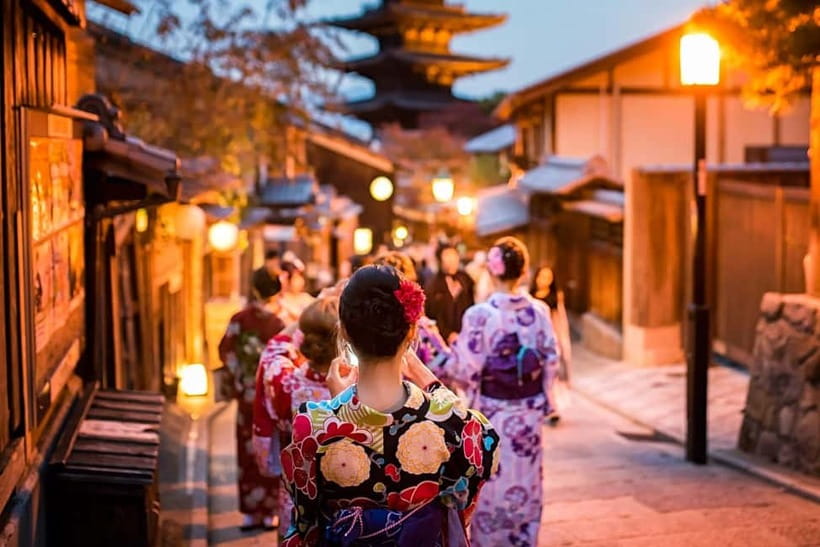
This tour is built around a simple idea: Gion at night is a different place than Gion at noon. As the sun drops, lanterns and warm light make the old streets feel softer, more secretive, and more intimate. You are walking through a district where the architecture and routines are still visible, not staged for a tour bus.
I like that the focus stays on atmosphere and understanding, not just collecting landmarks. The guide helps you notice small details you would miss on your own, like where people gather, how paths funnel you toward key buildings, and why certain streets have a special feel even when you think you have already seen them earlier in the day.
Meeting at Kyoto Kawaramachi Garden: find the big black world map
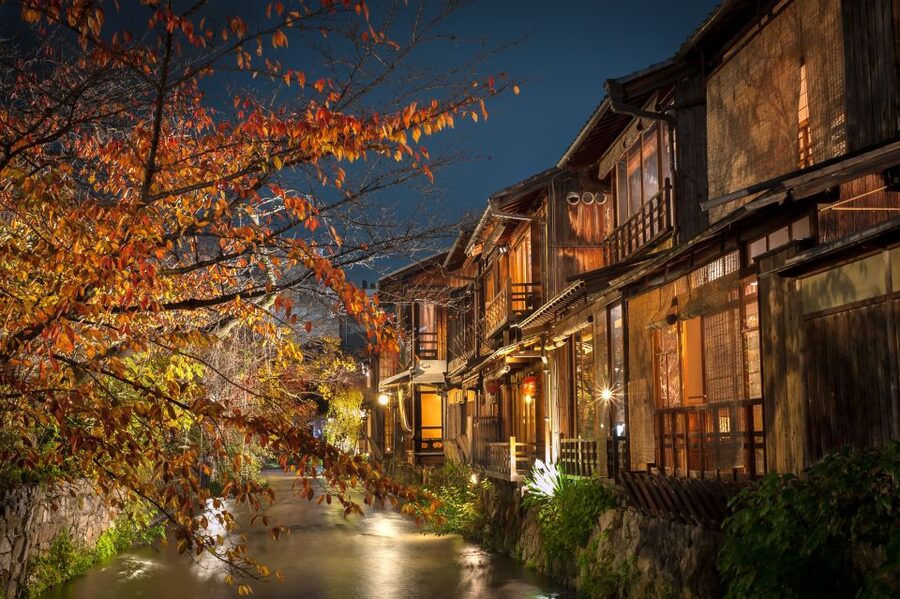
Your starting point is Kyoto Kawaramachi Garden, at the corner in front of a big black world map. The guide will be wearing a TripGuru shirt or holding a TripGuru sign, which makes it easier to spot the right person fast.
A practical tip: arrive 10 minutes early. The guides only wait a maximum of 10 minutes before moving on to the next stop. Kyoto evening logistics can get spicy, too, so give yourself buffer time getting to the meeting area. If you are using navigation apps, remember heavy traffic can throw off arrival time.
More geisha experiences in Kyoto:
- Best of Kyoto: Gion, Geisha, Pagodas & Cobblestones
★ 4.9 · 2,058 reviews - Night Walk in Gion: Kyoto’s Geisha District
★ 4.5 · 2,003 reviews - Kyoto Night Foodie Tour in Gion (9+ dishes + 6 Sake tastings)
★ 5.0 · 1,762 reviews - Kyoto Gion Geisha District Walking Tour – The Stories of Geisha
★ 5.0 · 1,441 reviews
Kyoto Minami-za: theater energy before the lanterns
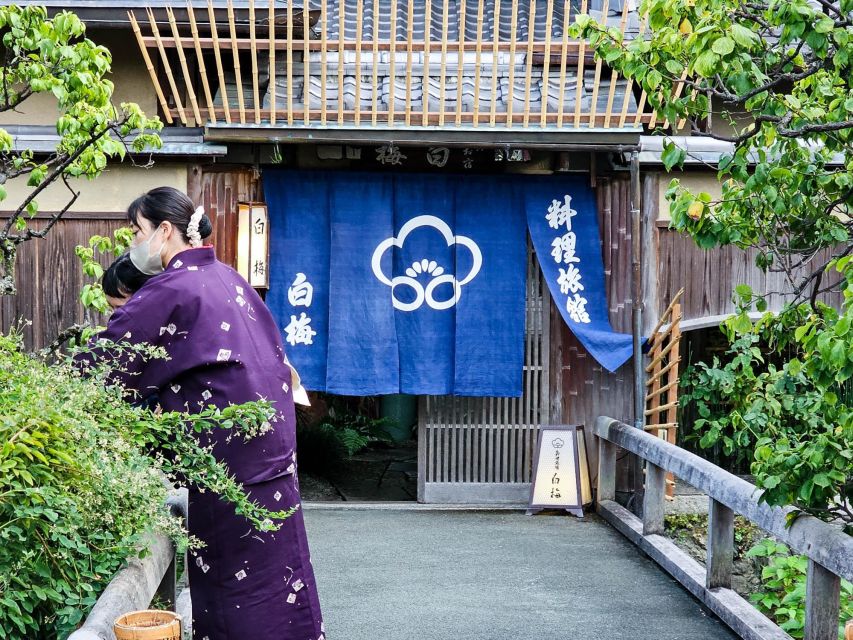
One of the early passes is Kyōto Minami-za. You are not spending a long time there, but it sets a tone. Kyoto theater spaces have a long cultural reach, and seeing that presence at the start helps you understand that this part of town is about performance in more than one sense.
Even if you have never attended a stage show in Japan, you will likely start connecting the dots. Gion is not only about aesthetics. It is also about roles, traditions, and etiquette that shape how public space works.
Hanamikoji Street: the historic lane everyone mentions for a reason
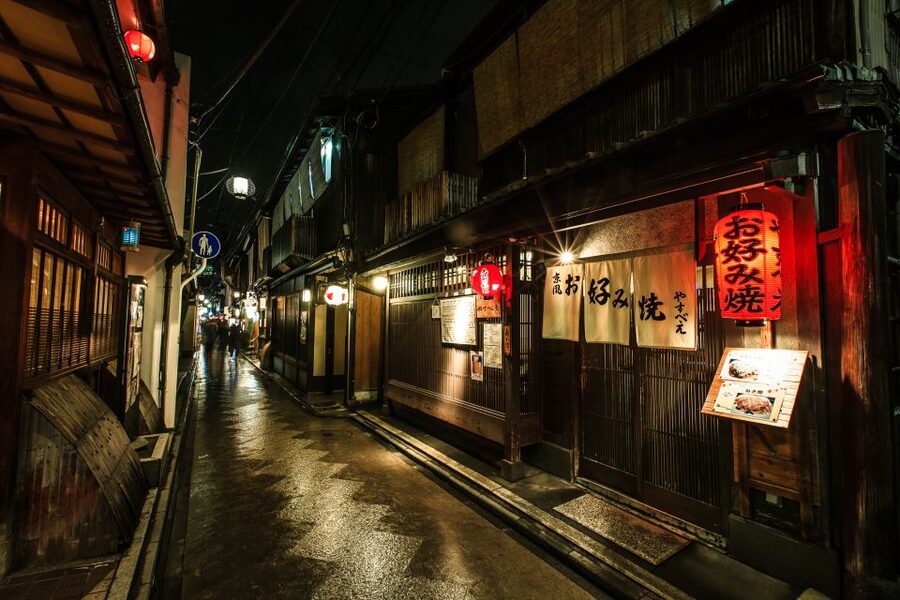
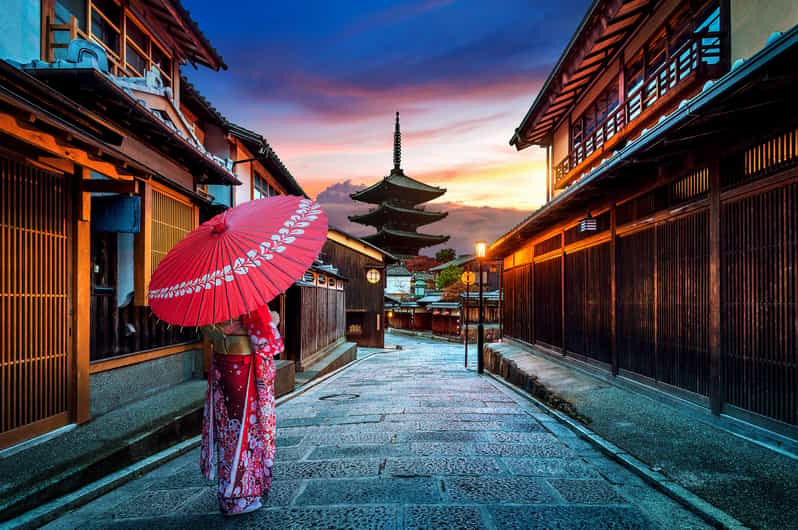
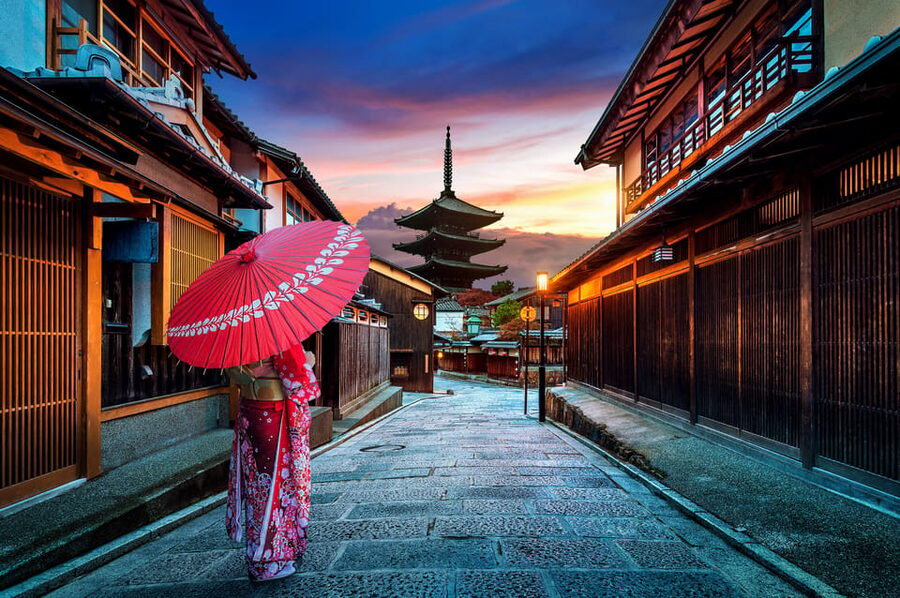
Then comes Hanamikoji Street, one of the best-preserved traditional streets in the area. This is the point where you slow down without realizing it. The street has that narrow, storybook feel, but the experience is more than aesthetics. You learn how the lane fits into Gion’s past and how it still influences what you see walking by tonight.
What to watch for here:
- Street rhythm: narrow spacing changes how sound carries and where people naturally pause.
- Architecture details: woodwork, storefront styles, and the way buildings face the lane.
- Night lighting: lanterns do the work of making the street feel instantly more ceremonial.
A drawback: you will likely feel the temptation to stop every few steps for photos. Do it, but keep moving when the guide is explaining something. The best moments here come when you connect the story to the view in real time.
Maruyama Park: a short pause with big evening atmosphere
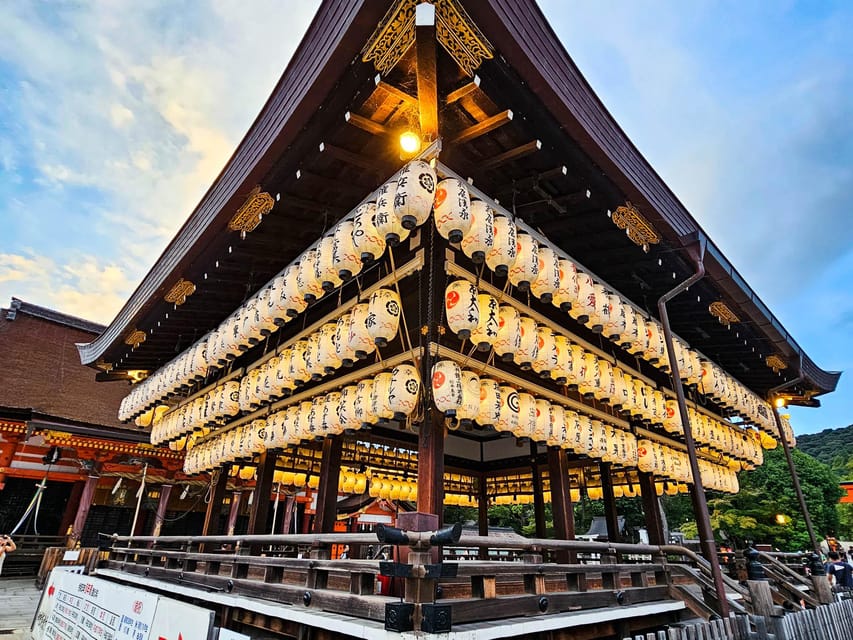
Next up is Maruyama Park for a short stop. This gives your legs a quick reset and shifts you from street-level charm to a wider sense of how the area holds its night energy.
Even in a brief window, a park stop matters. You get:
- a moment to compare views from open space versus the tight backstreets,
- a chance to catch your breath before the shrine segment,
- better angles for scenic views on the way.
If the weather is chilly, this stop can feel extra helpful. Several people mention a tea or snack-style break elsewhere in the route, which makes this kind of pacing a nice rhythm rather than a nonstop march.
Yasaka Shrine at night: spotting meaning in the dark
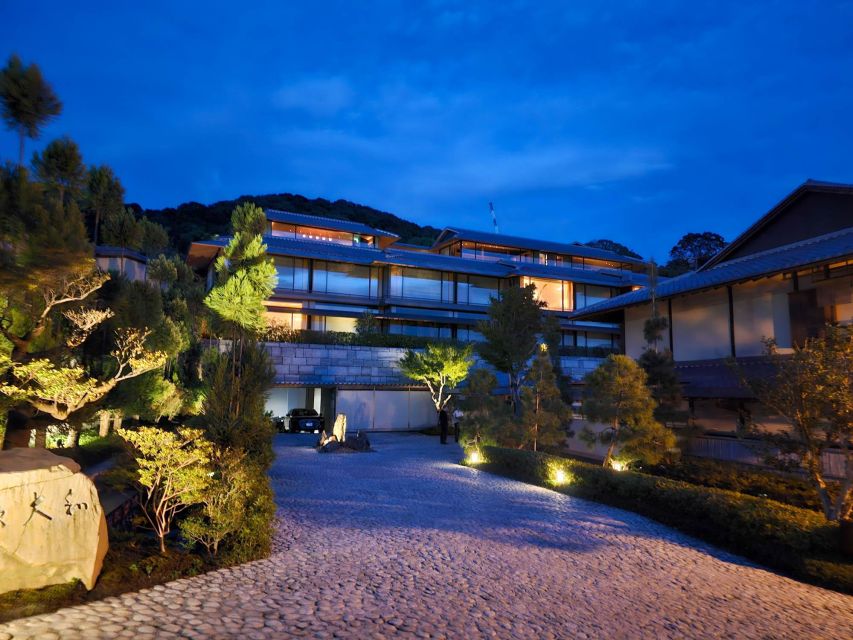
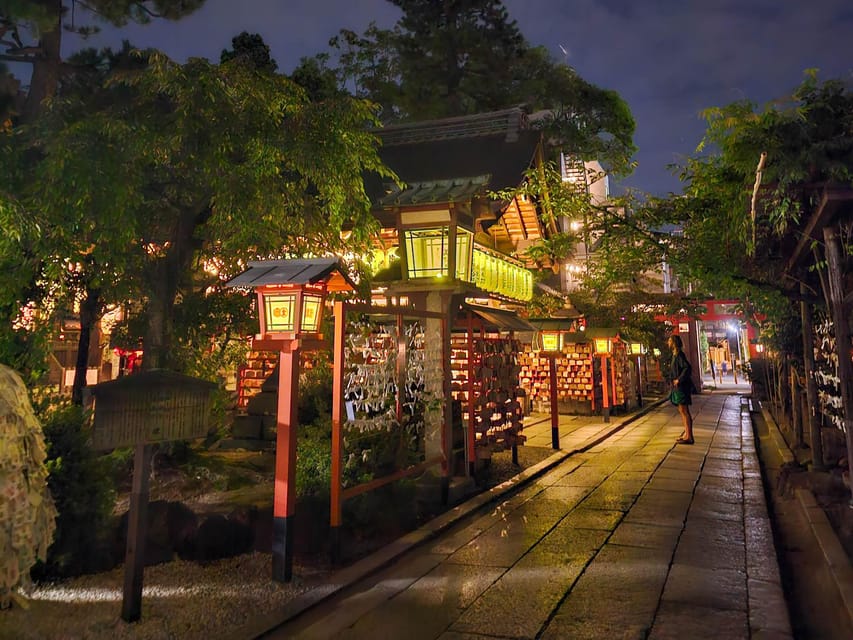
Yasaka Shrine is one of the core stops, and it is where the tour’s cultural context really lands. At night, shrine spaces feel different, partly because lighting shapes what you notice and partly because the atmosphere is calmer than you might expect in a major district.
The guide helps you connect what you are seeing to Japanese customs and the logic behind how religious spaces function in daily life. You will also learn how to interpret certain elements without needing a background lecture.
Practical note: this is a popular area. You will need to be respectful with space, and that includes photography. The tour guidance specifically recommends keeping distance, using a longer lens, and avoiding interrupting geiko or maiko if you encounter them.
Pontocho and Sanjo Bridge: where the night turns social
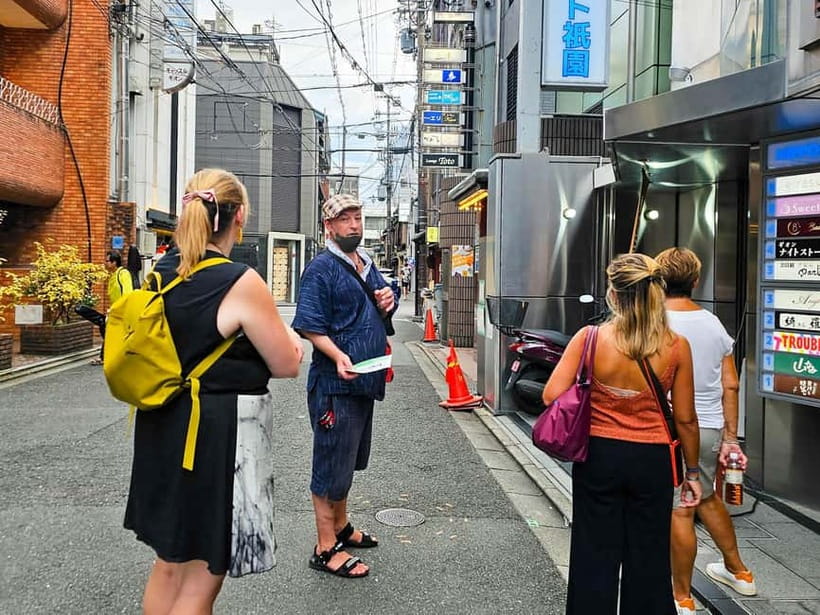
Later, you head toward Pontocho, the narrow riverside alley area known for its nighttime restaurant and bar scene. This is where Gion’s evening life becomes visible in a more immediate way. You start noticing how people move through the alleys, how lanterns and doorways frame views, and how the district feels at street level rather than postcard level.
The tour ends at Sanjo Bridge. That finish location is smart. You get an easy sense of where you are in the city and how to transition to the rest of your evening on your own. It is a good way to avoid the problem of being stranded somewhere inconvenient after a short walk.
Snack stop: small cost, real payoff
The tour includes a local snack, which is more valuable than it sounds. Walking 3 hours through a historic district works up an appetite, and having the snack built into the timing prevents the usual scramble to find food mid-tour.
Some reviews mention matcha dessert-style snacks and even places where the snack cost sits under a stated cap around 1000 yen per person. The key for you: you are getting something simple and local without committing to a full meal inside tight time constraints.
One more practical benefit: the snack moment gives your guide a chance to slow the group down, check in, and keep everyone comfortable for the final stretches.
Price and what you really get for $22
At $22 per person for a 3-hour evening walk with an English-speaking guide and a snack, this is one of those prices that only looks small until you do the math. You are paying for:
- guided navigation through a complex neighborhood at night,
- cultural explanations timed to what you can actually see,
- a small group cap that keeps interaction practical,
- and a snack that keeps you from dropping energy halfway through.
If you were to pay for a longer tour, a taxi ride to cover the same area, and a meal later, the total often climbs fast. Here, the value comes from the tight focus: you get a concentrated evening experience without the day-long commitment.
The main tradeoff is also tied to value: you are walking. If you want a sit-down, minimal-step experience, you might be happier with a shorter or more accessible option.
Geiko and maiko sightings: a bonus, not a promise
One of the most talked-about elements is the chance to spot geiko or maiko on the move. The tour itself frames this as possible but not guaranteed, and I think that is the right way to approach it.
You should also follow the etiquette guidance: stay respectful, keep your distance, avoid blocking their path, and use a longer lens. If you find yourself near them, step out of the way, offer a smile, a quick bow, and a thank you.
Here is the mindset shift that makes this work: treat any sighting as a surprise gift. The real win is understanding the district enough that even without a sighting, the walk still feels meaningful.
How the guides make the difference in a small group
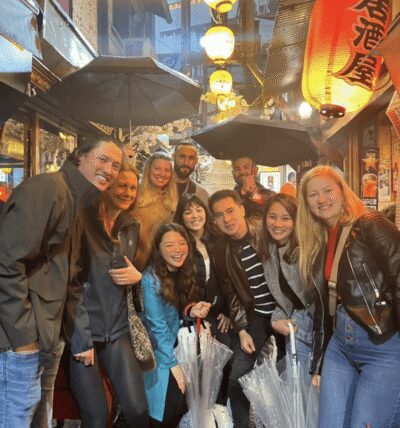
What stands out most from the experience across guides is how the tour stays interactive. People mention guides like Jasmine, Raphael, Naoki, Alex, and Vincent for being friendly, answering lots of questions, and adjusting pace so everyone in the group feels comfortable.
In a larger group, history and etiquette talk can feel rushed. In this small setup, you can ask why something is arranged the way it is, why certain areas feel more traditional, or what you are looking at when you see specific buildings and street patterns.
If you are the type who likes to learn while walking, this format is ideal. You are not stuck with a script. The guide can respond to the group’s curiosity in real time.
What to bring for a comfortable night in Gion
Bring the basics and you will enjoy the walk more:
- Comfortable shoes (you will appreciate them at the end)
- A camera (and if you plan to photograph, consider a longer lens)
- Cash (for personal snacks or drinks, since only the snack is included)
Weather matters. The route is outdoors, and it is at night, so dress for cooler temperatures than you expect in Kyoto.
Who should book this Kyoto Gion sunset walk
This is a great fit if:
- you want a focused 3-hour introduction to Gion at night,
- you like asking questions and getting context while you walk,
- you care about etiquette and cultural meaning, not just pictures.
It might be a less ideal fit if:
- you need minimal walking or have mobility limits,
- you have heart problems or respiratory issues,
- you are pregnant and want a more comfortable option.
If you are traveling with limited time in Kyoto, this tour is also a strong choice because it gives you a concentrated evening experience without draining your whole day.
Should you book this Kyoto Gion Sunset Walking Tour?
I would book it if you want a smart way to experience Kyoto after dark, with a local guide helping you read the district instead of just passing it. The combination of small group size, lantern-lit street pacing, and an included snack makes it good value for $22, especially as a first evening in Kyoto.
Book it if your priority is atmosphere plus cultural context. Skip it if you want a fully relaxing, low-walking plan or if nighttime walking is a health concern for you.
If you do go, show up early, wear comfortable shoes, and treat geiko or maiko sightings as a bonus. You will still get plenty out of the walk even if the night does not hand you a rare sighting.
More Evening Experiences in Kyoto
- Kyoto Gion Night Walk & Geisha District Guided Tour
★ 5.0 · 786 reviews - Kyoto Ghost Tour: Dark Tales, Urban Legends, Bamboo Forest Night
★ 5.0 · 625 reviews - Kyoto Bar Hopping Night Tour
★ 5.0 · 613 reviews - Kyoto Night All-Inclusive Eats and Streets, Gion and Beyond
★ 4.7 · 601 reviews
Fresh options around Kyoto
- Kyoto Aquarium Admission Ticket★ 4.7 · 12 reviews
- Kyoto Gion Photoshoot – Private Session | Pro Photographer★ 5.0 · 12 reviews
- Gyoza Cooking Class in Kyoto: Traditional Japanese Dumplings★ 5.0 · 12 reviews
- Kyoto: Guided Food Tour with 12 Dishes & 3 Drinks★ 5.0 · 12 reviews
- Kyoto: Avoid the Crowds at the Hidden Gems of Arashiyama★ 4.9 · 13 reviews
- Kyoto Early Bird English Tour: Gion & Higashiyama(Private opt)★ 5.0 · 13 reviews
- Otsu-e Folk Art Workshop & Local Culture Walk Near Kyoto★ 5.0 · 13 reviews
- Kyoto, Osaka, Nara Full Day tour by Car English speaking Driver★ 3.5 · 13 reviews
Walking Tours, compared.
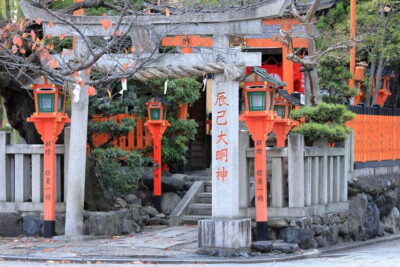
Kyoto Geisha Walking Tour: Gion District & Hidden Gems
Read our review →
Tokyo Tsukiji Fish Market Food and Culture Walking Tour
Read our review →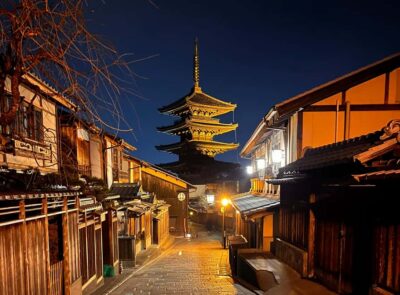
Gion Magical Night Walking Tour with Geisha Trivia
Read our review →
Imperial Palace and Shogun Historical Walking Tour
Read our review →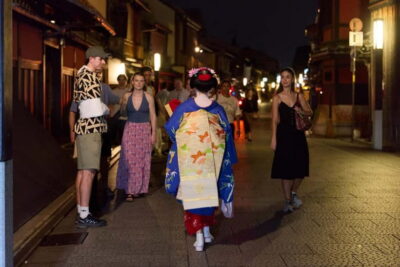
Gion Geisha District Walking Tour – Stories of Geisha
Read our review →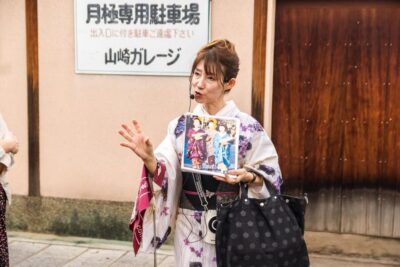
Shinjuku Local Bar and Izakaya Guided Walking Tour
Read our review →
Browse the lists this tour appears in