
Reviewed · WALKING TOURS
Kyoto: Gion & Geisha District Night Time Walking Tour
Kyoto glows after dark in Gion. I love how this walk starts at Yasaka Shrine, tied to Kyoto’s festivals and the world of geisha culture, then keeps flowing through classic lanes that feel like you time-traveled. The night setting also helps you see the neighborhood with calmer eyes.
Second, I really like the way your guide connects the details, from Nene no Michi and the historical name behind it to the meaning behind rituals at Yasui-Konpiragu Shrine. You also get photos during the tour, which is a big plus if you are traveling solo. One thing to weigh first: this is not wheelchair-friendly, since it’s a walking route through old streets and shrine grounds.
Key takeaways before you go
- Start at Yasaka Shrine for festival context right from the beginning.
- Nene no Michi is a story-stone lane, with traditional townhouses and teahouses along the way.
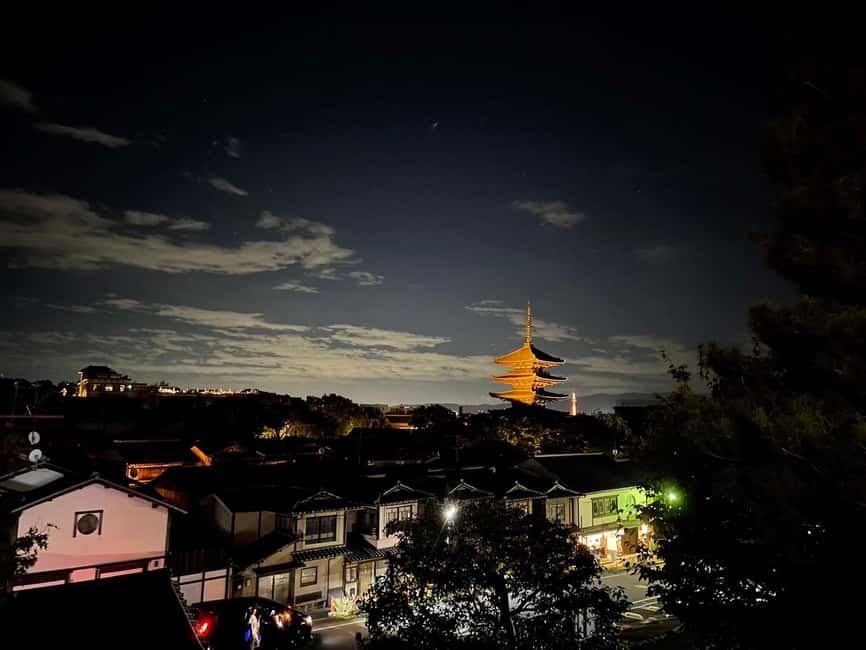
- Ninenzaka gives you that iconic Kyoto slope of historic wooden streets for great night photos.
- Yasui-Konpiragu Shrine’s Power Stone archway includes a specific prayer ritual for bonds and letting go.
- Hanamikoji Street is where your guide explains the refined, private side of geiko and maiko life.
- You get photos during the tour, so you do not have to play camera controller all evening.
Why this Gion night walk feels different than daytime
Gion is famous. That also means it can be crowded. This is a nighttime walking tour, and that matters because the streets look more intimate after dark. You can actually focus on the details you came for: shrine shapes, old stone lanes, wooden storefronts, and the layered meaning behind what you are seeing.
I also like that the route is not just a straight line of photo stops. It’s set up like a cultural circuit. You move from sacred space to gardens to streets tied to samurai-era legend, then into the heart of geiko culture.
And at $20 for about two hours, the value is pretty hard to ignore, especially because you are getting live English guidance plus photos, not just wandering with a map.
More Walking Tours in Kyoto
- Kyoto Geisha Walking Tour: Gion District & Hidden Gems
★ 4.7 · 3,273 reviews - Kyoto: Gion Magical Night Walking Tour with Geisha Trivia
★ 4.9 · 2,393 reviews - Kyoto: Gion Geisha District Walking Tour – Stories of Geisha
★ 4.7 · 2,187 reviews
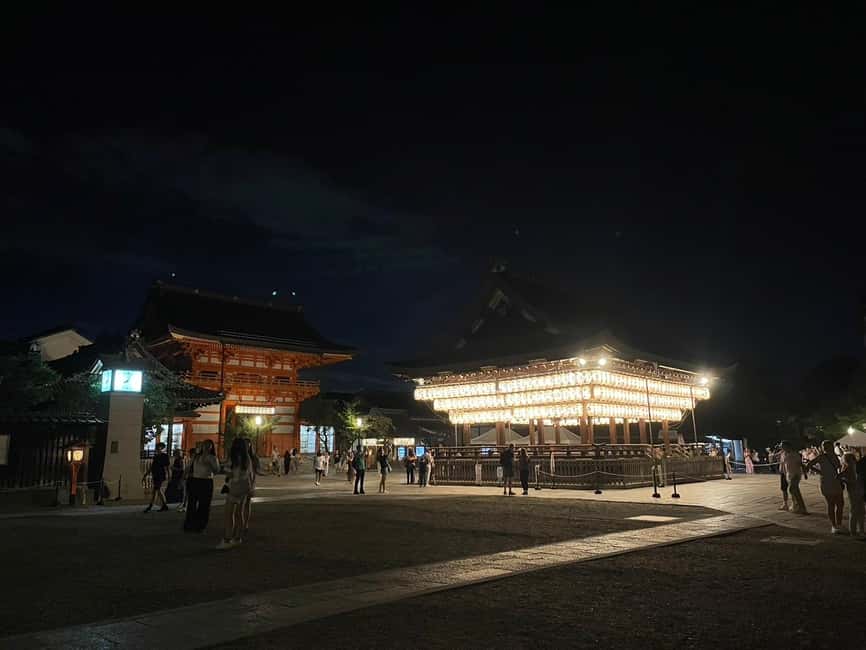
Yasaka Shrine at night, where festivals and culture begin
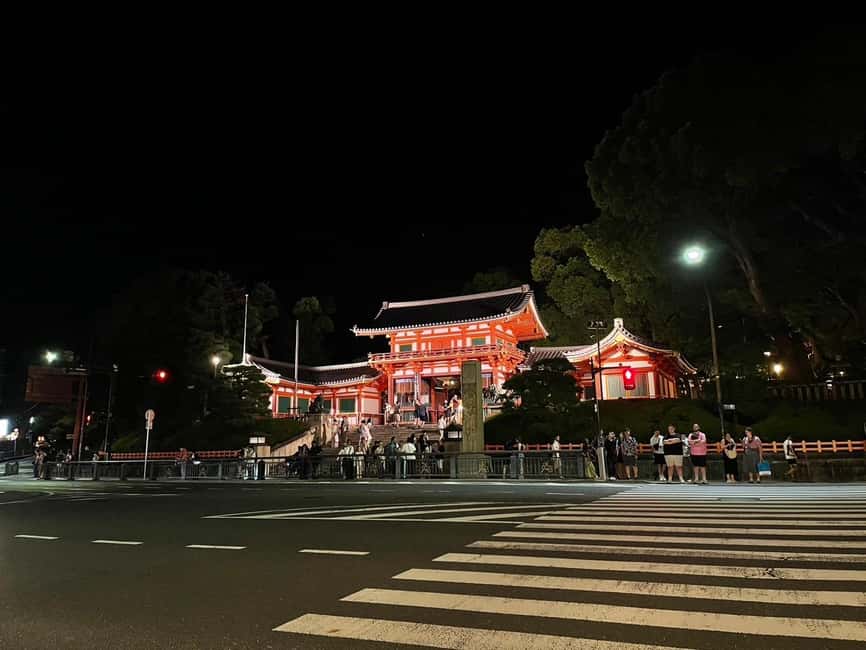
You start at Starbucks near Kyoto Gion Hotel, then head toward Yasaka Shrine, one of Kyoto’s most treasured spiritual landmarks. The best part of the opening is that your guide does not treat the shrine like a postcard. They explain how it connects to Kyoto’s festivals, which gives you a framework for the rest of the walk.
Why this start works: your brain needs context early. Once you know what festivals mean here, you start noticing more than architecture. You notice symbolism, placement, and why certain spots pull people in.
Time-wise, expect about a 20-minute guided stop. That’s long enough to orient yourself and ask questions, not so long that you feel stuck while the evening slips by.
Maruyama Park slowdown: a pause before the lanes
From the shrine area, the route continues to Maruyama Park, described as Kyoto’s oldest public garden. This is the breather in the whole evening.
Even at night, it’s the kind of place where you can feel the city quiet down. It breaks up the walking, and it gives you a sense of how Kyoto mixes nature with tradition. You are not just walking “streets.” You’re walking through Kyoto’s idea of calm.
This also helps if you get a little sensory overload in crowded districts. The park segment is like adjusting your eyes, so when the tour returns to old lanes, you actually see them.
Nene no Michi: the stone lane with a samurai-era name
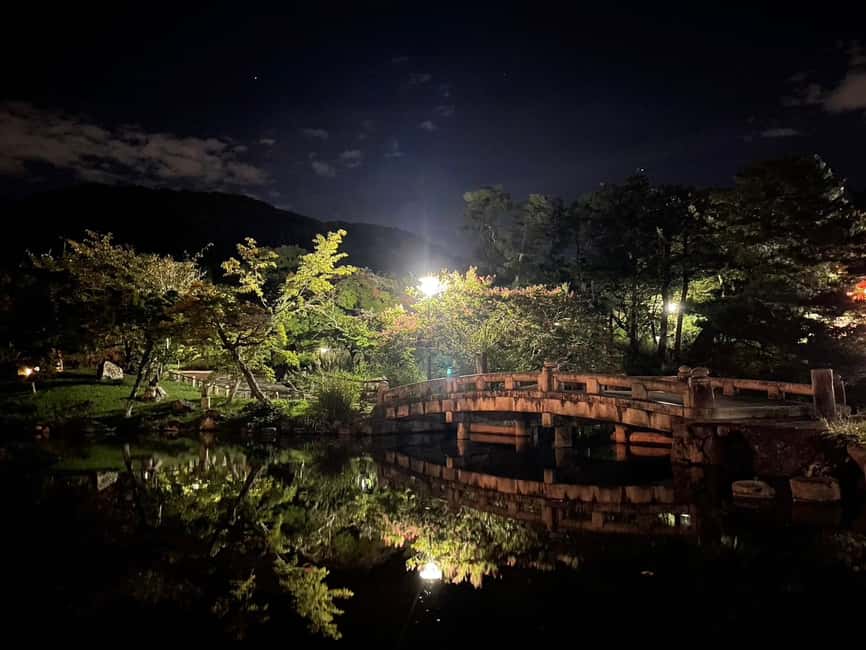
Next comes Nene no Michi, a charming stone-paved lane named after the wife of Toyotomi Hideyoshi. I love when a street name carries history you can actually repeat. It turns a lane into a lesson you’ll remember.
This is also one of the most “Kyoto-feeling” segments in the walk because it’s lined with traditional townhouses, cozy teahouses, and artisan shops. Your guide’s job here is to point out what to look for so you are not just walking past walls and storefronts.
Expect a guided stretch of about 20 minutes. That’s a comfortable pace for narrow lanes, especially at night when you can slow down and take in textures: stone, wood, paper lantern glow, and the geometry of old buildings.
More geisha experiences in Kyoto:
- Best of Kyoto: Gion, Geisha, Pagodas & Cobblestones
★ 4.9 · 2,058 reviews - Night Walk in Gion: Kyoto’s Geisha District
★ 4.5 · 2,003 reviews - Kyoto Night Foodie Tour in Gion (9+ dishes + 6 Sake tastings)
★ 5.0 · 1,762 reviews - Kyoto Gion Geisha District Walking Tour – The Stories of Geisha
★ 5.0 · 1,441 reviews
Ninenzaka: that historic slope, lit up for night photos
Ninenzaka is where Kyoto’s old-street look turns into a full-on photo mission. The slope is famous for historic wooden buildings and quaint storefronts, and the nighttime lighting tends to make everything feel extra cinematic.
Your guide brings this part to life by treating it as more than a view. They connect it back to the neighborhood’s identity, so you understand why the streets have stayed preserved and why they still matter to Kyoto today.
The timing is set for flow, with about 20 minutes here. You’ll have enough time to get photos without turning this into a long stop that messes up the rest of your night.
Practical tip: bring a charged phone and clean your camera lens before you start. Old street lights can cause smudges to show up fast in photos.
Yasui-Konpiragu Shrine and the Power Stone archway ritual
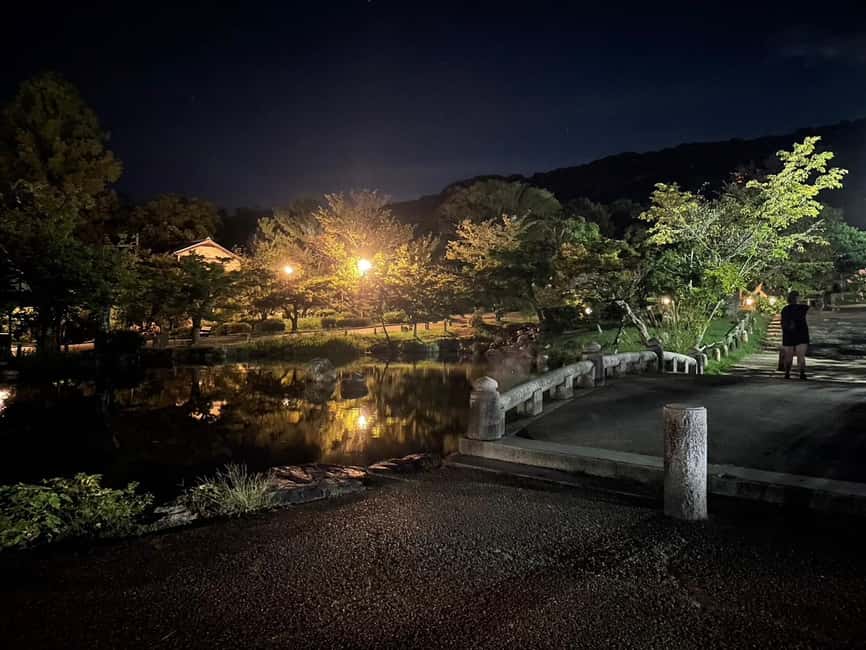
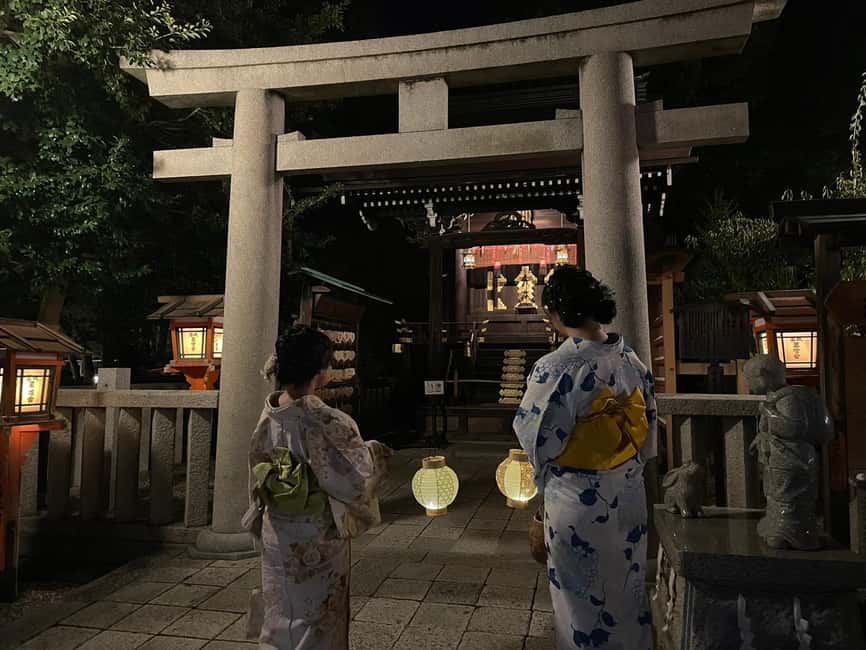
This is the part of the tour that feels most “only in Kyoto.” You visit Yasui-Konpiragu Shrine, known for its symbolic Power Stone archway.
People move through the archway as part of a ritual tied to personal prayers, like strengthening bonds or leaving unwanted ties behind. Even if you do not participate, the meaning gives the archway weight. You start seeing it like a shared story in stone, not just a photo target.
The tour includes about 20 to 30 minutes at shrine areas depending on pacing, so you can take in the atmosphere and listen without rushing through.
This stop is also valuable because it shows you Kyoto’s spirituality is not frozen in the past. It’s lived. It’s specific. It connects architecture to everyday hopes.
Hanamikoji Street: geiko and maiko culture, explained with respect
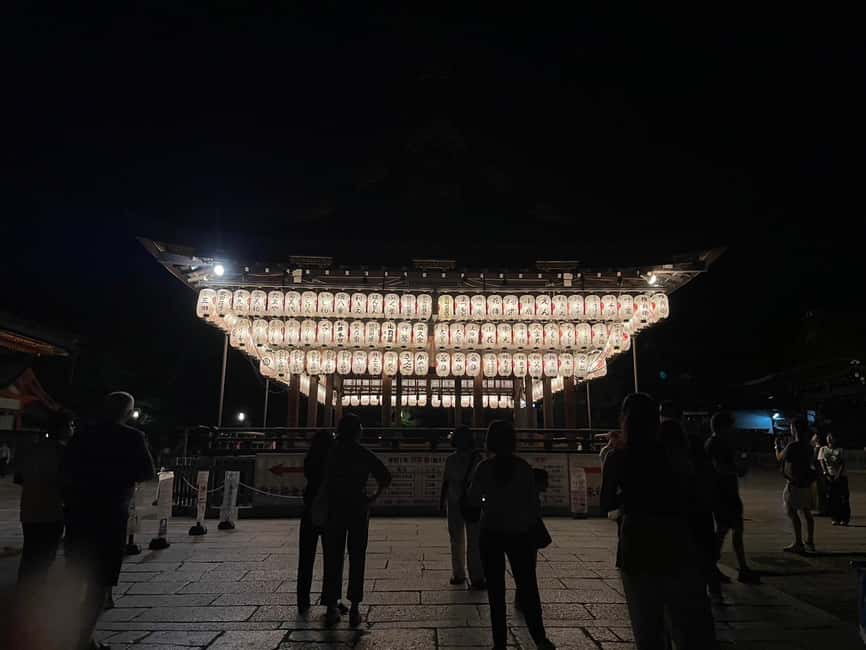
Now you reach Hanamikoji Street, the heart of Gion, lined with preserved wooden teahouses where geiko (Kyoto geisha) practice their craft and culture.
This is where your guide’s storytelling really matters. The tour is designed to explain the refined world of geiko and maiko training and artistry, in a way that feels informative, not like a spectacle. Your guide shares cultural significance and how the district functions as a living cultural space.
This is also one of the evenings where you might spot geiko briefly, though it is not the kind of thing you should count on like a timed show. Still, the setting at night gives you your best odds simply because you are in the right place and the timing feels natural.
If you have questions, ask them here. This is the most likely stretch of the tour where you’ll get clearer answers because you are standing right in the context.
Price and value: what $20 buys you in two hours
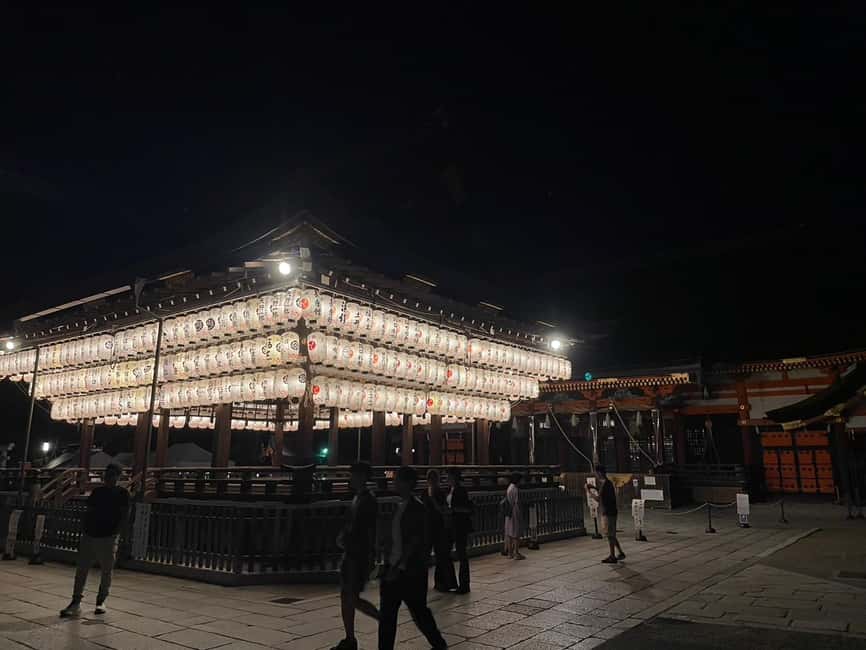
At $20 per person for around 2 hours, this tour is strong value because it bundles several things most DIY visitors end up piecing together:
- A structured walking route across major Gion landmarks
- An English-speaking guide
- Photo help during the tour
- Explanations tied to festivals, street names, and shrine meaning
Could you wander these streets on your own? Sure. But without guidance, it’s easy to miss the “why.” The difference here is that you get meaning with your steps.
The reviews also hint that the guides take time to answer questions and help with photos. That’s not just comfort. It’s part of the value, especially if you are a solo traveler who wants good night images without wrestling your camera.
Photos, pacing, and how to make the most of your night
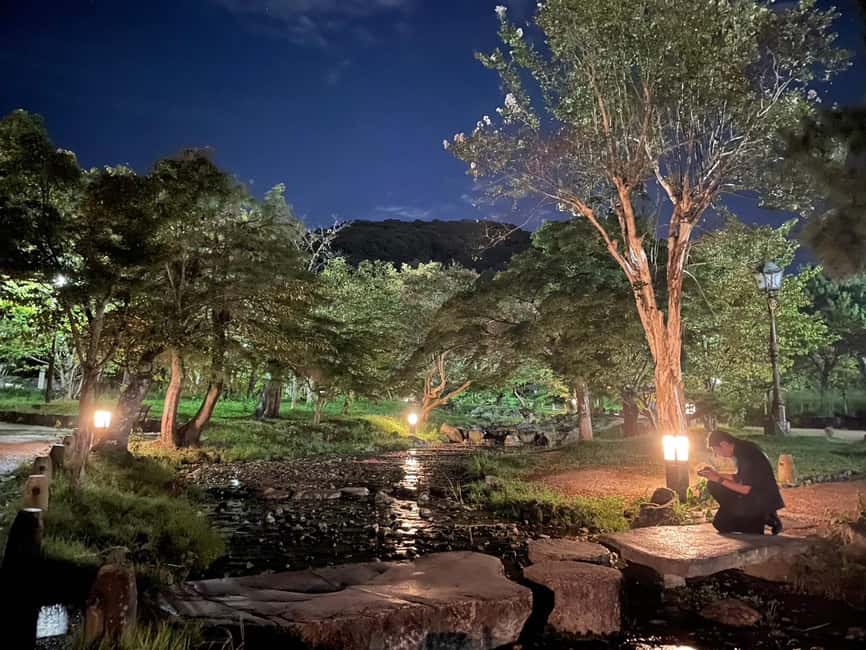
This is a walking tour, so think of it as a guided evening stroll with purposeful stops. You are not doing a marathon, but old lanes and shrine paths can feel longer than the map suggests once you factor in time for explanations and photos.
Here’s how I’d plan for a smoother experience:
- Wear comfortable shoes you can walk in for two hours without thinking.
- Keep your phone handy and ready for night shots, especially around Ninenzaka and Hanamikoji Street.
- If you want better photos, bring an extra burst of patience. Night lighting and narrow lanes can be tricky.
One practical bonus: the tour includes photos during the walk. That means you’re not stuck doing awkward solo selfies the whole time, which is a real quality-of-life improvement.
Who this tour suits best, and who should skip it
This tour fits well if you want a guided, story-driven night walk through Gion without having to research every shrine detail beforehand. It’s especially good if you care about cultural meaning: festival connections, shrine rituals, and the historical stories behind street names.
It may not be ideal if you have mobility concerns. It’s not suitable for wheelchair users, and the route is on foot through older streets and shrine areas.
It also works nicely for first-timers in Kyoto who feel overwhelmed. The route focuses on a tight cluster of sights, so your evening stays cohesive.
Should you book this Kyoto Gion night walking tour?
I’d book it if you want an organized evening that turns famous streets into understandable places. Starting at Yasaka Shrine gives you a strong foundation, and the rest of the route builds from there, with Nene no Michi, Ninenzaka, the Power Stone ritual at Yasui-Konpiragu Shrine, and Hanamikoji Street where the geiko and maiko story finally becomes real.
Skip it if you need wheelchair access, or if you hate walking at night and prefer a purely self-guided plan.
If you are choosing between doing nothing or taking a short guided tour, this hits a sweet spot: two hours, English guide, meaningful stops, and photo help for a price that feels fair.
FAQ
How much does the Kyoto Gion night walking tour cost?
It costs $20 per person.
How long is the tour?
The tour lasts 2 hours.
Where do we meet for the tour?
Meet in front of Starbucks located next to Kyoto Gion Hotel. The provided coordinates are 35.0036732, 135.7760837.
What key sights are included during the walk?
The tour covers Yasaka Shrine, Maruyama Park, Nene no Michi, Ninenzaka, Yasui-Konpiragu Shrine (Power Stone archway), and Hanamikoji Street.
Is the guide English-speaking, and are photos included?
Yes. The tour includes a live English-speaking guide, and photos are included during the tour.
Can I reserve now and pay later, and is free cancellation available?
Yes. You can reserve now & pay later, and you can cancel up to 24 hours in advance for a full refund.
Is the tour suitable for wheelchair users?
No, it is not suitable for wheelchair users.
More Evening Experiences in Kyoto
- Kyoto Gion Night Walk & Geisha District Guided Tour
★ 5.0 · 786 reviews - Kyoto Ghost Tour: Dark Tales, Urban Legends, Bamboo Forest Night
★ 5.0 · 625 reviews - Kyoto Bar Hopping Night Tour
★ 5.0 · 613 reviews - Kyoto Night All-Inclusive Eats and Streets, Gion and Beyond
★ 4.7 · 601 reviews
Fresh options around Kyoto
- Kyoto Aquarium Admission Ticket★ 4.7 · 12 reviews
- Kyoto Gion Photoshoot – Private Session | Pro Photographer★ 5.0 · 12 reviews
- Gyoza Cooking Class in Kyoto: Traditional Japanese Dumplings★ 5.0 · 12 reviews
- Kyoto: Guided Food Tour with 12 Dishes & 3 Drinks★ 5.0 · 12 reviews
- Kyoto: Avoid the Crowds at the Hidden Gems of Arashiyama★ 4.9 · 13 reviews
- Kyoto Early Bird English Tour: Gion & Higashiyama(Private opt)★ 5.0 · 13 reviews
- Otsu-e Folk Art Workshop & Local Culture Walk Near Kyoto★ 5.0 · 13 reviews
- Kyoto, Osaka, Nara Full Day tour by Car English speaking Driver★ 3.5 · 13 reviews
Walking Tours, compared.
Kyoto Geisha Walking Tour: Gion District & Hidden Gems
Read our review →
Tokyo Tsukiji Fish Market Food and Culture Walking Tour
Read our review →
Gion Magical Night Walking Tour with Geisha Trivia
Read our review →
Imperial Palace and Shogun Historical Walking Tour
Read our review →
Gion Geisha District Walking Tour – Stories of Geisha
Read our review →
Shinjuku Local Bar and Izakaya Guided Walking Tour
Read our review →
Browse the lists this tour appears in