
Reviewed · HISTORICAL TOURS
Hiroshima History Tour : A-Bomb Dome, Peace Memorial & City
Atomic history, told by people with memory. This private Hiroshima history tour pairs family-linked guides with major sites like the Peace Memorial Museum and the Atomic Bomb Dome, so the day feels personal instead of just factual. I like that the Peace Museum includes skip the line entry, and you also get time in Shukkeien Garden to cool your head after all the heaviness. One possible drawback: it is a thoughtful walking tour with serious subject matter, so comfortable shoes and a steady pace really matter.
You’ll move through Hiroshima in a logical loop, with stops that shift from exhibits and monuments to reflection. Expect a 3 hour experience (often closer to 3 to 4 hours depending on your pace), and a route you can adjust ahead of time. Pickup is offered, tickets are handled for you where included, and the guide works in English and Japanese.
Key highlights you should know before you go
- Local perspective with family ties: some guides are second-generation atomic bomb survivors, others are tied through family or life in Hiroshima.
- Skip the line at Peace Memorial Museum: the museum is the anchor stop, and getting in smoothly saves energy.
- A layered route: museum facts, park monuments, the Children’s Peace Monument for Sadako, then the Dome and the hypocenter area.
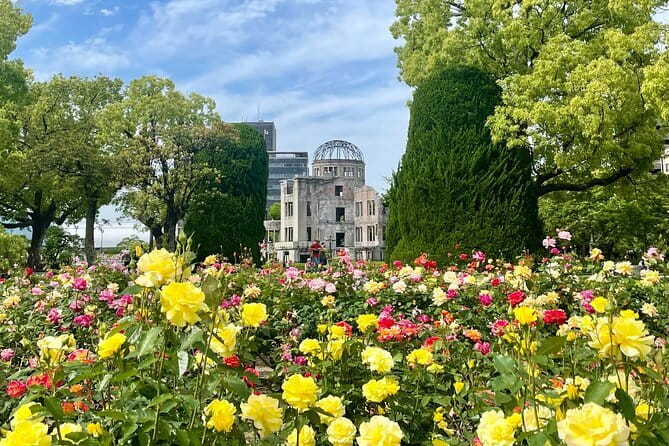
- UNESCO Atomic Bomb Dome, up close: you’ll see why the building’s position matters so much to the story.
- Shukkeien Garden as a breather: entry is included, and the garden’s older design helps you reset.
- Private tour, just your group: you control your speed and questions, not a loud group rhythm.
Why a Hiroshima history tour with family-tied locals feels different
You can read about Hiroshima in books. The shock comes when you watch the city as locals do, with everyday life wrapping around memory. That is the core value here, the guide’s perspective shaped by family and lived connection to Hiroshima.
Some guides are second-generation atomic bomb survivors. Others were born and raised in Hiroshima or have family members affected by the bombing. Either way, the goal is not a scripted lecture. You’ll get stories passed down quietly, along with practical context that helps you understand what you’re looking at.
If you like history that has a human face, you’ll appreciate how the tour connects places to people. You’ll also notice that the tone stays thoughtful. That matters at the Peace Memorial Museum and around the Dome, where the details can feel overwhelming if you’re alone.
A few more Hiroshima days worth comparing
- Hiroshima Historical Walking Tour – Why A-Bomb was Dropped
★ 4.8 · 893 reviews - Hiroshima Peace (Heiwa) Walking Tour at World Heritage Sites
★ 5.0 · 872 reviews - Miyajima Half-day Trip Historical Walking Tour
★ 5.0 · 284 reviews
Peace Memorial Museum, where the facts land first
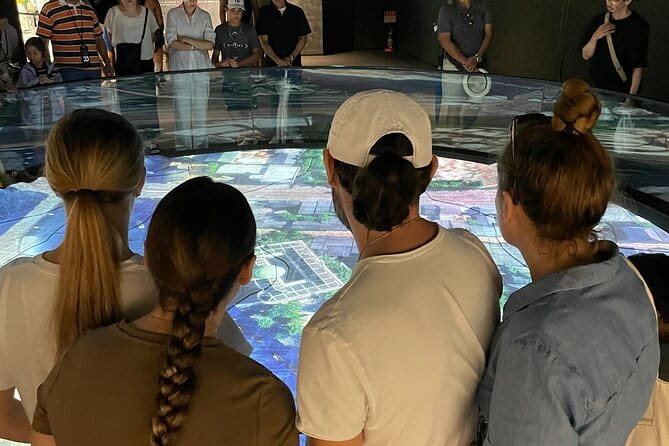
This is your first major stop, and it sets the emotional and historical baseline. You’ll spend about an hour inside the Hiroshima Peace Memorial Museum, with admission included and skip the line entry offered.
What makes this museum especially important is how it mixes formats. You’ll see exhibits and data, plus artwork connected to A-bomb survivors. That combination helps you connect scientific information to lived experience, without turning the visit into only one type of learning.
Plan your mindset before you go in. The museum is not trying to shock you for attention. It is built to make the reality understandable, and that can take more mental energy than you expect. If you want to keep the rest of the day balanced, give yourself enough time to absorb quietly.
Peace Memorial Park and the monuments you’ll actually notice
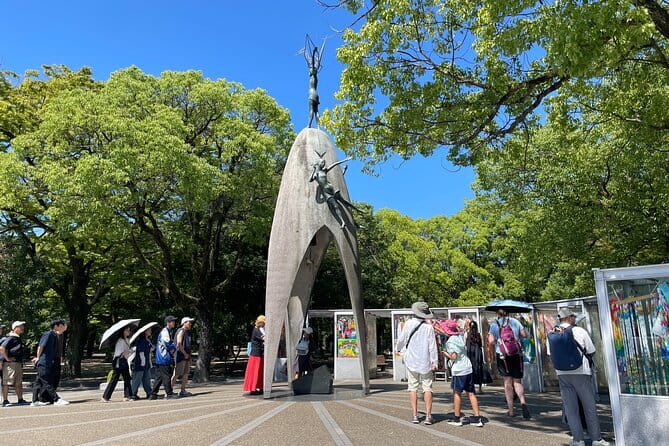
After the museum, you’ll step into Peace Memorial Park for a lighter pace, about 20 minutes on foot. Many visitors rush this area, but a short stroll with context changes everything. You’ll visit several monuments and get a sense of how Hiroshima rebuilt and keeps remembering.
The park is partly about space and sound. It invites you to slow down, look longer, and read plaques without feeling rushed. The tour framing helps too, because a guide who grew up in Hiroshima can point out what locals treat as normal or meaningful.
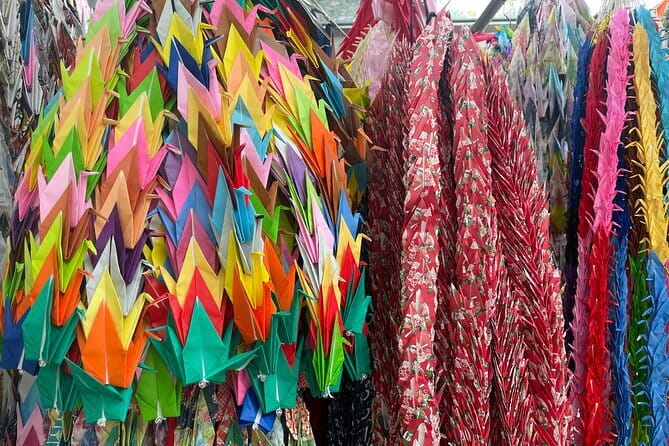
You’ll also make a stop at the Children’s Peace Monument, a brief 5 minutes. This is where Sadako’s story comes in, along with the famous origami cranes. It’s one of those moments where the tour shifts from massive historical events to something you can emotionally hold onto.
The Atomic Bomb Dome: UNESCO, but also a physical reminder
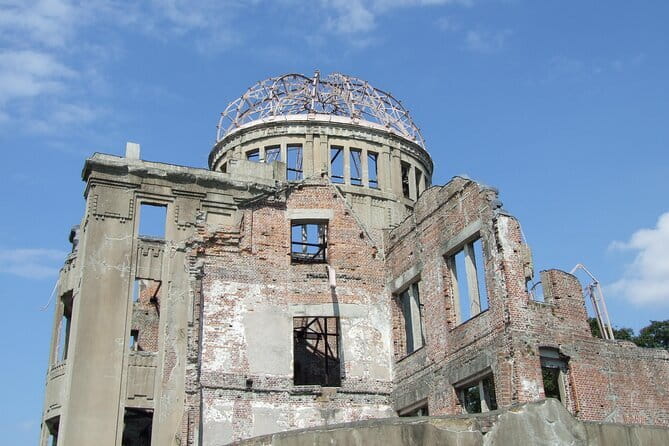
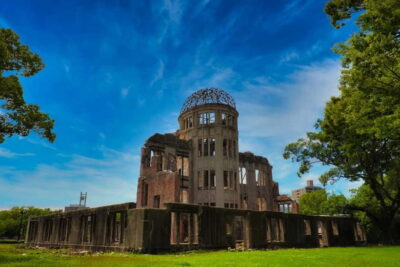
Next comes the Atomic Bomb Dome, one of Hiroshima’s most recognizable images. It’s a UNESCO World Heritage Site, and you’ll have about 20 minutes there.
The key detail is physical, not just symbolic. The building still retains its original appearance because it is located almost directly below the hypocenter. That fact makes the structure feel less like a relic and more like a marker of where history struck.
A good guide will help you read the Dome correctly. Look at what survived, and also what the surrounding context tells you about scale. You’ll likely find yourself standing longer than planned, because you can’t really unsee what the place represents.
Same corner of Japan, a different kind of day:
- Peaceful Hiroshima & Miyajima UNESCO 1 Day Bus Tour
★ 5.0 · 5,309 reviews - Hiroshima: Hiroshima and Miyajima UNESCO Sites 1-Day Tour
★ 4.9 · 2,330 reviews - Hiroshima / Miyajima Full-day Private Tour with Government Licensed Guide
★ 5.0 · 1,298 reviews - Hiroshima in a Nutshell: Morning Bike Adventure
★ 5.0 · 524 reviews
Hypocenter monument near Shima hospital: the exact moment matters
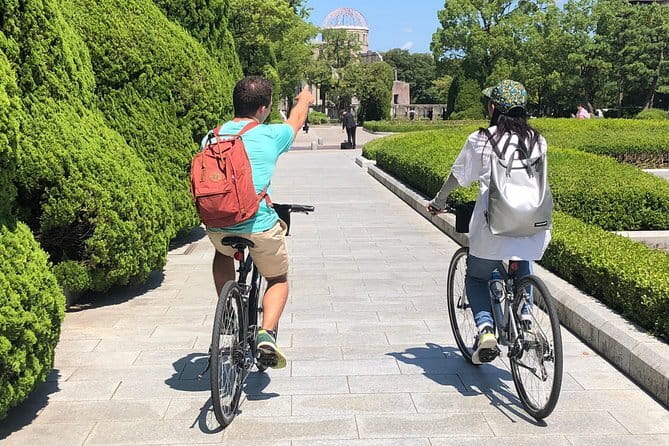
Right near the Dome area, you’ll also stop at the hypocenter monument. This is about 10 minutes and is free to visit.
This portion of the route is precise. The atomic bomb exploded above Shima hospital, and the monument is meant to help you picture the location and timing. Standing there is different from seeing the Dome from a postcard distance, because you’re forced to focus on the blast site rather than the surviving structure.
If you’re the type who likes clear, specific grounding, this stop delivers. It helps you understand why the Dome’s position is so central to the story.
Hiroshima Castle replica: a short reset with an important caveat
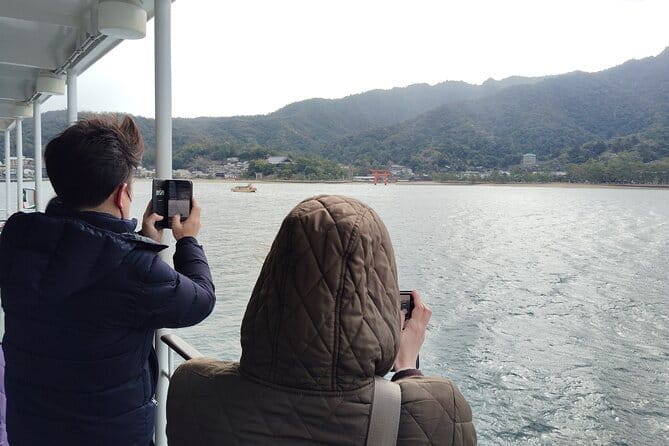
From the memorial sites, you’ll move to Hiroshima Castle. Expect about a 15 minute stop, mostly for viewing from the outside.
Here’s the caveat: it is a replica of the original castle, since the earlier version was destroyed by the A-bomb. In normal circumstances, you’ll do photos from the outside, but you can enter the museum inside if you want. Entry to that museum is not included.
This stop can work as a mental reset. After heavy sites, it gives your eyes a break and offers a different angle on Hiroshima’s long arc. Just be honest with yourself about expectations, a replica can still be meaningful, but it is not the original building.
Shukkeien Garden: calm time that still connects to Hiroshima
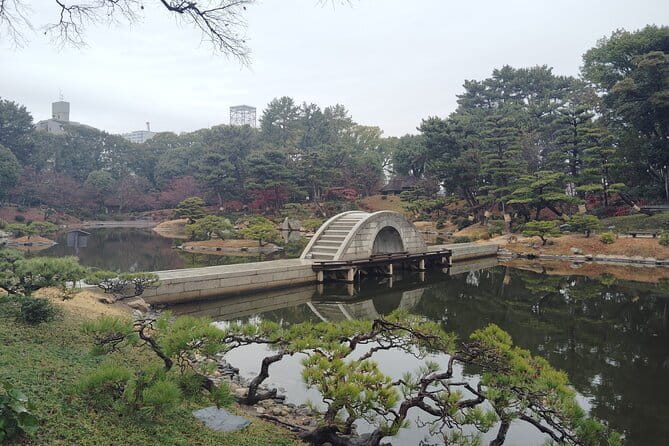
Your final anchor stop is Shukkeien, one of Japan’s older Japanese gardens. You’ll have about 45 minutes here, and garden admission is included.
Shukkeien matters because it is not designed for speed. You’ll notice the pond, trees, and subtle undulations that make walking feel like moving through a carefully composed scene. The garden was created in 1620 and belonged to a samurai who settled in the area, so you’re stepping into a landscape shaped by centuries of local life.
This is also your practical breathing space. If you’ve spent hours absorbing tragedy, the garden offers quiet without pretending the day didn’t happen. Even the contrast can be useful, because it reminds you Hiroshima is still a living city, not only a museum outside your window.
Seasonal bonus: if your timing lines up with Momiji (autumn leaves) at Shukkeien, the garden can look especially stunning. If it is not that season, you’ll still get the classic pond-and-path rhythm that makes Shukkeien a worthwhile included stop.
How customization and the private format affect your day
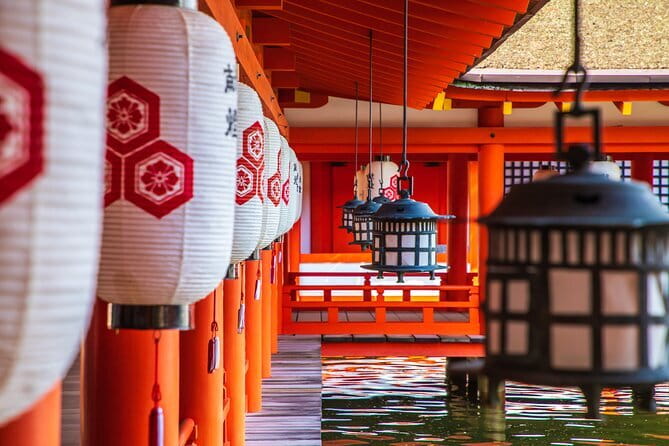
This is a private tour, meaning it is only your group. That changes the whole experience, especially when the content is emotional and personal. You won’t have to compete with other voices or adjust your questions down to fit a group flow.
The guide can also customize in advance, which is a quiet but big advantage. If you want more time at the museum, less time at the castle photos, or extra questions around the Dome and hypocenter, you can usually shape the rhythm.
Pickup is offered, and the tour stays near public transportation. That helps if you want to build the rest of your day around train times, or if you prefer not to manage a complicated transfer on your own.
Also, you get photo data from the tour. That’s a small inclusion that can help a lot, especially for stops where you want a clean shot but don’t want to juggle your phone or camera the whole time.
Price and value: what $105.42 gets you in real terms
At $105.42 per person for a roughly 3 hour private walking tour, the cost can look high on paper. In practice, the value depends on what you’d otherwise pay and what you’d otherwise miss.
Here’s what is included that you would likely pay separately:
- Peace Memorial Museum admission, with skip the line
- Shukkeien Garden admission
- Photo data from the tour
- A local guide working in English and Japanese
Also, several stops are free to visit, like Peace Memorial Park monuments, the Children’s Peace Monument, the Atomic Bomb Dome area, and the hypocenter monument. You’re essentially paying for the guided thinking, plus the paid admissions handled for you.
What’s not included:
- Lunch and food
- Tips
- Private transportation
- Public transportation fare, listed as ¥240 per person
That public transit note matters if you are not using pickup. For many visitors, lunch is a bigger “surprise cost” than they expect, so plan for it. If you’d rather keep things simple, you can grab something nearby after the tour and spend your energy on the last part of the day instead of negotiating meals.
If you want a tour where the guide’s personal perspective is the main feature, this price can make sense. If you’d rather self-tour with a quick audio guide and no guide-time flexibility, you’ll pay extra for the human context.
Practical tips so the day goes smoothly
First, wear walking shoes. You’re moving between multiple major sites with scheduled stop times, and the day works best at an adult walking pace.
Second, think about emotional energy. This route includes the museum, monuments, and reflection points tied to the atomic bombing. If you’re sensitive to heavy subject matter, plan your evening after the tour, not before it.
Third, weather matters. The experience requires good weather. If the day is rainy or miserable, you may be asked to reschedule or receive a full refund if the tour is canceled due to poor conditions.
Finally, you might see good guide language support in both English and Japanese. That can help if you want deeper explanations or clarification of what a plaque or exhibit is saying.
Should you book this Hiroshima history tour?
Yes, if you want more than a checklist of landmarks. This is the right choice when you value human perspective alongside major sites, especially at the Peace Memorial Museum and around the Atomic Bomb Dome.
Book it if:
- you want a private, flexible pace
- you like asking questions and getting context tied to everyday Hiroshima life
- you want Shukkeien Garden included so the day has a calm landing spot
Skip it, or at least reconsider, if:
- you’re not up for walking and a steady schedule of memorial sites
- you prefer lightweight, purely factual sightseeing without personal stories
- you’re traveling when weather is likely to be rough
If you do book, arrive ready to listen. The best part of this kind of tour is not memorizing dates. It’s understanding how the city remembers, and how that memory continues to shape its future.
FAQ
How long is the Hiroshima History Tour?
The tour is approximately 3 hours.
What does the ticket price include?
The experience price includes Peace Memorial Museum admission (with skip the line), Shukkeien Garden admission, and photo data from the tour, plus a guide (English, Japanese).
Is the tour private?
Yes. It is a private tour, so only your group will participate.
Do I need to pay for lunch during the tour?
Lunch is not included. The tour does not include any food or drink.
Is pickup offered?
Pickup is offered.
What if the weather is bad or I need to cancel?
Free cancellation is available up to 24 hours in advance for a full refund. If the experience is canceled due to poor weather, you’ll be offered a different date or a full refund.
Fresh options around Hiroshima
- The Peace Memorial and Beyond: A Half-Day around Hiroshima★ 4.9 · 12 reviews
- Hiroshima Saijo Sake Tasting Tour with visit to 3 Breweries★ 5.0 · 12 reviews
- Private Hiroshima Calligraphy: Create Your Own Kanji Art Souvenir★ 5.0 · 12 reviews
- Hiroshima:Private lacquer workshop experience tour(gift included)★ 5.0 · 13 reviews
- Sunset Walking Tour at Peace Park, Hiroshima★ 5.0 · 13 reviews
- Kimono and Calligraphy Experience in Miyajima★ 5.0 · 16 reviews
- Hiroshima Peace Memorial Park: A Guided Tour★ 4.9 · 16 reviews
- History of Hiroshima: Small Group Night Walking Tour★ 4.8 · 17 reviews
Historical Tours, compared.
World Heritage Shirakawa-go and Experience Tours from Kanazawa
Read our review →
Imperial Palace and Shogun Historical Walking Tour
Read our review →
World Heritage Kyoto & Nara Uji Authentic Matcha Experience
Read our review →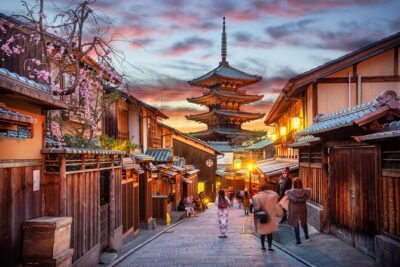
Kyoto Gion: 2-Hour Geisha Culture & History Walking Tour
Read our review →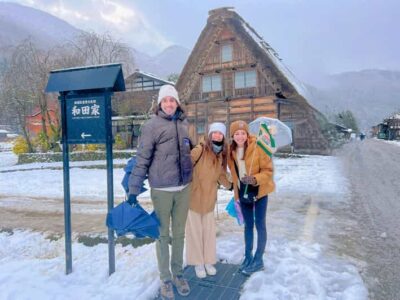
World Heritage Shirakawa-go Morning Guided Tour
Read our review →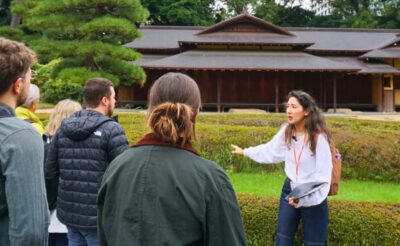
Hiroshima Historical Walking Tour – Why A-Bomb was Dropped
Read our review →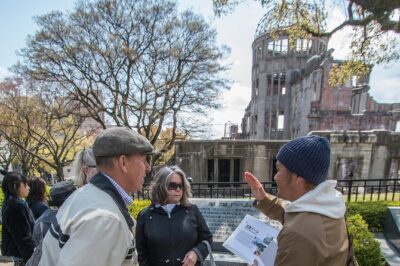
Hiroshima Peace (Heiwa) Walking Tour at World Heritage Sites
Read our review →Browse the lists this tour appears in