
Musubi tastes better when your hands make it. I love the chance to learn from an 80-year-old grandma and I love that you get a full teishoku meal right after. The only catch is it is a big lunch, so if you eat a lot beforehand, you might struggle to finish everything.
Before you roll your first rice shape, you wash your hands and get a quick primer on what musubi is, and how it differs from onigiri. With a small group limited to 6, the grandma demonstrates up close, while an assistant provides English step-by-step translation so you can keep up.
At $38 for 90 minutes, this is a straightforward, hands-on food experience with real, homemade results. Transportation to the venue is not included, but once you arrive the rhythm is relaxed and practical, and you leave with three musubi you made yourself.
Key things that make this musubi class worth your time
- An 80-year-old musubi grandma teaching techniques the way they are done for generations
- Musubi vs onigiri explained early, so you start with correct context
- Choose from 6 fillings and make 3 musubi with your own hands
- A homemade Japanese teishoku meal with miso soup, salad, dessert, and a beverage
- Small group (up to 6) so instructions actually land, not just pass by
- English translation support alongside Japanese instruction for a smooth experience
Why Ginza musubi class taught by a grandma feels personal
There is a particular kind of comfort you get from learning food from an older Japanese cook. Not because it is sentimental. Because it is precise. In this Ginza musubi-making class, the whole point is that you are not just watching someone else work. You are copying the technique, the pace, and the little corrections as they happen.
Two things make it especially memorable. First, you learn from an 80-year-old grandma, and that changes the vibe. She teaches like you are learning a practical skill you will actually use. Second, you do not leave hungry. After you finish making your musubi, you sit down to a homemade teishoku-style meal that rounds out the experience.
One consideration up front: the food portion is generous. Several people point out that you should plan to come on an empty stomach. If you treat it like a light snack class, you will feel it during the meal. If you arrive properly hungry, it feels like a warm, satisfying lunch at someone’s home.
A few more Tokyo days worth comparing
- Mt Fuji and Hakone 1-Day Bus Tour Return by Bullet Train
★ 5.0 · 26,383 reviews - 1-Day Tokyo Bus Tour
★ 5.0 · 14,250 reviews - Tokyo: TOKYO SKYTREE® Admission ticket
★ 4.5 · 11,192 reviews
Getting the basics right: musubi vs onigiri, and what you will learn
Japanese rice snacks can sound similar in English. The class handles that early, before you touch anything. You start with hand-washing, then you get a quick summary about musubi, including how it differs from onigiri.
That matters more than you might think. If you only focus on shaping rice, you miss the cultural framing. Here, you are learning the idea behind what you are making, not only the final look. By the time you start forming your own musubi, you already understand what the instructor considers musubi, and why she separates it from onigiri.
Then comes the structure that keeps things understandable in a mixed-language setting. The grandma teaches in Japanese, and you get English support from an assistant. The goal is not to translate every single word perfectly. The goal is for you to understand the technique, including the small steps that make the finished musubi hold together.
If you learn best through doing, this is a strong fit. You will get guidance, then immediate practice. You do not have to memorize anything alone.
Choose your filling from six options, then make three musubi
This is a practical cooking class, not a decorative craft. The class gives you 6 filling choices, and you pick the one you want for your musubi. Then you make 3 musubi total, so there is time to get comfortable.
Here is where the value shows up. A lot of food experiences let you taste, maybe make one bite. This one has you repeating the core steps three times. That repetition is what turns a confusing first attempt into something you can do with confidence.
What does that look like in real time?
- You follow the grandma’s demonstration while the assistant translates the key instructions.
- You handle the rice, portion it, and shape it using the method she shows.
- You add your chosen filling, then form and finish each musubi so it stays neat and compact.
You do not need fancy knife skills or any prior cooking experience. Your main tools are your hands and attention. If you are the type who likes instant feedback, you will probably enjoy how the instruction stays focused on technique, not theory.
A small but important tip: listen for the guidance that relates to consistency. In rice shaping classes, the difference between good and great often comes down to texture and pressure. The grandma’s coaching is built around those details, and the translation helps you catch what to adjust.
Teishoku lunch right after: miso soup, salad, dessert, and a beverage
The meal is not an afterthought. It is part of the experience, and it helps you understand why musubi fits into everyday Japanese eating. Once you finish your three musubi, you sit down to a homemade Japanese teishoku meal.
Based on what is included, your plate typically includes:
- Miso soup
- Salad
- Your musubi
- Dessert
- A beverage
This matters for two reasons. First, you get to taste what you made alongside a complete meal format, instead of eating rice bites in isolation. Second, the teishoku style sets expectations for how balanced a Japanese lunch can be, even when the main focus is simple food like rice and fillings.
Pacing is key. Because the lunch is filling, plan your day so this is a main meal. If you arrive already full from snacks, you may feel rushed or overwhelmed when dessert shows up.
One more practical note: the class format usually has you busy and focused while you are shaping, so you may not notice how much time has passed until you reach the meal. People who love this experience often say the lunch felt like a genuine hospitality moment, not a token snack.
Same corner of Japan, a different kind of day:
- Tokyo: teamLab Planets TOKYO Digital Art Museum Entry Ticket
★ 4.6 · 9,779 reviews - Mt Fuji & Hakone Cruise, Drum Show Bullet Train 1 Day from Tokyo
★ 4.0 · 7,413 reviews - Tokyo: Sumo Show Experience with Chicken Hot Pot and a Photo
★ 4.8 · 6,678 reviews - Tokyo: Shinjuku Food Tour (13 Dishes at 4 Local Eateries)
★ 5.0 · 6,603 reviews
What the 90 minutes actually feels like, and who it suits best
The class runs 90 minutes, and it is designed as a small-group session. Small group is not just a comfort detail. It affects everything: you are more likely to get corrections, you can ask questions, and the pacing stays manageable.
Language support is also straightforward. The instruction is in English and Japanese, with translation assistance so you can follow along. If your Japanese is basic, you are still set up to succeed. The assistant’s job is to keep you from getting lost during the hands-on parts.
Who is this for?
- Food lovers who want something more meaningful than a tasting tour
- People who enjoy practical cooking and want to take a new skill home
- Travelers who like cultural learning through everyday habits, not museum-style explanations
It is also a good option for a day when you want warmth, indoor focus, and a structured activity. One neat point from past participants is that it can be a smart choice when the weather is inconvenient, because the whole thing stays inside and centered on food.
Who should skip it?
- Children under 6 are not suited for the class
- Vegans and vegetarians are not included in the suitable diets listed here
If you are traveling with kids who are old enough to sit, listen, and handle shaping tasks, the experience can work well. The key is maturity and patience during the instruction and meal portion.
Price and value: what $38 buys you in real terms
At $38 per person, you are paying for three things: instruction, food, and the fact that you make the food yourself. Many “cultural” experiences charge more for less time cooking. Here, the class is time-boxed to 90 minutes, and your outcome is tangible, three musubi in hand plus a full teishoku meal.
Let’s translate that into everyday value:
- You are not paying for a guided walk and a photo stop. You are paying for a skill lesson.
- You are not paying for small bites. You are eating a full lunch with soup, salad, dessert, and a beverage.
- You are not paying for a crowd. The group stays small, capped at 6.
It is also a stable experience from a traveler’s perspective. If you like clear start-to-finish activities, this one fits. You know what you will do: wash hands, learn the musubi basics, pick fillings, shape three musubi, then eat.
Also, the included items are straightforward, which helps you budget. Transportation is the only thing not included, so you can plan that cost separately and not get surprised.
Practical tips so you enjoy every step, not just the food
I like experiences where you can walk in, follow the plan, and still feel proud of the result. For this one, a few prep choices make the day smoother.
- Come hungry. This is the biggest tip. Plan this as a main lunch, not a snack.
- Wear something comfortable. You will be sitting and shaping rice, and you want your hands to move freely.
- Expect texture work, not speed. The fun is in learning the feel of the shaping process.
- Ask questions about what makes musubi different from onigiri while it is still fresh. The class frames this early for a reason.
- If you have dietary needs, double-check against the listed limits. The class is not suitable for vegans or vegetarians, and it is not built as a swap-and-go menu.
In sessions where the English-speaking host is present, the vibe tends to be welcoming and chatty. Some participants specifically mention meeting Yuko as the English-speaking host, and also mention Gina as part of the welcoming team. Names aside, the theme stays the same: you are not thrown into silence. You get translation and warmth.
Should you book this GRAN-MUSUBI musubi class in Ginza?
Book it if you want an authentic, hands-on food lesson with an actual meal at the end. This class stands out because you get to practice shaping rice three times, choose fillings from six options, and then eat a full teishoku including miso soup and dessert. The small group size and English support make it feel doable, even if you are not confident in Japanese.
Skip it if you are vegan or vegetarian, or if you are traveling with a child under 6. Also consider skipping or eating lightly beforehand if you know you do not do well with large lunches. The class is generous on food, and that is part of the value.
If you like learning by doing, and you want a meal that feels like Japanese home hospitality rather than a scripted show, this one is an easy yes.
FAQ
How long is the musubi-making class?
The class lasts 90 minutes.
What do I make and what do I eat during the experience?
You will make 3 musubi, with a choice of filling, and you will also enjoy a homemade Japanese teishoku meal. The meal includes miso soup, salad, dessert, and a beverage.
Is the class suitable for young children?
No. The class is not suitable for children under 6 years.
Is this experience vegan or vegetarian friendly?
No. The class is listed as not suitable for vegans and not suitable for vegetarians.
Is there English translation during the class?
Yes. The class includes English translation assistance, and it is taught in English and Japanese.
Is transportation included, and can I cancel if plans change?
Transportation to the venue is not included. You can cancel up to 24 hours in advance for a full refund.
Fresh options around Tokyo
- Tokyo: Nikko Kegon Falls Lake Chuzenji Toshogu Temple & More★ 4.9 · 12 reviews
- Tokyo: Samurai History Walking Tour★ 5.0 · 12 reviews
- Harajuku: Kawaii Fashion and Pop-Culture Tour★ 4.7 · 12 reviews
- Tokyo: Mt. Fuji & Lake Kawaguchi Instagram Full Day Trip★ 4.1 · 12 reviews
- Shibuya Tokyo: Modern Kintsugi Workshop in Shibuya★ 5.0 · 12 reviews
- Tokyo: GTR Guided Daikoku Experience at Night★ 5.0 · 12 reviews
- Tokyo: Daikoku JDM Car Culture Tour★ 4.6 · 12 reviews
- Mt Fuji Private Day Trip from Tokyo with English speaking driver★ 5.0 · 13 reviews
Workshops, compared.
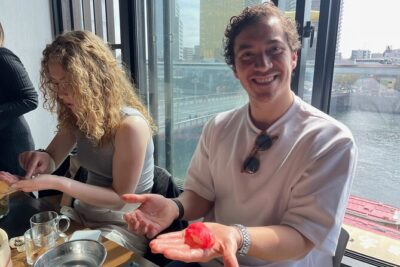
Sushi Making Tokyo Roll and Authentic Japanese Sushi Class
Read our review →
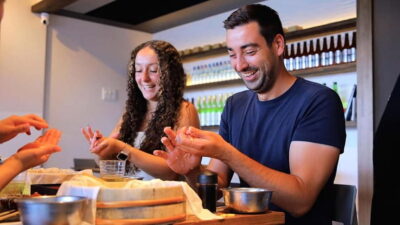
Roll and Authentic Sushi Making Class in Asakusa
Read our review →
Ramen Cooking Class at Ramen Factory in Kyoto
Read our review →
Sushi Making Class in a Happi Coat near a Famous Spot
Read our review →
Sushi Making Osaka Roll and Authentic Japanese Sushi Class
Read our review →Browse the lists this tour appears in