
Reviewed · WORKSHOPS
Experience Big soba knife Soba Making Class in Tokyo Kappabashi
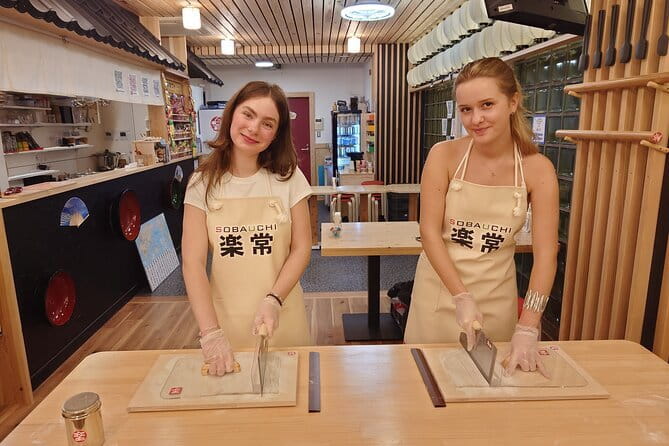
Watching noodles turn into comfort food. This hands-on soba-making class is set in Tokyo’s Kappabashi tool district, and you learn the actual buckwheat process step-by-step at Open Kitchen Studio in Asakusa. You’ll get aprons and gloves, use a soba-specific knife, and finish by tasting the noodles you made.
I especially like the way the class feels organized and friendly, even when the instructor is not speaking English, and how the pace is fast enough to fit real sightseeing plans. I also like that you taste at the end, so you are not stuck wondering if you got it right. A possible drawback to consider: buckwheat allergies mean you cannot enter, so this one is not for everyone.
Key Things That Make This Class Worth Your Time
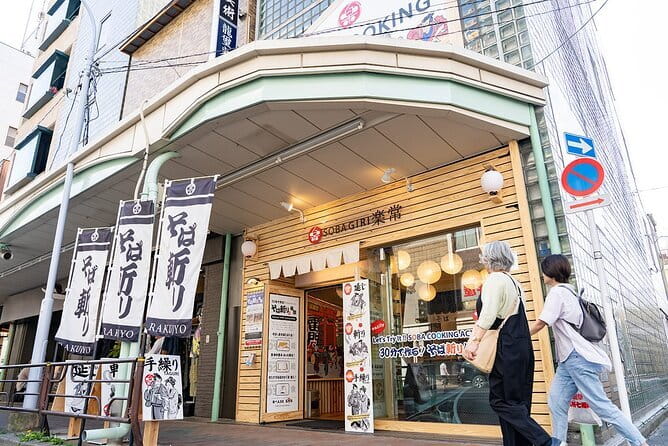
- Kappabashi, Tokyo’s kitchen-tool street, sets the foodie mood before you even start cutting noodles
- Small group size (max 15) keeps the class from feeling rushed or crowded
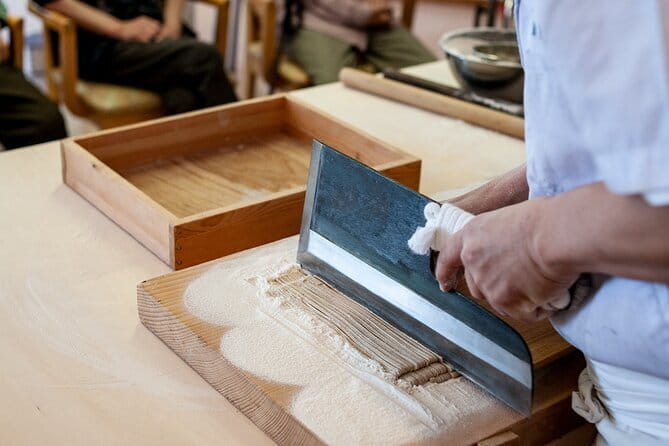
- Four clear steps for making soba dough, add water, knead, stretch, cut
- You learn with a soba-specific knife, not a generic kitchen tool
- Taste at the end, so the class ends with instant payoff, not just technique
- Optional add-ons like matcha soba and sake let you customize your experience
Why Kappabashi Soba Beats a Standard Food Stop
If you want Japanese food, sure, you can eat your way through Tokyo. But if you want to understand it, you need your hands involved.
This class is built around soba noodles made from buckwheat flour. It is not a demo where you watch and hope. You’ll mix, knead, stretch, and cut noodles with guidance right in Kappabashi (the neighborhood where chefs come to source cooking equipment). That matters, because Kappabashi already trains your eye to notice tools and process. You start thinking like a maker, not just a diner.
Two other details make it feel genuinely practical. First, the class is designed to be quick, around 50 minutes total. Second, the format is small-group, capped at 15 people, so you are not lost in a sea of aprons.
One more thing that I think makes this class special is what the provider stresses: the activity is electricity-free and eco-focused. You are doing a very old-school food task. No complicated tech. No heat lamps. Just your knife, your dough, and timing.
A few more Tokyo days worth comparing
- Mt Fuji and Hakone 1-Day Bus Tour Return by Bullet Train
★ 5.0 · 26,383 reviews - 1-Day Tokyo Bus Tour
★ 5.0 · 14,250 reviews - Tokyo: TOKYO SKYTREE® Admission ticket
★ 4.5 · 11,192 reviews
Entering Open Kitchen Studio in Asakusa (Where Tools Meet Technique)
The meeting point is at Matsugaya, Taito City. From there, the studio experience takes you into the Kappabashi side of Asakusa’s food zone, and it is about 25 minutes from Sensoji Temple. That is close enough to pair with other Asakusa sights without it swallowing your whole day.
The studio itself is described as spacious on the ground floor, with seating up to 30 people. That is a good sign for comfort. You are not just standing around with wet hands waiting your turn.
They also make the start easy. Aprons and gloves are available in different sizes. That means you can focus on learning rather than worrying about what to wear. Gloves also help you handle the dough cleanly while you figure out the feel.
One more rule to know before you go: buckwheat allergies are not permitted. Soba is the main event, and buckwheat is part of everything here.
The 50-Minute Flow: From Dough to Noodle Cut
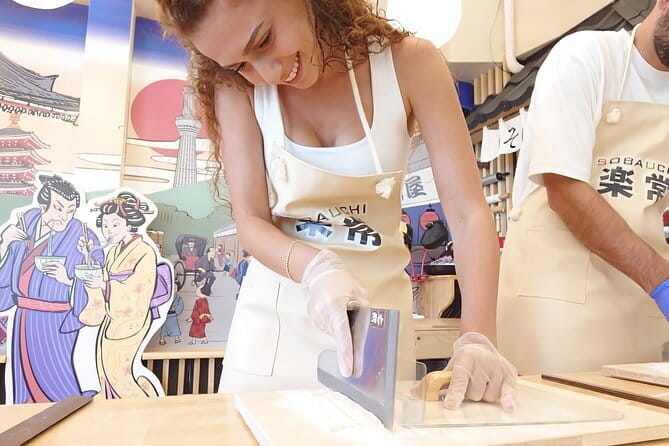
The class is structured around four steps, designed to be learnable in a short time: adding water, kneading, stretching, and cutting. The hands-on portion is taught as a compact process in about 30 minutes, with the rest of the time used for setup, instruction, and finishing.
Here is what that means for you as a visitor. You are not being asked to master a new craft in a year. You are practicing the key movements that create good soba texture and shape, then you get immediate feedback when you taste.
The instructions are also meant to remove friction. You get a clear workflow, and the class is presented in a way that works even if you do not catch every word. In past experiences, the instructor approach has been described as funny and able to get messages across without fuss. That kind of teaching style is a big deal in a short class.
The class also emphasizes what soba should be: buckwheat soba without wheat flour. For many visitors, that detail changes your expectations. It is not a wheat-based noodle trick. It is a distinct dough with its own handling.
Buckwheat from Nagano and a Soba-Specific Knife
A lot of cooking classes use whatever tools are on hand. This one leans into authenticity through specific tools.
You’ll work with a large knife designed for soba. You cut long, thin noodles, and the knife is part of why the process feels like soba-making and not just kneading and chopping. If you care about cooking technique, you’ll appreciate that the class respects the craft.
Another detail that helps set expectations: the buckwheat flour is from Nagano Prefecture. That is a nice touch because soba is strongly regional in Japan. You are not just making a generic noodle. You are making a Japanese-style buckwheat noodle using ingredients the class identifies.
If you are wondering how you will manage the cutting, relax. The whole point of a class like this is guided practice. People often leave saying they can make soba at home, or at least understand the process enough to try again. The reason is simple: you repeat the key motions and see what the dough does under your hands.
Same corner of Japan, a different kind of day:
- Tokyo: teamLab Planets TOKYO Digital Art Museum Entry Ticket
★ 4.6 · 9,779 reviews - Mt Fuji & Hakone Cruise, Drum Show Bullet Train 1 Day from Tokyo
★ 4.0 · 7,413 reviews - Tokyo: Sumo Show Experience with Chicken Hot Pot and a Photo
★ 4.8 · 6,678 reviews - Tokyo: Shinjuku Food Tour (13 Dishes at 4 Local Eateries)
★ 5.0 · 6,603 reviews
Tasting, Snack Stops, and Taking Home Noodles
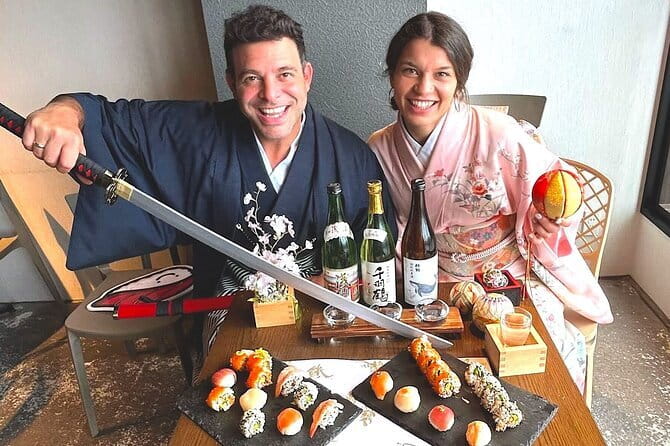
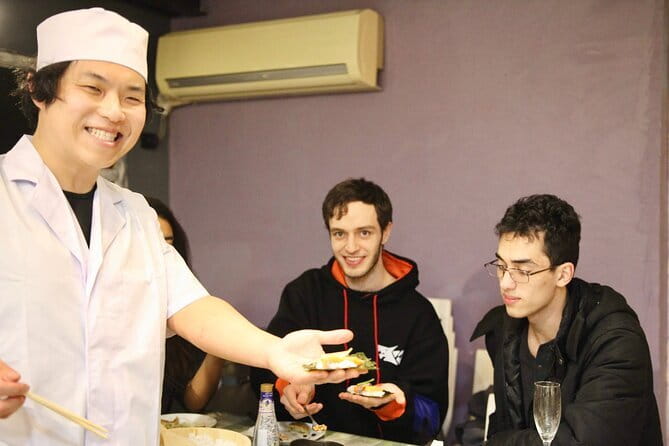
The best part of a hands-on class is the ending. Here, you get to taste the soba you cut. That is included as snacks, and it happens after the making steps.
Because soba can be eaten as a light meal or a snack, the taste at the end is a flexible win. Even if you are planning a big dinner later, you leave with a meaningful food experience that connects directly to what you made.
You can also take out the noodles you made. That is a practical perk. It means you can turn your class into a personal souvenir you actually eat later. It also helps if your schedule is tight and you do not want to linger.
The class notes that you can try your soba in a variety of flavors. Specific flavor names are not listed in the core info, so think of this as you will likely be given options on-site.
Optional Upgrades: Matcha Soba and Sake Pairing
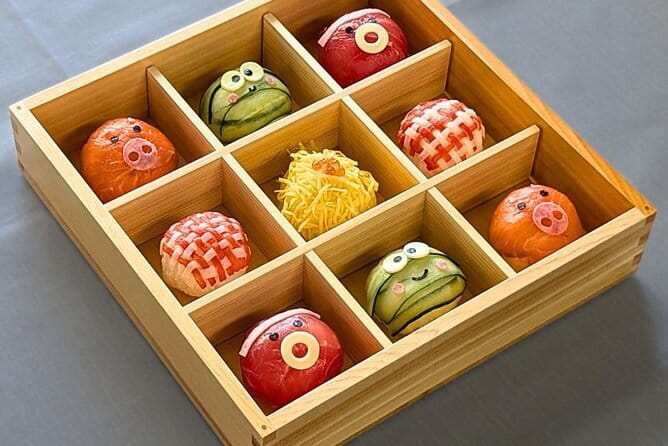
This class gives you a couple of add-on routes if you want to make it more of an evening-with-food experience.
For 700 yen, you can do matcha soba, where matcha green tea is mixed into the soba flour. That is a fun twist because it changes both flavor and color, and it still keeps the soba-making format intact.
There is also an option for three types of sake for 1500 yen, with the owner carefully selecting and comparing them. If you like the idea of matching what you made with regional drinks, this is the sort of add-on that can make the class feel extra special.
If you are trying to keep it simple, you can stick with the standard soba tasting and save your money.
Price and Value: Paying for Technique, Not Just a Meal
At $51.33 per person, this is not a cheap activity. But it is also not overpriced in a way that feels like you are paying only for food.
Here is what you are getting value-wise:
- Hands-on soba knife practice with a specific tool
- Instruction through the full dough process, not just observation
- Aprons and gloves provided in multiple sizes
- Snacks included, meaning you taste the outcome at the end
- Small-group learning, max 15 people, so attention is more likely
- All fees and taxes included, which reduces the chance of surprise extras
Duration is about 50 minutes, so it is a good use of time if you are also trying to see Asakusa and Kappabashi.
Also, the class includes a note about vegan or no-pork options, with an additional fee of 500 yen if you choose that. That kind of clear add-on policy can be easier to plan around than vague menu choices.
Who Should Book This Soba Class (and Who Should Skip)
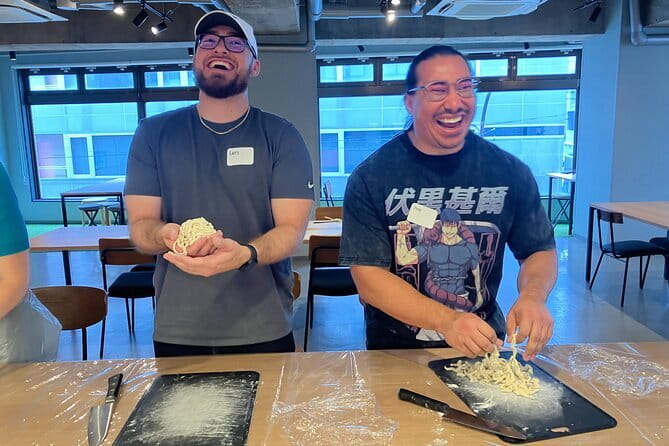
This class fits best if you:
- Want a hands-on cooking experience in Tokyo, not just another tasting walk
- Like Japanese technique and tools, especially those connected to food craft
- Prefer a short, structured activity that ends with you eating what you made
- Travel with a partner or small group and want something interactive
Based on the way the class describes itself and the way it is organized, it is also a good match for couples and families who want a guided activity that does not drag on.
You should skip if:
- You have a buckwheat allergy, since entry is not allowed
- You only want a large meal, because the included part is snacks and tasting, not a full sit-down meal package
If you are traveling with kids, you might find it especially engaging because you get to watch and participate in a visible transformation, dough to noodles. Just keep in mind it is a real cutting process, so you will follow the class rules for safe participation.
Quick Practical Tips for a Smooth Class Day
A few smart moves can help you get more out of the 50 minutes:
- Wear something easy to move in. Even with gloves and an apron, you will be hands-on.
- Plan your timing. If you are pairing it with Sensoji Temple, remember the studio is about 25 minutes away by the class’s location description.
- Go in hungry, but not starving. You do get tasting snacks at the end, and that is the payoff.
- Bring curiosity about tools. Kappabashi is a kitchen-tools street area, so this will make more sense if you notice the shapes and purposes of tools around you.
- If you want matcha or sake, budget for add-ons. Matcha soba and the sake set are listed as optional purchases.
One more thing: people have praised that the instructor takes photos and sends them. If that option is important to you, it is worth going in prepared to enjoy that moment, since it is a nice way to remember a skill-based experience.
Should You Book It?
If you want one Tokyo activity that is hands-on, food-focused, and connected to real Japanese technique, I think you should strongly consider booking this soba class in Kappabashi.
It is good value for what you do, not just what you eat. The small-group format, the soba-specific knife, and the fact you taste what you made are the three reasons it works. You also get a fast class that fits within a sightseeing day.
The main reason to skip is also clear: buckwheat allergy means you cannot enter. If that does not apply to you, this is one of those rare classes where the payoff is immediate, you leave with noodles you can take out, and you go home understanding how soba dough behaves.
FAQ
How long is the soba making class?
The class is listed at about 50 minutes (approx.). The instruction for the four steps is taught in about 30 minutes.
Where does the class take place?
It takes place at Open Kitchen Studio in Kappabashi, Asakusa. The meeting point is listed at 111-0036 Tokyo, Taito City, Matsugaya, 3-chōme112 松が谷センタービル, and the activity ends back at the meeting point.
What is included in the price?
The price includes all fees and taxes, snacks taste the soba you cut yourself, and aprons and gloves in various sizes. Optional choices like vegan or no-pork flavor, matcha soba, and sake are extra.
Is this class good for small groups?
Yes. The class has a maximum of 15 travelers, and it is described as a small-group experience.
Can I bring a service animal?
Yes, service animals are allowed.
Are there any food restrictions or allergy concerns?
Those with buckwheat allergies are not permitted to enter the restaurant. If you choose a vegan or no-pork flavor option, there is an additional fee of 500 yen.
What if I need to cancel?
You can cancel for a full refund if you cancel at least 24 hours before the experience starts. If you cancel less than 24 hours before, the amount paid is not refunded.
Fresh options around Tokyo
- Tokyo: Nikko Kegon Falls Lake Chuzenji Toshogu Temple & More★ 4.9 · 12 reviews
- Tokyo: Samurai History Walking Tour★ 5.0 · 12 reviews
- Harajuku: Kawaii Fashion and Pop-Culture Tour★ 4.7 · 12 reviews
- Tokyo: Mt. Fuji & Lake Kawaguchi Instagram Full Day Trip★ 4.1 · 12 reviews
- Shibuya Tokyo: Modern Kintsugi Workshop in Shibuya★ 5.0 · 12 reviews
- Tokyo: GTR Guided Daikoku Experience at Night★ 5.0 · 12 reviews
- Tokyo: Daikoku JDM Car Culture Tour★ 4.6 · 12 reviews
- Mt Fuji Private Day Trip from Tokyo with English speaking driver★ 5.0 · 13 reviews
Workshops, compared.
Sushi Making Tokyo Roll and Authentic Japanese Sushi Class
Read our review →
Roll and Authentic Sushi Making Class in Asakusa
Read our review →
Ramen Cooking Class at Ramen Factory in Kyoto
Read our review →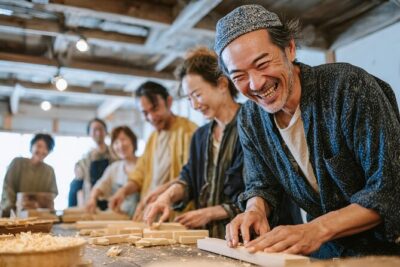
Sushi Making Class in a Happi Coat near a Famous Spot
Read our review →
Sushi Making Osaka Roll and Authentic Japanese Sushi Class
Read our review →Browse the lists this tour appears in