
Reviewed · WORKSHOPS
Asakusa Calligraphy Workshop Craft Your Own Art in Tokyo
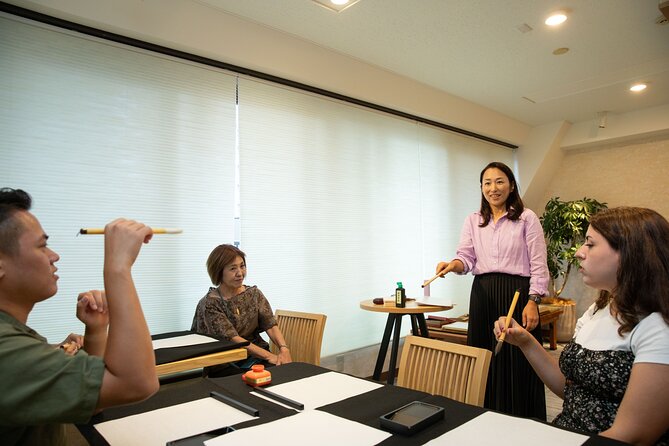
Calligraphy feels personal fast. In Asakusa, you learn Japanese calligraphy basics up close, with a small group so the instructor can correct your grip and stroke order. I love that you get hands-on practice with traditional brushes and also write with a modern brush pen so your results look crisp.
One thing to keep in mind is that this is a 1 to 1.5 hour class. If you want lots of extra practice time or a bigger, more detailed piece, you may wish the session were longer. Also, bottled water is not included, so plan for that before you start.
Quick Hits: Asakusa Calligraphy, Worth the Time
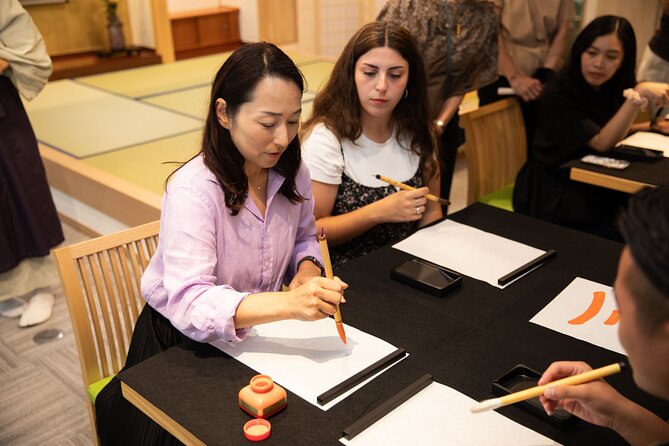
- Small group size (max 10) means you are not stuck watching from the side.
- Brush grip and stroke order coaching is the kind of feedback you cannot get from videos.
- Traditional brush plus brush pen lets you keep the look, with easier precision.
- Pick your characters for writing, so your final piece feels more like you.
- Souvenirs are included, and you also take home your finished artwork.
- Asakusa location puts the class in one of Tokyo’s most historic-feeling neighborhoods.
Asakusa Setup at Tokyo Tourist Lounge
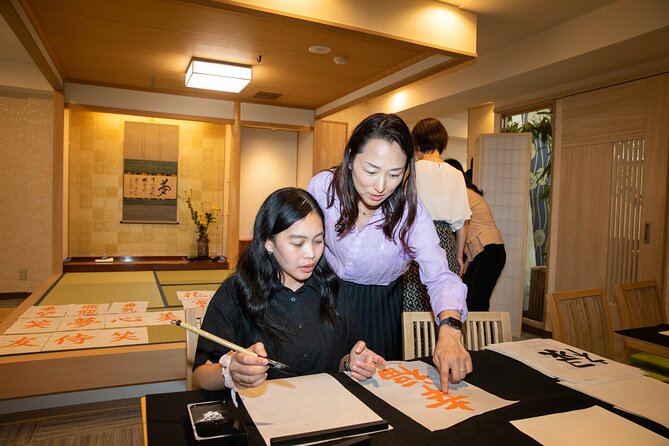
The experience starts at the Tokyo Tourist Lounge Asakusa, on the 5th floor. The address is listed as 5F, 2-18-15 雷門, 台東区, 東京都 111-0034, Japan, and it ends back at the same meeting point. That round-trip setup is practical. You can arrive, check in, focus on the lesson, and then walk out without needing to plot a second stop.
I like that it is near public transportation. Tokyo can be a lot, and when your cultural activity is easy to reach, you spend less energy on logistics and more on the moment. If you are the type who likes to get started quickly, this format helps.
Also, the class uses a mobile ticket, which keeps things simple on the day. You just show up with your confirmation on your phone and you are good to go.
A few more Tokyo days worth comparing
- Mt Fuji and Hakone 1-Day Bus Tour Return by Bullet Train
★ 5.0 · 26,383 reviews - 1-Day Tokyo Bus Tour
★ 5.0 · 14,250 reviews - Tokyo: TOKYO SKYTREE® Admission ticket
★ 4.5 · 11,192 reviews
The 1 to 1.5 Hour Lesson Plan (What You’ll Do, Step by Step)
This workshop is designed as a focused, beginner-friendly sprint. Expect about 1 to 1.5 hours, where you practice technique first and then put that technique to work in a character of your choice.
Warm-Up: Grip, Stroke Control, and Stroke Order
The session begins with core skills: brush control, stroke order, and basic calligraphy techniques. This is where the teacher’s value really shows. Stroke order sounds boring until you try to write without it, then you realize the order is what makes each line look intentional.
You will practice essential movements, including the proper brush grip. With calligraphy, your hand position affects everything: pressure, angle, and how smoothly the ink moves. This is the type of instruction that is hard to teach yourself, even with good online lessons.
Main Practice: Write Your Chosen Characters
Once your control is starting to feel more natural, you move into writing characters you choose. You practice the strokes that make up the character, then you try again with feedback. For many people, that moment is when calligraphy stops feeling mysterious and starts feeling like a skill you can actually repeat.
Same corner of Japan, a different kind of day:
- Tokyo: teamLab Planets TOKYO Digital Art Museum Entry Ticket
★ 4.6 · 9,779 reviews - Mt Fuji & Hakone Cruise, Drum Show Bullet Train 1 Day from Tokyo
★ 4.0 · 7,413 reviews - Tokyo: Sumo Show Experience with Chicken Hot Pot and a Photo
★ 4.8 · 6,678 reviews - Tokyo: Shinjuku Food Tour (13 Dishes at 4 Local Eateries)
★ 5.0 · 6,603 reviews
Tool Switch: Traditional Brush and Modern Brush Pen
A big part of this workshop is the tool mix. You learn on traditional brushes, then you also use a modern fude pen (brush pen) during the session. The brush pen is not there to replace the tradition, it is there to help you get precision without losing the calligraphy look.
This combo is genuinely useful for your life after Tokyo. Traditional brushes can be a little more particular, while a brush pen is often easier to use at home. You get both options in one class, so you can decide what fits your style and how much effort you want later.
Finishing: Take Home Your Artwork and Souvenirs
By the end, you leave with your finished calligraphy piece plus special souvenirs included in the experience. This matters because it turns a one-time activity into something you can display. It is also a way to remember how it felt to get that first clean stroke with guidance.
What You Learn (And Why It Changes Your Results)
Japanese calligraphy is not just about writing characters. It is about controlling movement so each stroke looks calm, balanced, and connected.
Here is the practical value of what you are taught, and why it matters:
Brush Grip: Your Hand Position Controls the Ink
When the instructor corrects your brush grip, you are not just fixing a posture. You are changing the way ink spreads and how much pressure you accidentally apply. After a few guided tries, your strokes usually look more consistent, which is exactly what you want for a satisfying take-home result.
Stroke Order: The Secret to Looking Intentional
Stroke order keeps the character from looking like disconnected lines. It also helps you predict how the brush will move next. Once you understand the logic of the order, writing becomes less like guesswork and more like following a rhythm.
Control and Stroke Order You Can Practice at Home
The workshop explicitly includes techniques you can practice at home. That is important because good calligraphy is repetition, not talent. You are given a path to keep going after the class, even if your practice space is just a kitchen table and some paper.
Creativity With Chosen Characters
Writing characters you choose makes the class feel less like a worksheet. It also helps you pay closer attention, because you care what the final piece looks like. If you have ever done an art class where the subject did not matter, you know how quickly interest can drop. This one avoids that problem.
Brush vs Brush Pen: Choosing the Right Tool for Your Style
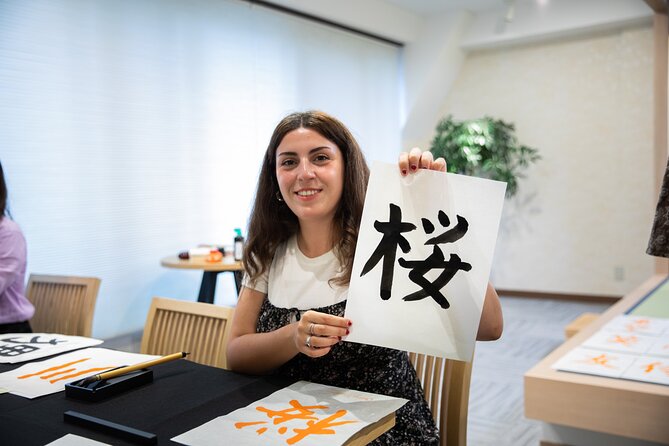
The traditional brush is where you learn classic calligraphy mechanics. You feel the ink and the brush shape in your hand. It can be a little harder at first, but that is also why the teacher’s corrections matter.
The modern brush pen helps with precision. You still get brush-like strokes, but you usually get easier repeatability. In a short class, that can mean you are more likely to finish with a piece you feel proud to take home.
I like that you do both here. You do not have to decide in advance. You can find out which tool you actually enjoy using, not which one sounds coolest on paper.
The Teacher Factor: Small Group Access That Helps
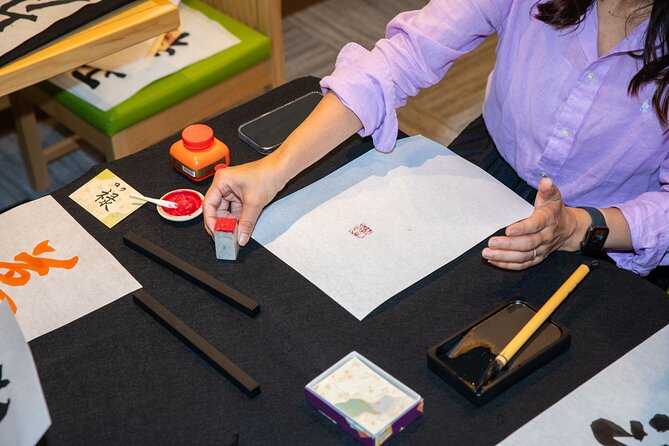
This workshop runs with a maximum of 10 travelers, so it stays small. That sounds like a marketing detail until you picture it in your head. With a bigger class, the instructor’s corrections can feel distant. With a small one, corrections land right when you need them.
One detail that stands out is the instructor name, Mei. In one situation, someone arrived late because of traffic, and Mei stayed patient and adapted the session rather than shutting it down. That tells me the teaching style is flexible. In a short class, flexibility is not a luxury. It is what keeps your experience from turning stressful.
If you learn better when someone is watching closely, this format suits you.
Asakusa Real-Life Practicalities (What to Plan For)
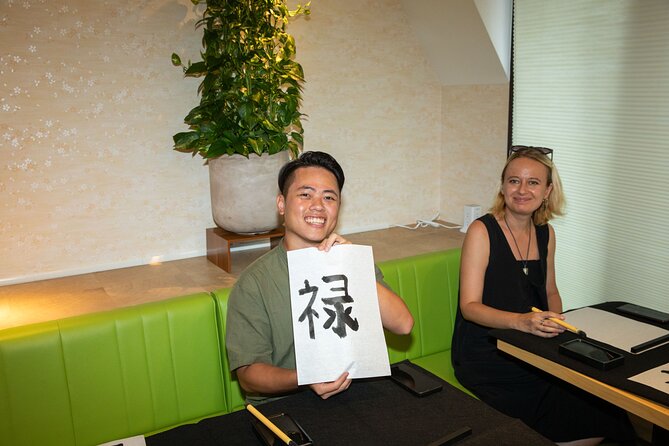
This is a walk-in day activity, not a full-day tour. Still, you want to show up ready to write for an hour or so.
Bring comfortable clothes and be prepared to focus on hand movements. Writing requires small precision, and you do not want to fuss with sleeves that slide or shoes that feel wrong. Also, since bottled water is not included, I suggest grabbing water before you head in, especially on warm or humid days.
Check your timing too. Even though the instructor has shown patience when someone is late, arriving on time gives you more useful practice. A calligraphy class is not the best place to run your day on extra stress.
Finally, since you are in Asakusa, you can make this fit nicely with a broader day exploring the neighborhood. Just keep the class slot protected so you are not rushing out mid-session.
Price and Value: Why $40 Can Actually Make Sense
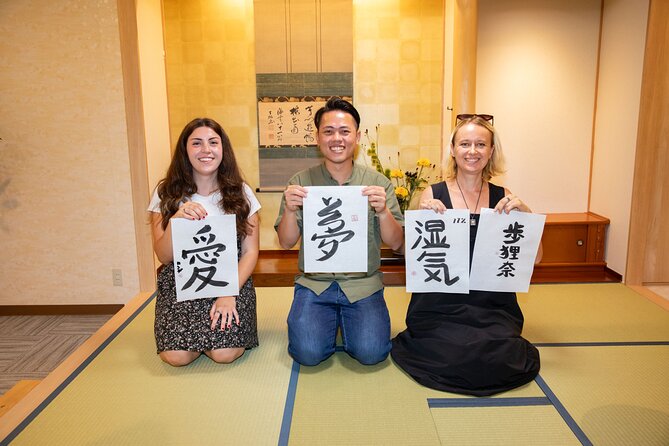
The price is $40.00 per person, and the experience includes an entrance fee and souvenirs. Bottled water is not included, but everything tied to the class itself and what you take home is included.
So what are you really paying for?
You are paying for:
- Instructor time focused on technique like grip and stroke order
- Tools and guidance so you do not waste the session trying to figure things out alone
- A take-home artwork that you can keep and show
- Souvenirs, which makes the class feel like an actual Tokyo cultural purchase, not a quick activity
Compared with generic sightseeing, this is a skill-based experience. It gives you something you keep using or displaying, and it is hard to replicate that later from a souvenir store alone.
Who This Workshop Is Best For (And Who Might Want Something Else)
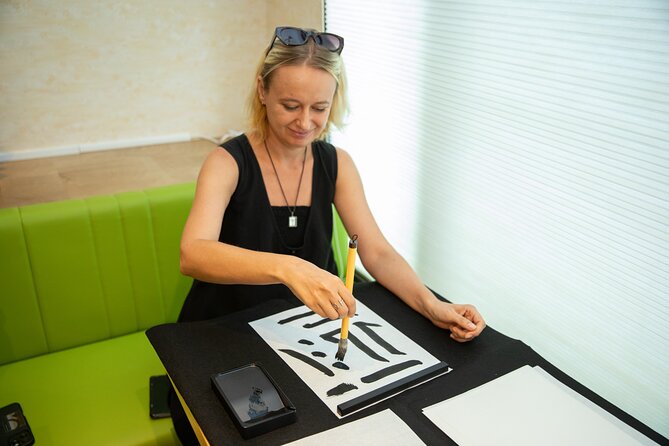
This class fits beginners well. You are learning essential techniques you would not get from books or online videos, and the small group format supports that.
It is also a great choice if you want a meaningful cultural activity that does not require any special background. You can come in not knowing the first thing about stroke order, and the lesson structure is built to walk you through control first.
If you are an advanced calligrapher seeking a long, deep style training session, this may feel too short. The workshop is about learning and producing a finished keepsake, not multi-week refinement.
Should You Book the Asakusa Calligraphy Workshop?
If you want a hands-on Tokyo activity with real teaching, not just watching and snapping photos, I think this is a strong pick. The mix of traditional brush plus brush pen is smart, because it helps you learn the classic mechanics while also leaving with a tool you can likely use again at home. And the small group size plus stroke-order coaching are the two things most likely to make your final piece look good.
I would book it if:
- you enjoy making one tangible souvenir you can use or display
- you want a guided skill, not just a cultural stop
- you like the idea of practicing something at home after the class ends
I would hesitate if:
- you need extra time for lots of repeated attempts, or you want a very large final artwork
- you dislike activities that require careful hand control for an hour
FAQ
How long is the Asakusa calligraphy workshop?
It lasts about 1 hour 30 minutes (approximately), so plan for a short, focused session.
What is the price per person?
The price is $40.00 per person.
How many people are in the class?
The workshop has a maximum of 10 travelers, so it stays small for better access to the instructor.
Where do I meet the group?
You meet at Tokyo Tourist Lounge Asakusa, 5F, 2-18-15 雷門, 台東区, 東京都 111-0034, Japan. The activity ends back at the same meeting point.
What is included, and what should I bring?
The experience includes the entrance fee and souvenirs. Bottled water is not included, so you may want to bring water or buy some nearby.
What is the cancellation policy?
Free cancellation is available, and you can cancel up to 24 hours in advance for a full refund. If you cancel less than 24 hours before the start time, the amount you paid is not refunded.
Fresh options around Tokyo
- Tokyo: Nikko Kegon Falls Lake Chuzenji Toshogu Temple & More★ 4.9 · 12 reviews
- Tokyo: Samurai History Walking Tour★ 5.0 · 12 reviews
- Harajuku: Kawaii Fashion and Pop-Culture Tour★ 4.7 · 12 reviews
- Tokyo: Mt. Fuji & Lake Kawaguchi Instagram Full Day Trip★ 4.1 · 12 reviews
- Shibuya Tokyo: Modern Kintsugi Workshop in Shibuya★ 5.0 · 12 reviews
- Tokyo: GTR Guided Daikoku Experience at Night★ 5.0 · 12 reviews
- Tokyo: Daikoku JDM Car Culture Tour★ 4.6 · 12 reviews
- Mt Fuji Private Day Trip from Tokyo with English speaking driver★ 5.0 · 13 reviews
Workshops, compared.
Sushi Making Tokyo Roll and Authentic Japanese Sushi Class
Read our review →
Roll and Authentic Sushi Making Class in Asakusa
Read our review →
Ramen Cooking Class at Ramen Factory in Kyoto
Read our review →
Sushi Making Class in a Happi Coat near a Famous Spot
Read our review →
Sushi Making Osaka Roll and Authentic Japanese Sushi Class
Read our review →Browse the lists this tour appears in