
Ramen tastes better when you make it personal. This Kyoto workshop pairs ceramic ramen bowl painting with a hands-on meal featuring Michelin-nominated Musoshin ramen, taught by Shin and the Musoshin team.
I love how the class builds in two satisfying stages, art first, then cooking at the table with Musoshin ingredients. I also like the options for different diets, including gluten-free and vegetarian or vegan ramen. One possible drawback: the broth and key components are prepared ahead, so this feels more like ramen assembly and topping customization than a full from-scratch cooking class.
Key things to know before you go
- You take home your painted ceramic same day for decoration, with free kiln firing available for next-day use
- Musoshin’s “12-hour soup” philosophy means you still get a hands-on build, just not the broth-from-scratch part
- Noodles are made in-house every morning and rested overnight, so the texture is part of the system
- Small-group feel in a real ramen workshop you can connect to Musoshin’s restaurant world
- Michelin-nominated taste, not just a theme you are eating ramen they operate with in their restaurants
- Family-friendly planning with hosts who help kids participate without slowing the class
Inside Musoshin Ramen Academy, a Kyoto workshop with real restaurant energy
Kyoto has no shortage of cooking classes, but this one is built around a ramen shop mindset. Musoshin Ramen started in Kyoto in 2022, and now runs six restaurants across Kyoto and Toronto. The Toronto location has been nominated for Michelin for three consecutive years, and the recipe approach is the same. What that means for you is simple: you are not just making a fun craft, you are eating a ramen system that already performs as a restaurant meal.
The class is run by Musoshin Ramen Academy, and it’s tied directly to the ramen world, not separated from it. You’ll work in a workshop setting where the staff bring ingredients and guide you through the steps. Several class moments also feel intentionally human, like hosts taking photos and walking around so everyone keeps up, including kids.
The practical side matters too. The session runs about 1 hour to 90 minutes, so you get a full experience without losing most of your day to waiting around.
More Cooking Classes in Kyoto
- Ramen Cooking Class at Ramen Factory in Kyoto
★ 5.0 · 1,937 reviews - Kyoto: Ramen Cooking Class at a Ramen Factory with Souvenir
★ 4.9 · 532 reviews - Kyoto: Ramen, Gyoza, and Onigiri Cooking Class
★ 5.0 · 445 reviews
What you paint: the ramen bowl or spoon souvenir plan
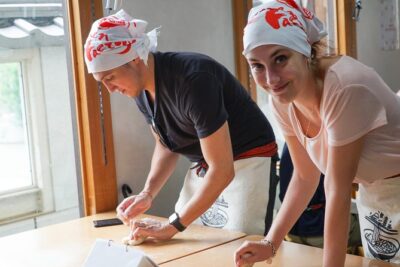
This is one of the reasons the experience is so memorable: you make something you can actually use. You can choose to paint Musoshin’s ramen bowl and, depending on the option you select, you can also paint a ramen spoon. You’ll also get a bandana and an apron as part of the experience.
Here’s the smart part for your trip planning. The ceramic you paint can be taken home the same day as a decorative item. If you want it fired, you can also have it baked in a kiln for free, then pick it up the next day. That gives you two souvenir paths:
- Decor-only today, no waiting
- Fired and ready for meal use tomorrow, with an easy pickup
From real usage, I’d treat this like luggage math. If you’re traveling with kids or flying, a spoon can be easier to pack than a bowl. One review also highlighted that spoons can be a great way to keep space down while still getting a proper ceramic souvenir.
How the ramen class actually runs, painting first, then your ramen build
The flow is designed to keep energy high and stress low. You start with painting. This is not rushed. The hosts help you settle in so you can focus on your design, and the atmosphere is friendly, with lots of interaction and photo-taking.
Then you shift from art mode to dinner mode. The key idea is that Musoshin prepares the ingredients professionally. They bring what you need from their Gion location, and you assemble and cook your ramen with guidance. The class isn’t just watching someone else work. You do the parts that create your bowl.
Some of the most praised parts in the experience are the pace and organization. People consistently note that the class feels well timed, and that hosts keep things moving while still explaining what’s happening.
Also, keep your expectations realistic about what you will do yourself. The broth takes 12 hours to cook, and the noodles and sauces are made in-house. So the class focuses on the parts that make ramen feel like ramen in your hands: heating, assembling, topping, and tasting.
The ingredients story: in-house noodles, 12-hour soup, and handmade touches
This is where Musoshin goes from fun to seriously tasty. The ramen ingredients are made in-house, and you can taste the discipline in the build.
A few details you should know:
- Noodles are made in the shop every morning
- The noodles rest overnight before being used the next day
- The ramen soup is cooked for 12 hours
- Ramen soy sauce and roast pork are handmade
When you eat, the “Michelin-nominated” part stops being a marketing label. It starts sounding like process. Rested noodles carry better bite. Long-cooked soup carries depth. Handmade elements help unify the whole bowl, not just one flavor note.
One important takeaway for you as a diner: the ramen will taste different than the typical fast bowl. This is restaurant ramen that you get to assemble and finish yourself, which makes it hit harder. Several people described the taste as the best ramen they had in Japan, and a number of families even went back to a Musoshin restaurant the next day to keep the ramen streak going.
More Ramen Tours in Kyoto
- Kyoto Ramen and Gyoza Cooking Class with Professional Chefs
★ 5.0 · 282 reviews - Home style Ramen and Homemade Gyoza in Kyoto
★ 5.0 · 152 reviews - Kyoto Michelin Ramen Workshop or Painting Ramen Essentials
★ 4.9 · 100 reviews - Kyoto Ramen & Gyoza Cooking Class with Professional Chefs
★ 4.8 · 100 reviews
Michelin recognition, what it means for your meal
Musoshin’s Toronto location has been nominated for Michelin for three consecutive years, and the recipe is described as the same. In plain terms, you’re eating ramen with a level of quality control that should hold up under close scrutiny.
In this class, you are not only eating ramen, you are also arranging it. That matters because you experience the bowl as a system: broth base, noodles, toppings, and the final combination. You can think of it as tasting with your hands, not just tasting with a spoon.
Diet options are also part of the value. Gluten-free, vegetarian, and vegan ramen options are available. So you are not stuck with a side dish and a sad smile if your group has dietary needs.
If you’re in the majority category and eat pork, expect the classic direction that Musoshin uses, with roast pork handmade for the ramen. If you’re avoiding pork or want a plant-based bowl, choose one of the vegetarian or vegan options in advance if that’s available at booking.
The hosts: Shin and the team make the class feel personal
People remember this class because of the energy of the staff. Shin is frequently mentioned as the guide and host, along with Sherry in at least some sessions. You may also meet other team members like Amir, Miki, or Mickey depending on the day and group size.
Common praises show a clear pattern:
- Friendly, patient instruction that works for kids and adults
- Photos taken during the cooking and painting steps
- Hosts checking in so everyone participates, not just watches
This is a key reason the experience works across ages. A 9-year-old, a teenager, and an adult all have different needs. Here, the class seems to handle that by keeping steps short and interactive.
One small caution if you have very specific goals: this isn’t the kind of cooking class where you invent every component from scratch. If what you want is sauce-making chemistry, you may find you do more assembling than building the entire ramen universe. Still, the guided process is fun, and the result is a bowl you eat right there.
Small group and timing, how to fit it into your Kyoto day
The class is designed as a small group experience, with an instructor who speaks English and Japanese. That language mix is a big practical advantage. You can ask questions, follow along, and still enjoy the experience even if your Japanese is basic or nonexistent.
In terms of timing, plan for 1 hour to 90 minutes. That range gives you flexibility, but it also means you should treat it like a real activity slot. If your schedule is tight, picking a time that matches your hunger window helps. You’ll be painting and then eating, so arriving too late or hungry-and-stressed can make the first part less relaxing.
If you’re traveling with kids, the indoor workshop format can also be a relief on a hot day. Even if the rest of Kyoto is calling you outdoors, this is one afternoon plan that keeps everyone moving and occupied.
Price and value: what $64 buys you in art plus a restaurant-grade ramen meal
At $64 per person, the value is strongest when you look at the full stack, not just the meal.
Included items cover more than dinner:
- A Michelin-nominated Musoshin ramen experience
- Your painted Musoshin ramen bowl (option)
- Musoshin’s ramen spoon (option)
- A bandana (and you get an apron during the class)
- Free kiln baking for your custom-designed bowl
That kiln bake detail is a big deal. Ceramic souvenirs often come with extra fees. Here, firing is included, and it turns your painting into something you can actually use. The same-day decorative option is also there as a backup.
The only extra cost to think about is shipping. If you request shipping to your next hotel, shipping cost is not included. If you’re carrying your ceramics yourself, you may be fine. If you want it shipped for convenience, budget for that.
For families, the best value angle is simple: everyone gets a role. Kids get to paint and participate in assembly. Adults get restaurant-grade ramen quality with a story you can explain later.
Who should book this ramen and pottery class?
This is a good match if:
- You want a souvenir that is not plastic junk, a real ceramic piece
- You care about tasting ramen that has restaurant-level standards
- Your group includes kids, because the steps are interactive and the hosts work hard to include everyone
- You need dietary flexibility, since gluten-free, vegetarian, and vegan options exist
It might be a less perfect match if:
- You only want a full from-scratch cooking class where you make every base component
- You are extremely price sensitive and plan to skip the souvenir part, because the art and kiln firing are part of the deal
For solo travelers, it also works. Some people did the experience by themselves and still got a smooth, guided session with personalized attention and a strong meal.
Practical tips so your souvenir and ramen turn out the way you hope
A few small, practical moves help a lot:
Plan your design before you arrive. You’ll get the chance to paint, but you don’t want to start with a blank canvas and then scramble for ideas.
If you want to use the ceramic for meals later, choose the kiln firing option. You’ll pick up the fired item the next day, so plan at least one day of buffer if you’re trying to coordinate pickups with other activities.
Pack smart for ceramic. Even if you take items home the same day for decoration, protect them. Kyoto streets are crowded, and you do not want your souvenir to ride around unprotected.
If you care about diet needs, decide on your ramen style ahead of time. The class has gluten-free, vegetarian, and vegan options, but you’ll be happier when you know what your group will be eating when you sit down.
Should you book this Kyoto experience?
My take: book it if you want a Kyoto activity that feels both creative and genuinely delicious. The standout combination is paint your own ceramic plus Michelin-nominated Musoshin ramen that you assemble and eat right away. You’re not just buying a meal, you’re bringing home a meaningful souvenir, and you’re learning how ramen quality is built through in-house process.
Skip it or reconsider if you’re specifically chasing a hands-on broth-making course. Since the soup is cooked for 12 hours and key components are prepared, the class is more about assembly and customization than full ingredient manufacture.
If your ideal day in Kyoto includes hands-on fun, a family-friendly atmosphere, and a bowl of ramen you’ll think about later, this is a strong fit.
FAQ
How long is the class?
The duration is listed as 1 hour to 90 minutes. The exact start time depends on availability.
Where does the ramen come from?
Musoshin says the ramen ingredients are sourced from their Musoshin Gion location, with ingredients prepared professionally.
Do I get to paint a bowl or spoon?
Yes. The experience includes Musoshin’s ramen bowl option, and there is also an option to paint a ramen spoon. You also receive an apron and a bandana.
Can I take the ceramic home the same day?
Yes. The ceramic you paint can be taken home for decoration the same day it is created.
What is the kiln firing option, and is it free?
If you choose it, your painted ceramic can be fired in a kiln for free. It will be ready for pickup after the next day.
What kind of ramen will I eat?
You will eat ramen from Musoshin, and it includes Michelin-nominated recognition. The ingredients and soup base are prepared in-house.
Are there vegetarian or vegan options?
Yes. Vegetarian and vegan ramen options are available, and gluten-free options are also available.
What languages do instructors use?
The class is taught in English and Japanese.
How much does it cost?
The price is $64 per person. Shipping is not included if you request delivery to your next hotel.
More Ramen Experiences in Kyoto
- Kyoto Ramen Noodle Making Class
★ 5.0 · 58 reviews - Ramen Gyoza Onigiri Japanese Cooking Class in Kyoto
★ 5.0 · 44 reviews - Kyoto Ramen Spoon Painting & Michelin Cooking Class
★ 5.0 · 34 reviews - Kyoto Ramen Tour
★ 5.0 · 22 reviews
Fresh options around Kyoto
- Kyoto: Quiet and Graceful Tea Ceremony★ 4.5 · 19 reviews
- Oboro | Mindful Tea Ceremony in a 100-Year-Old Kyoto Teahouse★ 5.0 · 19 reviews
- Ikebana Traditional Japanese Art of Flower Arranging★ 4.5 · 19 reviews
- Kyoto Satoyama Cycling with Lunch and English Guide★ 5.0 · 19 reviews
- Tea Ceremony Experience in Traditional Kyoto Townhouse★ 5.0 · 19 reviews
- Kyoto International Party Solo Friendly Expats and Locals★ 5.0 · 19 reviews
- Kyoto: Amanohashidate Ine Funaya Tour★ 4.4 · 19 reviews
- Kyoto Private Food Tours with a Local Foodie: 100% Personalized★ 4.5 · 19 reviews
Cooking Classes, compared.
Ramen Cooking Class at Ramen Factory in Kyoto
Read our review →
Ramen & Gyoza Cooking Class in Tokyo with Local Supermarket Visit
Read our review →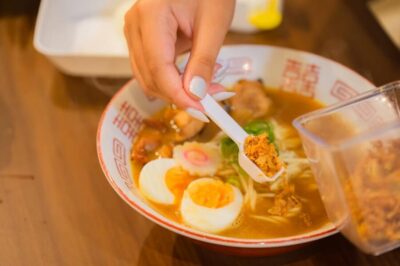
Ramen Cooking Class at a Ramen Factory with Souvenir
Read our review →
Japanese Washoku Bento Small Group Cooking Class
Read our review →
Easy Ramen Cooking Experience in Kabukicho, Shinjuku
Read our review →
Ramen and Sushi Cooking Class with Sake Pairing Set in Tokyo
Read our review →Browse the lists this tour appears in