
Reviewed · RAMEN TOURS IN KYOTO
Home style Ramen and Homemade Gyoza in Kyoto
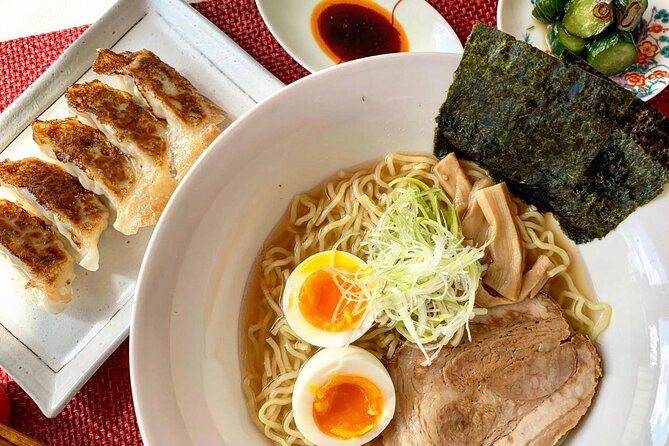
Ramen taught in a real Kyoto kitchen. This class is interesting because you do not just watch, you build home-style ramen soup and gyoza from scratch step by step, then sit down and eat your results in a real household setting. It is a 3.5-hour experience that turns a food memory into real skills.
What I love most is the small group feel, with a maximum of 8 people, so you get attention as you go. The other big plus is Nariko’s calm, practical teaching in the kitchen, including hands-on prep like wrapper making. One possible drawback: if you need vegetarian food, this will not work because the ramen soup uses dried fish, and it cannot be made without it.
Key highlights before you book
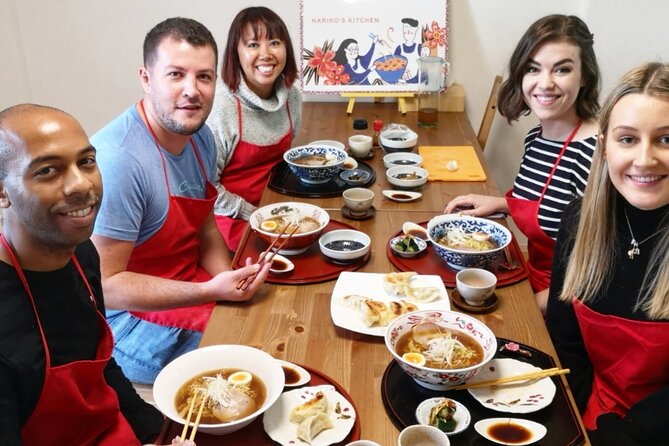
- Home cooking, not restaurant tricks: You make the dishes from scratch in a house kitchen and eat the meal you cooked.
- Gyoza skins made by hand: You will make dumpling wrappers, not just fill or fold store-bought dough.
- Mother-style ramen soup method: Nariko uses her mother’s ramen soup recipe to show you how flavor is built.
- Knife skills included: You get taught with real cutting and prep steps, so this is best for capable hands.
- Recipes shared after class: You leave with the know-how to repeat the dishes back home.
A Kyoto home kitchen where ramen starts with broth
This is not a big cooking studio. You meet at 5-6 Matsugasaki Rokunotsubochō, Sakyo Ward, Kyoto, right around 10:00 am, and then head to Nariko’s home kitchen. Expect a focused setup that feels designed for learning, with enough space for a small group and a clear work flow.
The ramen part starts with the broth, and that matters. Many ramen classes jump straight to noodles or toppings. Here, you work on the soup base first, using simple ingredients and Nariko’s family approach. Nariko shares that she uses her mother’s recipe for the ramen soup. That is a big deal for value: you are learning the flavor logic, not just copying a final plate.
A key clarification so you plan your expectations well: you do not make ramen noodles in this class. You focus on the soup and the dumpling side. In practice, that makes the class feel less rushed and more skill-building. It also means you can still enjoy a full ramen experience without needing wheat dough-making equipment or complicated noodle timing.
One more practical note: the soup uses dried fish. That is common in ramen in Japan, but you should know it upfront. If you are sensitive to seafood flavors or you follow a strict vegetarian diet, this is the part that determines whether you can participate.
More Ramen Tours in Kyoto
- Ramen Cooking Class at Ramen Factory in Kyoto
★ 5.0 · 1,937 reviews - Kyoto: Ramen Cooking Class at a Ramen Factory with Souvenir
★ 4.9 · 532 reviews - Kyoto: Ramen, Gyoza, and Onigiri Cooking Class
★ 5.0 · 445 reviews
Making gyoza wrappers and pan-fried dumplings
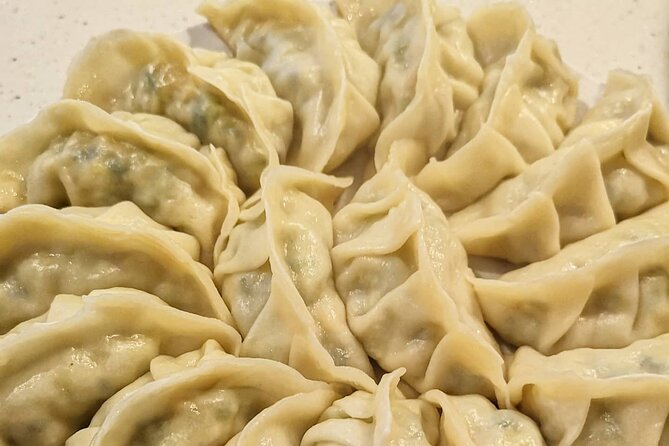
The gyoza section is the centerpiece you will remember. You are making dumplings with homemade skins, which means wrapper dough work is part of the lesson, not an afterthought. In many classes, the wrappers are premade. Here, you learn how to make and work the dough so it becomes something you can fold and cook confidently.
You also learn the technique for preparing gyoza properly. A useful detail from past students is that the dumplings are made fried, not boiled. That changes the whole cooking rhythm. You are aiming for browned edges and a cooked bottom, so timing and heat control become part of the lesson.
Here is what you will likely get from Nariko’s teaching style. She breaks tasks into small steps and walks you through each one. You do not need to be a chef. You just need to be willing to follow instructions, taste as you go, and ask questions when something feels unclear.
What is especially valuable is how the class handles hands-on mistakes. When you fold wrappers, you will probably have a few that look less perfect than you want. That is normal. The point is learning how to shape and seal dumplings so they hold together when they hit the pan.
This is also where you build knife confidence, because gyoza filling usually means chopping and mixing ingredients. Even if you are not a fast cutter, you get the guidance to keep moving without feeling rushed.
Cucumber pickles that balance the whole meal
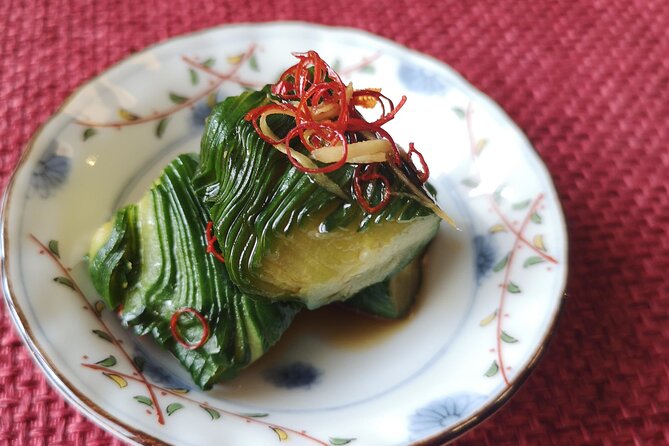
Most cooking classes treat side dishes as optional. This one includes cucumber pickles, and that is smart. Pickles bring acidity and crunch, and that cuts through rich flavors from both broth and fried dumplings.
Cucumber pickles also give you a different kind of cooking skill than dough and pan work. Instead of heat control or wrapper folding, you focus on seasoning and prep. That makes the class feel varied and keeps you from burning out on one technique.
It also helps the final meal feel complete. When you sit down, you are not just tasting soup and dumplings. You get a small, refreshing contrast that makes the whole plate more satisfying.
If you like Japanese meals that feel balanced rather than heavy, this side is one of the reasons you will leave thinking about the flavor, not only the process.
How the tasting works and why it feels like a real meal
The best part of a cooking class is always the eating, but quality matters. In this class, you are tasting what you made after the prep work is done. That simple structure turns the kitchen into a full experience, not a half-workshop.
Because you make both the ramen soup and the gyoza, tasting feels connected. You see how the broth tastes on its own, then how it pairs with the dumplings you folded and cooked. That pairing matters, and it is hard to replicate if your class only teaches one component.
The meal is also designed to feel orderly and civilized, in the sense that you are not eating standing up or in a cramped, chaotic group setup. You should expect a home-table feeling. People often say the space feels spotless and comfortable, which matters when you are spending 3.5 hours chopping and cooking.
You also get to enjoy the food in a calm setting, which helps you actually notice flavors and textures. That attention is what makes the recipes usable later.
A few more Kyoto days worth comparing
- Kyoto Ramen and Gyoza Cooking Class with Professional Chefs
★ 5.0 · 282 reviews - Kyoto Michelin Ramen Workshop or Painting Ramen Essentials
★ 4.9 · 100 reviews - Kyoto Ramen & Gyoza Cooking Class with Professional Chefs
★ 4.8 · 100 reviews - Kyoto: Ramen Bowl Painting and Michelin Cooking Class
★ 4.9 · 96 reviews
Recipes and skills you can actually repeat at home
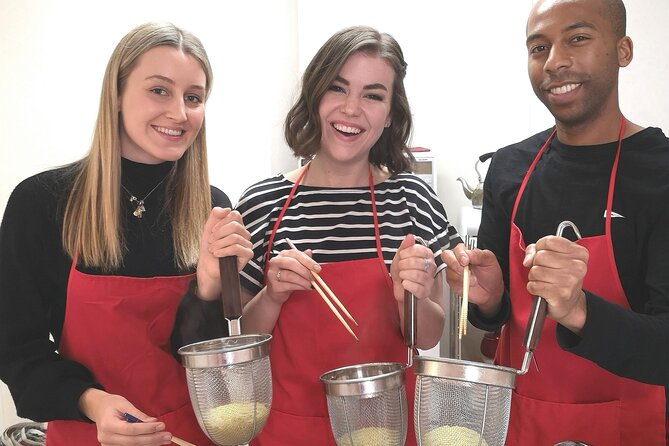
A big reason to do a hands-on class in Japan is not just the trip meal. It is the ability to recreate something later when you are tired, hungry, and craving comfort food.
This class is built around exactly that goal. After the cooking, you are able to take the recipes home. Past participants point out that recipes are shared, which is the practical part people forget to check. A class without a written recipe is mostly entertainment. With a recipe, you turn the memory into dinner plans.
The other home-cooking win is that you learn the logic behind the flavor. Since the ramen soup is based on a family recipe, you are learning how broth flavor is assembled rather than just following a vague list of ingredients. Even if you cannot source the exact same items in your country, you will know what flavors you are aiming for.
For gyoza, the most valuable transferable skill is wrapper handling. You can apply the same basic dough and shaping approach to other dumpling styles. And because you cook them fried, you also get heat awareness. That is often where home cooks struggle.
If you enjoy cooking already, this class will feel rewarding right away. If you do not, it can still work because the steps are taught in small chunks. The focus is on doing the work yourself, not memorizing a complicated chef lecture.
Group size, timing, and the knife-use reality
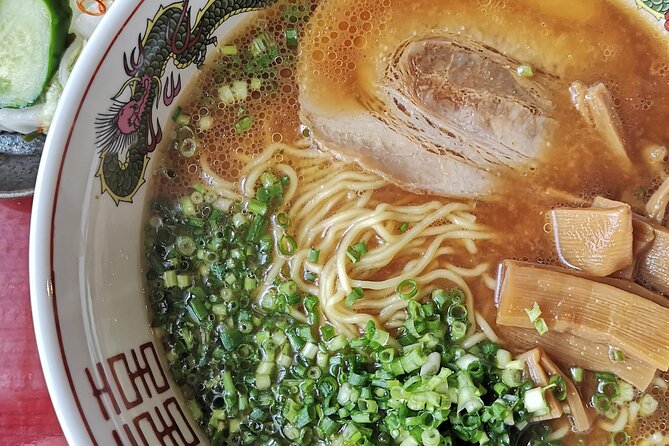
Let’s talk logistics in plain terms, because this one has a few rules that affect your comfort.
Duration: about 3 hours 30 minutes
Start time: 10:00 am
Group size: maximum 8 travelers
Ticket: mobile ticket
Meeting point: 5-6 Matsugasaki Rokunotsubochō, Sakyo Ward, Kyoto
The class also has some clear boundaries that protect the learning experience. There are no spectators allowed. Only participants can attend, because space is limited.
Age matters too. The instruction is that participants must be older than 10, and children should be at least age 10 and able to use a knife. Since the class involves real cutting and prep, this is not the kind of activity where you sit and watch from across the room.
This is one reason the small group size is so important. You want enough time for everyone to practice cutting, shaping, and cooking without feeling like a crowd in a restaurant kitchen. With up to 8 people, Nariko can likely keep pacing and help you fix issues before frustration sets in.
Finally, confirmations happen after booking, and you should receive confirmation within 48 hours (assuming availability). That gives you time to plan your day and still adjust if another plan falls through.
Price and value: why $118.92 can feel worth it
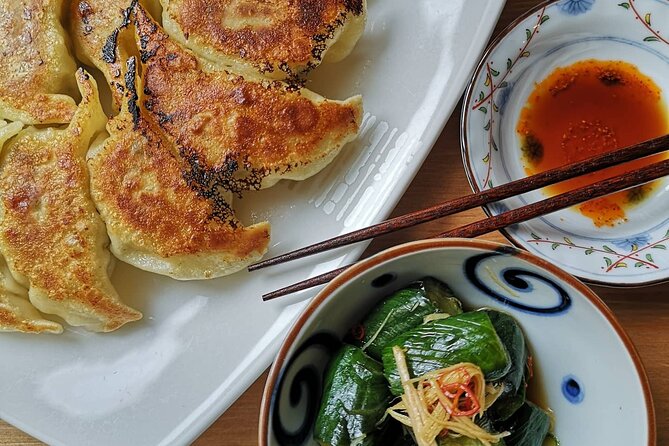
At $118.92 per person, this is not a budget class. But you should judge it like a skill session, not like a casual snack.
Here is what you are paying for, based on how the class runs:
- Hands-on ramen soup work, using Nariko’s family-style approach
- Gyoza wrappers from scratch, not just filling and folding
- Cucumber pickles as part of a full meal
- A 3.5-hour experience in a real home kitchen
- Small group size up to 8, which usually means more teaching time
- A meal that includes what you cook, plus recipes you can reuse at home
If you compare this to paying for a restaurant meal plus a separate workshop, the value starts to make sense. You are getting the meal, but you are also buying the technique. That is what turns it from food tourism into practical cooking education.
One more value point: Nariko is described as personable and patient, and that matters when you are working with dough, knives, and a hot pan. If you feel comfortable in the learning environment, you get better results. That is hard to put into dollars, but you feel it in the finished gyoza.
One caution for decision-making: the experience is non-refundable and cannot be changed, so only book it when your Kyoto plans are firm. Cooking classes lose value if you are stressed about timing or worried about rain plans.
Who should book this Kyoto ramen and gyoza class
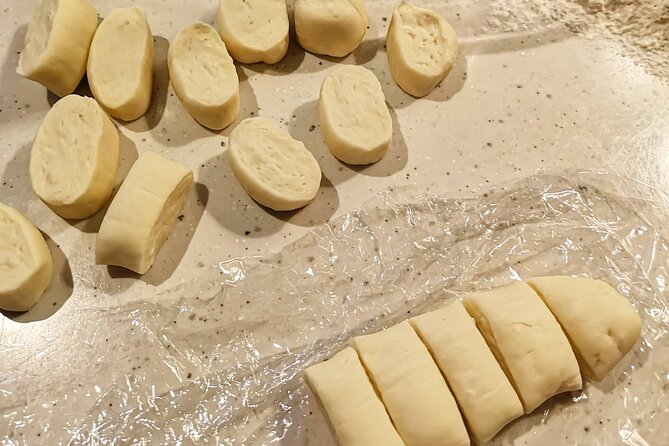
This class fits a specific kind of traveler. You will likely love it if you want food you can recreate, and if you enjoy learning by doing rather than just eating.
It is a strong pick for:
- Couples who want a memorable shared activity and a dinner you helped make
- Serious food fans who want ramen flavor technique and gyoza wrapper practice
- Families with kids age 10 and up who can handle a knife and follow instructions
- Anyone who wants an authentic home-kitchen experience in Kyoto, not another crowded tourist workshop
If you are traveling solo, the small group format can still feel friendly, because you are all working at the same pace in the same space. You will not feel like you disappeared into a big crowd.
If you are vegetarian, plan to skip. The ramen soup uses dried fish and the class cannot make it without it.
Should you book Nariko’s Kitchen for ramen and gyoza?
I think this is an easy yes for the right person. If your priority is making real Japanese comfort food with your own hands, in a small group, and leaving with recipes you can cook again, this class hits the mark. The broth focus, the homemade gyoza wrappers, and the fried cooking method are exactly the kind of skills that make you feel capable later.
Book it if you:
- Are comfortable with knife work (or your child is age 10 and ready for it)
- Want a home-kitchen experience with small group attention
- Eat fish or at least can handle dried fish in ramen broth
- Like learning techniques you can repeat at home
Skip it if:
- Vegetarian is non-negotiable for you
- You want ramen noodles made from scratch (this class does not make them)
- You need a spectator-friendly setup, because only participants can attend
If you want one hands-on Kyoto food memory that turns into dinner back home, this is a solid use of your time.
FAQ
Is this class vegetarian-friendly?
No. Nariko uses dried fish for the ramen soup, and the class cannot make the ramen soup without it.
Do we make ramen noodles in this class?
No. This class does not make ramen noodles. You focus on the ramen soup, while gyoza wrappers are made from scratch.
What dishes are included?
You make home-style ramen soup, homemade gyoza (including the gyoza skins), cucumber pickles, and you eat what you cook.
How long does the class last?
It lasts about 3 hours 30 minutes.
What time does the class start?
The start time is 10:00 am.
Where do we meet in Kyoto?
The meeting point is 5-6 Matsugasaki Rokunotsubochō, Sakyo Ward, Kyoto, 606-0915, Japan.
How many people are in the group?
The class has a maximum of 8 travelers, and only participants can attend due to limited space.
What is the minimum age to join?
Participants must be older than 10, and children should be at least age 10 and able to use a knife.
What ticket type do I need?
The class uses a mobile ticket.
What if I need to cancel or change my booking?
This experience is non-refundable and cannot be changed for any reason. If you cancel or ask for an amendment, the amount you paid will not be refunded.
Fresh options around Kyoto
- Kyoto Aquarium Admission Ticket★ 4.7 · 12 reviews
- Kyoto Gion Photoshoot – Private Session | Pro Photographer★ 5.0 · 12 reviews
- Gyoza Cooking Class in Kyoto: Traditional Japanese Dumplings★ 5.0 · 12 reviews
- Kyoto: Guided Food Tour with 12 Dishes & 3 Drinks★ 5.0 · 12 reviews
- Kyoto: Avoid the Crowds at the Hidden Gems of Arashiyama★ 4.9 · 13 reviews
- Kyoto Early Bird English Tour: Gion & Higashiyama(Private opt)★ 5.0 · 13 reviews
- Otsu-e Folk Art Workshop & Local Culture Walk Near Kyoto★ 5.0 · 13 reviews
- Kyoto, Osaka, Nara Full Day tour by Car English speaking Driver★ 3.5 · 13 reviews
Ramen Tours in Kyoto, compared.
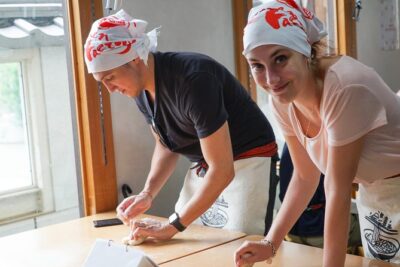
Ramen Cooking Class at Ramen Factory in Kyoto
Read our review →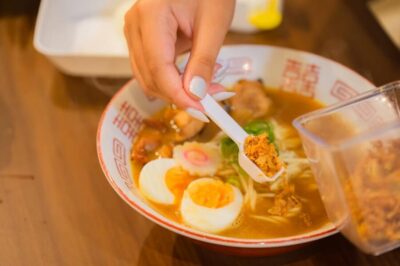
Ramen Cooking Class at a Ramen Factory with Souvenir
Read our review →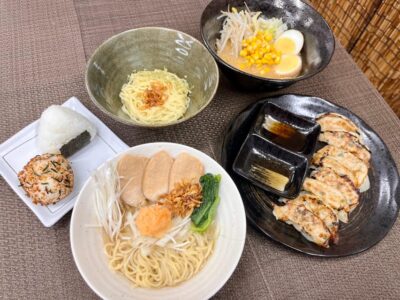
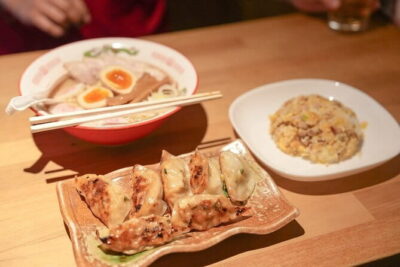
Kyoto Ramen and Gyoza Cooking Class with Professional Chefs
Read our review →
Kyoto Michelin Ramen Workshop or Painting Ramen Essentials
Read our review →Kyoto Ramen & Gyoza Cooking Class with Professional Chefs
Read our review →
Browse the lists this tour appears in