
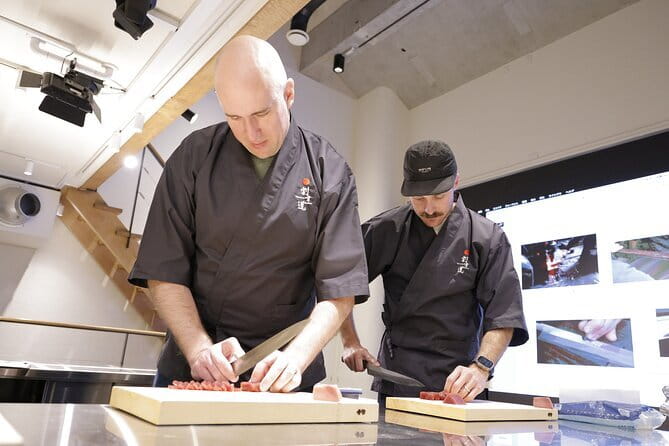
Reviewed · WORKSHOPS
Tokyo Keen Japanese Knife and Sashimi Workshop
Japanese knife skills become hands-on fast. In this Kappodo workshop in Nishiazabu, you learn whetstone sharpening and then cut sashimi, not just watch it. You also make a rice bowl of zuke-don for lunch, plus miso soup and a taste of original sake.
With a small group of up to 8, Chef Naoya and interpreter Hiromi explain in Japanese and English and keep things moving. One consideration: this is real knife work, so expect focused practice and a bit of kitchen “concentration mode,” not a casual sightseeing stop.
Quick highlights of the Tokyo Keen knife and sashimi class
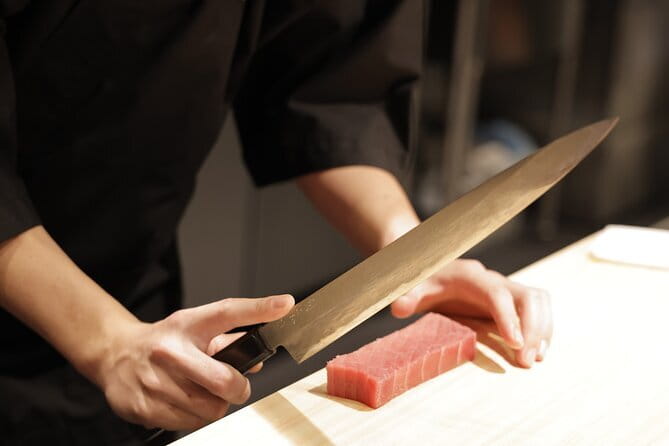
- Whetstone sharpening you can practice again at home
- Instructor demo, then hands-on sashimi cutting with a Japanese knife
- Lunch built around what you cut, zuke-don with miso soup
- Small group format, max 8 people, with bilingual support
- Kappodo original sake tasting, plus included drinks
- 10% off purchases at the 1F shop on the same day
Where this workshop fits in Tokyo (and why Nishiazabu helps)
This class takes place in Minato City, Nishiazabu, at Kappodo’s HQ area and studio setup. You’ll meet at the address in Nishiazabu (DK Building, 2-chōme), and the experience ends back at the same meeting point.
The practical win here is location. You won’t need a long trek across town, and it’s marked as near public transportation, which matters when you only have a couple hours. Also, private transportation isn’t included, so plan to use trains or your usual Tokyo transit routine.
You should think of this as a compact, skill-focused Tokyo experience. It’s not a museum tour. It’s a “learn, do, eat” class that uses the kitchen to teach how Japanese knives behave in real food.
A few more Tokyo days worth comparing
- Mt Fuji and Hakone 1-Day Bus Tour Return by Bullet Train
★ 5.0 · 26,383 reviews - 1-Day Tokyo Bus Tour
★ 5.0 · 14,250 reviews - Tokyo: TOKYO SKYTREE® Admission ticket
★ 4.5 · 11,192 reviews
The first lesson: Japanese knife culture before the cutting starts
The session begins with a structured intro to Japanese knives: how they are made and the culture and customs around them. This matters more than it sounds. When you understand what the knife is designed to do, the sharpening and cutting lessons feel logical instead of random.
You’ll get the sense that knife use in Japan is partly about respect and routine. People don’t treat a knife like a disposable tool. They treat it like something you maintain, sharpen, and use with care.
Then comes the next step: you see a knife skills demonstration by the instructor before you pick up your own knife. That order is smart for first-timers. You get a visual reference first, then you copy and practice, with help when you miss.
Whetstone sharpening: the hands-on part that makes this class useful
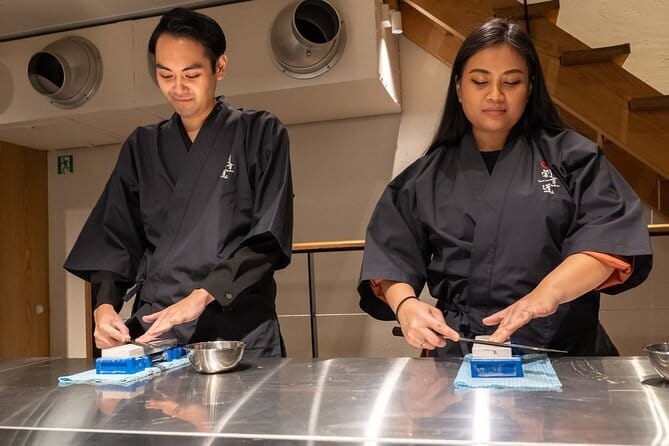
One of the best parts of this workshop is the time you spend on sharpening a Japanese knife using a whetstone. Even if you’ve never used one, the instructor supports you, and the format is built for practice.
Sharpening is where many “food experiences” stop at theory. Here, it’s hands-on. That’s valuable because a Japanese knife’s cutting feel comes from the edge quality, not from magic. When you learn the steps and the rhythm of whetstone sharpening, you can keep experimenting after your trip.
You’ll also learn that different knives are used for different tasks, and you’ll hear explanations about the types of knives involved. That helps you avoid the common mistake of thinking one knife is “the knife” for everything.
A small caution: sharpening requires patience. If you rush, you’ll miss feedback from the instructor and it will feel harder than it needs to. If you take your time, you’ll likely get the most out of this section.
Knife-work demo to hands-on sashimi cutting: where the skills click
After sharpening practice, you shift into actual cutting. You’ll watch the instructor demonstrate knife work, then you test your skills by cutting sashimi. This is the part people tend to remember because you can feel the difference immediately.
Cutting sashimi isn’t just “make a slice.” Japanese knife technique often means controlling angle, speed, and how you guide the blade through the food. The point of doing this in class is that you can see what good looks like and try it while the instructor can correct you on the spot.
This is where the workshop earns its “hands-on” reputation. You don’t just learn what sharpness means. You feel it while you work. You also learn that Japanese knives can feel different from what many people are used to, so your first attempts might be awkward in a good way. That discomfort is usually proof you’re learning something real.
The class is capped at a maximum of 8 travelers, which helps. Smaller groups tend to mean less waiting and more chance to get individual feedback while you’re cutting.
Same corner of Japan, a different kind of day:
- Tokyo: teamLab Planets TOKYO Digital Art Museum Entry Ticket
★ 4.6 · 9,779 reviews - Mt Fuji & Hakone Cruise, Drum Show Bullet Train 1 Day from Tokyo
★ 4.0 · 7,413 reviews - Tokyo: Sumo Show Experience with Chicken Hot Pot and a Photo
★ 4.8 · 6,678 reviews - Tokyo: Shinjuku Food Tour (13 Dishes at 4 Local Eateries)
★ 5.0 · 6,603 reviews
The food part: marinating, zuke-don assembly, and what you’ll eat at the end
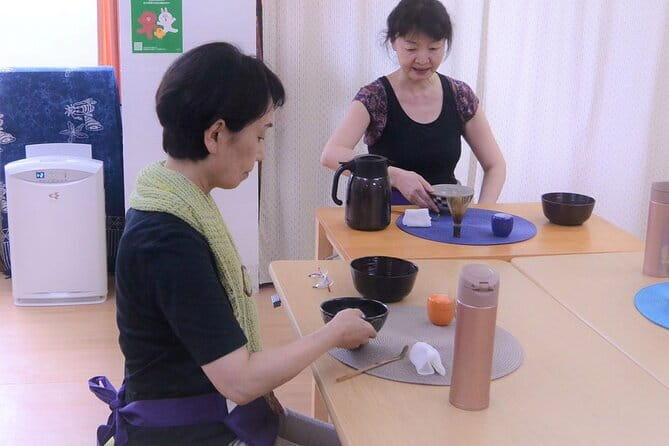
The cooking class ties everything together with sashimi zuke-don for lunch. Zuke-don is a bowl of rice topped with marinated sashimi, commonly tuna, though the fish can vary depending on what’s available.
A key detail: while the sashimi is marinating, you learn knife sharpening on the whetstone. That timing is efficient. You’re practicing skills while your ingredients do their thing, so you’re not stuck waiting around with empty hands.
Once it’s time to cook, you practice making your own zuke-don bowl. Then you eat what you made. The included meal is not just a token bite. You’ll get the tuna bowl you prepared and miso soup, so lunch feels like a full payoff after the work.
You’ll also have included drinks, and there’s a taste of Kappodo original sake. One of the reviews specifically mentioned sake and tea as part of the meal experience, which lines up with the idea that the workshop is designed for you to relax and enjoy your results.
This combination is smart for value. You’re learning knife skills, but you’re also learning how those skills connect to Japanese food culture at the table.
Guides, language support, and how comfortable this feels
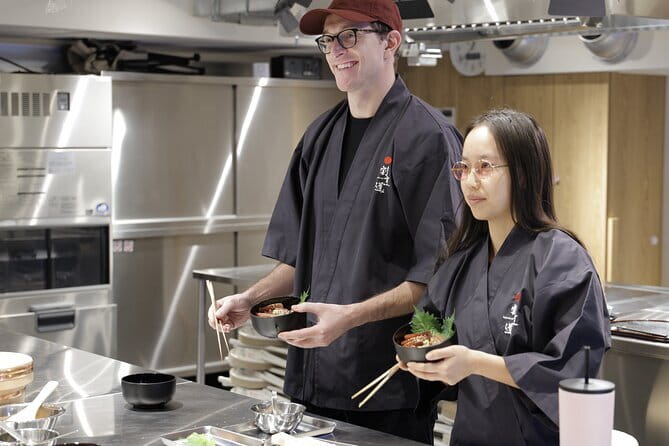
Bilingual support is a major strength here. In the session, the instructors explain in Japanese and English, and the vibe is patient. Chef Naoya and interpreter Hiromi are named in feedback, and they are part of what makes the class feel welcoming for people who don’t speak Japanese.
That matters for a knife workshop because instructions can be technical. When you understand what to do and why, you can correct quickly. The class is structured to help you get comfortable, not to test you.
Also, tools and aprons are included, which removes a common anxiety for first-timers. You don’t have to figure out what to bring or whether your own equipment is “right enough.” You show up, follow along, and use what’s provided.
You’ll also receive a certificate of participation. It’s not life-changing paper, but it’s a nice marker if you like collecting proof of skill-building experiences.
Price and value: what $130.78 really buys you
At $130.78 per person, this isn’t a cheap “activity.” But it’s also not just a short demo. For that price, you get a two-hour session with expert instruction, included tools and aprons, lunch (the bowl you make) plus miso soup, and drinks with a sake tasting.
In Tokyo, you’re paying for time with instructors who can correct technique while you cut and sharpen. A small-group format makes that time more meaningful. If you were to hire a private instructor or buy a class with meals in a comparable format, the cost usually climbs fast.
The same-day shop discount adds another bit of practical value. You can enjoy 10% off items at the 1F shop on the day you visit. That’s useful if you end up wanting to buy a knife or related tools after seeing what works.
One more point: knife workshops are “use it or lose it” learning. You’ll get more value if you’re the type who practices at home. If you’re just collecting photos, you might not get full mileage out of a sharpening and cutting class.
Who should book this workshop (and who might skip)
I think this is a great fit if you fall into one of these groups:
- You want a hands-on Japanese skill, not just a meal.
- You’re curious about how Japanese knives differ and how sharpening works.
- You’re comfortable with focused instruction for two hours and don’t mind practicing.
It’s less ideal if you want a fully relaxed, sightseeing-style experience. Knife sharpening and cutting take concentration, and the “doing” part is central. Also, if you have any strong discomfort with handling sharp tools, you’ll want to weigh that before booking, since the workshop is built around safe but real practice.
If you’re coming from a bigger Tokyo day, this class can still work well because it’s only about 2 hours and ends where you started. You can slot it into your schedule without a long commute.
Should you book Tokyo Keen Japanese Knife and Sashimi Workshop?
Book it if you want a memorable Tokyo experience that gives you something you can repeat: whetstone sharpening steps and a better sense for how sashimi cutting should feel. The small group size, bilingual support, included lunch, and sake tasting make the whole thing feel like a complete package, not a quick stunt.
Skip it if you’re only after light entertainment or you’re not interested in learning technique. This is a skill class first, food class second, and the best parts happen when you actually pick up the knife and practice.
If you do book, go with a calm mindset. Take feedback, practice patiently, and treat lunch as the payoff for the work you did earlier. That is where the experience lands.
FAQ
How long is the Tokyo Keen Japanese Knife and Sashimi Workshop?
The workshop runs for about 2 hours.
How many people are in the group?
The experience has a maximum of 8 travelers.
What is included in the price?
All tools and aprons used in the lessons, lunch (the tuna bowl you made), alcoholic beverages tasting of Kappodo original sake, a tour guide, a certificate of participation, and a 10% discount at the 1F shop on the same day.
Is transportation included?
No. Private transportation is not included.
What will I eat and drink during the class?
You’ll make and eat a tuna zuke-don style rice bowl for lunch, plus miso soup. Drinks are included, and there is a tasting of Kappodo original sake.
Do instructors teach in English?
The session includes instruction for foreigners, with instructors teaching in both Japanese and English.
Where do I meet for the workshop?
You meet at Kappodo H.Q / Tokyo D kitchen Studio in Nishiazabu, Minato City, at the DK Building address listed for the experience.
Does the activity end at the meeting point?
Yes, the activity ends back at the meeting point.
Is free cancellation available?
Yes. You can cancel for a full refund up to 24 hours in advance of the experience start time.
Fresh options around Tokyo
- Tokyo: Nikko Kegon Falls Lake Chuzenji Toshogu Temple & More★ 4.9 · 12 reviews
- Tokyo: Samurai History Walking Tour★ 5.0 · 12 reviews
- Harajuku: Kawaii Fashion and Pop-Culture Tour★ 4.7 · 12 reviews
- Tokyo: Mt. Fuji & Lake Kawaguchi Instagram Full Day Trip★ 4.1 · 12 reviews
- Shibuya Tokyo: Modern Kintsugi Workshop in Shibuya★ 5.0 · 12 reviews
- Tokyo: GTR Guided Daikoku Experience at Night★ 5.0 · 12 reviews
- Tokyo: Daikoku JDM Car Culture Tour★ 4.6 · 12 reviews
- Mt Fuji Private Day Trip from Tokyo with English speaking driver★ 5.0 · 13 reviews
Workshops, compared.
Sushi Making Tokyo Roll and Authentic Japanese Sushi Class
Read our review →
Roll and Authentic Sushi Making Class in Asakusa
Read our review →
Ramen Cooking Class at Ramen Factory in Kyoto
Read our review →
Sushi Making Class in a Happi Coat near a Famous Spot
Read our review →
Sushi Making Osaka Roll and Authentic Japanese Sushi Class
Read our review →Browse the lists this tour appears in