
Reviewed · WORKSHOPS
Manga Lesson with a Professional Japanese Manga Artist in Nakano
Turn manga tools into your own art. I love the private lesson feel and the take home artwork that you finish with real screen tones and ink. The one snag to consider is location spotting, since directions can feel a little tricky the first time.
You get a professional Japanese manga artist who sets a pace for your level, and you work through the process from pencil draft to final pasted tones in about 2 hours. Best part for planning, you get English guidance without interpreters, and your tools are included with a mobile ticket for entry.
Quick hits before you go
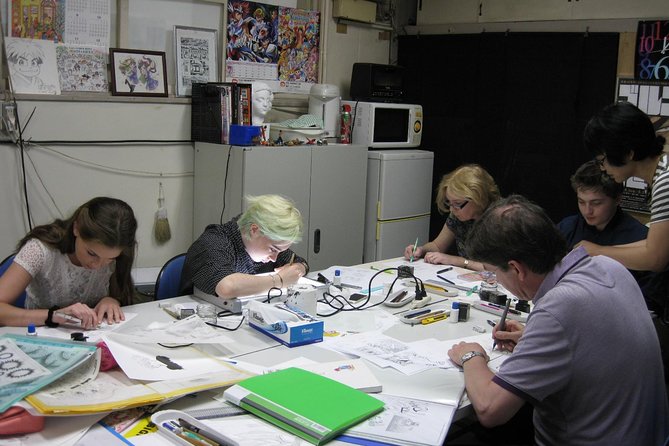
- A professional artist leads the whole session so you are not copying vague tips, you are drawing with direct feedback.
- Screen tone comes last with the classic gray textures and effects, so your page lands with that finished manga look.
- Tools are provided including manga pens and ink, manga paper, and screen tone materials.
- All skill levels are welcome and the instructor tailors the lesson, even if you are brand new.
- You end with a souvenir page you can take home, not just a sketchbook practice sheet.
- Private means your group only so families, couples, and solo travelers get attention at the right pace.
Manga School Nakano, and why this feels like real Tokyo creative time
Nakano City is where you come to slow down and do something hands-on, instead of just hopping from sight to sight. The class meets at Manga School Nakano at 165-0026 Tokyo, Nakano City, Arai, 2-chōme 713 南国ビル, and it runs about 2 hours.
What makes the setting work for a vacation is that it is specific. You are showing up for manga tools, manga paper, and a finished page. One review highlight keeps popping up in different ways: people left with a sense that the instructor treated their drawing seriously, even when they started with little or no experience.
The practical thing: the meeting point is near public transportation. You should still plan to arrive a bit early. One common caution is that it can be hard to locate at first, especially if your Japanese is basic and the signage is not super obvious.
More anime and pop culture tours in Tokyo:
- Official Street Go-Kart Tour – Akihabara
★ 5.0 · 1,578 reviews - Tokyo Go Kart: Asakusa, Skytree, and Akihabara **IDP MUST**
★ 5.0 · 988 reviews - Tokyo Studio Ghibli Museum and Ghibli Film Appreciation Tour
★ 4.5 · 421 reviews
The full 2 hour class flow, from pencil draft to finished manga
This lesson is structured like a real manga page process, not a random art craft session. You arrive at Manga School Nakano, meet your instructor, and get a short lecture on manga techniques and the history of manga. That intro matters, because it frames what you are about to do and why manga art relies on specific steps.
Then comes the step-by-step drawing time. You start by working on your manga character with guidance and corrections as you go. The instructor breaks things down so you are not left guessing. If you are a beginner, you can use manga references to copy with help.
Here is the workflow you will follow during your session:
1) Pencil drawing (draft) where you place the design first
2) Inking where you erase pencil lines and commit to the outlines
3) Painting black parts to build the manga contrast
4) Correcting mistakes while the page is still workable
5) Adding highlights with white ink for that classic printed look
6) Pasting screen tones for gray textures and effects
You do not need to rush. The instructor checks your progress step by step, and the pacing adjusts to the group. In one family-style lesson, the instructor managed different ages and skill levels in the same session, which is exactly what you want on vacation.
The manga workflow that actually makes your page look manga
If you have only ever seen manga images on screens, it is easy to assume it is just “draw a face.” In this class, you learn that manga style is built from process choices.
The biggest shift is going from pencil to ink. In the pencil stage, you are allowed to map out your character. Then the lesson asks you to ink with intention, and that is where the page starts to look like published manga. You will erase pencil lines once the inking is done, which forces clarity.
Next is black areas. Those heavy black shapes are not random decoration. They control depth and readability on the page. When you add them yourself under instruction, you start to see how manga artists think in shapes, not just outlines.
Then you add highlights using white ink. This is one of those steps that feels small, but it changes the whole emotion of the drawing. Hair shine, cheek highlights, and small reflective spots make the character feel more alive.
Finally comes screen tone. This is the signature material that turns your character into a true manga-style illustration. Screen tone creates gray textures and visual effects that are hard to replicate if you are only using markers or digital filters. You paste it as the final step, which helps you avoid getting tone in the wrong place.
The fun part is that each step has a reason. Even if you never become a professional, you walk away knowing why the order matters.
Tools you get to use, and why that is worth paying for
A huge part of the value here is that the class gives you access to tools you would not casually pick up on vacation. You use screen tone, manga pens and ink, and manga paper. You also get to try multiple pen nib types, including three specialized pen nibs mentioned in the lesson description.
In practice, that means your line quality improves fast because you are using the right hardware. Different nibs handle line weight differently. That is hard to teach with words alone, so the hands-on tool time is the shortcut.
You will also use dip pen and ink materials. Dip pen work has its own rhythm, and even if your first line feels a little wobbly, the instructor can correct how you hold the pen and how you build lines.
One more practical perk: you learn what each tool is for. Screen tone is not just “gray.” It is for mood, texture, and effects. Ink is for permanence and crisp edges. White ink is for highlights and contrast. Once you understand that toolkit, you can keep improving after the class.
And yes, people genuinely get excited about it. One review notes that simply trying tools they normally would not use was exciting. That reaction is real, because you are not only drawing, you are learning the artist workflow.
A few more Tokyo days worth comparing
- Mt Fuji and Hakone 1-Day Bus Tour Return by Bullet Train
★ 5.0 · 26,383 reviews - 1-Day Tokyo Bus Tour
★ 5.0 · 14,250 reviews - Tokyo: TOKYO SKYTREE® Admission ticket
★ 4.5 · 11,192 reviews - Tokyo: teamLab Planets TOKYO Digital Art Museum Entry Ticket
★ 4.6 · 9,779 reviews
Getting tailored coaching, even if you are new or returning to drawing
The class is designed to be private and customizable to skill level. That is important. If you are traveling with kids, teens, or an art-practicing adult, this kind of instruction can actually work for everyone because the instructor can adjust.
Beginners are supported with reference options. You can choose manga references to copy with help from the instructor. The goal is not to produce a perfect drawing in one sitting. The goal is to learn the steps and end with a page you are proud to take home.
More experienced artists are also not left bored. The instructor reviews and corrects drawings as you work, so practicing artists can refine technique, line control, and how they approach manga-style effects like tone placement.
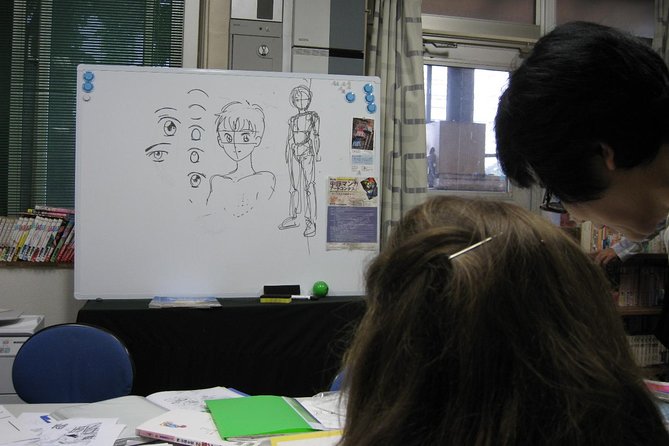
One instructor name comes up again and again in the feedback: Nao Yazawa. Multiple reviews describe Nao as patient and able to explain manga basics clearly. In one family group, Nao was also described as using a whiteboard and book references, which helps when you are trying to connect the step-by-step method to what you are seeing on the paper.
That English support is another big deal. The lesson description says you can receive precise guidance in English without interpreters. In real life, that usually means you are not stuck pointing at drawings and hoping someone guesses your intent.
What you take home, and how it becomes a real souvenir
The takeaway is not just a certificate. You leave with your completed manga drawing as a souvenir. That changes the whole tone of the activity. Instead of attending an experience that fades by the next day, you get a physical result you can share at home.
You also get the satisfaction of finishing the classic manga steps in order. Pencil draft to final screen tone is the difference between a cute sketch and a true manga-style page.
One detail from a review that stands out: in at least one lesson, the instructor kept copies to display and post on Instagram. That does not mean it is guaranteed every time, but it tells you the school treats the artwork like real work, not throwaway practice.
If you want to protect your souvenir after class, treat it gently. Keep it flat, let any ink settle, and store it so it does not get bent in your bag. These are basic paper-care habits, but they matter because screen tone and ink look best when the sheet stays uncreased.
Price and value for a professional manga workshop at about $67.77
At $67.77 per person for about 2 hours, you are paying for more than the instructor’s time. You are paying for:
- A professional Japanese manga artist guiding the page process
- Included tools like manga pens and ink, manga paper, and screen tone materials
- Hands-on step-by-step instruction from pencil to finished pasted tones
- Your take-home completed artwork as the final deliverable
- Private class format so the pace can fit your group
Drinks are not included, so plan to buy water before you go or bring a bottle if that is allowed.
Is it a bargain? It depends on what you compare it to. If you compare it to a typical museum ticket, it can feel pricey. If you compare it to buying art supplies plus trying to learn manga techniques on your own, the price starts making sense quickly. The class bundles instruction and materials in a way you usually cannot replicate easily while traveling.
Also, the private format protects your time. You are not waiting your turn or watching someone else’s drawing technique for two hours. You are building your own page.
Who should book this Nakano manga lesson
This is a strong fit if you:
- Love manga and want to understand how the look is made, not just copy a character
- Have kids or teens who love drawing, and you want them to leave with a finished piece
- Want a creative break in Tokyo that feels local and specific, not generic
- Have never drawn manga before and want a guided start
It is also a good choice if you are an experienced artist but want a focused lesson on manga-style steps and materials like screen tone and white highlights.
The reviews lean hard on one theme: people feel pressure-free. The instructor’s job is to correct you as you go, but the atmosphere stays supportive. If you hate feeling clumsy in new settings, you will likely appreciate that.
Your main consideration is logistical, not artistic. One review notes that locating the building was the only wrinkle, especially with minimal English signage. So bring the address, check transit directions ahead of time, and arrive early enough to calm down.
Should you book Manga School Nakano? My take
Book it if you want a hands-on Tokyo experience with a clear outcome: a finished manga page you can take home. The process teaching is the core value here, and the tool access makes the class feel like more than a hobby workshop.
Skip or rethink if you are mainly looking for a casual photo stop or you want a super lightweight activity with no step-by-step drawing. This class is focused on drawing, inking, and tone work. You will work during the whole session.
If you do book, I would plan around three things:
- Arrive early to find the building at Arai, Nakano
- Wear something comfortable for close-up drawing work
- Be ready to follow a real manga page workflow, because that is where the magic comes from
If you are a manga fan, or you have a creative person in your group, this is one of the rare activities in Tokyo where the final result feels personal, not just instructional.
FAQ
How long is the manga lesson?
The class runs for about 2 hours.
What is included in the price?
The price includes a professional manga artist and the manga tools.
Do I need drawing skills before I go?
No. The lesson is designed for all skill levels, and the instructor tailors the teaching. Beginners can also use references to copy with help.
Is this a private class or a public group lesson?
It is private, and only your group participates. If you are a single traveler you should choose the single person tuition option, and for groups of 2 to 4 you choose group tuition.
Will I take my artwork home?
Yes. You walk away with your completed manga drawing as a souvenir.
Where is the meeting point in Nakano?
The meeting point is Manga School Nakano, 165-0026 Tokyo, Nakano City, Arai, 2-chōme 713 南国ビル.
Is drinks included?
No. Drinks are not included.
What is the cancellation policy?
Free cancellation is available up to 24 hours in advance for a full refund. If you cancel less than 24 hours before the start time, the amount paid is not refunded.
Fresh options around Tokyo
- Tokyo: Nikko Kegon Falls Lake Chuzenji Toshogu Temple & More★ 4.9 · 12 reviews
- Tokyo: Samurai History Walking Tour★ 5.0 · 12 reviews
- Harajuku: Kawaii Fashion and Pop-Culture Tour★ 4.7 · 12 reviews
- Tokyo: Mt. Fuji & Lake Kawaguchi Instagram Full Day Trip★ 4.1 · 12 reviews
- Shibuya Tokyo: Modern Kintsugi Workshop in Shibuya★ 5.0 · 12 reviews
- Tokyo: GTR Guided Daikoku Experience at Night★ 5.0 · 12 reviews
- Tokyo: Daikoku JDM Car Culture Tour★ 4.6 · 12 reviews
- Mt Fuji Private Day Trip from Tokyo with English speaking driver★ 5.0 · 13 reviews
Workshops, compared.
Sushi Making Tokyo Roll and Authentic Japanese Sushi Class
Read our review →

Roll and Authentic Sushi Making Class in Asakusa
Read our review →
Ramen Cooking Class at Ramen Factory in Kyoto
Read our review →

Sushi Making Class in a Happi Coat near a Famous Spot
Read our review →
Sushi Making Osaka Roll and Authentic Japanese Sushi Class
Read our review →Browse the lists this tour appears in