
Reviewed · WORKSHOPS
Private Mochi Sweets Making class near Shibuya area
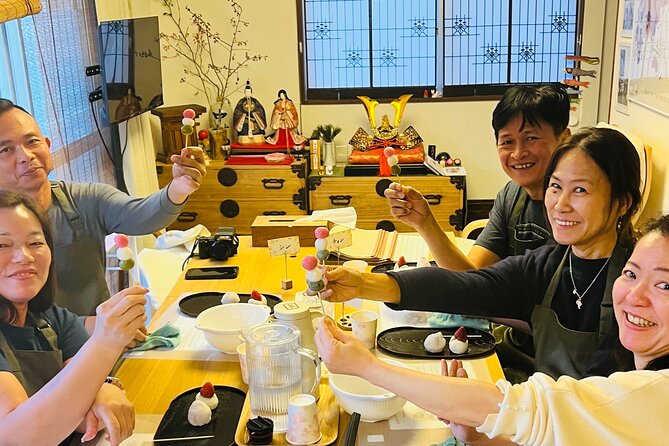
Mochi from scratch in a real Tokyo home. This private-style lesson near Shibuya has you shaping and cooking mochi and dango step by step with Sakura in her own Sangenjaya place, not watching from the sidelines. I especially like the small-group feel, max 8 travelers, because you get more personalized coaching than most big workshops.
The other big win for me is the tasting setup, tea and matcha served in a cozy home setting, plus a take-out bag so you can bring leftovers along. One thing to plan for: the venue is on the second floor with stairs, and there is a dog in the home, so people with dog allergies should reconsider.
Key things that make this class worth your time
- Sakura’s home setting near Shibuya makes it feel like everyday Japanese life, not a performance
- Hands-on mochi and dango (not a demo), so you leave with real skills and sweets you made yourself
- Tea service included, with options like matcha and decaf black tea if you avoid caffeine
- Gluten-free and no-alcohol ingredients for the dango you make
- Take-out bag included, so nothing has to be eaten on the spot
- Maximum 8 travelers, which helps the pacing stay friendly and clear
Mochi Making Near Shibuya, in Sakura’s Sangenjaya Home
If you want wagashi that feels personal, this is the kind of class that delivers. You meet in Sangenjaya, Setagaya City, at 1-chōme-11-13, and you finish back at the same point after about 2 hours. It is close enough to Shibuya to feel convenient, but the neighborhood vibe is more local than touristy.
What makes this stand out is the setting. Sakura teaches in her own home, and that changes the whole tone. Instead of a classroom where everyone rushes through, you get a slower rhythm, you can ask questions, and the instructor can explain not just what you do, but why mochi and dango are important in Japanese culture and traditional recipes.
I also like that the class is designed for beginners. You do not need to know anything about Japanese sweets before you arrive. The format is step-by-step, and the “every step yourself” approach matters because it turns the experience into something you can repeat later.
A few more Tokyo days worth comparing
- Mt Fuji and Hakone 1-Day Bus Tour Return by Bullet Train
★ 5.0 · 26,383 reviews - 1-Day Tokyo Bus Tour
★ 5.0 · 14,250 reviews - Tokyo: TOKYO SKYTREE® Admission ticket
★ 4.5 · 11,192 reviews
What You Learn to Make, Mochi plus Dango and Fruit Daifuku

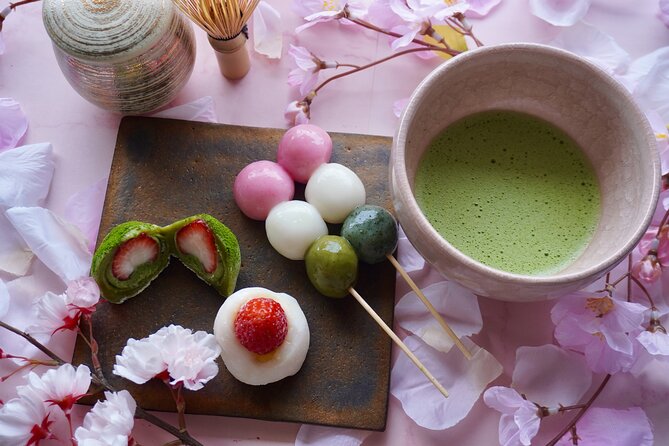
This is a mochi and dango lesson, hands-on from start to finish. You learn how to make fruit daifuku and dango with Sakura guiding you while you shape and cook. The dango you make is specifically described as containing no gluten, no alcohol, and no additives, which is a nice practical detail if you are watching ingredients.
The class is also not only about recipes. You get context on mochi’s cultural history and traditional recipes from the instructor in a way that fits the pace of a home kitchen. In plain terms, you leave understanding what you made and where it shows up in Japanese life, not just how to produce the final bite.
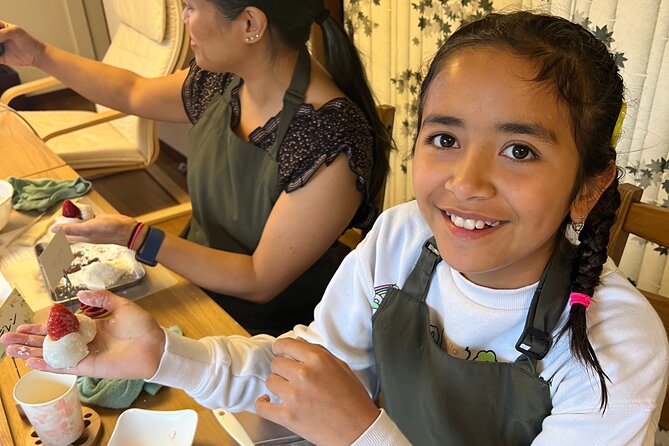
Based on the way Sakura teaches, you will likely notice that the lesson adjusts to the group. If you are traveling with kids, she is used to teaching children gently and effectively. A number of families mention kids leaving happy and satisfied, which lines up with what you would want from a hands-on class on a day when everyone is already walking a lot.
The 2-Hour Class Flow From First Mix to Final Bite
The timing here is straightforward: about 2 hours total. That is long enough to feel real, but not so long that you lose the day to one activity.
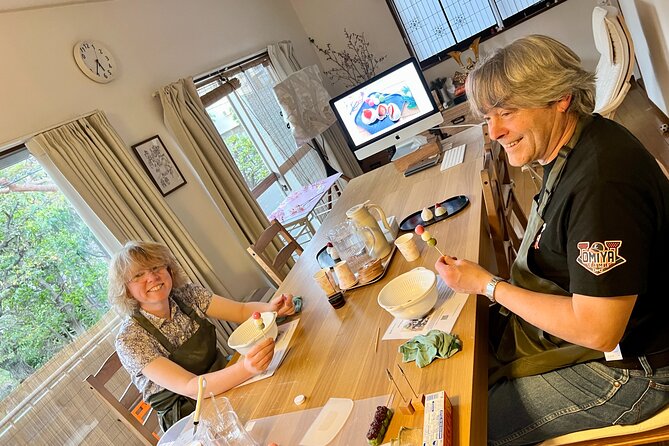
Even though it is only one main stop in Sangenjaya, the class itself is structured. Expect an intro first, then working phases where you handle the dough, form the sweets, and move through the process with instructions in the home kitchen. The “not demonstration-style” part is key. You shape the mochi, you learn the handling, and you see how the process comes together into daifuku and dango.
Here is why that matters for your trip planning. Two-hour cooking classes in tourist areas often feel like you do a few steps and then get a finished product. This one is set up so you actually participate throughout. That is also why many people rate it so highly as a fun family activity. If you are the type who likes hands-on experiences, this format is the right length and the right level of involvement.
One extra bonus, if you enjoy playful add-ons: some groups mention light extras alongside the core sweets and matcha, like a dango-themed activity. You should not count on that every session, but it reflects the overall vibe, friendly and not overly formal.
Tea Pairings, Take-Home Boxes, and the Comfort Factor
You get coffee and/or tea, and matcha or Japanese green tea is part of the set-up. If you avoid caffeine, decaffeinated black tea is available. This helps the class work for more people than you might expect, especially if you are sensitive to caffeine but still want to participate.
You also get a take-out bag. That is a small detail, but it changes how you plan your day. You are not forced to eat everything immediately. If you want to save some sweets for later, bring them back to your hotel room, or share with someone who did not join, you can.
And because this is in a home rather than a commercial studio, the environment tends to feel calmer. A residential area also means the class can pair well with an easy stroll before or after. The area is near public transportation, so you can build it into a day around Shibuya without feeling stuck.
Same corner of Japan, a different kind of day:
- Tokyo: teamLab Planets TOKYO Digital Art Museum Entry Ticket
★ 4.6 · 9,779 reviews - Mt Fuji & Hakone Cruise, Drum Show Bullet Train 1 Day from Tokyo
★ 4.0 · 7,413 reviews - Tokyo: Sumo Show Experience with Chicken Hot Pot and a Photo
★ 4.8 · 6,678 reviews - Tokyo: Shinjuku Food Tour (13 Dishes at 4 Local Eateries)
★ 5.0 · 6,603 reviews
Price and Value, Why This Feels Worth It at $79.28
At $79.28 per person for about two hours, you are paying for two things: the instructor’s time and the fact that it is hands-on in a real home kitchen. You are not just buying a snack, you are buying instruction, ingredient preparation, and the tea service.
In terms of value, this is not the cheapest option in Tokyo. But it also is not the kind of workshop where you mostly watch. The pricing makes more sense when you consider that Sakura teaches in a small group setting, max 8 travelers, which usually means more attention and less waiting your turn.
The ingredient promise is another value signal. Dango is described as no gluten, no alcohol, and no additives. That is helpful if you normally worry about dietary surprises in food classes. The inclusion list is also practical: aprons available for rent, coffee/tea included, and take-out bags provided.
If you are the kind of traveler who likes authenticity over novelty, this class fits. The home setting and the personalized pacing are the payoff. You feel like you are stepping into Japanese everyday hospitality for a couple of hours, rather than consuming a scripted tourist experience.
Practical Logistics in a Residential Area (Stairs, Transit, and Pets)
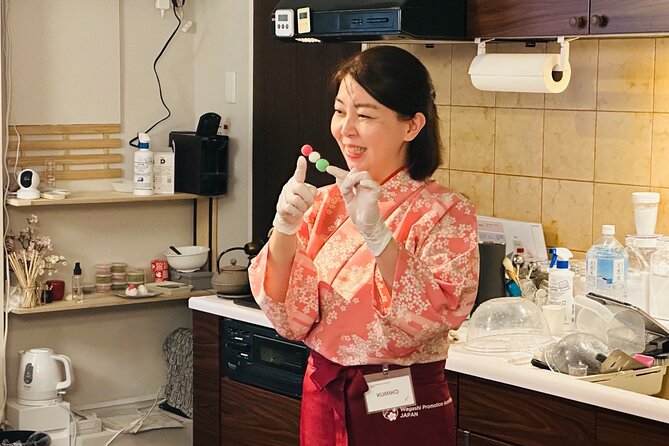
This is in Sangenjaya, and the meeting point is an exact residential address. The tour notes it is near public transportation, which helps a lot, because you can plan to arrive by train and keep the trip simple. It also ends back at the meeting point, so you are not dealing with an end-of-tour scramble.
Two practical notes to take seriously:
1) The venue is on the second floor, and you need to go up stairs. If you have mobility constraints, this will matter.
2) There is a dog in the home. The activity specifically says it is not recommended for people who have a dog allergy. Service animals are allowed, but if your allergy is triggered by pets, you will need to think carefully.
Also plan around what is included and what is not. Bottled water is not included, and soda or pop and alcoholic beverages are not included. Brunch is not included either. So if you are scheduling this near a meal time, you might want to eat beforehand or bring a light snack for after.
Finally, directions and timing matter more for this kind of class than big tourist sites. Because you are going to a home kitchen, you want to arrive a few minutes early, calm down, and get your bearings fast.
Who This Hands-On Sweets Class Is Best For
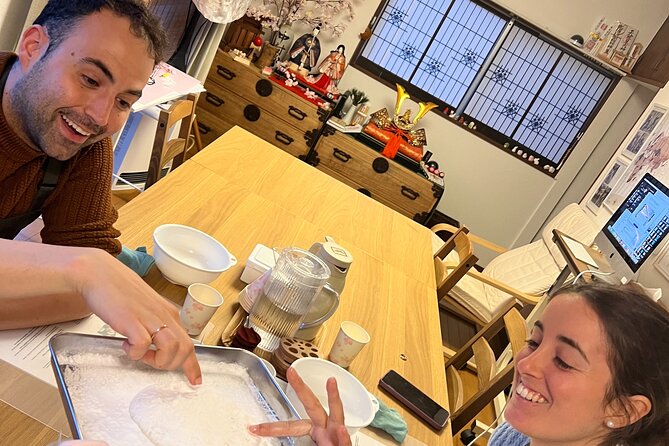
This class is a strong fit for a few types of travelers:
- Families with kids who want an activity that is participatory and patient. Sakura is described as experienced with teaching children gently.
- Food lovers who want more than a tasting, you want to touch, shape, and cook.
- Travelers who like learning context, mochi’s cultural history and traditional recipes are part of the experience, not an afterthought.
- People who want a small group setting where questions are easier to ask and the pace is more comfortable.
It is also a nice option if you are staying near Shibuya but want a different side of Tokyo than the immediate station area. Sangenjaya has a more local feel, and the home setting makes it feel like a real neighborhood moment.
The main reason to pass is the dog allergy or the second-floor stairs. If either one is a problem, you will be happier choosing a different type of class.
Should You Book This Mochi-Making Class Near Shibuya?
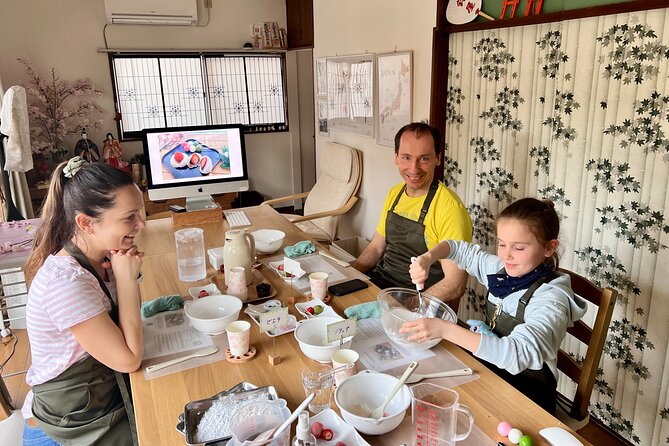
I think you should book it if you want a hands-on wagashi experience that stays personal. The home setting, small group size (max 8), tea service, and the fact that you make fruit daifuku and dango yourself are the big reasons it works.
You might skip it if you cannot handle stairs or if dog allergies are a serious concern. Also, if you only want a quick snack, this will feel more like a mini workshop than a casual food stop. But if you enjoy cooking experiences, even as a beginner, two hours is a sweet spot.
One more nudge before you decide: check your caffeine preference. Matcha and green tea are included, and decaf black tea is available, but you should know what you are ordering in advance.
If your goal is real Japanese hospitality plus edible souvenirs you actually made, this class delivers.
FAQ
How long is the mochi and dango class?
It runs for about 2 hours.
Where do I meet for the class?
The meeting point is 1-chōme-11-13 Sangenjaya, Setagaya City, Tokyo 154-0024, Japan. The activity ends back at the meeting point.
What do I make during the class?
You learn to make mochi and dango by hand. The class includes fruit daifuku and dango.
Is there tea or coffee included?
Yes. Coffee and/or tea are served, including Japanese green tea or matcha. If you do not like caffeine, decaffeinated black tea is provided.
Are aprons provided?
Yes. Aprons are available for rent.
Is this class gluten-free?
The dango made in the class is described as containing no gluten.
Is it good for children?
The instructor is described as teaching kids gently and effectively, and children are said to leave happy and fully satisfied.
How big is the group?
It has a maximum of 8 travelers.
Is there a pet in the home?
Yes. The class notes that there is a dog in the home, and it is not recommended for people with a dog allergy.
What if the class is canceled due to weather or minimum travelers?
If canceled due to poor weather, you will be offered a different date or a full refund. If canceled because the minimum number of travelers is not met, you will also be offered a different date or a full refund.
Fresh options around Tokyo
- Tokyo: Nagano Snow Monkeys and Zenkoji Tour with Temples★ 4.9 · 19 reviews
- Yokohama Port: Private Customizable Tour with Transfer★ 5.0 · 19 reviews
- Explore Unique Tokyo Streets / Learn with a Pro Photographer★ 5.0 · 19 reviews
- Sushi Making with Interactive Samurai Experience at JIN-ASAKUSA★ 5.0 · 19 reviews
- DAIKOKU excursion by car DRIFT automobile encounter★ 4.5 · 19 reviews
- Official Street Go Kart Tour Akihabara 2nd★ 5.0 · 19 reviews
- Cosplay Experience with Professional Makeup and Photo Shoot!★ 5.0 · 19 reviews
- Tokyo: Name Seal & Pouch or Tote Bag Making Experience★ 4.5 · 19 reviews
Workshops, compared.
Sushi Making Tokyo Roll and Authentic Japanese Sushi Class
Read our review →
Roll and Authentic Sushi Making Class in Asakusa
Read our review →
Ramen Cooking Class at Ramen Factory in Kyoto
Read our review →
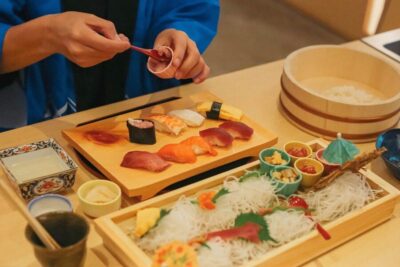
Sushi Making Class in a Happi Coat near a Famous Spot
Read our review →
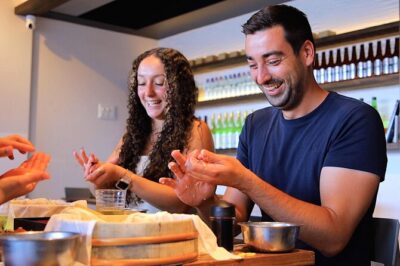
Sushi Making Osaka Roll and Authentic Japanese Sushi Class
Read our review →Browse the lists this tour appears in