
Reviewed · PHOTOGRAPHY SESSIONS
Explore Unique Tokyo Streets / Learn with a Pro Photographer
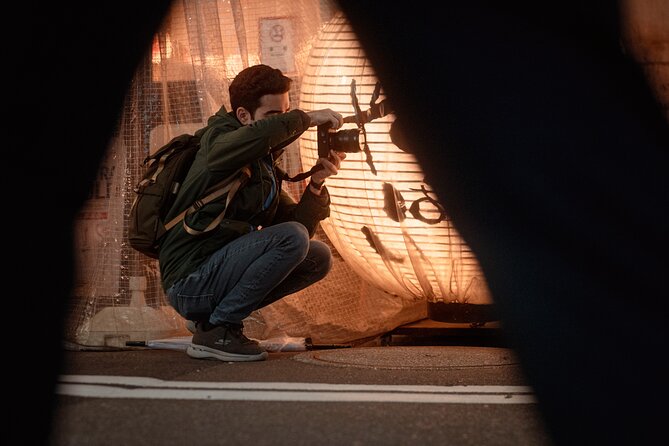
Tokyo at night teaches fast. This small-group evening photo walk in Shimbashi and Yurakucho turns dark streets into a classroom, led by pro photographer Deniz Demir. I like that you get hands-on coaching tied to real street scenes, not generic camera talk, and I also like the personal pace thanks to a max group size of 6. One thing to consider is that you’ll be walking on city streets for about 2 hours, so comfortable shoes matter.
Deniz’s approach is built around how you shoot, and he’s willing to talk about your specific questions on the spot. You’ll cover practical basics like settings and lenses, plus more advanced street-shooting thinking like framing and using what’s around you to level up ordinary shots. The only possible drawback is that the best results depend on your willingness to experiment in low light, not just watch and hope.
If you want better photos from Tokyo nights, this kind of focused tutoring can be a big shortcut. You’re not stuck doing the same tourist loop with a quick camera glance, you’re learning a repeatable street-photography way of seeing. If your goal is purely sightseeing, you may find the teaching moments a little more intense than you expect, but they’re tightly connected to what you’re photographing.
Key points before you book
- Small group coaching (max 6) means Deniz can give tips that fit your camera and your questions.
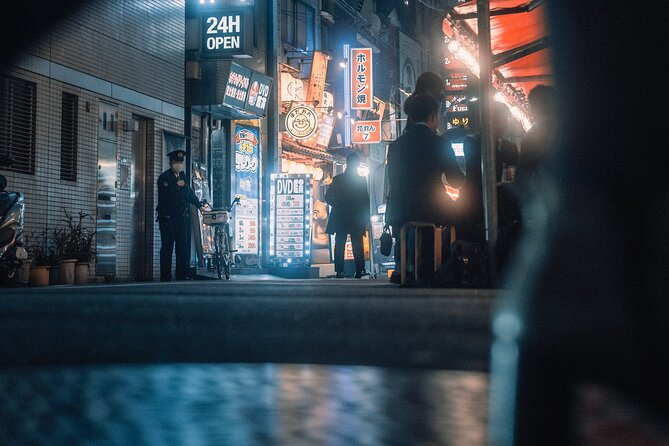
- Evening Shimbashi and Yurakucho help you practice street lighting, reflections, and city contrast.
- Tripod option: your guide can bring one if you want the extra stability for night shots.
- Learn by doing: you work on settings, lenses, and street shooting philosophy as you walk.
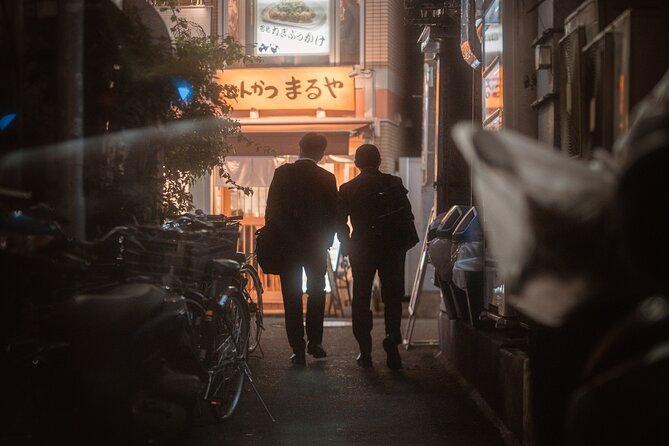
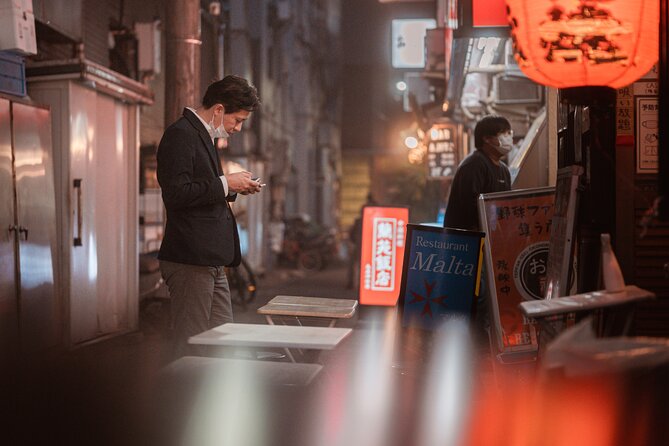
- Weekday salaryman culture can add a specific human slice of Tokyo for your photos.
- Several evening tour options let you pick a time that fits your schedule.
Evening Tokyo street photos work because light changes every block
Night in Tokyo is not just darker daylight. In places like Shimbashi and Yurakucho, the light shifts fast across shop fronts, signage, and office-area streets, and that gives you lots of chances to learn what your camera can do in real time. The timing is also smart, because you get that blend of city glow plus actual street texture.
This tour is built for evening, so you get practice where most people struggle: low light, movement, and mixed lighting. You’ll learn to make those conditions look intentional instead of noisy or blurry.
More Photo Tours in Tokyo
- Tokyo Ryogoku Sumo Morning Practice + Photo Shoot with Wrestlers
★ 4.5 · 277 reviews - Tokyo Sumo Morning Practice Tour w/ Ring-Side Seat + Photo Shoot
★ 5.0 · 93 reviews - Tour with Pro Tokyo Photographer and take Edgy Unique Portraits
★ 5.0 · 80 reviews
Meeting at Shimbashi Station and keeping the group small
You start at Shimbashi Station, and the specific meeting area is listed as 2 Chome-17 Shinbashi, Minato City, Tokyo. The walk ends back at the meeting point, which keeps logistics simple if you are hopping to dinner or another plan right after.
The other major advantage is group size. With a maximum of 6 people, it’s easier to get individualized feedback and faster course-correction. You’re not waiting for your turn while the group drifts in the dark.
I also like that the tour is framed as coaching, not a lecture. Deniz Demir runs the experience, and his perspective as a working photographer matters because he explains photography the way it shows up when you’re actually out shooting.
Shimbashi to Yurakucho, what you’ll actually practice
This evening photo walk centers on Yurakucho and Shimbashi. Even without a long museum-style itinerary, the areas give you variety, which is what you need to learn fast. Different street “moods” let you test your camera choices, then adjust the next time you see a better composition.
Here’s how you’ll likely experience it as you walk:
- You’ll spend time looking closely at scenes, not just capturing them. That’s key, because street photography rewards watching first, shooting second.
- You’ll work on framing and composition while the environment keeps offering new angles.
- You’ll practice how to respond when light changes, people move, or your first shot isn’t what you hoped for.
The big win is that Deniz’s help is tied to the act of shooting in front of you. You’re not just collecting photos, you’re improving how you decide what to photograph.
Settings and lenses: the fundamentals that stop wasted shots
A lot of camera issues people blame on “bad light” are actually setting choices. Deniz covers basic topics like settings and lenses, and that’s exactly where you start seeing results. If you can set the camera with confidence, the city becomes easier to photograph.
Expect talk that connects theory to street reality. For example, you’ll likely discuss how shutter speed, aperture, and ISO choices affect motion blur versus crisp detail, plus how lens choice changes perspective and depth. In a street setting, small decisions like that often matter more than buying new gear.
The standout part is personalization. Since the group is small, you can ask questions about your exact camera setup and get guidance that fits. That matters if you brought a phone camera, a compact, or a more serious interchangeable-lens setup, because the principles still show up differently.
Same corner of Japan, a different kind of day:
- Mt Fuji and Hakone 1-Day Bus Tour Return by Bullet Train
★ 5.0 · 26,383 reviews - 1-Day Tokyo Bus Tour
★ 5.0 · 14,250 reviews - Tokyo: TOKYO SKYTREE® Admission ticket
★ 4.5 · 11,192 reviews - Tokyo: teamLab Planets TOKYO Digital Art Museum Entry Ticket
★ 4.6 · 9,779 reviews
Street shooting philosophy: framing and using the environment
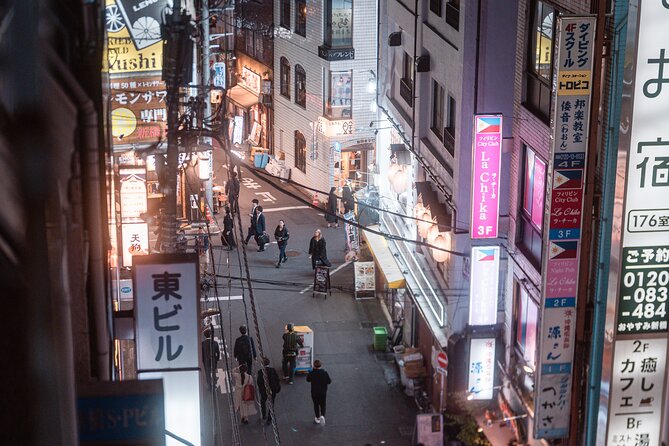
This is where the tour gets more interesting than a typical photo walk. Deniz doesn’t treat street photography as random luck. He focuses on what to look for and how to shape a scene so it reads well in a photo.
You’ll cover ideas like:
- What framing really means on streets, where lines, storefronts, and shadows constantly compete for attention
- How to use the environment to turn ordinary views into pictures you feel proud of
- How to think before you shoot, so you don’t just fire and hope
If you’ve ever taken a great street photo only after multiple attempts, you already understand the value here. This tour helps you build a better decision-making loop. You look, you predict, you compose, you shoot, then you adjust.
Gear talk that gets practical fast, from LED’s to prisms
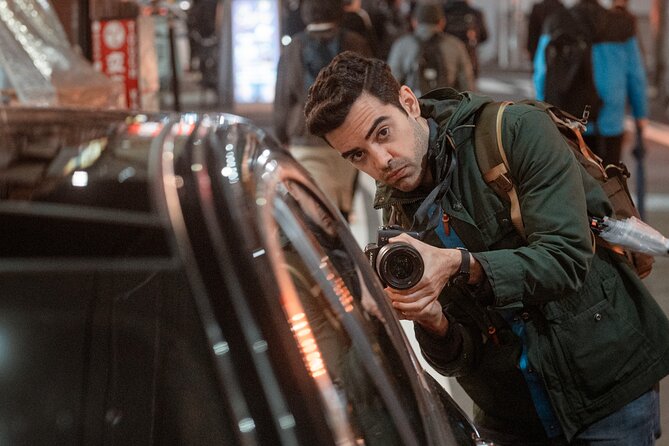
Deniz also discusses other gear beyond the basics, including LED’s and prisms. That sounds technical, but the point is practical: he wants you to understand what different tools can do for your photos, especially at night.
Even if you don’t plan to use every piece of gear yourself, the explanations can change how you approach the city. For instance, LED tools can affect how you control light, while prisms can change reflections and flare in ways that are very relevant to night streets with signage and glass surfaces.
A key detail here is that the tour is not gear worship. The teaching stays anchored to results you can create outdoors. You’re learning how to control the look, not chasing gadgets.
Tripod option and pacing during the 2-hour walk
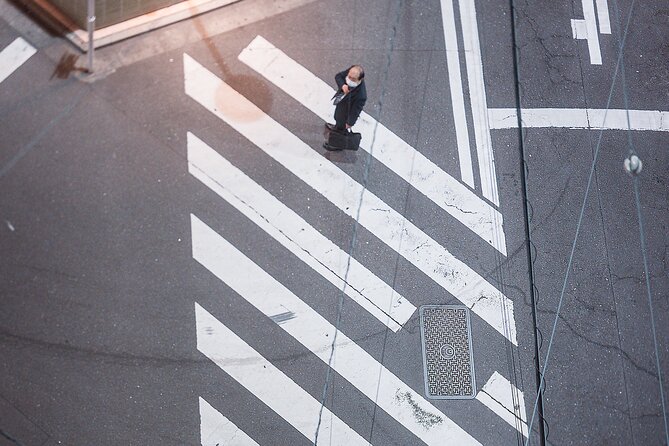
The tour runs about 2 hours. That’s a nice sweet spot, because it’s long enough to test settings and refine your compositions, but short enough that the evening energy stays strong.
If you want more stability for night shots, the guide can bring a tripod if desired. That’s useful if you’re trying for sharper results in darker areas or aiming for more deliberate compositions where you want your framing to hold steady. At the same time, street photography often benefits from handheld spontaneity, so you can choose what fits your style.
Pacing is also practical. In a small group, you can slow down when you see a scene that’s working, then move on when the light or the moment passes. Night scenes change quickly, and the timing of your decisions is part of the learning.
Weekdays and salaryman culture: photographing a real Tokyo rhythm
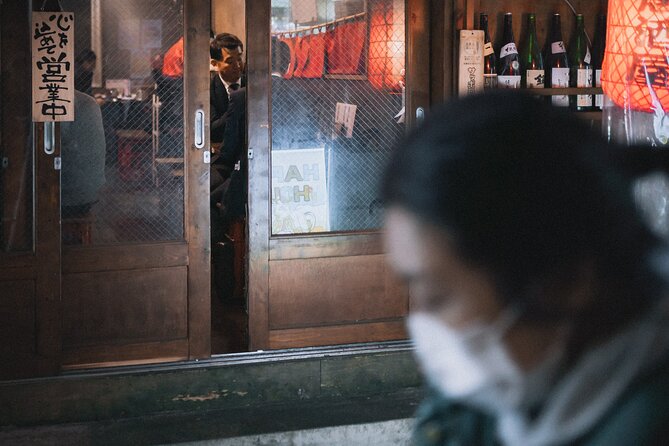
On weekday evening tours, you’ll learn about Japan’s unique salaryman culture up close as you take photos. This adds context that’s bigger than just the buildings and signage. It can help you understand the patterns of the street, the flow of people, and why the atmosphere looks the way it does.
What this means for your photos is subtle but important. When you understand the rhythm of a scene, you’re more likely to capture meaningful moments instead of just random snapshots. You’ll also be more confident photographing people respectfully, because you understand what you’re seeing.
If you’re photographing Tokyo primarily for human stories, this is the kind of local-culture angle that can turn an average night into something more personal.
Price and value: what $128.09 buys you (and what it doesn’t)
At $128.09 per person, this is not a bargain-basement option. The value comes from the format: one pro guide, small group size up to 6, and hands-on coaching tied to what you’re shooting right now.
You’re paying for two things that are hard to get on your own:
- Feedback that’s specific to your approach and your gear
- A guided practice session in a photographic setting, at the exact time of day when night photography gets tricky
If you’ve struggled with night shots, you’ll likely appreciate how direct the help is. It’s the difference between taking 100 photos and still not sure what to change, versus learning how to change one thing and see it work in the next minute.
Also note the tour uses a mobile ticket, and there are group discounts. Add in the fact that people often book about 16 days in advance, and you can see it’s in demand. If your dates are fixed, booking earlier is a smart move.
Who should book this Shimbashi and Yurakucho photo walk
You should book if you want to improve quickly and you like real-world practice. This fits especially well if you:
- Own a camera and want to understand settings and lens choices better at night
- Want street shooting guidance that covers both basics and higher-level thinking like framing
- Prefer small-group attention over generic walking tours
You might skip it if you’re expecting a purely sightseeing evening with minimal instruction. Also consider that the pace is walk-focused for about 2 hours, and the tour expects moderate physical fitness, so plan for uneven city sidewalks and lots of standing and shooting.
If you’re new to photography, the fundamentals make it approachable. If you already know basics, the emphasis on street philosophy and gear like LED’s and prisms can still sharpen your eye.
Should you book this evening photography tour?
My practical take: yes, if you want your Tokyo night photos to improve fast. The best reason to book is the small group coaching with Deniz Demir, because you get personalized help while you’re actually photographing Shimbashi and Yurakucho. You’re not guessing your way through low light.
Book it especially if you’ve looked at your camera settings and thought, I have the gear, why don’t my photos look like I want? This tour is designed for exactly that moment, with a mix of camera fundamentals and street-shooting thinking.
If you want a calm, passive walk with no focus on learning, then choose a different style of tour. But if you want to leave with stronger skills and photos you can stand behind, this is a solid value.
FAQ
Where does the tour start and end?
The tour starts at Shimbashi Station (listed as 2 Chome-17 Shinbashi, Minato City) and ends back at the same meeting point.
How long is the evening photography experience?
It runs for about 2 hours.
How big is the group?
The tour has a maximum of 6 travelers.
What areas of Tokyo does the tour cover?
It explores Yurakucho and Shimbashi during the evening.
Do I get personalized photography tips?
Yes. You’ll get photography tips from your pro photographer guide, and the small group size supports a personalized approach.
Can the guide bring a tripod?
Yes, your photographer guide can bring a tripod if you want one.
Are there different evening tour options?
Yes, you can choose from several evening tour options for flexibility.
Is the salaryman culture part only for certain days?
It’s described for evening tours during weekdays.
Is the tour suitable for people with moderate mobility?
The tour is listed for travelers with a moderate physical fitness level.
Can I bring a service animal?
Service animals are allowed.
More Photography Sessions in Tokyo
- Best Go Kart Experience in Shibuya Crossing with Iconic Photos
★ 5.0 · 348 reviews - Tokyo Go-Karting Experience: Shibuya Crossing with Photos
★ 4.8 · 190 reviews - Tokyo Cyberpunk Street Photo Tour
★ 5.0 · 165 reviews - Tokyo by Night Photography Tour (Private Option Available)
★ 5.0 · 151 reviews
Fresh options around Tokyo
- Tokyo: Nikko Kegon Falls Lake Chuzenji Toshogu Temple & More★ 4.9 · 12 reviews
- Tokyo: Samurai History Walking Tour★ 5.0 · 12 reviews
- Harajuku: Kawaii Fashion and Pop-Culture Tour★ 4.7 · 12 reviews
- Tokyo: Mt. Fuji & Lake Kawaguchi Instagram Full Day Trip★ 4.1 · 12 reviews
- Shibuya Tokyo: Modern Kintsugi Workshop in Shibuya★ 5.0 · 12 reviews
- Tokyo: GTR Guided Daikoku Experience at Night★ 5.0 · 12 reviews
- Tokyo: Daikoku JDM Car Culture Tour★ 4.6 · 12 reviews
- Mt Fuji Private Day Trip from Tokyo with English speaking driver★ 5.0 · 13 reviews
Photography Sessions, compared.
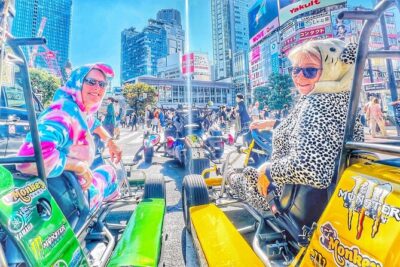
Best Go Kart Experience in Shibuya Crossing with Iconic Photos
Read our review →

Tokyo Go-Karting Experience: Shibuya Crossing with Photos
Read our review →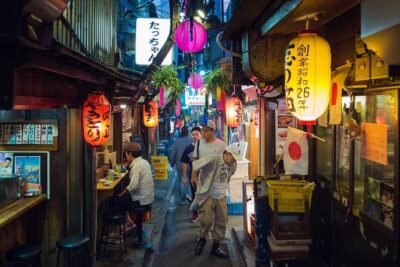
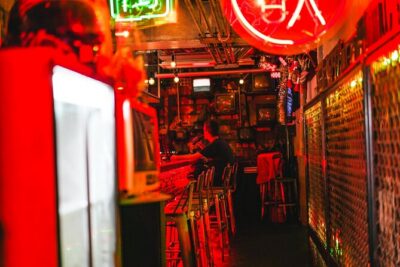
Tokyo by Night Photography Tour (Private Option Available)
Read our review →
![[Okinawa Blue Cave] Snorkeling with Private Guide+ Free Photos](https://review-japan.com/wp-content/uploads/okinawa-blue-cave-snorkeling-with-private-guide-free-photos-400x267.jpg)
[Okinawa Blue Cave] Snorkeling with Private Guide+ Free Photos
Read our review →Browse the lists this tour appears in